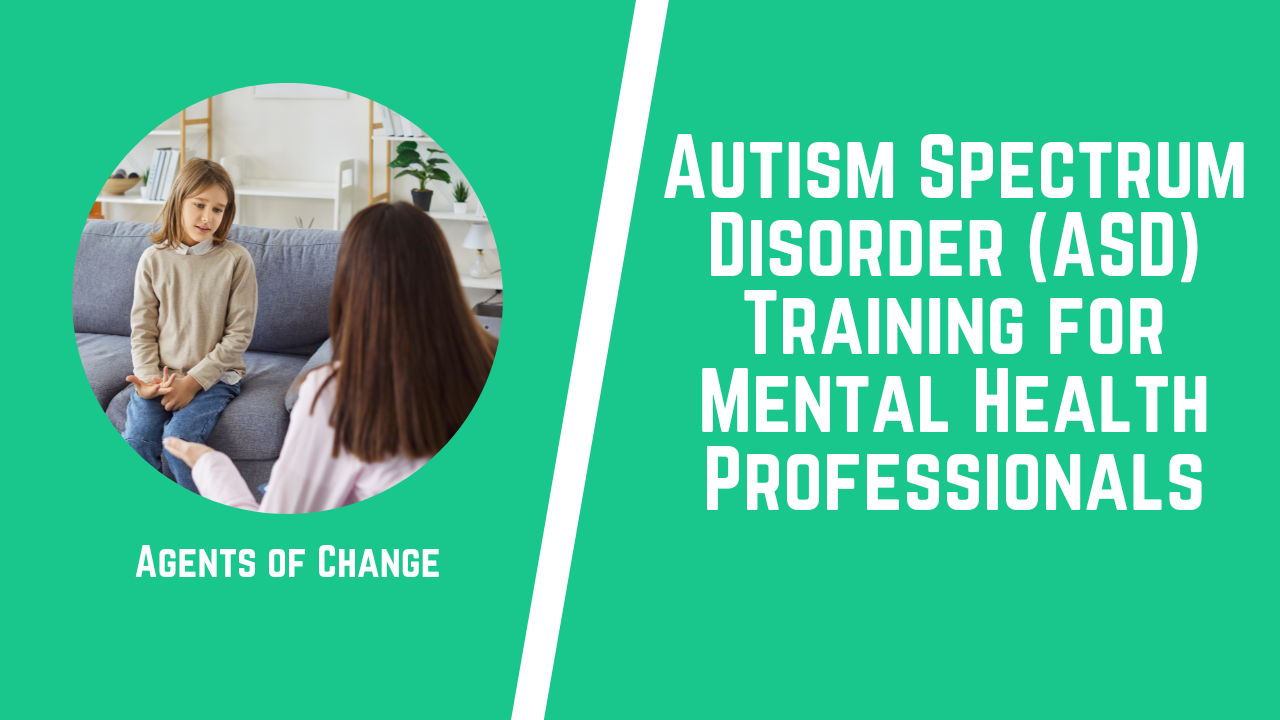
Autism Spectrum Disorder (ASD) Training for Mental Health Professionals
Autism Spectrum Disorder (ASD) Training for Mental Health Professionals
Step into almost any modern therapy setting, and you will quickly notice something important. More clients are presenting with traits, experiences, or diagnoses related to autism than ever before. Yet many mental health professionals admit they were given only limited training on how to truly support autistic individuals in a meaningful and effective way. That gap can create uncertainty in sessions and, at times, missed opportunities for connection and growth.

Autism Spectrum Disorder is complex, highly individualized, and often misunderstood, especially in adults and historically underdiagnosed groups. Without specialized knowledge, clinicians may rely on approaches that do not align with the needs of neurodivergent clients. This can lead to frustration on both sides, leaving clients feeling unseen while professionals question whether they are providing the best possible care. So what changes when clinicians receive the right training?

This article explores how Autism Spectrum Disorder (ASD) training can transform clinical practice. From improving communication to adapting therapeutic techniques, the right training helps clinicians feel more confident, and clients feel more understood. Whether you are new to the field or looking to deepen your expertise, this guide will walk you through why ASD training matters and how it can elevate the quality of care you provide.

Did you know? Agents of Change Continuing Education offers Unlimited Access to 150+ ASWB and NBCC-approved online CE courses and 15+ Live Events per year for one low annual fee to meet your state’s requirements for Continuing Education credits and level up your career.

We’ve helped hundreds of thousands of Social Workers, Counselors, and Mental Health Professionals with Continuing Education, learn more here about Agents of Change and claim your 7.5 free CEUs.

1) Why Autism Training Matters More Than Ever

The landscape of mental health care is shifting, and fast. Autism is being identified more accurately across age groups, cultures, and identities, which means clinicians are encountering autistic clients in nearly every setting. With that shift comes a clear responsibility. Mental health professionals need the right tools, not just general awareness, to provide care that is effective, respectful, and aligned with each client’s needs.

a therapist meeting with a client who displays some subtle signs of autism like not making eye contact in a warm interesting office

So why does autism training feel especially urgent right now? Let’s break it down.


A Rapid Increase in Recognition and Diagnosis

Autism is not necessarily becoming more common, but recognition has improved significantly. Clinicians are now seeing:

  • More adult diagnoses, especially among women and nonbinary individuals
  • Increased awareness in culturally diverse communities
  • Clients who have spent years masking their traits

This means many clients entering therapy may already feel misunderstood or overlooked. Without proper training, it becomes easy to miss subtle indicators or misinterpret behaviors.

What This Means for Clinicians

  • You are more likely than ever to work with autistic clients
  • Presentations of autism may not match outdated stereotypes
  • Diagnostic clarity requires updated knowledge and skills

The Limits of Traditional Training

Most graduate programs provide only a surface-level overview of autism. While that foundation is helpful, it often falls short in real-world practice.

Many clinicians report feeling unprepared when working with autistic clients because:

  • Training focused heavily on children, not adults
  • Little attention was given to masking and late diagnosis
  • Practical therapy adaptations were not covered in depth

As a result, therapists may rely on approaches that feel ineffective or confusing for the client.

Common Gaps in Training

  • Limited understanding of sensory processing differences
  • Lack of strategies for adapting communication styles
  • Minimal exposure to neurodiversity-affirming care

The Risk of Misdiagnosis and Misunderstanding

Without specialized training, autism can easily be mistaken for other conditions. This is especially true when clients present with overlapping symptoms.

Conditions Often Confused With Autism

  • Anxiety disorders
  • ADHD
  • Personality disorders
  • Depression

While these conditions can co-occur with autism, misidentifying the root experience can lead to treatment plans that do not fully support the client.

Why This Matters

  • Clients may feel invalidated or misunderstood
  • Interventions may not address core challenges
  • Progress in therapy may stall or regress

Improving Client Outcomes Through Better Understanding

When clinicians are trained in autism-informed care, something shifts. Sessions become more collaborative. Communication improves. Clients often feel a sense of relief, like they no longer have to explain every part of their experience.

Key Benefits of ASD Training

  • More accurate assessments and diagnoses
  • Stronger therapeutic relationships
  • Increased client engagement and trust
  • Better long-term outcomes

Even small adjustments, such as using clearer language or offering more structure, can significantly improve how therapy feels for autistic clients.


Meeting Ethical and Professional Standards

Mental health professionals are expected to provide competent, culturally responsive care. As autism awareness grows, so does the expectation that clinicians understand how to work effectively with neurodivergent individuals.

Ongoing training supports:

  • Ethical decision-making
  • Inclusive and affirming practices
  • Continued professional development

Why It’s an Ethical Priority

  • Clients deserve care tailored to their needs
  • Outdated approaches can cause harm, even unintentionally
  • Staying informed is part of maintaining professional integrity

Responding to a More Informed Client Base

Clients today are doing their own research. Many arrive in therapy already familiar with autism, neurodiversity, and their own lived experiences.

That changes the dynamic.

What Clients Are Looking For

  • Clinicians who understand autism beyond stereotypes
  • Validation of their experiences
  • Practical strategies that actually work

If a therapist lacks this knowledge, clients may disengage quickly or seek support elsewhere.


A Shift Toward Neurodiversity-Affirming Care

The conversation around autism has evolved. Instead of viewing autism strictly as a disorder to be treated, many professionals now embrace a neurodiversity perspective.

This approach emphasizes:

  • Respect for neurological differences
  • Strength-based frameworks
  • Collaboration rather than correction

Core Principles of Neurodiversity-Affirming Practice

  • Autism is a difference, not a defect
  • Clients are the experts on their own experiences
  • Therapy should support autonomy and self-understanding

The Bottom Line

Autism training is no longer a niche specialization. It is becoming a core competency for mental health professionals across disciplines.

Without it, clinicians risk falling behind in both knowledge and practice. With it, they gain the ability to provide care that is more accurate, more compassionate, and more effective.

Learn more about Agents of Change Continuing Education. We’ve helped hundreds of thousands of Social Workers, Counselors, and Mental Health Professionals with their online continuing education and CEUs, and we want you to be next!

2) Core Components of Autism Spectrum Disorder (ASD) Training for Mental Health Professionals
Strong clinical work doesn’t happen by accident. It’s built on a foundation of knowledge, reflection, and practical skill. When it comes to Autism Spectrum Disorder (ASD) training, that foundation includes several essential components that go far beyond basic definitions or diagnostic criteria.

a therapist meeting with a client who displays some subtle signs of autism like not making eye contact in a warm interesting office

Each component plays a distinct role in helping clinicians move from uncertainty to confidence. And when these elements come together, something powerful happens. Therapy becomes more attuned, more effective, and far more meaningful for autistic clients.

Let’s walk through these core components in detail.


1. A Deep Understanding of the Autism Spectrum

At the heart of any ASD training is a thorough understanding of what the spectrum actually means. Autism is not linear. It doesn’t move from “mild” to “severe” in a predictable way. Instead, it presents as a wide range of traits that vary across individuals and even within the same person over time.

What This Component Covers

Training in this area focuses on:

  • Differences in social communication, including verbal and nonverbal styles
  • Patterns of behavior, routines, and interests
  • Sensory processing variations
  • Executive functioning challenges, such as planning, organization, and flexibility

Clinicians also learn how these traits may appear differently depending on age, gender, culture, and environment.

Why It Matters

Without this depth of understanding, it’s easy to rely on outdated stereotypes. For example, assuming all autistic individuals avoid eye contact or struggle socially in the same way can lead to inaccurate assumptions. A well-trained clinician learns to look beyond surface behaviors and consider the broader context of each client’s experience.


2. Diagnostic Competence and Assessment Skills

Accurate diagnosis is one of the most critical and complex aspects of autism-related care. Many individuals, especially adults, have gone years without being properly identified.

Key Areas of Focus

ASD training equips clinicians to:

  • Recognize subtle or masked presentations of autism
  • Differentiate ASD from conditions with overlapping features, such as ADHD or anxiety
  • Use validated screening and assessment tools appropriately
  • Conduct thorough developmental and psychosocial histories

Clinicians also learn the importance of gathering collateral information when possible, including input from family members or past records.

The Challenge of Masking

One of the most important concepts covered is masking. Many autistic individuals consciously or unconsciously hide their traits to fit social expectations. This can make diagnosis more difficult and often leads to misinterpretation.

Training helps clinicians identify signs of masking, such as:

  • Social exhaustion after interactions
  • Rehearsed or scripted communication
  • A discrepancy between internal experience and external presentation

Recognizing masking can completely change how a clinician understands a client.


3. Communication and Interaction Strategies

Communication differences are central to autism, but they are often misunderstood. ASD training emphasizes that communication is not “deficient” but different.

Skills Clinicians Develop

  • Using clear, concrete, and direct language
  • Avoiding idioms, sarcasm, or abstract phrasing when it may cause confusion
  • Allowing extra processing time before expecting a response
  • Supporting alternative communication methods, such as writing or visual tools

Building Mutual Understanding

Training also highlights that communication is a two-way process. It’s not just about helping the client adapt. Clinicians must adapt their own style as well.

For example:

  • Instead of asking, “How does that make you feel?” a clinician might ask, “What thoughts or sensations did you notice in that moment?”
  • Rather than expecting immediate eye contact, they may focus on the content of what is being shared

These adjustments create a more accessible and respectful therapeutic space.


4. Sensory Awareness and Environmental Adaptation

Sensory processing differences are a core feature of autism, yet they are frequently overlooked in mental health settings.

What Training Includes

Clinicians learn to identify:

  • Sensory sensitivities to light, sound, texture, or smell
  • Sensory-seeking behaviors
  • The impact of sensory overload on emotional regulation

Practical Applications

This component goes beyond theory. It teaches clinicians how to adapt the therapy environment, such as:

  • Adjusting lighting or reducing background noise
  • Offering options for seating or movement
  • Allowing the use of sensory tools like fidgets or weighted items

Why This Is Critical

Imagine trying to engage in deep emotional work while your environment feels overwhelming. Without addressing sensory needs, therapy can become exhausting or even distressing for autistic clients.


5. Adapting Evidence-Based Therapeutic Approaches

Many traditional therapeutic models were not designed with neurodivergent clients in mind. ASD training focuses on how to adapt these approaches without losing their effectiveness.

Common Adaptations

  • Structuring sessions with clear agendas and goals
  • Breaking down complex concepts into manageable steps
  • Using visual aids or written summaries
  • Incorporating a client’s special interests into therapeutic work

Examples in Practice

Cognitive Behavioral Therapy (CBT), for instance, can be highly effective when adapted appropriately. Instead of relying heavily on abstract cognitive restructuring, clinicians might:

  • Use concrete examples
  • Focus on observable patterns
  • Incorporate visual thought-mapping techniques

The goal is not to replace established methods but to make them accessible.


6. Strength-Based and Neurodiversity-Affirming Perspectives

A major shift in modern ASD training is the move away from deficit-focused models toward a strength-based approach.

Core Principles

  • Autism is a natural variation in human neurobiology
  • Differences should be respected, not “fixed”
  • Therapy should support autonomy and self-understanding

What This Looks Like in Practice

Clinicians learn to:

  • Identify and build on a client’s strengths
  • Validate lived experiences
  • Support self-advocacy and identity development

For example, a client’s intense focus on a specific interest can be reframed as a strength that enhances learning, creativity, or problem-solving.


7. Emotional Regulation and Mental Health Support

Autistic individuals often experience co-occurring mental health challenges, including anxiety, depression, and burnout.

Training Focus

  • Understanding how emotional regulation may differ
  • Recognizing signs of autistic burnout
  • Teaching coping strategies that align with sensory and cognitive needs

Tailored Interventions

Standard coping techniques may need modification. For example:

  • Traditional mindfulness practices might be adjusted to focus on sensory grounding
  • Emotional identification tools may include visual supports or scales

This ensures that interventions are actually usable and effective.


8. Cultural Competence and Inclusive Practice

Autism does not exist outside of a cultural context. Training emphasizes the importance of understanding how identity influences diagnosis and treatment.

Key Considerations

  • Differences in how autism is perceived across cultures
  • Barriers to diagnosis in marginalized communities
  • The impact of systemic bias in mental health care

Why This Matters

Certain groups, including people of color and women, are often underdiagnosed or misdiagnosed. Without cultural competence, clinicians may unintentionally reinforce these disparities.


9. Family and Systems-Based Approaches

Autism affects not just the individual, but their broader support system. Training includes strategies for working with families, caregivers, and other professionals.

Skills Developed

  • Providing psychoeducation in a supportive and nonjudgmental way
  • Navigating family dynamics
  • Collaborating with schools, medical providers, and community resources

Supporting the Whole System

When families are informed and supported, outcomes improve for everyone involved. Therapy becomes more cohesive and sustainable.


10. Ethical Practice and Ongoing Professional Development

Finally, ASD training reinforces the importance of ethical, informed care. This includes recognizing the limits of one’s knowledge and committing to continued learning.

Ethical Responsibilities

  • Practicing within one’s scope of competence
  • Seeking supervision or consultation when needed
  • Staying updated on current research and best practices

The Role of Continuing Education

This is where ongoing learning platforms, such as Agents of Change Continuing Education, become especially valuable. With over 150 ASWB and NBCC-approved courses and more than 15 live events each year, clinicians have access to current, relevant training that supports long-term growth.

Their $99 per year subscription makes it easier to stay informed without financial strain, offering a practical way to maintain competence in a rapidly evolving field.

Agents of Change has helped hundreds of thousands of Social Workers, Counselors, and Mental Health Professionals with Continuing Education, learn more here about Agents of Change and claim your 7.5 free CEUs!

3) Common Challenges Without Proper ASD Training

Even the most skilled and compassionate clinicians can struggle when working with autistic clients if they haven’t received specialized training. It’s not a matter of effort or intention. It’s a matter of having the right framework and tools. Without Autism Spectrum Disorder (ASD) training, certain patterns tend to show up again and again in clinical practice.

Let’s take a closer look at the five most common challenges.


1. Misinterpreting Communication Styles

One of the most immediate challenges shows up in how communication is understood. Autistic clients may communicate in ways that differ from neurotypical expectations, and without training, those differences can be misunderstood.

What This Can Look Like

  • A client avoids eye contact and is seen as disengaged
  • Responses are brief or literal and interpreted as a lack of insight
  • Pauses in conversation are mistaken for resistance

The Impact

When communication styles are misread, clinicians may respond in ways that feel frustrating or invalidating to the client. Over time, this can weaken the therapeutic relationship and reduce trust.


2. Overlooking or Misdiagnosing Autism

Autism can be difficult to identify, especially in adults or individuals who have learned to mask their traits. Without proper training, clinicians may miss key indicators or attribute them to other conditions.

Common Misdiagnoses

  • Anxiety disorders
  • ADHD
  • Personality disorders
  • Depression without recognizing underlying ASD

Why This Matters

Misdiagnosis can lead to treatment plans that don’t fully address the client’s needs. Clients may spend years in therapy without understanding why certain approaches never quite work for them.


3. Using Ineffective or Inaccessible Interventions

Many standard therapeutic techniques rely on abstract thinking, open-ended reflection, or social assumptions that may not align with how autistic clients process information.

Examples of Mismatched Approaches

  • Asking broad, vague questions without structure
  • Relying heavily on metaphor or figurative language
  • Expecting quick emotional identification without support

The Result

Clients may feel confused, overwhelmed, or disconnected from the process. Clinicians, in turn, may feel like therapy is “not working,” without realizing the approach itself needs adjustment.


4. Ignoring Sensory and Environmental Factors

Sensory sensitivities are a core aspect of autism, yet they are often overlooked in traditional mental health settings. Without ASD training, clinicians may not recognize how much the environment affects a client’s ability to engage.

Common Oversights

  • Bright or flickering lighting in the therapy room
  • Background noise or interruptions
  • Lack of flexibility for movement or sensory tools

The Consequences

A client who feels physically uncomfortable or overwhelmed may struggle to focus, communicate, or regulate emotions during sessions. This can be mistaken for lack of engagement rather than a response to the environment.


5. Weak Therapeutic Alliance and Client Disengagement

When multiple misunderstandings add up, the therapeutic relationship can suffer. Clients may feel like they are constantly being misread or asked to adapt in ways that don’t feel authentic.

Signs of a Strained Alliance

  • Clients becoming quieter or less participatory over time
  • Missed appointments or early termination of therapy
  • Feedback that therapy feels unhelpful or exhausting

Why This Happens

Without a neurodiversity-informed approach, therapy can unintentionally place the burden on the client to “fit” the process. When that happens, clients may disengage rather than continue in a space that doesn’t feel supportive.


The Takeaway

These challenges are common, but they are not unavoidable. With the right training, clinicians can shift their approach in ways that improve clarity, connection, and outcomes.

Recognizing these patterns is the first step. Addressing them through targeted education is what transforms practice.

4) How to Choose the Right ASD Training Program

Choosing an autism training program can feel surprisingly complicated. There are a lot of options, a lot of promises, and frankly, a lot of courses that sound helpful without offering the depth clinicians actually need. A strong program should do more than define autism or repeat diagnostic language. It should help mental health professionals build practical, ethical, and usable skills they can bring directly into the therapy room.

The good news is that there’s a clear way to sort through the noise. Taking it step by step makes the process much easier.


Step 1: Get Clear on Your Clinical Goals

Before comparing programs, start with your own needs. Different professionals look for ASD training for different reasons, and that matters.

Ask yourself:

  • Are you trying to improve assessment and diagnostic skills?
  • Do you want better tools for working with autistic children, teens, or adults?
  • Are you looking for therapy adaptations you can apply right away?
  • Do you need CEUs while expanding your autism-related competence?

A clinician who wants help identifying autism in late-diagnosed adults may need a very different course than someone focused on family therapy or school-based support. Starting with your goal helps you avoid enrolling in a program that is informative but not especially useful for your actual work.

Why This First Step Matters

When you skip this part, it’s easy to choose training based on marketing instead of relevance. And then, halfway through the course, you realize it isn’t answering the questions you actually brought with you.


Step 2: Look for Neurodiversity-Affirming Content

This is one of the most important filters you can use. Quality ASD training should reflect current, respectful, and clinically sound thinking about autism.

A neurodiversity-affirming program typically:

  • Frames autism as a difference in neurodevelopment rather than a flaw to correct
  • Emphasizes autonomy, dignity, and individualized care
  • Encourages clinicians to support clients instead of pushing them toward forced normalization
  • Includes language that respects autistic identity and lived experience

Warning Signs to Watch For

Be cautious if a program:

  • Focuses heavily on eliminating autistic traits without context
  • Uses rigid deficit-based language throughout
  • Treats compliance as the main marker of success
  • Ignores the voices of autistic adults

That kind of framing can shape clinical practice in ways that feel outdated and, in some cases, harmful. Training should help professionals become more responsive and more thoughtful, not more controlling.


Step 3: Make Sure the Program Goes Beyond Basic Awareness

A lot of autism courses stop at introductory information. They may explain what autism is, list broad characteristics, and touch briefly on diagnosis. That can be useful as a starting point, but it usually isn’t enough for mental health professionals who are actively seeing clients.

A stronger program should include depth in areas such as:

  • Diagnostic complexity and differential diagnosis
  • Masking and late identification
  • Sensory processing differences
  • Executive functioning
  • Therapy adaptations
  • Co-occurring mental health conditions
  • Cultural and gender differences in presentation

What to Aim For

You want training that helps answer real practice questions, such as:

  • How do I adapt CBT for an autistic client?
  • How can I tell the difference between autism and social anxiety?
  • What should I do when a client struggles to identify emotions in a traditional therapy format?
  • How do sensory issues affect emotional regulation in session?

If a course never gets practical, it may leave you more aware but not more capable.


Step 4: Check Whether the Training Is Designed for Mental Health Professionals

This sounds obvious, but it is often overlooked. Some autism trainings are excellent for educators, parents, or medical providers, yet they do not address the realities of psychotherapy, counseling, or clinical social work.

Look for a program that speaks directly to:

  • Therapists
  • Counselors
  • Social workers
  • Psychologists
  • Other mental health professionals

Why Audience Matters

A course built for clinicians is more likely to cover:

  • Therapeutic alliance with autistic clients
  • Adapting interventions in session
  • Case conceptualization
  • Ethical issues in treatment
  • Documentation and assessment concerns
  • Trauma-informed work with autistic individuals

A broad autism overview may be helpful, but if it does not connect to the therapy room, you may still be left wondering what to do on Monday morning with your actual caseload.


Step 5: Review the Credentials and Perspective of the Instructors

Who is teaching the material matters almost as much as the material itself.

When evaluating a program, look at:

  • The instructor’s professional background
  • Their direct experience with autistic clients
  • Whether they specialize in autism, mental health, or both
  • Whether autistic perspectives are included in the training content

Strong Programs Often Include

  • Clinicians with real practice experience
  • Experts in autism assessment or treatment
  • Autistic self-advocates or contributors with lived experience
  • Instructors who understand both research and application

A well-rounded program doesn’t rely on theory alone. It brings together evidence, clinical judgment, and lived experience in a way that feels grounded and useful.


Step 6: Prioritize Practical Application

The best training programs do more than teach concepts. They show you how to use them.

Look for training that includes:

  • Case examples
  • Sample interventions
  • Session adaptations
  • Realistic clinical scenarios
  • Concrete tools you can implement immediately

Helpful Questions to Ask

  • Will this program show me how to modify common therapy approaches?
  • Does it explain what autism can look like in real clinical settings?
  • Are there examples of actual client presentations?
  • Will I leave with strategies I can apply right away?

This step matters because knowledge without application often fades quickly. Practical learning sticks. It also builds confidence much faster.


Step 7: Evaluate Whether the Program Covers Diverse Presentations of Autism

Autism does not look the same in every person, and a worthwhile training program should make that clear.

The course should address variation across:

  • Age
  • Gender
  • Race and ethnicity
  • Culture
  • Communication style
  • Support needs
  • Co-occurring diagnoses

Why This Is Essential

Historically, many people have been overlooked because training focused too narrowly on stereotypical presentations. Adults, girls and women, people of color, and highly masked individuals are often underdiagnosed or misunderstood.

A strong program teaches clinicians to widen their lens. That doesn’t mean becoming vague. It means becoming more accurate.


Step 8: Confirm That the Program Offers Approved Continuing Education Credits

For many clinicians, training needs to meet licensure requirements as well as clinical goals. That makes CE approval a practical and important factor.

Check whether the program is approved by organizations relevant to your license, such as:

  • ASWB
  • NBCC
  • Other recognized boards or credentialing bodies relevant to your profession

Why This Matters

A high-quality course that does not count toward your continuing education requirements may still be helpful, but if you need CEUs, it may not be the best fit right now. Choosing a program that supports both your learning and your licensure needs makes the investment more worthwhile.

For example, Agents of Change Continuing Education offers more than 150 ASWB and NBCC-approved courses for therapists, social workers, counselors, and mental health professionals. That makes it easier to build autism-related competence while earning the credits required to keep your license active.


Step 9: Compare Accessibility, Cost, and Format

Even the strongest training program won’t help much if it doesn’t fit your schedule, learning style, or budget.

Consider:

  • Is it self-paced or live?
  • Can you access it on your own time?
  • Is it affordable enough for ongoing learning?
  • Does it offer a single course or a full library of options?

What to Think About Practically

A busy clinician may need flexible, on-demand coursework. Someone who learns better through interaction may prefer live events or discussion-based formats. Ideally, a training provider offers both.

This is one reason some clinicians choose Agents of Change Continuing Education. It is often highlighted as the most affordable option available for CEUs, with a $99/year subscription that provides access to a growing library of 150 ASWB and NBCC-approved courses, 15+ live events per year, and more. That kind of format can make ongoing learning feel sustainable instead of stressful.


Step 10: Read the Course Description Carefully Before Enrolling

This step is simple, but it saves people from a lot of disappointment.

Before signing up, read the course details closely. Look for specifics, not vague promises.

A solid course description should tell you:

  • What topics will be covered
  • Who the course is for
  • What learning outcomes are expected
  • Whether the material is introductory, intermediate, or advanced
  • What CE credits are included

Pay Attention to Specificity

If the course description says things like “gain insight into autism” but never explains how, that may be a sign the content is broad and general. By contrast, a description that mentions masking, therapy adaptations, sensory needs, and diagnostic complexity is more likely to offer meaningful depth.


Step 11: Think Long Term, Not Just One Course at a Time

Autism competence is not built in a single afternoon. One course can be useful, but real growth usually comes from ongoing education over time.

So when choosing a program, ask yourself whether the provider supports continued development.

That might include:

  • Multiple autism-related courses
  • Training on related mental health topics
  • Live events for updated learning
  • Opportunities to expand beyond the basics

Why This Matters

As your confidence grows, your questions will change. First, you may want general clinical guidance. Later, you may want more specialized training on autistic burnout, trauma, late diagnosis, family systems, or co-occurring disorders.

A provider with a broad, growing library can support that progression more effectively than a single standalone course.


Step 12: Choose a Program You’ll Actually Complete

This may be the most practical step of all.

The best program on paper is useless if it is too expensive, too time-consuming, too vague, or too disconnected from your work to hold your attention. Choose training that feels realistic for your life and meaningful for your practice.

That means being honest about:

  • Your available time
  • Your learning preferences
  • Your current level of knowledge
  • Your budget
  • Your immediate clinical needs

Sometimes the right choice is the most comprehensive program. Other times, it’s the program that is accessible, high-quality, and easy to integrate into an already full schedule.


Quick Step-by-Step Checklist

Here’s a simple way to evaluate any ASD training program before enrolling:

  1. Identify your clinical goals.
  2. Confirm the training is neurodiversity-affirming.
  3. Make sure it goes beyond autism basics.
  4. Check that it is designed for mental health professionals.
  5. Review the instructors’ experience and perspective.
  6. Look for practical tools and real case applications.
  7. Ensure it covers diverse autism presentations.
  8. Verify CE approval if you need credits.
  9. Compare cost, format, and accessibility.
  10. Read the course description carefully.
  11. Consider whether it supports long-term learning.
  12. Pick the option you are most likely to complete and use.

5) FAQs – Autism Spectrum Disorder (ASD) Training for Mental Health Professionals

Q: How does Autism Spectrum Disorder (ASD) Training for Mental Health Professionals improve therapy outcomes?

A: ASD training helps clinicians better understand how autistic individuals think, communicate, and process the world around them. With that understanding, therapists can adjust their approach in ways that actually resonate with the client. Instead of relying on generic techniques, they can use structured communication, sensory-aware strategies, and tailored interventions that feel more accessible.

As a result, clients often feel more understood and less pressured to mask their natural behaviors. This leads to stronger therapeutic relationships, improved engagement in sessions, and more meaningful progress over time. In short, the therapy becomes more effective because it is aligned with the client’s needs rather than forcing the client to adapt to the therapy model.

Q: Is Autism Spectrum Disorder (ASD) Training for Mental Health Professionals necessary if I already have experience working with autistic clients?

A: Experience is valuable, but it does not always replace formal training. Many clinicians develop helpful instincts over time, yet may still miss important concepts such as masking, sensory processing differences, or neurodiversity-affirming care.

Formal training fills in those gaps and often reframes previous experiences in a more accurate way. It can help clinicians recognize patterns they may have overlooked and introduce strategies they had not considered before. Even seasoned professionals often report that ASD-specific training improves their confidence and helps them feel more effective in complex cases.

Q: What should I look for in a high-quality ASD training program that offers continuing education credits?

A: A strong ASD training program should combine clinical depth with practical application. Look for courses that go beyond basic definitions and include topics like diagnostic clarity, therapy adaptations, communication strategies, and sensory considerations. It is also important that the training reflects a neurodiversity-affirming perspective and includes real-world examples you can apply in practice.

If you need continuing education credits, make sure the program is approved by recognized organizations such as ASWB or NBCC. Platforms like Agents of Change Continuing Education are a popular option because they offer more than 150 approved courses, over 15 live events each year, and an affordable $99 per year subscription. That combination allows clinicians to build relevant skills while meeting licensure requirements in a manageable and cost-effective way.

6) Conclusion

Autism Spectrum Disorder (ASD) training is no longer something reserved for specialists. It has become a core part of providing thoughtful, effective care in today’s clinical landscape. As more individuals seek support and more diverse presentations of autism are recognized, clinicians are being called to expand their understanding and adapt their approach in meaningful ways. This kind of training bridges the gap between intention and impact, helping professionals move from uncertainty to confidence.

With the right knowledge and tools, therapy becomes more accessible and more collaborative. Clients feel understood rather than analyzed, supported rather than corrected. Small adjustments in communication, structure, and environment can completely change how therapy is experienced. Over time, these changes lead to stronger relationships, better engagement, and outcomes that feel genuinely helpful for the people we serve.

————————————————————————————————————————————————

► Learn more about the Agents of Change Continuing Education here: https://agentsofchangetraining.com

About the Instructor, Dr. Meagan Mitchell: Meagan is a Licensed Clinical Social Worker and has been providing Continuing Education for Social Workers, Counselors, and Mental Health Professionals for more than 10 years. From all of this experience helping others, she created Agents of Change Continuing Education to help Social Workers, Counselors, and Mental Health Professionals stay up-to-date on the latest trends, research, and techniques.

#socialwork #socialworker #socialwork #socialworklicense #socialworklicensing #continuinged #continuingeducation #ce #socialworkce #freecesocialwork #lmsw #lcsw #counselor #NBCC #ASWB #ACE

Disclaimer: This content has been made available for informational and educational purposes only. This content is not intended to be a substitute for professional medical or clinical advice, diagnosis, or treatment

Note: Certain images used in this post were generated with the help of artificial intelligence.

Share:

Discover more from Agents of Change

Subscribe now to keep reading and get access to the full archive.

Continue reading

SOCIAL WORK MONTH SPECIAL: Unlimited CE + Live Events for $49. Spots are limited!