Common Ethical Transgressions in Telehealth and How to Avoid Them
Common Ethical Transgressions in Telehealth and How to Avoid Them
Telehealth has rapidly transformed the way healthcare professionals connect with clients. Therapy sessions, medical consultations, and mental health check-ins can now happen through a screen instead of inside a traditional office. This shift has expanded access to care for many people who might otherwise struggle to receive services. At the same time, the convenience of virtual care introduces new ethical considerations that clinicians must carefully navigate.

When providers move their practice online, familiar ethical principles such as confidentiality, informed consent, and professional boundaries still apply. However, the digital environment creates situations that can make these principles more complicated to maintain. A client might join a session from a public space, technology platforms may store sensitive data, and location-based licensing rules can become harder to track. Without clear protocols, even experienced professionals can unintentionally step into ethical gray areas.

Understanding the common ethical transgressions in telehealth and how to avoid them is essential for therapists, counselors, social workers, and other healthcare providers who use virtual care. By recognizing potential risks and adopting thoughtful strategies, clinicians can protect client privacy, maintain professional integrity, and deliver high-quality care in a digital setting. This article explores some of the most frequent ethical challenges in telehealth and offers practical guidance to help professionals avoid them.

Did you know? Agents of Change Continuing Education offers Unlimited Access to 150+ ASWB and NBCC-approved online CE courses and 15+ Live Events per year for one low annual fee to meet your state’s requirements for Continuing Education credits and level up your career.

We’ve helped hundreds of thousands of Social Workers, Counselors, and Mental Health Professionals with Continuing Education, learn more here about Agents of Change and claim your 7.5 free CEUs.

1) Why Ethics Matter More Than Ever in Telehealth

Healthcare professionals operate within strict ethical frameworks. These guidelines protect clients and maintain trust in the profession.

a mental health therapy session taking place over a computer in a warm private setting

But telehealth shifts the context of care. Suddenly, clinicians are navigating technology platforms, remote environments, and geographic boundaries that traditional practice never had to address.

A few key factors make telehealth ethically complex:

1. Technology introduces risk

Video platforms, electronic records, messaging systems, and mobile devices all create potential vulnerabilities. A small oversight in security settings can expose sensitive client information.

2. Boundaries blur more easily

When therapy happens online, personal and professional spaces begin to overlap. Providers might work from home. Clients might log in from a car, office, or public location.

The environment becomes harder to control.

3. Regulations vary by location

Licensure laws often depend on the client’s physical location. A therapist licensed in one state might unknowingly provide services across state lines during a telehealth session.

4. Informal communication increases

Text messaging, chat portals, and email sometimes replace traditional scheduling and communication systems. Without clear policies, casual communication can lead to ethical complications.

Learn more about Agents of Change Continuing Education. We’ve helped hundreds of thousands of Social Workers, Counselors, and Mental Health Professionals with their online continuing education and CEUs, and we want you to be next!

2) Common Ethical Transgressions in Telehealth and How to Avoid Them
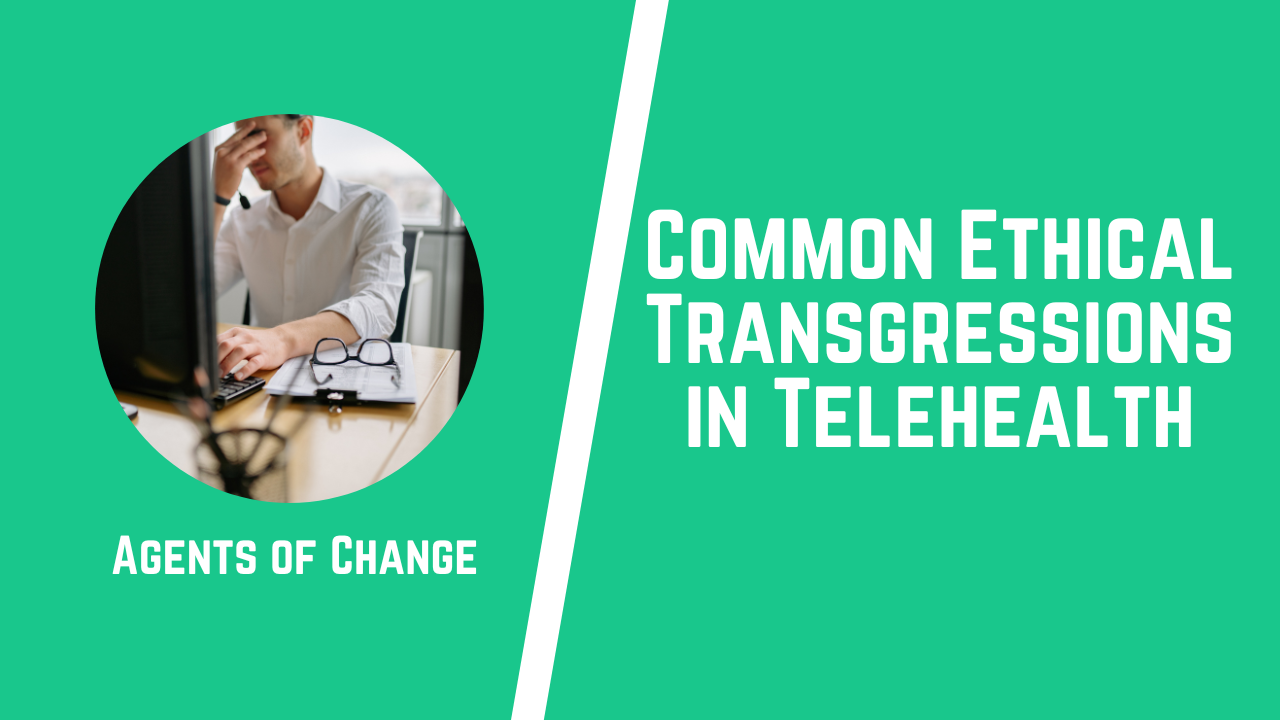
As telehealth becomes a normal part of clinical practice, ethical standards must adapt to new technologies and remote environments. While the core principles of professional ethics remain the same, the way they are applied in virtual settings can create unexpected challenges. Many clinicians enter telehealth with strong ethical foundations, yet small oversights with technology, communication, or documentation can lead to serious issues.

Understanding the common ethical transgressions in telehealth and how to avoid them helps providers recognize risks before they become problems. By learning how these situations arise and what warning signs to watch for, clinicians can strengthen ethical decision-making in digital practice.

Below are some of the most frequent ethical issues in telehealth, along with practical strategies and real-world scenarios that illustrate how they can occur.


1. Breaches of Client Confidentiality

Confidentiality is one of the most fundamental ethical obligations in healthcare. In telehealth settings, maintaining privacy can be more complicated because sessions occur outside controlled clinical environments.

How to Identify the Risk

Confidentiality risks often appear when:

  • Sessions occur in locations where others may overhear conversations

  • Unsecured internet connections are used

  • Devices lack password protection

  • Telehealth platforms are not compliant with privacy regulations

  • Sessions are recorded without proper consent

Even minor details can create vulnerabilities. For example, a therapist conducting sessions from a home office may not realize that voices carry through walls or that family members can hear parts of the conversation.

Scenario

A counselor schedules a telehealth session during a busy afternoon at home. While wearing headphones, the counselor assumes the conversation is private. Meanwhile, a family member walks through the hallway and overhears the client discussing a traumatic experience. The client later becomes concerned that someone else may have heard sensitive information.

How to Avoid This Transgression

Providers can reduce confidentiality risks by following a few key practices:

  • Conduct sessions in a fully private space

  • Use HIPAA-compliant telehealth platforms

  • Protect devices with strong passwords

  • Avoid public Wi-Fi when possible

  • Begin sessions by confirming the client’s privacy

A simple opening question can help prevent issues:

“Are you in a private space where you feel comfortable speaking today?”


2. Inadequate Telehealth Informed Consent

Many clinicians obtain informed consent for treatment, but forget that telehealth requires additional consent procedures. Clients need to understand the unique risks associated with virtual care.

How to Identify the Risk

Warning signs of inadequate consent include:

  • Clients are unsure about how telehealth platforms work

  • Lack of written telehealth policies

  • No discussion of potential technology failures

  • Clients unaware of privacy limitations

Without proper consent, clients may not fully understand how their information is transmitted or stored.

Scenario

A therapist begins virtual sessions with a new client but never provides a telehealth-specific consent form. During a session, the connection fails, and the client becomes distressed, unsure what to do next. The therapist had never explained backup communication procedures.

How to Avoid This Transgression

Clinicians should create a comprehensive telehealth consent process that covers:

  • Technology risks

  • Privacy considerations

  • Communication methods

  • Emergency procedures

  • Policies regarding recording sessions

Reviewing the consent document together ensures clients understand what to expect.


3. Practicing Outside Licensed Jurisdictions

Licensure laws typically require clinicians to be licensed in the state where the client is physically located during the session. Telehealth makes this rule easier to overlook.

How to Identify the Risk

This ethical issue often occurs when:

  • Clients travel temporarily

  • Providers assume the client is still in their usual location

  • Location verification is not part of the session protocol

Even a single session conducted across state lines may violate licensing regulations.

Scenario

A therapist begins a telehealth session with a long-term client. During a casual conversation, the client mentions visiting relatives in another state. The therapist continues the session without realizing that providing services in that state requires a separate license.

How to Avoid This Transgression

Providers should build location verification into their routine.

Recommended steps include:

  • Ask clients to confirm their physical location at the start of each session

  • Document the location in clinical notes

  • Stay informed about interstate licensing agreements

  • Review regulatory guidelines regularly

Many clinicians stay updated through continuing education. For example, Agents of Change Continuing Education offers more than 150 ASWB and NBCC-approved courses that help therapists, social workers, and counselors remain informed about telehealth regulations and professional ethics.


4. Weak Technology Security

Technology security plays a major role in ethical telehealth practice. Even small gaps in digital security can expose sensitive client information.

How to Identify the Risk

Technology vulnerabilities may include:

  • Using free video platforms without encryption

  • Storing client files on personal laptops

  • Sharing login credentials

  • Failing to update software or security patches

If devices or software are not secure, unauthorized access becomes possible.

Scenario

A clinician conducts sessions using a personal laptop that automatically stores video meeting data. The computer is later stolen from a coffee shop, potentially exposing confidential client information.

How to Avoid This Transgression

Strong digital security habits help prevent data breaches.

Key strategies include:

  • Using encrypted telehealth platforms

  • Enabling two-factor authentication

  • Keeping software and operating systems updated

  • Encrypting stored client records

  • Avoiding personal device storage when possible

Technology policies should be reviewed regularly to ensure compliance with privacy regulations.


5. Blurred Professional Boundaries

Telehealth can unintentionally create a more casual atmosphere between clinicians and clients. While this may feel comfortable, professional boundaries still need to be maintained.

How to Identify the Risk

Boundary issues often arise when:

  • Clients contact providers through personal social media

  • Communication occurs through informal texting

  • Providers share excessive personal details during sessions

  • Work hours become unclear

These shifts can slowly change the therapeutic relationship.

Scenario

A client sends a friend request to a therapist on social media after several successful telehealth sessions. The therapist accepts the request, believing it will strengthen rapport. Over time, the client begins commenting on the therapist’s personal posts and messaging outside of scheduled sessions.

The therapeutic boundaries become blurred, making professional objectivity more difficult.

How to Avoid This Transgression

Maintaining boundaries in telehealth requires clear expectations.

Clinicians should:

  • Establish professional communication channels

  • Avoid connecting with clients on personal social media

  • Define response times for messages

  • Document off-session interactions

Consistent policies help protect both the provider and the client.


6. Lack of Emergency Planning

In traditional settings, clinicians can respond quickly if a client experiences a crisis. Telehealth removes the provider from the client’s physical environment, which can complicate emergency responses.

How to Identify the Risk

Emergency preparedness may be inadequate if:

  • The clinician does not know the client’s physical location

  • Emergency contact information is missing

  • Crisis procedures have not been discussed

  • Local emergency resources are unknown

Without preparation, providers may feel unsure how to respond during a crisis.

Scenario

During a telehealth session, a client expresses suicidal thoughts. The therapist realizes they do not know the client’s current location because the client recently moved. Without this information, contacting local emergency services becomes difficult.

How to Avoid This Transgression

Clinicians should prepare for emergencies before they occur.

Recommended steps include:

  • Collect emergency contact information during intake

  • Confirm the client’s location at every session

  • Research crisis resources near the client

  • Create a clear emergency response protocol

Planning ahead ensures clinicians can respond quickly and ethically if a crisis occurs.


Recognizing Ethical Risks Early

Many ethical violations do not happen intentionally. Often, they develop gradually through small oversights or unclear procedures.

Clinicians can reduce risk by regularly asking themselves questions such as:

  • Is this communication happening through a secure channel?

  • Am I following licensing regulations for this client’s location?

  • Would this interaction maintain professional boundaries if reviewed later?

  • Have I documented the session appropriately?

Continuous education, ethical reflection, and clear protocols ensure that telehealth remains safe, effective, and trustworthy for both clinicians and the people they serve.

Agents of Change has helped hundreds of thousands of Social Workers, Counselors, and Mental Health Professionals with Continuing Education, learn more here about Agents of Change and claim your 7.5 free CEUs!

3) The Role of Continuing Education in Ethical Telehealth Practice

Telehealth technology evolves quickly, and so do the ethical standards that guide its use. Laws change, digital platforms update their privacy features, and new clinical situations appear that were not addressed in traditional training. Because of this, continuing education plays a crucial role in helping clinicians maintain ethical and legally compliant telehealth practices.

While foundational graduate programs introduce ethical principles, they cannot fully prepare professionals for the rapidly shifting digital landscape. Therapists, counselors, and social workers who provide virtual care benefit from ongoing training that keeps them informed about privacy laws, digital communication standards, and emerging clinical challenges. Continuing education bridges the gap between traditional ethical training and modern realities of telehealth.

Below are several ways continuing education supports ethical telehealth practice and helps clinicians avoid common pitfalls.


Staying Current With Telehealth Laws and Regulations

Telehealth regulations vary across states and professional licensing boards. These rules frequently change as technology expands and healthcare systems adapt to new forms of service delivery. Without regular updates, clinicians may unknowingly violate licensing requirements or privacy regulations.

Continuing education programs help providers stay informed about:

  • Interstate licensure requirements

  • Telehealth practice standards issued by licensing boards

  • Documentation requirements for virtual sessions

  • Changes in HIPAA and digital privacy regulations

  • Ethical guidelines related to remote care

Courses that focus on regulatory updates allow clinicians to adjust their practice before issues arise. This proactive approach helps reduce legal risks while strengthening ethical decision-making.

For many professionals, structured CEU programs provide the most reliable way to stay updated. Agents of Change Continuing Education, for example, offers more than 150 ASWB and NBCC-approved courses designed for therapists, counselors, and social workers who need to maintain licensure and stay informed about evolving practice standards.


Strengthening Ethical Decision-Making Skills

Telehealth often presents complex situations that require careful ethical judgment. While ethical codes provide general guidance, real-world scenarios rarely fit neatly into simple categories.

Continuing education helps clinicians develop stronger ethical reasoning skills by exploring case studies and practical scenarios.

Common topics covered in telehealth ethics training include:

  • Maintaining confidentiality in virtual environments

  • Managing digital communication boundaries

  • Navigating telehealth emergencies and crisis situations

  • Handling informed consent in remote care

  • Addressing dual relationships in online settings

Through guided discussions and case-based learning, clinicians learn how to evaluate ethical dilemmas and make informed decisions that prioritize client safety and professional integrity.


Improving Technology Competence and Digital Security

Ethical telehealth practice depends heavily on secure and reliable technology. However, many clinicians were trained before telehealth platforms became widely used, which means technology competence cannot be assumed.

Continuing education can help professionals strengthen their digital skills in areas such as:

  • Using HIPAA-compliant telehealth platforms

  • Protecting client data with encryption and secure storage

  • Managing digital documentation systems

  • Identifying potential cybersecurity risks

  • Responding to technology failures during sessions

Developing these technical competencies reduces the likelihood of privacy breaches and protects confidential client information.


Creating Clear Policies for Virtual Practice

Another benefit of continuing education is that it helps clinicians develop structured policies for telehealth services. Clear policies reduce confusion and ensure consistent ethical standards.

Training programs often guide clinicians in creating protocols such as:

Telehealth communication policies

  • Acceptable messaging channels

  • Response time expectations

  • Procedures for missed sessions

Privacy protection procedures

  • Secure internet requirements

  • Device security guidelines

  • Confidential workspace standards

Emergency response protocols

  • Collecting client location information

  • Identifying local crisis resources

  • Contacting emergency services if needed

Establishing clear policies helps clinicians create a predictable and safe telehealth environment for clients.


Learning From Peer Experiences and Professional Discussions

Continuing education also provides opportunities for professionals to learn from one another. Ethical dilemmas in telehealth often involve situations that many clinicians have encountered before.

Live continuing education events create space for meaningful discussion about real-world challenges.

Benefits of peer learning include:

  • Hearing how other clinicians address ethical dilemmas

  • Sharing strategies for maintaining boundaries in virtual settings

  • Learning about emerging telehealth trends

  • Building professional support networks


Affordable and Accessible Professional Development

Cost and scheduling barriers sometimes prevent clinicians from accessing high-quality continuing education. Telehealth professionals often juggle demanding caseloads, leaving limited time for training.

Accessible CEU platforms make ongoing learning more manageable.

For example, Agents of Change Continuing Education offers one of the most affordable CEU options available. Their $99 per year subscription provides:

  • Access to a growing library of 150 ASWB and NBCC-approved courses

  • 15 or more live continuing education events each year, which averages more than one per month

  • Flexible online learning designed for busy professionals

Affordable access encourages clinicians to engage in continuous learning rather than waiting until license renewal deadlines approach.


Building Confidence in Ethical Telehealth Practice

Ultimately, continuing education helps clinicians feel more confident in their ability to deliver ethical telehealth services. When professionals understand the rules, technological tools, and ethical frameworks guiding virtual care, they can focus more fully on supporting their clients.

Confidence in ethical practice leads to:

  • Better client trust

  • Reduced risk of ethical violations

  • Stronger professional reputation

  • Improved quality of care

Telehealth will likely remain a permanent part of modern healthcare. Continuing education ensures that clinicians remain prepared to navigate the ethical challenges that come with providing care in digital environments.

4) Practical Strategies for Ethical Telehealth Practice

Understanding ethical guidelines is essential, but applying them consistently in day-to-day telehealth sessions is what truly protects clients and clinicians. Ethical telehealth practice does not always require complex systems or advanced technology. In many cases, simple habits and clear routines can prevent common ethical issues before they arise.

Clinicians who incorporate practical safeguards into their workflow create a more secure and predictable environment for both themselves and their clients. The following strategies are straightforward steps that professionals can begin using immediately to strengthen ethical telehealth practice.


Start Every Session by Confirming the Client’s Location

Telehealth regulations often depend on the clientis physical location during the session. Because clients may travel or move between sessions, confirming their location should become a routine part of each appointment.

A simple check at the beginning of the session can prevent licensing issues and help prepare for emergencies.

What to do:

  • Ask the client where they are physically located at the start of the session

  • Document the location in the clinical note

  • Confirm whether the client is in a private and safe space

Example question clinicians can ask:

“Before we start, can you confirm where you are joining the session from today?”

This small step protects both the clinician and the client if a crisis situation occurs.


Use a Dedicated, Private Workspace

One of the most common telehealth risks involves accidental confidentiality breaches. Sessions conducted in shared or noisy environments may expose private conversations.

Clinicians can greatly reduce this risk by creating a consistent and private workspace for telehealth sessions.

Simple ways to improve privacy:

  • Use a room with a door that can be closed

  • Wear headphones during sessions

  • Place a “do not disturb” sign outside the workspace

  • Use a neutral background that does not reveal personal information

Even clinicians working from home can create professional and confidential environments with a few adjustments.


Choose Secure Technology Platforms

Technology plays a major role in telehealth ethics. Using the right platforms helps protect client data and maintain compliance with privacy regulations.

Clinicians should evaluate their telehealth tools regularly to ensure they meet security standards.

Technology safety checklist:

  • Use a HIPAA-compliant telehealth platform

  • Enable two-factor authentication for accounts

  • Keep software and devices updated

  • Use password-protected devices

  • Avoid public WiFi when conducting sessions

Secure technology reduces the risk of unauthorized access to sensitive client information.


Establish Clear Communication Boundaries

Telehealth often introduces new communication channels such as text messaging, email, or patient portals. Without clear boundaries, these communication methods can quickly become overwhelming or ethically complicated.

Clients benefit from knowing exactly how and when communication will occur.

Helpful communication guidelines include:

  • Define acceptable communication methods

  • Set response time expectations

  • Clarify whether texting is allowed

  • Explain how to handle emergencies outside session hours

When expectations are clear from the beginning, misunderstandings become far less likely.


Review Telehealth Informed Consent Regularly

Many clinicians obtain telehealth consent during the intake process and never revisit it. However, reviewing these policies periodically ensures that clients continue to understand how telehealth services operate.

Key topics that should be addressed in telehealth consent include:

  • Privacy risks related to technology

  • Potential technical interruptions

  • Backup communication plans

  • Emergency procedures

  • Policies on recording sessions

Revisiting these topics helps reinforce transparency and ethical accountability.


Document Telehealth Details in Clinical Notes

Accurate documentation is an important safeguard in ethical telehealth practice. Notes should include telehealth-specific details that demonstrate compliance with professional guidelines.

Clinicians should consider documenting:

  • The telehealth platform used

  • Client’s location during the session

  • Any technical issues that occurred

  • Emergency planning discussions, if relevant

Good documentation protects clinicians and provides a clear record of care.


Maintain Professional Boundaries Online

Digital communication can sometimes blur the line between personal and professional relationships. Clinicians should maintain clear boundaries across all online interactions.

Strategies for maintaining boundaries include:

  • Avoid connecting with clients on personal social media accounts

  • Use professional communication platforms instead of personal messaging apps

  • Avoid sharing personal details unrelated to treatment

  • Keep telehealth sessions structured and focused on clinical goals

Maintaining these boundaries preserves the integrity of the therapeutic relationship.


Create a Simple Emergency Plan for Every Client

Even in telehealth, clinicians must be prepared for crisis situations. Developing a clear emergency plan for each client ensures that help can be accessed quickly if needed.

A basic telehealth emergency plan should include:

  • The client’s current address or location

  • Emergency contact information

  • Local crisis hotline numbers

  • Instructions for contacting emergency services if necessary

Discussing this plan early in the therapeutic relationship allows clinicians to respond quickly and confidently during emergencies.


Schedule Time for Ongoing Professional Learning

Ethical telehealth practice improves when clinicians stay informed about new technology, evolving regulations, and emerging ethical challenges.

Continuing education helps professionals refine their skills and avoid common ethical missteps. Platforms like Agents of Change Continuing Education provide more than 150 ASWB and NBCC-approved courses for therapists, counselors, and social workers who want to strengthen their clinical and ethical knowledge.

Regular learning opportunities keep clinicians informed about best practices and help them adapt to the evolving landscape of virtual care.


Build Ethical Habits Into Daily Practice

Ethical telehealth practice does not depend on a single rule or policy. Instead, it grows from consistent habits that clinicians build into their workflow.

By confirming client location, protecting privacy, using secure technology, maintaining boundaries, and continuing professional education, clinicians create a telehealth environment that prioritizes safety, trust, and professional integrity.

Consistent small actions can help prevent many ethical issues that arise in digital care. Over time, these practices become second nature and strengthen the quality of care clinicians provide through telehealth.

5) FAQs – Common Ethical Transgressions in Telehealth and How to Avoid Them

Q: What are the most common ethical transgressions in telehealth?

A: Several ethical issues appear frequently in telehealth practice, often because digital care environments create new challenges for clinicians. Some of the most common concerns include breaches of confidentiality, practicing outside licensed jurisdictions, inadequate informed consent for telehealth, weak technology security, and blurred professional boundaries.

For example, conducting sessions in non-private locations, using unsecured video platforms, or communicating with clients through personal messaging apps can create ethical risks. Recognizing these situations early is an important step in understanding Common ethical transgressions in telehealth and how to avoid them, allowing clinicians to make adjustments that protect both clients and their professional licenses.

Q: How can clinicians protect client confidentiality during telehealth sessions?

A: Protecting confidentiality in telehealth requires both technological safeguards and thoughtful clinical practices. Clinicians should use secure, HIPAA-compliant video platforms and ensure their devices are password-protected and regularly updated. Sessions should be conducted in private spaces where conversations cannot be overheard, and providers may choose to use headphones to further reduce risk.

It is also helpful to begin each session by confirming that the client is in a private and comfortable location. Additionally, clinicians should clearly explain privacy limitations during the informed consent process so clients understand how their information is protected in virtual settings.

Q: Why is continuing education important for ethical telehealth practice?

A: Telehealth regulations, technology standards, and ethical guidelines continue to evolve as virtual care becomes more widespread. Continuing education helps clinicians stay informed about these changes and ensures they are practicing in ways that meet current legal and ethical standards. Through professional development courses, clinicians can learn about updated licensing regulations, telehealth documentation practices, digital privacy protections, and strategies for maintaining professional boundaries online.

Programs such as Agents of Change Continuing Education offer more than 150 ASWB and NBCC-approved courses and host over 15 live continuing education events each year, giving therapists, counselors, and social workers regular opportunities to strengthen their ethical telehealth practice while earning the CEUs required to maintain their licenses.

6) Conclusion

Telehealth has created new opportunities for healthcare professionals to reach clients who might otherwise struggle to access care. Virtual sessions offer flexibility, convenience, and expanded access to mental health services. However, providing care through digital platforms introduces ethical responsibilities that require careful attention. By understanding Common ethical transgressions in telehealth and how to avoid them, clinicians can recognize potential risks and take proactive steps to protect client privacy, maintain professional boundaries, and follow licensing regulations.

Ethical telehealth practice depends on consistent habits and thoughtful preparation. Simple actions such as verifying a client’s location, using secure technology, creating clear communication policies, and maintaining thorough documentation can prevent many common ethical problems. When clinicians remain mindful of how technology affects confidentiality, consent, and boundaries, they create a virtual environment that supports safe and effective care. These practices strengthen trust between providers and clients while protecting the integrity of the therapeutic relationship.


► Learn more about the Agents of Change Continuing Education here: https://agentsofchangetraining.com

About the Instructor, Dr. Meagan Mitchell: Meagan is a Licensed Clinical Social Worker and has been providing Continuing Education for Social Workers, Counselors, and Mental Health Professionals for more than 10 years. From all of this experience helping others, she created Agents of Change Continuing Education to help Social Workers, Counselors, and Mental Health Professionals stay up-to-date on the latest trends, research, and techniques.

#socialwork #socialworker #socialwork #socialworklicense #socialworklicensing #continuinged #continuingeducation #ce #socialworkce #freecesocialwork #lmsw #lcsw #counselor #NBCC #ASWB #ACE

Disclaimer: This content has been made available for informational and educational purposes only. This content is not intended to be a substitute for professional medical or clinical advice, diagnosis, or treatment

Note: Certain images used in this post were generated with the help of artificial intelligence.

Share:

Discover more from Agents of Change

Subscribe now to keep reading and get access to the full archive.

Continue reading

SOCIAL WORK MONTH SPECIAL: Unlimited CE + Live Events for $49. Spots are limited!