From Passive to Powerful: Methods to Involve Clients/Client Systems in Intervention Planning
From Passive to Powerful: Methods to Involve Clients/Client Systems in Intervention Planning
Intervention planning works best when it feels like a shared process rather than a one-sided decision. Yet, in many settings, clients are still placed in a passive role, expected to follow plans they had little part in creating. That disconnect can lead to low motivation, limited follow-through, and outcomes that fall short of their potential. When clients and their support systems are genuinely involved, the entire dynamic changes in a meaningful way.

There is something powerful about being heard and included. Clients bring lived experience, personal insight, and a deep understanding of their own needs that no assessment tool can fully capture. By using thoughtful and intentional methods to involve clients or client systems in intervention planning, professionals can build stronger relationships and develop plans that actually reflect the client’s priorities. This approach encourages trust, strengthens engagement, and creates a sense of ownership that drives real progress.

Of course, meaningful involvement does not happen automatically. It requires skill, flexibility, and a willingness to shift away from traditional top-down models. Whether through collaborative goal setting, shared decision-making, or ongoing feedback, there are many ways to invite clients into the process in ways that feel natural and respectful. This discussion explores practical strategies that help transform intervention planning into a collaborative and empowering experience.

Did you know? Agents of Change Continuing Education offers Unlimited Access to 150+ ASWB and NBCC-approved online CE courses and 15+ Live Events per year for one low annual fee to meet your state’s requirements for Continuing Education credits and level up your career.

We’ve helped hundreds of thousands of Social Workers, Counselors, and Mental Health Professionals with Continuing Education, learn more here about Agents of Change and claim your 7.5 free CEUs.

1) Why Client Involvement Matters More Than Ever

Client involvement isn’t just a best practice anymore. It’s an expectation, and for good reason. Across healthcare, mental health, and social services, there’s been a clear shift toward person-centered care. People want to be active participants in decisions that affect their lives, and honestly, they should be. When clients are included in intervention planning, the process becomes more relevant, more respectful, and far more effective.

a therapist working closely with a client on a plan in a warm office environment

One of the biggest reasons this matters today is the growing recognition that outcomes improve when clients feel ownership over their goals. Think about it. If someone helps shape a plan that reflects their values, priorities, and real-life circumstances, they’re much more likely to stay engaged. On the other hand, when plans feel imposed or disconnected, motivation tends to drop off quickly. Engagement isn’t something that can be forced. It develops through collaboration, trust, and consistent inclusion.

There’s also a broader cultural shift happening. Clients are more informed than ever, with access to information, resources, and communities that shape how they understand their needs. They’re asking questions, exploring options, and expecting transparency. This means professionals have to adapt by creating space for dialogue rather than simply providing direction. Methods to involve clients or client systems in intervention planning are essential in meeting these expectations and building meaningful partnerships.

Another key factor is the role of client systems. Families, caregivers, and community supports often influence outcomes in powerful ways. Ignoring these systems can limit progress, while involving them thoughtfully can strengthen accountability and support. Of course, this must always be done with clear consent and attention to boundaries, but when handled well, it can make interventions more sustainable and grounded in everyday life.

Finally, there’s something deeply human at the center of all this. People want to feel seen, respected, and understood. When professionals take the time to include clients in planning, it sends a clear message that their voice matters. That alone can shift the tone of the entire process. In today’s evolving landscape, client involvement is not just important. It’s essential for creating meaningful, lasting change.

Learn more about Agents of Change Continuing Education. We’ve helped hundreds of thousands of Social Workers, Counselors, and Mental Health Professionals with their online continuing education and CEUs, and we want you to be next!

2) Core Principles Behind Effective Engagement

Engaging clients in intervention planning doesn’t happen by accident. It’s built on a set of core principles that guide how professionals communicate, collaborate, and create space for meaningful participation. Without these foundations, even the most well-intentioned strategies can feel forced or ineffective. When these principles are consistently applied, though, engagement becomes more natural, more authentic, and far more impactful.

a diverse therapist working closely with a client on a plan in a warm office environment

1. Collaboration Over Control

At the heart of effective engagement is a shift in mindset. Instead of leading with authority, professionals work alongside clients as partners. This means inviting input, respecting preferences, and making decisions together whenever possible. Clients are far more likely to invest in a plan when they feel like co-creators rather than passive recipients.

2. Transparency and Open Communication

Clients deserve clear, honest information about their options, progress, and challenges. Being transparent builds trust and reduces uncertainty. When professionals explain the reasoning behind recommendations and openly discuss alternatives, clients feel more confident and empowered to participate in decision-making.

3. Respect for Individual Experience

No two clients are the same, and their experiences shape how they view challenges and solutions. Effective engagement requires acknowledging and valuing those lived experiences. This includes being mindful of cultural, social, and personal factors that influence each client’s perspective.

4. Strengths-Based Focus

It’s easy to focus on problems, but meaningful engagement grows from recognizing strengths. Highlighting what clients are already doing well helps build confidence and shifts the tone from “fixing” to “building.” This approach encourages clients to see themselves as capable contributors to their own progress.

5. Flexibility and Responsiveness

Life changes, and intervention plans should too. Effective engagement means staying open to adjustments based on client feedback, new challenges, or shifting priorities. Being flexible shows clients that their input has real influence over the direction of their care.

6. Consistent Feedback and Reflection

Engagement is an ongoing process, not a one-time conversation. Regularly checking in with clients about what’s working and what isn’t keeps the process dynamic and responsive. It also reinforces that their voice continues to matter throughout the journey.


Summary of Key Core Principles

To bring it all together, effective client engagement in intervention planning is grounded in a few essential ideas:

  • Partnership: Work with clients, not over them
  • Honesty: Share information openly and clearly
  • Respect: Value each client’s unique perspective and background
  • Empowerment: Focus on strengths and capabilities
  • Adaptability: Stay flexible as needs evolve
  • Ongoing Dialogue: Keep communication active and meaningful

When these principles are consistently applied, engagement becomes more than a technique. It becomes a natural part of how care is delivered, creating stronger connections and better outcomes for everyone involved.

Agents of Change has helped hundreds of thousands of Social Workers, Counselors, and Mental Health Professionals with Continuing Education, learn more here about Agents of Change and claim your 7.5 free CEUs!

3) Methods to Involve Clients/Client Systems in Intervention Planning
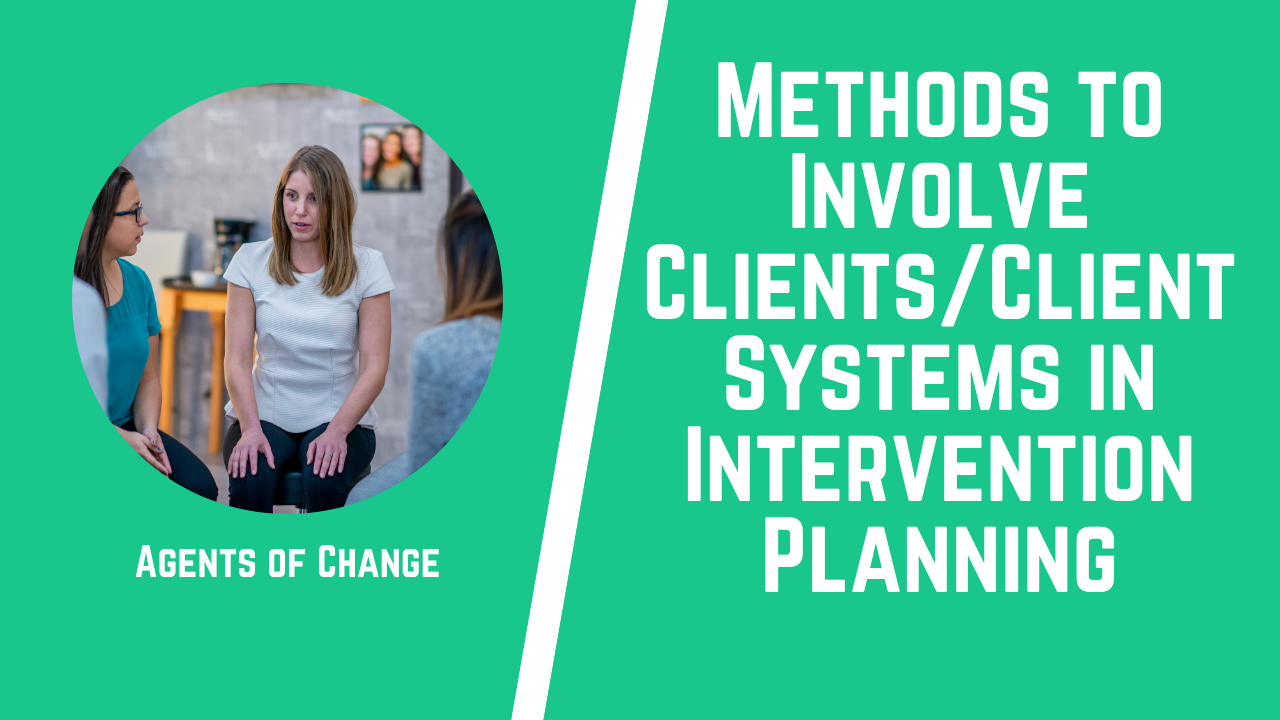
Turning engagement into action requires more than good intentions. It calls for clear, practical strategies that make it easy for clients and their systems to participate meaningfully. The following five methods are widely used, adaptable across settings, and grounded in real-world practice. Each one focuses on making clients active contributors rather than passive participants.

1. Collaborative Goal Setting

This is often the starting point for effective engagement. Instead of presenting pre-written goals, invite clients to define what success looks like for them.

How to use it:

  • Begin with open-ended questions like, “What would you like to see change in your life?”
  • Reflect their responses to ensure understanding
  • Work together to turn their ideas into specific, realistic goals
  • Revisit and adjust goals regularly based on progress or new insights

This method helps clients feel ownership over their plan, which naturally increases motivation and follow-through.


2. Shared Decision-Making

Shared decision-making ensures that clients are actively involved in choosing interventions rather than simply agreeing to them.

How to use it:

  • Clearly present available options in simple, understandable language
  • Discuss the benefits and potential challenges of each option
  • Ask for the client’s preferences and concerns
  • Make decisions together, documenting the client’s input

When clients understand their choices and have a voice in selecting them, they’re more likely to stay engaged and committed.


3. Inclusion of Client Systems

Clients rarely exist in isolation. Their families, caregivers, and support networks can play a crucial role in intervention planning.

How to use it:

  • Ask clients who they consider part of their support system
  • Obtain consent before involving others
  • Invite key supports to participate in planning sessions when appropriate
  • Clarify roles so everyone understands how they can contribute

This approach can strengthen accountability and provide additional layers of support, especially when systems are aligned with the client’s goals.


4. Strengths-Based Mapping

Focusing on strengths helps shift the narrative from problems to possibilities. It encourages clients to recognize their own abilities and resources.

How to use it:

  • Ask clients about past successes and coping strategies
  • Identify personal strengths, skills, and external supports
  • Create a visual or written map of these strengths
  • Integrate these strengths into intervention strategies

By building on what’s already working, clients feel more confident and capable of making progress.


5. Feedback-Informed Planning

Engagement doesn’t stop once a plan is created. Ongoing feedback keeps the process responsive and client-centered.

How to use it:

  • Check in regularly with questions like, “How is this plan working for you?”
  • Use simple rating scales or informal discussions to gather feedback
  • Adjust interventions based on client input
  • Encourage honesty by creating a safe, non-judgmental space

This method reinforces that the client’s voice continues to shape the process, not just at the beginning but throughout the entire intervention.


These five strategies highlight how involving clients/client systems in intervention planning can be both structured and flexible. When applied consistently, they transform planning into a collaborative experience that reflects the client’s real needs, values, and goals.

4) Common Barriers (And How to Work Through Them)

Even with the best intentions and solid strategies, engaging clients and their systems in intervention planning isn’t always smooth. Real-world practice comes with challenges, and sometimes those challenges can feel frustrating or even discouraging. The key is recognizing these barriers early and having practical ways to work through them without losing focus on collaboration.

1. Client Resistance or Low Motivation

Not every client walks into a session ready to participate. Some may feel unsure, overwhelmed, or even skeptical about the process.

How to work through it:

  • Focus on building rapport before jumping into planning
  • Use motivational interviewing techniques to explore ambivalence
  • Validate their feelings instead of pushing for immediate change
  • Start small with achievable goals to build momentum

Resistance often softens when clients feel understood rather than pressured.


2. Limited Time and High Caseloads

Time constraints are a reality in many settings. When sessions are short or caseloads are heavy, collaboration can feel rushed.

How to work through it:

  • Prioritize key decisions instead of trying to cover everything at once
  • Use structured tools or templates to guide conversations efficiently
  • Break planning into smaller steps across multiple sessions
  • Incorporate brief check-ins to maintain continuity

Even small moments of intentional collaboration can make a big difference.


3. Systemic and Organizational Constraints

Policies, documentation requirements, and rigid protocols can sometimes limit flexibility in intervention planning.

How to work through it:

  • Identify where flexibility exists within the system and use it fully
  • Advocate for client-centered approaches when possible
  • Document client input clearly to support collaborative decisions
  • Stay focused on what you can control within the structure

Working within systems can be challenging, but client-centered care can still thrive in small, consistent ways.


4. Communication Barriers

Differences in language, literacy levels, or communication styles can make it harder for clients to fully engage.

How to work through it:

  • Use plain, simple language instead of technical jargon
  • Incorporate visual tools or written summaries
  • Check for understanding by asking clients to reflect back what they heard
  • Use interpreters or culturally appropriate resources when needed

Clear communication creates a stronger foundation for meaningful participation.


5. Lack of Trust or Previous Negative Experiences

Some clients come in with past experiences where they felt unheard or dismissed. That history can make engagement difficult.

How to work through it:

  • Be consistent, reliable, and transparent in your interactions
  • Acknowledge past experiences without trying to “fix” them immediately
  • Give clients control over pacing and participation
  • Follow through on what you say to build credibility over time

Trust isn’t built in a single session. It develops gradually through respectful and dependable interactions.


Addressing these barriers doesn’t require perfection. It requires awareness, patience, and a willingness to adjust your approach. When professionals stay flexible and client-centered, even the most challenging situations can become opportunities for deeper engagement and stronger collaboration.

5) FAQs – Methods to Involve Clients/Client Systems in Intervention Planning

Q: What are the practical first steps for involving clients/client systems in intervention planning?

A: A great starting point is to focus on simple, consistent changes rather than trying to overhaul your entire approach at once. Begin by asking more open-ended questions, inviting clients to share their priorities, and reflecting their responses to ensure clarity.

From there, involve them in setting at least one goal during each session. You can also introduce small feedback check-ins, such as asking what felt helpful or what they would like to change moving forward. These early steps help build trust and create a foundation for deeper collaboration over time.

Q: How can I involve client systems without overstepping boundaries or violating confidentiality?

A: This is a common concern, and it’s important to approach it thoughtfully. Always start by asking the client who they consider part of their support system and whether they want those individuals involved. Obtain clear, informed consent before including anyone in the planning process.

Be transparent about what information will be shared and give the client control over those decisions. It’s also helpful to define roles during joint sessions so everyone understands their purpose. Respecting boundaries while encouraging collaboration allows you to involve client systems in a way that feels safe and supportive.

Q: What if clients agree to participate in planning, but don’t follow through afterward?

A: This situation can be frustrating, but it’s often a signal that something in the plan isn’t fully aligned with the client’s needs or readiness. Instead of assuming a lack of motivation, revisit the plan together. Ask questions like, “What got in the way?” or “Does this goal still feel important to you?”

Sometimes goals need to be adjusted to be more realistic or meaningful. Other times, additional support or resources may be needed. Ongoing feedback and flexibility are key parts of effective methods to involve clients/client systems in intervention planning, helping ensure that plans remain relevant and achievable.

6) Conclusion

Involving clients and their systems in intervention planning is no longer optional. It is a necessary shift toward more meaningful, effective, and respectful care. When clients are given a genuine voice in shaping their goals and strategies, they become active participants in their own progress. This sense of ownership can lead to stronger engagement, better follow-through, and outcomes that truly reflect what matters most to them.

The strategies discussed throughout this post show that collaboration does not have to be complicated. Small changes in how questions are asked, how decisions are made, and how feedback is gathered can transform the entire process. By applying thoughtful methods to involve clients or client systems in intervention planning, professionals can build stronger relationships and create plans that are both practical and empowering. Over time, these efforts contribute to a more responsive and client-centered approach to care.

————————————————————————————————————————————————

► Learn more about the Agents of Change Continuing Education here: https://agentsofchangetraining.com

About the Instructor, Dr. Meagan Mitchell: Meagan is a Licensed Clinical Social Worker and has been providing Continuing Education for Social Workers, Counselors, and Mental Health Professionals for more than 10 years. From all of this experience helping others, she created Agents of Change Continuing Education to help Social Workers, Counselors, and Mental Health Professionals stay up-to-date on the latest trends, research, and techniques.

#socialwork #socialworker #socialwork #socialworklicense #socialworklicensing #continuinged #continuingeducation #ce #socialworkce #freecesocialwork #lmsw #lcsw #counselor #NBCC #ASWB #ACE

Disclaimer: This content has been made available for informational and educational purposes only. This content is not intended to be a substitute for professional medical or clinical advice, diagnosis, or treatment

Note: Certain images used in this post were generated with the help of artificial intelligence.

Share:

Discover more from Agents of Change

Subscribe now to keep reading and get access to the full archive.

Continue reading