Getting the Most Out of Supervision: A Guide for New Therapists and Interns
Getting the Most Out of Supervision: A Guide for New Therapists and Interns
 

Beginning your career as a therapist or counselor is both thrilling and overwhelming. The first clients you see, the theories you try to apply, and the uncertainty that comes with inexperience can all feel like a heavy mix of excitement and pressure. In the middle of this learning curve, supervision becomes one of the most valuable supports you have. It provides a space where you can test ideas, explore questions, and gain feedback that helps shape your growth.

For many new therapists and interns, supervision may seem like something that happens automatically. You meet with your supervisor, discuss cases, and move on to the next week. But approaching it in such a passive way means you might miss out on the deeper opportunities supervision has to offer. This process is more than a requirement for licensure; it is a unique chance to sharpen your skills, build your confidence, and develop your professional identity.

The purpose of this guide is to help you approach supervision with clarity and intention. By preparing thoughtful questions, setting clear learning goals, and staying open to feedback, you can turn supervision into a rich, collaborative experience that accelerates your growth. Along the way, we will also highlight resources like continuing education courses that can support you beyond supervision sessions.

Did you know? Agents of Change Continuing Education offers Unlimited Access to 150+ ASWB and NBCC-approved CE courses for one low annual fee to meet your state’s requirements for Continuing Education credits and level up your career.

We’ve helped tens of thousands of Social Workers, Counselors, and Mental Health Professionals with Continuing Education, learn more here about Agents of Change and claim your 5 free CEUs.

1) Why Supervision Matters More Than You Think

Supervision often gets treated as just another box to check on the road to licensure. You meet, you talk, you get your hours signed off. But if that is all you see, you are missing the real heart of what supervision can provide. It is much more than a requirement. It is the place where you develop as a clinician, find your confidence, and start to understand what kind of therapist you want to become.

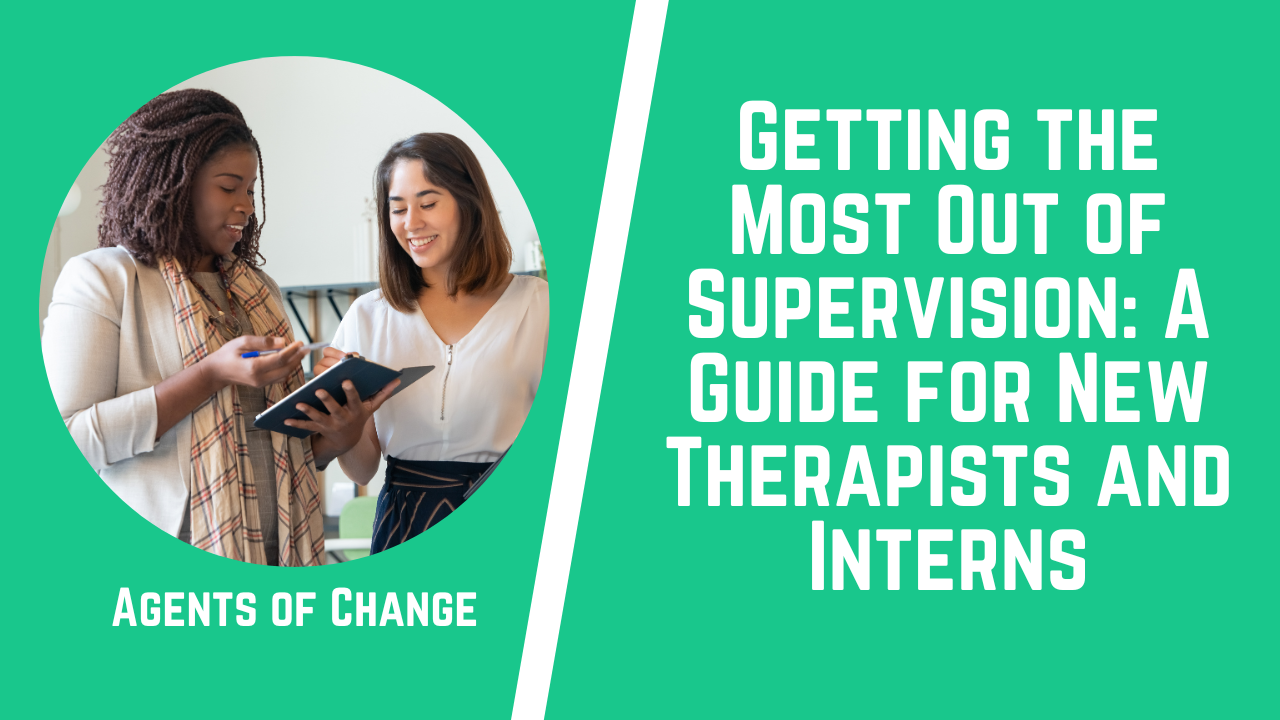
two diverse social workers talking together in a collaborative environment in an office.

A Space for Reflection

One of the greatest gifts of supervision is the chance to pause and reflect. Sessions with clients can move quickly, and it is easy to feel caught up in the moment. Supervision creates a slower, more thoughtful space where you can look back and ask important questions.

  • How did I respond to that client’s silence?

  • What feelings came up for me in the room?

  • Did I miss something important because I felt nervous?

By stepping out of the rush of client sessions, you can identify your patterns, habits, and blind spots. Reflection turns everyday experiences into building blocks for growth.

Guidance When You Feel Stuck

Every new therapist hits moments of uncertainty. Maybe a client’s story feels overwhelming, or you are unsure which intervention to use. In these situations, supervision provides the guidance you need to keep moving forward. Instead of sitting alone with doubts, you can bring them into the open and learn strategies from someone with more experience.

Supervisors help you untangle complex cases, think through ethical dilemmas, and discover new ways of understanding clients. Their perspective can shift you from feeling stuck to feeling supported.

Feedback That Shapes Your Clinical Voice

Supervision is where feedback becomes a tool instead of a threat. Honest input from your supervisor helps you recognize both your strengths and the areas that need attention. While it can feel uncomfortable at first, consistent feedback is what allows you to grow faster.

Some of the most valuable lessons you will learn early on might come from feedback, such as:

  • Encouragement to slow down and listen more deeply

  • Reminders to stay curious rather than rush toward solutions

  • Observations about your body language or tone with clients

Feedback may not always feel easy to hear, but over time, it becomes one of the most powerful resources in your professional journey.

A Foundation for Professional Identity

Supervision is not just about fixing immediate challenges. It is also about shaping your long-term identity as a therapist. The way you engage in supervision influences how you will continue learning throughout your career. If you practice being reflective, open to feedback, and curious now, you will carry those habits forward for years to come.

When you view supervision as more than a hurdle to overcome, it becomes the foundation of your professional growth. It is where your skills, confidence, and clinical voice all begin to take form.

Learn more about Agents of Change Continuing Education. We’ve helped tens of thousands of Social Workers, Counselors, and Mental Health Professionals with their continuing education, and we want you to be next!

2) Preparing for Supervision: What Should You Bring to the Table?

Supervision works best when you show up ready to engage. Walking in unprepared can make sessions feel flat, while intentional preparation creates richer discussions and clearer growth. Think of it like preparing for a client session. You would never go in without some sense of what you wanted to accomplish. The same goes for supervision.

two diverse social workers talking together in a collaborative environment in an office. One is younger and one is older.

Keep a Running List of Questions

During the week, jot down questions as they arise instead of relying on memory at the last minute. These can come from client interactions, paperwork, or even your own emotional responses. By bringing a list, you signal to your supervisor that you are engaged and intentional.

Examples of useful questions include:

  • How do I handle a client who avoids every personal topic?

  • What should I do when my gut tells me something, but I cannot find the right intervention?

  • Am I overstepping by sharing personal experiences with clients?

Having these questions ready ensures that supervision time stays focused on your most pressing needs.

Reflect on Your Reactions

Supervision is not just about your clients. It is also about you. Pay attention to your emotional responses during sessions and bring them into supervision. Did you feel nervous, frustrated, or unsure? These reactions can highlight areas where you are growing and where you may need support.

Reflection helps turn those uncomfortable moments into valuable material for discussion. It is often the personal reactions, rather than the technical details, that lead to the deepest learning.

Share Successes as Well as Struggles

It can be easy to focus only on what went wrong. While that is important, do not overlook the value of discussing what went well. Supervisors need to hear your successes too, so they can highlight strengths and help you build on them.

You might bring examples such as:

  • A client is finally opening up after weeks of resistance

  • Successfully managing a difficult silence in session

  • Feeling confident when navigating a sensitive ethical issue

Celebrating wins allows your supervisor to reinforce good practice, and it gives you the confidence to continue growing.

Gather Supporting Materials

Sometimes it helps to bring more than just your memory. Notes or treatment plans can give your supervisor a fuller picture of your work. Having concrete examples makes it easier for them to offer specific feedback rather than general advice.

Be Ready to Set Goals

Preparing for supervision also means thinking ahead about what you want to accomplish in the long run. Instead of waiting for your supervisor to set the direction, come with ideas. Whether it is improving risk assessments, learning a new intervention, or becoming more confident with a certain population, naming your goals helps guide the conversation.

Stay Open and Curious

Finally, bring a mindset of curiosity. Come willing to ask, learn, and even sit with uncertainty. Supervision is not about performing or proving yourself. It is about exploring the areas where you still need growth. Showing up curious makes the process richer and more rewarding.

Agents of Change has helped tens of thousands of Social Workers, Counselors, and Mental Health Professionals with Continuing Education, learn more here about Agents of Change and claim your 5 free CEUs!

3) The Art of Receiving Feedback Without Shutting Down

Feedback is one of the most valuable parts of supervision, yet it can also be the hardest to hear. When you are just starting out, every comment can feel personal, as if it reflects on your worth as a therapist. The truth is, feedback is not about who you are, but about how you practice. Learning how to receive it with openness rather than defensiveness can transform your growth.

Why Feedback Feels So Uncomfortable

It helps to first understand why feedback can sting. For many new therapists, their work feels closely tied to their identity. When a supervisor points out something that could be improved, it can feel like a critique of who you are, not just what you did. Recognizing this reaction is normal makes it easier to move past it.

Reframing Feedback as a Tool for Growth

Instead of seeing feedback as a threat, try to frame it as a resource. Every suggestion is an opportunity to sharpen your skills and become a more effective therapist. Even critical comments can be reframed as guidance toward improvement. This shift in mindset helps reduce defensiveness and encourages curiosity.

Helpful tip: After hearing feedback, ask yourself, How can this help me become more effective for my clients? That question shifts the focus away from self-judgment and toward learning.

Listening First, Responding Later

It is easy to jump into explanations or defenses the moment feedback lands. Instead, practice pausing. Give yourself time to listen fully, even if you disagree. Often, sitting with feedback for a little while allows you to see its value more clearly.

Helpful tips for listening well:

  • Take notes during feedback so you can review later.

  • Resist the urge to interrupt with justifications.

  • Repeat back what you heard to ensure you understood correctly.

Asking Clarifying Questions

If feedback feels vague, do not be afraid to ask for specifics. A comment like “You need to slow down with clients” may leave you wondering what that really means. Clarifying questions can turn a broad statement into actionable advice.

Examples of clarifying questions:

  • “Can you give me an example from my session notes where I rushed?”

  • “What would slowing down look like in practice with this client?”

  • “Are there specific phrases I could use that might help?”

Applying Feedback Quickly

Feedback has the most impact when you put it into practice right away. Waiting weeks before trying something new makes it harder to integrate. Even small adjustments in your next session can help you test out the suggestions and bring back observations to your supervisor.

Helpful tip: Choose one piece of feedback from each supervision session to focus on immediately. This makes growth feel manageable instead of overwhelming.

Developing Resilience Over Time

The more you practice receiving feedback, the less threatening it becomes. Over time, you will begin to welcome feedback as a natural part of learning. It becomes less about proving yourself and more about strengthening your clinical skills.

Think of it as building a muscle. At first, it feels uncomfortable and even painful. With repetition, it becomes second nature, and you start to see the results in your confidence and competence.

4) Supplementing Supervision With Outside Resources

Supervision is central to your growth, but it should not be the only place you learn. Bringing in outside resources can strengthen your skills, deepen your knowledge, and give you material to discuss with your supervisor.

Taking initiative beyond scheduled meetings not only accelerates your progress but also demonstrates to your supervisor that you are serious about becoming the best therapist you can be.

Continuing Education Opportunities

One of the most effective ways to supplement supervision is through continuing education. Quality CE courses provide structured learning on specific topics that may not come up often in supervision. For example, you might want additional training in trauma-informed care, cultural competence, or crisis intervention.

A great place to start is Agents of Change Continuing Education, which offers over 150 ASWB and NBCC-approved courses for Social Workers, Counselors, and Mental Health Professionals. These courses allow you to earn the CE credits required to keep your license active, while also filling in gaps in your clinical knowledge. Agents of Change also provides live continuing education events throughout the year, which give you the chance to engage with instructors and peers in real time.

Reading and Research

Books, articles, and research studies are excellent companions to supervision. When you encounter a topic that sparks curiosity in your sessions, take the time to read more about it. Not only does this expand your knowledge, but it also gives you material to bring into supervision for discussion.

For example, if you are working with a client who struggles with grief, you might read current research on grief counseling approaches. You can then ask your supervisor, “How might these strategies fit with what we are already doing in session?” This turns outside reading into a living part of your supervision process.

Peer Consultation and Support

Supervision is formal and structured, but peer consultation offers a different kind of learning. Talking with classmates, colleagues, or other interns can help you see different perspectives and strategies. Sometimes, hearing how someone else handled a similar challenge can spark ideas for your own work.

Peer discussions can cover:

  • Managing time in sessions
  • Balancing empathy with boundaries
  • Navigating organizational policies alongside client needs

When combined with supervision, peer consultation creates a richer learning environment.

Personal Reflection Practices

Not all growth comes from formal learning. Simple reflective practices, such as journaling after sessions or recording your own emotional reactions, can generate insights you bring to supervision. Reflection helps you process what you are experiencing, which makes your supervision conversations deeper and more meaningful.

Building a Habit of Lifelong Learning

The best therapists see professional growth as an ongoing process. Supervision is the starting point, but the habit of supplementing it with resources ensures you keep developing long after your licensure is complete. By investing in CE courses, reading, peer consultation, and reflection, you create a foundation for continuous growth that will serve you throughout your career.

5) FAQs – Getting the Most Out of Supervision: A Guide for New Therapists and Interns
Q: What should I do if I feel nervous sharing mistakes with my supervisor?

A: It is completely normal to feel nervous about admitting mistakes, especially when you are new. Many interns fear that being honest will make them look incompetent. In reality, supervisors expect you to make mistakes and often see transparency as a sign of maturity.

If you hide struggles, your supervisor cannot help you work through them, which can slow down your growth. Try reframing mistakes as learning opportunities. When you share openly, supervisors can provide strategies to prevent similar issues in the future, and you build trust in the relationship.

Q: How can I balance supervision with all the other demands of being an intern?

A: Internship often feels like a balancing act between client sessions, paperwork, supervision, and personal life. One way to manage this is to prepare for supervision throughout the week instead of saving everything until the last minute.

Keep a notebook or digital file where you jot down client challenges, personal reactions, or ethical questions as they arise. This reduces stress and makes supervision more efficient. It also helps to view supervision as a time-saver rather than an extra task. By addressing concerns quickly, you avoid letting problems grow larger or more time-consuming.

Q: Is it worth supplementing supervision with continuing education while I am still an intern?

A: Absolutely. While supervision gives you personalized guidance, continuing education fills in gaps with structured training. Programs like Agents of Change Continuing Education offer more than 150 ASWB and NBCC-approved courses, along with live events that run throughout the year.

These opportunities can give you a deeper understanding of specific issues you may encounter in practice, such as trauma, anxiety, or cultural considerations. Even if you are not yet required to complete CE credits, starting early builds the habit of ongoing professional development. It also provides you with practical tools to bring back into your supervision sessions for discussion.

6) Conclusion

Supervision is more than a checkpoint on the way to licensure. It is the place where you begin to shape your clinical voice, test your skills, and learn how to navigate the real challenges of working with clients. When approached with preparation and openness, supervision becomes a powerful tool for both personal and professional growth.

By coming with questions, setting clear goals, and embracing feedback, you can turn supervision into a collaborative and dynamic process. It is not about proving yourself to your supervisor, but about building habits that will carry you through your career. The more intentional you are in these early stages, the more confident and competent you will feel in your work with clients.

————————————————————————————————————————————————

► Learn more about the Agents of Change Continuing Education here: https://agentsofchangetraining.com

About the Instructor, Meagan Mitchell: Meagan is a Licensed Clinical Social Worker and has been providing Continuing Education for Social Workers, Counselors, and Mental Health Professionals for more than 8 years. From all of this experience helping others, she created Agents of Change Continuing Education to help Social Workers, Counselors, and Mental Health Professionals stay up-to-date on the latest trends, research, and techniques.

#socialwork #socialworker #socialwork #socialworklicense #socialworklicensing #continuinged #continuingeducation #ce #socialworkce #freecesocialwork #lmsw #lcsw #counselor #NBCC #ASWB #ACE

Disclaimer: This content has been made available for informational and educational purposes only. This content is not intended to be a substitute for professional medical or clinical advice, diagnosis, or treatment

Share:

Discover more from Agents of Change

Subscribe now to keep reading and get access to the full archive.

Continue reading