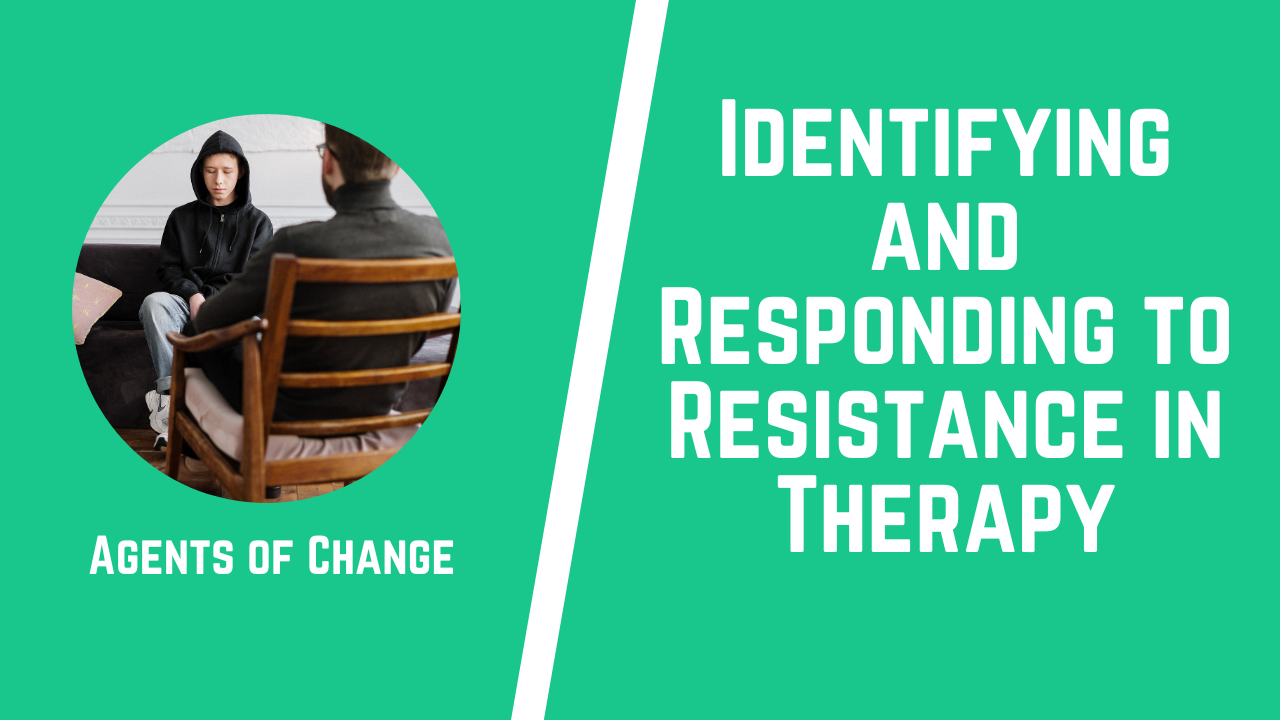
Identifying and Responding to Resistance in Therapy
Identifying and Responding to Resistance in Therapy
Therapy rarely moves in a straight line. Some sessions feel open and flowing, while others seem to stall without warning. A client might change the subject, laugh off a serious question, or leave long silences hanging in the room. These moments can feel confusing for therapists, especially when progress suddenly slows, but they often signal something meaningful happening beneath the surface.

Resistance in therapy is not a sign that a client does not care or is unwilling to grow. More often, it reflects a protective instinct that developed for good reasons. Clients learn over time how to avoid emotional pain, reduce vulnerability, and maintain a sense of control. When therapy begins to touch those guarded areas, resistance naturally appears as a way to keep them feeling safe.

Learning to identify and respond to resistance in therapy helps clinicians approach these moments with curiosity rather than frustration. Rather than seeing resistance as a barrier, therapists can recognize it as valuable information about what the client needs in that moment. With patience, awareness, and the right approach, these challenging moments often become turning points that deepen trust and move the work forward.

Did you know? Agents of Change Continuing Education offers Unlimited Access to 150+ ASWB and NBCC-approved CE courses and 12+ Live Events per year for one low annual fee to meet your state’s requirements for Continuing Education credits and level up your career.

We’ve helped hundreds of thousands of Social Workers, Counselors, and Mental Health Professionals with Continuing Education, learn more here about Agents of Change and claim your 5 free CEUs.

1) What Is Resistance in Therapy?

Resistance in therapy refers to any behavior, conscious or unconscious, that moves a client away from change, emotional exploration, or therapeutic progress. It can show up in subtle ways that are easy to overlook or in more obvious patterns that feel frustrating in the moment. Either way, resistance is rarely random. It usually serves a purpose that once helped the client feel safer, more in control, or less emotionally overwhelmed.

a therapy client displaying resistance in a therapy session in a warm calm room

Rather than viewing resistance as a problem to eliminate, therapists benefit from seeing it as communication. It signals that something in the therapeutic process feels threatening, vulnerable, unfamiliar, or emotionally intense for the client. When understood this way, resistance becomes meaningful data that can guide the direction of the work.

Resistance as a Protective Strategy

Most forms of resistance began as survival strategies long before the client entered therapy. Avoidance, deflection, intellectualizing, and emotional withdrawal often helped them cope with difficult environments, relationships, or experiences.

These strategies may have:

  • Reduced emotional pain

  • Prevented rejection or criticism

  • Helped them maintain control in chaotic situations

  • Protected them from shame or vulnerability

  • Allowed them to function during overwhelming times

In therapy, these same strategies can appear at exactly the moments when deeper work is about to begin.

Conscious vs Unconscious Resistance

Some clients are aware they are avoiding certain topics. Others have no idea it is happening.

Conscious resistance may sound like:

  • “I don’t want to talk about that”

  • “I’m not ready yet”

  • “That feels too uncomfortable”

Unconscious resistance may look like:

  • Forgetting important details

  • Repeatedly changing subjects

  • Showing up late or missing sessions

  • Agreeing in session but not following through outside of it

Both forms deserve curiosity rather than correction.

How Resistance Appears in Session

Resistance can be verbal, behavioral, emotional, or relational. It often shows up in patterns rather than one isolated moment.

Common signs include:

  • Long silences when difficult topics arise

  • Excessive joking when emotions surface

  • Talking in circles without emotional depth

  • Minimizing problems or experiences

  • Challenging the therapist’s observations

  • Shifting into storytelling instead of reflection

  • Repeated “I don’t know” responses

These behaviors are not signs of failure. They are signs that something important is being approached.

Resistance Is About Safety, Not Defiance

It can be tempting to interpret resistance as opposition, especially when progress feels slow. In reality, most clients are not trying to resist the therapist. They are trying to protect themselves from emotional discomfort, vulnerability, or fear.

When therapists reframe resistance as an attempt to maintain safety, their response naturally becomes more compassionate and effective.

Resistance Often Signals Where the Real Work Is

Ironically, the moments when resistance appears are often the moments closest to meaningful insight or change. The client may be nearing material that feels raw, painful, or deeply personal. Resistance, in this sense, points directly to the areas that require the most care and patience.

Understanding what resistance is, and why it happens, lays the foundation for responding to it in ways that strengthen trust rather than strain it.

Learn more about Agents of Change Continuing Education. We’ve helped hundreds of thousands of Social Workers, Counselors, and Mental Health Professionals with their continuing education, and we want you to be next!

2) Common Forms of Resistance Therapists Encounter

Resistance rarely announces itself clearly. It tends to show up in everyday session behaviors that can feel ordinary at first glance. Over time, patterns emerge. Recognizing these patterns helps therapists respond with curiosity instead of frustration.

a therapy client displaying resistance in a therapy session in a warm calm room

Below are some of the most common forms of resistance therapists can expect to encounter in clinical work.

Intellectualizing Instead of Feeling

Some clients talk about emotions rather than experiencing them. They explain, analyze, and describe situations with impressive clarity, yet there is little emotional connection to what they are saying.

You might notice:

  • Detailed explanations with flat affect

  • Psychological insight without emotional depth

  • Long discussions that feel distant from lived experience

This often protects clients from feeling overwhelmed by strong emotions.

Humor and Deflection

Humor appears right when the conversation starts to feel vulnerable. The client makes a joke, laughs something off, or shifts the tone to avoid emotional intensity.

Common signs include:

  • Laughing while describing painful experiences

  • Turning serious questions into light conversation

  • Making self-deprecating jokes when feeling exposed

Humor can be a shield that keeps discomfort at a safe distance.

Chronic “I Don’t Know”

Repeated “I don’t know” responses often signal discomfort rather than a lack of awareness. The question may feel too personal, confusing, or emotionally risky to answer.

Therapists may observe:

  • Immediate “I don’t know” to reflective questions

  • Minimal effort to explore the question

  • Body language that suggests tension or withdrawal

This response often indicates the client feels unsure how to approach what is being asked.

Topic Shifting

When conversations move away from vulnerable material, resistance is often present. The client may redirect the discussion toward safer subjects without realizing they are doing it.

Watch for:

  • Sudden changes in subject after emotional questions

  • Returning to surface-level details repeatedly

  • Avoiding follow-up questions about sensitive topics

Over-Agreeing Without Follow-Through

Some clients appear fully engaged in session. They nod, agree, and express motivation, but no change happens between sessions.

This can look like:

  • Consistent agreement with therapeutic suggestions

  • Homework or goals left unfinished

  • Statements of commitment without action

Agreement becomes a way to avoid deeper engagement while keeping the therapist satisfied.

Minimizing Problems

Clients downplay the severity of their experiences or emotions. They may describe serious events as if they were minor inconveniences.

You may hear:

  • “It wasn’t that bad”

  • “Other people have it worse”

  • “I’m probably overreacting”

Minimization helps reduce emotional exposure.

Challenging the Therapist

Some resistance shows up as questioning the therapist’s observations, interpretations, or methods. This can feel confrontational, but often reflects discomfort with where the conversation is heading.

Examples include:

  • Debating interpretations

  • Dismissing suggestions quickly

  • Expressing doubt about the usefulness of therapy

This can be a way to regain control when feeling vulnerable.

Missed Sessions and Chronic Tardiness

Avoidance can extend beyond the therapy room. Patterns of lateness, cancellations, or forgetting appointments often coincide with difficult therapeutic work.

Notice if:

  • Sessions are missed after emotionally intense meetings

  • Tardiness increases when certain topics arise

  • Rescheduling becomes frequent near breakthrough moments

Silence at Key Moments

Silence can be thoughtful processing, but it can also be resistance. When silence appears right after a meaningful question or emotional moment, it may signal discomfort.

Observing body language, breathing, and eye contact can help determine what the silence represents.

These forms of resistance are not signs that therapy is failing. They are signs that important emotional material is close to the surface. Recognizing these patterns allows therapists to respond with patience, curiosity, and care rather than pressure or frustration.

Agents of Change has helped hundreds of thousands of Social Workers, Counselors, and Mental Health Professionals with Continuing Education, learn more here about Agents of Change and claim your 5 free CEUs!

3) Identifying and Techniques for Responding to Resistance

Recognizing resistance is only half the task. The real skill lies in how therapists respond once they notice it. Resistance does not need to be confronted with force or corrected with logic. It responds best to patience, curiosity, and a steady therapeutic presence.

When therapists learn to identify resistance early and adjust their approach, sessions feel less strained and more collaborative. What once felt like a standstill becomes an opportunity to build safety and trust.

How to Identify Resistance in the Moment

Resistance often reveals itself through subtle shifts in tone, body language, and engagement. Paying attention to these cues helps therapists respond before the client feels overwhelmed.

Look for:

  • Sudden changes in posture or eye contact

  • A shift from emotional expression to storytelling

  • Shortened answers or repeated “I don’t know”

  • Nervous laughter or joking

  • Topic changes after reflective questions

  • Noticeable drops in energy or engagement

These signs often appear before the client is consciously aware of their own avoidance.

Pause Before Responding

When resistance appears, the instinct may be to push forward, clarify, or explain. Slowing down is usually more effective.

Consider:

  • Giving the client space instead of filling silence

  • Softening your tone and pacing

  • Letting the moment breathe before asking another question

This communicates safety rather than urgency.

Gently Name What You Notice

Bringing awareness to resistance without judgment can help clients recognize what is happening internally.

Examples:

  • “I notice we shifted topics when this came up. I wonder what that felt like?”

  • “It seems like this question might feel uncomfortable. Is that right?”

  • “I’m sensing this might be hard to talk about. We can take it slowly.”

This approach invites collaboration rather than defensiveness.

Validate the Protective Function

Clients often feel understood when therapists acknowledge that their avoidance makes sense.

You might say:

  • “Avoiding this has probably helped you cope for a long time.”

  • “It makes sense that this feels hard to approach.”

  • “Part of you might be trying to keep things manageable right now.”

Validation reduces shame and opens the door to exploration.

Explore the Fear Behind the Resistance

Once safety is established, gently explore what feels threatening.

Questions to consider:

  • “What do you think might happen if we talk more about this?”

  • “What feels risky about going there?”

  • “What would make this feel safer to discuss?”

This helps clients put words to what they are protecting.

Adjust the Pace of the Session

Resistance often means the emotional pace is too fast. Slowing down can restore comfort.

Helpful adjustments include:

  • Returning to grounding techniques

  • Focusing on present-moment experiences

  • Building rapport before returning to deeper material

  • Breaking large topics into smaller pieces

Reinforce Autonomy and Choice

Clients resist less when they feel in control of the process.

Remind them:

  • “We can go at a pace that feels right for you.”

  • “You get to decide what we talk about today.”

  • “There’s no pressure to go further than you’re ready for.”

A sense of choice reduces defensiveness.

Use Reflective Listening

Reflecting what the client is expressing, both verbally and nonverbally, can help them feel heard without pressure.

Examples:

  • “It sounds like part of you wants change, and part of you feels unsure.”

  • “You’re feeling pulled in two directions right now.”

  • “There’s a lot of hesitation here.”

This encourages self-awareness without confrontation.

Return to the Therapeutic Alliance

When resistance increases, strengthening the relationship often matters more than continuing the topic.

You can ask:

  • “How are you feeling about our work together lately?”

  • “Is there anything I’m doing that feels unhelpful?”

  • “Do you feel comfortable with the direction we’re going?”

Repairing and reinforcing trust often reduces resistance naturally.

4) Practical Checklist for Therapists

When resistance shows up in session, it can feel disorienting. Having a simple mental checklist helps therapists slow down, regroup, and respond thoughtfully instead of reacting on impulse. This checklist is not meant to be rigid. It is a guide that brings attention back to curiosity, safety, and the therapeutic relationship.

Use these questions as a quick internal reset when you sense resistance building.

Step 1: Pause and Observe

Before saying anything, take a breath and notice what is happening.

  • Has the client’s tone, posture, or energy changed?

  • Did the conversation shift right after a meaningful question?

  • Is silence feeling heavy rather than reflective?

  • Are you feeling impatient, confused, or eager to push forward?

Your own reaction is often the first clue that resistance is present.

Step 2: Consider What the Resistance Might Be Protecting

Ask yourself what purpose this behavior could be serving.

  • Is the client avoiding emotional overwhelm?

  • Could shame or fear be underneath this moment?

  • Does this topic threaten their sense of control?

  • Might they feel exposed, judged, or unsafe?

This reframes resistance as protection rather than opposition.

Step 3: Check Your Pace

Resistance often signals that therapy is moving faster than the client’s comfort level.

  • Am I asking questions that feel too direct right now?

  • Did we move into deep material without enough preparation?

  • Would slowing down help restore safety?

Step 4: Reconnect With Validation

Look for opportunities to normalize and validate the client’s experience.

  • Can I acknowledge how hard this feels?

  • Can I affirm that avoidance has likely helped them cope?

  • Have I communicated understanding before exploring further?

Step 5: Gently Bring Awareness to the Moment

If appropriate, name what you are noticing without judgment.

  • Can I reflect the shift in a curious way?

  • Can I invite them to share what this moment feels like?

Step 6: Reinforce Autonomy

Remind the client that they are in control of the process.

  • Have I made it clear they can set the pace?

  • Do they feel they have a choice in what we discuss?

Step 7: Return to the Alliance

When in doubt, prioritize the relationship over the content.

  • Does the client feel connected to me right now?

  • Is there tension that needs to be addressed?

  • Would a brief check-in about our work together help?

This checklist helps therapists stay grounded when resistance appears. Instead of feeling stuck or frustrated, clinicians can move through these steps and reorient toward safety, curiosity, and collaboration. Over time, this approach makes resistance feel less like a barrier and more like a guide for where care and patience are needed most.

5) FAQs – Identifying and Responding to Resistance in Therapy
Q: How can therapists tell the difference between resistance and a client simply needing more time to process?

A: This can be tricky because silence, hesitation, and slower responses can mean either thoughtful processing or active avoidance. The difference often shows up in the client’s body language, emotional presence, and engagement. When a client is processing, they usually remain emotionally connected to the conversation, even in silence.

When resistance is present, you may notice withdrawal, topic changes, nervous humor, or a drop in engagement. Gently checking in with observations like, “What’s happening for you right now?” can clarify whether the client is reflecting or protecting themselves from discomfort.

Q: Should therapists directly confront resistance when they notice it?

A: Direct confrontation rarely works and can actually strengthen defensiveness. A softer, more curious approach is far more effective. Naming what you notice without judgment helps clients feel understood rather than challenged. For example, saying, “I noticed we moved away from that topic pretty quickly. I’m wondering what that felt like for you?” invites reflection. This approach respects the client’s protective instincts while gently bringing awareness to the moment.

Q: What if resistance continues for many sessions and progress feels stalled?

A: Ongoing resistance often points to deeper issues related to trust, safety, or pacing in the therapeutic relationship. This is a signal to step back and focus less on content and more on the alliance. Exploring how the client feels about therapy, adjusting the pace, and reinforcing their autonomy can help. It may also be helpful for therapists to seek consultation, supervision, or continuing education to refine their approach. Persistent resistance is not a failure. It is an invitation to approach the work with more patience, flexibility, and curiosity.

6) Conclusion

Resistance is a natural and meaningful part of the therapeutic process. It signals that something important is being protected, often for very good reasons. When therapists learn to recognize resistance as communication rather than opposition, sessions begin to feel less frustrating and more informative. These moments offer valuable insight into the client’s fears, needs, and readiness for change.

By slowing down, validating the client’s experience, and responding with curiosity, therapists create an environment where defenses can gradually soften. Trust deepens when clients feel understood instead of pushed. Over time, what once appeared to be a barrier often becomes the doorway to deeper work, greater insight, and lasting progress.

————————————————————————————————————————————————

► Learn more about the Agents of Change Continuing Education here: https://agentsofchangetraining.com

About the Instructor, Dr. Meagan Mitchell: Meagan is a Licensed Clinical Social Worker and has been providing Continuing Education for Social Workers, Counselors, and Mental Health Professionals for more than 10 years. From all of this experience helping others, she created Agents of Change Continuing Education to help Social Workers, Counselors, and Mental Health Professionals stay up-to-date on the latest trends, research, and techniques.

#socialwork #socialworker #socialwork #socialworklicense #socialworklicensing #continuinged #continuingeducation #ce #socialworkce #freecesocialwork #lmsw #lcsw #counselor #NBCC #ASWB #ACE

Disclaimer: This content has been made available for informational and educational purposes only. This content is not intended to be a substitute for professional medical or clinical advice, diagnosis, or treatment

Note: Certain images used in this post were generated with the help of artificial intelligence.

Share:

Discover more from Agents of Change

Subscribe now to keep reading and get access to the full archive.

Continue reading