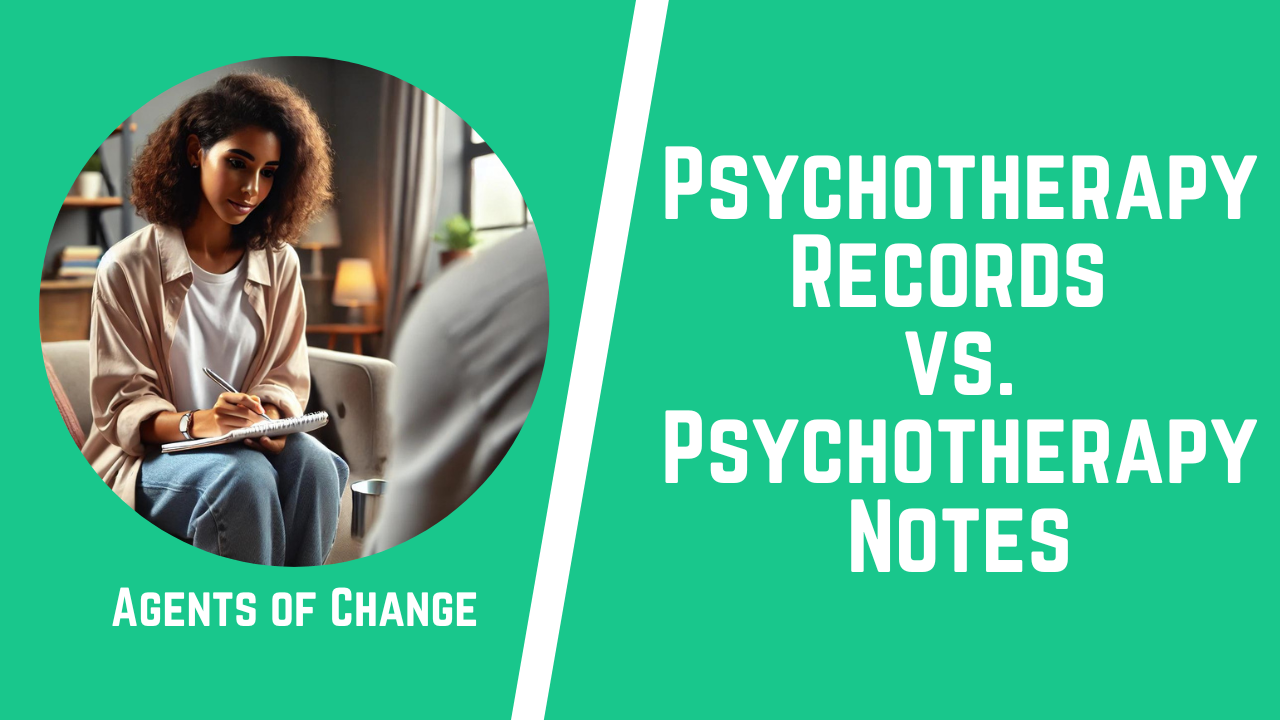
In mental health care, documentation plays a pivotal role. It ensures continuity of care, supports treatment planning, and protects both clients and therapists in legal or ethical matters. However, not all documentation is created equal, and understanding the differences between Psychotherapy Records and Psychotherapy Notes is crucial for any mental health professional.
While they might sound similar, these two types of documentation serve very distinct purposes, and knowing how to differentiate them can significantly impact your practice.
Psychotherapy Records provide a comprehensive overview of a client’s treatment journey, from initial assessments to progress notes and treatment plans. These records are often shared with other healthcare providers and are accessible to clients under laws like HIPAA. On the other hand, Psychotherapy Notes are the therapist’s private reflections, capturing thoughts and impressions that are meant to remain confidential. These notes are usually protected from client access, allowing therapists to document their internal processes without fear of external scrutiny.
For Social Workers and other mental health professionals, understanding the nuances between these two types of documentation is essential. Not only does it help ensure ethical and legal compliance, but it also enhances the therapeutic process by balancing transparency with privacy. Whether you’re new to the field or seeking to refine your documentation skills, this blog post will guide you through the key differences between Psychotherapy Records and Psychotherapy Notes, and why these distinctions matter.
Did you know? Agents of Change Continuing Education offers Unlimited Access to 150+ CE courses for one low annual fee to meet your state’s requirements for Continuing Education credits and level up your career.
We’ve helped thousands of Social Workers, Counselors, and Mental Health Professionals with Continuing Education, learn more here about Agents of Change and claim your 5 free CEUs.
1) What Are Psychotherapy Records?
Psychotherapy Records are a critical component of mental health care. They serve as the official documentation of a client’s treatment and provide a detailed account of the therapeutic process.
These records are not just administrative tools; they are vital for ensuring continuity of care, supporting clinical decision-making, and protecting both the client and therapist in legal or ethical situations.

Defining Psychotherapy Records
Psychotherapy Records, often referred to as clinical or medical records, are comprehensive documents that capture the entirety of a client’s treatment experience. These records are essential for providing a clear picture of a client’s mental health journey and are used by therapists to track progress, make informed decisions, and coordinate care with other healthcare providers when necessary.
Key components of Psychotherapy Records include:
-
Client Intake Forms: Basic demographic information, emergency contacts, and consent forms.
-
Initial Assessments: Detailed evaluations that include the client’s presenting issues, mental health history, and any relevant medical or social history.
-
Treatment Plans: Goals, objectives, and interventions agreed upon by both the therapist and the client to guide the course of treatment.
-
Progress Notes: Documentation of each session, focusing on the client’s progress, therapeutic techniques used, and any modifications to the treatment plan.
-
Risk Assessments: Documentation of any identified risks (e.g., self-harm, suicidal ideation) and the strategies employed to mitigate them.
-
Medication Records: If applicable, records of any medications prescribed, along with discussions about side effects, effectiveness, and compliance.
-
Correspondence: Records of communication between the therapist and other professionals (e.g., psychiatrists, primary care physicians) or family members, with the client’s consent.
These records are meticulously maintained to provide a full and accurate representation of the client’s therapy, which can be crucial for a variety of reasons, including continuity of care, legal protection, and insurance reimbursement.
Purpose and Importance of Psychotherapy Records
Psychotherapy Records serve several key purposes in clinical practice. Their importance cannot be overstated, as they support both the therapist and the client in several ways:
1. Continuity of Care
One of the primary functions of Psychotherapy Records is to ensure continuity of care. These records allow a therapist to track a client’s progress over time and adjust treatment strategies as needed. They also provide valuable information to other healthcare providers if a client is referred to another professional or if care is coordinated across multiple providers.
2. Legal and Ethical Protection
Psychotherapy Records are legal documents that can be used in court or other legal proceedings. Accurate and thorough documentation can protect both the therapist and the client in cases of disputes, malpractice claims, or legal inquiries. Additionally, maintaining proper records is an ethical obligation for mental health professionals, as it ensures accountability and transparency in the therapeutic process.
3. Insurance Reimbursement
For therapists who bill insurance, Psychotherapy Records are essential. Insurance companies often require detailed records to justify the services provided, determine coverage, and process claims. Without proper documentation, therapists may face challenges in getting reimbursed for their services.
Components of Psychotherapy Records
Let’s take a closer look at the individual components of Psychotherapy Records and why each is essential:
Initial Assessments
The initial assessment is the foundation of the therapeutic process. During this phase, the therapist gathers comprehensive information about the client’s history, presenting problems, and goals for treatment. This assessment typically includes:
-
Client History: Medical, psychological, and social history that may impact the client’s current mental health.
-
Presenting Problem: A detailed description of the client’s current issues and symptoms.
-
Mental Status Exam: An evaluation of the client’s current cognitive and emotional functioning.
-
Diagnostic Impressions: Based on the information gathered, the therapist may provide a preliminary diagnosis to guide treatment planning.
This assessment is crucial for developing a tailored treatment plan and serves as a baseline for measuring progress over time.
Treatment Plans
A treatment plan is a collaborative document that outlines the goals of therapy, the interventions that will be used, and the expected outcomes. Treatment plans should be specific, measurable, attainable, relevant, and time-bound (SMART). Key elements of a treatment plan include:
-
Goals: Broad, overarching objectives for therapy (e.g., reduce anxiety, improve coping skills).
-
Objectives: Specific, measurable steps the client will take to achieve their goals (e.g., practice relaxation techniques three times per week).
-
Interventions: The therapeutic techniques and strategies the therapist will use to help the client meet their objectives (e.g., cognitive-behavioral therapy, mindfulness exercises).
-
Timeline: The expected duration of treatment and any planned reviews or adjustments to the treatment plan.
Treatment plans are dynamic documents that should be reviewed and updated regularly to reflect the client’s progress and any changes in their needs.
Progress Notes
Progress notes are the core of ongoing Psychotherapy Records. These notes document each session with the client and should focus on the client’s progress, any challenges encountered, and the interventions used. While the format of progress notes can vary, many therapists use the SOAP method:
-
Subjective: The client’s self-reported feelings, thoughts, and experiences.
-
Objective: The therapist’s observations, including behavior, mood, and affect.
-
Assessment: The therapist’s clinical interpretation of the session, including any changes in the client’s condition or progress towards treatment goals.
-
Plan: The therapist’s plan for future sessions, including any adjustments to the treatment plan or homework assignments for the client.
These notes are essential for tracking the effectiveness of treatment and making necessary adjustments to the therapeutic approach.
Medication Records
For clients who are prescribed medication, it’s important to document all relevant details in the Psychotherapy Records. This includes:
-
Prescriptions: The name, dosage, and frequency of any medications prescribed.
-
Client Feedback: Any side effects reported by the client and their overall experience with the medication.
-
Collaboration: Notes on any communication with the prescribing physician regarding the client’s medication management.
Accurate medication records are vital for ensuring the client’s safety and for coordinating care with other healthcare providers.
Best Practices for Maintaining Psychotherapy Records
Maintaining Psychotherapy Records requires attention to detail and a commitment to ethical practice. Here are some best practices to consider:
-
Confidentiality: Always store records securely, whether they are digital or paper-based. Access should be restricted to authorized personnel only.
-
Accuracy: Ensure that all entries are accurate, clear, and concise. Avoid using jargon or subjective language that could be misinterpreted.
-
Timeliness: Document sessions as soon as possible after they occur to ensure that details are fresh in your mind and accurately captured.
-
Compliance: Stay up-to-date with relevant laws and regulations regarding record-keeping, including HIPAA requirements and state-specific guidelines.
Ethical Considerations in Psychotherapy Records

While Psychotherapy Records are essential for clinical and legal reasons, they also raise important ethical considerations. Therapists must balance providing enough detail to support the therapeutic process and protecting the client’s privacy. Some ethical considerations include:
-
Informed Consent: Clients should be informed about what will be included in their records and who may have access to them.
-
Sensitivity: Avoid including unnecessary details that could be harmful if accessed by others, even with the client’s consent.
-
Objectivity: Document facts and observations, not opinions or speculations, to avoid potential misunderstandings.
For Social Workers and therapists looking to enhance their documentation skills while adhering to ethical guidelines, Agents of Change Continuing Education offers specialized courses that cover these topics in depth. These courses are an excellent resource for anyone seeking to improve their record-keeping practices.
Psychotherapy Records are far more than just paperwork—they are the backbone of effective and ethical mental health care. By understanding their purpose, components, and the ethical considerations involved, therapists can ensure they maintain thorough and accurate records that serve both their clients and their practice. Proper documentation not only supports the therapeutic process but also protects both the client and the therapist in a variety of situations, from legal cases to insurance claims.
Whether you’re a seasoned professional or new to the field, keeping up with best practices in documentation is essential. Agents of Change Continuing Education offers a range of courses that can help you stay informed and ensure your documentation meets the highest standards.
Learn more about Agents of Change Continuing Education. We’ve helped thousands of Social Workers, Counselors, and Mental Health Professionals with their Continuing Education and want you to be next!
2) What Are Psychotherapy Notes?
Psychotherapy Notes, often referred to as process notes or private notes, are an essential yet distinct element of clinical documentation in mental health practice. Unlike Psychotherapy Records, which are comprehensive and accessible to clients, Psychotherapy Notes are private, personal reflections of the therapist that are kept separate from the official medical record.
These notes serve as a space for therapists to document their thoughts, impressions, and hypotheses about the therapeutic process, without the constraints of formal documentation.

Defining Psychotherapy Notes
Psychotherapy Notes are informal, personal notes taken by a therapist during or after a session. They are distinct from the more formalized Psychotherapy Records in several key ways:
-
Personal Reflections: These notes often contain the therapist’s personal reflections on the session, such as thoughts on the client’s progress, observations on the therapeutic relationship, or hypotheses about underlying issues.
-
Not Part of the Medical Record: Psychotherapy Notes are kept separate from the official medical record. This separation is crucial because it grants these notes a higher level of privacy and protection under laws like HIPAA.
-
Flexible and Unstructured: Unlike progress notes, which follow a structured format (e.g., SOAP notes), Psychotherapy Notes can be more freeform and unstructured. This allows therapists to capture their intuitive thoughts and impressions without worrying about fitting them into a formal documentation style.
These notes are primarily for the therapist’s use and are not meant to be shared with others, including the client, unless the therapist chooses to do so.
Purpose of Psychotherapy Notes
Psychotherapy Notes serve several important functions in the therapeutic process. While they are not required by law or necessary for clinical practice, many therapists find them invaluable for enhancing their work with clients.
1. Enhancing Clinical Reflection
Psychotherapy Notes provide a space for therapists to reflect on their sessions and explore deeper insights that may not be appropriate for formal documentation. These reflections can help therapists better understand the dynamics at play in the therapeutic relationship, identify patterns or themes, and consider new directions for treatment.
For example, a therapist might use Psychotherapy Notes to jot down thoughts about:
-
Transference and Countertransference: Observations on how the client’s feelings toward the therapist (or vice versa) might be affecting the therapy.
-
Unconscious Processes: Speculations about underlying issues that have not yet been discussed in therapy but seem to be influencing the client’s behavior.
-
Session Dynamics: Reflections on how the session unfolded, including any moments of tension, breakthrough, or resistance.
These notes can serve as a valuable tool for deepening the therapist’s understanding of the client and refining their therapeutic approach.
2. Supporting Ongoing Treatment
While Psychotherapy Notes are not part of the official record, they can still play a significant role in informing future sessions. By reviewing these notes before a session, therapists can remind themselves of important insights or hypotheses they want to explore further. This can help ensure that therapy remains focused and productive, even when sessions are spaced out over time.
For instance, a therapist might review their notes to:
-
Revisit Hypotheses: Bring forward ideas or interpretations that were previously considered but not yet discussed with the client.
-
Track Changes: Notice any shifts in the client’s behavior, mood, or engagement over time that may not be immediately apparent from session to session.
-
Plan Future Interventions: Identify areas that require more attention or new techniques that might be effective in addressing the client’s challenges.
In this way, Psychotherapy Notes can help therapists maintain continuity in treatment and ensure that each session builds on the last.
3. Protecting Therapist Privacy
One of the most important aspects of Psychotherapy Notes is that they are protected from client access under HIPAA, as long as they are kept separate from the official medical record. This allows therapists to document their personal reflections and thoughts without worrying about how those notes might be interpreted by the client or others.
For example, a therapist might use Psychotherapy Notes to:
-
Record Sensitive Information: Make notes about concerns or observations that might be too sensitive or speculative to include in the formal record.
-
Process Emotional Reactions: Reflect on their own emotional responses to the client or the session, which could help in managing countertransference.
-
Jot Down Tentative Ideas: Write down preliminary thoughts or hypotheses that are not yet fully formed and may change as therapy progresses.
By keeping these notes private, therapists can explore their ideas more freely and without the pressure of potential scrutiny.
Key Differences Between Psychotherapy Notes and Psychotherapy Records
While both Psychotherapy Notes and Psychotherapy Records are forms of documentation, they serve different purposes and have different implications for clinical practice. Here are some key differences:
-
Purpose:
-
Psychotherapy Records: Serve as the official documentation of a client’s treatment, including assessments, progress notes, and treatment plans.
-
Psychotherapy Notes: Provide a private space for the therapist’s personal reflections and insights.
-
-
Content:
-
Psychotherapy Records: Contain detailed, factual information that is relevant to the client’s treatment and can be shared with other healthcare providers.
-
Psychotherapy Notes: Include subjective thoughts, observations, and hypotheses that are not shared with others and are not part of the official medical record.
-
-
Access:
-
Psychotherapy Records: Are generally accessible to the client under HIPAA and can be requested in legal proceedings.
-
Psychotherapy Notes: Are protected under HIPAA and are not accessible to the client, as long as they are kept separate from the medical record.
-
-
Format:
-
Psychotherapy Records: Follow a structured format, such as SOAP notes, and are written with the expectation that they may be reviewed by others.
-
Psychotherapy Notes: Are more flexible and unstructured, allowing the therapist to document thoughts and reflections in a way that best suits their needs.
-
Best Practices for Maintaining Psychotherapy Notes
While Psychotherapy Notes are private and flexible, there are still best practices therapists should follow to ensure they are used effectively and ethically:
-
Keep Notes Separate: Ensure that Psychotherapy Notes are stored separately from the client’s official medical record. This is crucial for maintaining their protected status under HIPAA.
-
Store Securely: Just like with any form of documentation, Psychotherapy Notes should be stored securely to protect client confidentiality. Whether digital or paper-based, ensure that access is restricted.
-
Be Mindful of Content: While Psychotherapy Notes allow for more freedom in documenting personal reflections, therapists should still be mindful of what they write. Avoid using these notes to vent frustrations or make unprofessional comments.
-
Use Notes Thoughtfully: Psychotherapy Notes should serve a purpose in the therapeutic process. Use them to enhance your understanding of the client, track progress, and inform your clinical decisions.
Ethical Considerations for Psychotherapy Notes
Even though Psychotherapy Notes are more private than Psychotherapy Records, they still raise important ethical considerations. Therapists must be careful to use these notes in a way that supports the therapeutic process and upholds ethical standards.
1. Confidentiality
While Psychotherapy Notes are protected from client access, they still contain sensitive information that must be kept confidential. Therapists should take steps to ensure that these notes are stored securely and are not accidentally disclosed.
2. Professionalism
It can be tempting to use Psychotherapy Notes as a space to vent frustrations or make unfiltered comments. However, therapists must remember that these notes are still part of their professional documentation. Maintaining a level of professionalism in these notes is essential, even though they are private.
3. Purposeful Documentation
Psychotherapy Notes should serve a clear purpose in enhancing the therapeutic process. Therapists should use these notes to document thoughts and reflections that will inform future sessions, rather than simply using them as a catch-all for random observations.
For Social Workers and therapists looking to improve their documentation practices, Agents of Change Continuing Education offers specialized courses on ethical documentation and record-keeping. These courses can help therapists navigate the complexities of Psychotherapy Notes and ensure that they are used effectively and ethically.
Practical Examples of Psychotherapy Notes
To give you a clearer idea of how Psychotherapy Notes can be used in practice, here are a few examples:
-
Session Reflection: “Client appeared more withdrawn today. Noticed a possible connection between discussions of family and her avoidance behaviors. Will explore this further in future sessions.”
-
Therapeutic Hypothesis: “Possible transference occurring—client’s anger towards me may be a projection of unresolved feelings towards her father. Need to approach this carefully in the next session.”
-
Personal Reaction: “Felt unusually frustrated during today’s session—possible countertransference? Need to monitor my own reactions closely in upcoming sessions.”
These examples illustrate how Psychotherapy Notes can be used to capture a therapist’s internal processes and guide future therapeutic work.
Psychotherapy Notes are a unique and valuable tool for therapists, allowing them to document their personal reflections and enhance the therapeutic process without the constraints of formal documentation. While these notes are more private and flexible than Psychotherapy Records, they still require careful consideration and ethical handling.
We’ve helped thousands of Social Workers, Counselors, and Mental Health Professionals with Continuing Education, learn more here about Agents of Change and claim your 5 free CEUs!
3) Key Differences Between Psychotherapy Records and Psychotherapy Notes
Understanding the differences between Psychotherapy Records and Psychotherapy Notes is crucial for any mental health professional. While both are essential components of clinical documentation, they serve distinct purposes, follow different guidelines, and have varying implications for practice.
Purpose and Function
One of the primary distinctions between Psychotherapy Records and Psychotherapy Notes lies in their purpose and function within the therapeutic process.
1. Psychotherapy Records: Comprehensive Clinical Documentation
Psychotherapy Records, also referred to as clinical or medical records, serve as the official documentation of a client’s treatment. These records are detailed and comprehensive, providing a complete picture of the client’s mental health journey from the initial assessment through to the end of treatment. They are intended to:
-
Support Continuity of Care: Psychotherapy Records ensure that any healthcare provider involved in the client’s care can access the necessary information to provide consistent and informed treatment.
-
Serve as Legal Documents: These records can be used in legal proceedings, such as court cases or insurance claims, to verify the care provided and protect both the client and the therapist.
-
Facilitate Communication: Psychotherapy Records may be shared with other professionals involved in the client’s care, such as psychiatrists, primary care physicians, or other therapists.
Because of their formal nature, Psychotherapy Records must be thorough, factual, and objective. They include everything from initial assessments and treatment plans to progress notes and medication records.
2. Psychotherapy Notes: Private, Informal Reflections
In contrast, Psychotherapy Notes are much more private and informal. Often referred to as process notes, these are the therapist’s personal reflections on the therapeutic process. The primary purposes of Psychotherapy Notes include:
-
Supporting Clinical Reflection: These notes allow therapists to document their personal thoughts, hypotheses, and reactions to sessions. This helps therapists refine their understanding of the client and plan future interventions.
-
Maintaining Privacy: Unlike Psychotherapy Records, these notes are protected from client access under HIPAA (provided they are kept separate from the medical record), allowing therapists to explore their thoughts without concern about external scrutiny.
-
Enhancing Therapeutic Focus: Psychotherapy Notes can be used to track patterns, transference issues, or other subtle dynamics that might not be appropriate for inclusion in the official record but are essential for guiding the therapeutic process.
These notes are not intended to be shared with others and are often kept unstructured, offering therapists the flexibility to document in a way that suits their personal style and needs.
Content and Structure
The content and structure of Psychotherapy Records and Psychotherapy Notes differ significantly, reflecting their distinct roles in therapy.
1. Psychotherapy Records: Structured and Factual
Psychotherapy Records are highly structured and must adhere to specific standards of documentation. They include the following key components:
-
Initial Assessments: Comprehensive evaluations of the client’s history, presenting problems, and diagnostic impressions.
-
Treatment Plans: Detailed plans outlining the goals, objectives, and interventions that will guide therapy.
-
Progress Notes: Session-by-session documentation of the client’s progress, using structured formats like SOAP (Subjective, Objective, Assessment, Plan) notes.
-
Risk Assessments: Documentation of any risks identified during therapy and the steps taken to address them.
-
Medication Records: If applicable, details about any medications prescribed and discussions around medication management.
The content in Psychotherapy Records is factual and objective. It focuses on the client’s symptoms, behaviors, and the interventions used, with an emphasis on documenting what is clinically relevant to the client’s care. Because these records may be reviewed by others, including clients, legal professionals, or other healthcare providers, accuracy and professionalism are paramount.
2. Psychotherapy Notes: Flexible and Subjective
On the other hand, Psychotherapy Notes are much less formal and can be highly subjective. These notes might include:
-
Personal Impressions: The therapist’s thoughts on the client’s emotional state, behavior, or response to interventions.
-
Speculative Thoughts: Hypotheses about underlying issues or patterns that are not yet fully explored in therapy.
-
Reflections on the Therapeutic Relationship: Observations on transference, countertransference, or other dynamics between the therapist and client.
-
Session Dynamics: Notes on how the session unfolded, including any significant moments, breakthroughs, or resistance from the client.
Because Psychotherapy Notes are for the therapist’s eyes only, they don’t need to follow a specific structure. This flexibility allows therapists to capture their reflections in a way that best supports their clinical process. However, even though these notes are more informal, it’s still important to be mindful of what is included and ensure that the content serves a meaningful purpose in guiding therapy.
Access and Privacy
Access and privacy are where the differences between Psychotherapy Records and Psychotherapy Notes become most pronounced. These differences have significant implications for both therapists and clients.
1. Psychotherapy Records: Accessible and Transparent
Under HIPAA, clients generally have the right to access their Psychotherapy Records. This transparency is important for several reasons:
-
Client Rights: Allowing clients to access their records supports their right to be informed about their treatment and to have control over their healthcare information.
-
Continuity of Care: If a client moves to a new therapist or seeks additional care, their Psychotherapy Records can be shared to ensure a seamless transition.
-
Legal and Ethical Accountability: Because these records can be used in legal proceedings or audits, therapists must ensure they are accurate, objective, and professional.
Given this level of access, therapists need to be careful about what they include in Psychotherapy Records. Any subjective opinions, sensitive information, or speculative thoughts should be handled with caution, as they could potentially harm the therapeutic relationship if misunderstood.
2. Psychotherapy Notes: Protected and Private
In contrast, Psychotherapy Notes are generally not accessible to clients. HIPAA provides special protections for these notes, recognizing their role as a private space for therapists to document their personal reflections. The conditions for this protection include:
-
Separation from Medical Records: To maintain their protected status, Psychotherapy Notes must be kept separate from the client’s official medical record. If they are integrated into the clinical record, they lose their special protections and can be accessed like any other part of the record.
-
Limited Sharing: Psychotherapy Notes are not intended to be shared with other healthcare providers, clients, or legal entities, unless the therapist chooses to do so. This allows therapists to document sensitive or speculative information without concern about external scrutiny.
This level of privacy is essential for therapists who need a space to process their thoughts and explore ideas that may not be fully formed. It also helps protect the therapeutic process by ensuring that clients don’t misinterpret or become distressed by the therapist’s personal reflections.
Ethical Considerations
Both Psychotherapy Records and Psychotherapy Notes require careful ethical consideration, but the focus differs depending on the type of documentation.
1. Ethical Considerations for Psychotherapy Records
When documenting Psychotherapy Records, therapists must adhere to strict ethical guidelines to ensure that their records are:
-
Accurate: All information in Psychotherapy Records should be factually correct and free from bias or subjective opinions.
-
Objective: Therapists should focus on documenting observable behaviors, symptoms, and clinical interventions, avoiding speculative or judgmental language.
-
Confidential: While Psychotherapy Records are accessible to clients and other professionals, therapists must still ensure that sensitive information is handled with care and shared only when necessary and appropriate.
For Social Workers and other therapists seeking to enhance their ethical documentation practices, Agents of Change Continuing Education offers courses that provide guidance on maintaining high standards in clinical documentation.
2. Ethical Considerations for Psychotherapy Notes
While Psychotherapy Notes offer more privacy, they still raise important ethical questions. Therapists should ensure that their notes are:
-
Purposeful: Psychotherapy Notes should clearly support the therapeutic process rather than be a space for unfiltered or unprofessional comments.
-
Confidential: Even though these notes are protected from client access, they must still be stored securely to protect the client’s privacy.
-
Professional: While more informal, Psychotherapy Notes should still reflect the therapist’s professionalism and commitment to ethical practice.
Practical Implications of the Differences
Understanding the differences between Psychotherapy Records and Psychotherapy Notes isn’t just a matter of theory—it has practical implications for how therapists approach documentation in their daily practice.
-
Informed Consent: Therapists should explain to clients the difference between the records and notes, ensuring that clients understand what is documented and who might have access to that information.
-
Documentation Strategies: Knowing when to document something in Psychotherapy Records versus Psychotherapy Notes can help therapists navigate sensitive situations. For example, if a therapist is unsure about a hypothesis, they might choose to document it in their private notes rather than the official record.
-
Risk Management: By maintaining clear distinctions between these two types of documentation, therapists can better protect themselves from legal risks and ensure that their documentation practices align with ethical standards.
The distinctions between Psychotherapy Records and Psychotherapy Notes are not just technicalities—they are fundamental to ethical, effective, and legally compliant mental health practice. By understanding these differences and applying best practices for each type of documentation, therapists can protect their clients’ privacy, enhance their clinical work, and ensure that they are prepared for any legal or ethical challenges that may arise.
Whether you’re a Social Worker, psychologist, or counselor, it’s essential to stay informed about the nuances of clinical documentation.
For those looking to deepen their knowledge and skills in this area, Agents of Change Continuing Education offers a range of courses that can provide valuable insights and practical guidance. By investing in your continuing education, you can ensure that your documentation practices are always up to date and in line with the highest standards of care.
4) FAQs – Psychotherapy Records vs. Psychotherapy Notes
Q: What should I do if a client requests access to their Psychotherapy Notes?
A: Under HIPAA, Psychotherapy Notes are generally protected from client access, as long as they are kept separate from the official medical record. If a client requests access to their Psychotherapy Notes, it’s important to explain that these notes are private reflections meant to support the therapeutic process and are not part of the clinical record.
However, you can offer to discuss the content of your Psychotherapy Records with them, which includes all the relevant and factual information about their treatment. If you’re uncertain about how to handle such requests, it may be helpful to consult with a legal or ethical expert in your field.
Q: Can Psychotherapy Notes ever be subpoenaed or used in legal proceedings?
A: Psychotherapy Notes are afforded a higher level of protection under HIPAA and are generally not subject to subpoena or disclosure in legal proceedings, provided they are kept separate from the client’s official medical record.
However, there are some exceptions where a court might order the release of these notes, particularly in cases involving serious legal matters. If faced with such a situation, it’s advisable to consult with legal counsel to understand your rights and obligations. It’s also important to document your decision-making process in your official records, while maintaining the privacy of your Psychotherapy Notes as much as possible.
Q: How can I decide what to include in Psychotherapy Records versus Psychotherapy Notes?
A: The key difference lies in the purpose of the documentation. Psychotherapy Records should include all factual, clinically relevant information necessary for continuity of care, legal compliance, and communication with other healthcare providers. This includes assessments, treatment plans, progress notes, and any correspondence related to the client’s care.
On the other hand, Psychotherapy Notes are for your private reflections, including your thoughts on session dynamics, transference issues, or preliminary hypotheses that may not yet be ready for formal documentation. If you’re uncertain about where to document something, consider whether it would be helpful or appropriate for others (such as the client or another healthcare provider) to access that information. If not, it might belong in your private notes.
5) Conclusion
Understanding the distinctions between Psychotherapy Records and Psychotherapy Notes is essential for mental health professionals who want to provide high-quality care while adhering to ethical and legal standards.
These two forms of documentation serve different purposes, with Psychotherapy Records providing a comprehensive and accessible account of a client’s treatment, and Psychotherapy Notes offering a private space for therapists to document their personal reflections and insights.
By keeping these records separate and respecting the unique role each one plays, therapists can protect client confidentiality, enhance the therapeutic process, and ensure compliance with regulations like HIPAA.
Learn more about Agents of Change Continuing Education. We’ve helped thousands of Social Workers, Counselors, and Mental Health Professionals with their Continuing Education and want you to be next!
Earn 6 ethics credits by taking our live Ethics of AI and Technology course!
————————————————————————————————————————————————
► Learn more about the Agents of Change Continuing Education here: https://agentsofchangetraining.com
About the Instructor, Meagan Mitchell: Meagan is a Licensed Clinical Social Worker and has been providing Continuing Education for Social Workers, Counselors, and Mental Health Professionals for more than 8 years. From all of this experience helping others pass their exams, she created Agents of Change Continuing Education to help Social Workers stay up-to-date on the latest trends, research, and techniques.
#socialwork #socialworker #socialwork #socialworklicense #socialworklicensing #continuinged #continuingeducation #ce #socialworkce #freecesocialwork #lmsw #lcsw
Disclaimer: This content has been made available for informational and educational purposes only. This content is not intended to be a substitute for professional medical or clinical advice, diagnosis, or treatment