Therapist Certifications: A Comprehensive List
Therapist Certifications: A Comprehensive List
Becoming a therapist is about more than just earning a degree and setting up shop—it’s a continuous journey of growth, learning, and specialization. In a world where mental health challenges are becoming increasingly complex, therapists must stay equipped with the latest tools and techniques.

This is where certifications come in. They don’t just validate your expertise; they also open doors to new opportunities, build client trust, and keep your skills sharp. Whether you’re a Social Worker, Counselor, or Mental Health Professional, certifications can elevate your practice to the next level.

Navigating the world of therapist certifications can feel overwhelming, especially with so many options available. From general credentials like the Licensed Clinical Social Worker (LCSW) to specialized certifications in trauma, addiction, or play therapy, each certification serves a unique purpose. Understanding which ones align with your career goals and how to maintain them is key. Plus, staying up to date with continuing education requirements is a vital part of keeping your license active and your knowledge fresh.

In this comprehensive guide, we’ll explore a wide array of therapist certifications, breaking them down by specialization and relevance. Whether you’re looking to expand your expertise or fulfill licensing requirements, this article has you covered. And don’t worry—resources like Agents of Change Continuing Education are here to make the process manageable. With more than 150 ASWB and NBCC-approved courses available, plus live events throughout the year, keeping your certifications current has never been easier. Let’s dive in!

Did you know? Agents of Change Continuing Education offers Unlimited Access to 150+ ASWB and NBCC-approved CE courses for one low annual fee to meet your state’s requirements for Continuing Education credits and level up your career.

We’ve helped tens of thousands of Social Workers, Counselors, and Mental Health Professionals with Continuing Education, learn more here about Agents of Change and claim your 5 free CEUs.

1) Why Therapist Certifications Matter

Therapist certifications are more than just a professional milestone—they’re an investment in your career, credibility, and ability to make a meaningful impact. Whether you’re pursuing a general license or a niche specialty, certifications provide numerous benefits that go far beyond a framed certificate on the wall.

a diverse therapist confidently working with a client in a warm and inviting office setting.

Let’s break down why certifications are essential through key aspects of their value.

Build Trust and Credibility

Earning certifications communicates a powerful message to clients, employers, and colleagues: you’ve gone the extra mile to refine your skills and uphold professional standards. This can be especially critical in mental health fields where trust is the cornerstone of client-therapist relationships. Certifications provide:

  • Proof of Expertise: They verify your qualifications in specific therapeutic modalities or populations.
  • Professional Validation: Recognized credentials instill confidence in clients and employers alike.
  • Ethical Commitment: Many certifications require adherence to strict ethical guidelines, reinforcing your dedication to quality care.

When clients see titles like Licensed Clinical Social Worker (LCSW) or Certified Clinical Trauma Professional (CCTP) next to your name, they’re more likely to trust you with their mental health journey.


Open New Career Opportunities

Certifications often act as the key to unlocking specialized roles or higher-paying positions. Whether you’re looking to move into leadership, start a private practice, or branch into a niche area, having the right credentials can make all the difference.

  • Specialization: Credentials like the Certified Grief Counseling Specialist (CGCS) or Registered Play Therapist (RPT) can qualify you for roles tailored to specific client needs.
  • Leadership Opportunities: Advanced certifications like the Master Addiction Counselor (MAC) or Qualified Clinical Social Worker (QCSW) prepare you for supervisory or administrative positions.
  • Increased Earnings: Specialized certifications often correlate with higher salary ranges due to the expertise they represent.

Certifications give you the competitive edge to stand out in a crowded job market and pursue roles that align with your passions.


Stay Current with Evolving Practices

The field of mental health is constantly changing, with new therapeutic approaches and research emerging every year. Certifications and their renewal processes ensure you remain on the cutting edge of best practices, benefiting both you and your clients.

a diverse therapist learning at a warm and well-organized desk in front of a computer, focused and engaged in professional growth.

How Certifications Keep You Updated:

  • Continuing Education: Most certifications require ongoing learning, often through accredited courses. Organizations like Agents of Change Continuing Education make this easy with over 150 ASWB and NBCC-approved courses.
  • Networking Opportunities: Certification programs and renewal events often connect you with like-minded professionals and mentors.
  • Adapting to Trends: From telehealth (via credentials like BC-TMH) to trauma-informed care, certifications ensure you’re prepared for modern challenges.

By pursuing certifications, you demonstrate a commitment to continuous growth, setting yourself apart as a dedicated and informed professional.


Meet Licensing and Ethical Requirements

Many states and professional organizations mandate certifications to practice or maintain an active license. Without these credentials, you risk losing the ability to work in your chosen field. Certifications also promote adherence to ethical standards, ensuring that clients receive safe and effective care.

Key Licensing Benefits of Certifications:

  • Mandatory Qualifications: Licenses like LCSW or NCC are often prerequisites for practice.
  • State-Specific Compliance: Certification renewals align with state and national regulations for therapists.
  • Ethical Alignment: Certifications require therapists to stay updated on ethical codes and standards.

Therapist certifications are far more than a checkbox—they’re a vital part of your career development, credibility, and ability to make a difference. With resources like Agents of Change Continuing Education, staying on top of these certifications is achievable and rewarding.

Learn more about Agents of Change Continuing Education. We’ve helped tens of thousands of Social Workers, Counselors, and Mental Health Professionals with their continuing education, and we want you to be next!

2) Therapist Certifications: A Comprehensive List
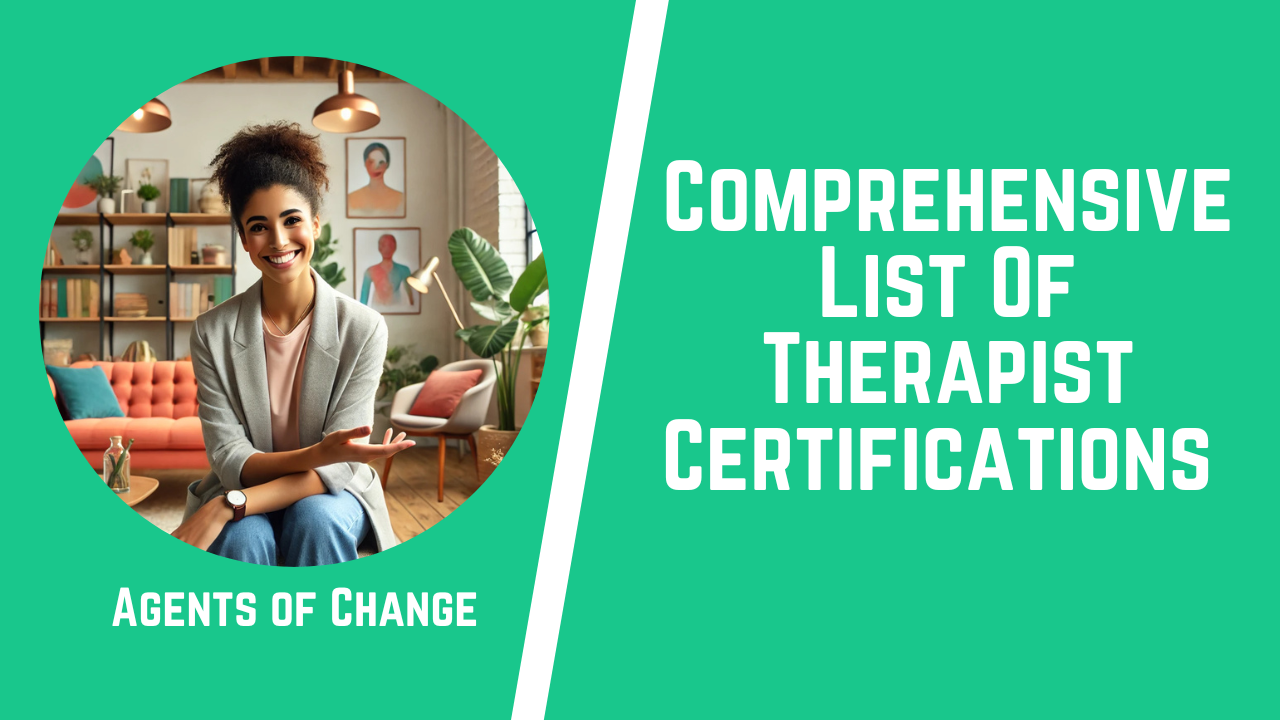
The world of therapy offers a diverse range of certifications, each tailored to specific fields, specialties, and client needs. Whether you’re pursuing a clinical license, diving into trauma work, or branching into a niche like play therapy, there’s a certification for you.

Below is a detailed list of certifications categorized by profession and specialty, providing an all-encompassing guide to elevate your career.


General Therapy Certifications

These certifications serve as foundational credentials for therapists in diverse roles, validating their general skills and competence.

Licensed Professional Counselor (LPC)

The LPC is a common certification for therapists, often required for providing individual, group, or family therapy in various settings. It ensures that a therapist has met educational, experiential, and examination criteria.

National Certified Counselor (NCC)

Offered by the National Board for Certified Counselors (NBCC), the NCC is a widely recognized credential that reflects general counseling expertise and can be a stepping stone to specialized certifications.

Licensed Clinical Social Worker (LCSW)

The LCSW is a must-have for Social Workers focusing on clinical practice. It certifies expertise in diagnosing and treating mental health conditions.


Social Work Certifications

Social Workers have access to a variety of certifications that reflect their diverse roles in mental health, case management, and advocacy.

1. Academy of Certified Social Workers (ACSW)

This nationally recognized certification highlights a Social Worker’s commitment to high standards and advanced practice.

2. Certified Advanced Social Work Case Manager (C-ASWCM)

Ideal for Social Workers focusing on complex client care coordination, this certification validates expertise in managing multifaceted cases.

3. Clinical Social Work Supervisor Certification

This credential is essential for those mentoring and supervising new Social Workers entering clinical practice.

4. Qualified Clinical Social Worker (QCSW)

The QCSW certification is designed for experienced clinicians, emphasizing advanced skills in psychotherapy and mental health care.

5. Certified Hospice and Palliative Social Worker (CHP-SW)

This certification focuses on Social Workers providing end-of-life care, grief support, and emotional resilience services.


Counseling Certifications

Counselors often seek certifications to specialize in specific areas or enhance their clinical expertise.

1. Certified Clinical Mental Health Counselor (CCMHC)

The CCMHC is perfect for therapists focusing on diagnosing and treating mental health disorders, with a strong emphasis on clinical expertise.

2. Certified Rehabilitation Counselor (CRC)

Specializing in working with clients with disabilities, the CRC certification ensures therapists are equipped to provide support in vocational and personal adjustment.

3. Board Certified-TeleMental Health Provider (BC-TMH)

This certification equips counselors to provide therapy through digital platforms, ensuring ethical and effective virtual care.

4. Certified Grief Counseling Specialist (CGCS)

For therapists focusing on loss and bereavement, the CGCS offers advanced training in grief management and support.


Trauma and Crisis Certifications

a therapist helping a client in trauma within a safe, supportive, and nurturing office setting.

Therapists who specialize in trauma and crisis intervention benefit from certifications that validate their expertise in these critical areas.

1. Certified Clinical Trauma Professional (CCTP)

A widely respected credential, the CCTP prepares therapists to handle trauma cases with evidence-based methods.

2. Advanced Certified Trauma Professional (ACTP)

Building on the CCTP, this certification provides deeper expertise in trauma-informed care for complex cases.

3. Crisis Intervention Specialist (CIS)

Therapists working in emergency or high-stress environments can use this certification to master techniques for immediate crisis management.

4. Eye Movement Desensitization and Reprocessing (EMDR) Certification

This certification is specific to practitioners of EMDR, an evidence-based technique for treating trauma and PTSD.

5. Certified Compassion Fatigue Professional (CCFP)

Therapists working in high-stress environments can earn this certification to better manage their own emotional well-being and that of their clients.


Addiction and Substance Use Certifications

Working with addiction requires specialized training and credentials to address the unique challenges clients face in recovery.

1. Certified Alcohol and Drug Counselor (CADC)

The CADC certification is a gold standard for professionals treating substance abuse and addiction.

2. Master Addiction Counselor (MAC)

This advanced certification signifies deep expertise in addiction counseling and positions therapists as leaders in the field.

3. National Certified Peer Recovery Support Specialist (NCPRSS)

Designed for professionals with lived experience, this certification focuses on peer support in addiction recovery.


Child and Family Therapy Certifications

Therapists who focus on children and families can benefit from these specialized certifications.

1. Registered Play Therapist (RPT)

The RPT certification equips therapists to use play as a tool to help children process emotions and resolve challenges.

2. Certified Child and Adolescent Trauma Professional (CATP)

Specializing in child-focused trauma care, the CATP is essential for therapists working with young clients who’ve experienced adverse events.

3. Certified Autism Specialist (CAS)

This certification is tailored for therapists working with clients on the autism spectrum, providing tools for better understanding and support.

4. Marriage and Family Therapist (MFT)

The MFT certification is critical for therapists focusing on family dynamics, relationships, and marriage counseling.


Specialized Therapy Certifications

These certifications address unique therapeutic modalities or populations.

1. Certified Anger Management Specialist (CAMS)

Ideal for therapists working with clients struggling to regulate anger, this certification provides proven strategies for effective management.

2. Certified Integrative Mental Health Professional (CIMHP)

The CIMHP certification is for therapists who incorporate holistic approaches like nutrition and lifestyle into mental health care.

3. Certified Expressive Arts Therapist (CEAT)

Therapists interested in creative modalities like art, music, and drama therapy can benefit from this credential.

4. Certified Hypnotherapist (CHT)

For therapists who use hypnosis to treat anxiety, trauma, and other mental health conditions, the CHT demonstrates expertise.


Continuing Education Certifications

Therapists are required to maintain their certifications through continuing education. Organizations like Agents of Change Continuing Education offer resources to fulfill these requirements. They provide:

  • Over 150 ASWB and NBCC-approved courses.
  • Specialized training for Social Workers, Counselors, and Mental Health Professionals.
  • Live events throughout the year for interactive and hands-on learning.

Additional Certifications to Consider

For therapists looking to stand out even further, consider these additional certifications:

  • Certified Cognitive Behavioral Therapist (CCBT): Mastery in CBT techniques.
  • Dialectical Behavior Therapy Certification (DBT-C): Advanced DBT skills for treating emotional dysregulation.
  • Certified Mindfulness-Based Stress Reduction Teacher (MBSR-T): Expertise in mindfulness-based practices.
  • Certified Health Coach (CHC): A focus on mental and physical well-being integration.

This extensive list of certifications showcases the incredible breadth of options available to therapists. Whether you’re a Social Worker, Counselor, or other Mental Health Professional, pursuing these credentials allows you to specialize, grow, and make a meaningful impact.

With resources like Agents of Change Continuing Education, earning and maintaining these certifications has never been more accessible.

We’ve helped tens of thousands of Social Workers, Counselors, and Mental Health Professionals with Continuing Education, learn more here about Agents of Change and claim your 5 free CEUs!

3) Continuing Education: A Therapist’s Lifeline

Continuing education is the backbone of a therapist’s professional development. It’s not just about maintaining licensure; it’s about staying relevant, learning new techniques, and growing in ways that enhance your ability to support clients. For Social Workers, Counselors, and other Mental Health Professionals, the commitment to lifelong learning isn’t optional—it’s essential.


Why Continuing Education Matters

Therapists operate in a dynamic field where new research, tools, and client needs emerge constantly. Without regular education, it’s easy to fall behind. Here’s why continuing education is so vital:

  • Licensing Requirements: Most states require a set number of Continuing Education Credits (CECs) to renew your license.
  • Skill Enhancement: Learn new therapeutic approaches and gain expertise in specialized areas.
  • Professional Credibility: Staying updated with current trends reinforces your commitment to high standards.
  • Client Impact: Up-to-date knowledge translates into better care and outcomes for your clients.

By prioritizing continuing education, you meet industry standards and reaffirm your dedication to professional excellence.


Benefits of Structured Continuing Education

Structured continuing education programs provide the resources and flexibility you need to thrive in your career. Consider these key benefits:

1. Convenience for Busy Professionals

Most therapists juggle demanding schedules, but modern continuing education options offer:

  • Online Courses: Learn at your own pace with accessible, self-guided modules.
  • Live Events: Engage in interactive, real-time discussions with peers and instructors.

Organizations like Agents of Change Continuing Education provide more than 150 ASWB and NBCC-approved courses, tailored for professionals with limited time.

2. Specialized Learning

Continuing education allows you to focus on niche areas, such as:

  • Trauma-informed care.
  • Telehealth practices (e.g., BC-TMH certification).
  • Play therapy and child counseling.

This specialized focus helps you address unique client needs and distinguish yourself in the field.

3. Networking Opportunities

Live continuing education events, like those periodically offered by Agents of Change, provide opportunities to:

  • Build connections with other professionals.
  • Gain insights from industry experts.
  • Share experiences and best practices.

How to Choose the Right Continuing Education Program

Not all continuing education programs are created equal. Here are some tips for selecting the best option for your goals:

1. Accreditation

Ensure the program is approved by recognized organizations like:

  • ASWB (Association of Social Work Boards).
  • NBCC (National Board for Certified Counselors).

2. Relevance to Your Career

Pick courses or programs aligned with your current role or areas of interest. For instance:

  • Social Workers might focus on certifications like LCSW or QCSW renewal.
  • Counselors might explore trauma, addiction, or telehealth training.

3. Flexibility and Format

Choose programs that fit your schedule and preferred learning style, whether it’s on-demand video lessons or interactive workshops.


How Agents of Change Continuing Education Can Help

When it comes to continuing education, Agents of Change Continuing Education stands out as a trusted resource. Here’s what they offer:

  • Extensive Course Library: Access over 150 courses approved by ASWB and NBCC.
  • Variety of Formats: Choose from online self-paced modules or engaging live events.
  • Comprehensive Topics: From ethics to advanced trauma therapy, find courses tailored to Social Workers, Counselors, and Mental Health Professionals.
  • Ease of Compliance: Their platform makes it easy to track completed courses and meet licensing requirements.

With periodic live events throughout the year, Agents of Change ensures you’re never short of options for fulfilling your continuing education needs.


Practical Tips for Staying on Top of Continuing Education

Maintaining your Continuing Education Credits doesn’t have to be overwhelming. Here are some practical strategies to stay on track:

  • Set Annual Goals: Plan your courses at the beginning of each year to avoid last-minute stress.
  • Diversify Your Learning: Mix self-paced courses with live events for a well-rounded experience.
  • Keep Records: Maintain a portfolio of your certifications and completed credits for easy license renewal.
  • Leverage Resources: Use platforms like Agents of Change for a seamless experience.

Continuing education is more than a requirement—it’s your lifeline to staying effective, competitive, and fulfilled in your career. By prioritizing learning and choosing quality resources like Agents of Change Continuing Education, you ensure that both you and your clients benefit from the best practices the industry has to offer.

4) FAQs – Therapist Certifications

Q: What are the most important therapist certifications to consider?

A: The most important certifications depend on your profession and specialization. For Social Workers, the Licensed Clinical Social Worker (LCSW) is often essential, as it allows for clinical practice and positions you as a mental health expert.

Counselors may find the National Certified Counselor (NCC) or Certified Clinical Mental Health Counselor (CCMHC) to be particularly valuable.

If you’re pursuing a niche area, certifications like Certified Clinical Trauma Professional (CCTP), Registered Play Therapist (RPT), or Certified Alcohol and Drug Counselor (CADC) are excellent options. Your career goals and client focus will guide your decision.

Q: How do I maintain my therapist certifications?

A: Most certifications require periodic renewal, which typically involves earning Continuing Education Credits (CECs) through approved courses or training programs. Renewal periods vary by certification, ranging from annually to every two or three years. You’ll also need to adhere to ethical standards and, in some cases, pay a renewal fee.

Platforms like Agents of Change Continuing Education simplify this process by offering over 150 ASWB and NBCC-approved courses, allowing you to fulfill your CE requirements conveniently. Additionally, they host live events periodically, providing interactive ways to stay compliant and informed.

Q: How can continuing education improve my therapy practice?

A: Continuing education keeps your skills current, ensuring you’re familiar with the latest therapeutic techniques and research. It allows you to explore new specializations, like trauma-informed care, telehealth, or play therapy, enhancing your ability to address diverse client needs.

Beyond skill development, continuing education boosts your professional credibility and helps maintain your licensure. Organizations like Agents of Change Continuing Education make it easy to pursue ongoing learning, offering flexible online courses and live events tailored to Social Workers, Counselors, and other Mental Health Professionals. Staying engaged with continuing education ensures you’re always providing the highest standard of care.

5) Conclusion

Therapist certifications are more than just professional milestones—they’re essential tools for building trust, deepening your expertise, and advancing your career. Whether you’re a Social Worker pursuing clinical credentials like the LCSW, a Counselor exploring trauma certifications, or a Mental Health Professional diving into niche areas like play therapy or addiction counseling, certifications provide the foundation for impactful and ethical practice. They demonstrate your commitment to excellence and give you the confidence to navigate the ever-evolving challenges in mental health care.

As you progress in your career, continuing education becomes the lifeline that keeps your certifications current and your skills sharp. Organizations like Agents of Change Continuing Education make it easy to meet these requirements with a variety of ASWB and NBCC-approved courses and live events.

By prioritizing ongoing learning, you can stay ahead of industry trends, meet licensing standards, and most importantly, provide the best possible care to your clients. The resources available today make the journey of lifelong learning not only manageable but rewarding.

Ultimately, certifications and continuing education are investments in yourself and the communities you serve. They reflect your dedication to growth and your willingness to rise to new challenges. So, take the next step—explore the certifications and educational opportunities that resonate with your goals, and let them guide you toward a fulfilling and impactful career. With the right tools, support, and mindset, the possibilities for your practice are limitless.

————————————————————————————————————————————————

► Learn more about the Agents of Change Continuing Education here: https://agentsofchangetraining.com

About the Instructor, Meagan Mitchell: Meagan is a Licensed Clinical Social Worker and has been providing Continuing Education for Social Workers, Counselors, and Mental Health Professionals for more than 8 years. From all of this experience helping others, she created Agents of Change Continuing Education to help Social Workers, Counselors, and Mental Health Professionals stay up-to-date on the latest trends, research, and techniques.

#socialwork #socialworker #socialwork #socialworklicense #socialworklicensing #continuinged #continuingeducation #ce #socialworkce #freecesocialwork #lmsw #lcsw #counselor #NBCC #ASWB #ACE

Disclaimer: This content has been made available for informational and educational purposes only. This content is not intended to be a substitute for professional medical or clinical advice, diagnosis, or treatment

Share:

Discover more from Agents of Change

Subscribe now to keep reading and get access to the full archive.

Continue reading