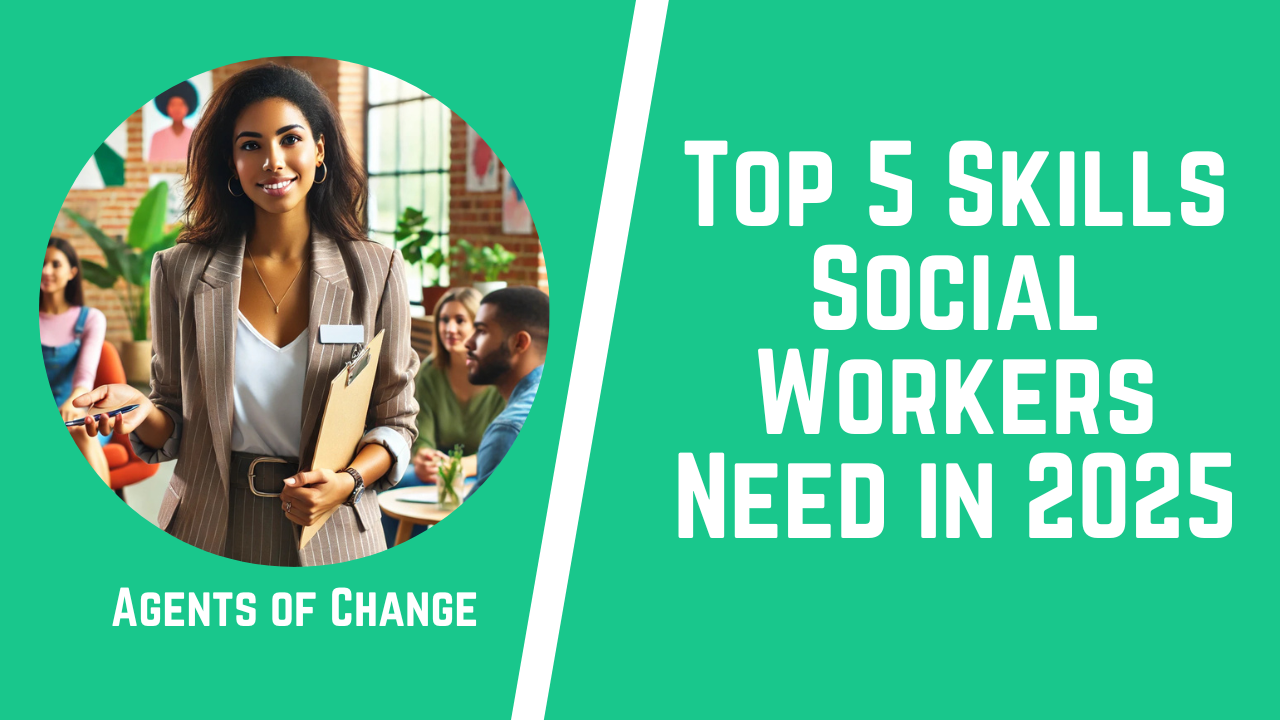
Top 5 Skills Social Workers Need in 2025

Top 5 Skills Social Workers Need in 2025

Social Work has always been a dynamic field, requiring professionals to adapt quickly to societal shifts and emerging challenges. As we approach 2025, the pace of change is accelerating, making it essential for Social Workers to focus on skill development to stay effective and impactful.

From navigating complex human emotions to integrating cutting-edge technology into practice, the demands of the profession are expanding in ways we’ve never seen before. For Social Workers who want to thrive, the key lies in cultivating the right mix of soft skills and specialized training.

What does it take to excel as a Social Worker in 2025? It’s not just about having empathy or a strong ethical foundation—though those remain vital. The future demands a deeper focus on Emotional Intelligence, cultural competency, resilience, and advanced communication techniques, paired with a solid understanding of new tools and technologies. These are the building blocks for supporting clients effectively in a fast-changing world. Thankfully, resources like Agents of Change Continuing Education offer courses to help Social Workers master these skills and maintain their licensure.

In this blog post, we’ll explore the top 5 skills Social Workers need in 2025 to rise above the challenges and make a meaningful impact. Whether you’re a seasoned professional or new to the field, this guide will highlight the critical abilities you need to hone—along with actionable strategies to help you succeed. Let’s dive in and uncover how you can prepare for the future of Social Work!

Did you know? Agents of Change Continuing Education offers Unlimited Access to 150+ ASWB and NBCC-approved CE courses for one low annual fee to meet your state’s requirements for Continuing Education credits and level up your career.

We’ve helped thousands of Social Workers, Counselors, and Mental Health Professionals with Continuing Education, learn more here about Agents of Change and claim your 5 free CEUs.

1) Top 5 Skills Social Workers Need in 2025

#1. Emotional Intelligence: The Heart of Social Work

a diverse social worker demonstrating emotional intelligence

Why Emotional Intelligence Matters

In a world increasingly dominated by technology, Emotional Intelligence (EI) remains one of the most essential skills for Social Workers. This ability to understand, manage, and influence emotions—both yours and others’—is at the core of effective client relationships.

Imagine working with a client experiencing trauma. They’re not just looking for solutions; they need empathy, understanding, and someone who can read between the lines. That’s where EI shines. It helps Social Workers build trust, de-escalate tense situations, and offer meaningful support.

How to Build Emotional Intelligence

  • Practice active listening. Tune in to what’s being said—and what’s not.
  • Cultivate self-awareness. Reflect on how your emotions influence your interactions.
  • Engage in empathy exercises. Try seeing situations through your client’s eyes.

Agents of Change Continuing Education offers excellent resources for enhancing Emotional Intelligence. Their live events, held throughout the year, provide opportunities to refine these skills in a hands-on setting.


#2. Technological Proficiency: The New Normal

The Rise of Tech in Social Work

Technology is reshaping how Social Workers operate, from teletherapy sessions to digital case management tools. By 2025, having a solid grasp of tech won’t be optional—it’ll be a must.

For instance, virtual reality is being used to simulate therapy scenarios, while AI tools are assisting with client assessments. These innovations can save time, improve outcomes, and make services more accessible.

Key Tech Skills for Social Workers

  • Telehealth proficiency: Be comfortable conducting virtual sessions.
  • Data management: Learn how to use platforms that track client progress.
  • Cybersecurity basics: Understand how to keep client data safe.

Courses offered by Agents of Change Continuing Education can help you stay ahead of the curve. Their library includes tech-focused classes tailored for Social Workers, ensuring you’re prepared for the future.


#3. Cultural Competency: Meeting Clients Where They Are

Embracing Diversity in Practice

Clients come from all walks of life, and cultural competency is what bridges the gap between intention and impact. This skill goes beyond understanding—it’s about respecting and adapting to diverse cultural norms, beliefs, and values.

For example, consider working with immigrant families. Their experiences with systems and institutions may differ drastically from what you’re used to. Cultural competency ensures that your approach is both inclusive and effective.

a social worker researching on a computer in a warm and inviting office setting, designed to reflect a productive and professional environment.

How to Enhance Cultural Competency

  • Educate yourself. Read about the cultural backgrounds of your clients.
  • Seek feedback. Ask clients about their preferences and comfort levels.
  • Challenge biases. Reflect on how your own worldview affects your practice.

Many continuing education courses focus on this critical area, including those from Agents of Change Continuing Education. These programs offer practical strategies for building more inclusive practices.


#4. Advanced Communication Skills: The Art of Connection

More Than Talking

Social Workers are master communicators, but in 2025, the bar is set even higher. It’s not just about what you say—it’s about how you say it. Effective communication involves listening deeply, asking the right questions, and conveying ideas clearly.

With mental health issues on the rise, advanced communication skills can make or break your impact. Whether you’re facilitating a group session or advocating for a client, the ability to connect meaningfully is non-negotiable.

Tips for Strengthening Communication

  • Use plain language. Avoid jargon, especially with clients unfamiliar with technical terms.
  • Practice reflective listening. Summarize what you’ve heard to ensure understanding.
  • Be adaptable. Tailor your communication style to fit different audiences.

Live events from Agents of Change Continuing Education provide a dynamic way to refine these skills. Participating in workshops and role-playing exercises can boost your confidence and competence.


#5. Resilience and Adaptability: Thriving in Uncertain Times

Navigating the Unexpected

If the past few years have taught us anything, it’s that change is constant. Social Workers are often at the forefront of crises, from natural disasters to pandemics. Resilience and adaptability aren’t just survival tools—they’re thriving tools.

For instance, imagine a sudden policy change that affects your clients’ access to services. How you respond—calmly, creatively, and flexibly—can make all the difference.

Strategies for Building Resilience

  • Develop stress-management techniques. Meditation, exercise, and time management can help.
  • Embrace a growth mindset. View challenges as opportunities to learn.
  • Stay informed. Keeping up with industry trends makes it easier to adapt.

Continuing education programs, like those from Agents of Change, play a pivotal role here. By staying engaged with new ideas and practices, you’ll be better equipped to handle whatever comes your way.

Learn more about Agents of Change Continuing Education. We’ve helped thousands of Social Workers, Counselors, and Mental Health Professionals with their continuing education, and we want you to be next!

2) How Emerging Trends Are Shaping the Future of Social Work

The world is evolving at a breakneck pace, and Social Work is no exception. Emerging societal, technological, and cultural trends are reshaping how Social Workers approach their roles, demanding adaptability and innovation.

To stay ahead, Social Workers must understand these trends and embrace the opportunities they bring. Below, we’ll dive into the key areas driving change and how they’re shaping the future of this critical profession.


The Integration of Technology in Social Work

Technology is no longer a luxury in Social Work—it’s a necessity. From telehealth platforms enabling virtual therapy to AI tools assisting with case management, tech is transforming the profession.

  • Teletherapy and Virtual Counseling: With the rise of telehealth, Social Workers can now reach clients who were previously underserved, such as those in rural or remote areas. This trend not only improves access but also helps clients feel more comfortable in familiar settings.

  • AI-Driven Assessments: Artificial intelligence is being used to analyze client data and identify patterns that might not be immediately visible. This allows Social Workers to make more informed decisions and tailor their interventions.

  • Digital Case Management: Platforms designed for tracking client progress, scheduling, and documentation are making day-to-day tasks more efficient, freeing up time for Social Workers to focus on what matters most: their clients.

To stay competitive, Social Workers must familiarize themselves with these tools. Continuing education programs, such as those from Agents of Change Continuing Education, offer courses specifically tailored to telehealth, AI, and digital integration, ensuring you are equipped to navigate this shift.


The Evolving Role of Cultural Competency

As societies become increasingly diverse, cultural competency is more critical than ever. Social Workers must be equipped to work effectively with clients from a variety of backgrounds, considering cultural norms, values, and systemic barriers.

  • Addressing Intersectionality: Clients often face overlapping challenges, such as race, gender, and economic disparities. Social Workers need to understand how these intersect to provide comprehensive support.
  • Language Accessibility: Multilingual resources and interpreters are becoming staples in many Social Work settings to ensure equitable communication.
  • Trauma-Informed Care Across Cultures: Recognizing how cultural contexts influence the experience and expression of trauma is essential for offering truly inclusive support.

By staying informed on cultural trends and taking courses on cultural sensitivity, Social Workers can enhance their ability to connect with diverse populations.


Mental Health and Wellness: Rising to the Challenge

The growing awareness of mental health issues is driving increased demand for Social Work services. At the same time, Social Workers face the challenge of maintaining their own mental wellness in a high-stress profession.

  • Focus on Preventive Care: There’s a growing emphasis on prevention rather than crisis intervention, requiring Social Workers to adopt proactive strategies in their work.
  • Community-Based Mental Health Initiatives: Grassroots movements and community-led programs are emerging as effective ways to address mental health disparities.
  • Workplace Wellness for Social Workers: Burnout is a significant concern. Agencies and organizations are starting to prioritize the mental health of their staff through wellness programs, flexible schedules, and support systems.

By recognizing these shifts, Social Workers can adjust their approaches and advocate for their own well-being as much as they do for their clients.


Adapting to Environmental and Social Justice Issues

Environmental and social justice concerns are becoming central to Social Work, reflecting the profession’s broader commitment to advocacy. Social Workers are increasingly called to address systemic inequities and environmental factors affecting their clients’ well-being.

  • Climate Change and Displacement: Rising sea levels and natural disasters are creating climate refugees, who often require Social Work services.
  • Economic Inequality: As income gaps widen, Social Workers are stepping up to advocate for policy changes and support those facing financial hardship.
  • Social Advocacy in Practice: More than ever, Social Workers are becoming active participants in legislative efforts to address issues like housing, healthcare, and education.

Through continuing education and staying engaged with current events, Social Workers can sharpen their advocacy skills to tackle these pressing issues head-on.


The Call for Lifelong Learning

an illustrated version of a small group of 4 to 5 diverse social workers in a collaborative learning session, featuring a friendly, detailed style that emphasizes teamwork and a warm, professional atmosphere.

In a rapidly changing profession, learning doesn’t stop after earning a degree. Emerging trends highlight the importance of lifelong education to ensure Social Workers remain effective and relevant. Providers like Agents of Change Continuing Education offer a wealth of resources, including live events and more than 150 courses, to help Social Workers stay ahead of these trends.

We’ve helped thousands of Social Workers, Counselors, and Mental Health Professionals with Continuing Education, learn more here about Agents of Change and claim your 5 free CEUs!

3. Practice Steps to Implement These Skills in Everyday Practice


Knowing the top skills Social Workers need in 2025 is one thing—putting them into practice is another. To effectively integrate Emotional Intelligence, technological proficiency, cultural competency, advanced communication skills, and resilience into daily routines, Social Workers need actionable strategies.

This section will explain how you can incorporate these essential abilities into your everyday work, helping you stay effective, confident, and prepared for the challenges ahead.


Building Emotional Intelligence into Client Interactions

Emotional Intelligence (EI) isn’t just a mindset—it’s a practice. To build stronger relationships and foster trust, you need to use EI intentionally during every client interaction.

  • Start Every Meeting with Intent: Before engaging with a client, take a moment to reflect on your emotions and set an empathetic tone. Consider questions like, “How am I feeling today?” and “What does this client need from me emotionally?”

  • Practice Reflective Listening: Show your clients you’re truly hearing them. Repeat back key points they’ve shared and validate their feelings. For example, you might say, “It sounds like you’ve been feeling overwhelmed with everything on your plate. That’s completely understandable.”

  • Check In Regularly: Emotional dynamics can shift throughout a conversation. Periodically pause to ask, “How are you feeling right now?” This shows care and ensures the client feels supported.

Developing Emotional Intelligence takes practice and awareness. Consider enrolling in courses focused on empathy and relationship-building through providers like Agents of Change Continuing Education, which offers live events and interactive opportunities to hone this skill.


Mastering Technology Step by Step

Technological proficiency doesn’t happen overnight, but incorporating tech tools into your practice can streamline your work and improve client outcomes.

  1. Start Small with One Tool: If you’re new to tech, focus on mastering one platform at a time. For instance, begin with a telehealth service or digital case management software.

  2. Attend Training Sessions: Many software providers offer free training. Take advantage of these to learn how to maximize the tool’s functionality.

  3. Stay Current on Cybersecurity: Regularly update your knowledge on client data protection. Simple steps, like using encrypted email services or password managers, can safeguard sensitive information.

  4. Integrate Tools into Client Care: Use digital platforms to set reminders for follow-ups, track progress, or share educational materials with clients. Even small tech additions can make a big difference.

Continuing education courses that focus on technology, like those offered by Agents of Change, can help you confidently adopt these tools without feeling overwhelmed.


Applying Cultural Competency in Everyday Work

Cultural competency starts with awareness but must be followed by action. Integrating this skill into daily practice ensures you’re meeting clients where they are.

  • Ask Before Assuming: If you’re unsure about a client’s preferences or cultural norms, don’t hesitate to ask respectfully. Questions like, “How would you like me to address you?” or “Are there any traditions or practices that are important to you?” go a long way in building trust.

  • Use Culturally Relevant Materials: Provide resources in the client’s preferred language or that reflect their cultural values. This could include brochures, videos, or community connections.

  • Challenge Your Own Biases: Commit to ongoing self-reflection and education. For example, after each session, consider whether your personal views may have influenced your recommendations or actions.

Courses on cultural sensitivity, such as those available through Agents of Change Continuing Education, can equip you with tools to deepen your understanding and practice.


Strengthening Communication Skills with Simple Adjustments

Advanced communication is a cornerstone of Social Work, and small changes can significantly improve how you engage with clients, colleagues, and stakeholders.

  • Simplify Your Language: Avoid using jargon or overly technical terms, especially when working with clients. For instance, instead of saying, “Let’s assess your socioeconomic barriers,” try, “Let’s talk about what’s making things hard for you right now.”

  • Adopt a Collaborative Tone: Use phrases that encourage partnership, such as, “How can we work together to address this?” or “What solutions feel realistic for you?”

  • Adapt to the Medium: Communication styles may need to shift depending on whether you’re speaking in person, over the phone, or through video. For example, video sessions may require more non-verbal affirmations, like nodding or smiling, to convey understanding.

Role-playing exercises offered in live continuing education events, such as those from Agents of Change, can help you practice and refine these techniques in a supportive setting.


Building Resilience Through Daily Habits

Resilience isn’t just about bouncing back—it’s about staying strong in the face of challenges. Incorporating resilience-building habits into your routine can help you handle the emotional demands of Social Work.

  1. Prioritize Self-Care: Set aside time daily for activities that recharge you, whether it’s a walk, meditation, or spending time with loved ones.

  2. Use Supervision Wisely: Regular check-ins with your supervisor or peers can help you process difficult cases and brainstorm solutions.

  3. Celebrate Small Wins: Take time to acknowledge your successes, no matter how minor they may seem. For instance, completing a difficult client session or finishing a complex report deserves recognition.

  4. Stay Connected: Build a strong professional network by attending workshops and conferences. These connections can provide support and resources when you need them most.

Participating in continuing education programs focused on resilience and stress management can also offer valuable tools and strategies for maintaining well-being.


Turning Knowledge into Action

The skills Social Workers need in 2025—Emotional Intelligence, technological proficiency, cultural competency, advanced communication, and resilience—are all actionable and teachable. By committing to small, consistent improvements in these areas, you can create a meaningful impact in your daily practice.

Remember, resources like Agents of Change Continuing Education are there to support you. With over 150 courses and live events, they provide the tools you need to implement these skills effectively and thrive in your career.

4) FAQs – Top 5 Skills Social Workers Need in 2025

Q: How can Social Workers effectively stay updated on new skills and trends in the field?

A: Staying updated requires a proactive approach. Social Workers can participate in continuing education programs, such as those offered by Agents of Change Continuing Education, which provide over 150 ASWB and NBCC-approved courses.

These courses cover a wide range of topics, from technology integration to cultural competency. Attending live events, reading professional journals, and joining industry organizations can also help you stay informed about emerging trends and best practices in Social Work.

Q: What is the best way to start improving Emotional Intelligence in Social Work practice?

A: Improving Emotional Intelligence begins with self-awareness. Reflect on how your emotions influence your interactions and practice active listening to better understand your clients’ needs. Incorporating empathy exercises, seeking feedback from peers, and engaging in role-playing scenarios are practical ways to sharpen this skill.

Continuing education programs, like those from Agents of Change, often include courses focused on Emotional Intelligence and its application in Social Work, making them an excellent resource for skill development.

Q: How can Social Workers balance the emotional demands of their work while maintaining personal well-being?

A: Balancing the emotional demands of Social Work requires intentional self-care and resilience-building strategies. This includes setting boundaries, engaging in stress-management activities like meditation or exercise, and seeking supervision or peer support to process challenging cases.

Regularly celebrating small victories and participating in professional development opportunities can also bolster your sense of accomplishment. Continuing education providers like Agents of Change Continuing Education often offer courses on resilience and burnout prevention, equipping Social Workers with tools to prioritize their mental health while excelling in their careers.

5) Conclusion

As Social Workers step into 2025, the profession’s challenges and opportunities continue to expand, demanding a fresh set of skills and a forward-thinking mindset. From building Emotional Intelligence to mastering technology, each skill discussed in this post is crucial for navigating the complexities of modern Social Work.

These aren’t just theoretical abilities—they’re practical tools that can make a tangible difference in your daily interactions with clients, colleagues, and communities. By committing to lifelong learning and intentional practice, Social Workers can stay effective, relevant, and resilient in a rapidly changing world.

The good news is, you don’t have to navigate these shifts alone. Resources like Agents of Change Continuing Education are designed to support Social Workers at every stage of their careers. With more than 150 ASWB and NBCC-approved courses, as well as live events throughout the year, they provide opportunities to deepen your expertise, explore emerging trends, and earn the continuing education credits needed to keep your license active. Staying connected to professional development ensures you’re not just meeting the demands of the present but also preparing for the future of Social Work.

Learn more about Agents of Change Continuing Education. We’ve helped thousands of Social Workers, Counselors, and Mental Health Professionals with their Continuing Education and want you to be next!

————————————————————————————————————————————————

► Learn more about the Agents of Change Continuing Education here: https://agentsofchangetraining.com

About the Instructor, Meagan Mitchell: Meagan is a Licensed Clinical Social Worker and has been providing Continuing Education for Social Workers, Counselors, and Mental Health Professionals for more than 8 years. From all of this experience helping others, she created Agents of Change Continuing Education to help Social Workers, Counselors, and Mental Health Professionals stay up-to-date on the latest trends, research, and techniques.

#socialwork #socialworker #socialwork #socialworklicense #socialworklicensing #continuinged #continuingeducation #ce #socialworkce #freecesocialwork #lmsw #lcsw #counselor #NBCC #ASWB #ACE

Disclaimer: This content has been made available for informational and educational purposes only. This content is not intended to be a substitute for professional medical or clinical advice, diagnosis, or treatment

Share:

Discover more from Agents of Change

Subscribe now to keep reading and get access to the full archive.

Continue reading

New LIVE CE event - Therapeutic Interventions for the Treatment of Clients with Chronic Pain - Get 3 CE credits