What is Abuse by Proxy?

What is Abuse by Proxy?

Abuse is often imagined as something direct and unmistakable, yet some of the most damaging forms are far less visible. Instead of confrontation or obvious harm, certain behaviors unfold through other people, making the situation harder to identify and even harder to explain. This is where confusion begins to take root, leaving individuals questioning what they are experiencing and whether their concerns are valid.

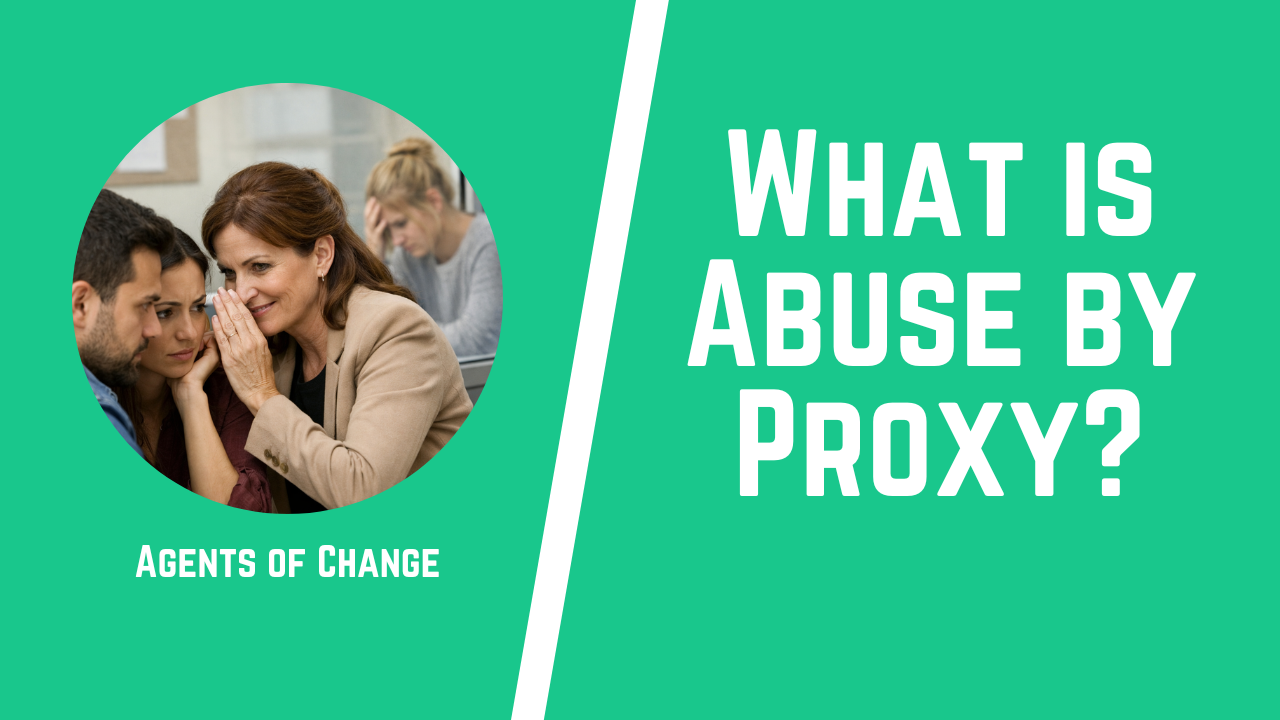
So, what is abuse by proxy? At its simplest, it involves one person influencing or manipulating others to carry out harmful actions on their behalf. These actions may appear disconnected at first, but over time, a pattern can emerge. Relationships shift, trust erodes, and the person affected may feel increasingly isolated without understanding why these changes are happening.

Because this form of abuse operates indirectly, it often goes unnoticed or misunderstood. People involved may not realize they are being used, and those targeted can struggle to articulate what is happening. By bringing awareness to these dynamics, it becomes easier to recognize the signs, understand the impact, and begin finding ways to respond with clarity and confidence.

Did you know? Agents of Change Continuing Education offers Unlimited Access to 150+ ASWB and NBCC-approved online CE courses and 15+ Live Events per year for one low annual fee to meet your state’s requirements for Continuing Education credits and level up your career.

We’ve helped hundreds of thousands of Social Workers, Counselors, and Mental Health Professionals with Continuing Education, learn more here about Agents of Change and claim your 7.5 free CEUs.

1) What is Abuse by Proxy?

At a glance, abuse might seem like something obvious, direct, and easy to identify. But that’s not always how it unfolds. Sometimes, harm is carried out indirectly, through other people, systems, or situations. That’s where things get complicated.

So, what is abuse by proxy? It’s a form of manipulation in which one individual uses others to inflict harm on a target. Instead of acting themselves, they influence, persuade, or even subtly pressure third parties to carry out behaviors that damage another person emotionally, socially, or even professionally.

The result? The target experiences real harm, yet the source of that harm feels scattered and difficult to pinpoint.


How Abuse by Proxy Works

Abuse by proxy doesn’t happen randomly. It typically follows a pattern, even if it’s not immediately obvious.

An individual may begin by shaping a narrative about the target. Then, they selectively share that narrative with others. Over time, those people may begin to act differently, often without realizing they are participating in a larger dynamic.

Here’s how it often plays out:

  • The abuser frames the target in a negative or misleading way
  • Information is shared selectively or distorted
  • Third parties respond based on that information
  • The target experiences exclusion, criticism, or consequences
  • The abuser maintains distance and denies involvement

It’s subtle, but intentional.


Key Characteristics of Abuse by Proxy

While every situation is unique, some common traits define this type of abuse.

Indirect Action

The harm is delivered through others rather than directly. This creates distance between the abuser and the consequences.

Manipulation of Perception

The abuser often controls how others view the target by sharing partial truths or misleading information.

Lack of Transparency

Communication tends to happen behind the scenes, leaving the target out of the loop.

Plausible Deniability

Because the abuser is not acting openly, they can easily deny responsibility if questioned.


Common Methods Used in Abuse by Proxy

There are several ways this dynamic can show up in everyday life. Some are more obvious than others.

Social Influence and Rumors

  • Spreading gossip or selective stories
  • Encouraging others to question or distrust the target
  • Framing the target as difficult or problematic

Emotional Manipulation Through Others

  • Using friends or family members to deliver messages
  • Encouraging others to confront or distance themselves from the target
  • Creating situations where the target feels rejected or misunderstood

Institutional or System-Based Actions

  • Filing complaints or reports without a valid cause
  • Involving authority figures to create pressure or consequences
  • Misusing the workplace or legal systems to target someone

Using Children or Dependents

  • Coaching a child to repeat certain statements
  • Encouraging loyalty conflicts
  • Limiting or controlling communication between the child and another adult

Who Are the “Proxies”?

One of the most challenging aspects of abuse by proxy is that the people involved are often unaware of their role.

Proxies can include:

  • Friends or acquaintances
  • Family members
  • Coworkers or supervisors
  • Teachers, counselors, or authority figures
  • Online communities or social groups

They may believe they are acting on accurate information or trying to help. In reality, they are being influenced in ways they may not fully understand.


Why This Form of Abuse Is So Confusing

It’s not just the behavior itself that makes abuse by proxy difficult to recognize. It’s the way it feels from the inside.

People experiencing it often report:

  • A sense that something is “off” but hard to explain
  • Sudden changes in how others treat them
  • Feeling judged or excluded without a clear reason
  • Difficulty identifying a single source of conflict

And because everything seems indirect, it’s easy to second-guess what’s happening.


The Core Idea to Remember

At its heart, abuse by proxy is about control through influence. It’s not loud or obvious. It’s quiet, layered, and often hidden behind other people’s actions. Understanding this concept is the first step toward recognizing it. Once you begin to see the patterns, the confusion starts to lift, and what once felt scattered begins to make a lot more sense.

Learn more about Agents of Change Continuing Education. We’ve helped hundreds of thousands of Social Workers, Counselors, and Mental Health Professionals with their online continuing education and CEUs, and we want you to be next!

2) Why Abuse by Proxy Is So Hard to Recognize

At first, something just feels off. Maybe people are acting differently, conversations seem strained, or opportunities start slipping away without a clear explanation. Still, nothing points directly to a single cause. That’s what makes abuse by proxy so difficult to recognize. It doesn’t arrive in a way that’s easy to name or confront.

Because the behavior is indirect, it often hides behind normal social interactions, misunderstandings, or everyday conflict. Many people experiencing it struggle to explain what’s happening, which can lead to self-doubt and hesitation. Over time, that uncertainty can become just as damaging as the behavior itself.

Let’s take a closer look at why this form of abuse is so challenging to identify.


1. Indirect Behavior Masks the Source

Unlike direct abuse, where the harmful behavior comes from a clearly identifiable person, abuse by proxy is carried out through others. This creates distance between the person orchestrating the harm and the actual impact.

As a result:

  • There’s no obvious “main actor” to point to
  • Harmful actions appear disconnected or coincidental
  • The situation feels scattered rather than targeted

This lack of a clear source makes it harder to trust your instincts.


2. It Often Looks Like Miscommunication

Abuse by proxy can easily be mistaken for simple misunderstandings. People may assume:

  • “Maybe wires just got crossed”
  • “They probably heard something wrong”
  • “This will clear up on its own”

Because miscommunication is so common in everyday life, it becomes a convenient explanation. Meanwhile, the underlying pattern continues unnoticed.


3. Multiple People Are Involved

When several people begin acting differently, it can create a sense that the issue must be widespread or even justified. This is especially confusing because:

  • It feels unlikely that multiple people would be wrong
  • Social pressure can make the situation seem valid
  • The target may feel outnumbered or overwhelmed

In reality, these individuals may all be responding to the same manipulated narrative.


4. Proxies May Be Unaware

The people being used as intermediaries often don’t realize they are part of a harmful dynamic. They may believe they are:

  • Helping resolve a situation
  • Acting on accurate information
  • Supporting someone they trust

Because their intentions may seem genuine, it becomes harder to question their behavior or recognize the influence behind it.


5. Plausible Deniability Protects the Abuser

One of the defining features of abuse by proxy is the ability for the orchestrator to deny involvement. If confronted, they can easily say:

  • “I didn’t tell them to do that”
  • “I had nothing to do with it”
  • “You’re making assumptions”

Without direct evidence, these denials can feel convincing, even when something doesn’t add up.


6. Emotional Impact Clouds Clarity

Experiencing this type of situation can trigger strong emotional responses, including anxiety, confusion, and self-doubt. Over time, this can lead to:

  • Questioning your own perception
  • Minimizing what’s happening
  • Feeling hesitant to speak up

When your confidence in your own interpretation starts to slip, recognizing patterns becomes much harder.


7. Lack of Clear Evidence

Abuse by proxy often leaves little concrete proof. There may not be:

  • Written communication directly linking the abuser to the actions
  • Witnesses who see the full picture
  • Clear timelines that are easy to document

Instead, the evidence tends to be subtle and spread out, which can make it difficult to validate concerns.


8. Social Dynamics Can Reinforce the Pattern

Group behavior plays a powerful role. When a narrative spreads, even informally, people may align with it without questioning its accuracy.

This can lead to:

  • Groupthink or shared assumptions
  • Exclusion that feels socially justified
  • A growing divide between the target and others

And once that momentum builds, it can be hard to reverse.


Bringing It All Together

Recognizing abuse by proxy requires looking beyond isolated incidents and paying attention to patterns. It’s not always about one clear event. It’s about how multiple small moments connect over time.

If something consistently feels confusing, unfair, or orchestrated, it’s worth taking a closer look. Awareness doesn’t solve everything right away, but it does provide a starting point. And sometimes, that clarity is exactly what’s needed to begin making sense of what once felt impossible to explain.

Agents of Change has helped hundreds of thousands of Social Workers, Counselors, and Mental Health Professionals with Continuing Education, learn more here about Agents of Change and claim your 7.5 free CEUs!

3) Common Forms of Abuse by Proxy

Abuse by proxy doesn’t follow just one script. It adapts to different environments, relationships, and power structures. That’s part of what makes it so difficult to spot. The behaviors may look completely different on the surface, yet they share the same core pattern of indirect harm through others.

Below are five of the most common forms, along with how they typically show up and what makes each one so impactful.


1. Parental Alienation

This form often occurs in separated or divorced families, where one parent influences a child to distance themselves from the other parent.

It can involve:

  • Speaking negatively about the other parent
  • Limiting or interfering with communication
  • Encouraging the child to feel fear, anger, or distrust

Over time, the child may begin to internalize these messages, believing they are their own thoughts. The child becomes the proxy, carrying emotional weight they may not fully understand.


2. Social Smear Campaigns

In this form, the abuser spreads selective or misleading information within a social circle to damage the target’s reputation.

This might look like:

  • Sharing one-sided stories
  • Framing the target as difficult or unstable
  • Encouraging others to distance themselves

The result is often social isolation. Friends may pull away without ever having a direct conversation with the person being targeted.


3. Workplace Manipulation

Professional environments can provide fertile ground for abuse by proxy, especially where hierarchy and communication gaps exist.

Common tactics include:

  • Influencing coworkers or supervisors with biased narratives
  • Excluding the target from meetings or opportunities
  • Undermining credibility through indirect feedback

Because workplace decisions often rely on perception, even subtle manipulation can have serious consequences for someone’s career.


4. Institutional or Legal Abuse by Proxy

In some cases, systems and institutions are used as tools to exert pressure or cause harm.

This can involve:

  • Filing false or exaggerated complaints
  • Misusing legal processes to create stress or financial burden
  • Reporting someone to regulatory boards without valid cause

Even when claims are unfounded, the process itself can be overwhelming and damaging. The system becomes the proxy, carrying out the impact.


5. Triangulation in Relationships

Triangulation happens when a third person is brought into a conflict to avoid direct communication.

This often includes:

  • Relaying messages through others instead of speaking directly
  • Recruiting someone to take sides
  • Creating tension between individuals who might otherwise resolve issues on their own

It can occur in families, friendships, and romantic relationships. Over time, it erodes trust and creates unnecessary division.


Why These Forms Matter

Each of these forms may look different, yet they all rely on the same underlying dynamic. Someone is influencing others to act in ways that harm a target, often without those intermediaries realizing their role.

Recognizing these patterns is a powerful step. Once you can identify the form it’s taking, the situation becomes less confusing and more manageable. And that clarity can make all the difference when deciding how to respond.

4) How Mental Health Professionals Can Support Clients in Responding to Abuse by Proxy

When clients are dealing with abuse by proxy, they often arrive in therapy feeling confused, invalidated, and emotionally drained. They may struggle to explain what’s happening because the harm isn’t direct or easy to prove. As a result, one of the most important roles mental health professionals play is helping clients make sense of their experience without minimizing it.

Support in these situations requires a thoughtful, nuanced approach. It’s not just about addressing symptoms like anxiety or stress. It’s about helping clients recognize patterns, rebuild trust in their own perception, and develop practical ways to respond.


1. Validate the Client’s Experience

Many individuals experiencing abuse by proxy have already been dismissed or misunderstood. They may have heard things like “you’re overthinking it” or “that doesn’t sound intentional.”

That’s why validation is critical.

Mental health professionals can:

  • Acknowledge the client’s emotional reality
  • Reflect patterns they are noticing in the client’s story
  • Normalize confusion given the indirect nature of the behavior

Even simple statements like “that sounds incredibly frustrating” or “it makes sense you’d feel unsettled” can help restore a sense of grounding.


2. Help Clients Identify Patterns

Because abuse by proxy is often subtle, clients may focus on isolated incidents rather than the broader pattern. Clinicians can gently guide clients toward seeing connections over time.

This might include:

  • Mapping out timelines of events
  • Identifying repeated themes in interactions
  • Exploring shifts in relationships or environments

Once patterns become clearer, clients often feel a sense of relief. Things begin to make more sense, and that clarity can reduce self-doubt.


3. Strengthen Reality Testing and Self-Trust

A major impact of abuse by proxy is the erosion of self-trust. Clients may question their instincts or feel unsure about what is real.

Therapists can support this by:

  • Encouraging clients to reflect on their observations
  • Differentiating between facts, interpretations, and assumptions
  • Reinforcing the client’s ability to evaluate situations thoughtfully

Over time, this helps rebuild confidence in their own judgment.


4. Develop Healthy Boundaries

Boundaries are essential when navigating indirect harm. Clients may need support in deciding where to limit contact or how to respond to certain individuals.

This process can involve:

  • Identifying relationships that feel unsafe or draining
  • Practicing assertive communication skills
  • Exploring when disengagement may be the healthiest option

Boundaries don’t have to be extreme to be effective. Even small shifts can create meaningful protection.


5. Build Coping and Emotional Regulation Skills

The uncertainty and social stress associated with abuse by proxy can trigger anxiety, anger, or sadness. Helping clients manage these emotions is a key part of the work.

Clinicians might introduce:

  • Grounding techniques to reduce overwhelm
  • Cognitive strategies to challenge unhelpful thoughts
  • Mindfulness practices to stay present and centered

These tools give clients a sense of control, even when external circumstances feel unpredictable.


6. Support Strategic Decision-Making

Clients often face difficult choices, such as whether to confront others, report concerns, or step away from certain environments. There’s rarely a one-size-fits-all answer.

Mental health professionals can help by:

  • Exploring potential outcomes of different choices
  • Weighing risks and benefits
  • Supporting decisions that align with the client’s values and safety

The goal is not to direct the client, but to empower them to make informed, confident decisions.


7. Encourage External Support Systems

Isolation is a common consequence of abuse by proxy. Rebuilding connection is an important part of healing.

Therapists can encourage clients to:

  • Identify safe, trustworthy individuals
  • Reconnect with supportive relationships
  • Consider group support or community resources

Even one stable connection can significantly improve resilience.


8. Stay Informed Through Continuing Education

Because abuse by proxy can be complex and easily overlooked, ongoing professional development is essential. Staying informed helps clinicians recognize subtle dynamics and respond effectively. Resources like Agents of Change Continuing Education offer valuable training opportunities. They provide more than 150 ASWB and NBCC-approved courses designed for therapists, social workers, counselors, and mental health professionals. In addition, they host over 15 live continuing education events each year, offering practical insights into real-world clinical challenges.

Even better, Agents of Change Continuing Education is one of the most affordable options available. For $99 per year, professionals gain access to a growing library of courses, 15+ live events annually, and ongoing learning opportunities that support effective, ethical practice.


Bringing It All Together

Supporting clients through abuse by proxy requires patience, awareness, and a strong therapeutic alliance. It’s about helping clients move from confusion to clarity, from self-doubt to self-trust.

When mental health professionals provide validation, insight, and practical tools, clients are better equipped to navigate these complex dynamics. And while the situation itself may be indirect, the support offered in therapy can be direct, steady, and deeply impactful.

5) FAQs – Abuse by Proxy

Q: How is abuse by proxy different from direct emotional or psychological abuse?

A: Abuse by proxy differs because the harm is carried out indirectly through other people rather than through direct interaction. In traditional emotional or psychological abuse, the source of harm is usually clear and identifiable.

With abuse by proxy, the individual orchestrating the behavior may never openly engage in harmful actions, which creates confusion and makes it harder to recognize. This indirect nature often leads victims to question their experiences, since the behavior appears fragmented across multiple people rather than coming from a single source.

Q: What should I do if I think I’m experiencing abuse by proxy?

A: If you suspect you’re experiencing abuse by proxy, start by paying attention to patterns rather than isolated incidents. Document interactions, changes in relationships, and any recurring themes that feel connected.

Try to maintain direct communication where possible to clarify misunderstandings, but also recognize when setting boundaries is necessary. Seeking support from a therapist or counselor can be incredibly helpful, as they can provide an outside perspective and help you process what’s happening. You don’t have to figure it out alone, even if the situation feels unclear.

Q: Can someone participate in abuse by proxy without realizing it?

A: Yes, and this is one of the most challenging aspects of abuse by proxy. Many people who act as intermediaries, or “proxies,” believe they are responding to accurate information or helping resolve a situation.

They may not be aware that they are being influenced or manipulated. This lack of awareness can make the situation even more difficult to address, since intentions may appear harmless on the surface. Understanding this dynamic can help victims approach the situation with more clarity, even when others involved do not recognize their role.

6) Conclusion

Understanding abuse by proxy brings clarity to a form of harm that often feels confusing and difficult to explain. When actions are carried out indirectly through others, it can leave individuals questioning their own experiences and struggling to identify what is really happening. Recognizing the patterns behind this behavior is an important step toward regaining a sense of control and confidence.

While the impact of abuse by proxy can be deeply unsettling, awareness creates a path forward. By identifying warning signs, setting boundaries, and seeking support, individuals can begin to navigate these situations with greater clarity. Mental health professionals, supportive relationships, and continued education all play a role in helping people process and respond effectively.

————————————————————————————————————————————————

► Learn more about the Agents of Change Continuing Education here: https://agentsofchangetraining.com

About the Instructor, Dr. Meagan Mitchell: Meagan is a Licensed Clinical Social Worker and has been providing Continuing Education for Social Workers, Counselors, and Mental Health Professionals for more than 10 years. From all of this experience helping others, she created Agents of Change Continuing Education to help Social Workers, Counselors, and Mental Health Professionals stay up-to-date on the latest trends, research, and techniques.

#socialwork #socialworker #socialwork #socialworklicense #socialworklicensing #continuinged #continuingeducation #ce #socialworkce #freecesocialwork #lmsw #lcsw #counselor #NBCC #ASWB #ACE

Disclaimer: This content has been made available for informational and educational purposes only. This content is not intended to be a substitute for professional medical or clinical advice, diagnosis, or treatment

Note: Certain images used in this post were generated with the help of artificial intelligence.

Share:

Discover more from Agents of Change

Subscribe now to keep reading and get access to the full archive.

Continue reading

SOCIAL WORK MONTH SPECIAL: Unlimited CE + Live Events for $49. Spots are limited!