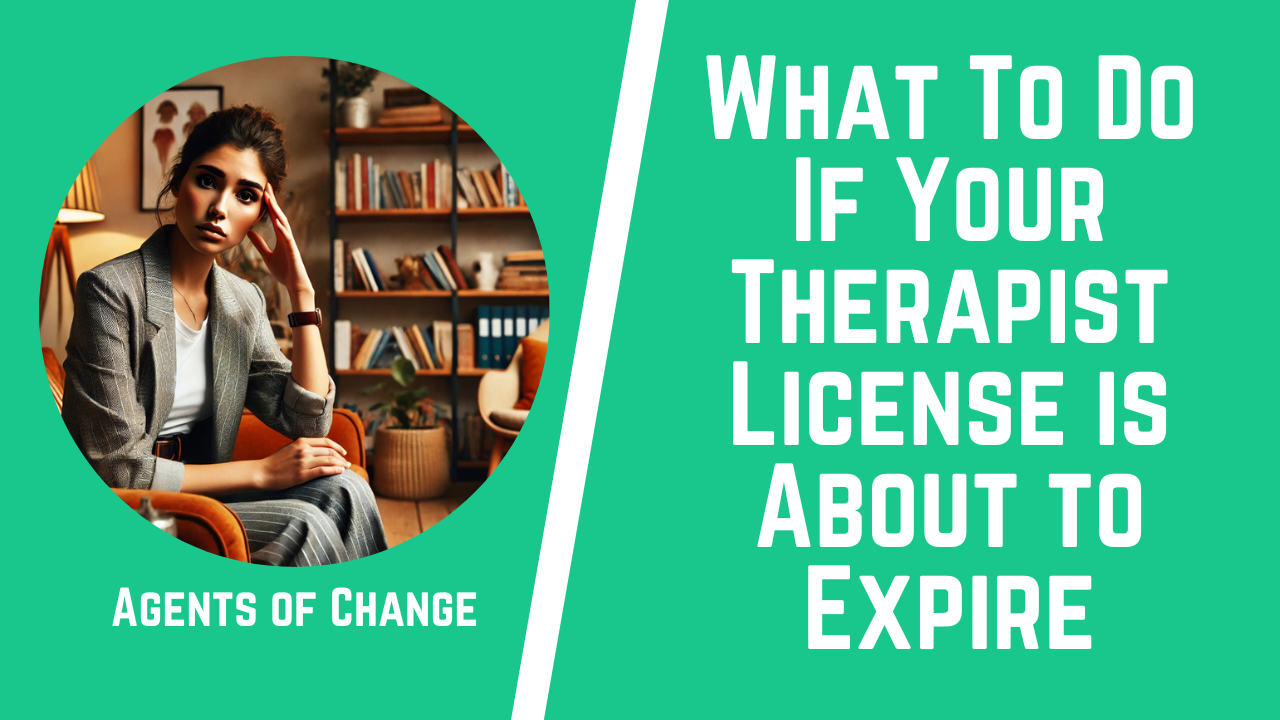
Realizing your therapist license is about to expire can be a nerve-wracking moment. Keeping your license current is more than just a legal requirement—it’s a professional lifeline. Without it, your ability to practice and serve your clients is at risk. The good news? Renewing your license doesn’t have to be a chaotic, last-minute scramble. With the right steps and resources, you can tackle this challenge head-on and come out stronger for it.
In this post, we’ll break down exactly what to do if your therapist license is about to expire. From understanding renewal requirements to fulfilling your continuing education credits, we’ll guide you through the process so you can stay on top of your professional responsibilities.
We’ll also spotlight Agents of Change Continuing Education, a trusted resource for Social Workers and Mental Health Professionals, offering more than 150 approved courses to help you meet your continuing education needs quickly and conveniently.
This isn’t just about checking off a box on your to-do list; it’s about maintaining your credibility, serving your clients effectively, and avoiding unnecessary stress. So if you’re staring down an upcoming deadline or just want to be prepared for the future, you’re in the right place. Let’s dive in and make sure you’re ready to handle your license renewal with confidence!
Did you know? Agents of Change Continuing Education offers Unlimited Access to 150+ ASWB and NBCC-approved CE courses for one low annual fee to meet your state’s requirements for Continuing Education credits and level up your career.
We’ve helped thousands of Social Workers, Counselors, and Mental Health Professionals with Continuing Education, learn more here about Agents of Change and claim your 5 free CEUs.
1) Recognizing the Signs: Is Your License About to Expire?
It’s surprisingly easy for license renewal deadlines to sneak up on busy professionals. Between managing clients, paperwork, and continuing education requirements, you might not notice your license’s expiration date creeping closer. Here’s how to recognize the signs that your therapist license is about to expire and take action before it’s too late.

1. Check Your Expiration Date
One of the simplest ways to confirm your license status is to check its expiration date. Your licensing board should have provided this information when you first received or last renewed your license.
-
Where to Look:
- Your physical or digital license
- Emails or letters from your licensing board
- Your board’s online portal (many offer real-time updates on your license status)
-
Pro Tip: Set a calendar reminder a few months before your expiration date to avoid last-minute panic.
2. Understand Your Renewal Cycle
Every profession and state has its own renewal timeline. Some licenses need to be renewed annually, while others have two- or three-year cycles. If you’re not sure, check with your licensing board or consult the renewal policies outlined on their website.
Key Questions to Ask Yourself:
- When did I last renew my license?
- Is my license due for renewal this year?
- Are there additional requirements for this renewal cycle (like fingerprinting or updated background checks)?
Staying aware of your specific renewal timeline can save you a lot of stress and ensure you’re always ahead of schedule.
3. Missing or Overlooked Notices
Licensing boards typically send renewal reminders, but it’s easy for these notices to get lost in the shuffle. If you’ve missed these communications, you might be closer to your expiration date than you think.
Signs You May Have Missed Renewal Notices:
- You haven’t received any emails or letters about your renewal.
- Your address or email on file with the licensing board is outdated.
- You can’t remember the last time you logged into your licensing board’s portal.
Quick Fix: Log into your account with your licensing board and confirm your contact information. While you’re there, check your renewal status directly.
4. Monitor Your Continuing Education Credits
For many Mental Health Professionals, completing continuing education credits is a prerequisite for license renewal. If you haven’t been keeping up with these requirements, it might be a sign that your renewal deadline is near.
Questions to Ask Yourself About CE Credits:
- Have I completed the required CEUs for this renewal cycle?
- Do I have proof of completed courses (certificates, transcripts)?
- Are my CE providers board-approved?
If you’re falling short on credits, consider a trusted provider like Agents of Change Continuing Education. They offer over 150 approved courses for Social Workers, Therapists, and Counselors, plus live events throughout the year, making it easy to catch up fast.
5. Watch for Red Flags in Your Daily Practice
Finally, keep an eye out for small signs in your professional routine that might indicate your license is nearing expiration:
- Billing Issues: Insurance companies often require proof of an active license for reimbursement.
- Client Trust: Some clients may ask about your credentials and licensing status, especially if they’ve heard about renewal delays in the news.
- Professional Anxiety: If you’re feeling uneasy about whether your license is current, it’s worth double-checking.
Action Plan: Don’t Ignore the Signs
Recognizing these signs early can save you from unnecessary stress and complications. Start by confirming your license’s expiration date, reviewing your CEU progress, and ensuring your contact information with the licensing board is up to date.
By staying proactive, you can avoid the frantic rush to renew and keep your focus on what matters most: serving your clients with professionalism and care.
Learn more about Agents of Change Continuing Education. We’ve helped thousands of Social Workers, Counselors, and Mental Health Professionals with their continuing education, and we want you to be next!
2) The Steps to Take When You Realize Your Therapy License Is About to Expire
If you’ve discovered your therapist license is on the verge of expiration, don’t panic—take action! Acting quickly and methodically will save you time, reduce stress, and keep you on track professionally. Here’s a step-by-step guide to help you navigate this situation smoothly.
1. Confirm Your License Status
Before doing anything else, verify your current license status. You may be closer to expiration than you thought—or perhaps already expired.

How to Check:
- Log Into Your Licensing Board’s Portal: Most boards have an online system where you can view your license details.
- Review Renewal Notices: Check emails or letters from your licensing board for the most up-to-date information.
- Contact Your Licensing Board: If you’re unsure about your status, reach out directly. They can provide specific details about your expiration date and renewal requirements.
2. Understand Renewal Requirements
Every state and profession has its own rules for license renewal. Familiarize yourself with these so you know exactly what you need to do.
Key Information to Gather:
- Deadline: When is your renewal application due?
- CE Requirements: How many continuing education credits do you need, and in what areas?
- Fees: What are the renewal and late fees, if applicable?
- Supporting Documents: Are there additional forms or background checks required?
3. Complete Outstanding Continuing Education Credits
If you’re short on CE credits, this is your top priority. Many boards won’t process your renewal application without proof of completed credits.
Quick CE Solutions:
- Use a Trusted CE Provider: Agents of Change Continuing Education offers over 150 ASWB and NBCC-approved courses for Social Workers and Mental Health Professionals.
- Look for Live Events: Agents of Change also hosts live continuing education events throughout the year, which can be a great way to earn credits quickly.
- Verify Board Approval: Ensure the courses you take meet your licensing board’s criteria.
Tips for Success:
- Focus on courses that fulfill mandatory topics like ethics or trauma-informed care.
- Save all certificates or transcripts for proof during renewal.
4. Gather and Submit Required Documents
Once your CEUs are complete, it’s time to gather and submit all required materials.
Common Requirements Include:
- Renewal Application: Complete the form provided by your licensing board.
- CE Documentation: Submit certificates of completion for all required credits.
- Payment: Pay the renewal fee (and any late fees if applicable).
- Additional Forms: Some boards may require updated background checks or notarized documents.
Submit your application as soon as possible to avoid delays. Some boards may take weeks to process renewals, so time is of the essence.
5. Stop Practicing if Necessary
If your license has already expired, you must pause your practice immediately to avoid legal and ethical issues.
Steps to Take:
- Notify Your Clients: Inform them of a temporary suspension in services and provide referrals if needed.
- Contact Supervisors or Employers: If you’re part of an agency, let your supervisors know your situation.
- Focus on Reinstatement: Prioritize completing all renewal or reinstatement requirements.
6. Follow Up with Your Licensing Board
Once your renewal application is submitted, don’t assume everything is taken care of.
Follow-Up Checklist:
- Confirm Receipt: Reach out to your licensing board to ensure they’ve received your materials.
- Check Processing Times: Ask how long it will take to finalize your renewal.
- Verify Updated Status: Once processed, confirm that your license is active and up to date.
Stay Ahead of Future Expiration Dates
Once your license is renewed, take steps to avoid this situation in the future:
- Set calendar reminders well before your next expiration date.
- Use tools like Agents of Change Continuing Education to plan and complete your CE requirements throughout the year.
- Keep copies of all documents for easy reference during your next renewal cycle.
By following these steps, you’ll ensure your license remains active, your practice stays uninterrupted, and your clients receive the professional care they depend on.
We’ve helped thousands of Social Workers, Counselors, and Mental Health Professionals with Continuing Education, learn more here about Agents of Change and claim your 5 free CEUs!
3) Common Challenges and How to Tackle Them
Renewing your therapist license can sometimes feel like navigating an obstacle course. From last-minute CE requirements to confusing paperwork, challenges arise that can derail the process if you’re not prepared. The good news? Most of these issues have straightforward solutions. Here’s how to tackle common challenges and keep your license renewal on track.

1. Falling Behind on Continuing Education Requirements
One of the most frequent challenges professionals face is not having enough continuing education (CE) credits by the time their renewal deadline approaches.
Why It Happens:
- Busy schedules make it hard to prioritize CE courses.
- Forgetting to track completed credits throughout the year.
- Misunderstanding the types of courses required by your licensing board.
How to Tackle It:
- Plan Ahead: Schedule CE courses throughout the year instead of waiting until the last minute.
- Use a Reliable Provider: Enroll with a trusted resource like Agents of Change Continuing Education, which offers over 150 ASWB and NBCC-approved courses for Social Workers and Mental Health Professionals.
- Focus on Requirements: Prioritize courses in mandated topics like ethics, diversity, or trauma.
2. Missing Renewal Deadlines
Renewal deadlines are easy to miss, especially if you’re juggling a busy practice. Unfortunately, missing the deadline can lead to penalties or even license suspension.
Why It Happens:
- Not keeping track of the expiration date.
- Relying on renewal reminders that never arrive (or get lost in your inbox).
How to Tackle It:
- Set Calendar Alerts: Add multiple reminders leading up to your renewal deadline.
- Double-Check Contact Information: Ensure your licensing board has your current email and mailing address so you don’t miss important notices.
- Act Early: Start the renewal process at least 3–6 months before your license expires.
3. Confusion Over Licensing Board Requirements
Every licensing board has its own set of rules for renewal, which can sometimes feel like navigating a maze of regulations.
Why It Happens:
- Requirements vary by state, making it easy to get mixed up.
- CE courses might not meet board standards if they aren’t pre-approved.
- Some boards require additional steps, like fingerprinting or background checks.
How to Tackle It:
- Read the Guidelines: Review your licensing board’s website for specific renewal instructions.
- Contact the Board: If anything is unclear, don’t hesitate to ask questions.
- Use Approved CE Providers: Opt for platforms like Agents of Change Continuing Education to ensure your courses meet board standards.
4. Losing Important Documentation
Proof of completed CE credits, renewal forms, and payment receipts are essential for a smooth process. Losing these documents can cause unnecessary delays.
Why It Happens:
- Forgetting to save digital or physical copies of certificates.
- Misplacing receipts or forgetting where you stored completed applications.
How to Tackle It:
- Organize Your Files: Create a dedicated folder (digital and/or physical) for all licensing-related documents.
- Back Up Records: Save CE certificates and receipts in multiple locations, like a cloud drive and an external hard drive.
- Request Duplicates: If you lose documentation, contact your CE provider or licensing board to request replacements.
5. Financial Constraints
License renewal fees and the cost of CE courses can add up, especially for professionals on a tight budget.
Why It Happens:
- Renewal fees and CE costs aren’t always planned for in advance.
- Unexpected expenses may leave little room in your budget.
How to Tackle It:
- Budget Early: Include renewal-related costs in your annual financial plan.
- Choose Affordable CE Options: Agents of Change Continuing Education offers competitively priced courses to help you earn credits without breaking the bank.
- Check for Discounts: Some CE providers offer discounts for early registration or bundled courses.
6. Delays in Processing Renewal Applications
Even after submitting everything, some professionals experience delays in having their licenses renewed.
Why It Happens:
- High volume of applications near deadlines.
- Missing or incomplete documentation in the application.
- Delays in verifying CE credits or background checks.
How to Tackle It:
- Submit Early: Avoid the rush by completing your renewal well before the deadline.
- Follow Up: Contact your licensing board to check the status of your application if it seems delayed.
- Keep Practicing Rules in Mind: If your license is still being processed but hasn’t expired, confirm with your board whether you can continue practicing during the interim.
Final Thoughts
Challenges with license renewal are common, but they’re not insurmountable. By planning ahead, staying organized, and utilizing trusted resources like Agents of Change Continuing Education, you can overcome these obstacles and ensure your professional credentials remain in good standing. The key is to act promptly and methodically—your clients, career, and peace of mind depend on it!
4) Preventing Future Issues with Licensure Renewal
Renewing your therapist license doesn’t have to be a stressful experience. With a little planning and organization, you can avoid last-minute scrambles and stay on top of your licensure requirements. Here’s how to set yourself up for success and ensure your license renewal process goes smoothly every time.
1. Set Up a Reliable Reminder System
The most common reason professionals face licensure renewal issues is simply forgetting about their expiration date. A reliable reminder system can solve this problem.
Strategies for Staying Alert:
- Use Digital Tools: Set calendar alerts on your phone or email system at key intervals (e.g., six months, three months, and one month before your license expires).
- Leverage Licensing Board Portals: Many boards offer automated reminders or email updates. Make sure your contact information is up to date.
- Physical Reminders: If you’re old-school, write your expiration date on a visible calendar or sticky note near your workspace.
2. Plan Continuing Education Throughout the Year
Scrambling to complete your CE credits just before your renewal deadline is stressful and unnecessary. Spread out your continuing education requirements over time for a smoother experience.
Tips for CE Planning:
- Create a Yearly Schedule: Allocate specific months for completing CE courses.
- Stay Updated on Requirements: Check your board’s website annually for any changes in required topics or credit hours.
- Choose Flexible Providers: Platforms like Agents of Change Continuing Education offer a wide range of ASWB and NBCC-approved courses, making it easy to fulfill your requirements on your own timeline.
Pro Tip: Look for live events throughout the year to mix up your learning experience—Agents of Change regularly hosts live CE events that can make earning credits more engaging.
3. Keep Your Documentation Organized
Losing track of certificates, receipts, or applications can slow down the renewal process. An organized system will save you time and headaches.
How to Stay Organized:
- Use Digital Storage: Create a dedicated folder on your computer or cloud storage for all licensure-related files.
- Keep Physical Backups: For critical documents like CE certificates, maintain a physical file as a backup.
- Track Completed Credits: Use a simple spreadsheet to log CE courses, credit hours, and providers.
4. Stay Informed About Licensing Changes
Licensing requirements can change over time, so staying informed ensures you won’t miss new updates.
Ways to Stay Up-to-Date:
- Subscribe to Newsletters: Many licensing boards send updates via email.
- Join Professional Associations: Organizations for Social Workers or Mental Health Professionals often share important industry news.
- Attend Webinars or Conferences: Many events include sessions on licensure updates and requirements.
5. Budget for Renewal Costs
Renewal fees and CE courses can add up, so planning for these expenses will help avoid financial stress when deadlines approach.
Financial Tips:
- Set Aside Funds Annually: Include licensure renewal fees in your yearly budget.
- Look for Discounts: Many CE providers, like Agents of Change Continuing Education, offer package deals or discounted rates for bulk course purchases.
- Reinvest Tax Refunds: If you receive a tax refund, consider using part of it to cover professional expenses like CE credits or renewal fees.
6. Build a Routine for License Management
Treat your licensure renewal as an ongoing professional responsibility rather than a once-every-few-years task.
Steps to Build a Renewal Routine:
- Review Requirements Annually: Dedicate time each year to review your licensing board’s requirements.
- Complete CE Quarterly: Break your CE requirements into manageable chunks and complete a few hours each quarter.
- Track Renewal Dates in Advance: Always know when your license is due for renewal so you’re never caught off guard.
Final Thoughts
Preventing future issues with licensure renewal is all about preparation and consistency. By implementing reliable reminder systems, planning your continuing education in advance, and staying organized, you’ll save yourself time and stress. Resources like Agents of Change Continuing Education can make this process even easier with their diverse course offerings and live events.
By taking these proactive steps, you can focus on what you do best—serving your clients—without worrying about looming deadlines or unexpected hurdles.
5) FAQs – What To Do If Your Therapist License is About to Expire
Q: What happens if my therapist license expires?
A: If your therapist license expires, you are legally required to stop practicing immediately. Continuing to provide therapy or counseling services without an active license can lead to severe consequences, including fines, legal action, and potential harm to your professional reputation.
Additionally, reinstating an expired license may require extra steps, such as paying late fees, completing additional continuing education credits, or even retaking licensing exams, depending on your state’s regulations.
To avoid this, act promptly when you notice your license is nearing expiration. If you’ve already missed your deadline, contact your licensing board as soon as possible to understand their reinstatement process and requirements.
Q: How can I make sure I meet all my continuing education requirements on time?
A: The best way to ensure you meet continuing education (CE) requirements is to plan ahead and spread out your coursework throughout the renewal cycle. Here are some tips:
- Use a Reliable CE Provider: Enroll in courses through a trusted platform like Agents of Change Continuing Education, which offers more than 150 ASWB and NBCC-approved courses for Social Workers, Counselors, and Mental Health Professionals.
- Create a CE Plan: Dedicate time each quarter to complete some of your CE credits, focusing on topics that are required by your licensing board.
- Keep Records Organized: Save your CE certificates in both digital and physical formats to make the renewal process easier.
By staying proactive and using flexible course options, you can meet all your CE requirements well before your renewal deadline.
Q: What should I do if I’ve missed my license renewal deadline?
A: If you’ve missed your license renewal deadline, the first step is to stop practicing immediately to avoid legal and ethical violations. Next, contact your licensing board to understand their specific process for late renewals or reinstatement. Most boards will allow you to reinstate your license within a certain timeframe, although this may involve:
- Paying late renewal fees.
- Completing additional CE credits.
- Submitting extra documentation or undergoing a review process.
If you need to catch up on CE requirements quickly, Agents of Change Continuing Education is an excellent resource. They offer flexible online courses and live events to help you meet your credit requirements efficiently. The key is to act promptly—delaying further could result in more complex and costly reinstatement procedures.