
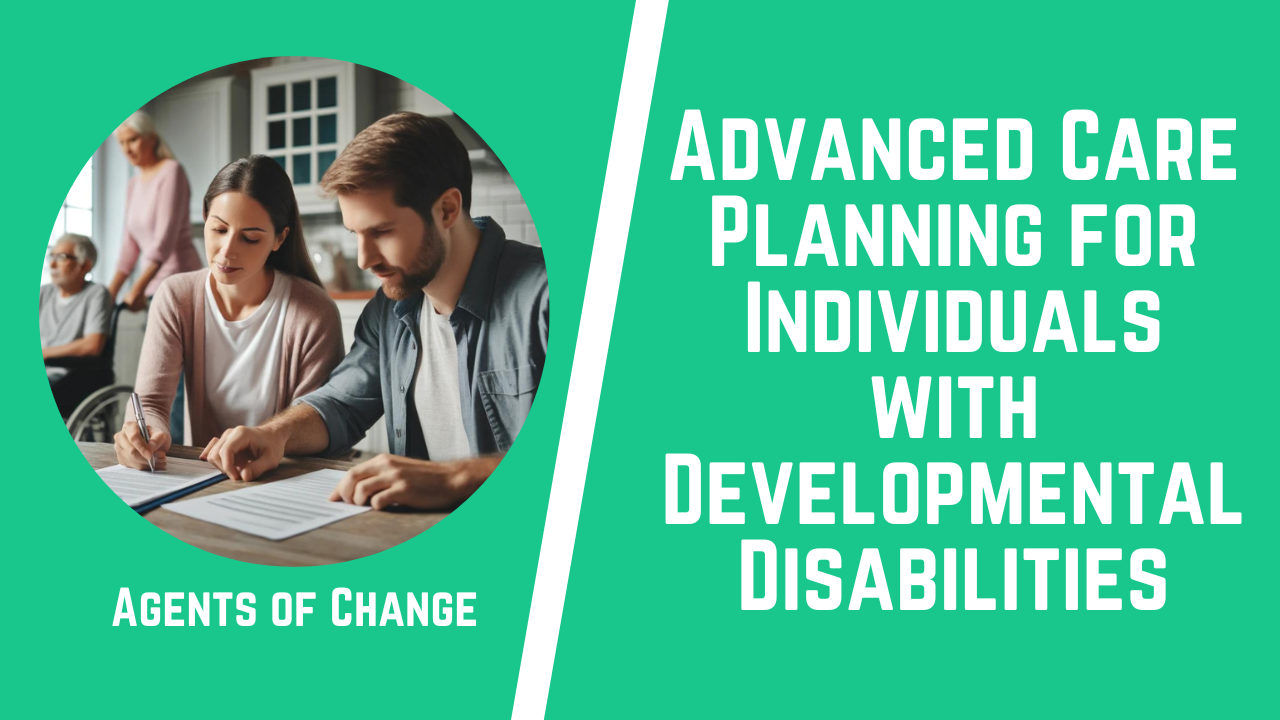
Advanced Care Planning for Individuals with Developmental Disabilities

Advanced Care Planning for Individuals with Developmental Disabilities

Navigating life’s pathways with developmental disabilities requires more than just day-to-day support; it demands a proactive approach to planning for the future. Advanced Care Planning (ACP) is a crucial process tailored to respect the rights, needs, and preferences of individuals with developmental disabilities, ensuring they have a say in their care throughout their lives. This planning is not just a set of legal documents; it is a deeply personal, ongoing conversation about an individual’s desires regarding medical care, living arrangements, and even end-of-life choices.

For many, the concept of ACP may seem daunting—filled with complex terminology and sensitive discussions. However, it’s truly about empowering individuals by preparing for situations where they might not be able to voice their needs and preferences. By engaging in Advanced Care Planning, families, caregivers, and the individuals themselves can create a clear, compassionate roadmap that honors the person’s values and wishes, making tough future decisions a little easier.

The role of Social Workers and other professionals in this process is important. They serve both as advocates and also as educators, guiding families through the intricate landscape of ACP. For professionals looking to deepen their expertise, resources like Agents of Change Continuing Education provide comprehensive courses designed to enhance understanding and skills in navigating these essential conversations.

Did you know? Agents of Change Continuing Education offers Unlimited Access to 150+ CE courses for one low annual fee to meet your state’s requirements for Continuing Education credits and level up your career.

We’ve helped thousands of Social Workers, Counselors, and Mental Health Professionals with Continuing Education, learn more here about Agents of Change and claim your 5 free CEUs.

1) Why ACP Matters for Individuals with Developmental Disabilities

Ensuring Personal Autonomy

Advanced Care Planning (ACP) is crucial in advocating for the personal autonomy of individuals with developmental disabilities. It facilitates a structured dialogue where these individuals can express their personal values, lifestyle preferences, and care expectations.

A young child with intellectual disabilities engaging autonomously in an educational activity in a classroom setting.

This dialogue is crucial because it helps ensure that their voices are heard, especially in situations where they might later be unable to communicate their desires effectively due to health issues.

  • Voice and Choice: Ensures that individuals have a say in their future medical care and living arrangements.
  • Legal Empowerment: Helps in setting up legal protections that respect the individual’s autonomy and enforce their care preferences.

Enhancing Quality of Life

The proactive nature of ACP significantly contributes to enhancing the quality of life for those with developmental disabilities. By discussing and documenting care preferences early, individuals are more likely to receive the type of care that aligns with their values and needs, which promotes greater satisfaction and comfort.

  • Consistency in Care: ACP helps maintain a consistent approach to health care and daily living that aligns with the individual’s preferences, even if their ability to communicate changes over time.
  • Reduction in Stress: Knowing that there is a plan in place can reduce anxiety and stress for both the individual and their caregivers, leading to a more stable and comforting environment.

Protecting Rights and Dignity

ACP is an empowering process that protects the legal rights of individuals with developmental disabilities and upholds their dignity by involving them in decisions that affect their lives. This is particularly important in medical or emergency situations where decisions might need to be made quickly.

  • Informed Consent: Facilitates an understanding of different medical procedures and interventions, ensuring that consent is informed and reflective of the individual’s preferences.
  • Dignity in Care: Promotes dignity in care by adhering to the wishes of the individual, preventing unwanted or unnecessary treatments that may not align with their personal values or enhance their well-being.

Facilitating Family and Caregiver Support

ACP also plays a critical role in guiding families and caregivers, providing them with clear directives on how to best support the individual. This planning eases the emotional and logistical burdens often faced during challenging times, ensuring that everyone involved understands the preferred course of action.

A caregiver assisting a diverse intellectually disabled child in a vibrant classroom setting, engaging in a painting activity.

  • Clarity and Direction: Provides clear guidelines and directions to caregivers and family members, reducing conflicts or uncertainties about care decisions.
  • Emotional Support: Prepares families and caregivers emotionally and logistically for future healthcare scenarios, ensuring that they have the support and resources they need to manage care transitions effectively.

Supporting Long-Term Planning

Long-term planning is essential for ensuring that individuals with developmental disabilities can lead fulfilling lives as they age. ACP addresses aspects like long-term housing, potential guardianship, and financial management, which are critical for sustaining care and quality of life over the long haul.

  • Future Security: Helps secure future living arrangements and financial security, which are crucial for continuous care.
  • Comprehensive Care Approach: Encourages a holistic approach to planning, which includes medical care, daily living support, and personal development.

Through ACP, individuals with developmental disabilities are not only protected legally and medically, but they are also respected as autonomous individuals with their own wishes and rights.

This process enhances their quality of life, supports their dignity, and ensures that their voices continue to guide their care, even if they lose the ability to communicate their needs directly.

Learn more about Agents of Change Continuing Education. We’ve helped thousands of Social Workers, Counselors, and Mental Health Professionals with their Continuing Education and want you to be next!

2) The ACP Process: A Step-by-Step Guide

Navigating the Advanced Care Planning (ACP) process can initially seem overwhelming. However, by breaking it down into clear, manageable steps, individuals with developmental disabilities, their families, and caregivers can approach ACP with confidence and clarity. Here’s a detailed, step-by-step guide to help streamline this essential process.

Step 1: Initiate the Conversation

The first step in ACP is initiating the conversation. This involves identifying the right time and setting, as well as ensuring that the individual feels comfortable and understood.

  • Choosing a Comfortable Setting: Select a quiet, private space where the individual feels safe and at ease.
  • Inclusive Discussion: Involve the individual, their family members, caregivers, and any other relevant parties in the discussion to ensure all perspectives are considered.
  • Professional Guidance: Consider involving a Social Worker or a healthcare provider who is experienced in ACP to facilitate the conversation and provide expert insights.

Step 2: Document Preferences and Decisions

Once the conversation has started, the next step is to document the preferences and decisions regarding future care. This includes living arrangements, medical care preferences, and any end-of-life care options.

  • Living Will: Draft a living will that outlines medical interventions the individual agrees to or refuses.
  • Durable Power of Attorney: Appoint a trusted person who can make decisions on the individual’s behalf if they become unable to do so.
  • Emergency Instructions: Create easily accessible instructions for emergencies, outlining critical medical information and contacts.

Step 3: Establish Legal and Ethical Guidelines

Legal considerations are paramount in ACP, ensuring that all decisions and documents are valid and enforceable.

  • Legal Review: Have all documents reviewed by a lawyer specializing in disability rights and family law to ensure they comply with state laws and protect the individual’s rights.
  • Ethical Considerations: Ensure that all decisions respect the individual’s rights, dignity, and personal values. This may involve ethical consultations with healthcare professionals.

Step 4: Communicate with Healthcare Providers

It’s crucial that all healthcare providers are aware of the individual’s ACP decisions to ensure that these preferences are respected across all settings.

  • Share Documents: Provide copies of all ACP documents to the individual’s primary care provider, specialists, and emergency contacts.
  • Regular Updates: As health conditions change, update healthcare providers about any new decisions or adjustments in the care plan.

Step 5: Review and Update Regularly

ACP is not a one-time event. It needs regular reviews and updates to remain relevant and reflective of the individual’s current needs and wishes.

  • Scheduled Reviews: Set a regular schedule to review the ACP documents, typically on an annual basis or after any major health diagnosis or change in living situation.
  • Adjustments as Needed: Make adjustments to the care plan and legal documents as the individual’s health, preferences, and circumstances evolve.

Step 6: Education and Advocacy

Educating the individual and their support network about ACP and advocating for their rights throughout the process are vital to its success.

  • Ongoing Education: Utilize resources from organizations like Agents of Change Continuing Education to stay informed about best practices in ACP.
  • Advocacy: Be proactive in advocating for the individual’s rights and ensuring that their preferences are respected by all parties involved.

By following these detailed steps, individuals with developmental disabilities and their support networks can effectively navigate the complexities of Advanced Care Planning. This ensures that their wishes are respected and that they receive the care that best aligns with their values and needs throughout their lives.

We’ve helped thousands of Social Workers with Continuing Education, learn more here about Agents of Change and claim your 5 free CEUs!

3) Real Challenges and Practical Solutions with ACP

Advanced Care Planning (ACP) for individuals with developmental disabilities presents unique challenges that require thoughtful solutions. Understanding these challenges and having practical strategies in place can make the process more effective and less stressful for everyone involved.

Understanding and Communicating Complex Information

One of the primary hurdles in ACP is the difficulty some individuals may have in understanding complex medical and legal information. This can make it challenging for them to make informed decisions.

A hospital social worker having a serious conversation with a family around a hospital bed. The scene captures the supportive yet intense atmosphere as they discuss complex medical decisions.

Practical Solutions:

  • Simplified Communication: Use clear, simple language and visual aids to explain complex concepts.
  • Repeated Discussions: Allow for multiple conversations to give the individual time to absorb and reflect on the information.
  • Professional Assistance: Engage professionals who are trained in working with people with developmental disabilities to facilitate understanding and decision-making.

Emotional and Psychological Barriers

The topics discussed during ACP, such as end-of-life care and loss of independence, can evoke strong emotions and may be difficult for the individual and their family to address.

Practical Solutions:

  • Supportive Environment: Create a supportive and empathetic environment during discussions. Acknowledge and validate feelings as they arise.
  • Professional Counseling: Incorporate mental health professionals into the ACP process to provide emotional support and guidance.
  • Phased Approach: Break the process into smaller, more manageable parts to avoid overwhelming the individual.

Legal and Ethical Concerns

Legal issues can complicate ACP, especially concerning the rights of individuals with developmental disabilities to make their own decisions. Ethical dilemmas may also arise, particularly around the degree of care and intervention.

Practical Solutions:

  • Legal Expertise: Consult with legal experts who specialize in disability rights to navigate any legal complexities and ensure that all documents are compliant with current laws.
  • Ethical Guidelines: Follow established ethical guidelines and consider consulting with an ethics committee when faced with difficult decisions.
  • Guardianship Considerations: Carefully consider the need for and extent of guardianship, aiming for the least restrictive form of decision-making support.

Family Dynamics and Conflict

Families may disagree about what is best for the individual, especially in emotionally charged situations or where there are differing beliefs about medical care and quality of life.

Practical Solutions:

  • Mediation: Use mediation services to help resolve conflicts among family members, ensuring that the focus remains on the best interests of the individual.
  • Inclusive Meetings: Include all key family members and caregivers in discussions to ensure everyone’s views are heard and considered.
  • Clear Documentation: Document all decisions and the reasons behind them to clarify understanding and intentions, reducing the potential for future disagreements.

Continuity of Care Across Settings

Ensuring that ACP decisions are followed across various care settings, such as from home care to hospital care, can be problematic, especially if there is a change in healthcare providers.

Practical Solutions:

  • Comprehensive Documentation: Keep detailed records that are easily accessible to all healthcare providers involved in the individual’s care.
  • Communication Bridges: Establish a protocol for communicating ACP decisions to all relevant parties, including new care providers and emergency personnel.
  • Regular Reviews: Regularly review and update the ACP to reflect any changes in the individual’s condition or care setting.

By recognizing these challenges and implementing practical solutions, stakeholders can greatly improve the effectiveness of Advanced Care Planning for individuals with developmental disabilities. This ensures that the individual’s rights are protected, their preferences are respected, and their dignity is upheld throughout their life.

4) FAQs – Advanced Care Planning for Individuals with Disabilities

Q: What happens if there’s no Advanced Care Planning in place for an individual with developmental disabilities?

A: Without an Advanced Care Planning (ACP) document, decisions regarding the care and treatment of individuals with developmental disabilities can become significantly more complicated and stressful, particularly in emergency situations. In the absence of ACP:

  • Legal Uncertainty: There may be legal confusion about who is authorized to make decisions on behalf of the individual.
  • Potential Conflict: Family members and caregivers might disagree about the best course of action, leading to conflicts or delays in medical care.
  • Inconsistent Care: Without a clear plan, medical and caregiving teams might not know the individual’s preferences, potentially leading to care that does not align with their values or wishes.

Q: Can the decisions made during Advanced Care Planning be changed later on?

A: Absolutely! Advanced Care Planning is a dynamic process designed to adapt to the changing preferences, needs, and circumstances of the individual with developmental disabilities. Decisions can and should be revisited periodically, especially if:

  • Health Changes: There are significant changes in the individual’s health status that might affect their care preferences.
  • New Information: New medical information or treatments become available that might influence decision-making.
  • Personal Wishes: The individual’s wishes change as they age or as they experience different aspects of their condition.

It is important to schedule regular reviews of all ACP documents and decisions to ensure they continue to reflect the individual’s current wishes and circumstances.

Q: How can Social Workers and other professionals enhance their skills in Advanced Care Planning for individuals with developmental disabilities?

A: Social Workers and other professionals can enhance their skills in ACP by engaging in continuous education and training, which helps them stay updated with the latest practices and regulations. Key strategies include:

  • Specialized Training: Participate in workshops, seminars, and courses focused on ACP, particularly those dealing with developmental disabilities. Agents of Change Continuing Education offers over 150 courses that are specifically designed to help Social Workers refine their skills and earn continuing education credits.
  • Collaboration and Networking: Collaborate with professionals across different fields to share insights and best practices. Networking can provide new perspectives and strategies that enhance ACP outcomes.
  • Utilizing Resources: Leverage resources from professional associations, online platforms, and expert-led sessions to stay informed about legal, ethical, and practical aspects of ACP.

5) Conclusion

Advanced Care Planning (ACP) for individuals with developmental disabilities is not only a clinical necessity but also an expression of respect for their autonomy and an essential component of compassionate care.

It’s a dynamic process that requires thoughtful conversation, careful planning, and continuous adaptation to changing circumstances. By prioritizing ACP, we not only ensure that the medical and personal care provided aligns with the individual’s preferences and needs but also that their dignity is maintained across all stages of life.

For families, caregivers, and professionals like Social Workers, engaging in ACP means embracing a commitment to understanding and advocating for those who may not always be able to speak for themselves.

It involves continuous education, like the resources provided by Agents of Change Continuing Education, which empower professionals to navigate the complexities of ACP with confidence and competence. With every conversation and decision, we step closer to a society that fully honors the rights and desires of individuals with developmental disabilities.

Learn more about Agents of Change Continuing Education. We’ve helped thousands of Social Workers, Counselors, and Mental Health Professionals with their Continuing Education and want you to be next!

————————————————————————————————————————————————

► Learn more about the Agents of Change Continuing Education here: https://agentsofchangetraining.com

About the Instructor, Meagan Mitchell: Meagan is a Licensed Clinical Social Worker and has been providing Continuing Education for Social Workers, Counselors, and Mental Health Professionals for more than 8 years. From all of this experience helping others pass their exams, she created Agents of Change Continuing Education to help Social Workers stay up-to-date on the latest trends, research, and techniques.

#socialwork #socialworker #socialwork #socialworklicense #socialworklicensing #continuinged #continuingeducation #ce #socialworkce #freecesocialwork #lmsw #lcsw

Disclaimer: This content has been made available for informational and educational purposes only. This content is not intended to be a substitute for professional medical or clinical advice, diagnosis, or treatment

Share:

Discover more from Agents of Change

Subscribe now to keep reading and get access to the full archive.

Continue reading