Blog

Agents of Change Blog

Search

Our Recent Posts

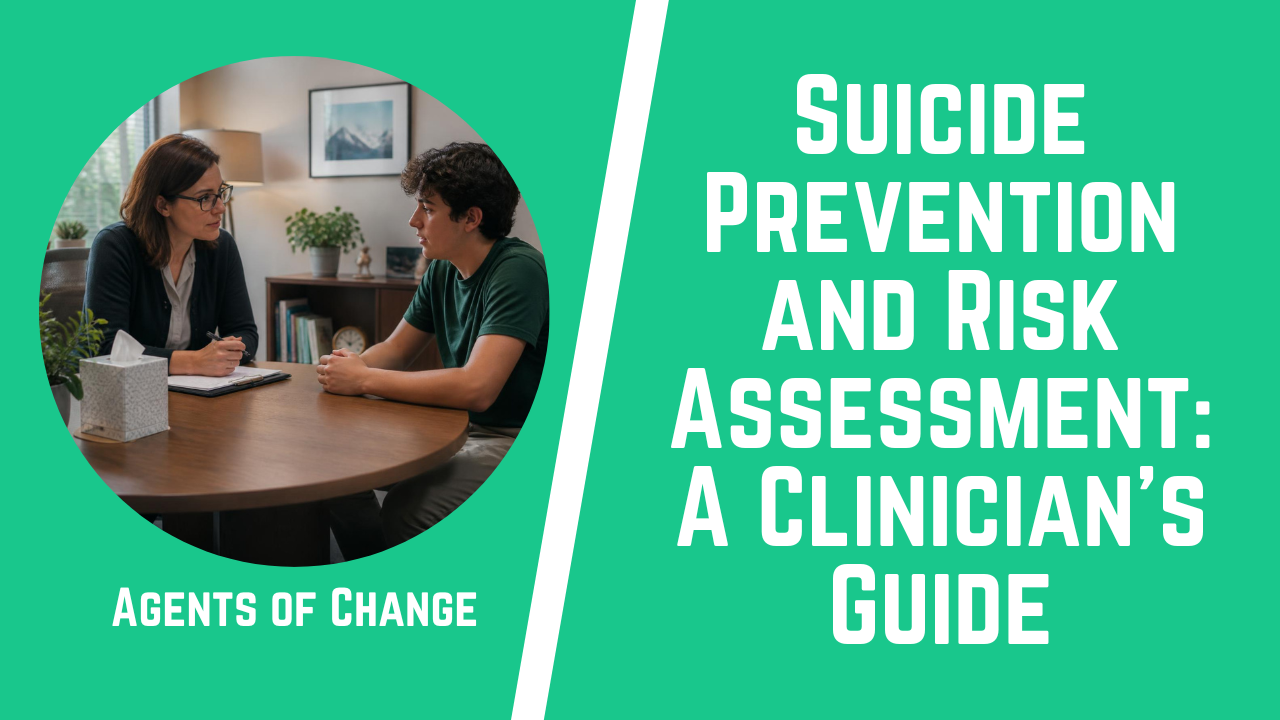
Adolescent Suicide Rates and Prevention: What Clinicians Need to Know

Adolescent suicide remains one of the most urgent concerns facing Social Workers, Therapists, Counselors, and other Mental Health Professionals. A young person may enter treatment talking about school stress, family conflict, friendship problems, anxiety, or exhaustion without immediately revealing suicidal

Cultural Humility and Competence on the 2026 ASWB Exam

Cultural considerations can completely change how an ASWB exam question should be interpreted. A client may decline a recommended service, describe distress through a spiritual or cultural framework, request that family members participate in decision-making, or express distrust of an

Neurodiversity-Affirming Therapy Approaches

For many years, mental health treatment often viewed neurological differences through a deficit-based lens. Autistic clients were encouraged to appear less Autistic, people with ADHD were told to become more organized or disciplined, and those with sensory or communication differences

Trauma-Informed Care and the Stress Response

A client misses an appointment, shuts down during an assessment, becomes irritated by a routine question, or struggles to remember what was discussed moments earlier. These reactions may be labeled as avoidance, resistance, poor motivation, or noncompliance. Yet beneath the

a therapist talking with a client for the first time in a calming office setting

The Mental Status Exam (MSE) Cheat Sheet for the ASWB Exam

The Mental Status Exam can feel like a long list of clinical terms until you understand what each category is actually measuring. Mood, affect, thought process, perception, insight, judgment, and orientation may sound technical at first, but each one helps

Most Popular Stories

Adolescent Suicide Rates and Prevention: What Clinicians Need to Know

Adolescent suicide remains one of the most urgent concerns facing Social Workers, Therapists, Counselors, and other Mental Health Professionals. A young person may enter treatment talking about school stress, family conflict, friendship problems, anxiety, or exhaustion without immediately revealing suicidal