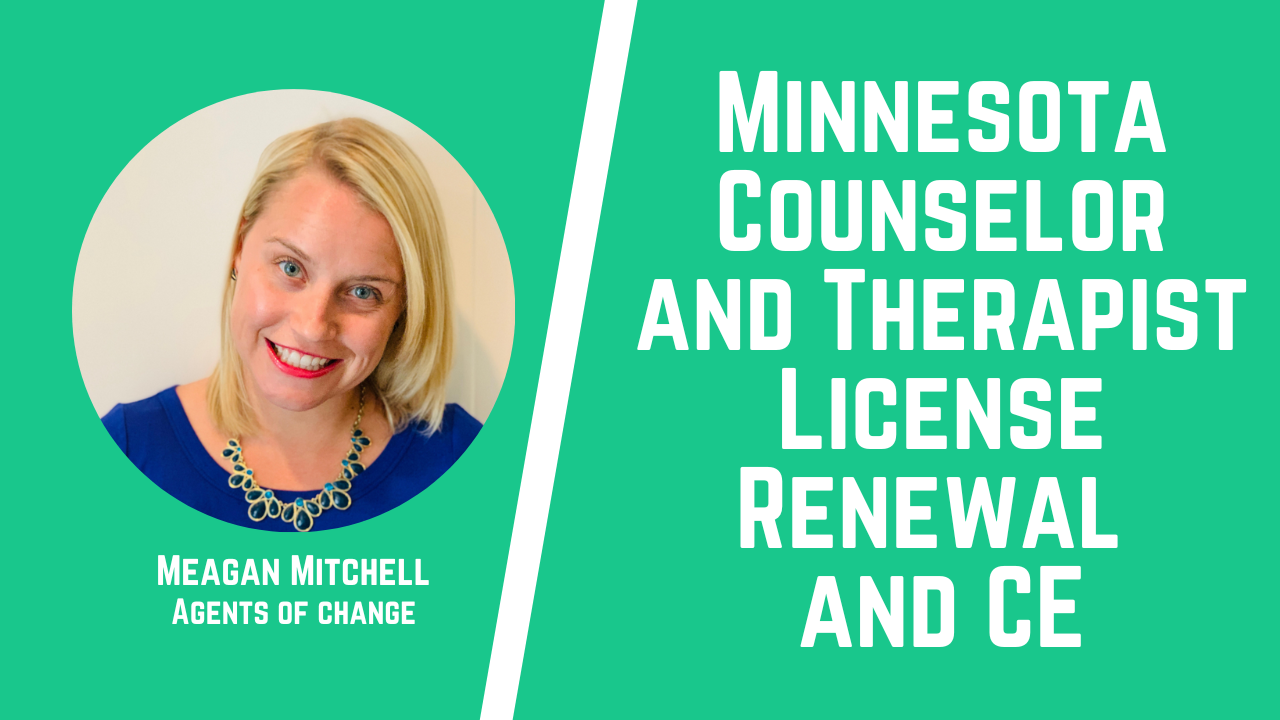
Minnesota Counselor and Therapist Licensure Renewal Dates and CE Requirements

Minnesota Counselor and Therapist Licensure Renewal Dates and CE Requirements

Renewing a counseling or therapy license in Minnesota is an essential part of maintaining your professional credentials and ensuring you stay up-to-date with industry standards.

Whether you’re a Licensed Professional Counselor (LPC), a Licensed Professional Clinical Counselor (LPCC), or a Licensed Marriage and Family Therapist (LMFT), understanding the specific renewal deadlines and Continuing Education (CE) requirements is crucial for avoiding lapses in licensure. Navigating these requirements can sometimes feel overwhelming, but staying informed will help you stay compliant and continue practicing without interruptions.

In Minnesota, each professional license type has its own set of renewal dates and CE credit requirements that must be met within a given period. These requirements are designed to promote continuous professional development, ensuring that counselors and therapists remain equipped with the latest knowledge and best practices to support their clients effectively.

The renewal process typically involves submitting proof of completed CE credits, paying renewal fees, and adhering to ethical standards set by Minnesota’s respective licensing boards.

Did you know? Agents of Change Continuing Education offers Unlimited Access to 150+ NBCC-approved CE courses for one low annual fee to meet your state’s requirements for Continuing Education credits.

We’ve helped thousands of Counselors and Therapists with Continuing Education, learn more here about Agents of Change and claim your 5 FREE CEs!

1) Key Minnesota Counselor and Therapist Licensure Renewal Dates

In Minnesota, professionals working in counseling and therapy need to obtain specific licenses and meet credentialing requirements to legally practice. There are two primary types of counseling licenses available: Licensed Professional Counselor (LPC) and Licensed Professional Clinical Counselor (LPCC).

A Licensed Professional Counselor in Minnesota conducting a community counseling session outdoors. Each image captures the peaceful, natural surroundings of Minnesota with a focus on the state's lakes and greenery, providing a serene backdrop for the session.

Additionally, individuals who wish to practice as Marriage and Family Therapists (LMFT) must obtain a separate license through the Minnesota Board of Marriage and Family Therapy.

1. Licensed Professional Counselor (LPC) Requirements

To become an LPC in Minnesota, candidates must meet the following criteria:

  • Educational Requirements: A master’s or doctoral degree in counseling or a related field from a regionally accredited institution is required. The program must include at least 48 semester hours of coursework.
  • Examination: Candidates must pass the National Counselor Examination (NCE) or another acceptable examination approved by the Minnesota Board of Behavioral Health and Therapy (BBHT).
  • Supervised Experience: LPC candidates must complete 2,000 hours of post-degree supervised experience.

2. Licensed Professional Clinical Counselor (LPCC) Requirements

The LPCC designation allows counselors to practice independently and diagnose mental health conditions. To qualify for this higher level of licensure, individuals must fulfill additional requirements:

  • Educational Requirements: A master’s or doctoral degree in counseling or a closely related field with at least 60 semester hours, including specific coursework in diagnosis, treatment planning, and clinical counseling.
  • Examination: Candidates must pass both the National Clinical Mental Health Counseling Examination (NCMHCE) and the NCE.
  • Supervised Experience: 4,000 hours of post-master’s supervised professional practice are required. At least 1,800 of these hours must be in direct client contact, with supervision by a licensed mental health professional.

3. Licensed Marriage and Family Therapist (LMFT) Requirements

To practice as a licensed LMFT in Minnesota, individuals must meet the following qualifications:

  • Educational Requirements: A master’s or doctoral degree in marriage and family therapy or a closely related field with at least 48 semester hours of relevant coursework.
  • Examination: Candidates must pass the Association of Marital and Family Therapy Regulatory Boards (AMFTRB) national examination.
  • Supervised Experience: 4,000 hours of post-master’s clinical experience in marriage and family therapy, with at least 1,000 hours in direct client contact, are required. Supervision must be provided by an LMFT or an approved supervisor.

Licensure Renewal and Fees

Minnesota counseling and therapy licenses are generally renewed every two years. Specific fees and continuing education (CE) requirements differ based on the type of license.

LPC License Renewal

  • Renewal Frequency: Every two years. The exact deadline is tied to your initial licensure date, meaning your renewal date is typically the last day of the month in which your license was originally issued.
  • Continuing Education (CE) Requirements: LPCs must complete 40 hours of continuing education during each two-year cycle.
  • Renewal Fee: $250.
  • Late Renewal Fee: Additional $50 if renewal is late.

LPCC License Renewal

  • Renewal Frequency: Every two years. The exact deadline is tied to your initial licensure date, meaning your renewal date is typically the last day of the month in which your license was originally issued.
  • Continuing Education (CE) Requirements: LPCCs must complete 40 hours of continuing education, with at least 6 hours focused on ethics or professional responsibility.
  • Renewal Fee: $250.
  • Late Renewal Fee: Additional $50 if renewal is late.

LMFT License Renewal

  • Renewal Frequency: Every two years. The exact deadline is tied to your initial licensure date, meaning your renewal date is typically the last day of the month in which your license was originally issued.
  • Continuing Education (CE) Requirements: LMFTs must complete 40 hours of continuing education during each renewal cycle, including 3 hours in ethics.
  • Renewal Fee: $200.
  • Late Renewal Fee: Additional $50 if renewal is late.

Sources:

Agents of Change Continuing Education offers Unlimited Access to 150+ NBCC-approved CE courses for one low annual fee to meet Minnesota’s requirements for Counselor and Therapist Continuing Education credits.

2) Minnesota Counselor and Therapist Continuing Education Requirements

In Minnesota, licensed counselors and therapists are required to fulfill Continuing Education (CE) requirements to maintain their licensure and stay current with professional standards and practices. Each licensing board mandates specific CE hours that must be completed within a two-year renewal period.

These CE requirements differ slightly depending on the type of license—whether for Licensed Professional Counselors (LPC), Licensed Professional Clinical Counselors (LPCC), or Licensed Marriage and Family Therapists (LMFT).

LPC (Licensed Professional Counselor) Continuing Education Requirements

Licensed Professional Counselors in Minnesota must complete 40 hours of approved continuing education during each two-year licensure renewal period. These hours are intended to enhance professional knowledge and skills and ensure counselors remain competent in their practice.

  • Total Hours Required: 40 hours every two years.
  • Ethics Requirement: A minimum of 3 hours must focus on ethics or professional responsibilities.
  • Acceptable CE Activities: Approved activities include attending workshops, conferences, seminars, and other formal education programs that are related to the counseling profession. CE credits can also be obtained through teaching courses, publishing academic work, and participating in supervised training sessions.
  • Documentation: Counselors must maintain records of their CE activities for at least four years, as the Minnesota Board of Behavioral Health and Therapy (BBHT) may conduct random audits to ensure compliance.

LPCC (Licensed Professional Clinical Counselor) Continuing Education Requirements

LPCCs are required to meet a slightly more detailed set of continuing education requirements compared to LPCs, reflecting the higher level of clinical practice permitted under this license. LPCCs must complete 40 hours of CE every two years.

  • Total Hours Required: 40 hours every two years.
  • Ethics and Clinical Focus Requirement: At least 6 hours must be in professional ethics, including clinical responsibilities. These courses often cover issues related to client confidentiality, proper conduct, and boundary-setting in therapeutic relationships.
  • Supervision Training (If Providing Supervision): If an LPCC provides clinical supervision to LPCs or other professionals, they must complete at least 6 hours of CE in supervision training as part of their required hours.
  • Acceptable CE Activities: As with LPCs, LPCCs can attend workshops, seminars, and other educational events. They can also earn credits through teaching, research, or writing in the mental health field. Online courses that meet the board’s standards are also accepted.
  • Documentation: Like LPCs, LPCCs must keep their CE records for four years and be prepared for potential audits.

LMFT (Licensed Marriage and Family Therapist) Continuing Education Requirements

Licensed Marriage and Family Therapists (LMFTs) in Minnesota are required to complete continuing education that specifically pertains to marriage and family therapy practice.

  • Total Hours Required: 40 hours every two years.
  • Ethics Requirement: At least 3 hours must be dedicated to ethics education, ensuring that LMFTs remain informed about professional responsibilities, client boundaries, and legal issues related to therapy.
  • Supervision Training (If Providing Supervision): For LMFTs who provide clinical supervision to other therapists or interns, 6 hours of CE must focus on supervision methods and best practices.
  • Cultural Competence and Diversity Training: LMFTs are also encouraged to take courses related to cultural competence and working with diverse populations, though this is not a formal requirement.
  • Acceptable CE Activities: LMFTs can earn CE credits by attending workshops, conferences, and educational programs relevant to their practice. They can also accrue CE hours by teaching, conducting research, publishing in academic journals, or completing supervised post-graduate training. Online programs accredited by the American Association for Marriage and Family Therapy (AAMFT) or other approved providers are also accepted.
  • Documentation: As with other licenses, LMFTs must maintain documentation of their CE credits for four years in case of an audit by the Minnesota Board of Marriage and Family Therapy.

General Notes on CE Providers and Audits

CE activities for LPCs, LPCCs, and LMFTs must generally be provided by approved organizations, such as national or state counseling associations, accredited academic institutions, or organizations recognized by the appropriate licensing board. Licensees must verify the approval status of a CE program before attending.

The Minnesota boards responsible for each license type reserve the right to audit professionals at random. This means counselors and therapists must be able to provide proof of attendance, completion certificates, and other documentation that verify they met the CE requirements for the renewal period.

Agents of Change Continuing Education is a great way to meet Minnesota’s Counselor and Therapist CE requirements and track your completed CEs, with over 150 NBCC-approved courses that meet these requirements!

Agents of Change has been approved by NBCC as an Approved Continuing Education Provider, ACEP No. 7620. Programs that do not qualify for NBCC credit are clearly identified. Agents of Change is solely responsible for all aspects of the programs.

3. FAQs – Minnesota Counselor and Therapist Licensure Renewal and CEs

Q: What happens if I don’t complete my Continuing Education (CE) requirements before my licensure renewal date?

A: Failing to complete your CE requirements before the renewal date can result in penalties or a lapse in your ability to legally practice. In Minnesota, both the Board of Behavioral Health and Therapy (BBHT) and the Board of Marriage and Family Therapy (BMFT) may impose late fees or require you to catch up on your CE credits before reinstating your license.

If you are audited and found non-compliant, you could face additional disciplinary actions, including fines or temporary suspension of your license. To avoid these complications, it’s essential to complete your CE credits within the designated renewal cycle and keep all documentation on file.

Q: Can I take online courses to meet my Continuing Education (CE) requirements for my LPC, LPCC, or LMFT license?

A: Yes, online courses are generally accepted as long as they are provided by an approved organization, such as a national or state counseling association, an accredited academic institution, or another provider recognized by the licensing board.

It’s important to verify that the online course or provider meets the board’s CE standards before enrolling. Online CE opportunities can be a convenient way to fulfill ethics, clinical supervision, and other required training hours.

Q: How do I prove that I completed the required Continuing Education (CE) hours?

A: You are responsible for maintaining records of all CE activities for at least four years in case you are selected for an audit by your licensing board. Accepted documentation includes certificates of completion, transcripts from academic institutions, and letters of verification from approved CE providers.

These documents should clearly outline the number of CE hours earned, the course topic, the date of completion, and the provider’s credentials. If you are audited and cannot provide proof of completion, your license may be subject to penalties or revocation.

Resources for CE: Agents of Change Continuing Education offers over 150 NBCC-approved courses that meet Minnesota Counselor and Therapist CE requirements. 

4) Conclusion

Meeting the licensure renewal and continuing education (CE) requirements for counselors and therapists in Minnesota is essential for maintaining your professional standing and ensuring the highest level of care for your clients. Whether you hold an LPC, LPCC, or LMFT license, staying on top of your renewal deadlines and CE obligations helps you stay informed about current practices, ethical standards, and developments within the field. These requirements not only safeguard your ability to practice but also promote ongoing professional growth.

By understanding the specific CE criteria, such as the focus on ethics, clinical supervision, and the number of required hours, you can plan ahead to complete your education efficiently and avoid the stress of last-minute scrambling.

Utilizing a mix of in-person and online CE options from accredited providers can make fulfilling these requirements easier while also expanding your knowledge base. Staying organized by keeping your CE documentation on file will also help you remain prepared in case of an audit.

Resources like Agents of Change Continuing Education provide accessible and varied learning opportunities for Counselors and Therapists to meet Continuing Education requirements. Learn more about Agents of Change Continuing Education.

We’ve helped thousands of Counselors and Therapists with their Continuing Education and want you to be next!


► Learn more about the Agents of Change Continuing Education here: Agents of Change Continuing Education

About the Instructor, Meagan Mitchell: Meagan is a Licensed Clinical Social Worker and has been providing Continuing Education for Counselors, Therapists, and Social Workersfor more than 10 years. From all of this experience helping others pass their exams, she created Agents of Change Continuing Education to help Counselors, Therapists, and Social Workers stay up-to-date on the latest trends, research, and techniques.

#counselor #NBCC #therapist #NBCC #continuinged #continuingeducation #ce #freeCE

Disclaimer: This content has been made available for informational and educational purposes only. This content is not intended to be a substitute for professional medical or clinical advice, diagnosis, or treatment

Share:

Discover more from Agents of Change

Subscribe now to keep reading and get access to the full archive.

Continue reading