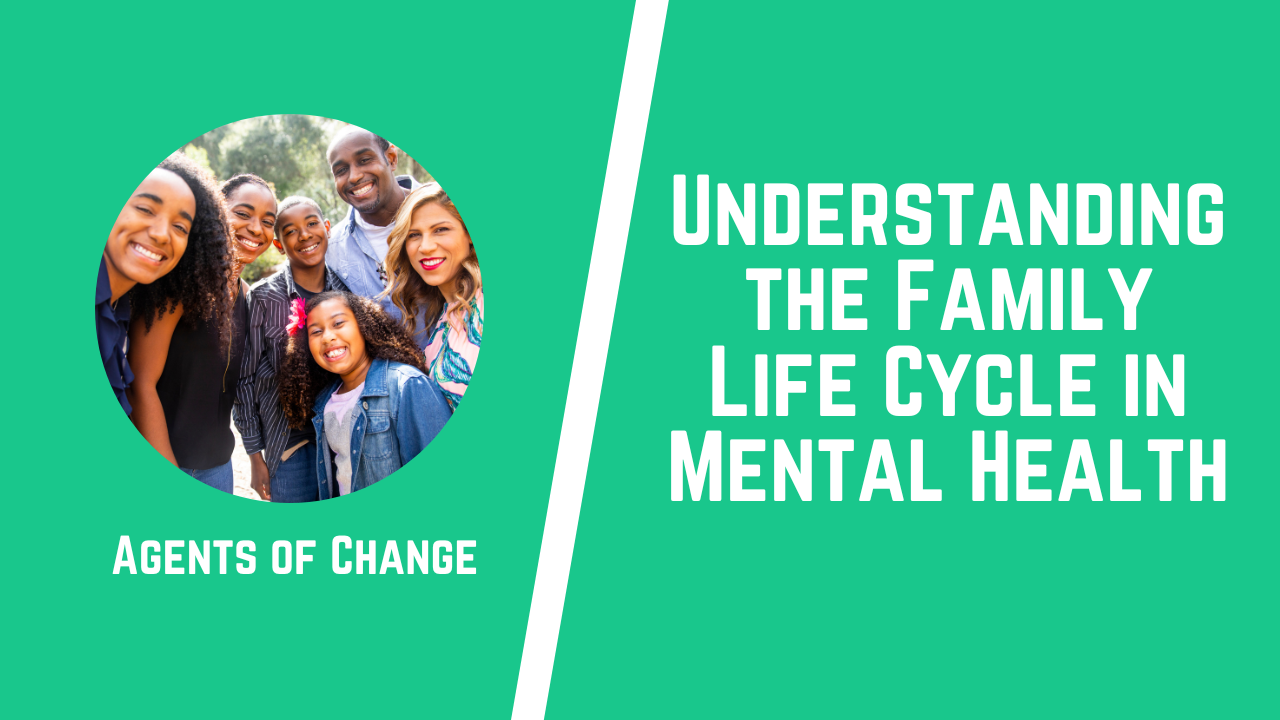
What is the Family Life Cycle in Mental Health?
What is the Family Life Cycle in Mental Health?
Families are constantly evolving, even when it feels like life is standing still. Relationships shift, roles change, and expectations get rewritten as people move through different stages of life together. These transitions can be exciting, confusing, overwhelming, or all three at once. When emotional strain shows up in families, it is often tied to these moments of change rather than a single event or person.

Understanding what is happening beneath the surface can make a powerful difference in mental health care. That is where the idea of the family life cycle comes in. This framework helps explain why certain challenges appear at predictable points in family development and why stress can increase during times that are supposed to feel joyful. By viewing families through a developmental lens, mental health professionals and individuals alike can better understand patterns, conflicts, and emotional reactions that might otherwise feel personal or alarming.

So, what is the Family Life Cycle? It is a way of looking at families as living systems that grow and adapt over time. Each stage brings its own emotional tasks, pressures, and opportunities for growth. When families are supported through these transitions, resilience strengthens, and connection deepens. This perspective invites compassion, patience, and a clearer path forward for families and the professionals who support them.

Did you know? Agents of Change Continuing Education offers Unlimited Access to 150+ ASWB and NBCC-approved CE courses and 15+ Live Events per year for one low annual fee to meet your state’s requirements for Continuing Education credits and level up your career.

We’ve helped hundreds of thousands of Social Workers, Counselors, and Mental Health Professionals with Continuing Education, learn more here about Agents of Change and claim your 5 free CEUs.

1) Understanding the Family Life Cycle in Mental Health

Understanding families as dynamic systems rather than fixed structures can completely change how mental health concerns are viewed and treated. The family life cycle offers a developmental framework that explains why stress, conflict, and emotional shifts often emerge at predictable points in family life. Instead of asking what is wrong with a family, this approach asks what stage the family is navigating and what adjustments are being demanded right now.

a picture of a diverse multigenerational family at a gathering

At its core, this model recognizes that families must constantly reorganize themselves in response to internal and external changes. When those adjustments happen smoothly, families tend to function well. When they stall or become overwhelming, mental health symptoms often appear.

What the Family Life Cycle Represents

The family life cycle represents a series of developmental stages that families typically move through over time. Each stage involves emotional tasks that must be addressed for healthy functioning to continue.

These tasks are not about perfection. They are about flexibility, communication, and adaptation. When families struggle to meet the demands of a stage, tension and distress can build.

Key ideas behind the family life cycle include:

  • Families change over time, even if membership stays the same

  • Stress often increases during transitions

  • Emotional symptoms can signal unfinished developmental work

  • Growth requires renegotiating roles, rules, and boundaries

This perspective helps normalize struggle and reduces the tendency to blame individuals for systemic challenges.

How Mental Health Is Affected at Each Stage

Every stage of the family life cycle introduces new pressures that can impact emotional well-being. These pressures may show up as anxiety, depression, behavioral concerns, or relationship conflict.

Common mental health impacts include:

  • Increased anxiety during periods of separation or independence

  • Depressive symptoms linked to role loss or identity shifts

  • Conflict related to unclear boundaries or expectations

  • Emotional overload when multiple transitions overlap

Recognizing the stage a family is in helps clinicians and individuals understand why certain symptoms appear when they do.

Why Transitions Are Especially Challenging

Transitions are the most vulnerable points in the family life cycle. Even positive changes can disrupt emotional balance because they require letting go of familiar roles and routines.

Families may struggle during transitions because:

  • Old coping strategies no longer work

  • Communication patterns lag behind new demands

  • Expectations between members are misaligned

  • Support systems have not adjusted yet

When transitions are misunderstood, families may interpret stress as failure rather than a normal part of change.

Using the Family Life Cycle as a Clinical Lens

In mental health settings, the family life cycle is often used as a guiding lens rather than a strict roadmap. It helps professionals identify where a family might be stuck and what kind of support would be most helpful.

Clinicians may use this framework to:

  • Assess whether developmental tasks are being avoided or rushed

  • Normalize conflict related to life changes

  • Design interventions that fit the family’s current stage

  • Help families anticipate upcoming challenges

By framing distress within a developmental context, the family life cycle supports more compassionate and effective mental health care.

Learn more about Agents of Change Continuing Education. We’ve helped hundreds of thousands of Social Workers, Counselors, and Mental Health Professionals with their continuing education, and we want you to be next!

2) Stages of the Family Life Cycle

The stages of the family life cycle describe how families evolve over time and how emotional needs, roles, and responsibilities shift along the way. Each stage comes with its own psychological tasks and stress points. When families adapt well, growth feels possible. When they struggle, mental health concerns often surface. Understanding these stages helps explain why certain challenges arise when they do and what support may be most effective.

a picture of a diverse multigenerational family at a gathering

Stage One: Leaving Home and Emerging Independence

This stage centers on the gradual separation of young adults from their family of origin. Emotional independence matters just as much as physical independence here.

Key themes and tasks include:

  • Developing a stable sense of identity

  • Establishing emotional boundaries with parents or caregivers

  • Managing financial and practical independence

  • Forming adult peer and romantic relationships

Common mental health patterns:

  • Anxiety around self-sufficiency

  • Guilt or fear related to separation

  • Family conflict over autonomy

  • Identity confusion or low self-confidence

If separation is discouraged or rushed, individuals may struggle later with intimacy, decision making, or self-trust.


Stage Two: Forming a Couple or Committed Partnership

In this stage, two people begin building a shared life while redefining their connection to extended family systems.

Key themes and tasks include:

  • Shifting primary loyalty toward the partner relationship

  • Negotiating roles, values, and expectations

  • Establishing boundaries with families of origin

  • Learning to manage conflict and emotional intimacy

Common mental health patterns:

  • Relationship anxiety or insecurity

  • Repeated conflict tied to unmet expectations

  • Stress from family interference

  • Reactivation of attachment wounds

This stage often reveals unresolved family of origin issues that can impact the stability of the couple if left unaddressed.


Stage Three: Families with Young Children

The transition to parenting reshapes family structure and identity. Time, energy, and emotional resources are stretched in new ways.

Key themes and tasks include:

  • Adjusting the couple relationship to include parenting roles

  • Creating routines, rules, and caregiving systems

  • Balancing work, family, and personal needs

  • Supporting early emotional development in children

Common mental health patterns:

  • Postpartum depression or anxiety

  • Increased relationship strain

  • Role overload and chronic exhaustion

  • Loss of individual identity

Mental health support during this stage often focuses on realistic expectations, communication, and self compassion.


Stage Four: Families with School-Age Children and Adolescents

This stage involves helping children gradually move toward independence while maintaining emotional connection and structure.

Key themes and tasks include:

  • Encouraging autonomy while maintaining safety

  • Revising parental authority and control

  • Managing increased external influences like peers and school

  • Tolerating conflict and emotional intensity

Common mental health patterns:

  • Anxiety or depression in children or teens

  • Behavioral challenges or risk-taking

  • Parent burnout or fear-based parenting

  • Escalating family conflict

Families who struggle here often benefit from reframing behavior as developmental rather than defiant.


Stage Five: Launching Children and Moving into Midlife

As children leave home, families must reorganize again. This stage often brings both freedom and loss.

Key themes and tasks include:

  • Redefining the parent role with adult children

  • Reinvesting in the couple relationship or personal goals

  • Supporting independence without overinvolvement

  • Facing aging, regret, or unrealized expectations

Common mental health patterns:

  • Empty nest depression

  • Relationship dissatisfaction or renewal

  • Anxiety about health or aging

  • Identity shifts after caregiving roles change

Unresolved conflicts from earlier stages may resurface if ignored during this transition.


Stage Six: Families in Later Life

Later life focuses on meaning, connection, and adaptation to physical or cognitive changes.

Key themes and tasks include:

  • Adjusting to retirement or reduced roles

  • Coping with illness, loss, or dependency

  • Maintaining dignity and autonomy

  • Processing life meaning and legacy

Common mental health patterns:

  • Grief and bereavement

  • Depression related to isolation or loss of purpose

  • Caregiver stress and burnout

  • Role reversals between parents and adult children

Support during this stage often emphasizes connection, acceptance, and honoring lived experience.


Overarching Patterns Across All Stages

While each stage has distinct challenges, several themes appear throughout the family life cycle:

  • Change is unavoidable and often uncomfortable

  • Transitions increase emotional vulnerability

  • Unfinished tasks tend to resurface later

  • Flexibility supports resilience and well-being

Understanding these stages allows families and mental health professionals to respond to stress with clarity rather than blame, creating space for healthier adaptation at every phase of life.

Agents of Change has helped hundreds of thousands of Social Workers, Counselors, and Mental Health Professionals with Continuing Education, learn more here about Agents of Change and claim your 5 free CEUs!

3) Clinical Applications in Mental Health Practice

The family life cycle is more than a conceptual model. In everyday mental health practice, it serves as a practical guide for understanding client concerns within a broader developmental and relational context. When clinicians apply this framework thoughtfully, it can clarify assessment, strengthen treatment planning, and improve therapeutic outcomes across individual, couple, and family work.

Using the Family Life Cycle in Assessment

Assessment becomes more meaningful when a clinician understands where a client or family is in their developmental journey. Symptoms rarely appear in isolation, and the family life cycle helps connect emotional distress to current transitions or unresolved stages.

Clinicians may explore questions such as:

  • What life stage is this family or individual navigating?

  • Are there recent or upcoming transitions increasing stress?

  • Which developmental tasks feel incomplete or overwhelming?

  • How have previous transitions been handled?

This approach helps distinguish between situational stress and long-standing patterns, reducing the risk of overpathologizing normal developmental challenges.

Informing Treatment Planning and Goals

Treatment planning is more effective when goals align with the developmental needs of the family or individual. Interventions that work well in one stage may feel ineffective or even harmful in another.

The family life cycle can guide treatment by:

  • Identifying which roles or boundaries need adjustment

  • Clarifying realistic expectations for change

  • Prioritizing skills that match the current stage

  • Anticipating resistance tied to fear of transition

For example, work with families launching young adults may focus on boundary-setting and autonomy, while families with adolescents may benefit from communication and conflict-management strategies.

Normalizing Stress and Reducing Shame

One of the most powerful clinical applications of the family life cycle is normalization. Many clients arrive in therapy believing something is fundamentally wrong with them or their family.

Using this framework allows clinicians to:

  • Reframe distress as a response to change

  • Validate emotional reactions without minimizing pain

  • Reduce shame associated with conflict or emotional symptoms

  • Increase client engagement and hope

When clients understand that stress often accompanies developmental shifts, they are more likely to approach therapy with curiosity rather than self-blame.

Supporting Prevention and Early Intervention

The family life cycle is also valuable in preventative mental health work. Anticipating upcoming transitions can help families prepare emotionally and practically before distress escalates.

Preventative applications may include:

  • Psychoeducation about expected challenges at each stage

  • Skill building before major transitions occur

  • Identifying support systems early

  • Strengthening communication and coping strategies in advance

Early intervention can reduce the intensity and duration of mental health symptoms during high-stress periods.

Integrating the Model with Other Clinical Approaches

The family life cycle framework integrates well with many therapeutic modalities. It does not replace other models but adds developmental context to existing approaches.

It pairs especially well with:

  • Family systems and structural therapy

  • Attachment-based interventions

  • Trauma-informed care

  • Cognitive and behavioral approaches

  • Narrative and strengths-based models

By grounding clinical work in developmental awareness, mental health professionals can offer care that feels both practical and deeply human.

Used flexibly and ethically, the family life cycle helps clinicians respond to clients with clarity, compassion, and confidence at every stage of life.

4) Cultural Context and the Family Life Cycle

The family life cycle does not exist in a cultural vacuum. Culture shapes how families define roles, manage transitions, express emotion, and seek support. Without cultural awareness, clinicians risk misunderstanding behaviors that are healthy, expected, or meaningful within a family’s cultural framework. Viewing the family life cycle through a cultural lens allows mental health professionals to offer care that is respectful, accurate, and effective.

How Culture Shapes Family Development

Culture influences the pace and meaning of each stage in the family life cycle. What is considered appropriate or healthy in one cultural context may look very different in another.

Cultural values can affect:

  • When young adults are expected to leave home

  • How independence and autonomy are defined

  • Expectations around marriage and partnership

  • The role of the extended family in daily life

  • Attitudes toward aging, caregiving, and elder authority

Understanding these influences helps clinicians avoid imposing dominant cultural norms on families whose values differ.

Individualism, Collectivism, and Family Roles

One of the most significant cultural distinctions affecting the family life cycle is the difference between individualistic and collectivist value systems.

In more individualistic cultures:

  • Independence is often prioritized early

  • Leaving home is viewed as a developmental milestone

  • Personal fulfillment may take precedence over family obligation

In more collectivist cultures:

  • Family interdependence is emphasized

  • Multigenerational households are common

  • Adult children may remain closely involved with parents

  • Caregiving is often seen as a shared responsibility

Neither approach is inherently healthier. Mental health challenges often arise when families feel pressured to adopt values that conflict with their cultural identity.

Cultural Expectations During Key Transitions

Major life transitions can carry different emotional meanings depending on cultural context. These meanings shape how stress is experienced and expressed.

Examples include:

  • Marriage as a union of families rather than individuals

  • Parenting as a collective role involving extended kin

  • Adolescence as a period of increased responsibility rather than rebellion

  • Aging as a time of increased respect rather than decline

When clinicians understand these expectations, they can better support families during transitions without mislabeling cultural norms as dysfunction.

Communication Styles and Emotional Expression

Culture strongly influences how families communicate and express emotion across the life cycle.

Cultural differences may appear in:

  • Direct versus indirect communication

  • Comfort with emotional disclosure

  • Expressions of respect, authority, or disagreement

  • Views on privacy and family boundaries

Mental health professionals must consider whether communication patterns reflect cultural norms rather than emotional avoidance or pathology.

Implications for Mental Health Practice

Applying the family life cycle model responsibly requires ongoing cultural humility. Clinicians should approach families as experts on their own experience while remaining curious and open.

Best practices include:

  • Asking how family roles and expectations are defined

  • Exploring cultural meanings attached to transitions

  • Avoiding assumptions based on dominant cultural models

  • Adapting interventions to fit cultural values

  • Recognizing the impact of migration, discrimination, and acculturation stress

When culture is honored within the family life cycle framework, mental health care becomes more accurate, compassionate, and empowering for the families it serves.

5) FAQs – Family Life Cycle in Mental Health

Q: How does understanding the family life cycle improve mental health treatment?

A: Understanding the family life cycle helps mental health professionals place emotional symptoms and relational conflict within a developmental context. Instead of viewing challenges as isolated problems, clinicians can recognize them as responses to life transitions such as launching children, becoming parents, or caring for aging relatives. This perspective supports more accurate assessment, reduces blame, and allows treatment to focus on helping families adapt to current demands rather than fixing individuals.

Q: Can the family life cycle framework be used with nontraditional or modern families?

A: Yes, the family life cycle framework is highly adaptable and can be applied to a wide range of family structures, including single-parent households, blended families, chosen families, and multigenerational systems. While the sequence of stages may differ, the emotional tasks of connection, separation, role negotiation, and adaptation still apply. The key is using the model flexibly and with cultural humility rather than as a rigid timeline.

Q: Why do mental health symptoms often appear during family transitions?

A: Family transitions require shifts in identity, roles, boundaries, and expectations. Even positive changes can create emotional strain because familiar coping strategies may no longer work. Anxiety, depression, and conflict often emerge when families feel unprepared for these adjustments or when earlier developmental tasks remain unresolved. Recognizing the link between transitions and mental health helps normalize distress and guides more effective support.

6) Conclusion

Families are constantly changing, and mental health concerns often reflect how well those changes are being managed. Viewing emotional struggles through the lens of the family life cycle offers clarity, compassion, and perspective. Instead of asking what is broken, this framework encourages us to ask what stage a family is navigating and what adjustments are being asked of them right now.

Understanding the Family Life Cycle helps normalize stress during times of transition and reduces unnecessary self-blame. Each stage carries its own emotional tasks, and difficulty meeting those demands does not mean failure. It means support is needed. When families and individuals recognize these patterns, they are better equipped to respond with flexibility, communication, and resilience.

For mental health professionals, the family life cycle remains a valuable tool for assessment, intervention, and prevention. When paired with cultural awareness and ongoing education, it strengthens clinical insight and effectiveness. By honoring the developmental nature of families, we create space for healing, growth, and connection across every stage of life.

————————————————————————————————————————————————

► Learn more about the Agents of Change Continuing Education here: https://agentsofchangetraining.com

About the Instructor, Dr. Meagan Mitchell: Meagan is a Licensed Clinical Social Worker and has been providing Continuing Education for Social Workers, Counselors, and Mental Health Professionals for more than 10 years. From all of this experience helping others, she created Agents of Change Continuing Education to help Social Workers, Counselors, and Mental Health Professionals stay up-to-date on the latest trends, research, and techniques.

#socialwork #socialworker #socialwork #socialworklicense #socialworklicensing #continuinged #continuingeducation #ce #socialworkce #freecesocialwork #lmsw #lcsw #counselor #NBCC #ASWB #ACE

Disclaimer: This content has been made available for informational and educational purposes only. This content is not intended to be a substitute for professional medical or clinical advice, diagnosis, or treatment

Note: Certain images used in this post were generated with the help of artificial intelligence.

Share:

Discover more from Agents of Change

Subscribe now to keep reading and get access to the full archive.

Continue reading