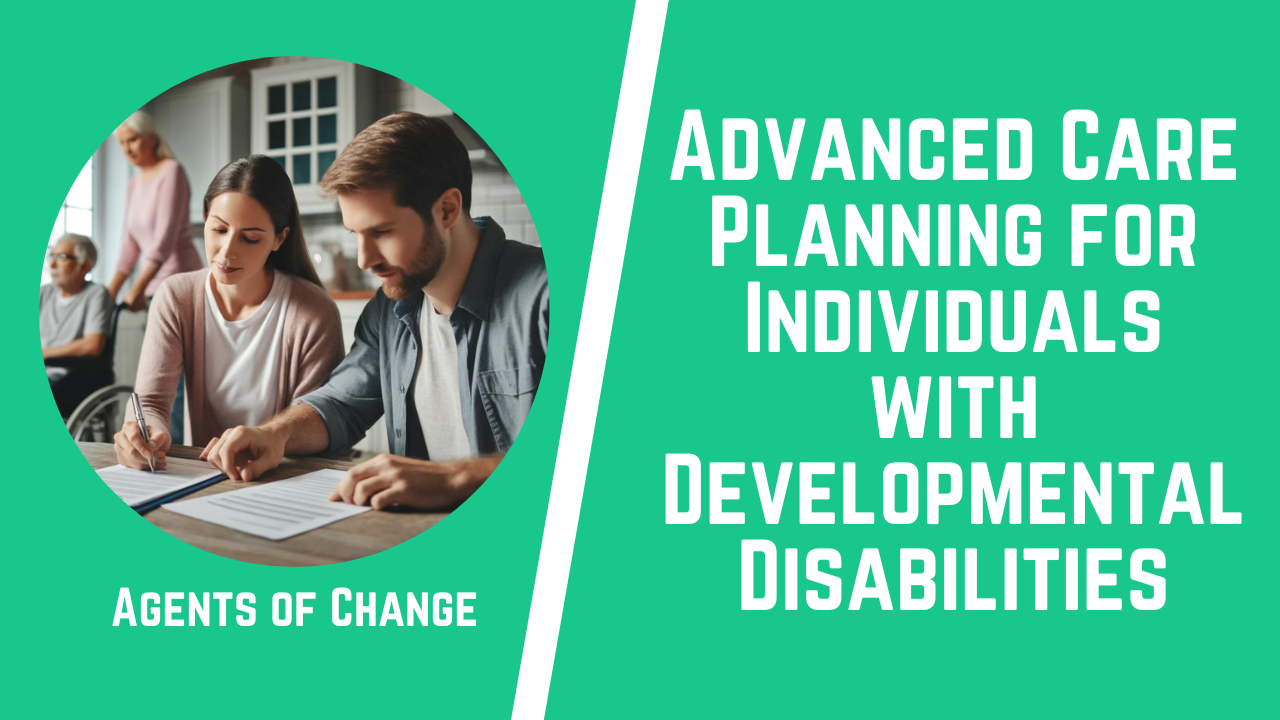
Advanced Care Planning for Individuals with Developmental Disabilities

Advance Care Planning (ACP) helps people make their wishes about future care known before a crisis. For people with intellectual and developmental disabilities, ACP is also a way to protect their right to make choices about their own lives. It’s not just a set of legal documents. It’s an ongoing conversation about what matters most to the person, including medical care, where they live, and end-of-life wishes.
Social Workers often guide this process as advocates, educators, and facilitators. This guide covers why ACP matters, the key tools and documents, a step-by-step process, common challenges, and continuing education to build your skills.
Did you know? Agents of Change Continuing Education offers Unlimited Access to 200+ ASWB and NBCC-approved online CE courses and 25+ Live Events per year for one annual fee to meet your state’s requirements for Continuing Education credits and level up your career.
We’ve helped more than 100,000 Social Workers, Counselors, and Mental Health Professionals with exam prep and Continuing Education. Learn more here about Agents of Change and claim your 7.5 free CEUs.
Quick answer: Advance Care Planning for people with developmental disabilities
- What it is: an ongoing conversation, plus documents, about a person’s values and wishes for future medical care, living arrangements, and end-of-life care.
- Start with the person: presume capacity, use accessible communication, and involve the person in every decision they can make.
- Least restrictive support: consider supported decision-making and health care proxies before guardianship.
- Keep it current: review the plan regularly and share it with every provider.
Jump to: Why ACP Matters · Key Tools and Documents · The ACP Process · Challenges and Solutions · Related CEUs · FAQs
Understand and Track Your CE Requirements for Free!
1) Why ACP Matters for People with Developmental Disabilities
| Benefit | Why It Matters |
|---|---|
| Autonomy | The person’s own values and preferences guide decisions, even if they later can’t communicate them. |
| Dignity and rights | People with disabilities have often had decisions made for them. ACP keeps them at the center. |
| Better-matched care | Documented preferences make it more likely that care fits what the person wants and helps avoid unwanted treatment. |
| Less conflict and stress | Clear wishes reduce uncertainty and disagreement among family members and caregivers during a crisis. |
| Long-term planning | Planning for housing, support, and who will help with decisions supports stability as the person and their caregivers age. |
Many adults with developmental disabilities live with aging parents who provide most of their support. Planning ahead helps prepare for the time when those parents can no longer do so.
2) Key Tools and Documents
Names and requirements vary by state, so families should work with an attorney or their state’s resources when creating legal documents.
| Tool | What It Does |
|---|---|
| Advance directive | A general term for documents that state health care wishes and name a decision-maker |
| Living will | States which medical treatments the person would or wouldn’t want in specific situations |
| Health care power of attorney (health care proxy) | Names a trusted person to make health care decisions if the person can’t |
| Supported decision-making | The person makes their own decisions with help from trusted supporters. A growing number of states legally recognize supported decision-making agreements. |
| POLST or similar form | Portable medical orders, signed by a clinician, for people who are seriously ill or frail |
| Guardianship or conservatorship | A court appoints someone to make some or all decisions. Because it removes rights, it should be a last resort and limited to what’s needed. |
| Personal profile | A plain-language document describing the person’s communication style, routines, likes, dislikes, and what comforts them |
3) The ACP Process: Step by Step
| Step | What It Involves |
|---|---|
| 1. Prepare | Choose a comfortable, private setting and a time when the person isn’t in crisis. Ask who the person wants included. |
| 2. Talk about values | Explore what matters most to the person, such as relationships, routines, faith, and where they want to live. |
| 3. Use accessible communication | Use plain language, pictures, easy-read materials, and the person’s preferred communication method. Plan for several shorter conversations. |
| 4. Choose decision supports | Help the person choose trusted supporters or a health care agent, and consider supported decision-making. |
| 5. Document wishes | Complete the documents that fit the person’s situation and state, with legal guidance where needed. |
| 6. Share the plan | Give copies to the person, their supporters, primary care and specialist providers, and residential or day program staff. |
| 7. Review regularly | Revisit the plan at least once a year and after any major change in health, living situation, or support. |
4) Challenges and Practical Solutions
| Challenge | Solutions |
|---|---|
| Understanding complex information | Use simple language and visual aids, check understanding by asking the person to explain in their own words, and repeat discussions over time. |
| Assumptions about capacity | Presume capacity. Capacity is decision-specific, so a person may be able to make some decisions but need support with others. |
| Strong emotions | Acknowledge feelings, take breaks, and break planning into smaller steps. Offer counseling when helpful. |
| Family disagreement | Keep the focus on the person’s own wishes. Use family meetings, mediation, or an ethics consultation when needed. |
| Overly restrictive decision-making | Explore less restrictive options like supported decision-making or a limited guardianship. |
| Plans not followed across settings | Keep documents accessible, share them with new providers, and include them in transitions between home, hospital, and residential care. |
The NASW Code of Ethics emphasizes self-determination and the dignity and worth of the person. ACP puts those values into practice by making sure people with disabilities are part of decisions about their own lives.
5) Continuing Education for ACP and End-of-Life Care
Agents of Change Continuing Education offers self-paced courses and live CE events with ASWB and NBCC approval and certificates of completion for your license renewal. Related courses include:
| Topic | Course |
|---|---|
| Palliative and end-of-life care | Social Workers and Palliative Care |
| Grief and loss | Grief Therapy |
Explore more in the course library or start with 7.5 free CEUs.
6) FAQs: Advance Care Planning for People with Developmental Disabilities
What happens if there’s no advance care plan?
Decision-making can become confusing and stressful, especially in an emergency. It may be unclear who has authority to decide, family members may disagree, and care may not match the person’s wishes. In some cases, a court may need to appoint a guardian.
Can ACP decisions be changed later?
Yes. ACP is an ongoing process. Plans should be reviewed regularly and updated when the person’s health, wishes, or circumstances change.
Can a person with an intellectual disability complete an advance directive?
Often, yes. Many people with intellectual disabilities can express their wishes and choose a health care agent, especially with accessible information and support. Capacity requirements vary by state, so check local rules.
How can Social Workers build their ACP skills?
Take continuing education in ethics, palliative care, and disability practice, collaborate with health care and legal professionals, and learn about the decision-making options available in your state.
7) Conclusion
Advance Care Planning is an expression of respect for the autonomy and dignity of people with developmental disabilities. By presuming capacity, communicating accessibly, choosing the least restrictive supports, and keeping plans current, Social Workers help ensure people’s own voices continue to guide their care.
Learn more about Agents of Change Continuing Education. We’ve helped more than 100,000 Social Workers, Counselors, and Mental Health Professionals with exam prep and Continuing Education and want to help you next!
► Learn more about Agents of Change Continuing Education here: https://agentsofchangeprep.com/continuing-education/
About the Lead Instructor, Dr. Meagan Mitchell: Meagan is a Licensed Clinical Social Worker and has been providing Continuing Education for Social Workers, Counselors, and Mental Health Professionals for more than 10 years. From all of this experience helping others, she created Agents of Change Continuing Education to help Social Workers, Counselors, and Mental Health Professionals stay up-to-date on the latest trends, research, and techniques.
Disclaimer: This content has been made available for informational and educational purposes only. This content is not intended to be a substitute for professional medical or clinical advice, diagnosis, or treatment.
Written by Agents of Change
Agents of Change will help you prepare to PASS your licensing exam and level up your career. With over 30 hours of visual and audio content, mock practice questions, test-taking tips, and strategies to break down and synthesize exam content, you will be prepared and confident to tackle your exam on test day!