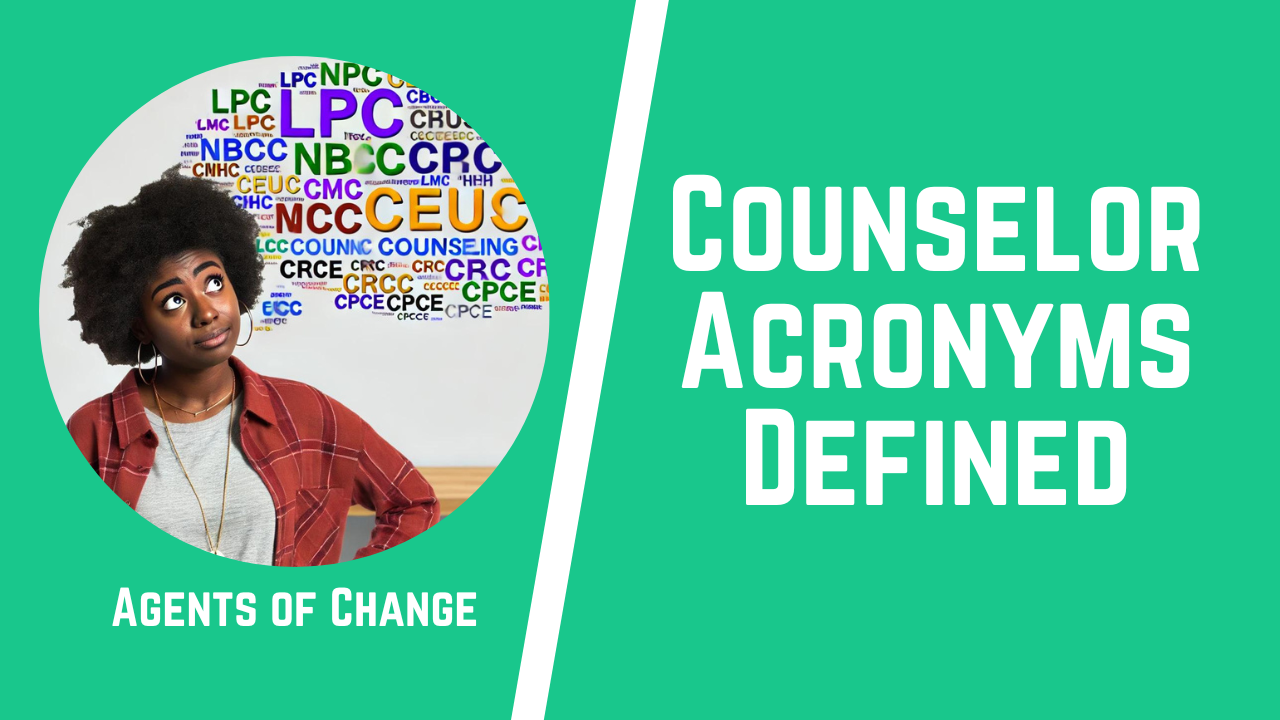
Stepping into the world of professional counseling can feel like learning a new language—full of acronyms that pop up in every conversation, document, and course. Whether you’re an aspiring counselor or an experienced one, these acronyms play a crucial role in shaping your career.
From certifications and exams to professional organizations, understanding them isn’t just useful—it’s essential. Without a solid grasp of what terms like NBCC, LPC, or NCE stand for, you might miss out on key opportunities, not to mention the confidence that comes with knowing exactly what’s being discussed.
Why are these acronyms so important? They represent milestones in your professional journey. Whether it’s preparing for a licensing exam or ensuring you’re staying on top of continuing education requirements, understanding these terms means you’re one step closer to achieving your career goals.
Plus, being able to navigate the often complex world of counselor acronyms helps build trust with clients, peers, and employers. Knowing the ins and outs of these terms signals that you’re dedicated and knowledgeable, which is crucial in such a people-centered profession.
Did you know? Agents of Change Continuing Education offers Unlimited Access to 150+ ASWB and NBCC-approved CE courses for one low annual fee to meet your state’s requirements for Continuing Education credits and level up your career.
We’ve helped thousands of Social Workers, Counselors, and Mental Health Professionals with Continuing Education, learn more here about Agents of Change and claim your 5 free CEUs.
1) Professional Counseling Organization Acronyms
Understanding the key organizations within the counseling field is essential for professional development, maintaining licensure, and staying updated on best practices.
These organizations provide guidance, resources, and certifications that shape the standards of the counseling profession. Their acronyms may pop up in conversations, job postings, and academic settings, so knowing them will help you stay informed and enhance your career.

Let’s explore some of the most important counseling organization acronyms and how they affect your professional life.
NBCC – National Board for Certified Counselors
The National Board for Certified Counselors (NBCC) is one of the most recognized organizations in the counseling field. It plays a crucial role in the certification process for counselors. NBCC administers key exams, such as the National Counselor Examination (NCE), and offers certification for various counseling specialties.
- What they do: NBCC administers certification exams and ensures that counselors maintain ethical and professional standards. They provide national certifications like NCC (National Certified Counselor), which signals a high level of competency.
- Why it’s important: Being NBCC-certified opens doors to more opportunities and enhances your professional credibility. Many states also require NBCC-administered exams for licensure, so knowing this acronym is crucial for aspiring counselors.
ACA – American Counseling Association
The American Counseling Association (ACA) is a professional organization that advocates for counselors and promotes excellence in the profession. It’s one of the largest associations for counselors in the U.S., offering numerous resources such as publications, webinars, and conferences to support professional growth.
- What they do: The ACA provides professional development opportunities, advocates for policies that benefit counselors, and establishes ethical guidelines for the profession. The ACA’s Code of Ethics serves as a foundational document for counselors nationwide.
- Why it’s important: ACA membership offers you access to a vast network of professionals, continuing education opportunities, and the chance to attend national conferences. For those pursuing leadership roles in counseling, membership can be a valuable stepping stone.
ASWB – Association of Social Work Boards
Although primarily serving Social Workers, the Association of Social Work Boards (ASWB) is a significant entity in the broader mental health community, including counselors. ASWB creates the licensing exams for Social Workers and establishes regulatory standards across the U.S. and Canada.
- What they do: ASWB develops and administers the Social Work Licensing Exam, but their impact extends into regulatory practices that influence the mental health field at large. Their resources on ethics and licensure can be valuable to counselors who work closely with Social Workers.
- Why it’s important: Knowing about ASWB is useful for counselors collaborating with Social Workers. Also, many counselors and Social Workers share overlapping responsibilities, so understanding the rules and standards in both fields ensures smoother professional interactions. As a bonus, organizations like Agents of Change Continuing Education offer ASWB-approved courses for counselors looking to maintain licensure or expand their skills.
AAMFT – American Association for Marriage and Family Therapy
The American Association for Marriage and Family Therapy (AAMFT) supports counselors specializing in family systems and relationships. AAMFT offers specialized certifications and licenses for Marriage and Family Therapists (MFTs) and is a leading resource for professionals working in family and couples counseling.
- What they do: AAMFT provides certifications, professional development opportunities, and ethical guidelines for Marriage and Family Therapists. It also promotes research and offers access to clinical resources specific to family therapy.
- Why it’s important: If you plan to focus on marriage and family therapy, AAMFT is a critical organization for your career. They provide valuable resources that help professionals meet the complex needs of families and couples in therapy. Plus, their certification enhances your professional standing within this niche.
NASW – National Association of Social Workers
Another essential organization, especially for those in clinical settings, is the National Association of Social Workers (NASW). While its primary focus is on Social Workers, NASW’s role in mental health care and advocacy makes it an influential entity in the counseling world as well.
- What they do: NASW provides advocacy, educational resources, and professional standards for Social Workers. It offers continuing education opportunities and pushes for social policies that benefit both Social Workers and their clients.
- Why it’s important for counselors: Counselors working closely with Social Workers or in interdisciplinary settings should be familiar with NASW’s policies and guidelines. The NASW Code of Ethics often overlaps with counseling principles, making it a useful resource.
AMHCA – American Mental Health Counselors Association
The American Mental Health Counselors Association (AMHCA) is dedicated to the profession of mental health counseling and represents licensed mental health counselors (LMHCs). AMHCA focuses on strengthening mental health counseling through education, advocacy, and professional development.
- What they do: AMHCA advocates for mental health counselors at the federal level, provides continuing education opportunities, and promotes research in mental health. They also work to ensure that mental health counselors have access to professional development resources and licensure support.
- Why it’s important: As a mental health counselor, being a part of AMHCA can connect you with valuable resources and give you a voice in national advocacy efforts. They offer CEUs that contribute to licensure renewal, helping counselors stay up-to-date in their practice.
CACREP – Council for Accreditation of Counseling and Related Educational Programs
The Council for Accreditation of Counseling and Related Educational Programs (CACREP) accredits counseling programs at universities across the United States. CACREP accreditation signifies that a counseling program meets high standards in terms of curriculum, faculty, and student outcomes.
- What they do: CACREP sets the standards for educational programs in counseling, ensuring that students are prepared for certification and licensure. Most states require students to graduate from a CACREP-accredited program to qualify for licensure.
- Why it’s important: If you’re pursuing a career in counseling, attending a CACREP-accredited program is often a prerequisite for state licensure. It also increases your employability by showing that you’ve completed a high-quality education.
NAADAC – National Association for Alcoholism and Drug Abuse Counselors
The National Association for Alcoholism and Drug Abuse Counselors (NAADAC) is the premier organization for professionals who work with individuals affected by addiction. NAADAC provides certification, education, and advocacy for substance abuse counselors.
- What they do: NAADAC offers certifications such as Certified Addiction Counselor (CAC) and Master Addiction Counselor (MAC). They also advocate for addiction counseling policies at both the state and federal levels.
- Why it’s important: If you specialize in addiction counseling, NAADAC provides essential certifications that will help you advance your career. Their professional resources and continuing education opportunities are also crucial for maintaining your expertise in the ever-evolving field of addiction treatment.
NCCAP – National Certification Council for Activity Professionals
The National Certification Council for Activity Professionals (NCCAP) may not be the first acronym that comes to mind for most counselors, but it’s increasingly relevant, especially for those working in settings like long-term care facilities or with older populations. NCCAP provides certification and sets standards for professionals working with activities that enhance the well-being of individuals, often in care settings.
- What they do: NCCAP certifies professionals who focus on improving the quality of life for elderly or special needs populations through therapeutic activities.
- Why it’s important: Counselors who work in geriatric settings or provide therapy to elderly clients may find NCCAP certifications beneficial. It also serves as a pathway for counselors who want to expand their career into activity-based therapeutic interventions.
Familiarizing yourself with these essential professional counseling organization acronyms gives you a clearer understanding of the structures that support, regulate, and advance the counseling profession.
Whether it’s the NBCC ensuring that high standards are maintained, the ACA advocating for policies that impact your work, or the AAMFT providing specialized certifications for family therapists, these organizations help shape the field and your career within it.
Learn more about Agents of Change Continuing Education. We’ve helped thousands of Social Workers, Counselors, and Mental Health Professionals with their Continuing Education and want you to be next!
2) Key Counselor Acronyms You Should Know
In the world of counseling, acronyms are everywhere. They simplify communication, but if you’re not familiar with them, it can feel like you’re constantly scrambling to keep up.
From licensure titles to counseling techniques and certifications, understanding these acronyms is crucial. Knowing them will help you navigate your career path more easily, whether you’re just beginning or you’ve been practicing for years.

Here’s a comprehensive breakdown of key counselor acronyms you should know, what they stand for, and why they’re important.
LPC – Licensed Professional Counselor
One of the most common acronyms you’ll come across in the counseling field is LPC, which stands for Licensed Professional Counselor. This designation is granted to counselors who have met specific educational, examination, and supervised experience requirements in their state.
- What you need: To become an LPC, you typically need a master’s degree in counseling, complete a certain number of supervised clinical hours, and pass a state-approved exam like the NCE (National Counselor Examination).
- Why it matters: Holding an LPC license allows you to independently practice counseling in most states. It’s one of the primary licenses you’ll see in the mental health field, and without it (or a similar license), you cannot legally offer counseling services in most settings.
NCE – National Counselor Examination
The NCE, or National Counselor Examination, is a comprehensive exam administered by the NBCC (National Board for Certified Counselors). This exam is a crucial step for many aspiring counselors who wish to obtain their LPC or similar licensure.
- What it covers: The NCE assesses your knowledge across several counseling domains, including human growth and development, counseling theories, group work, and professional ethics.
- Why it matters: Passing the NCE is often a requirement for licensure in many states, making it a key milestone for any counseling career. Adequate preparation is essential, and many resources, including those from Agents of Change Continuing Education, offer valuable prep materials and practice tests to help you succeed.
CEUs – Continuing Education Units
Once you’ve obtained your license, your education doesn’t stop. Most states require licensed counselors to complete Continuing Education Units (CEUs) to maintain their licensure. These are credits earned through approved educational activities that keep you updated on new research, techniques, and ethical standards.
- How they work: CEUs are generally required on an annual or biennial basis, and the specific number of units varies by state. Some states require 20-40 CEUs per renewal cycle.
- Why it matters: Failing to complete your required CEUs can result in the suspension or revocation of your license. Providers like Agents of Change Continuing Education offer a range of NBCC- and ASWB-approved courses that make it easy to earn CEUs while staying current on important topics.
LMHC – Licensed Mental Health Counselor
The acronym LMHC stands for Licensed Mental Health Counselor, which is a license similar to the LPC. The difference primarily lies in the state-specific terminology, as some states use LPC, while others use LMHC to designate licensed counselors.
- What you need: Like the LPC, an LMHC license requires a master’s degree in counseling or a related field, along with supervised clinical experience and the successful completion of a state-approved exam, often the NCMHCE (National Clinical Mental Health Counseling Examination).
- Why it matters: The LMHC allows counselors to practice independently in mental health settings. It’s the equivalent of an LPC in many states and is recognized in specific regions where “LMHC” is the preferred term for licensure.
NCMHCE – National Clinical Mental Health Counseling Examination
The NCMHCE is another essential exam for counselors, particularly those looking to obtain clinical licensure in certain states. Administered by the NBCC, the NCMHCE assesses your ability to apply clinical mental health knowledge in real-world scenarios.
- What it covers: The NCMHCE is designed to test your skills in diagnosing, treating, and managing mental health issues. It uses case studies to assess your competence in clinical decision-making.
- Why it matters: Many states require the NCMHCE for LMHC licensure. This exam is more focused on clinical practice than the NCE, which is broader in scope. Passing the NCMHCE shows that you’re ready to handle complex clinical situations.
LCSW – Licensed Clinical Social Worker
While this acronym is used in Social Work, it’s important for counselors to know about LCSW because of the overlap between the fields. Licensed Clinical Social Workers (LCSWs) provide mental health services and psychotherapy, and they often collaborate with counselors.
- What you need: Becoming an LCSW requires a master’s degree in Social Work (MSW), completion of supervised clinical hours, and passing a licensing exam administered by the ASWB (Association of Social Work Boards).
- Why it matters: Counselors often work alongside LCSWs in interdisciplinary settings. Understanding the qualifications and scope of practice for LCSWs helps improve collaboration and client care. Additionally, counselors who shift into Social Work or want to add Social Work to their practice should be familiar with LCSW licensure requirements.
NCC – National Certified Counselor
The NCC is a voluntary national certification offered by the NBCC. While it is not required for licensure, it demonstrates that a counselor has met high national standards for education, experience, and ethics in the counseling field.
- What you need: To become an NCC, you must have a graduate degree in counseling, pass the NCE, and meet certain supervision and experience requirements.
- Why it matters: Holding the NCC designation adds an extra layer of credibility to your resume. It signals to clients and employers that you’ve committed to maintaining a higher standard of professionalism and continuing education.
CACREP – Council for Accreditation of Counseling and Related Educational Programs
CACREP stands for the Council for Accreditation of Counseling and Related Educational Programs. This organization accredits graduate counseling programs, ensuring that they meet rigorous academic and professional standards.
- What it does: CACREP accreditation guarantees that a counseling program provides the necessary coursework and clinical training required for licensure. Many states require graduation from a CACREP-accredited program to qualify for licensure.
- Why it matters: If you’re pursuing a career in counseling, attending a CACREP-accredited program is often a prerequisite for state licensure. It also boosts your employability by showing that your education meets national standards.
DSM – Diagnostic and Statistical Manual of Mental Disorders
The DSM, or Diagnostic and Statistical Manual of Mental Disorders, is a widely used reference in the mental health field. It provides standardized criteria for the diagnosis of mental health disorders and is used by counselors, psychologists, psychiatrists, and other mental health professionals.
- Why it matters: Whether you’re working in private practice, a clinic, or a hospital, you’ll rely on the DSM to guide diagnosis and treatment planning. Understanding how to use the DSM properly is crucial for offering effective and ethical client care.
CBT – Cognitive Behavioral Therapy
Cognitive Behavioral Therapy (CBT) is one of the most popular and effective therapeutic approaches in counseling. It focuses on identifying and changing negative thought patterns and behaviors to improve mental health.
- What it involves: CBT is used to treat a variety of mental health disorders, including depression, anxiety, and PTSD. It helps clients understand the connection between their thoughts, emotions, and actions.
- Why it matters: Mastering CBT can make you a more effective counselor, as it’s widely used and supported by extensive research. Many continuing education courses, including those from Agents of Change Continuing Education, offer advanced training in CBT techniques, which can enhance your practice.
MI – Motivational Interviewing
Motivational Interviewing (MI) is a counseling approach designed to help individuals resolve ambivalence about change, often used in addiction counseling, health counseling, and behavioral interventions.
- What it involves: MI is client-centered and focuses on enhancing intrinsic motivation to make positive behavior changes. It’s particularly effective in cases where clients may be unsure about their desire to change habits or lifestyles.
- Why it matters: Counselors trained in MI are often better equipped to work with clients dealing with substance abuse or other behavior-related challenges. Many employers in clinical settings look for proficiency in MI techniques, making it a valuable acronym to know and practice to master.
SFBT – Solution-Focused Brief Therapy
Solution-Focused Brief Therapy (SFBT) is a therapeutic approach that emphasizes finding practical solutions to problems rather than delving deeply into the root causes of issues. It is a goal-directed therapy often used when time is limited or when clients need immediate, actionable strategies.
- What it involves: SFBT focuses on clients’ strengths and resources rather than their deficits. It encourages clients to envision their desired future and take steps toward achieving it.
- Why it matters: SFBT is useful in various settings, including schools, clinics, and short-term therapy models. It’s particularly effective for counselors working with clients who are looking for quick results or those in crisis.
Understanding these key counselor acronyms is a fundamental part of growing in your counseling career. Whether it’s earning your LPC, passing the NCE, or mastering therapeutic techniques like CBT and MI, each acronym represents a crucial step or tool in your professional journey.
As you move forward in your career, you’ll continue to encounter new acronyms and certifications, but staying engaged with continuing education, like the courses offered by Agents of Change Continuing Education, will help you keep pace with the ever-evolving field of counseling. Whether you’re just starting or are already a seasoned professional, understanding these counselor acronyms will empower you to thrive in your practice.
We’ve helped thousands of Social Workers, Counselors, and Mental Health Professionals with Continuing Education, learn more here about Agents of Change and claim your 5 free CEUs!
3) Counseling Certifications and Exam Acronyms
In the world of counseling, acronyms are everywhere. They simplify communication, but if you’re not familiar with them, it can feel like you’re constantly scrambling to keep up. From licensure titles to counseling techniques and certifications, understanding these acronyms is crucial. Knowing them will help you navigate your career path more easily, whether you’re just beginning or you’ve been practicing for years.
Here’s a comprehensive breakdown of key counselor acronyms you should know, what they stand for, and why they’re important.
LPC – Licensed Professional Counselor
One of the most common acronyms you’ll come across in the counseling field is LPC, which stands for Licensed Professional Counselor. This designation is granted to counselors who have met specific educational, examination, and supervised experience requirements in their state.
- What you need: To become an LPC, you typically need a master’s degree in counseling, complete a certain number of supervised clinical hours, and pass a state-approved exam like the NCE (National Counselor Examination).
- Why it matters: Holding an LPC license allows you to independently practice counseling in most states. It’s one of the primary licenses you’ll see in the mental health field, and without it (or a similar license), you cannot legally offer counseling services in most settings.
NCE – National Counselor Examination
The NCE, or National Counselor Examination, is a comprehensive exam administered by the NBCC (National Board for Certified Counselors). This exam is a crucial step for many aspiring counselors who wish to obtain their LPC or similar licensure.

- What it covers: The NCE assesses your knowledge across several counseling domains, including human growth and development, counseling theories, group work, and professional ethics.
- Why it matters: Passing the NCE is often a requirement for licensure in many states, making it a key milestone for any counseling career. Adequate preparation is essential, and many resources, including those from Agents of Change Continuing Education, offer valuable prep materials and practice tests to help you succeed.
CEUs – Continuing Education Units
Once you’ve obtained your license, your education doesn’t stop. Most states require licensed counselors to complete Continuing Education Units (CEUs) to maintain their licensure. These are credits earned through approved educational activities that keep you updated on new research, techniques, and ethical standards.
- How they work: CEUs are generally required on an annual or biennial basis, and the specific number of units varies by state. Some states require 20-40 CEUs per renewal cycle.
- Why it matters: Failing to complete your required CEUs can result in the suspension or revocation of your license. Providers like Agents of Change Continuing Education offer a range of NBCC- and ASWB-approved courses that make it easy to earn CEUs while staying current on important topics.
LMHC – Licensed Mental Health Counselor
The acronym LMHC stands for Licensed Mental Health Counselor, which is a license similar to the LPC. The difference primarily lies in the state-specific terminology, as some states use LPC, while others use LMHC to designate licensed counselors.
- What you need: Like the LPC, an LMHC license requires a master’s degree in counseling or a related field, along with supervised clinical experience and the successful completion of a state-approved exam, often the NCMHCE (National Clinical Mental Health Counseling Examination).
- Why it matters: The LMHC allows counselors to practice independently in mental health settings. It’s the equivalent of an LPC in many states and is recognized in specific regions where “LMHC” is the preferred term for licensure.
NCMHCE – National Clinical Mental Health Counseling Examination
The NCMHCE is another essential exam for counselors, particularly those looking to obtain clinical licensure in certain states. Administered by the NBCC, the NCMHCE assesses your ability to apply clinical mental health knowledge in real-world scenarios.
- What it covers: The NCMHCE is designed to test your skills in diagnosing, treating, and managing mental health issues. It uses case studies to assess your competence in clinical decision-making.
- Why it matters: Many states require the NCMHCE for LMHC licensure. This exam is more focused on clinical practice than the NCE, which is broader in scope. Passing the NCMHCE shows that you’re ready to handle complex clinical situations.
LCSW – Licensed Clinical Social Worker
While this acronym is primarily used in Social Work, it’s important for counselors to know about LCSW because of the overlap between the fields. Licensed Clinical Social Workers (LCSWs) provide mental health services and psychotherapy, and they often collaborate with counselors.
- What you need: Becoming an LCSW requires a master’s degree in Social Work (MSW), completion of supervised clinical hours, and passing a licensing exam administered by the ASWB (Association of Social Work Boards).
- Why it matters: Counselors often work alongside LCSWs in interdisciplinary settings. Understanding the qualifications and scope of practice for LCSWs helps improve collaboration and client care. Additionally, counselors who shift into Social Work or want to add Social Work to their practice should be familiar with LCSW licensure requirements.
NCC – National Certified Counselor
The NCC is a voluntary national certification offered by the NBCC. While it is not required for licensure, it demonstrates that a counselor has met high national standards for education, experience, and ethics in the counseling field.
- What you need: To become an NCC, you must have a graduate degree in counseling, pass the NCE, and meet certain supervision and experience requirements.
- Why it matters: Holding the NCC designation adds an extra layer of credibility to your resume. It signals to clients and employers that you’ve committed to maintaining a higher standard of professionalism and continuing education.
CACREP – Council for Accreditation of Counseling and Related Educational Programs
CACREP stands for the Council for Accreditation of Counseling and Related Educational Programs. This organization accredits graduate counseling programs, ensuring that they meet rigorous academic and professional standards.
- What it does: CACREP accreditation guarantees that a counseling program provides the necessary coursework and clinical training required for licensure. Many states require graduation from a CACREP-accredited program to qualify for licensure.
- Why it matters: If you’re pursuing a career in counseling, attending a CACREP-accredited program is often a prerequisite for state licensure. It also boosts your employability by showing that your education meets national standards.
DSM – Diagnostic and Statistical Manual of Mental Disorders
The DSM, or Diagnostic and Statistical Manual of Mental Disorders, is a widely used reference in the mental health field. It provides standardized criteria for the diagnosis of mental health disorders and is used by counselors, psychologists, psychiatrists, and other mental health professionals.
- Why it matters: Whether you’re working in private practice, a clinic, or a hospital, you’ll rely on the DSM to guide diagnosis and treatment planning. Understanding how to use the DSM properly is crucial for offering effective and ethical client care.
CBT – Cognitive Behavioral Therapy
Cognitive Behavioral Therapy (CBT) is one of the most popular and effective therapeutic approaches in counseling. It focuses on identifying and changing negative thought patterns and behaviors to improve mental health.
- What it involves: CBT is used to treat a variety of mental health disorders, including depression, anxiety, and PTSD. It helps clients understand the connection between their thoughts, emotions, and actions.
- Why it matters: Mastering CBT can make you a more effective counselor, as it’s widely used and supported by extensive research. Many continuing education courses, including those from Agents of Change Continuing Education, offer advanced training in CBT techniques, which can enhance your practice.
MI – Motivational Interviewing
Motivational Interviewing (MI) is a counseling approach designed to help individuals resolve ambivalence about change, often used in addiction counseling, health counseling, and behavioral interventions.
- What it involves: MI is client-centered and focuses on enhancing intrinsic motivation to make positive behavior changes. It’s particularly effective in cases where clients may be unsure about their desire to change habits or lifestyles.
- Why it matters: Counselors trained in MI are often better equipped to work with clients dealing with substance abuse or other behavior-related challenges. Many employers in clinical settings look for proficiency in MI techniques, making it a valuable acronym to know and practice to master.
SFBT – Solution-Focused Brief Therapy
Solution-Focused Brief Therapy (SFBT) is a therapeutic approach that emphasizes finding practical solutions to problems rather than delving deeply into the root causes of issues. It is a goal-directed therapy often used when time is limited or when clients need immediate, actionable strategies.
- What it involves: SFBT focuses on clients’ strengths and resources rather than their deficits. It encourages clients to envision their desired future and take steps toward achieving it.
- Why it matters: SFBT is useful in various settings, including schools, clinics, and short-term therapy models. It’s particularly effective for counselors working with clients who are looking for quick results or those in crisis.
Understanding these key counselor acronyms is a fundamental part of growing in your counseling career. Whether it’s earning your LPC, passing the NCE, or mastering therapeutic techniques like CBT and MI, each acronym represents a crucial step or tool in your professional journey.
As you move forward in your career, you’ll continue to encounter new acronyms and certifications, but staying engaged with continuing education, like the courses offered by Agents of Change Continuing Education, will help you keep pace with the ever-evolving field of counseling. Whether you’re just starting or are already a seasoned professional, understanding these counselor acronyms will empower you to thrive in your practice.
4) FAQs – Counselor Acronyms
Q: What’s the difference between the NCE and NCMHCE exams, and which one do I need to take?
A: The NCE (National Counselor Examination) and the NCMHCE (National Clinical Mental Health Counseling Examination) are both administered by the National Board for Certified Counselors (NBCC), but they serve different purposes.
The NCE is a broader exam that covers general counseling knowledge and is typically required for obtaining the Licensed Professional Counselor (LPC) designation. It assesses eight core areas of counseling, such as human growth, group work, and ethics.
The NCMHCE, on the other hand, focuses on clinical mental health counseling and uses case studies to test your clinical decision-making skills. This exam is often required for clinical mental health licensure, such as the Licensed Mental Health Counselor (LMHC) or advanced clinical roles.
Which one you take depends on the state you’re seeking licensure in and the specific licensure path you’re pursuing. Always check your state’s licensure board requirements to confirm which exam applies to you.
Q: What is CACREP accreditation, and why is it important for counseling students?
A: CACREP (Council for Accreditation of Counseling and Related Educational Programs) is an accrediting body that ensures counseling programs meet high academic and professional standards. If you’re planning to become a licensed counselor, attending a CACREP-accredited program is essential in many states.
Most state licensure boards require applicants to graduate from a CACREP-accredited program to qualify for licensure exams like the NCE or NCMHCE. CACREP accreditation guarantees that the program has met rigorous criteria, including providing appropriate coursework, faculty expertise, and practical training in counseling.
Choosing a CACREP-accredited program also increases your employability by demonstrating that you’ve received a top-tier education.
Q: How many CEUs do I need to maintain my counseling license, and where can I earn them?
A: The number of Continuing Education Units (CEUs) required to maintain your counseling license varies by state, but typically ranges from 20 to 40 CEUs per licensure renewal cycle, which is often every one to two years. CEUs are earned through professional development activities like workshops, conferences, or online courses.
It’s crucial to ensure that the courses you take are approved by recognized accrediting bodies like the NBCC or ASWB. One excellent resource for earning CEUs is Agents of Change Continuing Education, which offers a wide range of NBCC- and ASWB-approved courses to help you meet your continuing education requirements.
Completing CEUs not only keeps your license active but also ensures that you stay up-to-date with the latest counseling practices and ethical standards.