Stepping into the role of a family therapy counselor is a unique journey filled with purpose, growth, and a powerful impact on families. Whether you’ve always been fascinated by family dynamics or have a strong desire to help others heal, becoming a family therapy counselor offers a path to deeply meaningful work.
By working with families to resolve conflicts, navigate complex emotional landscapes, and build stronger connections, family therapy counselors play a crucial role in supporting mental and relational well-being.
To become a family therapy counselor, you’ll need more than just empathy and a desire to help. This career requires rigorous training, specific credentials, and continuous professional development to keep your skills sharp. From completing an advanced degree in counseling or social work to obtaining state licensure and fulfilling supervised clinical hours, each step of the journey prepares you to address a wide range of family-related challenges. And with evolving societal issues and new mental health insights emerging all the time, staying current through continuing education is essential to being effective and compassionate in this role.
In this guide, we’ll explore every key step toward becoming a family therapy counselor, highlighting essential skills, education requirements, and professional development tips. For ongoing growth, platforms like Agents of Change Continuing Education offer an expansive selection of ASWB and NBCC-approved courses, ensuring counselors are equipped with the knowledge and tools needed to serve families effectively. If you’re ready to dive in, let’s walk through the path to becoming a family therapy counselor and discover how you can make a lasting difference in people’s lives.
Did you know? Agents of Change Continuing Education offers Unlimited Access to 150+ ASWB and NBCC-approved CE courses for one low annual fee to meet your state’s requirements for Continuing Education credits and level up your career.
We’ve helped thousands of Social Workers, Counselors, and Mental Health Professionals with Continuing Education, learn more here about Agents of Change and claim your 5 free CEUs.
1) Understanding the Role of a Family Therapy Counselor
A family therapy counselor’s work is uniquely focused on the dynamics within families, helping individuals understand their relationships, identify sources of conflict, and build stronger, healthier connections.
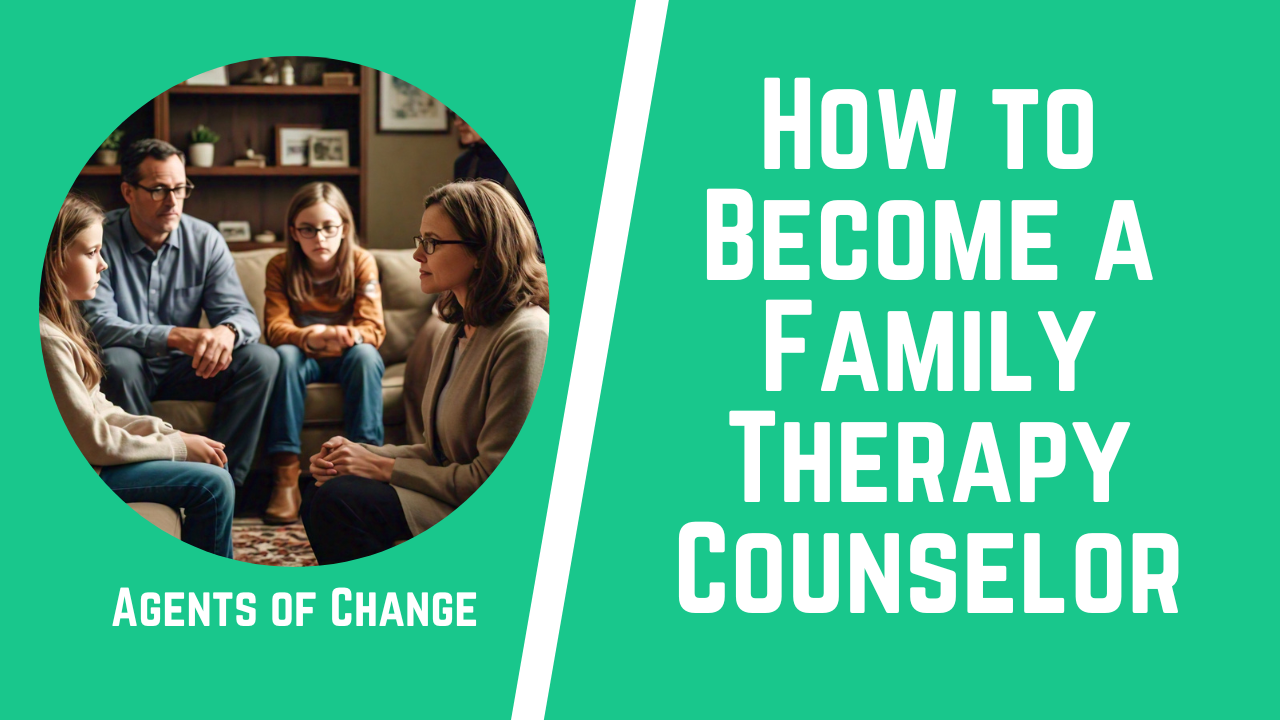
While many counselors focus on individuals, family therapy counselors work with multiple family members at once, facilitating open dialogue, fostering empathy, and teaching skills for better communication and conflict resolution. This approach is crucial, as issues in one family member often ripple through the entire unit.

Let’s dive deeper into the specifics of this role, from the types of issues addressed to the key techniques used and the settings where family therapy counselors make an impact.
Types of Issues Family Therapy Counselors Address
Family therapy counselors address a broad spectrum of challenges, often taking on roles that require flexibility, empathy, and the ability to work with people of all ages. Here are some common issues family therapy counselors help families navigate:
- Communication Breakdowns: Often, families face misunderstandings or difficulties in expressing emotions and needs effectively. Counselors help family members develop healthier communication styles to prevent and resolve conflict.
- Mental Health Challenges: Issues like depression, anxiety, and addiction can have a profound impact on family dynamics. Family therapy can support not only the person directly affected but also the family members struggling to cope with or understand the condition.
- Marital and Relationship Struggles: Marital tension and other relationship issues can impact the entire family. A family therapy counselor may work with couples to resolve conflicts and, in some cases, guide them through separation or divorce.
- Parenting Challenges: Parenthood can be challenging, and many parents struggle with balancing discipline, empathy, and nurturing. Counselors support parents in aligning their approaches and addressing any behavioral issues in their children.
- Trauma and Grief: Loss, trauma, and other major life events can significantly disrupt a family’s harmony. Family therapists guide families through the grieving process, helping them reconnect and find collective strength.
These issues can be complex and multi-layered, often intertwined with deep emotional roots. Family therapy counselors play an instrumental role in helping family members unravel these complexities in a safe and supportive setting.
Techniques Used in Family Therapy Counseling
Family therapy counselors use a variety of therapeutic techniques, often adapting their approach to best fit the family’s needs and personalities. Here are some of the most commonly used methods:
- Structural Family Therapy (SFT): This approach focuses on understanding and adjusting the structure within a family. It examines family roles, boundaries, and subsystems, aiming to create a healthier balance where each member’s role is clear and supportive.
- Cognitive-Behavioral Family Therapy (CBFT): CBFT uses cognitive-behavioral techniques to help family members recognize and change patterns of negative thinking and behavior. This approach is especially helpful when dealing with specific issues like addiction, anger management, or anxiety.
- Emotionally Focused Therapy (EFT): EFT is grounded in attachment theory and seeks to foster emotional security and attachment between family members. This technique is highly effective in addressing issues in couples and parent-child relationships.
- Narrative Therapy: This approach encourages family members to express their personal stories and identify how these stories shape their perceptions of themselves and each other. By “re-authoring” these narratives, families often find new perspectives on their roles and challenges.
By combining these approaches, family therapy counselors create a tailored experience for each family, recognizing that each unit has its own dynamics, needs, and goals.
Core Responsibilities of a Family Therapy Counselor
Family therapy counselors have a broad range of responsibilities that span from direct counseling to administrative tasks. Here’s a look at the core duties that define this role:
-
Conducting Family Assessments
Family therapy begins with an in-depth assessment to understand the family’s dynamics, history, and specific challenges. Counselors gather information on each family member’s background, past conflicts, and any significant life events, using this data to guide their treatment approach. -
Facilitating Open Dialogue
One of the primary roles of a family therapist is to create a safe environment where each family member feels heard and respected. This involves mediating conversations, managing strong emotions, and ensuring everyone has a chance to share their perspective. -
Developing Treatment Plans
After the initial assessment, family therapists work collaboratively with the family to develop a customized treatment plan. This plan outlines the goals for therapy, strategies to address specific issues, and techniques the family will practice outside of sessions. -
Teaching Coping and Communication Skills
Effective family therapy often includes training family members in skills like active listening, empathy, and conflict resolution. These tools empower family members to communicate more effectively, navigate difficult conversations, and handle stress in healthier ways. -
Offering Resources and Referrals
Family therapy counselors often connect families to additional resources, such as support groups, educational materials, and community programs. In some cases, referrals to specialists like substance abuse counselors or psychiatric services are necessary to provide comprehensive support. -
Maintaining Confidential Records
Like all mental health professionals, family therapy counselors are responsible for maintaining detailed, confidential records of their sessions. This includes session notes, assessments, treatment plans, and any changes in the family’s goals or dynamics over time.
Settings Where Family Therapy Counselors Work

Family therapy counseling isn’t confined to one specific setting. Many professionals work in various environments, adapting to different family needs and circumstances. Here’s where you’ll often find family therapy counselors making a difference:
- Private Practice: Many family counselors work in private practices, offering services to individuals, couples, and family units in a confidential setting.
- Hospitals and Health Clinics: Some counselors work within hospitals or health clinics, where they assist families dealing with chronic illness, mental health crises, or the impact of a family member’s hospitalization.
- Schools and Universities: Family therapy counselors in educational settings help families navigate academic stress, developmental challenges, and social issues that affect students’ well-being.
- Community Centers: Many family counselors work in community centers, providing accessible mental health services and support to families facing financial challenges or lacking access to private care.
- Social Service Agencies: Family therapy counselors also work in social service organizations, assisting families affected by poverty, substance abuse, or housing insecurity, often collaborating with case managers and other Social Workers to support holistic family wellness.
Why Family Therapy Counseling is Important
Family therapy counseling can profoundly impact individuals and family units by providing them with tools and insights that lead to lasting change. Here’s a look at some of the broader benefits family therapy brings:
- Prevents Intergenerational Patterns: Family therapy addresses dysfunctional patterns, helping families break cycles of trauma, abuse, or poor communication that might otherwise be passed down.
- Enhances Emotional Health: By improving family dynamics, therapy often reduces stress, anxiety, and depression, leading to better mental health outcomes for everyone involved.
- Improves Problem-Solving Skills: Family therapy doesn’t just resolve immediate conflicts; it also equips family members with problem-solving skills they can use in future situations.
- Strengthens Relationships: Building empathy, understanding, and respect between family members fosters stronger, more supportive relationships, which benefits each member’s overall well-being.
Family therapy counselors act as agents of change, supporting families in their most challenging moments. By offering guidance, insight, and practical strategies, they help family members reconnect, heal, and grow together, often leaving a positive impact that extends beyond the family unit into the community as a whole.
Learn more about Agents of Change Continuing Education. We’ve helped thousands of Social Workers, Counselors, and Mental Health Professionals with their Continuing Education and want you to be next!
2) Essential Skills for a Family Therapy Counselor
Working as a family therapy counselor requires more than academic knowledge. This role demands a unique blend of interpersonal skills, analytical abilities, and emotional resilience.
Successful counselors combine empathy with strategy, guiding families through difficult conversations while helping them build better communication and conflict-resolution skills. Let’s break down the core skills essential for anyone looking to thrive in this field.
Empathy and Compassion
Empathy is at the heart of family therapy counseling. A counselor’s ability to truly understand and share in the feelings of others creates the trust and safety families need to be open about their challenges. Empathy allows the counselor to see each family member’s perspective, even when family members struggle to see eye-to-eye.
- Active Listening: To show empathy, counselors must listen attentively to each family member, picking up on verbal and non-verbal cues. This involves giving full attention, validating each person’s experience, and showing that their concerns are heard.
- Non-Judgmental Approach: Family therapy often involves complex emotions and sensitive topics. By keeping a non-judgmental stance, counselors ensure that clients feel safe to express themselves without fear of criticism.
- Emotional Availability: Being emotionally present in sessions, even during difficult discussions, reassures family members that they’re not alone in their struggles.
Strong Communication Skills
Family therapy counselors are facilitators of dialogue, making communication skills vital. They must be able to guide conversations, mediate conflicts, and encourage family members to share their feelings openly.
- Clear and Concise Communication: Counselors need to convey complex concepts and interventions in ways that are easy to understand. Whether explaining therapeutic approaches or giving practical advice, clarity is essential.
- Mediation and Conflict Resolution: Family therapy often involves managing strong emotions and opposing viewpoints. Counselors must skillfully mediate, ensuring that every member feels heard while helping them work toward a resolution.
- Encouraging Self-Expression: Effective counselors encourage family members to express themselves fully. They help family members articulate their feelings and needs, even if these have been suppressed or ignored over time.
Analytical and Problem-Solving Skills
Counselors must assess each family’s unique dynamics, identify underlying issues, and develop effective strategies for change. Analytical and problem-solving skills allow counselors to navigate complex family structures and address multiple issues simultaneously.
- Assessment and Diagnosis: Through active observation and careful questioning, counselors gather information to diagnose family challenges accurately. This includes identifying patterns of behavior, emotional triggers, and potential mental health issues.
- Strategic Thinking: Every family situation is different, requiring counselors to develop individualized treatment plans. Strategic thinking helps counselors choose interventions that will be the most effective for each family’s particular needs.
- Solution-Focused Mindset: While family therapy explores emotions and past events, it’s also about creating solutions for a healthier future. A solution-focused approach helps counselors keep families on track toward positive change.
Resilience and Emotional Stability
Family therapy counseling can be emotionally intense. To support others effectively, counselors must have the emotional strength to manage difficult sessions, maintain professional boundaries, and avoid burnout.
- Self-Care Awareness: Counselors who prioritize self-care—whether through hobbies, exercise, or therapy for themselves—are better equipped to handle the emotional demands of family therapy.
- Boundaries: While compassion is essential, so is the ability to maintain professional boundaries. Effective counselors know when to be empathetic without becoming personally involved in clients’ issues.
- Stress Management Techniques: Counselors often witness distressing situations, from family conflicts to trauma. Having techniques to manage their own stress—such as mindfulness, breathing exercises, or supervision—helps them stay centered and present for their clients.
Flexibility and Adaptability
Family therapy sessions can be unpredictable, with unexpected emotions or conflicts surfacing at any moment. The ability to adapt to these situations, adjust approaches, and think on the spot is crucial for maintaining an effective therapeutic environment.

- Adaptability in Approach: No two families are alike, and counselors must be willing to shift their approach depending on the needs and dynamics present in each session. They may use different therapeutic methods, adjust communication styles, or pivot goals based on the family’s progress.
- Open-Mindedness: Family counselors work with people from all backgrounds, cultures, and belief systems. An open mind helps counselors approach each family without bias, respecting diverse values and traditions.
- Problem Re-Framing: Often, family members feel stuck in certain roles or dynamics. The ability to help clients see their problems from a new perspective or reframe their narratives can unlock new possibilities for growth and resolution.
Teaching and Coaching Skills
Family therapy isn’t only about solving current issues; it’s about equipping family members with tools to maintain healthier relationships long-term. Teaching and coaching skills allow counselors to offer practical, sustainable guidance.
- Teaching Communication Skills: One of the primary goals of family therapy is to improve communication within the family. Counselors teach techniques like “I” statements, active listening, and non-verbal communication awareness.
- Conflict Resolution Training: Many families come to therapy to improve conflict management. By teaching skills like calm conflict resolution and compromise, counselors empower families to handle future disagreements more effectively.
- Behavioral Modeling: Counselors often demonstrate healthy communication and problem-solving behaviors during sessions. This modeling serves as a practical example for family members to emulate.
Cultural Competence
Family structures and issues vary widely across different cultures. A skilled family therapy counselor understands and respects cultural influences on family dynamics, tailoring their approach accordingly.
- Understanding Cultural Norms: Knowledge of cultural values and traditions is crucial for effective family therapy. Counselors need to understand how cultural beliefs shape family expectations, communication styles, and responses to conflict.
- Sensitivity to Diversity: Counselors often work with families of various backgrounds, including those who may face unique challenges due to race, religion, or socioeconomic status. Sensitivity to diversity helps counselors approach these situations with respect and understanding.
- Avoiding Assumptions: Effective family counselors avoid making assumptions based on culture or background. They recognize that each family is unique and make an effort to understand individual dynamics without stereotyping.
A family therapy counselor’s success relies heavily on a well-rounded set of skills, each contributing to their ability to guide families through challenging times. By combining empathy with effective communication, problem-solving abilities, emotional resilience, and cultural sensitivity, counselors provide a safe space for families to explore, heal, and grow.
We’ve helped thousands of Social Workers, Counselors, and Mental Health Professionals with Continuing Education, learn more here about Agents of Change and claim your 5 free CEUs!
3) Education and Licensing Requirements
Becoming a family therapy counselor requires a blend of formal education, hands-on training, and state-specific licensure. This structured path is designed to ensure that counselors possess both the theoretical knowledge and practical skills necessary to guide families effectively.
Let’s break down the steps, from your initial degree to obtaining a license, along with some tips on how to make the most of each phase.
Step 1: Earn a Bachelor’s Degree
The journey to becoming a family therapy counselor typically begins with a bachelor’s degree. While this degree alone won’t qualify you to practice, it’s a necessary foundation.
- Suggested Majors: Psychology, Social Work, sociology, and human services are common undergraduate majors for aspiring family counselors. These fields provide a grounding in human behavior, social systems, and basic counseling concepts.
- Courses to Focus On: Look for classes in abnormal psychology, child development, social psychology, and counseling basics. These courses introduce concepts you’ll build on in graduate studies.
- Gaining Relevant Experience: During your undergraduate years, consider volunteering or interning in settings that involve counseling, social services, or community support. This experience will give you insight into the helping profession and strengthen your graduate school applications.
While a bachelor’s degree is a preliminary step, it’s an important one. Your major, coursework, and experiences during this time set the stage for advanced studies in family therapy counseling.
Step 2: Obtain a Master’s Degree in Family Therapy, Counseling, or Social Work
A master’s degree is the minimum educational requirement to practice as a family therapy counselor. Programs that specifically focus on marriage and family therapy (MFT), counseling, or Social Work provide the specialized training you’ll need.
Choosing the Right Program
When selecting a graduate program, consider programs accredited by recognized bodies such as the Commission on Accreditation for Marriage and Family Therapy Education (COAMFTE) or the Council on Social Work Education (CSWE).
- Marriage and Family Therapy (MFT) Programs: MFT programs specifically focus on understanding family dynamics, relationship patterns, and family-based interventions. These programs emphasize systemic therapy, equipping you with tools to address relational and family-focused challenges.
- Master’s in Counseling: Some counselors enter family therapy with a general counseling degree, often with a concentration in family counseling or clinical mental health counseling. These programs offer a broader counseling education with options for family therapy coursework.
- Master’s in Social Work (MSW): An MSW with a clinical focus also prepares you for family therapy work. Social Work programs often take a holistic approach, emphasizing community, social systems, and how external factors affect families.
Core Courses and Fieldwork
Master’s programs in family therapy and counseling typically require 2-3 years of full-time study, including coursework and supervised fieldwork.
- Core Courses: Expect to take classes in family systems theory, child and adolescent therapy, cultural competence, ethics in counseling, and mental health assessment. These courses offer a deep dive into the theories and practical applications of family therapy.
- Fieldwork and Practicum: Most programs require you to complete 500-1,000 hours of supervised clinical work. Practicums and internships, often completed at clinics or community agencies, allow you to apply theoretical knowledge with real clients under professional guidance.
Hands-on experience is critical in developing your counseling skills, allowing you to observe professionals and gain experience working directly with families.
Step 3: Complete Postgraduate Supervised Hours
Once you’ve earned your master’s degree, you’ll typically need to complete a set number of supervised clinical hours before you can obtain a license. These hours help you transition from student to practitioner, allowing you to refine your skills under supervision.
- Number of Hours: Requirements vary by state, but most states require between 2,000 and 4,000 supervised hours. These hours may need to be completed within a certain timeframe, often 1-2 years.
- Type of Supervision: Supervision must typically be provided by a licensed family therapist, counselor, or Social Worker who has the qualifications to oversee your work.
- Setting: You may complete supervised hours in a variety of settings, including private practices, community mental health agencies, hospitals, and social service organizations.
During this period, you’ll focus on developing advanced counseling skills, managing client cases, and receiving feedback from experienced professionals to further enhance your clinical abilities.
Step 4: Pass the Required Licensing Exam
After meeting educational and supervised-hour requirements, you’ll need to pass a licensing exam to become a licensed family therapy counselor. The type of exam you take depends on your degree and the specific license you’re seeking.
Common Licensing Exams
- Marriage and Family Therapy National Exam: Administered by the Association of Marital and Family Therapy Regulatory Boards (AMFTRB), this exam is required for those pursuing an MFT license in most states.
- National Clinical Mental Health Counseling Examination (NCMHCE): Offered by the National Board for Certified Counselors (NBCC), this exam is commonly required for those with a counseling degree seeking licensure as a Licensed Professional Counselor (LPC) with a focus on family therapy.
- Association of Social Work Boards (ASWB) Clinical Exam: Social Workers pursuing licensure as a Licensed Clinical Social Worker (LCSW) must often pass this exam, which includes family therapy competencies.
It’s essential to research your state’s requirements to ensure you’re preparing for the correct exam. Many counselors use preparatory courses or study materials to increase their chances of passing on the first attempt.
Step 5: Maintain Your License and Pursue Continuing Education
Once you’re licensed, you’ll need to fulfill continuing education (CE) requirements to keep your license active. These requirements vary by state but are essential for maintaining professional competence and staying up-to-date with developments in family therapy.
- Typical CE Requirements: Most states require licensed family therapy counselors to complete between 20 and 40 CE hours every one or two years.
- Approved CE Providers: Agents of Change Continuing Education is one example of an organization offering ASWB and NBCC-approved courses for family therapy counselors, Social Workers, and mental health professionals. With over 150 courses, they provide resources for maintaining your license while expanding your expertise in areas like trauma-informed care, cultural competence, and advanced therapy techniques.
- Areas of Focus: CE courses often cover new research, emerging therapeutic techniques, and specialized topics such as addiction counseling, crisis intervention, or working with specific populations.
Continuing education ensures that licensed family therapy counselors stay current in a field that’s constantly evolving, benefiting both counselors and the families they serve.
By following these steps—earning a bachelor’s degree, completing a specialized master’s program, accruing supervised hours, passing a licensing exam, and engaging in lifelong learning—you’ll be well-prepared to start and sustain a successful career as a family therapy counselor. With each phase, you’ll develop the knowledge, skills, and credentials necessary to make a meaningful impact on families in need.
4) Building Experience in Family Therapy Counseling
Once you’ve completed your education and licensure requirements, the next crucial step is building practical experience in family therapy counseling. This hands-on experience is invaluable, as it enables you to apply theoretical knowledge, develop your counseling style, and gain confidence working with diverse family dynamics.
Here, we’ll explore how to gain experience as a family therapy counselor, from internships and supervised hours to finding your specialty and learning from mentorship.
Starting with Internships and Supervised Clinical Hours
Before becoming fully licensed, you’ll complete supervised clinical hours, a requirement in most states. This initial experience is foundational, helping you hone your skills in a structured environment with guidance from seasoned professionals.
- Types of Settings: Many graduate programs and post-graduate supervised hours can be completed in diverse environments, such as community mental health centers, private practices, schools, or hospitals. Each setting offers unique experiences and client interactions, so try to gain exposure in multiple environments if possible.
- Role of Supervision: Supervision isn’t just a requirement—it’s an opportunity for growth. A supervisor observes your sessions, provides constructive feedback, and helps you navigate complex family dynamics. Supervision helps you build confidence and refine your approach under the guidance of an experienced counselor.
- Developing Client Interaction Skills: Supervised clinical hours allow you to practice communication and therapeutic techniques with real clients. You’ll learn how to establish rapport, set boundaries, and manage challenging situations with professionalism and empathy.
Gaining experience in various settings under supervision will broaden your understanding of family therapy’s diverse applications, preparing you for independent practice.
Choosing a Niche or Specialty Area
While general family therapy skills are essential, many counselors find that developing a niche or specialty can make their work more fulfilling and effective. Specializing can also make you more marketable to potential clients or employers.
Popular Specialties in Family Therapy Counseling
- Substance Abuse and Addiction Counseling: Families impacted by addiction face unique challenges, including codependency, enabling behaviors, and emotional trauma. Specializing in addiction counseling can equip you to guide families through recovery, offering both support and practical coping strategies.
- Trauma and Grief Counseling: Trauma and loss can have profound effects on family dynamics. Specializing in trauma-informed care or grief counseling allows you to help families process emotions, foster resilience, and find a path forward together.
- Child and Adolescent Counseling: Children and teens bring unique perspectives and needs to family therapy. Specializing in child and adolescent counseling helps you focus on developmental issues, behavioral concerns, and supporting healthy communication within the family unit.
- Marriage and Couples Counseling: Specializing in marriage or couples counseling within a family therapy context helps you address relationship-specific issues, such as communication breakdowns, conflict, and relationship transitions.
Developing expertise in a specific area allows you to focus on issues that you’re particularly passionate about, which can lead to more fulfilling and impactful work. Many counselors pursue additional training and certifications in their chosen specialty, often through continuing education courses like those offered by Agents of Change Continuing Education.
Building a Professional Network
Networking with other professionals in the field is invaluable, both for finding job opportunities and for continuing your professional development. Family therapy counselors often find that connecting with colleagues provides support, resources, and collaborative opportunities.
- Joining Professional Associations: Consider joining organizations such as the American Association for Marriage and Family Therapy (AAMFT) or the National Association of Social Workers (NASW). Membership provides access to conferences, workshops, and continuing education opportunities.
- Attending Workshops and Conferences: Conferences and workshops are excellent for meeting other professionals, learning new techniques, and staying updated on research and trends in family therapy.
- Participating in Supervision or Peer Consultation Groups: Many family therapy counselors continue participating in supervision or peer consultation groups, even after becoming licensed. These groups offer a space to discuss challenging cases, share insights, and receive feedback from trusted colleagues.
A solid professional network can provide guidance, support, and a collaborative community, which is especially valuable in a field where ongoing learning is essential.
Building Confidence and Developing Your Counseling Style
Your first few years in family therapy counseling are an opportunity to discover your unique approach, strengthen your communication style, and build confidence in your ability to help families.
- Experimenting with Different Techniques: As you work with different clients, you’ll get a sense of which therapeutic techniques feel most natural and effective for you. While some counselors favor structured approaches like Cognitive-Behavioral Therapy (CBT), others prefer the flexibility of Narrative Therapy or Emotionally Focused Therapy (EFT).
- Seeking Feedback: Feedback from supervisors, mentors, or peers can be invaluable in helping you refine your style. Don’t hesitate to ask for insights on what’s working well and where you could improve. Constructive feedback accelerates growth and gives you new perspectives.
- Reflecting on Your Practice: Regular self-reflection is a key component of becoming an effective counselor. Journaling about sessions, recording insights from challenging cases, and identifying areas for improvement will help you build a more intentional, self-aware practice.
Building experience also involves recognizing that it takes time to feel fully confident in your role. With each session, you’ll gain insight, improve your skills, and grow more comfortable in your own counseling style.
Continuing Education and Lifelong Learning
Family therapy counseling is a continually evolving field, and ongoing learning is essential for staying effective. After gaining foundational experience, you can deepen your knowledge and skills through continuing education.
- Meeting License Renewal Requirements: Most states require family therapy counselors to complete a certain number of continuing education hours for license renewal. Providers like Agents of Change Continuing Education offer courses that meet state requirements and cover diverse topics in family therapy.
- Pursuing Specialized Certifications: Certifications in specific areas, like trauma-informed care, play therapy, or substance abuse counseling, add to your expertise and can enhance your effectiveness in specialized cases.
- Staying Informed on Trends and Research: New studies, techniques, and societal changes can impact family therapy practices. Staying informed on the latest trends and research helps you provide families with the best, most relevant support possible.
As you gain experience, continuing education becomes a tool for refining your approach and staying energized in your work. Engaging in lifelong learning ensures that you’re prepared for new challenges and can provide clients with the most effective support.
Building experience in family therapy counseling involves more than just fulfilling hours—it’s about developing the skills, knowledge, and confidence needed to make a lasting impact. From initial supervised hours to lifelong learning and specialization, each step in this journey contributes to your growth as a compassionate, competent family therapy counselor.
Through mentorship, networking, and continuing education, you’ll create a foundation that allows you to truly make a difference in the lives of families.
5) FAQs – How to Become a Family Therapy Counselor
Q: What qualifications do I need to become a family therapy counselor?
A: To become a family therapy counselor, you typically need a master’s degree in Marriage and Family Therapy (MFT), Counseling, or Social Work, followed by completing supervised clinical hours and passing a state licensing exam.
After becoming licensed, family therapists are usually required to complete continuing education courses to maintain their credentials. Educational and licensing requirements may vary by state, so be sure to check the specific regulations in your area.
Q: How long does it take to complete the requirements and gain experience as a family therapy counselor?
A: Becoming a family therapy counselor typically takes around 6-8 years. This includes 4 years for a bachelor’s degree, 2-3 years for a master’s degree, and an additional 1-2 years to complete supervised clinical hours.
Once licensed, gaining experience and developing confidence as a family therapist is an ongoing process. Many counselors continue to build their expertise through continuing education and specialized certifications in areas like trauma-informed care, substance abuse, or child and adolescent counseling.
Q: What settings can family therapy counselors work in, and do I need to specialize in a particular area?
A: Family therapy counselors work in various settings, including private practice, hospitals, schools, community centers, and social service agencies. While specialization is not required, many counselors choose to focus on specific areas such as addiction counseling, trauma, child and adolescent counseling, or couples therapy. Specializing allows you to tailor your skills to particular issues, often making you more marketable and better equipped to handle complex family dynamics.