
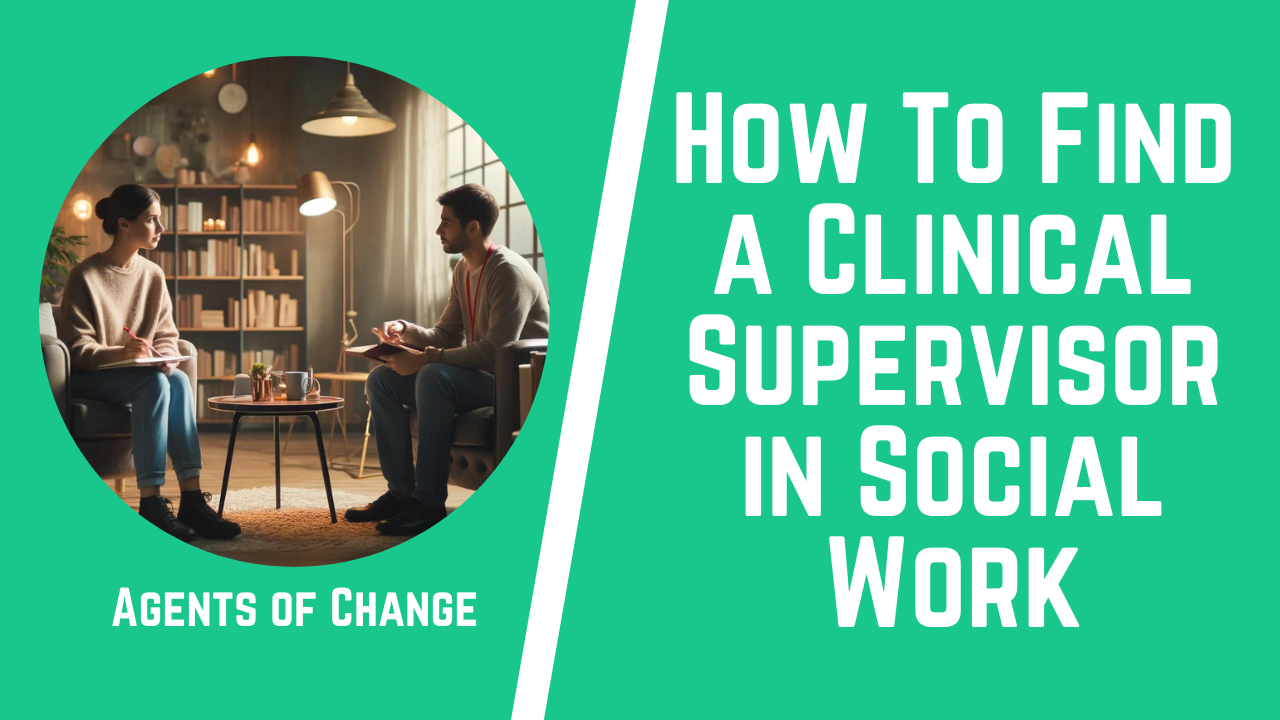
How To Find a Clinical Supervisor in Social Work

How To Find a Clinical Supervisor in Social Work

Embarking on a career in Social Work is both rewarding and demanding. Finding the right clinical supervisor is one of the most critical components of your professional journey. A clinical supervisor doesn’t just guide you through the technicalities of the job; they offer support, provide feedback, and help you grow both personally and professionally. However, the process of finding the right supervisor can be daunting, with many factors to consider and options to weigh.

In this blog post, we’ll explore how to find a clinical supervisor in Social Work, offering practical tips and insights to help you navigate this essential aspect of your career. We’ll discuss the various types of supervision available, such as agency-provided supervision, private practice supervision, and university-affiliated supervision, and highlight the pros and cons of each. Additionally, we’ll touch on the benefits of leveraging online platforms to find a supervisor that fits your specific needs and preferences.

By the end of this guide, you’ll have a comprehensive understanding of what to look for in a clinical supervisor, how to approach your search, and the different supervision options at your disposal. Whether you’re just starting or looking to change supervisors, this article will equip you with the knowledge and confidence to find a supervisor who can truly support your professional growth and success in Social Work.

Did you know? Agents of Change Continuing Education offers Unlimited Access to 150+ CE courses for one low annual fee to meet your state’s requirements for Continuing Education credits and level up your career.

We’ve helped thousands of Social Workers with Continuing Education, learn more here about Agents of Change and claim your 5 free CEUs.

1) Understanding Clinical Supervision in Social Work

Clinical supervision is a cornerstone of effective practice in Social Work. It provides a structured environment for Social Workers to reflect on their practice, receive guidance, and develop professionally. Understanding the various dimensions of clinical supervision is essential for both new and experienced Social Workers.

A clinical supervisor providing guidance to a supervisee in Social Work in a more informal and friendly setting. The atmosphere is relaxed and supportive, emphasizing mentorship and professional development.

The Role of Clinical Supervision

Clinical supervision serves several crucial functions within the field of Social Work:

  • Guidance and Mentorship: Supervisors offer expert advice and mentorship, helping Social Workers navigate complex cases and ethical dilemmas.

  • Skill Development: Supervision sessions are opportunities to learn new techniques and enhance existing skills.

  • Support and Reflection: Supervisors provide a safe space for Social Workers to discuss challenges, reflect on their practice, and receive emotional support.

Benefits of Clinical Supervision

Engaging in regular clinical supervision brings numerous benefits to Social Workers:

  • Enhanced Competence: Continuous learning and feedback improve your competence and confidence in handling cases.

  • Ethical Practice: Supervision ensures that you adhere to ethical standards and professional guidelines, protecting you and your clients.

  • Professional Growth: It fosters ongoing professional development, helping you stay current with best practices and emerging trends in Social Work.

Key Components of Effective Clinical Supervision

Effective clinical supervision is characterized by several key components:

  1. Regular Meetings: Consistent, scheduled sessions allow for ongoing support and development.

  2. Structured Agenda: Each session should have a clear agenda to address specific topics, challenges, and goals.

  3. Open Communication: A foundation of trust and open communication is essential for productive supervision.

  4. Constructive Feedback: Supervisors should provide balanced feedback that highlights strengths and identifies areas for improvement.

  5. Reflective Practice: Encouraging self-reflection helps Social Workers gain deeper insights into their practice and personal growth.

Types of Clinical Supervision

Understanding the different types of clinical supervision can help you choose the right approach for your needs:

Individual Supervision

  • Personalized Attention: One-on-one supervision allows for tailored guidance and support.

  • Deep Reflection: Provides space for in-depth discussions about cases and personal challenges.

  • Flexible Scheduling: Easier to arrange sessions that fit your schedule.

Group Supervision

  • Peer Learning: Engages with other Social Workers to share experiences and learn from each other.

  • Diverse Perspectives: Exposure to different viewpoints and approaches can enrich your practice.

  • Cost-Effective: Often more affordable than individual supervision.

Methods of Clinical Supervision

Clinical supervision can be conducted through various methods, each with its own set of advantages:

In-Person Supervision

  • Face-to-Face Interaction: Direct communication and stronger rapport.

  • Immediate Feedback: Quick responses to questions and concerns.

  • Structured Environment: A professional setting that fosters focus and engagement.

Online Supervision

  • Accessibility: Convenient for those in remote areas or with busy schedules.

  • Flexibility: Easier to fit into your routine with virtual meetings.

  • Resource-Rich: Access to a wider range of supervisors beyond your geographical area.

A diverse social worker on a video call with another social worker, viewed from the perspective of the person on the side of the computer. The setting is cozy and informal, emphasizing the supportive and friendly nature of the mentorship relationship.

Factors to Consider When Choosing a Supervisor

Selecting the right clinical supervisor involves several important considerations:

  • Experience and Expertise: Ensure the supervisor has relevant experience in your area of practice.

  • Supervisory Style: Match their style with your learning preferences and needs.

  • Availability: Confirm their availability aligns with your schedule and requirements.

  • Credentials and Licensing: Verify their qualifications and ensure they meet the regulatory standards of your profession.

  • Reputation and Feedback: Seek recommendations from colleagues and peers who have worked with them.

Learn more about Agents of Change Continuing Education. We’ve helped thousands of Social Workers with their Continuing Education and want you to be next!

2) How To Find a Clinical Supervisor in Social Work

Finding the right clinical supervisor is a critical step in your Social Work career. The process involves careful consideration of your needs, goals, and the various supervision options available. Here, we’ll break down the steps and strategies to help you find a clinical supervisor that fits your professional aspirations and personal preferences.

Identifying Your Supervision Needs

Before you start your search, it’s essential to identify what you need from a clinical supervisor. Reflect on your professional goals, areas where you seek improvement, and the type of guidance you prefer.

Assess Your Goals

  • Skill Development: What specific skills do you want to develop or enhance?

  • Career Advancement: Are you looking to specialize in a particular area of Social Work?

  • Ethical Guidance: Do you need help navigating ethical dilemmas in your practice?

Determine Your Preferences

  • Supervisory Style: Do you prefer a directive, supportive, or collaborative approach?

  • Frequency of Meetings: How often do you want to meet with your supervisor?

  • Mode of Supervision: Would you benefit more from in-person or online sessions?

Exploring Supervision Options

There are various avenues to explore when searching for a clinical supervisor. Each option offers different advantages and potential drawbacks. Let’s examine the primary sources where you can find a supervisor.

Agency-Provided Supervision

Many Social Workers find supervisors through their place of employment. Agencies often have in-house supervisors to support their staff.

How to Access:
  • Human Resources: Contact your HR department for information on available supervisors.

  • Colleagues: Ask colleagues about their experiences with in-house supervisors.

Private Practice Supervision

Private practice supervisors offer personalized and flexible supervision tailored to your needs.

How to Access:
  • Professional Associations: Check listings on websites of organizations like the NASW.

  • Online Directories: Use platforms like Psychology Today or TherapyDen to find private supervisors.

  • Networking Events: Attend Social Work conferences and workshops to connect with potential supervisors.

Two social workers sitting in a cozy, warm office having an important conversation in a calm manner. The setting exudes a sense of confidentiality, support, and professional respect.

University-Affiliated Supervision

Universities often provide supervision to alumni and practicing professionals in their network.

How to Access:
  • Alumni Networks: Reach out to your alma mater’s alumni office.

  • University Clinics: Contact university-affiliated clinics or counseling centers.

  • Academic Conferences: Participate in conferences where university faculty are presenting.

Utilizing Online Platforms and Directories

The internet has made it easier than ever to find a clinical supervisor, especially if you’re open to online supervision.

Popular Online Platforms:

  • SupervisionDirectory.com: A specialized directory for finding clinical supervisors.

  • TherapyDen: A platform for finding therapists and supervisors with various specializations.

  • Psychology Today: Widely used for locating mental health professionals, including supervisors.

How to Search Effectively:
  • Filter Options: Use filters to narrow down your search by location, specialization, and availability.

  • Read Reviews: Look for testimonials and reviews from other Social Workers.

  • Check Credentials: Verify the qualifications and licenses of potential supervisors.

Networking and Professional Organizations

Networking is a powerful tool in your search for a clinical supervisor. Engaging with professional organizations and attending events can lead to valuable connections.

Join Professional Organizations

  • NASW (National Association of Social Workers): Offers resources and directories for finding supervisors.

  • Local Chapters: Participate in local chapter events to meet supervisors in your area.

Attend Conferences and Workshops

  • Social Work Conferences: National and regional conferences are excellent venues to meet experienced supervisors.

  • Continuing Education Workshops: These events provide education credits and networking opportunities.

Evaluating Potential Supervisors

Once you have a list of potential supervisors, it’s time to evaluate them to find the best fit.

Conduct Initial Interviews

  • Ask About Experience: Inquire about their background, specialization, and experience in supervision.

  • Discuss Supervisory Style: Ensure their approach aligns with your learning preferences.

  • Clarify Logistics: Talk about availability, frequency of meetings, and fees.

Consider Compatibility

  • Professional Compatibility: Do their values and ethics align with yours?

  • Personal Rapport: Do you feel comfortable and respected in their presence?

  • Feedback Mechanisms: Are they open to providing and receiving feedback?

Making Your Decision

After evaluating your options, it’s time to make a decision. Here are some final steps to ensure you choose the right supervisor.

Reflect on Interviews

  • Review Notes: Go over your notes from initial interviews to compare candidates.

  • Seek Input: If possible, get feedback from trusted colleagues or mentors.

Trust Your Instincts

  • Comfort Level: Choose someone you feel comfortable with and trust.

  • Professional Fit: Ensure they can meet your professional development needs.

Agents of Change Continuing Education

While finding a supervisor, remember to consider your continuing education needs. Agents of Change Continuing Education offers over 150 courses for Social Workers to earn Continuing Education Credits (CECs). These courses are crucial for maintaining your license and staying updated with the latest practices.

Why Choose Agents of Change?

  • Diverse Course Offerings: A wide range of topics relevant to Social Work.

  • Flexible Learning: Online courses that fit your schedule.

  • Accreditation: Recognized courses that fulfill licensure requirements.

We’ve helped thousands of Social Workers with Continuing Education, learn more here about Agents of Change and claim your 5 free CEUs!

3) Tips for a Successful Supervision Experience

A successful supervision experience is fundamental to your growth and effectiveness as a Social Worker. It involves more than just attending scheduled sessions; it’s about actively engaging in the process, being open to learning, and building a productive relationship with your supervisor. Here are some practical tips to ensure you make the most out of your clinical supervision.

Setting Clear Goals

One of the first steps to a successful supervision experience is setting clear, achievable goals. These goals will guide your supervision sessions and provide a framework for your professional development.

A social worker writing down a list of goals in her notebook, preparing for a supervision session. The setting is cozy and productive, with a thoughtful atmosphere as she organizes her thoughts.

Identifying Your Goals

  • Short-Term Goals: Focus on immediate needs such as improving a particular skill or addressing a current challenge.

  • Long-Term Goals: Consider your broader career aspirations, like becoming a specialist in a specific area of Social Work or achieving licensure.

Documenting Goals

  • Supervision Plan: Create a written supervision plan that outlines your goals and the steps needed to achieve them.

  • Regular Reviews: Revisit and revise your goals periodically to reflect your progress and any new challenges.

Communicating Effectively

Effective communication is the cornerstone of a productive supervision relationship. It ensures that you and your supervisor are on the same page and can promptly address any issues.

Open and Honest Dialogue

  • Transparency: Be open about your strengths and areas where you need improvement.

  • Active Listening: Pay close attention to your supervisor’s feedback and ask clarifying questions if needed.

  • Feedback Exchange: Don’t hesitate to provide feedback to your supervisor about what is working well and what could be improved.

Preparing for Sessions

  • Agenda Setting: Come to each session with a clear agenda, including topics you want to discuss and any questions you have.

  • Case Preparation: Prepare detailed case notes and reflections to facilitate in-depth discussions.

Being Open to Feedback

Constructive feedback is a vital part of clinical supervision. Being open to and acting on feedback will enhance your practice and professional development.

Receiving Feedback

  • Stay Receptive: Approach feedback with an open mind, recognizing it as an opportunity for growth.

  • Ask for Specifics: If feedback is vague, ask your supervisor to provide specific examples and suggestions for improvement.

  • Reflect on Feedback: Take time to reflect on the feedback and how it applies to your practice.

Implementing Feedback

  • Action Plans: Based on the feedback you receive, develop action plans outlining concrete steps to address the areas for improvement.

  • Follow-Up: Discuss your progress in subsequent supervision sessions to demonstrate your commitment to growth and to get further guidance.

Staying Organized

Organization plays a crucial role in making your supervision experience effective. It helps you keep track of your progress, ensures you’re prepared for sessions, and allows for better reflection.

Keeping a Supervision Log

  • Session Summaries: Document the key points, feedback, and action items from each supervision session.

  • Progress Tracking: Regularly update your log to track your progress toward your goals.

Organizing Materials

  • Digital Tools: Use digital tools like calendars, note-taking apps, and project management software to keep your materials organized.

  • Physical Files: Maintain a well-organized physical file for any printed materials, case notes, and supervision documents.

Building a Strong Supervisory Relationship

A strong supervisory relationship is built on mutual respect, trust, and collaboration. This relationship is fundamental to a supportive and effective supervision experience.

Establishing Trust

  • Consistency: Be consistent in your attendance and preparation for supervision sessions.

  • Confidentiality: Maintain confidentiality and trust by being honest and respectful in your communications.

Collaboration

  • Joint Problem-Solving: Approach challenges collaboratively, viewing your supervisor as a partner in your professional development.

  • Shared Decision-Making: Involve your supervisor in setting goals and developing action plans, ensuring that you both have a vested interest in your success.

Engaging in Reflective Practice

Reflective practice involves regularly analyzing your experiences and actions to improve your professional skills and decision-making processes.

Reflective Journaling

  • Daily Reflections: Keep a journal where you reflect on your daily experiences, challenges, and learnings.

  • Session Reflections: After each supervision session, write down what you discussed, what you learned, and how you plan to apply it.

Peer Reflection

  • Peer Supervision Groups: Join or form peer supervision groups where you can share experiences and gain insights from your peers.

  • Case Discussions: Engage in case discussions with colleagues to get different perspectives and deepen your understanding.

Maintaining Professional Boundaries

While building a strong relationship with your supervisor is essential, it’s equally important to maintain professional boundaries to ensure a productive and focused supervision experience.

Defining Boundaries

  • Role Clarity: Clearly define your and your supervisor’s roles and responsibilities.

  • Personal vs. Professional: Keep personal matters separate from professional supervision to maintain focus on your professional development.

Addressing Boundary Issues

  • Open Communication: Address any boundary issues directly with your supervisor in a respectful manner.

  • Supervision Contracts: Consider using a supervision contract that outlines the expectations and boundaries of the supervisory relationship.

Utilizing Continuing Education

Engaging in continuing education is a crucial aspect of maintaining your professional competence and enhancing your supervision experience.

Agents of Change Continuing Education

  • Course Offerings: Explore the extensive course offerings from Agents of Change Continuing Education, which provides over 150 courses for Social Workers.

  • Flexible Learning: Take advantage of the flexibility of online courses to fit your busy schedule.

  • Accreditation: Ensure the courses you take are accredited and recognized for license renewal and professional development.

4) FAQs – Finding Supervision as a Social Worker

Q: What should I do if my supervisor’s feedback is not constructive or helpful?

A: If you find that your supervisor’s feedback is not constructive or helpful, it’s important to address the issue directly and professionally. Here are some steps you can take:

  • Communicate Your Concerns: Politely express your concerns to your supervisor, providing specific examples of feedback that you found unhelpful. This can open a dialogue and help your supervisor understand your needs better.

  • Request Specific Guidance: Ask for more specific, actionable feedback that you can implement. You might say, “Could you provide an example of how I could improve in this area?”

  • Seek Additional Support: If the issue persists, consider seeking advice from colleagues or mentors who might provide additional perspectives or support.

  • Evaluate the Fit: Reflect on whether the supervisory relationship is meeting your needs. If not, it may be appropriate to explore finding a different supervisor who better aligns with your professional goals and learning style.

Q: How can I balance the cost of private supervision with my budget?

A: Balancing the cost of private supervision with your budget can be challenging, but there are strategies to make it more manageable:

  • Employer Assistance: Check if your employer offers any financial assistance or reimbursement for supervision costs. Some agencies provide stipends or subsidies for professional development.

  • Sliding Scale Fees: Look for supervisors who offer sliding scale fees based on income. Many supervisors are willing to adjust their rates to accommodate financial constraints.

  • Group Supervision: Consider participating in group supervision sessions, which are often more affordable than individual supervision. Group supervision can still provide valuable insights and support.

  • Online Supervision: Explore online supervision options, which can sometimes be more cost-effective due to reduced overhead costs for supervisors.

  • Budgeting: Plan your budget to include supervision costs as a regular expense. Prioritize supervision as an investment in your professional development and career growth.

Q: How do I know if online supervision is right for me?

A: Online supervision can be an excellent option for many Social Workers, but it’s important to determine if it suits your specific needs and preferences. Here are some factors to consider:

  • Comfort with Technology: Ensure you are comfortable using video conferencing tools and other online platforms required for virtual supervision.

  • Privacy and Confidentiality: Confirm that you have a private and quiet space for online supervision sessions where you can speak freely without interruptions.

  • Licensing Requirements: Check your state’s licensing regulations to ensure that online supervision is accepted for your licensure requirements. Different states have different rules regarding virtual supervision.

  • Flexibility and Convenience: Consider the convenience of scheduling and attending online sessions, especially if you have a busy or unpredictable schedule. Online supervision offers greater flexibility and eliminates travel time.

  • Connection Quality: Assess whether you feel you can build a strong, trusting relationship with a supervisor in a virtual setting. While some may find it easy to connect online, others might prefer face-to-face interaction for a more personal touch.


5) Conclusion

Finding the right clinical supervisor in Social Work is a pivotal step in ensuring your professional growth and success. The journey involves assessing your needs, exploring various supervision options, and carefully evaluating potential supervisors to find the best fit. By understanding the different types of supervision available—such as agency-provided, private practice, and university-affiliated supervision—and leveraging resources like online directories and professional networks, you can navigate this process with confidence and clarity.

A successful supervision experience hinges on clear goal-setting, effective communication, and openness to feedback. Maintaining an organized approach and building a strong, collaborative relationship with your supervisor will further enhance the benefits you gain from supervision.

Engaging in reflective practice and upholding professional boundaries are also key to making the most of your supervision sessions. Additionally, don’t overlook the importance of continuing education; platforms like Agents of Change Continuing Education offer a wealth of resources to help you stay current and competent in your practice.

Learn more about Agents of Change Continuing Education. We’ve helped thousands of Social Workers with their Continuing Education and want you to be next!

————————————————————————————————————————————————

► Learn more about the Agents of Change Continuing Education here: https://agentsofchangetraining.com

About the Instructor, Meagan Mitchell: Meagan is a Licensed Clinical Social Worker and has been providing Continuing Education for Social Workers for more than 8 years. From all of this experience helping others pass their exams, she created Agents of Change Continuing Education to help Social Workers stay up-to-date on the latest trends, research, and techniques.

#socialwork #socialworker #socialwork #socialworklicense #socialworklicensing #continuinged #continuingeducation #ce #socialworkce #freecesocialwork #lmsw #lcsw

Disclaimer: This content has been made available for informational and educational purposes only. This content is not intended to be a substitute for professional medical or clinical advice, diagnosis, or treatment


Share:

Discover more from Agents of Change

Subscribe now to keep reading and get access to the full archive.

Continue reading