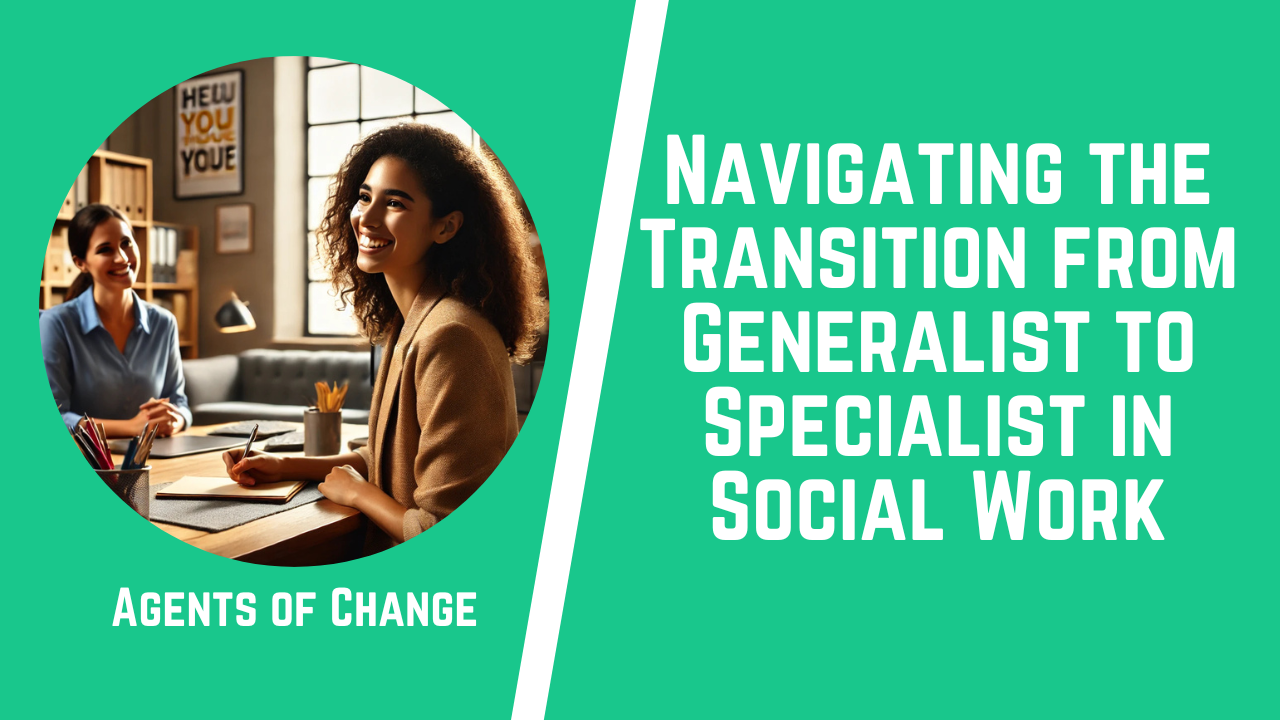
Navigating the Transition from Generalist to Specialist in Social Work
Navigating the Transition from Generalist to Specialist in Social Work
Social Work is a field that thrives on adaptability and a broad understanding of human needs. As a generalist Social Worker, you’ve likely developed a solid foundation, working with diverse populations and addressing a wide range of challenges.

Yet, many Social Workers reach a point where they feel the pull to specialize—whether it’s to deepen their impact, advance their career, or align their practice with a personal passion. The transition from generalist to specialist isn’t just a career move; it’s an opportunity to evolve into a more focused and skilled professional.

Specialization opens doors to exciting fields like geriatric care, substance abuse counseling, or child welfare, each offering the chance to make a profound difference in specific communities. However, this transition isn’t without its hurdles. Questions arise: How do you choose the right area? What skills and certifications are necessary? And how can you stand out in a competitive job market?

Fortunately, with strategic planning, continuing education, and resources like Agents of Change Continuing Education, Social Workers can navigate this shift confidently and effectively.

In this article, we’ll explore how to transition from generalist to specialist in Social Work, highlighting actionable steps, real-world strategies, and the value of targeted continuing education. Whether you’re aiming to work with aging populations, support individuals battling addiction, or champion children’s welfare, this guide will equip you with the insights and tools to take your career to the next level. Let’s get started!

Did you know? Agents of Change Continuing Education offers Unlimited Access to 150+ ASWB and NBCC-approved CE courses for one low annual fee to meet your state’s requirements for Continuing Education credits and level up your career.

We’ve helped tens of thousands of Social Workers, Counselors, and Mental Health Professionals with Continuing Education, learn more here about Agents of Change and claim your 5 free CEUs.

1) Understanding the Difference: Generalist vs. Specialist Social Work

The distinction between generalist and specialist Social Work is fundamental to understanding the transition process. Each approach plays a vital role in serving communities, but they differ significantly in scope, focus, and required expertise.

a diverse social worker actively engaging with the community in a vibrant outdoor setting

Let’s break it down into key components.

The Role of a Generalist Social Worker

Generalist Social Workers are often the first point of contact for individuals and families seeking support. They’re equipped with a broad skill set that enables them to address various challenges across diverse populations. Their flexibility is a hallmark of the profession, but it also means they work on a wide range of issues without deep specialization.

Key responsibilities of a generalist Social Worker include:

  • Assessing client needs and creating initial action plans
  • Connecting clients to community resources and services
  • Providing support in areas like housing, employment, and education
  • Facilitating group and individual therapy sessions
  • Advocating for systemic changes to improve client outcomes

Generalist practice is rewarding for those who thrive on variety and enjoy tackling a mix of social issues. However, some Social Workers may feel the urge to focus more deeply on a particular area of interest.

The Role of a Specialist Social Worker

Specialists focus their efforts on specific populations, issues, or interventions. Unlike generalists, who address a broad spectrum of needs, specialists become experts in a particular domain, gaining advanced skills and knowledge to provide targeted support.

Specialist Social Workers might focus on:

  • Geriatric care, assisting older adults with healthcare access, financial planning, and end-of-life decisions
  • Substance abuse counseling, helping individuals overcome addiction and build sustainable recovery plans
  • Child welfare, advocating for the safety and rights of children in foster care or adoption systems
  • Medical Social Work, supporting patients navigating complex healthcare systems

This deeper focus often leads to more impactful outcomes for clients and greater professional satisfaction for the Social Worker.

Key Differences Between Generalist and Specialist Practice

Here’s a snapshot comparison of the two roles:

Aspect Generalist Social Work Specialist Social Work
Scope Broad, addressing multiple issues Narrow, focusing on a specific area or population
Training General education in Social Work principles Advanced training in a niche area
Client Populations Diverse, including all ages and backgrounds Specific, such as seniors, veterans, or children
Career Opportunities Entry-level and versatile Niche roles with higher earning potential

Advantages and Challenges of Each Approach

Both generalist and specialist practices come with unique benefits and challenges. Understanding these can help you decide when and why to pivot toward specialization.

Advantages of Generalist Social Work:

  • Versatility in job opportunities
  • Exposure to a wide variety of social issues
  • A broader understanding of systemic challenges

Challenges of Generalist Social Work:

  • Feeling stretched too thin
  • Limited depth in addressing complex or niche issues

Advantages of Specialist Social Work:

  • Deeper expertise in a chosen field
  • Higher earning potential and career growth opportunities
  • Stronger connections with specific communities

Challenges of Specialist Social Work:

  • Longer time to gain expertise and certifications
  • Risk of burnout in high-demand fields

Understanding the core differences between generalist and specialist Social Work is crucial as you consider transitioning. While generalist practice lays the foundation, specialization allows you to build on it and make an even greater impact in a focused area.

Learn more about Agents of Change Continuing Education. We’ve helped tens of thousands of Social Workers, Counselors, and Mental Health Professionals with their continuing education, and we want you to be next!

2) Why Specialize in Social Work?

Specializing in Social Work is a powerful way to align your career with your passions and make a deeper impact in the lives of your clients.

 a diverse social worker compassionately working with a geriatric individual in a cozy and supportive setting

While generalist practice provides a strong foundation, specialization allows you to build expertise, advance professionally, and contribute more effectively to specific areas of need. Let’s explore the benefits of specialization and why it might be the right step for you.


Professional Growth

Specialization opens doors to advanced roles that require specific skills and knowledge. It positions you as an expert in your chosen field, giving you a competitive edge in the job market.

Benefits of Professional Growth:

  • Increased Earning Potential: Specialists often command higher salaries due to their advanced expertise.
  • Expanded Career Opportunities: Specialization can lead to roles like clinical Social Worker, program director, or policy advisor.
  • Recognition as an Expert: You’ll gain credibility and respect within your niche area.

By focusing on a specialty, you can transition from being a generalist to a sought-after professional who is uniquely equipped to handle complex cases and systems.


Personal Fulfillment

Specializing allows you to align your work with your personal values and interests. If you’re passionate about helping children, supporting individuals with addiction, or advocating for veterans, specialization lets you channel that passion into your daily work.

Reasons for Greater Fulfillment:

  • Deeper Impact: You’ll be able to address issues at a more meaningful level.
  • Closer Connections: Working with a specific population fosters stronger relationships with clients and communities.
  • Personal Alignment: Specialization ensures your work reflects your core interests and values.

When your work resonates with your personal goals, you’re more likely to experience satisfaction and sustained motivation in your career.


Growing Demand for Specialists

As societal needs evolve, the demand for specialized Social Workers continues to grow. Specific areas like mental health, aging populations, and substance abuse require professionals with targeted expertise.

High-Demand Specialties:

  • Geriatric Social Work: With the aging baby boomer population, there’s a critical need for Social Workers to assist older adults.
  • Substance Abuse Counseling: The opioid crisis and increasing mental health challenges highlight the importance of specialists in addiction recovery.
  • Trauma and Crisis Intervention: From natural disasters to community violence, trauma-informed care is essential.

By specializing, you position yourself to meet these growing demands and secure roles that address pressing social issues.


Enhanced Job Satisfaction

A clear sense of purpose and the ability to see tangible results in your work can greatly enhance job satisfaction. Specialists often report feeling more effective and fulfilled compared to generalists.

Factors Contributing to Job Satisfaction:

  • Skill Mastery: Deepening your knowledge and skills builds confidence in your practice.
  • Focused Workload: Specialization helps avoid the overwhelming variety of tasks that generalists often face.
  • Career Stability: Specialists are less likely to face job insecurity due to high demand for their expertise.

When you specialize, your work feels more intentional, which can lead to a happier and more sustainable career. Specializing in Social Work isn’t just a career decision—it’s a commitment to growing professionally, serving your clients more effectively, and finding personal satisfaction in your work.

Whether you’re drawn to geriatric care, addiction counseling, or another specialty, the benefits of specialization make it a compelling choice for Social Workers ready to take the next step in their journey.

We’ve helped tens of thousands of Social Workers, Counselors, and Mental Health Professionals with Continuing Education, learn more here about Agents of Change and claim your 5 free CEUs!

3) Steps to Transition from Generalist to Specialist in Social Work
Transitioning from generalist to specialist in Social Work is a rewarding journey, but it requires careful planning, a clear focus, and dedication. The shift isn’t just about gaining new knowledge—it’s about redefining your career and embracing a role where you can make a deeper impact.

Here’s a step-by-step guide to help you navigate this transition effectively.


1. Reflect on Your Interests and Strengths

The first step in any transition is self-assessment. To choose the right specialization, you need to understand your own interests, skills, and career goals.

a diverse social worker seated at a desk in a warm and reflective office setting

Questions to Ask Yourself:

  • What issues or populations resonate most with me?
  • Have there been cases or clients that inspired me deeply?
  • Which Social Work activities do I find most fulfilling—direct practice, policy work, or community advocacy?

Action Steps:

  • Journal your thoughts about past experiences and areas of interest.
  • Speak with colleagues or mentors to gain insights into your strengths.
  • Explore different fields through reading, webinars, or short-term projects.

Your answers will help narrow your focus and set the foundation for the rest of your transition.


2. Gain Practical Experience

Before committing to a specialty, it’s valuable to test the waters through hands-on experience. This can help you confirm your interest and start building relevant skills.

Ways to Gain Experience:

  • Volunteer in organizations that serve your target population (e.g., shelters, rehabilitation centers, senior care facilities).
  • Request assignments or projects in your current role that align with your desired specialty.
  • Shadow specialists in your organization to understand their day-to-day work.

Example:

If you’re interested in substance abuse counseling, volunteer at a local addiction recovery center or attend a support group meeting to observe how interventions are carried out.


3. Pursue Continuing Education

Specializing often requires additional training to deepen your knowledge and meet certification requirements. Continuing education courses are a flexible and accessible way to gain expertise while working.

Why Continuing Education Matters:

  • Expands your understanding of niche areas
  • Builds credentials to strengthen your resume
  • Keeps you updated on the latest practices and policies

Recommended Resource:

Agents of Change Continuing Education offers over 150 ASWB and NBCC-approved courses designed for Social Workers, Counselors, and Mental Health Professionals. Their courses cover a range of specialties, including mental health, gerontology, and addiction counseling, and are available in self-paced or live formats.


4. Obtain Relevant Certifications

Earning certifications can set you apart and demonstrate your commitment to a particular field. Many specialties require certifications that involve a combination of education, experience, and passing an exam.

Common Certifications for Specialists:

  • Substance Abuse Counseling: Certified Alcohol and Drug Counselor (CADC)
  • Geriatric Social Work: Certified Advanced Social Work Case Manager (C-ASWCM)
  • Trauma and Crisis Intervention: Certified Clinical Trauma Professional (CCTP)

Action Steps:

  • Research certification requirements for your desired specialty.
  • Enroll in required courses or training programs.
  • Accumulate necessary supervised practice hours, if applicable.

Certifications not only validate your skills but also open doors to higher-paying roles.


5. Network and Build Relationships

Building a professional network is essential for transitioning into a specialized field. Connections can help you learn about job opportunities, gain mentorship, and understand industry trends.

Networking Strategies:

  • Attend Social Work conferences and workshops.
  • Join professional associations related to your chosen specialty (e.g., NASW’s Geriatric Social Work section).
  • Participate in live events offered by organizations like Agents of Change Continuing Education to meet like-minded professionals.

Pro Tip:

Engage in online communities, such as LinkedIn groups or forums, where specialists in your field share insights and job openings.


6. Adapt Your Resume and Professional Profile

As you gain experience and credentials, it’s crucial to update your resume and professional profiles to reflect your new focus.

Tips for Crafting a Specialist Resume:

  • Highlight relevant certifications and training prominently.
  • Emphasize experiences related to your target population or field.
  • Use specific keywords that match job descriptions in your specialty.

For instance, if you’re transitioning into geriatric Social Work, include any volunteer work, courses, or projects related to elder care.


7. Seek Out Specialist Roles

Once you’ve built the skills, credentials, and connections needed for your chosen field, start applying for specialist roles. Be strategic in your job search by targeting organizations and positions that align with your interests.

Where to Look for Specialist Roles:

  • Specialty-focused organizations, such as addiction treatment centers or hospice programs
  • Government agencies or nonprofits serving specific populations
  • Job boards and networks within professional associations

Remember, the transition might involve taking an entry-level position in your specialty to gain additional experience before advancing.


8. Embrace Lifelong Learning

Specializing doesn’t mean you’ve learned everything there is to know about your field. Social Work is constantly evolving, and specialists must stay updated on new research, interventions, and policies.

Ways to Stay Current:

  • Attend workshops and seminars regularly.
  • Subscribe to journals and publications in your field.
  • Continue taking courses through platforms like Agents of Change Continuing Education, which frequently updates its offerings to reflect industry trends.

Lifelong learning ensures you remain a valuable resource to your clients and an expert in your specialty.


Transitioning from generalist to specialist in Social Work is a journey that requires commitment, strategy, and perseverance. By reflecting on your interests, gaining experience, pursuing continuing education, and building a strong professional network, you’ll be well-equipped to navigate this exciting career move.

Whether your passion lies in helping seniors, supporting individuals battling addiction, or another specialized field, each step you take brings you closer to making a profound impact in your chosen area of expertise.

4) Challenges of Specializing—and How to Overcome Them

Specializing in Social Work is a transformative career step, but it’s not without its challenges. Transitioning from generalist to specialist requires a significant investment of time, effort, and resources.

Understanding these challenges and proactively addressing them can help ensure a smoother journey. Here’s a closer look at common obstacles and strategies to overcome them.


1. Fear of Losing Versatility

As a generalist, you’re accustomed to working across diverse issues and populations. Specializing might feel like narrowing your options and losing the flexibility that defines generalist practice.

The Challenge:

  • Concerns about limiting your career to one field or population
  • Fear that focusing on one area will make it harder to pivot later

How to Overcome It:

  • Embrace Foundational Skills: Remember that your generalist training provides transferable skills that are valuable in any specialty.
  • Stay Connected to Broad Practices: Volunteer occasionally or attend generalist-focused workshops to maintain versatility.
  • Focus on the Benefits: Recognize that specialization deepens your expertise, making you an indispensable resource in your field.

2. Steeper Learning Curve

Specializing often involves acquiring advanced knowledge, mastering new skills, and understanding complex regulations or interventions. This learning curve can feel overwhelming, especially if you’re juggling work and personal commitments.

The Challenge:

  • Adapting to new concepts and practices
  • Meeting certification or licensing requirements
  • Staying up-to-date on industry trends and research

How to Overcome It:

  • Take It Step by Step: Break the process into manageable milestones, like completing one certification or course at a time.
  • Use High-Quality Resources: Platforms like Agents of Change Continuing Education offer structured courses and live events that make complex material accessible.
  • Find a Mentor: Seek guidance from someone already established in your desired specialty to gain insights and practical tips.

3. Financial and Time Investment

Specialization requires continuing education, certifications, and sometimes lower-paying entry-level positions in a new field. Balancing these financial and time demands can be difficult.

The Challenge:

  • Paying for courses, certifications, or exam fees
  • Allocating time for education and networking while working full-time
  • Potential initial pay cuts in specialist roles

How to Overcome It:

  • Plan Your Budget: Look for affordable or employer-funded continuing education options.  Agents of Change Continuing Education is affordably priced and self-paced.
  • Leverage Flexible Learning: Choose online programs that allow you to learn on your schedule, reducing the strain on your time.
  • Apply for Scholarships or Grants: Explore financial aid options available for Social Workers pursuing advanced certifications.

4. Limited Immediate Opportunities

Finding specialist roles that align with your desired niche can take time, especially if the field is competitive or you lack direct experience.

The Challenge:

  • Difficulty breaking into a specialized field without prior experience
  • Fewer job openings in highly focused roles

How to Overcome It:

  • Start Small: Look for internships, volunteer roles, or part-time positions in your desired field to gain hands-on experience.
  • Leverage Your Network: Attend events and connect with professionals in your specialty. Live events hosted by Agents of Change Continuing Education provide great networking opportunities.
  • Highlight Transferable Skills: Emphasize how your generalist experience translates into valuable assets for specialized roles.

5. Risk of Burnout in High-Demand Fields

Specialist roles often come with unique stressors, especially in areas like trauma counseling, substance abuse treatment, or crisis intervention. High emotional demands can lead to burnout if not managed effectively.

The Challenge:

  • Increased emotional investment in cases
  • Managing heavy caseloads in high-demand specialties
  • Difficulty maintaining work-life balance

How to Overcome It:

  • Practice Self-Care: Set boundaries, take regular breaks, and engage in activities that recharge you.
  • Seek Peer Support: Join peer groups or supervision sessions to share challenges and learn coping strategies.
  • Pursue Ongoing Education in Resilience: Look for courses on managing burnout or practicing mindfulness, such as those offered by Agents of Change Continuing Education.

Specializing in Social Work is a rewarding but demanding process. By anticipating challenges like losing versatility, navigating steep learning curves, and managing burnout, you can take proactive steps to overcome these obstacles.

With determination, strategic planning, and the right resources, you’ll be well-equipped to thrive in your chosen field and make a meaningful impact.

5) FAQs – Navigating the Transition from Generalist to Specialist in Social Work

Q: How long does it take to transition from a generalist to a specialist role in Social Work?

A: The timeline for transitioning depends on several factors, including your chosen specialty, the requirements for certifications, and your current experience level. Generally, it takes 1-2 years to complete the necessary continuing education courses, gain relevant experience, and obtain any required certifications.

Platforms like Agents of Change Continuing Education offer flexible, self-paced courses that can help you advance at your own speed. If you’re already working in a related field, you might be able to accelerate the process by incorporating on-the-job learning.

Q: Do I need a specific certification to specialize in Social Work?

A: While not all specialties require certifications, obtaining one can significantly enhance your career prospects. For example, if you’re pursuing substance abuse counseling, a certification like Certified Alcohol and Drug Counselor (CADC) is often required or highly recommended.

Certifications typically involve completing specific coursework, gaining supervised practice hours, and passing an exam. Agents of Change Continuing Education provides a range of courses to prepare you for these certifications, making the process more manageable.

Q: How can I decide which area of Social Work to specialize in?

A: Choosing a specialty starts with self-reflection and exploration. Consider the populations or issues that resonate most with you. Reflect on cases or experiences that left a lasting impression. You can also experiment by volunteering, taking introductory courses in potential fields, or shadowing specialists to get a feel for the work.

Continuing education platforms like Agents of Change Continuing Education offer courses across various specialties, allowing you to explore different areas before committing to one. Networking with colleagues and attending professional events can also provide valuable insights into what specialization might be the best fit for your interests and skills.

6) Conclusion

Transitioning from a generalist to a specialist role in Social Work is a journey of growth, focus, and fulfillment. It’s an opportunity to align your career with your passions, gain deeper expertise, and make a lasting impact in the lives of those you serve. While the path may seem challenging, it’s also incredibly rewarding. By reflecting on your interests, gaining targeted experience, and pursuing continuing education, you can carve out a niche where your skills and values shine.

Specialization enhances your career prospects and allows you to meet the growing demand for Social Workers in areas like geriatric care, substance abuse counseling, and child welfare. Organizations like Agents of Change Continuing Education make this transition more accessible by offering over 150 ASWB and NBCC-approved courses that fit into your busy schedule. With their support, you can confidently navigate certifications, build new skills, and connect with a community of professionals in your chosen field.

Remember, specialization isn’t about leaving your generalist foundation behind—it’s about building on it to achieve greater focus and impact. The knowledge and experience you’ve gained as a generalist are invaluable assets as you take the next step. Embrace this opportunity to grow, invest in your future, and make a meaningful difference in the lives of those who need it most.

Your journey as a specialist Social Worker starts now!

————————————————————————————————————————————————

► Learn more about the Agents of Change Continuing Education here: https://agentsofchangetraining.com

About the Instructor, Meagan Mitchell: Meagan is a Licensed Clinical Social Worker and has been providing Continuing Education for Social Workers, Counselors, and Mental Health Professionals for more than 8 years. From all of this experience helping others, she created Agents of Change Continuing Education to help Social Workers, Counselors, and Mental Health Professionals stay up-to-date on the latest trends, research, and techniques.

#socialwork #socialworker #socialwork #socialworklicense #socialworklicensing #continuinged #continuingeducation #ce #socialworkce #freecesocialwork #lmsw #lcsw #counselor #NBCC #ASWB #ACE

Disclaimer: This content has been made available for informational and educational purposes only. This content is not intended to be a substitute for professional medical or clinical advice, diagnosis, or treatment

Share:

Discover more from Agents of Change

Subscribe now to keep reading and get access to the full archive.

Continue reading

New LIVE CE event - Therapeutic Interventions for the Treatment of Clients with Chronic Pain - Get 3 CE credits