Neurodivergent Testing: Challenges and Opportunities
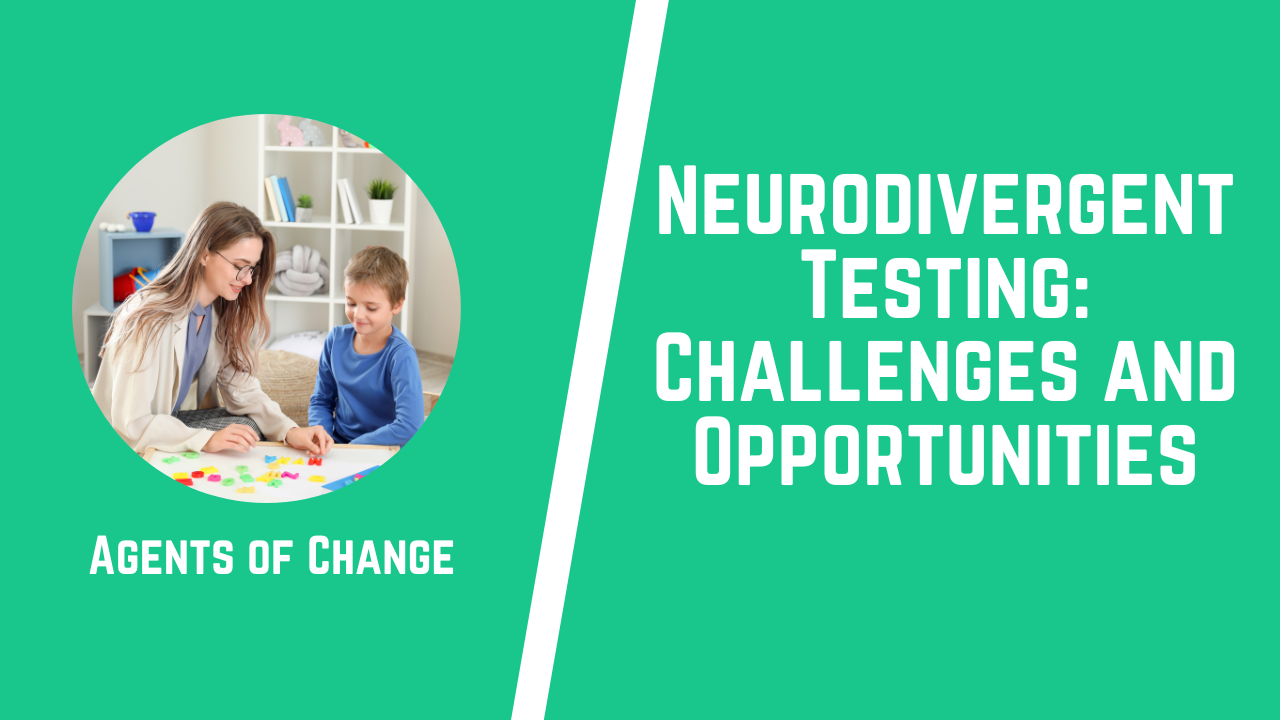
Neurodivergent Testing: Challenges and Opportunities
 

Neurodivergence has always existed, even when the language to describe it did not. For many people, discovering terms like autism, ADHD, or learning differences feels like finally finding a mirror that reflects something familiar. Questions tend to surface quickly.

Why do certain environments feel overwhelming? Why does focus come in bursts instead of steady lines? Neurodivergent testing often becomes part of this moment of curiosity, offering a structured way to explore how the brain processes the world.

At the same time, testing can feel intimidating. Assessments are often associated with labels, judgment, or the fear of being misunderstood. Some people hope testing will bring relief and validation, while others worry it may reduce their experiences to numbers on a page. Those mixed emotions are understandable. Neurodivergent testing sits at the intersection of science and personal identity, which makes it both powerful and deeply human.

This blog post takes a thoughtful look at neurodivergent testing as it exists today. Rather than treating assessments as simple answers, it explores how testing has evolved, what current research supports, and how results can be interpreted with care and context. Whether you are seeking insight for yourself, supporting someone else, or working as a mental health professional, the goal here is clarity without pressure and information without judgment.

Did you know? Agents of Change Continuing Education offers Unlimited Access to 150+ ASWB and NBCC-approved CE courses and 12+ Live Events per year for one low annual fee to meet your state’s requirements for Continuing Education credits and level up your career.

We’ve helped hundreds of thousands of Social Workers, Counselors, and Mental Health Professionals with Continuing Education, learn more here about Agents of Change and claim your 5 free CEUs.

1) Understanding Neurodivergence Beyond Labels

Neurodivergence isn’t a diagnosis by itself. It’s a framework. A way of understanding that brains vary naturally, the same way bodies do. The term was popularized in the late 1990s, but the idea behind it is older than that. People have always thought differently. The difference now is that we’re finally naming it.

a mental health professional administering a neurodivergence test in a warm office setting

What Neurodivergence Includes and What It Doesn’t

Neurodivergence commonly includes:

  • Autism spectrum conditions

  • Attention deficit hyperactivity disorder

  • Dyslexia and other learning differences

  • Dyspraxia

  • Dyscalculia

  • Tourette syndrome

It doesn’t automatically imply impairment, nor does it deny challenges. Both truths can coexist, even when it’s uncomfortable.

Some people seek testing for clarity. Others want validation. Some need documentation for accommodations. And some avoid testing altogether because they’ve been misunderstood before. All of those choices make sense.

Dangling between curiosity and caution, many people ask the same thing: Will testing help me understand myself better, or will it put me in a box I can’t escape?

Learn more about Agents of Change Continuing Education. We’ve helped hundreds of thousands of Social Workers, Counselors, and Mental Health Professionals with their continuing education, and we want you to be next!

2) The Evolution of Neurodivergent Testing

Testing hasn’t always been kind. Early assessments were deficit-focused, built around what someone couldn’t do compared to a narrow definition of normal. That legacy still echoes in some tools today, even when intentions are good.

a mental health professional administering a neurodivergence test to an adult in a warm office setting

From Pathology to Profile

Modern Neurodivergent Testing increasingly emphasizes cognitive profiles instead of simple pass or fail outcomes. Rather than asking whether someone meets a rigid threshold, newer tools explore patterns:

  • How attention fluctuates under different conditions

  • How sensory input is processed

  • How executive functioning shows up in daily life

  • How social communication varies by context

It’s less about labeling someone as broken and more about mapping how their brain engages with the world.

Why Context Matters More Than Ever

A test score without context is just a number. A test score with lived experience attached becomes a story.

For example, two people can score similarly on an ADHD assessment and experience life completely differently. One may thrive in fast-paced environments. Another may feel overwhelmed by the same stimuli. Testing alone doesn’t explain that. Interpretation does.

That’s why clinicians trained in neuro-affirming frameworks are increasingly sought after. Testing isn’t just administered anymore. It’s translated.

Agents of Change has helped hundreds of thousands of Social Workers, Counselors, and Mental Health Professionals with Continuing Education, learn more here about Agents of Change and claim your 5 free CEUs!

3) Research-Backed Neurodivergent Tests in Use Today

Below are widely used assessments backed by current research. This isn’t an endorsement, and it’s not medical advice. Think of it as a map, not a prescription.

Autism Spectrum Assessments

ADOS-2 (Autism Diagnostic Observation Schedule, Second Edition)
Often considered the gold standard for autism assessment. It uses structured and semi-structured tasks to observe communication, social interaction, and play.

Research support:
https://www.ncbi.nlm.nih.gov/pmc/articles/PMC5813679/

RAADS-R (Ritvo Autism Asperger Diagnostic Scale Revised)
A self-report tool commonly used for adults. Helpful for identifying traits that may have been missed earlier in life.

Research support:
https://doi.org/10.1037/t06014-000

ADHD Assessments

Conners Adult ADHD Rating Scales (CAARS)
Frequently used for adult ADHD assessment. Measures inattention, hyperactivity, impulsivity, and emotional regulation.

Research support:
https://psycnet.apa.org/record/2003-00752-009

Barkley Adult ADHD Rating Scale (BAARS-IV)
Focuses heavily on executive functioning and real-world impairment.

Research support:
Barkley, R. A. (2011). Barkley adult ADHD rating scale-iv (BAARS-IV). Guilford Press.

Learning Difference Assessments

Woodcock-Johnson Tests of Cognitive Abilities
Assesses cognitive processing and academic skills, often used to identify dyslexia and related learning differences.

Research support:
Woodcock, R. W., & Johnson, M. B. (1989). Woodcock-Johnson tests of cognitive ability. DLM Teaching Resources.

CTOPP-2 (Comprehensive Test of Phonological Processing)
Used primarily for identifying reading-related challenges.

Research support:
https://journals.sagepub.com/doi/abs/10.1177/0829573514563280

Important Disclaimer

These tools must be administered and interpreted by qualified professionals. Online quizzes can raise awareness, but they don’t replace formal assessment. Misinterpretation can do harm, even when intentions are good.

4) The Ethics and Emotions of Neurodivergent Testing

Neurodivergent testing is never just a technical process. Even when assessments are grounded in solid research and administered carefully, they intersect with identity, memory, and lived experience.

Ethical practice and emotional awareness are inseparable here. When one is ignored, the other tends to suffer. This section explores how ethics and emotions intertwine before, during, and after the testing process.

The Emotional Weight People Bring Into Testing

By the time someone seeks neurodivergent testing, they are rarely neutral. Many arrive carrying years of confusion, self-doubt, or quiet exhaustion. Others come with hope, believing that testing might finally explain patterns they have noticed their entire lives.

Common emotional experiences before and after testing include:

  • Relief at having language for long-standing experiences

  • Grief for missed support or misunderstood childhood moments

  • Anxiety about how results may affect work, school, or relationships

  • Fear of being reduced to a label rather than seen as a whole person

These reactions are not signs of weakness. They are reasonable responses to a process that simultaneously touches personal history and future expectations.

Informed Consent and Transparent Communication

Ethical neurodivergent testing begins long before any assessment tool is used. Informed consent is not just a form to sign. It is an ongoing conversation about what testing can and cannot provide.

Ethical communication should include clarity around:

  • The purpose of the assessment

  • The limits of what test results can explain

  • How results will be shared and documented

  • Who will have access to the information

When people understand the scope and limits of testing, they are better equipped to process the results without feeling blindsided or misled.

The Risk of Over-Pathologizing Difference

One of the most common ethical concerns in neurodivergent testing is the tendency to focus solely on deficits. When assessments highlight only what someone struggles with, they reinforce the idea that difference equals dysfunction.

A more ethical approach recognizes the full cognitive profile, including strengths, coping strategies, and adaptive skills. Ethical reporting often includes:

  • Areas of cognitive strength or creativity

  • Effective self-developed strategies

  • Environmental factors that influence functioning

  • Context for challenges rather than isolated scores

This balanced perspective reduces harm and supports self-understanding rather than shame.

Cultural, Gender, and Social Bias in Testing

No assessment tool exists outside of culture. Many widely used tests were developed using limited demographic samples, which can lead to biased outcomes when applied broadly.

Ethical practitioners actively consider how factors such as race, gender identity, socioeconomic status, and language background may influence results. Without this awareness, testing risks reinforcing systemic inequities rather than addressing them.

Examples of ethical safeguards include:

  • Adjusting interpretation based on cultural context

  • Questioning norms that may not apply universally

  • Seeking collateral information beyond test scores

  • Remaining open to re-evaluation when results do not align with lived experience

After the Results: Emotional Processing and Support

The moment results are shared is often the most emotionally charged part of neurodivergent testing. How information is delivered matters just as much as the information itself.

Ethical follow-through includes:

  • Allowing space for emotional reactions

  • Normalizing mixed or conflicting feelings

  • Offering resources or referrals when needed

  • Emphasizing that results describe patterns, not limits

Some people feel validated immediately. Others need time to sit with the information. Ethical practice respects both responses and avoids rushing people toward acceptance or action.

Holding Both Truth and Compassion

At its best, neurodivergent testing tells the truth without stripping away dignity. It acknowledges challenges without defining a person by them. Ethical testing holds space for complexity, recognizing that data and humanity must coexist.

When emotions are respected and ethics are centered, testing becomes less about classification and more about understanding. That shift, while subtle, makes all the difference.

5) FAQs – Neurodivergent Testing: Challenges and Opportunities
Q: How accurate is neurodivergent testing, really?

A: Neurodivergent testing can be highly informative when it is conducted by trained professionals using validated assessment tools. That said, no test offers a complete picture on its own. Results are influenced by factors such as environment, stress levels, cultural background, masking behaviors, and the individual’s understanding of the questions being asked.

This is why ethical testing relies on multiple sources of information, including interviews, observations, and personal history, rather than test scores alone. Accuracy improves when results are interpreted as patterns over time instead of fixed truths.

Q: Is it possible to feel worse after receiving testing results?

A: Yes, and this reaction is more common than many people expect. While some individuals feel immediate relief or validation, others experience grief, anger, or confusion after neurodivergent testing. Learning that certain challenges have a neurological basis can bring up questions about missed support, past misunderstandings, or altered self-image.

These emotions do not mean the testing was a mistake. They often signal that the information is meaningful and still being integrated. Supportive follow-up conversations and time for reflection are important parts of the process.

Q: Should someone pursue neurodivergent testing if they are already coping well?

A: Testing is not only for people in crisis. Some individuals pursue neurodivergent testing to gain self-understanding, improve communication with others, or access specific accommodations even if they feel generally functional. Others choose not to pursue testing at all and still live fulfilling lives.

There is no universal right answer. The decision depends on personal goals, access to supportive professionals, and how the information might be used. Testing is a tool, not a requirement, and its value depends on how it supports the individual’s well-being.

6) Conclusion

Neurodivergent testing, when approached with care and curiosity, can serve as a powerful tool for understanding rather than judgment. It has the potential to bring clarity to long-standing questions, validate lived experiences, and open doors to support that once felt out of reach. At the same time, testing is not a verdict on a person’s worth or capability. It is a snapshot of cognitive patterns within a specific context, shaped by environment, history, and interpretation.

What ultimately matters most is how testing is framed and used. Ethical assessment honors both data and dignity, acknowledging challenges without erasing strengths or identity. Emotional responses, whether relief, grief, or uncertainty, deserve space and patience. When results are delivered with transparency and compassion, they become a starting point for self-awareness rather than a final definition.

————————————————————————————————————————————————

► Learn more about the Agents of Change Continuing Education here: https://agentsofchangetraining.com

About the Instructor, Dr. Meagan Mitchell: Meagan is a Licensed Clinical Social Worker and has been providing Continuing Education for Social Workers, Counselors, and Mental Health Professionals for more than 10 years. From all of this experience helping others, she created Agents of Change Continuing Education to help Social Workers, Counselors, and Mental Health Professionals stay up-to-date on the latest trends, research, and techniques.

#socialwork #socialworker #socialwork #socialworklicense #socialworklicensing #continuinged #continuingeducation #ce #socialworkce #freecesocialwork #lmsw #lcsw #counselor #NBCC #ASWB #ACE

Disclaimer: This content has been made available for informational and educational purposes only. This content is not intended to be a substitute for professional medical or clinical advice, diagnosis, or treatment

Share:

Discover more from Agents of Change

Subscribe now to keep reading and get access to the full archive.

Continue reading

New LIVE CE event - Therapeutic Interventions for the Treatment of Clients with Chronic Pain - Get 3 CE credits