
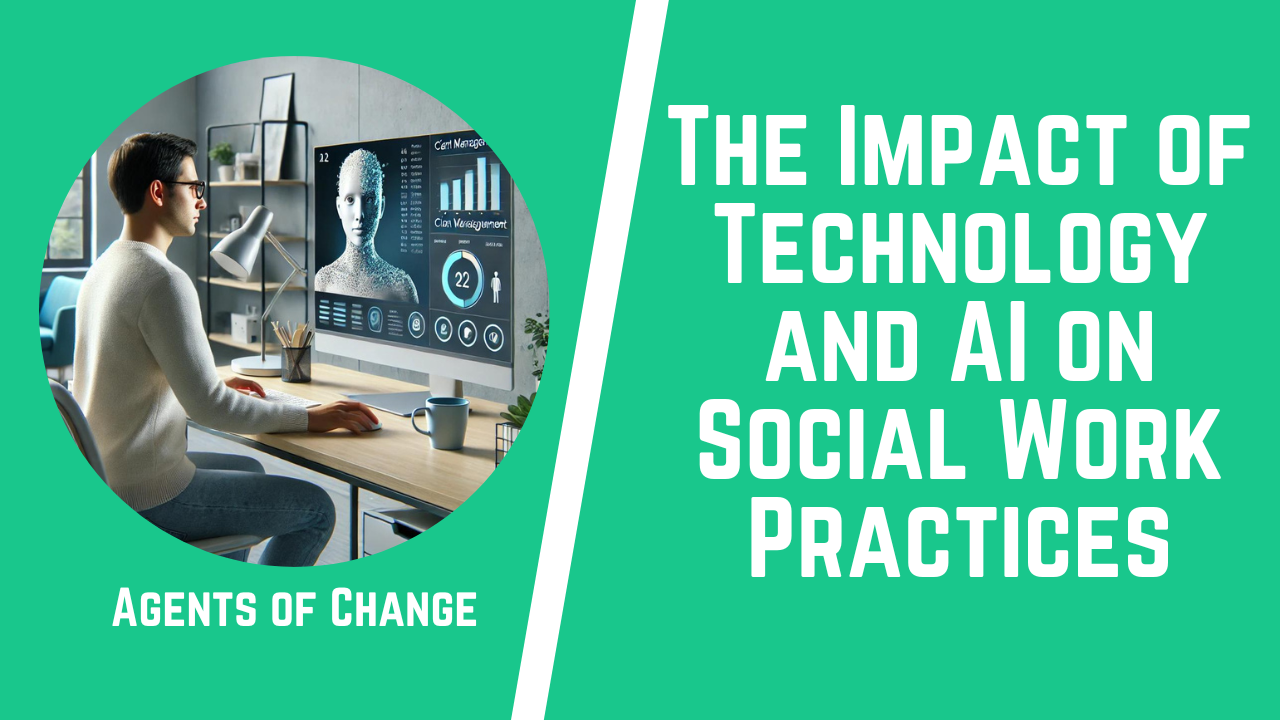
Social Work is undergoing a significant transformation as technology and artificial intelligence (AI) make their mark on the profession. What was once a field heavily reliant on face-to-face interactions and manual processes is now embracing the digital revolution.
Social Workers, known for their adaptability and resilience, are finding new ways to leverage these tools to enhance their practices and better serve their clients. From electronic health records to AI-powered chatbots, the possibilities seem endless—but with these advancements come new challenges and ethical considerations that the profession must address.
As the demand for social services grows, so does the need for more efficient and effective methods of delivering care. Technology and AI offer Social Workers innovative solutions to streamline their work, improve client outcomes, and reach underserved populations.
However, these advancements also raise important questions about equity, privacy, and the role of human judgment in a field that is inherently personal and relational. Social Workers must navigate this evolving landscape carefully, ensuring that the benefits of technology and AI are harnessed without compromising the core values of the profession.
Did you know? Agents of Change Continuing Education offers Unlimited Access to 150+ CE courses for one low annual fee to meet your state’s requirements for Continuing Education credits and level up your career.
Earn 6 ethics credits by taking our live Ethics of AI and Technology course!
We’ve helped thousands of Social Workers with Continuing Education, learn more here about Agents of Change and claim your 5 free CEUs.
1) The Digital Transformation of Social Work
The integration of digital tools into Social Work is not just a trend—it’s a fundamental shift that’s reshaping the profession. From daily administrative tasks to complex decision-making processes, technology is transforming how Social Workers operate. The impact is profound, offering new ways to connect with clients, manage cases, and even predict outcomes.

Communication and Client Engagement
One of the most significant changes brought about by technology in social work is how Social Workers communicate with their clients. Traditional methods of face-to-face meetings and phone calls are now complemented—and sometimes replaced—by digital communication tools. These tools offer greater flexibility and accessibility, allowing Social Workers to stay connected with clients even when in-person meetings aren’t possible.
-
Telehealth: Virtual therapy sessions have become a staple in modern social work, especially in the wake of the COVID-19 pandemic. Through secure video conferencing platforms, Social Workers can provide counseling, conduct assessments, and even facilitate group therapy sessions. This saves time and breaks down geographical barriers, making services accessible to clients in remote or underserved areas.
-
Mobile Communication: Text messaging, email, and mobile apps enable Social Workers to maintain regular communication with their clients. Whether it’s a quick check-in or sharing resources, these tools allow for more frequent touchpoints, fostering stronger relationships and more consistent support.
-
Social Media and Online Communities: While not a traditional tool in social work, social media can be a powerful platform for client engagement. Social Workers can use online communities to connect clients with peer support, share valuable resources, and even advocate for social justice issues on a larger scale. However, it’s essential to navigate these platforms with caution, ensuring client confidentiality and professional boundaries are maintained.
Case Management and Documentation
Gone are the days of paper files and endless paperwork. Technology has revolutionized how Social Workers manage their cases, making documentation more efficient and accurate. This shift saves time and improves the quality of care by ensuring that all relevant information is easily accessible and up-to-date.
-
Electronic Health Records (EHRs): EHRs have become the standard for managing client information in many areas of social work. These digital records allow Social Workers to access and update client files quickly, share information with other professionals, and ensure that records are complete and accurate. The result is more coordinated care and better outcomes for clients.
-
Case Management Software: Specialized software platforms offer comprehensive tools for managing every aspect of a Social Worker’s caseload. From scheduling appointments to tracking client progress and generating reports, these systems streamline administrative tasks, freeing up time for direct client interaction. Some systems even integrate billing and compliance features, ensuring that Social Workers meet regulatory requirements while managing their workload efficiently.
-
Automated Documentation: Automation is taking over many of the repetitive tasks that once bogged down Social Workers. For example, some systems can automatically generate progress notes based on session summaries, send reminders for upcoming appointments, or even flag potential issues in a client’s file that need further attention. This not only reduces the administrative burden but also minimizes the risk of errors or omissions.
AI-Driven Decision-Making
Artificial intelligence (AI) is revolutionizing how Social Workers make decisions and deliver care. By analyzing large datasets, AI can identify patterns and trends that might otherwise go unnoticed, providing Social Workers with valuable insights that inform their practice. While AI is still an emerging field in Social Work, its potential is enormous.
-
Predictive Analytics: One of the most exciting applications of AI in Social Work is predictive analytics. By analyzing past data, AI can predict future outcomes, such as the likelihood of a client experiencing a crisis or the effectiveness of a particular intervention. This allows Social Workers to take proactive measures, intervening before a situation escalates. For example, AI might identify a client at risk of homelessness and alert the Social Worker to provide additional support before the situation deteriorates.
-
Risk Assessment: AI tools can assist in risk assessment by evaluating multiple factors simultaneously and providing a risk score for clients. This helps Social Workers prioritize their caseloads, focusing on those clients who need immediate attention. While these tools are not a substitute for professional judgment, they can be a valuable supplement, helping Social Workers make more informed decisions.
-
AI-Powered Chatbots: While still in their infancy, AI-powered chatbots are beginning to play a role in Social Work. These virtual assistants can handle routine tasks, such as scheduling appointments or answering basic questions, freeing up Social Workers to focus on more complex issues. Some advanced chatbots can even provide emotional support or coping strategies to clients between sessions, offering a form of continuous care.
Accessibility and Inclusion
While technology offers many benefits, it’s essential to recognize that not all clients have equal access to these tools. The digital divide—the gap between those who have access to technology and those who do not—can create barriers to care. Social Workers must be mindful of this issue and strive to ensure that their tech-enabled practices are inclusive and equitable.
-
Telehealth and Internet Access: While telehealth offers convenience and flexibility, it requires a stable internet connection and access to a device, which not all clients may have. Social Workers must assess each client’s ability to use these tools and provide alternatives when necessary. For example, offering in-person sessions or phone consultations for clients who lack internet access can help bridge the gap.
-
Digital Literacy: Even when clients have access to technology, they may not have the skills to use it effectively. Social Workers can play a role in improving digital literacy by offering guidance on how to use telehealth platforms, mobile apps, or online resources. This not only empowers clients but also enhances the effectiveness of digital interventions.
-
Cultural Competence: Technology can sometimes create barriers to effective communication, especially with clients from diverse cultural backgrounds. Social Workers must ensure that their digital tools are culturally sensitive and accessible to all clients. This might involve offering services in multiple languages, considering cultural preferences in communication styles, or being aware of how certain technologies might be perceived in different communities.
Ethical Considerations
The digital transformation of social work also brings new ethical challenges that Social Workers must navigate. As technology and AI become more integrated into practice, questions around privacy, confidentiality, and professional boundaries become increasingly complex.
-
Client Privacy: Protecting client confidentiality is a cornerstone of Social Work practice, and this becomes even more critical in a digital environment. Social Workers must ensure that all digital tools comply with privacy regulations, such as HIPAA, and that client data is stored and transmitted securely. This includes being cautious about using unsecured communication methods, such as email or text messaging, and ensuring that telehealth platforms are encrypted.
-
Informed Consent: As Social Workers incorporate new technologies into their practice, they must obtain informed consent from clients. This means explaining how digital tools will be used, what data will be collected, and how it will be stored. Clients should have the opportunity to ask questions and opt-out of using certain technologies if they are uncomfortable.
-
Bias in AI: AI systems are only as good as the data they are trained on, and if that data is biased, the AI’s recommendations may also be biased. Social Workers must be aware of this potential pitfall and critically evaluate the outputs of AI tools. It’s essential to balance AI-driven insights with professional judgment and ensure that decisions are made in the best interest of the client.
The digital transformation of Social Work is both exciting and challenging. As technology and AI continue to evolve, Social Workers must adapt to these changes while staying true to the core values of the profession. By embracing these tools thoughtfully and ethically, Social Workers can enhance their practice, improve client outcomes, and ensure that they remain at the forefront of the field.
Learn more about Agents of Change Continuing Education. We’ve helped thousands of Social Workers with their Continuing Education and want you to be next!
Earn 6 ethics credits by taking our live Ethics of AI and Technology course!
2) Benefits of Technology and AI in Social Work
The integration of technology and artificial intelligence (AI) into social work practices offers a wide range of benefits, from improving efficiency and decision-making to enhancing client outcomes and accessibility. While the adoption of these tools comes with challenges, the potential advantages are significant.
Enhancing Efficiency and Reducing Administrative Burden
One of the most immediate and noticeable benefits of technology in social work is the enhancement of efficiency. Social Workers often juggle a multitude of tasks, from client interactions to documentation, scheduling, and reporting. Technology helps streamline these processes, allowing Social Workers to focus more on direct client care.

-
Automation of Routine Tasks: Technology can automate many routine tasks, such as scheduling appointments, sending reminders, and generating reports. This reduces the administrative burden on Social Workers, freeing up time for more critical activities. For example, automated billing systems can ensure timely invoicing and payment tracking, while case management software can keep all client information organized and accessible.
-
Faster Documentation: Electronic health records (EHRs) and other digital documentation tools allow Social Workers to quickly and efficiently update client files. This reduces the time spent on paperwork and minimizes the risk of errors. Moreover, the ability to access client information in real-time enhances the coordination of care, as Social Workers can easily share information with other professionals involved in a client’s care.
-
Improved Time Management: With tools like mobile apps and online platforms, Social Workers can manage their schedules more effectively. For instance, cloud-based calendars can sync across devices, ensuring that Social Workers never miss an appointment or deadline. This improved time management allows for a more balanced workload and better overall service delivery.
Empowering Informed Decision-Making
AI and advanced data analytics provide Social Workers with powerful tools to make more informed decisions. By analyzing large datasets, AI can identify patterns and trends that might not be immediately apparent, offering insights that can enhance decision-making and improve client outcomes.
-
Predictive Analytics: One of the most promising applications of AI in social work is predictive analytics. By analyzing historical data, AI can predict future outcomes, such as the likelihood of a client experiencing a crisis or the effectiveness of a particular intervention. This allows Social Workers to take proactive measures, intervening before a situation escalates. For example, AI might analyze a client’s past behavior and identify warning signs that suggest a relapse is imminent, enabling the Social Worker to provide additional support.
-
Risk Assessment Tools: AI-powered risk assessment tools can evaluate multiple factors simultaneously to generate a risk score for clients. This helps Social Workers prioritize their caseloads, ensuring that those clients who are most at risk receive the attention they need. While these tools are not a substitute for professional judgment, they provide valuable data that can inform decision-making and enhance the accuracy of assessments.
-
Data-Driven Insights: AI can analyze vast amounts of data to identify trends and correlations that may not be visible to the human eye. For example, AI might analyze data from multiple clients and identify common factors that contribute to successful outcomes. Social Workers can then use this information to tailor interventions and develop best practices that are grounded in evidence.
Improving Client Outcomes and Personalizing Care
At the heart of social work is the goal of improving client outcomes, and technology plays a crucial role in achieving this. By enabling more personalized and responsive care, technology helps Social Workers better meet the unique needs of each client.
-
Personalized Interventions: Technology allows Social Workers to offer more personalized interventions by providing real-time data on client progress. For example, mobile apps that track a client’s mood or behavior can provide immediate feedback to both the client and the Social Worker. This allows for more tailored interventions that address the client’s specific needs at the moment. Additionally, AI can analyze individual client data to recommend the most effective interventions based on similar cases, leading to more personalized and effective care.
-
Continuous Support: Technology enables Social Workers to provide continuous support to clients, even between sessions. For example, AI-powered chatbots can offer emotional support and coping strategies, while mobile apps can send daily reminders or motivational messages. This ongoing engagement can help clients stay on track with their goals and reduce the likelihood of setbacks.
-
Remote Access to Services: Telehealth platforms and online counseling services make it easier for clients to access the support they need, regardless of their location. This is especially beneficial for clients in rural or underserved areas who might otherwise struggle to receive care. By breaking down geographical barriers, technology ensures that all clients have the opportunity to receive timely and effective support.
Fostering Professional Development and Lifelong Learning
As technology continues to evolve, so too must the skills of Social Workers. Staying current with the latest tools and best practices is essential for providing high-quality care. Fortunately, technology also offers new opportunities for professional development and lifelong learning.

-
Online Continuing Education: Social Workers can now access a wealth of continuing education opportunities online. For example, Agents of Change Continuing Education offers over 150 courses that help Social Workers earn the Continuing Education Credits required to keep their licenses active. These courses cover a wide range of topics, from ethical considerations in technology use to the latest developments in telehealth. This allows Social Workers to stay informed and up-to-date without having to attend in-person workshops or conferences.
-
Webinars and Virtual Conferences: Technology has made it easier for Social Workers to participate in webinars and virtual conferences, where they can learn from experts in the field and network with peers. For example, the upcoming live ethics CE event hosted by Agents of Change on October 18th and 19th, 2024, offers Social Workers the opportunity to earn 6 ethics CE credits while engaging in discussions about the ethical challenges of using technology in social work.
-
Access to Research and Best Practices: Digital platforms provide Social Workers with easy access to the latest research, best practices, and professional resources. Whether it’s subscribing to online journals, participating in virtual discussion groups, or accessing databases of evidence-based practices, technology ensures that Social Workers have the information they need to stay at the forefront of their profession.
The benefits of technology and AI in social work are clear. By enhancing efficiency, empowering informed decision-making, improving client outcomes, increasing accessibility, and fostering professional development, these tools are helping Social Workers deliver better care to their clients.
However, it’s important to approach these technologies with a critical eye, ensuring that they are used in a way that aligns with the values of the profession and addresses the needs of all clients.
We’ve helped thousands of Social Workers with Continuing Education, learn more here about Agents of Change and claim your 5 free CEUs!
3) Challenges and Ethical Considerations
As technology and artificial intelligence (AI) become increasingly integrated into social work, Social Workers must navigate a range of challenges and ethical considerations.
While these tools offer significant benefits, they also present complexities that can impact the effectiveness of care and the integrity of the profession. From issues related to privacy and confidentiality to concerns about bias and the digital divide, Social Workers must carefully consider how they implement and use technology in their practice.
Privacy and Confidentiality
One of the most critical ethical concerns in the digital age is the protection of client privacy and confidentiality. Social Workers have a legal and ethical obligation to safeguard client information, but the use of digital tools introduces new risks that must be managed.
-
Data Security: Digital platforms, from electronic health records (EHRs) to telehealth services, store vast amounts of sensitive client information. If these systems are not properly secured, they can be vulnerable to data breaches, hacking, and unauthorized access. Social Workers must ensure that the platforms they use comply with industry standards for data security, such as encryption and multi-factor authentication, to protect client information.
-
Third-Party Vendors: Many digital tools used in social work are developed and maintained by third-party vendors. This adds an additional layer of complexity when it comes to confidentiality. Social Workers must carefully vet these vendors to ensure they adhere to privacy regulations, such as the Health Insurance Portability and Accountability Act (HIPAA), and that client data is not being shared or sold without consent.
-
Informed Consent: When using digital tools, Social Workers must obtain informed consent from clients, explaining how their information will be used, stored, and shared. This includes educating clients about the potential risks of using technology, such as the possibility of data breaches, and giving them the option to opt-out if they are uncomfortable with digital platforms.
The Digital Divide and Accessibility
While technology can potentially increase access to services, it can also exacerbate existing inequalities if not implemented thoughtfully. The digital divide—the gap between those who have access to technology and those who do not—remains a significant barrier for many clients.
-
Socioeconomic Barriers: Clients from low-income backgrounds may lack access to the necessary technology, such as smartphones, computers, or a stable internet connection. This can limit their ability to participate in telehealth services or access digital resources. Social Workers must assess each client’s access to technology and provide alternatives, such as in-person sessions or phone consultations, when necessary.
-
Geographic Barriers: While telehealth can help bridge geographic gaps, clients in rural areas may still face challenges with internet connectivity. This can make it difficult for them to participate in virtual sessions or access online resources. Social Workers must consider these barriers and work to find solutions that ensure all clients receive the support they need, regardless of their location.
-
Digital Literacy: Even when clients have access to technology, they may not have the skills or knowledge to use it effectively. Digital literacy varies widely among different populations, and Social Workers must be prepared to offer guidance and support to clients who are unfamiliar with digital tools. This might involve providing step-by-step instructions, offering training sessions, or connecting clients with resources that can help them build their digital skills.
Bias in AI and Ethical Decision-Making
AI has the potential to enhance decision-making in social work, but it also raises concerns about bias and the ethical implications of relying on automated systems. Social Workers must be vigilant in ensuring that AI tools are used in a way that is fair, equitable, and aligned with the values of the profession.
-
Algorithmic Bias: AI systems are only as good as the data they are trained on, and if that data is biased, the AI’s recommendations may also be biased. For example, if an AI system is trained on data that disproportionately reflects the experiences of certain groups, it may produce biased outcomes that disadvantage marginalized populations. Social Workers must be aware of these potential biases and critically evaluate the outputs of AI tools, ensuring that decisions are made in the best interest of the client.
-
Transparency and Accountability: One of the challenges with AI is that its decision-making processes are often opaque, making it difficult for Social Workers to understand how a particular recommendation was reached. This lack of transparency can be problematic, especially when clients’ lives and well-being are at stake. Social Workers must advocate for greater transparency in AI systems and ensure that they remain accountable for the decisions they make, even when those decisions are informed by AI.
-
Balancing Human Judgment and AI: While AI can provide valuable insights, it should not replace human judgment. Social Workers must strike a balance between using AI-driven tools and relying on their professional expertise. This means critically assessing AI recommendations and considering the broader context of the client’s situation, rather than blindly following algorithmic suggestions.
Ethical Dilemmas in Telehealth
Telehealth has become a crucial component of modern Social Work, but it also presents unique ethical dilemmas that must be carefully navigated. From maintaining professional boundaries to ensuring the quality of care, Social Workers must be mindful of the ethical challenges that come with providing services in a virtual environment.
-
Maintaining Professional Boundaries: The use of digital communication tools, such as texting and video calls, can blur the lines between professional and personal interactions. Social Workers must be clear about their boundaries and ensure that clients understand the appropriate channels for communication. For example, while texting may be convenient for scheduling appointments, it may not be appropriate for discussing sensitive issues or providing therapeutic support.
-
Quality of Care: While telehealth offers convenience and accessibility, it may not always provide the same level of care as in-person services. For example, non-verbal cues can be more difficult to interpret over video calls, and the therapeutic alliance may be harder to establish in a virtual environment. Social Workers must assess each client’s needs and determine whether telehealth is the most appropriate mode of service delivery. If not, they should offer alternatives that ensure the client receives the best possible care.
-
Confidentiality in Virtual Spaces: Maintaining confidentiality in a virtual environment can be challenging, especially if clients do not have access to a private space for telehealth sessions. Social Workers must work with clients to find solutions that protect their privacy, such as using headphones, finding a quiet location, or scheduling sessions at a time when the client is less likely to be interrupted.
Legal and Regulatory Challenges
The integration of technology and AI into social work also raises legal and regulatory challenges that must be addressed. As these tools become more prevalent, Social Workers must stay informed about the legal implications of using them and ensure that their practices comply with relevant regulations.
-
HIPAA Compliance: Social Workers who use digital tools must ensure that they comply with the Health Insurance Portability and Accountability Act (HIPAA) and other privacy regulations. This includes using secure platforms for telehealth sessions, storing client data in a compliant manner, and obtaining proper consent for digital communication. Failure to comply with these regulations can result in legal consequences and damage to the Social Worker’s professional reputation.
-
Licensing and Jurisdiction Issues: Telehealth allows Social Workers to provide services across state lines, but this can raise issues related to licensing and jurisdiction. Social Workers must be aware of the licensing requirements in both their own state and the client’s state and ensure that they are legally permitted to provide services in those jurisdictions. Additionally, they must stay informed about any changes to telehealth regulations, which can vary from state to state and may be subject to change.
-
Ethical Implications of Emerging Technologies: As new technologies continue to emerge, Social Workers must be proactive in considering the ethical implications of adopting these tools. This includes staying informed about developments in AI, telehealth, and digital communication, and participating in continuing education opportunities that address the ethical challenges of using these technologies in practice. For example, Agents of Change Continuing Education offers courses that explore the ethical considerations of technology in Social Work, helping Social Workers navigate these complex issues.
Continuing Education and Professional Development
Given the rapid pace of technological change, ongoing education and professional development are essential for Social Workers who want to stay current and ethically grounded in their practice. By engaging in continuing education, Social Workers can ensure that they are well-prepared to navigate the challenges and ethical considerations associated with technology and AI.
-
Staying Informed: Technology and AI are constantly evolving, and Social Workers must stay informed about the latest developments in these areas. This includes understanding new tools, keeping up with research on their effectiveness, and being aware of any changes to legal and ethical guidelines. Continuing education courses, such as those offered by Agents of Change, provide Social Workers with the knowledge and skills they need to stay ahead of the curve.
-
Addressing Ethical Dilemmas: Continuing education also offers opportunities to explore the ethical dilemmas associated with technology in social work. For example, the upcoming live ethics CE event on October 18th and 19th, 2024, hosted by Agents of Change, will provide Social Workers with valuable insights into the ethical challenges of using technology in their practice. By engaging in these discussions, Social Workers can develop strategies for addressing ethical dilemmas and ensuring that their practices align with the values of the profession.
-
Building Digital Competence: As technology becomes more integrated into Social Work, Social Workers must build their digital competence to use these tools effectively and ethically. This includes developing skills in digital communication, data security, and AI-driven decision-making. By investing in their professional development, Social Workers can ensure that they are equipped to navigate the challenges of the digital age and provide the highest quality of care to their clients.
The integration of technology and AI into Social Work presents both opportunities and challenges. By thoughtfully considering the ethical implications and addressing the potential risks, Social Workers can harness these tools to enhance their practice while staying true to the core values of the profession. It’s a complex balancing act, but with the right approach, technology can be a powerful ally in the pursuit of social justice and client well-being.
Earn 6 ethics credits by taking our live Ethics of AI and Technology course!
4) Real-World Applications of Technology and AI in Social Work
As technology and AI continue to evolve, their real-world applications in Social Work are becoming more apparent and increasingly vital to the profession. These innovations are transforming how Social Workers deliver services, manage cases, and interact with clients.
From enhancing mental health interventions to improving crisis management and empowering clients through digital tools, the practical applications of technology in social work are broad and impactful.
AI-Powered Mental Health Interventions
One of the most promising areas where AI is making a significant impact is in mental health interventions. AI-driven tools are being used to enhance traditional therapeutic practices, provide real-time support, and even predict potential crises before they occur.
-
AI Chatbots for Emotional Support: AI-powered chatbots are becoming an increasingly common tool in mental health care. These chatbots, which are available 24/7, can engage clients in conversations, provide coping strategies, and offer immediate emotional support. While they are not a replacement for professional therapy, they serve as a valuable supplement, particularly for clients who need additional support between sessions.
-
Crisis Prediction and Intervention: AI systems can analyze patterns in a client’s behavior to predict potential crises, such as suicidal ideation or relapse in substance use. By monitoring data from various sources, such as mobile apps, social media, or even wearable devices, AI can alert Social Workers to early warning signs. This allows for timely intervention, potentially preventing crises from escalating. For example, an AI system might detect a pattern of withdrawal or increased substance use in a client and notify the Social Worker to initiate a check-in or adjust the treatment plan.
-
Personalized Therapy Recommendations: AI can also assist in tailoring therapy to the individual needs of clients. By analyzing large datasets, AI can identify which therapeutic approaches have been most effective for similar clients. Social Workers can use this information to develop personalized treatment plans that are more likely to lead to positive outcomes. For example, AI might suggest a particular cognitive-behavioral therapy (CBT) technique based on the success rates observed in clients with similar conditions.
Streamlining Case Management
Effective case management is at the core of social work, and technology has significantly streamlined this process. Digital tools help Social Workers manage their caseloads more efficiently, ensuring that no client falls through the cracks and that services are delivered in a timely and organized manner.
-
Comprehensive Case Management Software: Case management software platforms allow Social Workers to track all aspects of a client’s case in one centralized system. These platforms often include features such as appointment scheduling, progress tracking, and document storage, making it easier for Social Workers to stay organized. Some systems even offer automated reminders for follow-ups or important deadlines, reducing the risk of oversight.
-
Collaborative Tools: Many case management systems are designed to facilitate collaboration among multiple professionals involved in a client’s care. This is particularly important in interdisciplinary settings, where Social Workers may need to coordinate with healthcare providers, educators, or legal professionals. Collaborative tools allow for seamless communication and information-sharing, ensuring that everyone involved in the case is on the same page.
-
Mobile Access: Mobile-enabled case management platforms allow Social Workers to access client information and update records in real-time, even when they’re out in the field. This is particularly beneficial for Social Workers who spend a significant amount of time in the community, as it allows them to stay connected and keep their documentation up to date, no matter where they are.
Enhancing Crisis Management and Emergency Response
Crisis management is a critical component of social work, and technology is playing a crucial role in improving how Social Workers respond to emergencies. From real-time data analysis to digital communication tools, technology is helping Social Workers intervene more effectively during crises.
-
Real-Time Data and Alerts: AI-powered systems can provide real-time alerts based on data analysis, helping Social Workers respond to crises as they unfold. For example, some systems can monitor social media posts for signs of distress or suicidal ideation and send alerts to Social Workers, allowing them to intervene quickly. Additionally, wearable devices that track physiological indicators, such as heart rate or sleep patterns, can be used to detect signs of a mental health crisis and notify Social Workers or emergency contacts.
-
Crisis Hotlines with AI Support: Crisis hotlines are increasingly incorporating AI to assist in triaging calls and providing immediate support. AI can help hotline operators quickly assess the severity of a situation and prioritize calls accordingly. Additionally, AI-driven chatbots can handle less severe cases or provide support while clients wait to speak with a human operator, ensuring that no one is left without help during a critical moment.
-
Digital Crisis Planning: Social Workers can use digital tools to create and manage crisis plans with their clients. These tools often include customizable templates that allow clients to outline their triggers, coping strategies, and emergency contacts. Digital crisis plans can be easily updated and shared with all relevant parties, ensuring that everyone involved in a client’s care knows how to respond during an emergency.
Empowering Clients Through Technology
Technology is not just a tool for Social Workers—it can also empower clients by providing them with the resources and support they need to take an active role in their care. From mobile apps to online resources, digital tools are helping clients become more engaged and self-sufficient.
-
Self-Monitoring Apps: A growing number of mobile apps allow clients to monitor their own mental health and well-being. These apps often include features such as mood tracking, journaling, and goal setting, which can help clients stay aware of their emotional state and make informed decisions about their care. For example, a client might use an app to track their daily mood and identify patterns that they can discuss with their Social Worker during sessions.
-
Digital Peer Support Communities: Online peer support communities offer clients a space to connect with others who are facing similar challenges. These communities can provide valuable social support, reduce feelings of isolation, and offer practical advice from people who have been through similar experiences. Social Workers can guide clients to reputable online communities and help them navigate the digital landscape safely and effectively.
-
Educational Resources and Tools: Many clients benefit from having access to educational resources that help them understand their conditions and the treatment options available to them. Digital platforms can provide clients with articles, videos, and interactive tools that empower them to take charge of their care. For example, a client dealing with anxiety might use an app that offers guided meditation exercises, cognitive-behavioral therapy (CBT) techniques, or information on how to manage anxiety in daily life.
Supporting Continuing Education for Social Workers
In addition to improving client care, technology is also enhancing the professional development of Social Workers. Digital tools and online platforms provide Social Workers with access to continuing education opportunities that help them stay current with the latest trends, tools, and ethical considerations in the field.
-
Online Continuing Education Courses: Social Workers can now access a wide range of continuing education courses online, allowing them to earn the necessary credits to maintain their licenses while expanding their knowledge. For example, Agents of Change Continuing Education offers over 150 courses on topics ranging from telehealth best practices to the ethical implications of AI in social work. These courses provide Social Workers with the flexibility to learn at their own pace, without the need to travel or take time off work.
-
Virtual Conferences and Webinars: The rise of virtual conferences and webinars has made it easier for Social Workers to participate in professional development events from anywhere in the world. These events often feature expert speakers, interactive workshops, and opportunities for networking with peers. For instance, the upcoming live ethics CE event hosted by Agents of Change on October 18th and 19th, 2024, offers Social Workers the chance to earn 6 ethics CE credits while exploring the ethical challenges of technology in social work.
-
Access to Research and Best Practices: Digital platforms provide Social Workers with easy access to the latest research, evidence-based practices, and professional resources. Whether it’s subscribing to online journals, participating in virtual discussion groups, or accessing databases of evidence-based practices, technology ensures that Social Workers have the information they need to stay at the forefront of their profession.
Utilizing Telehealth for Broader Reach
Telehealth has revolutionized how Social Workers provide services, making it easier to reach clients who might otherwise be unable to access care. This is especially true for clients in remote or underserved areas, as well as those with mobility issues or other barriers to in-person visits.
-
Virtual Counseling and Therapy Sessions: Telehealth platforms allow Social Workers to conduct counseling and therapy sessions via video conferencing, providing clients with the support they need from the comfort of their own homes. This is particularly beneficial for clients who may have difficulty traveling to appointments due to distance, disability, or time constraints. Telehealth also offers greater scheduling flexibility, making it easier for clients to fit sessions into their busy lives.
-
Remote Assessments and Interventions: Social Workers can use telehealth to conduct remote assessments and interventions, ensuring that clients receive timely care even when in-person visits are not possible. For example, a Social Worker might use a telehealth platform to assess a client’s mental health after a crisis or to provide ongoing support during a treatment plan. Remote interventions can also be used in conjunction with in-person services, offering a hybrid approach that maximizes the effectiveness of care.
-
Group Therapy and Support: Telehealth platforms can also facilitate group therapy sessions, allowing clients to participate in group work from different locations. This is particularly useful for clients who benefit from peer support but may not have access to in-person groups in their area. Online group therapy can help clients build connections, share experiences, and work toward common goals in a supportive environment.
The real-world applications of technology and AI in Social Work are vast and continually expanding. From enhancing mental health interventions to streamlining case management and empowering clients, these tools are transforming the field in profound ways.
While the adoption of technology requires careful consideration of ethical challenges and potential risks, the benefits it offers are undeniable. By embracing these innovations thoughtfully and strategically, Social Workers can improve the quality of care they provide and ensure that they remain at the forefront of the profession.
5) FAQs – Social Work, Technology, and AI
Q: How can technology and AI improve the efficiency of Social Workers?
A: Technology and AI significantly enhance the efficiency of Social Workers by automating routine tasks, streamlining documentation, and facilitating better case management. Tools like electronic health records (EHRs) allow for quicker and more accurate data entry, reducing the time spent on paperwork.
AI-powered systems can analyze large datasets to provide predictive insights, helping Social Workers prioritize their caseloads and make more informed decisions. Additionally, case management software and mobile apps enable Social Workers to organize their work, schedule appointments, and track client progress in real-time, ensuring that they can focus more on direct client care rather than administrative tasks.
Q: What ethical concerns should Social Workers be aware of when using AI in their practice?
A: When using AI in Social Work, Social Workers must be mindful of several ethical concerns, including bias in AI algorithms, transparency in decision-making, and the preservation of client privacy. AI systems can sometimes perpetuate biases present in the data they are trained on, which can lead to unfair or discriminatory outcomes.
Social Workers must critically assess AI-generated recommendations and ensure they align with professional ethics and client well-being. Additionally, the opacity of some AI systems can make it difficult to understand how decisions are made, raising concerns about accountability. Finally, ensuring that client data is securely stored and used in compliance with privacy regulations, such as HIPAA, is paramount when integrating AI into social work practice.
Q: How can Social Workers bridge the digital divide when working with clients who lack access to technology?
A: To address the digital divide, Social Workers must take a client-centered approach that assesses each client’s access to technology and digital literacy. For clients who lack access to devices or a stable internet connection, Social Workers can offer alternative solutions, such as in-person sessions, phone consultations, or connecting clients with community resources that provide access to technology.
Social Workers can also help clients build digital literacy by offering guidance on how to use telehealth platforms, mobile apps, or online resources effectively. By being flexible and resourceful, Social Workers can ensure that all clients receive the support they need, regardless of their technological limitations.
6) Conclusion
The impact of technology and AI on Social Work practices is profound, offering both opportunities and challenges that are reshaping the field. These tools have the potential to enhance efficiency, improve client outcomes, and make services more accessible, empowering Social Workers to better serve their clients.
From AI-driven mental health interventions to streamlined case management and telehealth, the integration of technology is opening new doors for innovation in Social Work. However, as these tools become more prevalent, it is crucial for Social Workers to remain vigilant about the ethical implications and ensure that technology is used in ways that align with the core values of the profession.
The challenges of navigating the digital divide, addressing potential biases in AI, and maintaining client privacy and confidentiality are real and must be thoughtfully managed. Social Workers must balance the benefits of technology with these ethical considerations, ensuring that they continue to provide equitable and compassionate care.
Ongoing education and professional development, such as the courses and events offered by Agents of Change Continuing Education, are essential for staying informed and equipped to handle the complexities of technology in Social Work.
Learn more about Agents of Change Continuing Education. We’ve helped thousands of Social Workers with their Continuing Education and want you to be next!
Earn 6 ethics credits by taking our live Ethics of AI and Technology course!
————————————————————————————————————————————————
► Learn more about the Agents of Change Continuing Education here: https://agentsofchangetraining.com
About the Instructor, Meagan Mitchell: Meagan is a Licensed Clinical Social Worker and has been providing Continuing Education for Social Workers for more than 8 years. From all of this experience helping others pass their exams, she created Agents of Change Continuing Education to help Social Workers stay up-to-date on the latest trends, research, and techniques.
#socialwork #socialworker #socialwork #socialworklicense #socialworklicensing #continuinged #continuingeducation #ce #socialworkce #freecesocialwork #lmsw #lcsw
Disclaimer: This content has been made available for informational and educational purposes only. This content is not intended to be a substitute for professional medical or clinical advice, diagnosis, or treatment