The Importance of Continuing Education in School Social Work

The Importance of Continuing Education in School Social Work

School Social Work is more than just a job—it’s a calling to support students, families, and educators through the ups and downs of academic life. But with the increasing complexity of mental health challenges, cultural dynamics, and systemic inequalities, the role of a School Social Worker is constantly evolving.

To stay effective in this fast-changing landscape, continuing education is not just helpful—it’s essential. It provides the tools, strategies, and confidence to address the unique challenges of today’s schools.

Continuing education ensures that School Social Workers remain at the forefront of their field, equipped with the latest research, intervention methods, and advocacy skills. It’s about more than keeping a license active; it’s about staying relevant and prepared to make a meaningful impact in students’ lives.

From learning new approaches to tackling student trauma to understanding updated educational policies, continuing education is the bridge between what Social Workers know today and what they’ll need to know tomorrow.

For those looking to expand their knowledge and meet professional requirements, providers like Agents of Change Continuing Education offer invaluable resources. With over 150 ASWB and NBCC-approved courses tailored for Social Workers, Counselors, and Mental Health Professionals, they make it easier than ever to grow professionally. Whether through self-paced programs or live events, continuing education empowers School Social Workers to stay ahead of the curve, ensuring their vital role in schools continues to shine.

Did you know? Agents of Change Continuing Education offers Unlimited Access to 150+ ASWB and NBCC-approved CE courses for one low annual fee to meet your state’s requirements for Continuing Education credits and level up your career.

We’ve helped tens of thousands of Social Workers, Counselors, and Mental Health Professionals with Continuing Education, learn more here about Agents of Change and claim your 5 free CEUs.

1) Why Is Continuing Education Essential in School Social Work?

Continuing education isn’t just a professional obligation for School Social Workers—it’s a cornerstone of effective practice. Staying informed, growing skills, and adapting to changes are vital for supporting students and their families.

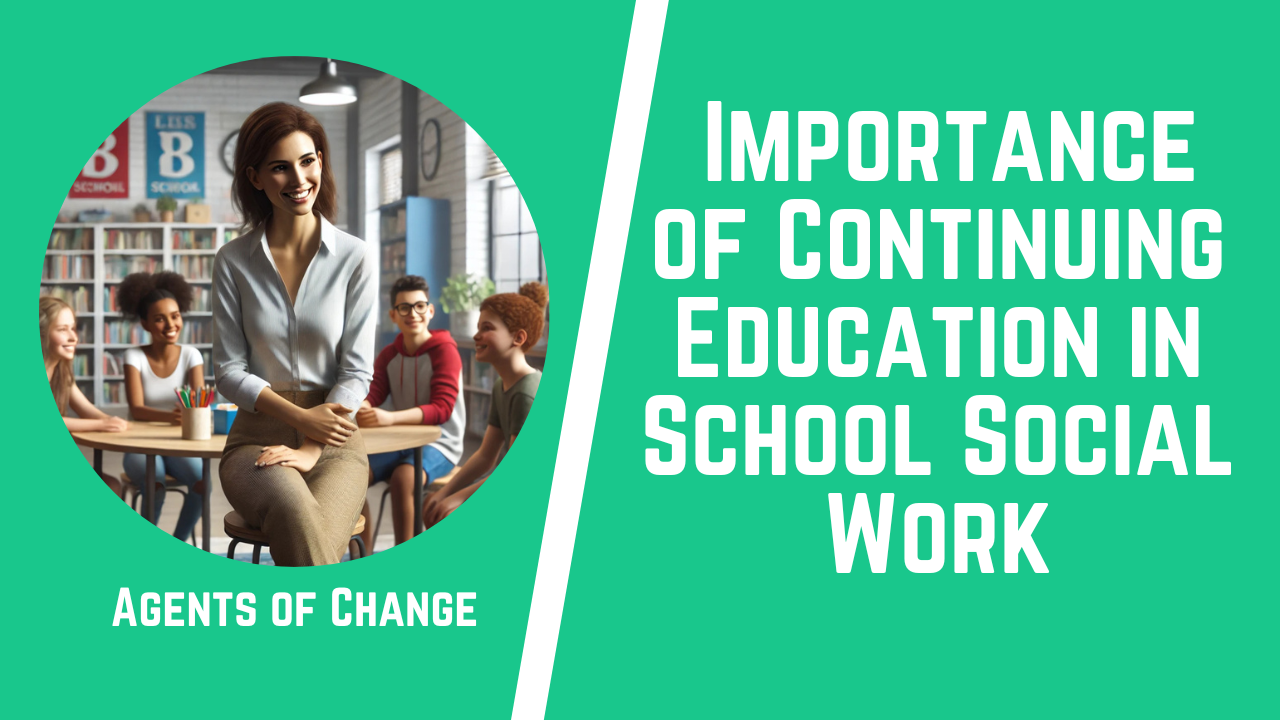
a diverse school social worker in welcoming and dynamic school environments, interacting warmly with students and fostering an atmosphere of support and inclusivity.

Below, we explore why continuing education is a must-have for School Social Workers.


Staying Informed About Emerging Issues

The challenges students face today vastly differ from those of a decade ago. From mental health crises to societal inequities, School Social Workers must keep up with the latest trends to remain effective.

  • Mental Health Trends: With anxiety, depression, and trauma becoming increasingly common, it’s crucial to learn evidence-based intervention strategies.
  • Social Justice and Equity: Schools are microcosms of society, and Social Workers need to understand systemic inequities to advocate for change.
  • Legal and Ethical Updates: Staying updated on policies, laws, and ethical guidelines ensures compliance and effective advocacy for students and families.

Developing New Skills and Techniques

A commitment to continuing education allows School Social Workers to build their professional toolkit. By expanding their knowledge, they can address a wider range of issues with greater confidence and success.

  • Conflict Resolution: Mastering de-escalation techniques can help resolve disputes between students, parents, and educators.
  • Crisis Intervention: Learning how to support students in emergencies, such as suicidality or abuse, is vital for immediate and long-term outcomes.
  • Behavioral Interventions: New research frequently uncovers more effective ways to manage classroom behavior and support learning environments.

Enhancing Professional Credibility

In a field where trust and respect are crucial, continuing education bolsters credibility among colleagues, families, and students. Staying updated demonstrates a commitment to professional growth and excellence.


Practical Benefits for Day-to-Day Work

Continuing education isn’t just about theoretical learning—it directly impacts the work School Social Workers do every day. Here’s how:

  • Building Stronger Relationships: Courses on communication and empathy help strengthen connections with students and staff.
  • Better Collaboration with Educators: Gaining insight into teacher-student dynamics fosters teamwork and shared problem-solving.
  • Tailored Support Plans: Learning about diverse student needs enables Social Workers to craft more effective, personalized intervention plans.

Key Benefits of Continuing Education

  • Improved Student Outcomes: Equipped with advanced skills, Social Workers can better address issues like bullying, attendance, and emotional well-being.
  • Professional Longevity: Staying engaged and growing prevents burnout, keeping Social Workers motivated and inspired.
  • Licensure Maintenance: Continuing education ensures compliance with state requirements, keeping licenses active and careers on track.

Keeping Up with the Latest Research

Educational settings are unique in their demands, requiring Social Workers to apply the latest research to everyday situations. Continuing education bridges the gap between theory and practice, enabling professionals to bring proven methods to their schools.


Final Thoughts

For School Social Workers, continuing education is more than a requirement—it’s a lifeline. It empowers them to adapt to the challenges of a complex world, ensuring they can continue making a profound difference in students’ lives. By investing in their professional development, Social Workers invest in the future of education itself.

Learn more about Agents of Change Continuing Education. We’ve helped tens of thousands of Social Workers, Counselors, and Mental Health Professionals with their continuing education, and we want you to be next!

2) Practical Benefits of Continuing Education for School Social Workers

Continuing education isn’t just about meeting professional requirements—it’s a game-changer for School Social Workers in their day-to-day roles.

a diverse school social worker in welcoming and dynamic school environments, interacting warmly with students and fostering an atmosphere of support and inclusivity

By staying up-to-date and honing their skills, they can achieve greater effectiveness, confidence, and job satisfaction. Let’s explore the practical benefits of continuing education and how it transforms the work of School Social Workers.


Improved Student Support

At the heart of School Social Work is the commitment to help students thrive academically, socially, and emotionally. Continuing education enhances a Social Worker’s ability to provide targeted and effective support.

  • Addressing Mental Health Needs: Courses on trauma-informed care, anxiety management, and depression interventions equip Social Workers better to handle the growing mental health concerns among students.
  • Promoting Inclusion and Equity: Continuing education on cultural competency and systemic inequities helps Social Workers create inclusive environments where all students feel valued and supported.
  • Crisis Management Skills: Learning updated crisis intervention techniques ensures that Social Workers are prepared to respond to emergencies effectively.

Enhanced Collaboration with School Staff

A well-trained School Social Worker can bridge gaps between students, families, and educators, fostering a collaborative approach to problem-solving.

  • Building Effective Partnerships: Continuing education improves communication and teamwork skills, enabling Social Workers to align with teachers, counselors, and administrators.
  • Understanding Educational Challenges: Courses that cover learning disabilities, classroom management, and behavioral interventions provide valuable insight into the challenges faced by educators.
  • Promoting a Holistic Approach: With the right training, Social Workers can integrate their efforts with broader school initiatives, creating a cohesive support system for students.

Personal and Professional Growth

Investing in continuing education benefits the Social Worker just as much as it does the students and schools they serve.

  • Boosting Confidence: Staying current with best practices and new techniques builds confidence, making Social Workers more effective and assertive in their roles.
  • Preventing Burnout: Engaging in learning opportunities can reignite passion for the profession, reducing feelings of stagnation or burnout.
  • Opening Career Opportunities: Specialized training can pave the way for career advancement, leadership roles, or specialization in areas like mental health or family services.

Practical Tools for Everyday Challenges

Continuing education provides actionable strategies and tools that Social Workers can immediately apply in their daily routines.

  • Better Time Management: Learning strategies for caseload prioritization helps Social Workers manage their workload efficiently.
  • Improved Documentation: Training on data tracking and reporting ensures that Social Workers meet administrative requirements with ease.
  • Conflict Resolution Techniques: Practical skills in mediation and de-escalation help resolve disputes among students, parents, and staff.

Supporting Professional Compliance

Maintaining an active license is non-negotiable for School Social Workers, and continuing education ensures they meet the necessary requirements.

  • State-Specific Requirements: Every state has unique CE credit requirements, and continuing education ensures compliance with these standards.
  • Trusted Providers: Programs like those offered by Agents of Change Continuing Education provide reliable, accredited courses that make license renewal stress-free.

A Better School Environment

When Social Workers engage in continuing education, the positive ripple effects extend throughout the school community.

  • Fostering Resilience: Well-trained Social Workers empower students to build resilience, leading to better academic and social outcomes.
  • Creating Positive School Culture: Ongoing learning allows Social Workers to introduce initiatives that promote inclusivity, empathy, and well-being among students and staff.

The practical benefits of continuing education for School Social Workers go far beyond professional requirements. From enhancing student support to fostering personal growth and improving school-wide collaboration, ongoing learning transforms the way Social Workers approach their roles. It’s an investment that pays dividends every single day, creating a stronger foundation for student success.

We’ve helped tens of thousands of Social Workers, Counselors, and Mental Health Professionals with Continuing Education, learn more here about Agents of Change and claim your 5 free CEUs!

3) How to Make the Most of Continuing Education

Continuing education is a powerful tool for personal and professional growth, but like any resource, its value depends on how you use it.

a diverse school social worker seated at their desk in front of a computer, working in a bright and welcoming school office setting

For School Social Workers, making the most of continuing education means approaching it with purpose, engagement, and strategic planning. Here’s how to ensure your learning journey is impactful and rewarding.


1. Set Clear Goals

Before diving into courses, take time to reflect on your career objectives and areas for improvement. This focus will guide your learning and help you prioritize courses that align with your goals.

  • Identify Skills Gaps: Are there areas where you feel less confident, such as crisis intervention or cultural competency?
  • Align with Career Aspirations: Whether you’re aiming for a leadership role or specialization, choose courses that support your ambitions.
  • Track Student Needs: Consider the unique challenges of your school community and seek training that addresses them.

2. Choose Accredited Providers

Not all continuing education programs are created equal. To get the most out of your investment, select courses from reputable, accredited providers.

  • Trusted Organizations: Providers like Agents of Change Continuing Education offer ASWB and NBCC-approved courses, ensuring the content meets professional standards.
  • Diverse Offerings: Look for providers with a variety of topics and formats, from self-paced courses to live events.
  • Relevant Content: Focus on programs tailored for School Social Workers, such as trauma-informed care, equity advocacy, and behavioral interventions.

3. Engage Actively

The value of continuing education isn’t just in attending—it’s in participating. Active engagement helps you retain information and apply it effectively.

  • Take Notes: Jot down key insights, questions, and strategies during your sessions.
  • Ask Questions: Whether in live events or through discussion boards, don’t hesitate to seek clarification or share your perspectives.
  • Participate in Discussions: Engage with instructors and peers to gain different viewpoints and practical tips.

4. Balance Flexibility and Accountability

Balancing a demanding job with continuing education can be tricky. By adopting a flexible yet disciplined approach, you can stay on track without feeling overwhelmed.

  • Schedule Time for Learning: Dedicate specific times for courses, treating them as non-negotiable appointments.
  • Start with Self-Paced Courses: If your schedule is unpredictable, begin with flexible programs offered by providers like Agents of Change Continuing Education.
  • Leverage Breaks: Use school holidays or quieter periods to tackle intensive learning.

5. Apply What You Learn

Continuing education is only as valuable as its application. Bring new insights into your daily practice to maximize their impact.

  • Try New Strategies: Implement techniques from your courses, whether they’re about conflict resolution, intervention planning, or communication skills.
  • Share with Colleagues: Collaborate with your peers to integrate new knowledge into your school’s broader support system.
  • Reflect and Adjust: Evaluate how your learning translates to real-world results and refine your approach as needed.

6. Keep a Record of Achievements

Documenting your continuing education journey helps you stay organized and prepared for licensure renewal or career advancement.

  • Track Completed Courses: Maintain a log of course titles, dates, and providers.
  • Highlight Accomplishments: Add completed training to your resume or portfolio to showcase your dedication to growth.
  • Prepare for License Renewal: Ensure you meet state-specific CE credit requirements by regularly reviewing your progress.

7. Mix and Match Learning Formats

Variety in learning formats keeps education engaging and ensures you gain insights from different perspectives.

  • Self-Paced Learning: Ideal for exploring topics at your own pace and revisiting complex material.
  • Live Events: Providers like Agents of Change Continuing Education host periodic live sessions, offering dynamic, interactive experiences.
  • Workshops and Webinars: Look for specialized programs that provide deep dives into specific areas of interest.

Continuing education is a valuable resource for School Social Workers, but its impact depends on how you approach it. By setting clear goals, choosing trusted providers, engaging actively, and applying new knowledge, you can ensure your learning journey is meaningful and transformative.

Take the time to make the most of continuing education—you, your students, and your school community will reap the benefits.

4) FAQs – The Importance of Continuing Education in School Social Work
Q: Why is continuing education important for School Social Workers?

A: Continuing education is a requirement because it ensures that Social Workers remain knowledgeable about the latest research, techniques, and policies in their field.

The challenges faced by students, families, and schools constantly evolve, and staying updated allows Social Workers to provide the best possible support. Beyond regulatory compliance, ongoing learning is essential for improving skills, boosting confidence, and delivering effective interventions.

Q: How can busy School Social Workers fit continuing education into their schedules?

A: Balancing a heavy workload with continuing education can be challenging, but it’s entirely possible with the right approach. Many accredited providers, like Agents of Change Continuing Education, offer flexible self-paced courses that allow Social Workers to learn on their own time.

Scheduling designated learning hours, leveraging school breaks, and setting realistic goals can also help. Additionally, periodic live events provide an opportunity to engage without the need for extended time commitments.

Q: What should School Social Workers look for in a continuing education program?

A: When selecting a continuing education program, it’s important to prioritize quality, relevance, and accreditation. Look for providers like Agents of Change Continuing Education, which offer ASWB and NBCC-approved courses specifically tailored for Social Workers.

Choose programs that align with your professional goals, address student needs, and cover topics such as trauma-informed care, cultural competency, and crisis intervention. A mix of self-paced and live formats can provide a well-rounded learning experience.

5) Conclusion

Continuing education is not just a requirement for School Social Workers—it’s a pathway to professional growth, enhanced effectiveness, and long-term impact. In an ever-changing educational landscape, staying updated with the latest research, techniques, and policies equips Social Workers with the tools they need to navigate complex challenges.

Whether it’s addressing student mental health issues, promoting equity, or collaborating with educators, continuing education empowers professionals to make a meaningful difference in schools.

Organizations like Agents of Change Continuing Education make this journey easier and more accessible. With over 150 ASWB and NBCC-approved courses, as well as periodic live events, they offer a range of opportunities tailored to the needs of Social Workers.

By investing in high-quality programs, professionals can stay current, meet licensure requirements, and continue growing in their careers. It’s more than learning—it’s about unlocking your potential to create positive change.

————————————————————————————————————————————————

► Learn more about the Agents of Change Continuing Education here: https://agentsofchangetraining.com

About the Instructor, Meagan Mitchell: Meagan is a Licensed Clinical Social Worker and has been providing Continuing Education for Social Workers, Counselors, and Mental Health Professionals for more than 8 years. From all of this experience helping others, she created Agents of Change Continuing Education to help Social Workers, Counselors, and Mental Health Professionals stay up-to-date on the latest trends, research, and techniques.

#socialwork #socialworker #socialwork #socialworklicense #socialworklicensing #continuinged #continuingeducation #ce #socialworkce #freecesocialwork #lmsw #lcsw #counselor #NBCC #ASWB #ACE

Disclaimer: This content has been made available for informational and educational purposes only. This content is not intended to be a substitute for professional medical or clinical advice, diagnosis, or treatment

Share:

Discover more from Agents of Change

Subscribe now to keep reading and get access to the full archive.

Continue reading

New LIVE CE event - Therapeutic Interventions for the Treatment of Clients with Chronic Pain - Get 3 CE credits