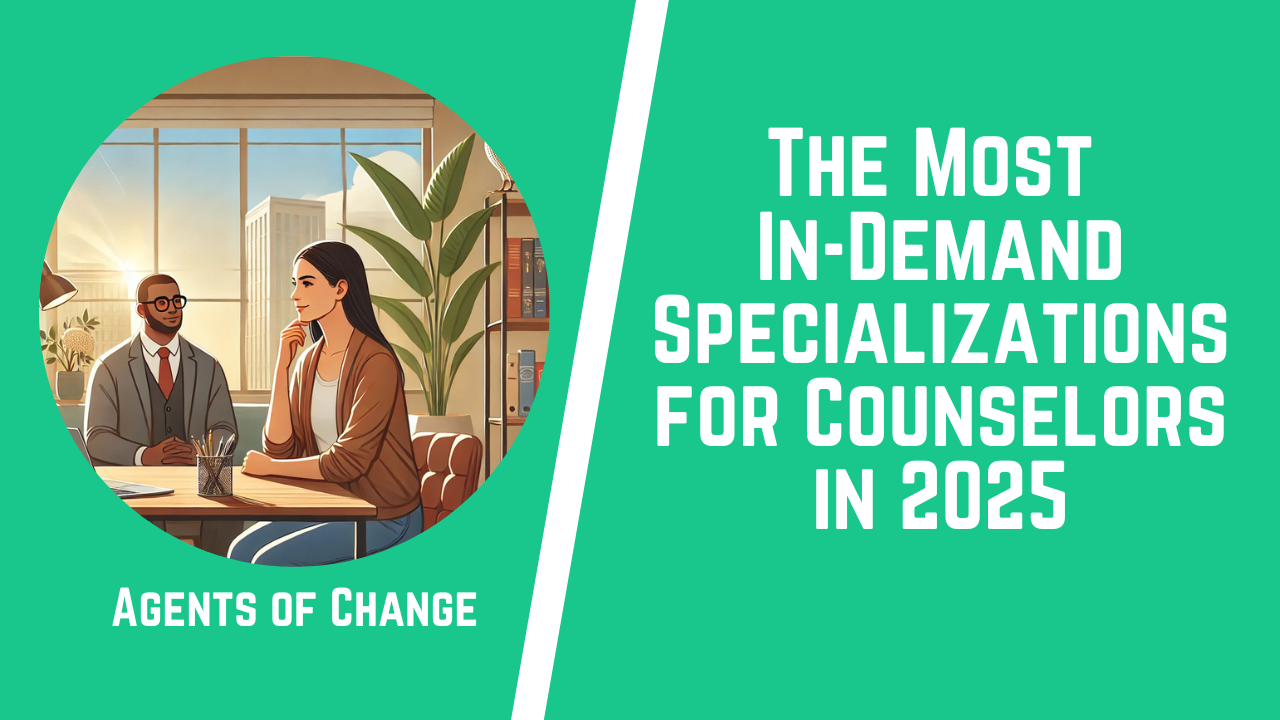
As we look toward 2025, the field of counseling is undergoing an exciting transformation. Shifting societal dynamics, emerging mental health needs, and technological advancements are shaping the demand for specialized counseling services. Whether addressing the complexities of trauma, embracing telehealth innovations, or providing culturally competent care, counselors are finding new ways to make a profound impact. These trends highlight the importance of developing niche expertise in order to stay relevant and provide meaningful support.
Specializing not only enhances your ability to serve clients but also opens doors to career growth and professional fulfillment. With so many opportunities to expand your skills, it’s crucial to stay informed and well-prepared. This is where continuing education comes into play.
Providers like Agents of Change Continuing Education make it easy for counselors to access top-tier training in high-demand areas. Offering over 150 courses approved by ASWB and NBCC, as well as live events throughout the year, this platform equips professionals to meet the challenges of a changing world.
In this blog post, we’ll explore the most in-demand specializations for counselors in 2025 and the essential role continuing education plays in mastering these fields. From trauma recovery and addiction counseling to telehealth and diversity-focused care, discover how you can elevate your practice and thrive in a rewarding, future-focused career. Let’s dive in!
Did you know? Agents of Change Continuing Education offers Unlimited Access to 150+ ASWB and NBCC-approved CE courses for one low annual fee to meet your state’s requirements for Continuing Education credits and level up your career.
We’ve helped thousands of Social Workers, Counselors, and Mental Health Professionals with Continuing Education, learn more here about Agents of Change and claim your 5 free CEUs.
1) Why Specialization Matters in Counseling
In the ever-evolving world of mental health, specialization is no longer a luxury—it’s a necessity. As societal needs grow more complex and diverse, counselors must adapt to provide the most effective care. Specializing enhances your professional expertise and ensures your practice stays relevant and impactful.

Meeting the Unique Needs of Clients
Clients today are looking for therapists who truly understand their struggles. Specialization allows counselors to:
- Offer tailored interventions for specific issues like trauma, addiction, or anxiety
- Build trust by demonstrating in-depth knowledge of their clients’ challenges
- Address cultural, social, or generational factors more effectively
For example, a counselor specializing in LGBTQ+ issues may offer more insightful guidance to clients exploring their identity than someone with only general counseling experience.
Standing Out in a Competitive Field
The counseling profession is growing rapidly, with more practitioners entering the field every year. Specializing gives you a competitive edge by:
- Differentiating you from generalist counselors
- Increasing your visibility in niche markets
- Attracting a steady stream of referrals from peers or healthcare providers
Clients are more likely to choose a counselor whose expertise matches their specific needs, making specialization a powerful marketing tool.
Boosting Your Career Satisfaction
Focusing on a niche you’re passionate about can transform your career. Specialization enables you to:
- Work with clients and issues that resonate with you
- Develop a deeper sense of purpose in your professional life
- Avoid burnout by focusing on areas that energize you
By investing in continuing education through platforms like Agents of Change Continuing Education, you can explore new areas of interest while enhancing your qualifications.
Keeping Up with Industry Trends
The mental health field is dynamic, with new challenges and opportunities emerging all the time. Specialization ensures you stay ahead by:
- Aligning your skills with the latest research and practices
- Adapting to shifts in client demographics and societal needs
- Preparing for innovations in therapy, such as digital counseling tools
For instance, as telehealth continues to rise, counselors with a specialization in online therapy are better positioned to serve tech-savvy clients or those in remote areas.
What Specialization Can Look Like
Specialization doesn’t mean limiting yourself—it means diving deeper into areas where you can make the biggest impact. Some examples include:
- Trauma-Informed Care: Helping clients process and heal from past experiences
- Addiction Counseling: Supporting individuals through recovery journeys
- School Counseling: Addressing the unique mental health challenges of children and adolescents
- Diversity Counseling: Promoting equity and cultural competence in mental health care
By focusing your efforts on one or more of these high-demand fields, you’re not just refining your practice—you’re contributing to the betterment of your community.
Specialization matters because it sharpens your skills, enhances client outcomes, and helps you stay ahead in an ever-changing profession. With the right training and resources, like those offered by Agents of Change Continuing Education, you can turn your passion into expertise and make a lasting impact on the lives of your clients.
Learn more about Agents of Change Continuing Education. We’ve helped thousands of Social Workers, Counselors, and Mental Health Professionals with their continuing education, and we want you to be next!
2) The Most In-Demand Specializations for Counselors in 2025
As we look to 2025, the demand for mental health services is growing across diverse sectors, fueled by increased awareness, shifting societal priorities, and technological advancements. This presents counselors with unique opportunities to specialize in high-demand fields, ensuring their skills remain relevant and impactful. Below are the specializations that are expected to shape the future of counseling.

Trauma Counseling: Healing Invisible Wounds
Trauma counseling has seen a surge in demand due to heightened awareness of PTSD, abuse, and crisis-related stress. The need for specialized trauma therapists is stronger than ever.
Why It’s Essential
Trauma affects individuals in profound and varied ways. Whether it’s combat veterans, survivors of natural disasters, or those recovering from childhood abuse, trauma counseling helps clients regain stability and rebuild their lives.
Skills and Techniques
- Trauma-Informed Care: Understanding how trauma impacts brain function and behavior
- EMDR (Eye Movement Desensitization and Reprocessing): A leading therapy for PTSD and anxiety
- Somatic Therapy: Addressing the body’s role in processing trauma
Continuing education programs, like those offered by Agents of Change Continuing Education, can help counselors master these techniques and stay updated on best practices.
Digital and Telehealth Counseling: The Future Is Virtual
The COVID-19 pandemic accelerated the adoption of telehealth, and it’s here to stay. By 2025, digital counseling will be one of the most sought-after specializations.
Why It’s Popular
- Accessibility for clients in rural or underserved areas
- Convenience for individuals balancing work, school, or family
- Integration of digital tools, like mental health apps, for enhanced client support
Challenges and Opportunities
- Navigating HIPAA compliance for virtual sessions
- Building rapport in a digital environment
- Utilizing data from apps and wearables to track client progress
Specializing in telehealth through targeted continuing education courses can help counselors adapt to this growing field and expand their client base.
Addiction Counseling: Battling a Growing Crisis
Substance use and behavioral addictions continue to rise, driven by stress, economic uncertainty, and societal pressures. Addiction counseling is a critical area where skilled professionals can make a difference.
Emerging Trends
- Harm Reduction Approaches: Focusing on minimizing the negative effects of addiction rather than enforcing abstinence
- Dual Diagnosis Expertise: Addressing co-occurring disorders like addiction and depression
- Family-Centered Models: Involving loved ones in the recovery process
Tools for Success
To excel in this field, counselors need:
- Knowledge of Medication-Assisted Treatment (MAT)
- Skills in motivational interviewing
- Cultural competence to understand how addiction varies across communities
Agents of Change Continuing Education offers a variety of courses tailored to addiction recovery, equipping counselors with cutting-edge strategies.
Diversity, Equity, and Inclusion (DEI) Counseling: Addressing Systemic Issues
As cultural awareness grows, so does the need for counselors who understand the intricacies of race, gender, and identity in mental health care.
Why It Matters
Clients from marginalized communities often face unique barriers to mental health care. DEI counseling helps bridge these gaps, providing equitable and inclusive support.
Areas of Focus
- Addressing implicit bias in therapy
- Supporting clients navigating discrimination or systemic inequality
- Providing culturally relevant interventions
By specializing in DEI counseling, professionals can create safe spaces for clients from all backgrounds and advocate for systemic change.
Adolescent and School Counseling: Shaping Young Lives
With mental health challenges among children and teens on the rise, adolescent and school counseling has become one of the most vital specializations.

Challenges Facing Youth
- Social media’s impact on self-esteem and mental health
- Bullying, both in-person and online
- Academic and extracurricular pressures leading to anxiety and burnout
How Counselors Can Help
- Offering evidence-based strategies like Cognitive Behavioral Therapy (CBT) for younger clients
- Providing coping mechanisms for stress and anxiety
- Supporting parents and educators in fostering healthier environments
Continuing education in child and adolescent mental health equips counselors to better address the unique needs of this demographic.
Geriatric Counseling: Supporting the Aging Population
The aging population is growing, and with it comes a need for counselors who specialize in geriatric mental health.
Key Concerns for Older Adults
- Loneliness and isolation
- Managing chronic illness or disability
- Grieving the loss of loved ones or independence
Skills for Geriatric Counselors
- Knowledge of age-related cognitive changes, such as dementia
- Empathy for generational differences and values
- Family mediation skills to address intergenerational conflicts
Specializing in this area not only enhances the lives of older adults but also strengthens family dynamics.
Integrating Specializations
In 2025, counselors may find that combining specializations offers even greater opportunities. For example:
- A trauma counselor specializing in telehealth can reach underserved populations affected by crises.
- An addiction counselor trained in DEI principles can provide culturally sensitive care to clients from diverse backgrounds.
Platforms like Agents of Change Continuing Education offer comprehensive training across various niches, enabling counselors to tailor their careers to the evolving needs of their clients.
The most in-demand specializations for counselors in 2025 reflect a profession that’s adapting to meet new challenges and opportunities. By focusing on one or more of these high-demand areas, counselors can enhance their impact, expand their reach, and create a lasting difference in their clients’ lives.
We’ve helped thousands of Social Workers, Counselors, and Mental Health Professionals with Continuing Education, learn more here about Agents of Change and claim your 5 free CEUs!
3) How Continuing Education Helps Counselors Succeed
Continuing education (CE) is more than just a licensing requirement—it’s a vital tool for professional growth, client success, and career advancement. For counselors striving to stay at the forefront of their field, CE provides opportunities to develop new skills, deepen expertise, and adapt to industry changes.
Staying Current with Industry Trends
The mental health landscape is constantly shifting, and continuing education ensures you remain informed about the latest developments.
What You’ll Gain
- Knowledge of emerging therapies, such as mindfulness-based approaches or trauma-informed care
- Updates on ethical practices and legal requirements, including HIPAA compliance for telehealth
- Insights into societal trends, like the rise of social media’s impact on mental health
By staying current, counselors can provide their clients with cutting-edge solutions while maintaining ethical and legal standards.
Expanding Specializations
Continuing education allows counselors to explore new areas of expertise or enhance existing specializations, helping them meet the diverse needs of their clients.
Popular Specializations to Explore
- Trauma recovery and PTSD treatment
- Addiction and substance use counseling
- Digital and telehealth therapy
- Diversity, equity, and inclusion (DEI) counseling
Platforms like Agents of Change Continuing Education offer a wide range of courses tailored to these fields, ensuring counselors can access high-quality training aligned with their career goals.
Enhancing Practical Skills
CE doesn’t just teach theory—it equips counselors with actionable tools and techniques they can use in their practice.
Skills You Can Build
- Advanced therapeutic techniques, such as EMDR or somatic therapy
- Crisis intervention strategies for clients facing immediate challenges
- Communication skills tailored for specific populations, like adolescents or older adults
These practical skills help counselors deliver more effective and personalized care to their clients.
Boosting Career Opportunities
Specialization and skill-building through continuing education can open new doors in your career.
Career Benefits
- Increased Marketability: Employers and clients are drawn to counselors with specialized training.
- Networking Opportunities: Live CE events, such as those offered by Agents of Change Continuing Education, connect you with peers and industry leaders.
- Higher Earning Potential: Specializations can allow you to charge higher rates or pursue leadership roles.
Continuing education also positions counselors to take on roles in academia, program development, or consulting, broadening career possibilities.
Maintaining Licensure
Licensing boards require counselors to complete a specific number of CE credits to stay active, but CE offers much more than compliance.
Why It’s Essential
- Ensures you meet professional standards in your state or region
- Demonstrates your commitment to lifelong learning
- Keeps you in good standing with regulatory bodies
With Agents of Change Continuing Education, counselors can easily fulfill their licensure requirements while gaining valuable knowledge to enhance their practice.
Fostering Personal and Professional Growth
Beyond the tangible benefits, continuing education fosters a sense of purpose and inspiration in your career.
Intangible Rewards
- Renewed passion for your work
- Confidence in your ability to tackle complex cases
- Satisfaction from helping clients more effectively
Investing in your education ensures that you continue to grow as a professional while maintaining the integrity and impact of your practice.
Continuing education isn’t just about meeting requirements—it’s a cornerstone of success for modern counselors. Whether you’re expanding your specializations, mastering new skills, or staying ahead of industry trends, the right courses can transform your practice. Providers like Agents of Change Continuing Education make it easy to access high-quality training, helping you build a fulfilling and future-focused career.
Remember, resources like Agents of Change Continuing Education are there to support you. With over 150 courses and live events, they provide the tools you need to implement these skills effectively and thrive in your career.
4) FAQs – The Most In-Demand Specializations for Counselors in 2025
Q: Why is specialization important for counselors in 2025?
A: Specialization is crucial because it allows counselors to provide targeted, effective care tailored to specific client needs. As mental health challenges grow more complex, clients are increasingly seeking counselors with expertise in areas like trauma recovery, addiction, or digital therapy.
Specialization enhances client outcomes and helps counselors stand out in a competitive field, ensuring they remain relevant and in demand. It also provides opportunities for personal growth and career advancement, making it a win-win for professionals and their clients.
Q: How does continuing education support specialization for counselors?
A: Continuing education enables counselors to deepen their knowledge and acquire new skills in high-demand fields. For example, courses on trauma-informed care, telehealth ethics, or addiction recovery equip counselors with the expertise to excel in these specializations.
Platforms like Agents of Change Continuing Education make it easy to access these resources, offering over 150 ASWB and NBCC-approved courses. By staying informed and up-to-date, counselors can expand their career options and deliver more impactful care.
Q: What are the benefits of specializing in digital and telehealth counseling?
A: Specializing in digital and telehealth counseling opens the door to a wide range of opportunities. Counselors can reach clients in underserved or remote areas, offer more flexible scheduling, and integrate innovative tools like mental health apps into their practice.
However, telehealth also requires specific skills, such as maintaining HIPAA compliance and building rapport in virtual settings. Continuing education programs often include modules focused on these areas, ensuring counselors are well-prepared to thrive in this growing field.