
What is Sand Tray Therapy?

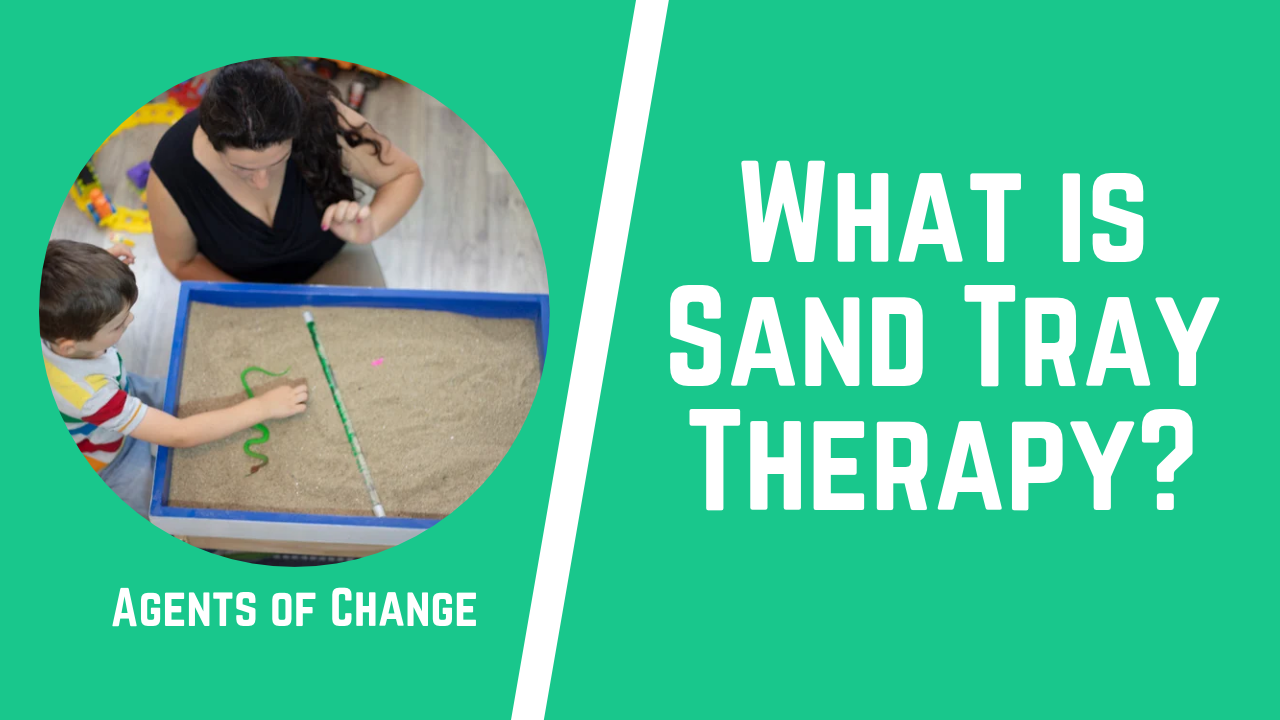
Sand tray therapy invites clients to build miniature scenes with sand and small figures, giving shape to emotions and experiences that can be hard to put into words. It’s used with children, teens, adults, couples, families, and trauma survivors.
Instead of explaining feelings out loud, the client lets the figures and the sand tell the story, while the therapist observes and invites reflection. For Social Workers, Counselors, and Therapists, it can be a valuable addition to practice, with the right training. This guide covers what sand tray therapy is, how a session works, its benefits and evidence, who it helps, the therapist’s role, and what goes into a sand tray toolkit.
Did you know? Agents of Change Continuing Education offers Unlimited Access to 200+ ASWB and NBCC-approved online CE courses and 25+ Live Events per year for one annual fee to meet your state’s requirements for Continuing Education credits and level up your career.
We’ve helped more than 100,000 Social Workers, Counselors, and Mental Health Professionals with exam prep and Continuing Education. Learn more here about Agents of Change and claim your 7.5 free CEUs.
Quick answer: what is sand tray therapy?
- Definition: an expressive therapy in which clients build scenes with miniature figures in a tray of sand to represent their inner world.
- Roots: Margaret Lowenfeld’s World Technique, later developed by Dora Kalff into Jungian sandplay.
- Who it helps: children, teens, adults, couples, families, and groups, especially clients who struggle to put feelings into words.
- The therapist’s role: create safety, observe, and invite reflection without imposing interpretations.
- Training matters: research is promising but still limited, and the approach requires specialized training and supervision.
Jump to: What It Is · How a Session Works · Benefits and Evidence · Who Can Benefit · The Therapist’s Role · The Toolkit · FAQs
1) What Is Sand Tray Therapy?
Sand tray therapy is an experiential, expressive approach in which clients use a tray of sand and a collection of miniatures to create a visual representation of their thoughts, feelings, relationships, or experiences. It isn’t about making something artistic; the scene simply gives the client’s inner world a concrete form.
Where It Came From
British pediatrician Margaret Lowenfeld developed the “World Technique” in the 1920s and 1930s to help children express themselves without words. Swiss analyst Dora Kalff later built on her work to create sandplay, a Jungian approach. Today, “sandplay” usually refers to Kalff’s Jungian method, while “sand tray therapy” is a broader term used across many theoretical approaches, including person-centered, Gestalt, Adlerian, and trauma-focused work.
Directive and Nondirective Approaches
In nondirective work, the client builds whatever they choose. In directive work, the therapist offers a prompt, such as “Create a scene that shows your family” or “Show how your week has felt.” Many clinicians use both, depending on the client and the goals of treatment.
2) How a Sand Tray Session Works
| Phase | What Happens |
|---|---|
| Introduction | The therapist explains the tray and miniatures and emphasizes that there’s no right or wrong way to create. |
| Creation | The client selects figures and shapes the sand, often in silence, while the therapist observes. |
| Exploration | The therapist invites the client to describe the scene, using open-ended questions. |
| Reflection | Client and therapist explore themes, feelings, and connections to the client’s life, led by the client’s own meaning. |
| Closure | The therapist helps the client transition out, often photographing the tray for the record. Many clinicians wait until the client leaves to take the tray apart. |
Helpful questions include “What do you notice about your scene?”, “Tell me about this figure,” and “If you could change anything in the tray, what would it be?”
3) Benefits and What the Research Says
- Nonverbal expression: clients can show feelings they can’t yet name.
- Psychological distance: working through symbols can make painful material feel more manageable, which is especially helpful in trauma work.
- Engagement: the hands-on process can lower defenses, particularly with children and guarded teens or adults.
- Insight: seeing a situation laid out in the tray can reveal patterns and relationships.
- Sense of control: clients can rearrange their scenes, practicing change and new possibilities.
Research on sand tray therapy and sandplay is growing, with studies suggesting benefits for children’s emotional and behavioral problems and for trauma-related symptoms. However, much of it involves small samples, and more rigorous studies are needed. It’s best used as one tool within an evidence-informed treatment plan, not as a stand-alone cure.
4) Who Can Benefit From Sand Tray Therapy?
| Population | How It Can Help |
|---|---|
| Children | Expressing big feelings, grief, divorce, behavioral concerns, and trauma through play |
| Teens | Exploring identity and stress when talking feels uncomfortable |
| Adults | Processing trauma, grief, life transitions, and stuck patterns from a new angle |
| Couples and families | Building shared scenes that reveal relationship dynamics and open communication |
| Groups | Processing shared experiences, such as collective grief, and building connection |
5) The Therapist’s Role
Creating Safety
Set up a calm, private space with the tray and an organized collection of miniatures, and communicate that there’s no right or wrong way to create.
Observing Without Interfering
Notice which figures the client chooses, where they’re placed, how the sand is shaped, recurring themes, and the client’s body language and pace.
Inviting, Not Interpreting
The meaning belongs to the client. Rather than telling a client what a figure represents, ask open-ended questions and reflect what you notice. A snake may mean danger to one client and healing to another.
Ethical Considerations
- Competence: get specialized training and supervision before using sand tray therapy. Credentials are available through organizations such as the Association for Play Therapy and Sandplay Therapists of America.
- Confidentiality: photos of trays are part of the client record and should be stored securely.
- Cultural responsiveness: symbols carry different meanings across cultures, and your collection should reflect the people you serve.
- Pacing and safety: trauma material can surface quickly, so help clients regulate and contain what comes up.
6) What’s in a Sand Tray Toolkit?
| Item | What to Know |
|---|---|
| The tray | A shallow rectangular tray, traditionally about 19.5 by 28.5 inches and 3 inches deep, often painted blue inside to suggest water or sky. Some clinicians keep a second tray for wet sand. |
| The sand | Clean, fine, nontoxic sand that’s pleasant to touch and easy to shape |
| Miniatures | People of different ages, abilities, and cultures; real and mythical animals; nature items; buildings, fences, and bridges; vehicles; and symbols like treasure chests, ladders, and clocks |
| Optional extras | Stones, shells, and other natural materials |
| Storage and care | Open shelves organized by category, regular cleaning, and periodic sand replacement |
Build your collection gradually, and include figures that represent both difficult emotions and sources of strength.
7) FAQs: Sand Tray Therapy
How is sand tray therapy different from talk therapy?
Talk therapy relies mainly on words. Sand tray therapy adds a hands-on, visual way to express thoughts and feelings, and it’s often combined with conversation.
Is sand tray therapy only for children?
No. It’s well known in child therapy, but teens, adults, couples, families, and groups can all benefit, especially when words feel hard to find.
What’s the difference between sandplay and sand tray therapy?
Sandplay usually refers to Dora Kalff’s Jungian method, which has its own training pathway. Sand tray therapy is a broader term for using the tray across many theoretical approaches.
Do I need special training to use sand tray therapy?
Yes. Practicing within your competence is an ethical requirement. Look for specialized training and supervision, and consider play therapy or sandplay credentials if you plan to use it often. Agents of Change Continuing Education offers 200+ ASWB and NBCC-approved courses on topics like trauma, child and family practice, and ethics to build your foundation.
8) Conclusion
Sand tray therapy gives clients a way to show what they can’t yet say. With a safe space, a thoughtful collection, and a therapist who observes and invites rather than interprets, the tray can open new paths to insight and healing. If you’re considering adding it to your practice, invest in specialized training and supervision first.
Learn more about Agents of Change Continuing Education. We’ve helped more than 100,000 Social Workers, Counselors, and Mental Health Professionals with exam prep and Continuing Education and want to help you next!
► Learn more about Agents of Change Continuing Education here: https://agentsofchangeprep.com/continuing-education/
About the Lead Instructor, Dr. Meagan Mitchell: Meagan is a Licensed Clinical Social Worker and has been providing Continuing Education for Social Workers, Counselors, and Mental Health Professionals for more than 10 years. From all of this experience helping others, she created Agents of Change Continuing Education to help Social Workers, Counselors, and Mental Health Professionals stay up-to-date on the latest trends, research, and techniques.
Disclaimer: This content has been made available for informational and educational purposes only. This content is not intended to be a substitute for professional medical or clinical advice, diagnosis, or treatment.
Written by Agents of Change
Agents of Change will help you prepare to PASS your licensing exam and level up your career. With over 30 hours of visual and audio content, mock practice questions, test-taking tips, and strategies to break down and synthesize exam content, you will be prepared and confident to tackle your exam on test day!

