What is the Responsibility Pie in Mental Health?
What is the Responsibility Pie in Mental Health?
 

Mental health conversations often feel heavier than expected. A single question can open the door to layers of emotion, responsibility, and uncertainty, leaving people wondering who is supposed to carry what. Clients may feel overwhelmed by self-blame, while professionals quietly shoulder pressure to fix complex problems that were never meant to rest on one set of shoulders. Somewhere in the middle of that tension sits a need for a clearer, more compassionate way to think about responsibility.

The idea of the “Responsibility Pie” offers that clarity. Rather than treating mental health challenges as the sole responsibility of one person, this framework spreads accountability across individuals, professionals, relationships, and systems. When responsibility is shared realistically, it becomes easier to see how context, access, and support shape outcomes. The conversation shifts from blame to understanding, which can feel surprisingly relieving.

This blog post explores what the Responsibility Pie really means and why it matters in real-world mental health practice. From therapy rooms to community settings, the concept helps create balance, reduce burnout, and strengthen collaboration. Whether you are a clinician, a student, or someone curious about mental health, this introduction sets the stage for a more humane way of understanding responsibility and care.

Did you know? Agents of Change Continuing Education offers Unlimited Access to 150+ ASWB and NBCC-approved CE courses and 12+ Live Events per year for one low annual fee to meet your state’s requirements for Continuing Education credits and level up your career.

We’ve helped hundreds of thousands of Social Workers, Counselors, and Mental Health Professionals with Continuing Education, learn more here about Agents of Change and claim your 5 free CEUs.

1) What Is the Responsibility Pie in Mental Health?
The Responsibility Pie is a practical way to understand how accountability is shared across different people and forces involved in mental health care. Instead of placing all responsibility on a client or quietly expecting a professional to carry the entire burden, this framework breaks responsibility into realistic portions. Each slice represents a different influence on mental health outcomes, helping everyone involved see the bigger picture with more clarity and less judgment.

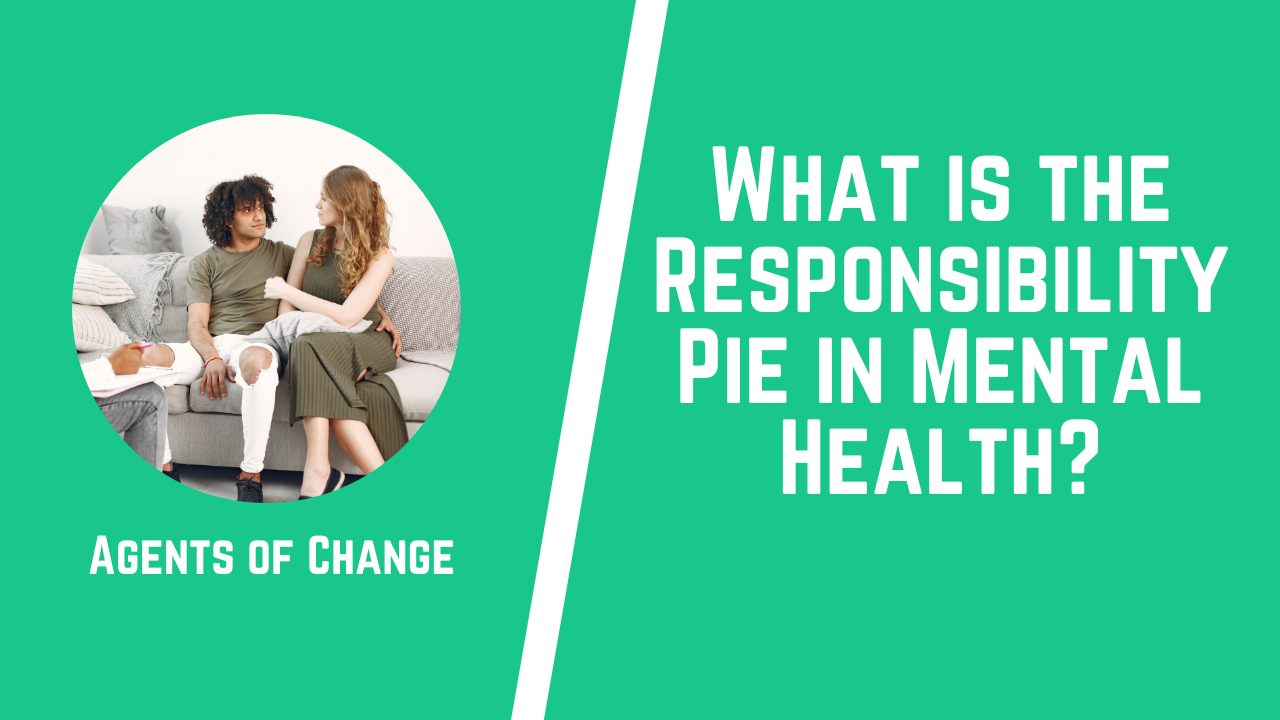
a diverse client in a therapy session that looks overwhelmed by all of the responsibilities they have.

At its heart, the Responsibility Pie encourages balanced thinking. Mental health is shaped by personal choices, professional guidance, relationships, systems, and circumstances that are often outside anyone’s control. When these factors are acknowledged openly, responsibility becomes something that can be managed rather than something that overwhelms.

The Core Idea Behind the Responsibility Pie

The central idea is simple but powerful. No single person is responsible for everything that happens in mental health care. Responsibility is distributed, and the size of each slice can change depending on the situation.

This way of thinking helps shift conversations away from blame and toward collaboration. It invites curiosity about what is influencing a person’s mental health instead of rushing to assign fault.

Key principles behind the Responsibility Pie include:

  • Responsibility is shared, not dumped on one individual

  • Accountability can exist without shame

  • Context matters just as much as effort

  • Responsibility can change over time

Why the Responsibility Pie Is Different From Blame

Blame focuses on who did something wrong. Responsibility focuses on who has influence and control. This distinction matters, especially in mental health settings where shame can easily take over.

When blame is present, people often shut down or become defensive. When responsibility is explored thoughtfully, people tend to open up. The Responsibility Pie makes space for honesty by separating intention from impact and effort from outcome.

This approach helps:

  • Clients reduce excessive self-blame

  • Professionals avoid taking on unrealistic expectations

  • Teams have clearer, healthier conversations

The Main Slices of the Responsibility Pie

While the exact slices vary from person to person, most Responsibility Pies include several common areas. Naming these areas helps clarify where energy and attention are best spent.

Individual Factors
This slice includes personal behaviors, coping skills, and engagement in care. It recognizes agency without ignoring limitations such as trauma, health conditions, or life stressors.

Professional Factors
This slice reflects the responsibility of therapists, social workers, counselors, and other providers to offer ethical, competent, and informed care. It includes assessment, treatment planning, boundaries, and ongoing learning.

Relational Factors
Family dynamics, friendships, workplace relationships, and social support systems all shape mental health. This slice highlights how connection or lack of support influences progress.

Systemic and Environmental Factors
Access to care, financial stress, discrimination, housing, and policy decisions live in this slice. These forces often have a powerful impact, even though they are largely outside individual control.

How the Responsibility Pie Is Used in Practice

In real-world settings, the Responsibility Pie can be a flexible tool rather than a rigid formula. Some clinicians draw it out visually with clients, while others use it as a conversational guide.

Common ways it is applied include:

  • Mapping out influences during intake or treatment planning

  • Revisiting responsibility when progress feels stuck

  • Helping clients externalize factors they unfairly blame themselves for

  • Supporting professionals in setting realistic boundaries

By breaking responsibility into clear, understandable pieces, the Responsibility Pie helps everyone involved approach mental health with more compassion, honesty, and balance.

Learn more about Agents of Change Continuing Education. We’ve helped hundreds of thousands of Social Workers, Counselors, and Mental Health Professionals with their continuing education, and we want you to be next!

2) Breaking Down the Slices of the Responsibility Pie

Understanding the Responsibility Pie becomes much easier once each slice is clearly named and explored. These slices are not meant to be equal in size, and they are not fixed forever. Some may grow while others shrink depending on life circumstances, access to support, and the stage of care. What matters most is recognizing that each slice plays a role in shaping mental health experiences and outcomes.

a diverse client in a therapy session that looks overwhelmed by all of the responsibilities they have.

Individual Responsibility

The individual slice represents the parts of mental health that are influenced by a person’s choices, behaviors, and engagement in care. This might include attending sessions, practicing coping strategies, communicating honestly, or setting personal boundaries. It reflects agency, but it does not assume unlimited capacity.

This slice must always be viewed through a compassionate lens. Trauma history, chronic stress, physical health, neurodiversity, and socioeconomic factors all affect how much responsibility a person can realistically carry at any given time. When this slice is framed without judgment, individuals are more likely to feel empowered rather than overwhelmed.

Professional Responsibility

The professional slice belongs to therapists, counselors, social workers, psychiatrists, and other mental health providers involved in care. It includes ethical decision-making, accurate assessment, appropriate interventions, and maintaining clear boundaries. It also involves recognizing when something falls outside one’s scope of practice and seeking consultation or referral when needed.

This slice does not include controlling outcomes or fixing every problem. Instead, it focuses on offering informed, compassionate, and consistent support. Ongoing training and reflection strengthen this slice, helping professionals show up with skill while protecting their own well-being.

Relational and Social Responsibility

Mental health is deeply influenced by relationships. This slice includes family members, partners, friends, coworkers, and broader social networks. Supportive relationships can make healing easier, while conflict or isolation can slow progress or intensify symptoms.

Acknowledging this slice helps clients understand that their struggles may be connected to relationship dynamics rather than personal failure. It also allows professionals to explore boundaries, communication patterns, and social support without placing all responsibility on the individual.

Examples of relational influences include:

  • Family expectations or conflict

  • Workplace stress or lack of accommodation

  • Social isolation or community connection

  • Caregiving roles and responsibilities

Systemic and Environmental Responsibility

This slice captures the larger forces that shape mental health but often go unnamed. Access to care, financial stability, housing, discrimination, cultural stigma, and policy decisions all live here. These factors can significantly impact mental health outcomes even though individuals and providers have limited control over them.

Naming systemic responsibility can be validating. It helps explain why progress may feel slow or why symptoms persist despite effort. It also opens the door to advocacy, resource connection, and realistic goal setting.

How the Slices Work Together

No slice exists in isolation. Individual effort may be limited by systemic barriers. Professional skill may be impacted by organizational constraints. Relationships can either support or undermine progress depending on context.

By looking at all the slices together, the Responsibility Pie creates a more accurate and humane understanding of mental health. It shifts the focus from who is at fault to what is influencing the situation, making space for clarity, shared accountability, and meaningful change.

Agents of Change has helped hundreds of thousands of Social Workers, Counselors, and Mental Health Professionals with Continuing Education, learn more here about Agents of Change and claim your 5 free CEUs!

3) Why the Responsibility Pie Matters in Clinical Practice

The Responsibility Pie is more than a helpful metaphor. In clinical practice, it becomes a grounding framework that shapes how clinicians think, communicate, and make decisions. When responsibility is clearly defined and shared, therapy and other mental health services tend to feel more collaborative, ethical, and sustainable for everyone involved.

It Reduces Burnout and Emotional Overload

One of the most significant reasons the Responsibility Pie matters is its impact on clinician well-being. Many mental health professionals enter the field with a strong desire to help, which can quietly turn into taking on too much responsibility. Over time, this leads to emotional exhaustion and burnout.

By consciously identifying what belongs in the professional slice and what does not, clinicians can release unrealistic expectations. This clarity allows them to stay engaged and compassionate without feeling responsible for outcomes that are influenced by factors outside their control.

Benefits for clinicians include:

  • Clearer professional boundaries

  • Less self-blame when progress is slow

  • Greater emotional sustainability over time

It Encourages Client Empowerment Without Shame

Clients often arrive in therapy carrying heavy self-blame, especially when symptoms persist or life feels stuck. The Responsibility Pie helps reframe this experience by separating responsibility from fault. Clients can see where they do have influence while also recognizing the limits of their control.

This balanced perspective supports empowerment. Clients are encouraged to engage actively in their care without feeling that every struggle reflects a personal failure. Responsibility becomes something that can be explored, not something that defines their worth.

It Strengthens the Therapeutic Relationship

A strong therapeutic alliance depends on trust, honesty, and shared understanding. When responsibility is openly discussed, it reduces unspoken tension in the room. Clients are less likely to feel judged, and clinicians are less likely to feel pressured to have all the answers.

Using the Responsibility Pie in conversation can:

  • Normalize challenges and setbacks

  • Create transparency around roles and expectations

  • Foster a sense of teamwork rather than hierarchy

It Supports Ethical and Reflective Practice

Ethical practice requires ongoing reflection on power, boundaries, and competence. The Responsibility Pie naturally supports this reflection by prompting clinicians to ask thoughtful questions about their role in each situation.

Rather than reacting out of guilt or urgency, clinicians can pause and consider:

  • What is within my professional responsibility here?

  • What factors are influencing this client beyond therapy?

  • Where might I need consultation, supervision, or referral?

This reflective approach reduces the risk of boundary crossings and supports more intentional decision-making.

It Improves Case Conceptualization and Treatment Planning

When clinicians consider all the slices of the Responsibility Pie, case conceptualization becomes more nuanced. Treatment plans are better aligned with reality, and goals feel more attainable.

By identifying multiple influences, clinicians can:

  • Set realistic expectations for progress

  • Address barriers outside the therapy room

  • Collaborate with other supports or services when needed

In clinical practice, the Responsibility Pie helps shift the focus from fixing problems to understanding them. That shift often makes the work more effective, more ethical, and more human for both clients and professionals.

4) How to Use the Responsibility Pie in Session and Real World Examples

The Responsibility Pie is most effective when it moves beyond theory and becomes part of everyday clinical conversations. It does not require formal worksheets or rigid steps. Instead, it works best as a flexible, collaborative tool that helps clients and clinicians slow down, name influences, and reduce unnecessary self-blame. When used thoughtfully, it can bring clarity to moments that feel confusing or stuck.

Introducing the Responsibility Pie in Session

Introducing the Responsibility Pie often starts with language rather than visuals. Clinicians might notice a client taking on excessive responsibility or expressing frustration about lack of progress. That moment becomes an opening to gently reframe the conversation.

A clinician might say something like, “Let’s look at everything that’s contributing to this situation,” or “It sounds like you’re holding a lot of responsibility that may not all belong to you.” From there, the idea of shared responsibility can be explored together.

Helpful ways to introduce the concept include:

  • Using everyday metaphors that feel accessible

  • Normalizing the idea that responsibility is shared

  • Emphasizing that responsibility is not the same as blame

  • Inviting the client to help identify different influences

Mapping the Responsibility Pie Together

Once the concept is introduced, some clinicians find it useful to map the Responsibility Pie visually. This can be done on paper, a whiteboard, or even verbally by naming slices out loud. The goal is not precision but understanding.

Clients can be invited to reflect on questions such as:

  • What parts of this situation are within your control right now?

  • What parts are influenced by other people or systems?

  • What feels unfairly heavy for you to carry alone?

This collaborative mapping often leads to moments of insight. Clients may realize they have been blaming themselves for things tied to family dynamics, workplace culture, or access to resources.

Using the Responsibility Pie When Progress Feels Stuck

Stalled progress is a common point where frustration builds for both clients and clinicians. The Responsibility Pie can be especially helpful here. Revisiting the slices allows everyone to reassess whether expectations are realistic.

In these moments, the framework helps shift the focus from “Why isn’t this working?” to “What factors are influencing what’s happening right now?” That shift can open the door to problem-solving, advocacy, or adjusting goals.

Ways the Responsibility Pie can help during stuck points include:

  • Identifying barriers outside the therapy room

  • Adjusting treatment goals to match current capacity

  • Reducing pressure on both client and clinician

Real World Example: Individual Therapy

Consider a client experiencing ongoing anxiety related to work. They feel frustrated that coping skills are not eliminating their symptoms. Through the Responsibility Pie, the clinician and client identify multiple contributing factors, including long work hours, lack of managerial support, and financial stress that limits job flexibility.

By naming these slices, the client stops viewing anxiety as a personal failure. The work shifts toward boundary setting, stress management, and exploring realistic options rather than chasing complete symptom elimination.

Real World Example: Family or Systems-Based Work

In family or community settings, the Responsibility Pie can help clarify roles and reduce conflict. For example, in work with a family supporting a teen with depression, responsibility may be spread across the teen, caregivers, school systems, and access to mental health services.

Seeing these slices laid out often reduces blame within the family. Caregivers feel less helpless, and the teen feels less targeted. The focus moves toward coordination, support, and shared effort.

Bringing the Responsibility Pie Into Everyday Life

Clients can also use the Responsibility Pie outside of sessions. Many find it helpful during moments of stress, conflict, or self-criticism. When something goes wrong, they can mentally ask themselves what slices are involved instead of assuming everything is their fault.

Over time, this practice builds self-compassion and realism. It reinforces the idea that mental health exists within a larger context and that no one is meant to manage it alone.

5) FAQs – What is the Responsibility Pie in Mental Health?

Q: How is the Responsibility Pie different from avoiding responsibility?

A: The Responsibility Pie does not remove accountability or encourage avoidance. Instead, it helps separate what someone can realistically influence from what lies outside their control. By clearly identifying different slices of responsibility, individuals and clinicians can focus effort where it actually matters.

This approach often increases engagement and motivation because people are no longer overwhelmed by responsibility that was never theirs to carry in the first place.

Q: Can the Responsibility Pie be used outside of therapy or clinical settings?

A: Yes, the Responsibility Pie can be applied in many real-world situations. People often use it to think through workplace stress, relationship conflict, caregiving roles, or major life transitions. By mentally mapping out who or what is influencing a situation, individuals can reduce self-blame and make clearer decisions. It is a flexible framework that supports healthier thinking both inside and outside formal mental health care.

Q: How does the Responsibility Pie support ethical mental health practice?

A: The Responsibility Pie encourages ongoing reflection about boundaries, power, and realistic expectations. For clinicians, it helps clarify what falls within professional responsibility and what does not, reducing the risk of burnout or boundary crossings. For clients, it reinforces dignity and autonomy without assigning blame. This shared understanding supports ethical decision-making, transparency, and more balanced therapeutic relationships.

6) Conclusion

The Responsibility Pie offers a grounded way to think about mental health that honors complexity instead of simplifying it. By recognizing that responsibility is shared across individuals, professionals, relationships, and systems, the framework replaces blame with clarity. It allows mental health work to reflect real life, where outcomes are shaped by far more than effort alone.

In clinical practice, this perspective supports healthier relationships and more sustainable care. Clients gain relief from excessive self-criticism, while clinicians are freed from carrying unrealistic expectations. Conversations become more honest, goals more attainable, and progress more meaningful when responsibility is understood in context rather than isolation.

Ultimately, the Responsibility Pie reminds us that mental health is not meant to be managed alone. When responsibility is named, shared, and revisited over time, it creates space for compassion, growth, and resilience. This balanced approach helps both clients and professionals stay connected to the purpose of the work while protecting their well-being along the way.

————————————————————————————————————————————————

► Learn more about the Agents of Change Continuing Education here: https://agentsofchangetraining.com

About the Instructor, Dr. Meagan Mitchell: Meagan is a Licensed Clinical Social Worker and has been providing Continuing Education for Social Workers, Counselors, and Mental Health Professionals for more than 10 years. From all of this experience helping others, she created Agents of Change Continuing Education to help Social Workers, Counselors, and Mental Health Professionals stay up-to-date on the latest trends, research, and techniques.

#socialwork #socialworker #socialwork #socialworklicense #socialworklicensing #continuinged #continuingeducation #ce #socialworkce #freecesocialwork #lmsw #lcsw #counselor #NBCC #ASWB #ACE

Disclaimer: This content has been made available for informational and educational purposes only. This content is not intended to be a substitute for professional medical or clinical advice, diagnosis, or treatment

Share:

Discover more from Agents of Change

Subscribe now to keep reading and get access to the full archive.

Continue reading

New LIVE CE event - Therapeutic Interventions for the Treatment of Clients with Chronic Pain - Get 3 CE credits