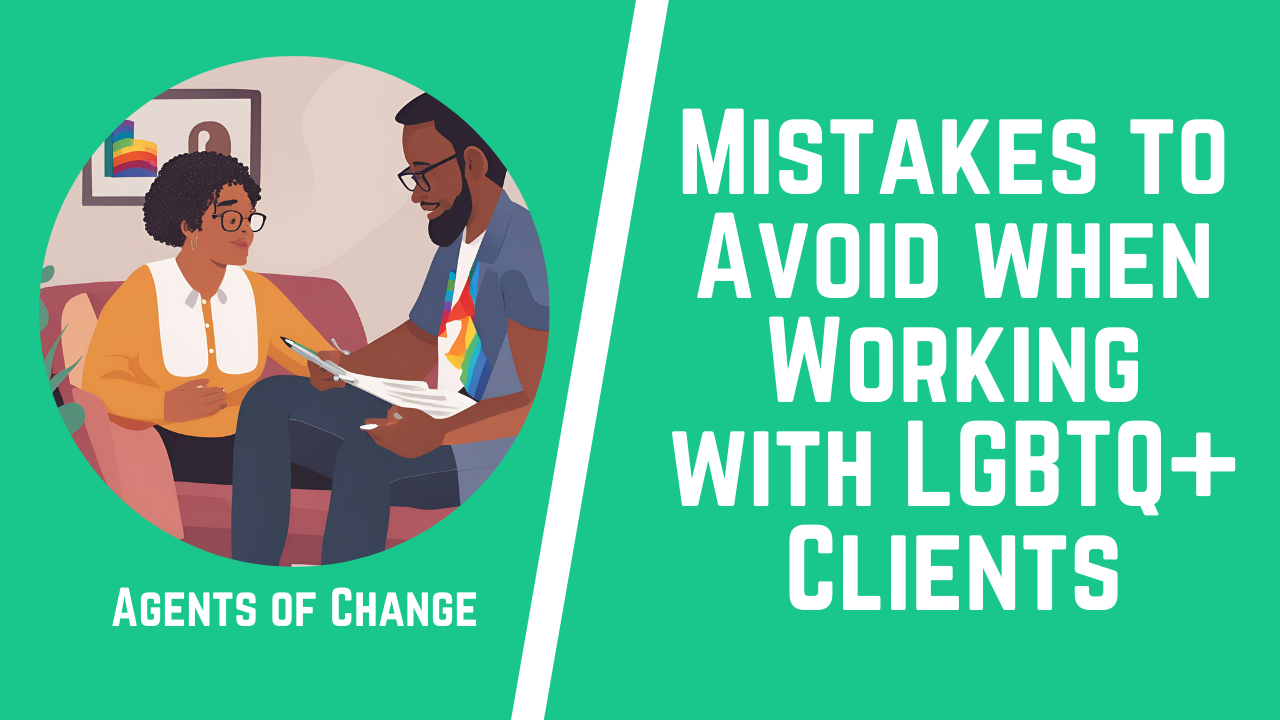
Navigating the complexities of working with LGBTQ+ clients can be challenging for Social Workers, but it’s an essential aspect of providing inclusive and effective support. The LGBTQ+ community encompasses diverse identities and experiences, each requiring a thoughtful and tailored approach. As professionals committed to fostering trust and understanding, it’s crucial to recognize and avoid common mistakes that can inadvertently cause harm or alienation.
Understanding the nuances of language, avoiding assumptions, and recognizing the intersections of various identities are fundamental in building rapport and creating a safe space for LGBTQ+ clients. Missteps in these areas can undermine the therapeutic relationship and hinder the progress of your clients. You can better support their unique needs and experiences by actively listening and continually educating yourself.
In this blog post, we’ll explore the key mistakes to avoid when working with LGBTQ+ clients and provide practical advice to help you navigate these potential pitfalls. With insights from real-world examples and expert recommendations, including resources from Agents of Change Continuing Education, you’ll be equipped to offer compassionate and effective support. Let’s dive in and learn how to enhance your practice to better serve LGBTQ+ individuals.
Did you know? Agents of Change Continuing Education offers Unlimited Access to 150+ CE courses for one low annual fee to meet your state’s requirements for Continuing Education credits and level up your career.
We’ve helped thousands of Social Workers, Counselors, and Mental Health Professionals with Continuing Education, learn more here about Agents of Change and claim your 5 free CEUs.
1) Understanding the LGBTQ+ Community

Gaining a comprehensive understanding of the LGBTQ+ community is foundational for providing effective support as a Social Worker. This community is rich with diversity, encompassing various identities and experiences. To serve LGBTQ+ clients effectively, it’s essential to appreciate this diversity and the unique challenges these individuals face.
The Spectrum of Identities
The LGBTQ+ acronym stands for Lesbian, Gay, Bisexual, Transgender, and Queer or Questioning, but it includes a wide range of other identities as well. These identities are not always static and can be fluid, evolving over time as individuals better understand themselves.
-
Lesbian: Women attracted to women.
-
Gay: Men attracted to men, but also used as a general term for same-sex attraction.
-
Bisexual: People attracted to more than one gender.
-
Transgender: People whose gender identity differs from the sex they were assigned at birth.
-
Queer: An umbrella term for non-heterosexual, non-cisgender identities.
-
Intersex: People born with physical sex characteristics that don’t fit typical definitions of male or female.
-
Asexual: People who experience little or no sexual attraction to others.
The Importance of Language
Language is crucial in building trust and showing respect. It is vital to use correct pronouns and terms. Misgendering or using incorrect pronouns can be deeply hurtful and damaging to the therapeutic relationship. Make it a practice to ask clients for their preferred pronouns and names and use them consistently.
-
Ask for Pronouns: “What pronouns do you use?”
-
Use Inclusive Language: Terms like “partner” instead of assuming “husband” or “wife.”
-
Avoid Outdated Terms: Terms like “transsexual” are outdated and can be offensive.
Unique Challenges Faced by LGBTQ+ Individuals
LGBTQ+ individuals often face unique challenges that can impact their mental health and overall wellbeing. These challenges can include discrimination, stigma, and a lack of acceptance from family, friends, or society.
-
Discrimination: Both overt and covert, in various settings such as work, healthcare, and education.
-
Mental Health Issues: Higher rates of anxiety, depression, and suicidal ideation due to societal pressures.
-
Lack of Acceptance: Family rejection can lead to homelessness, particularly for LGBTQ+ youth.
Intersectionality in the LGBTQ+ Community
Intersectionality refers to how various aspects of a person’s identity (such as race, gender, sexuality, and socioeconomic status) interact to create unique experiences and challenges. It’s important to recognize that LGBTQ+ individuals might also belong to other marginalized groups, compounding their experiences of discrimination and stigma.
Examples of Intersectional Challenges
-
LGBTQ+ People of Color: Face both racism and homophobia, which can compound their stress and mental health issues.
-
LGBTQ+ Immigrants: May deal with xenophobia alongside challenges related to their sexual or gender identity.
-
Disabled LGBTQ+ Individuals: Encounter barriers related to both disability and LGBTQ+ status.
The Role of Social Workers in Supporting LGBTQ+ Clients
As a Social Worker, your role is to provide support that acknowledges and respects the complexity of each client’s identity. This involves creating a safe and affirming environment where clients feel understood and respected.
-
Educate Yourself Continuously: Stay informed about LGBTQ+ issues and best practices.
-
Advocate for Clients: Challenge discrimination and advocate for the rights of LGBTQ+ individuals in various settings.
-
Provide Affirmative Care: Ensure your practice is welcoming and affirming to all clients, regardless of their identity.
By understanding the broad spectrum of identities within the LGBTQ+ community, appreciating the power of language, recognizing unique challenges, and considering intersectionality, Social Workers can better support their clients. This understanding forms the bedrock of effective and compassionate care, ensuring that LGBTQ+ clients receive the respect and support they deserve.
Learn more about Agents of Change Continuing Education. We’ve helped thousands of Social Workers, Counselors, and Mental Health Professionals with their Continuing Education and want you to be next!
2) Common Mistakes to Avoid
Working with LGBTQ+ clients requires sensitivity, understanding, and a commitment to continuous learning. Unfortunately, even well-intentioned Social Workers can make mistakes that may harm their clients or damage the therapeutic relationship.
This section will highlight some of the most common mistakes to avoid when working with LGBTQ+ clients, providing practical advice to help you navigate these pitfalls effectively.
Making Assumptions
One of the most significant mistakes is making assumptions about a client’s identity, experiences, or needs. Assumptions can lead to misunderstandings and a lack of personalized care.
Avoid Stereotyping
-
Don’t assume: Never assume that a client’s sexual orientation or gender identity is the most significant aspect of their life.
-
Listen actively: Ask open-ended questions and listen without preconceived notions. Each client’s journey is unique.
-
Avoid generalizations: Refrain from making broad statements about LGBTQ+ people based on stereotypes.
Example
Instead of assuming a transgender client’s main concern is their gender identity, explore all aspects of their life, including relationships, work, and mental health.
Failing to Address Intersectionality
Ignoring the intersections of various identities can result in incomplete or ineffective support. LGBTQ+ individuals often have multiple aspects to their identities that influence their experiences.
Consider All Aspects
-
Multiple Identities: Recognize that clients may identify with multiple marginalized groups, such as being LGBTQ+ and a person of color.
-
Holistic Approach: Address all aspects of a client’s identity to provide comprehensive support.
-
Ask about other identities: Use questions that explore different facets of your client’s identity, such as race, religion, and socioeconomic status.
Example
A black lesbian client might face both racial discrimination and homophobia. A holistic approach would consider how these intersecting identities impact her experiences and mental health.
Lack of Cultural Competence
Cultural competence involves understanding and respecting the diverse backgrounds and practices within the LGBTQ+ community. Lack of cultural competence can lead to misunderstandings and mistrust.
Continuous Education
-
Stay Informed: Regularly update your knowledge on LGBTQ+ issues, language, and best practices.
-
Seek Resources: Utilize resources such as Agents of Change Continuing Education, which offers over 150 courses for Social Workers to earn Continuing Education Credits.
-
Engage with the Community: Attend LGBTQ+ events and engage with community organizations to gain a deeper understanding.
Example
A Social Worker unfamiliar with the specific challenges faced by transgender individuals might inadvertently use incorrect terminology or fail to address key issues. Continuous education can help avoid these pitfalls.
Inadequate Confidentiality Measures
Confidentiality is critical in building trust with LGBTQ+ clients, who may have experienced breaches of privacy in the past. Inadequate confidentiality measures can lead to a lack of trust and a reluctance to share important information.
Best Practices
-
Clear Policies: Ensure that your confidentiality policies are clear and strictly followed.
-
Communicate Clearly: Discuss confidentiality at the beginning of your relationship with a client and regularly reinforce it.
-
Create a Safe Environment: Make it clear that your practice is a safe space where clients’ privacy is respected.
Example
A client may be hesitant to disclose their sexual orientation if they fear it might not be kept confidential. Reinforcing your confidentiality policies can help build trust.
Overlooking the Importance of Pronouns
Using the correct pronouns is a fundamental way to show respect. Overlooking or disregarding a client’s preferred pronouns can be deeply hurtful and damaging.
Correct Pronoun Usage
-
Ask Directly: Politely ask for your client’s preferred pronouns during the first meeting.
-
Use Consistently: Make a conscious effort to use the correct pronouns consistently.
-
Correct Mistakes: If you make a mistake, apologize, correct yourself, and move on without making it a big issue.
Example
If a non-binary client prefers they/them pronouns but is repeatedly misgendered, it can significantly impact their comfort and willingness to engage in therapy.
Ignoring Socioeconomic Factors
LGBTQ+ individuals can face unique socioeconomic challenges, including higher rates of homelessness and unemployment. Ignoring these factors can result in inadequate support.
Address Socioeconomic Issues
-
Comprehensive Assessment: Include questions about housing, employment, and financial stability in your assessments.
-
Provide Resources: Be prepared to offer or refer clients to resources that can help address these issues.
-
Advocate for Change: Work to advocate for policies that support LGBTQ+ individuals in your community.
Example
A transgender client experiencing job discrimination may also be struggling financially. Addressing their employment issues and connecting them with resources can provide more holistic support.
Failing to Provide Affirmative Care
Affirmative care is an approach that validates and supports LGBTQ+ identities. Failing to provide affirmative care can lead to a lack of trust and ineffective therapy.
Affirmative Practices
-
Validate Experiences: Affirm and validate your clients’ experiences and identities.
-
Educate Yourself: Stay informed about what affirmative care entails and how to implement it in your practice.
-
Create an Inclusive Environment: Make your practice welcoming by displaying LGBTQ+ inclusive symbols and literature.
Example
A bisexual client might feel invalidated if their Social Worker dismisses their identity as “just a phase.” Affirming their identity can foster a more trusting and effective therapeutic relationship.
We’ve helped thousands of Social Workers, Counselors, and Mental Health Professionals with Continuing Education, learn more here about Agents of Change and claim your 5 free CEUs!
3) Building Trust and Rapport
Establishing trust and rapport with LGBTQ+ clients is fundamental to effective and compassionate Social Work. This process requires deliberate actions, consistent behavior, and a deep understanding of the unique experiences and needs of LGBTQ+ individuals. Here, we’ll explore various strategies and practices to help build strong, trusting relationships with LGBTQ+ clients.
Creating a Safe Space
Creating a safe and welcoming environment is the first step in building trust. LGBTQ+ clients need to feel that they are in a space where they can express themselves without fear of judgment or discrimination.
Environmental Considerations
-
Inclusive Signage: Display signs or stickers indicating that your practice is LGBTQ+ friendly.
-
Neutral Decor: Avoid gendered decor and opt for neutral, inclusive themes.
-
Literature and Resources: Provide LGBTQ+ affirming literature in your waiting area and offices.
Communicative Practices
-
Non-judgmental Language: Use language that is non-judgmental and inclusive in all communications.
-
Confidentiality Assurances: Clearly communicate your confidentiality policies and reinforce them regularly.
-
Body Language: Use open and welcoming body language to show that you are approachable and empathetic.
Active Listening
Active listening is a crucial component in building trust and rapport. It involves fully engaging with your client’s words, feelings, and perspectives without interrupting or imposing your judgments.
Techniques for Active Listening
-
Reflective Responses: Paraphrase what the client has said to show that you understand and are engaged.
-
Empathetic Statements: Use empathetic statements like, “That sounds really challenging,” to validate their experiences.
-
Non-verbal Cues: Maintain eye contact, nod, and use other non-verbal cues to show that you are listening.
Example
When a client shares a difficult experience, reflect back their feelings: “It sounds like that situation made you feel very isolated. That must have been really tough.”
Being an Ally
Being an ally means actively supporting and advocating for LGBTQ+ rights, both in your professional practice and in your everyday life. This commitment can significantly enhance trust with your clients.
Demonstrating Allyship
-
Advocacy: Advocate for LGBTQ+ rights within your organization and community.
-
Education: Educate yourself and others about LGBTQ+ issues and challenges.
-
Supportive Actions: Participate in LGBTQ+ events and support LGBTQ+ organizations.
Everyday Practices
-
Challenge Discrimination: Speak out against homophobia, transphobia, and any form of discrimination.
-
Use Inclusive Language: Always use inclusive language and correct others when they don’t.
-
Model Respectful Behavior: Demonstrate respectful behavior towards all individuals, regardless of their identity.
Consistency and Reliability
Trust is built over time through consistent and reliable actions. Being dependable and predictable in your behavior helps clients feel secure and valued.
Best Practices
-
Keep Appointments: Always keep your appointments and be punctual.
-
Follow Through: Follow through on promises and commitments made to your clients.
-
Be Transparent: Be transparent about your processes and decisions, explaining the reasoning behind them.
Example
If you promise to provide a client with specific resources or information, ensure that you deliver on that promise in a timely manner.
Respecting Boundaries
Respecting your client’s boundaries is essential for building trust. This includes both physical boundaries and emotional boundaries.
Key Considerations
-
Ask for Consent: Always ask for consent before discussing sensitive topics or taking certain actions.
-
Respect Personal Space: Be mindful of personal space and physical touch.
-
Recognize Emotional Boundaries: Understand when a client may not be ready to discuss certain topics and respect their pace.
Example
If a client seems hesitant to talk about their family, respect their reluctance and avoid pressing them until they are ready to share.
Providing Affirmative Support
Affirmative support involves validating and affirming your client’s identity and experiences. This type of support helps clients feel seen and understood, which is crucial for building trust.
Affirmative Practices
-
Validate Identity: Affirm your client’s gender identity and sexual orientation.
-
Recognize Challenges: Acknowledge the unique challenges and discrimination they may face.
-
Support Self-Expression: Encourage clients to express themselves freely and authentically.
Example
When a client discusses their experience with discrimination, validate their feelings and experiences: “I can see how that experience was very painful and unjust. It’s important to recognize and address these challenges.”
Building a Collaborative Relationship
Building a collaborative relationship means working together with your client to set goals, develop plans, and address challenges. This partnership approach fosters mutual respect and trust.
Strategies for Collaboration
-
Shared Decision-Making: Involve clients in decision-making processes about their care and treatment.
-
Goal Setting: Work together to set realistic and achievable goals.
-
Feedback Loop: Regularly seek feedback from clients about their experiences and adjust your approach accordingly.
Example
During therapy sessions, ask your client what they hope to achieve and collaborate on setting specific goals. Revisit these goals regularly to track progress and make adjustments as needed.
4) Educating Yourself
In the rapidly evolving landscape of LGBTQ+ issues, continuous education is not just beneficial—it’s essential. As a Social Worker, staying informed about the latest developments, terminology, and best practices can significantly enhance your ability to provide effective support. This section outlines strategies and resources for educating yourself, helping you stay current and competent in your practice.
Continuous Learning
Lifelong learning is a critical component of professional development. The field of LGBTQ+ issues is dynamic, with new research, terminology, and best practices emerging regularly.
Strategies for Continuous Learning
-
Professional Development Courses: Enroll in courses that focus on LGBTQ+ issues and best practices.
-
Workshops and Seminars: Attend workshops and seminars to gain hands-on experience and insights from experts.
-
Reading and Research: Regularly read books, articles, and research papers on LGBTQ+ topics.
-
Online Resources: Utilize reputable online resources and platforms dedicated to LGBTQ+ education.
Example
Agents of Change Continuing Education offers over 150 courses for Social Workers to earn Continuing Education Credits. These courses cover a wide range of topics, including those relevant to working with LGBTQ+ clients, and can be an excellent resource for continuous learning.
Seeking Supervision and Peer Support
Supervision and peer support are invaluable resources for professional growth. Discussing cases and challenges with colleagues can provide new perspectives and solutions.
Benefits of Supervision
-
Expert Guidance: Gain insights and feedback from experienced supervisors.
-
Case Consultation: Discuss specific cases to identify potential issues and solutions.
-
Professional Development: Receive support in identifying areas for improvement and development.
Establishing Peer Support Networks
-
Regular Meetings: Set up regular meetings with peers to discuss challenges and share knowledge.
-
Study Groups: Form study groups to explore new research and best practices together.
-
Online Communities: Join online communities and forums dedicated to LGBTQ+ issues in social work.
Example
A Social Worker facing challenges in providing affirmative care to a non-binary client could benefit from discussing the case with a supervisor or peer group, gaining new strategies for effective support.
Engaging with the LGBTQ+ Community
Direct engagement with the LGBTQ+ community can provide profound insights and enhance your cultural competence. Building relationships within the community helps you understand their experiences and needs better.
Ways to Engage
-
Community Events: Attend LGBTQ+ community events, such as Pride parades, workshops, and cultural festivals.
-
Volunteering: Volunteer with LGBTQ+ organizations and support groups.
-
Partnerships: Form partnerships with local LGBTQ+ organizations to stay informed about community needs and resources.
Example
Volunteering at a local LGBTQ+ youth center can provide firsthand experience of the challenges and strengths within the community, enriching your understanding and empathy.
Utilizing Online and Offline Resources
A wealth of resources is available to Social Workers seeking to improve their understanding of LGBTQ+ issues. Leveraging these resources can provide comprehensive and up-to-date information.
Recommended Online Resources
-
GLAAD: Offers resources and news on LGBTQ+ media representation.
-
The Trevor Project: Provides crisis intervention and suicide prevention resources for LGBTQ+ youth.
-
PFLAG: Offers support, education, and advocacy for LGBTQ+ people and their families.
Recommended Books and Publications
-
“The Gendered Self: Further Commentary on the Transsexual Phenomenon” by Anne Vitale: A comprehensive look at transgender issues.
-
“The Queer and Transgender Resilience Workbook” by Anneliese Singh: Practical exercises for building resilience in LGBTQ+ individuals.
-
“Trans Bodies, Trans Selves: A Resource for the Transgender Community” by Laura Erickson-Schroth: An extensive resource covering a wide range of transgender topics.
Staying Current with Research and Trends
The field of LGBTQ+ studies is continuously evolving, with new research shedding light on various aspects of LGBTQ+ experiences. Staying current with these developments is crucial for providing relevant and effective support.
Strategies for Staying Informed
-
Academic Journals: Subscribe to academic journals that publish research on LGBTQ+ issues, such as the Journal of LGBT Youth or LGBT Health.
-
Conferences and Symposiums: Attend academic conferences and symposiums to learn about the latest research and network with experts.
-
Newsletters and Alerts: Sign up for newsletters and alerts from LGBTQ+ organizations and research institutes.
Example
Attending an annual conference on LGBTQ+ health can provide updates on the latest research findings, innovative practices, and emerging trends in the field.
Practicing Self-Reflection and Bias Awareness
Educating yourself also involves self-reflection and awareness of your own biases. Understanding your perspectives and potential biases is essential for providing unbiased and respectful care.
Self-Reflection Practices
-
Bias Training: Participate in training sessions focused on identifying and addressing personal biases.
-
Journaling: Keep a journal to reflect on your interactions with LGBTQ+ clients and identify areas for improvement.
-
Feedback: Seek feedback from clients and colleagues to gain insights into your practice and areas for growth.
Example
Regularly reflecting on your interactions with clients and seeking feedback can help you become more aware of any unconscious biases and take steps to address them.
5) FAQs – Working with LGBTQ+ Clients
Q: How can I stay updated on the latest developments in LGBTQ+ issues and best practices for Social Workers?
A: Staying updated on LGBTQ+ issues requires a proactive approach to continuous learning. Enroll in professional development courses and attend workshops and seminars focused on LGBTQ+ topics. Utilize resources like Agents of Change Continuing Education, which offers over 150 courses for Social Workers to earn Continuing Education Credits.
Additionally, subscribe to academic journals, follow reputable online resources such as GLAAD and The Trevor Project, and participate in community events and conferences to stay informed about the latest research and trends.
Q: What should I do if I accidentally use the wrong pronouns or terminology when working with an LGBTQ+ client?
A: If you accidentally use the wrong pronouns or terminology, it’s important to handle the situation with grace and respect. Promptly apologize and correct yourself without making a big deal out of it.
For example, you could say, “I’m sorry, I meant to say [correct pronoun/term].” This shows that you respect your client’s identity and are committed to using the correct language. Continually educate yourself about inclusive language and seek feedback from your clients to improve your practice.
Q: How can I create a more inclusive and welcoming environment for LGBTQ+ clients in my practice?
A: Creating an inclusive and welcoming environment for LGBTQ+ clients involves several key actions:
-
Inclusive Signage and Literature: Display signs, stickers, and literature that indicate your practice is LGBTQ+ friendly.
-
Neutral Decor: Use neutral, inclusive decor to ensure all clients feel welcome.
-
Ask for Pronouns: Always ask clients for their preferred pronouns and names and use them consistently.
-
Non-judgmental Language: Use inclusive, non-judgmental language in all communications.
-
Confidentiality Policies: Clearly communicate and strictly adhere to confidentiality policies to build trust.
-
Education and Training: Regularly participate in training and education to stay informed about LGBTQ+ issues and best practices.
6) Conclusion
Navigating the complexities of working with LGBTQ+ clients demands a thoughtful, informed, and empathetic approach. By understanding the broad spectrum of identities within the LGBTQ+ community, recognizing the importance of inclusive language, and avoiding common mistakes such as making assumptions and neglecting intersectionality, Social Workers can build a foundation of trust and respect. Continuous education, active listening, and a commitment to allyship are essential components of providing effective support.
Creating a safe and welcoming environment, respecting client boundaries, and offering affirmative care are crucial steps in fostering strong, trusting relationships with LGBTQ+ clients. The process of building rapport and trust is ongoing and requires consistent effort and dedication. By engaging with the community, seeking supervision and peer support, and utilizing resources such as Agents of Change Continuing Education, Social Workers, Counselors, and Mental Health Professionals can enhance their skills and stay informed about the latest developments and best practices in LGBTQ+ care.
Ultimately, the goal is to provide compassionate, inclusive, and effective support that recognizes and affirms the unique experiences of each LGBTQ+ client. By committing to continuous learning and self-reflection, Social Workers can ensure that their practice is competent and genuinely supportive of the diverse and dynamic needs of the LGBTQ+ community.
Through these efforts, Social Workers can significantly impact the lives of their LGBTQ+ clients, promoting their well-being and advocating for their rights within the broader societal context.
Learn more about Agents of Change Continuing Education. We’ve helped thousands of Social Workers, Counselors, and Mental Health Professionals with their Continuing Education and want you to be next!
————————————————————————————————————————————————
► Learn more about the Agents of Change Continuing Education here: https://agentsofchangetraining.com
About the Instructor, Meagan Mitchell: Meagan is a Licensed Clinical Social Worker and has been providing Continuing Education for Social Workers, Counselors, and Mental Health Professionals for more than 8 years. From all of this experience helping others pass their exams, she created Agents of Change Continuing Education to help Social Workers stay up-to-date on the latest trends, research, and techniques.
#socialwork #socialworker #socialwork #socialworklicense #socialworklicensing #continuinged #continuingeducation #ce #socialworkce #freecesocialwork #lmsw #lcsw
Disclaimer: This content has been made available for informational and educational purposes only. This content is not intended to be a substitute for professional medical or clinical advice, diagnosis, or treatment