Holding Space Through Change: Supporting the Transition to a Long-Term Care Facility

Holding Space Through Change: Supporting the Transition to a Long-Term Care Facility

Stepping into the process of relocating to a long-term care facility can feel overwhelming for clients and their families alike. Emotions tend to surface quickly, ranging from fear and grief to uncertainty about what lies ahead. For mental health professionals, this moment presents a unique opportunity to provide stability and guidance during a time that can feel deeply unsettling. Offering the right kind of support early on can make a meaningful difference in how individuals experience this transition.

When considering the realities of this transition, it becomes clear that this role goes far beyond offering surface-level reassurance. Clients are often facing a shift in identity, autonomy, and daily life, which can trigger complex emotional responses. At the same time, families may be navigating their own mix of guilt, relief, and concern. Balancing these perspectives requires sensitivity, strong communication skills, and a willingness to sit with discomfort rather than rushing to resolve it.

Approaching this transition with intention allows mental health professionals to create a space where clients feel heard, respected, and supported. By focusing on emotional validation, collaborative decision-making, and ongoing adjustment, professionals can help individuals move through this change with greater confidence. This article explores practical strategies, ethical considerations, and supportive techniques that can strengthen your approach to care during one of life’s most challenging transitions.

Did you know? Agents of Change Continuing Education offers Unlimited Access to 200+ ASWB and NBCC-approved online CE courses and 20+ Live Events per year for one low annual fee to meet your state’s requirements for Continuing Education credits and level up your career.

We’ve helped hundreds of thousands of Social Workers, Counselors, and Mental Health Professionals with Continuing Education, learn more here about Agents of Change and claim your 7.5 free CEUs.

1) Understanding the Emotional Landscape of Transition

a therapist talking with a family and their elderly parent to prepare them for a transition to a care facility

Why This Transition Feels So Significant

Moving into a long-term care facility is rarely viewed as a simple logistical step. For many individuals, it represents a major life turning point. The shift often involves leaving behind a familiar environment, long-standing routines, and a sense of independence that has been built over decades. Even when the move is necessary for safety or medical support, it can still feel like something important is being taken away.

Clients may struggle to reconcile the practical need for care with the emotional weight of the decision. While others might see the move as helpful or even essential, the individual experiencing it may feel a loss of control. That tension can shape how they respond to the transition, sometimes leading to resistance, withdrawal, or heightened emotional distress.

Common Emotional Responses

As a mental health professional, you will likely encounter a wide range of emotional reactions during this process. These responses can shift quickly and may not follow a predictable pattern.

Some of the most common include:

  • Grief: Clients often mourn the loss of their home, independence, and previous way of life
  • Anxiety: Concerns about unfamiliar surroundings, new routines, and the quality of care can create ongoing worry
  • Anger: Frustration may be directed toward family members, healthcare providers, or the situation itself
  • Depression: Feelings of sadness, hopelessness, or lack of motivation may emerge, especially if the move feels forced
  • Relief: In some cases, individuals feel safer knowing support is available, even if they struggle to express it openly

It’s important to recognize that these emotions can coexist. A client might feel relieved about increased safety while also grieving the loss of their home. Holding space for these mixed feelings is a key part of effective support.

The Role of Identity and Independence

One of the most profound aspects of this transition involves changes in identity. Many individuals define themselves through their independence, their home, or their role within their family. When those elements shift, it can leave them questioning who they are in this new context.

For example, someone who has always been the primary decision-maker in their household may suddenly feel sidelined. Others may struggle with the idea of needing help for daily tasks. These changes can lead to feelings of vulnerability or even shame if not addressed with care.

Supporting clients through this aspect of the transition involves helping them reconnect with parts of their identity that remain intact. Encouraging autonomy where possible and reinforcing their sense of self can make a meaningful difference.

Family Dynamics and Emotional Spillover

The emotional landscape is not limited to the individual making the move. Families often experience their own complex reactions, which can influence the transition in significant ways.

You may notice:

  • Guilt from family members who feel they should be providing care themselves
  • Disagreements among relatives about whether the move is necessary
  • Anxiety about the quality of care or the client’s adjustment
  • Relief paired with hesitation to express it openly

These dynamics can create additional stress for the client, especially if communication becomes strained. Mental health professionals play an important role in helping families navigate these emotions while maintaining focus on the client’s well-being.

Fear of the Unknown

Uncertainty is one of the biggest drivers of distress during this transition. Clients often have limited information about what daily life in a long-term care facility will actually look like. Questions about routines, relationships, and personal freedom can remain unanswered, fueling anxiety.

Some common concerns include:

  • “Will I have any control over my schedule?”
  • “Will I be able to make friends?”
  • “What if I don’t like it there?”

Addressing these fears involves providing clear, realistic information while also acknowledging that some uncertainty is unavoidable. Helping clients tolerate that uncertainty, rather than eliminating it entirely, is often a more sustainable approach.

Adjustment as an Ongoing Process

It’s important to remember that emotional adjustment does not happen all at once. The transition continues well beyond the physical move. Clients may initially appear to settle in, only to experience delayed emotional reactions later on.

This process can include:

  1. Initial resistance or distress before the move
  2. Temporary relief or numbness immediately after
  3. Emerging emotions as the reality of the change sets in
  4. Gradual adaptation and acceptance over time

Understanding this progression allows mental health professionals to provide consistent support rather than assuming the work is complete once the move has occurred. Patience and ongoing engagement are essential in helping clients navigate each phase of adjustment.

Learn more about Agents of Change Continuing Education. We’ve helped hundreds of thousands of Social Workers, Counselors, and Mental Health Professionals with their online continuing education and CEUs, and we want you to be next!

2) Building Trust Before the Move Happens

Establishing trust before a client transitions into a long-term care facility can shape the entire experience. When individuals feel understood and respected early on, they’re more likely to engage openly, express concerns, and participate in decision-making. Without that foundation, even the best interventions can fall flat.

the group going on a tour together of the facility, make it look warm and welcoming

When focusing on this transition, trust-building is not a one-time task. It’s an ongoing process that begins with the very first interaction and continues through each stage of the transition.


Establishing Rapport From the Start

First impressions matter more than we sometimes admit. Clients are often entering this process with heightened sensitivity, so the way you show up initially can set the tone.

To build rapport effectively:

  • Use open-ended questions that invite reflection rather than yes or no answers
  • Mirror the client’s language and emotional tone to show understanding
  • Avoid rushing into solutions too quickly
  • Show genuine curiosity about their life, not just their current situation

Simple moments of connection, like remembering a detail about their home or daily routine, can help clients feel seen. And when they feel seen, trust starts to grow.


Creating a Sense of Emotional Safety

Clients need to know they can speak honestly without fear of judgment or dismissal. Emotional safety doesn’t happen automatically. It’s built through consistent, intentional behavior.

You can foster this by:

  • Validating emotions even when they seem contradictory
  • Allowing space for silence instead of filling every pause
  • Acknowledging uncertainty rather than offering false reassurance
  • Being transparent about your role and limitations

Sometimes clients test this safety by expressing frustration or resistance. Instead of shutting that down, leaning into it can actually strengthen the relationship.


Listening Beyond the Surface

What clients say and what they mean are not always the same. A statement like “I don’t want to go” may reflect deeper fears about loss, control, or isolation.

To listen more effectively:

  • Pay attention to emotional cues, not just words
  • Reflect underlying feelings back to the client
  • Ask gentle follow-up questions to explore deeper concerns
  • Avoid interrupting or redirecting the conversation too quickly

When clients feel truly heard, they’re more likely to open up about what’s really driving their resistance or anxiety.


Clarifying Expectations Early

Uncertainty can erode trust quickly. If clients are unsure about what to expect from you or the process, they may become guarded or disengaged.

Be clear about:

  • Your role in the transition process
  • What support you can realistically provide
  • How often you will meet or check in
  • What the client can expect in terms of confidentiality

Clarity reduces anxiety. It also helps clients feel more grounded as they navigate unfamiliar territory.


Collaborating Instead of Directing

Even when a move feels inevitable, clients still need to feel involved in the process. A collaborative approach reinforces their sense of autonomy.

Ways to encourage collaboration include:

  • Asking for their input on decisions, even small ones
  • Presenting options rather than directives
  • Checking in regularly about their preferences
  • Respecting their pace of processing

When clients feel like participants instead of passive recipients, resistance often softens.


Recognizing and Addressing Mistrust

Some clients come into this process with existing mistrust toward healthcare systems or authority figures. Ignoring that reality can create barriers.

Signs of mistrust may include:

  • Reluctance to share personal information
  • Questioning motives or recommendations
  • Withdrawing from conversations
  • Expressing skepticism about the move

To address this:

  • Acknowledge their concerns directly without becoming defensive
  • Provide clear, honest information
  • Follow through on commitments consistently
  • Give them time to build confidence in the relationship

Trust doesn’t develop overnight, especially when past experiences have been negative. Patience plays a big role here.


Involving Family Without Undermining the Client

Families can either support or complicate trust-building. Their involvement needs to be handled carefully to avoid making the client feel sidelined.

Keep in mind:

  • Always center the client’s voice in discussions
  • Set boundaries if family members dominate conversations
  • Encourage respectful communication among all parties
  • Clarify roles so expectations are understood

Balancing these dynamics can be challenging, but when done well, it strengthens the overall support system.


Consistency Builds Confidence

Trust grows through repeated, reliable interactions. Clients notice when you show up as promised, follow through on what you say, and remain steady even when emotions run high.

Focus on:

  • Being punctual and prepared for meetings
  • Maintaining a calm and grounded presence
  • Following up on previous conversations
  • Keeping communication clear and predictable

Over time, these small, consistent actions build a sense of stability that clients can rely on.


Building trust before the move happens is one of the most impactful steps in a successful transition. It lays the groundwork for honest communication, reduces resistance, and helps clients feel less alone in a process that can otherwise feel overwhelming.

Agents of Change has helped hundreds of thousands of Social Workers, Counselors, and Mental Health Professionals with Continuing Education, learn more here about Agents of Change and claim your 7.5 free CEUs!

3) Practical Strategies for Supporting the Transition

When it comes to supporting this transition, theory only goes so far. Clients and families need tangible, actionable support that helps them move from uncertainty to a sense of stability. While every situation is different, there are several core strategies that consistently make a meaningful impact.

Below are five practical approaches you can integrate into your work to support clients through this complex transition.


1. Normalize Emotional Reactions Early and Often

One of the most powerful things you can do is help clients understand that what they’re feeling is completely valid. Many individuals worry that their reactions are “too much” or inappropriate, which can lead to withdrawal or reluctance to open up.

You can support normalization by:

  • Reflecting emotions without judgment
  • Reassuring clients that mixed feelings are common
  • Sharing that others in similar situations often experience the same reactions
  • Avoiding language that minimizes or redirects their emotions

When clients feel understood, they’re more likely to engage in the process instead of resisting it.


2. Break the Process Into Manageable Steps

A long-term care transition can feel overwhelming when viewed as one large, life-altering event. Breaking it down into smaller, more manageable pieces helps reduce anxiety and creates a sense of progress.

Consider helping clients:

  • Outline a simple timeline of what to expect
  • Identify key milestones before, during, and after the move
  • Focus on the immediate next steps instead of the entire transition
  • Revisit and adjust the plan as needed

This structured approach can make the unknown feel more predictable and less intimidating.


3. Encourage Personalization of the New Environment

A new living space can feel unfamiliar and impersonal at first. Helping clients bring elements of their previous home into the new setting can ease that discomfort.

Encourage clients to:

  • Bring meaningful personal items like photos or keepsakes
  • Arrange their space in a way that feels familiar
  • Incorporate favorite colors, textures, or scents
  • Maintain small routines that connect them to their past environment

These efforts help preserve identity and create a sense of continuity during a time of change.


4. Promote Autonomy Through Choice

Even when options are limited, offering choices can restore a sense of control. Losing independence is one of the most difficult aspects of this transition, so maintaining autonomy wherever possible is essential.

You can support this by:

  • Offering choices in daily routines, such as meal times or activities
  • Involving clients in decisions about their care plan
  • Asking for their preferences regularly
  • Respecting their input, even when it differs from others’ opinions

Small decisions can have a big impact on how empowered a client feels.


5. Facilitate Gradual Exposure to the New Setting

Whenever possible, easing into the new environment can reduce anxiety. A sudden move can feel jarring, while gradual exposure allows clients to adjust at their own pace.

Options may include:

  • Scheduling short visits to the facility before the move
  • Meeting staff members in advance
  • Attending activities or meals ahead of time
  • Exploring the layout to reduce unfamiliarity

Familiarity builds comfort. The more the environment feels known, the less intimidating it becomes.


Implementing these strategies can significantly improve how clients experience the transition process. While challenges will still arise, a thoughtful and structured approach allows mental health professionals to provide steady, meaningful support every step of the way.

4) Supporting Adjustment After the Move

The transition doesn’t end once the boxes are unpacked and the room is set up. In many ways, that’s when the real emotional work begins. Clients are now living in a new environment, surrounded by unfamiliar routines, people, and expectations. For mental health professionals, this phase requires patience, consistency, and a deep understanding that adjustment is rarely linear.


The First Few Weeks: A Critical Adjustment Window

The initial period after the move can feel disorienting. Even clients who seemed prepared beforehand may experience a surge of unexpected emotions once the change becomes real.

During this time, clients may:

  • Withdraw from social interaction
  • Express regret or a desire to return home
  • Experience increased anxiety or confusion
  • Struggle with sleep or appetite changes

These reactions are common and should not be interpreted as failure or resistance. Instead, they signal that the client is processing a major life shift.

Providing frequent check-ins during this period can help clients feel supported and less alone as they begin to navigate their new environment.


Rebuilding Routine and Structure

Familiar routines often provide a sense of comfort and predictability. When those routines are disrupted, clients can feel ungrounded.

You can support this process by:

  • Helping clients establish a daily schedule that feels manageable
  • Identifying parts of their previous routine that can be maintained
  • Encouraging consistency in sleep, meals, and activities
  • Collaborating with facility staff to align care with the client’s preferences

Even small routines, like having coffee at a certain time or engaging in a favorite activity, can create a sense of stability.


Encouraging Social Connection

Loneliness can become a significant challenge after the move. Clients may feel isolated, especially if they are hesitant to engage with new people.

To support connection:

  • Encourage participation in group activities at a comfortable pace
  • Explore shared interests with other residents
  • Support visits or communication with family and friends
  • Validate any social anxiety that arises during this process

Building relationships takes time, and pushing too quickly can backfire. Gentle encouragement often works better than pressure.


Processing Ongoing Emotions

Adjustment is not a one-time emotional event. Feelings may resurface unexpectedly, even weeks or months after the move.

Create space for clients to:

  • Reflect on what they miss about their previous home
  • Express frustration or disappointment without judgment
  • Explore what aspects of the new environment feel difficult
  • Identify moments of comfort or progress

By continuing to process these emotions, clients can gradually make sense of their experience rather than suppressing it.


Strengthening Sense of Identity

One of the ongoing challenges after the move is maintaining a sense of self. Clients may feel like their identity has been reduced to their role within the facility.

You can help reinforce identity by:

  • Encouraging involvement in activities that reflect personal interests
  • Highlighting strengths, skills, and life experiences
  • Supporting opportunities for independence where possible
  • Using language that emphasizes personhood rather than limitations

Helping clients reconnect with who they are beyond their current circumstances can significantly improve emotional well-being.


Collaborating With Facility Staff

Adjustment is a team effort. Mental health professionals, caregivers, and facility staff all play a role in supporting the client.

Effective collaboration includes:

  • Sharing insights about the client’s emotional needs and preferences
  • Communicating concerns early before they escalate
  • Advocating for individualized care when necessary
  • Encouraging staff to engage with the client in meaningful ways

When everyone is aligned, the client receives more consistent and supportive care.


Recognizing Progress, Even When It’s Subtle

Adjustment doesn’t always look dramatic. Sometimes progress is quiet and easy to overlook.

It might show up as:

  • Sitting in a common area for a few extra minutes
  • Participating in a new activity once
  • Expressing slightly less resistance
  • Beginning to form a connection with another resident

Acknowledging these small steps can help clients feel encouraged and motivated to keep moving forward.


Supporting adjustment after the move requires ongoing attention, flexibility, and compassion. While challenges are inevitable, consistent emotional support can help clients gradually find a sense of belonging and stability in their new environment.

5) FAQs – Supporting the Transition to a Long-Term Care Facility as a Mental Health Professional
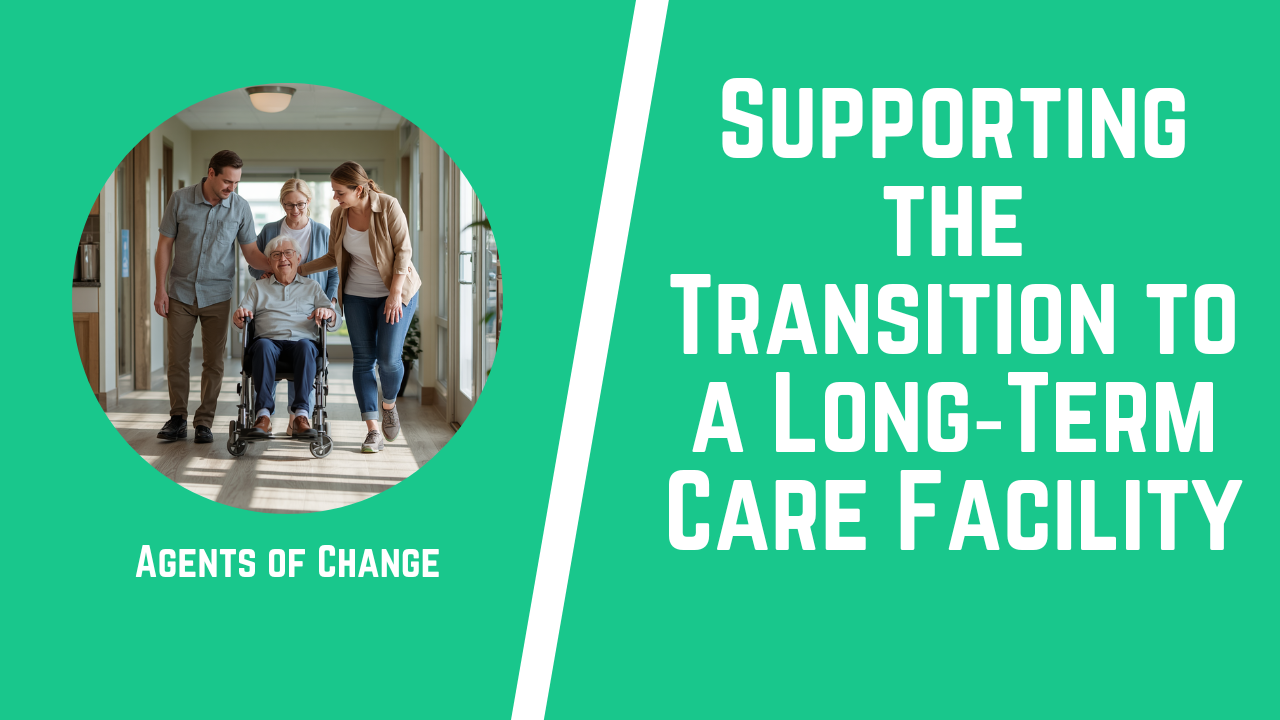
Q: How can mental health professionals reduce a client’s anxiety before transitioning to a long-term care facility?

A: Reducing anxiety starts with preparation and emotional validation. Clients often fear the unknown, so providing clear, realistic information about what to expect can help ease uncertainty. It’s also important to create space for them to express concerns openly without feeling dismissed.

Techniques such as breaking the transition into smaller steps, arranging pre-move visits, and involving the client in decision-making can increase their sense of control. Over time, consistent reassurance paired with honest communication helps build trust and lowers anxiety levels.

Q: What should I do if a client is emotionally struggling after the move but refuses support?

A: This situation can be challenging, but it’s not uncommon. Start by respecting the client’s autonomy while continuing to offer gentle, consistent outreach. Sometimes refusal is rooted in fear, grief, or a desire to maintain control.

Rather than pushing for engagement, focus on building rapport through brief, low-pressure interactions. Observing behavior, collaborating with staff, and identifying small entry points for connection can gradually open the door. Patience is key here, as trust may take time to develop in the new environment.

Q: How can I support families who feel guilty about transitioning a loved one into long-term care?

A: Family members often carry significant emotional weight during this process, especially guilt and self-doubt. Supporting them involves normalizing these feelings while helping them reframe the decision as one rooted in safety and care.

Encourage open conversations about their concerns and remind them that choosing additional support does not mean they are abandoning their loved one. Providing education about the benefits of long-term care and offering strategies for staying involved can help families feel more confident and less overwhelmed.

6) Conclusion

Supporting someone through the transition to a long-term care facility requires more than clinical knowledge. It calls for patience, empathy, and a willingness to walk alongside clients during one of the most emotionally complex periods of their lives. From the initial conversations to the adjustment after the move, mental health professionals play a vital role in helping individuals feel heard, respected, and supported. Each interaction offers an opportunity to reduce fear, build trust, and create a sense of stability in the midst of change.

While the process can be challenging, it is also deeply meaningful work. By focusing on practical strategies, clear communication, and ongoing emotional support, professionals can help clients move through this transition with greater confidence. Families also benefit from guidance and reassurance, especially when they are navigating their own mix of emotions. When everyone involved feels supported, the transition becomes less overwhelming and more manageable over time.

Continuing to strengthen your skills in this area can make a lasting difference in the quality of care you provide. Resources like Agents of Change Continuing Education offer accessible and affordable opportunities to expand your knowledge while earning required CEUs. With a commitment to growth and a client-centered approach, mental health professionals can make this transition feel less like an ending and more like the beginning of a new chapter filled with support and dignity.

————————————————————————————————————————————————

► Learn more about the Agents of Change Continuing Education here: https://agentsofchangetraining.com

About the Instructor, Dr. Meagan Mitchell: Meagan is a Licensed Clinical Social Worker and has been providing Continuing Education for Social Workers, Counselors, and Mental Health Professionals for more than 10 years. From all of this experience helping others, she created Agents of Change Continuing Education to help Social Workers, Counselors, and Mental Health Professionals stay up-to-date on the latest trends, research, and techniques.

#socialwork #socialworker #socialwork #socialworklicense #socialworklicensing #continuinged #continuingeducation #ce #socialworkce #freecesocialwork #lmsw #lcsw #counselor #NBCC #ASWB #ACE

Disclaimer: This content has been made available for informational and educational purposes only. This content is not intended to be a substitute for professional medical or clinical advice, diagnosis, or treatment

Note: Certain images used in this post were generated with the help of artificial intelligence.

Share:

Discover more from Agents of Change

Subscribe now to keep reading and get access to the full archive.

Continue reading