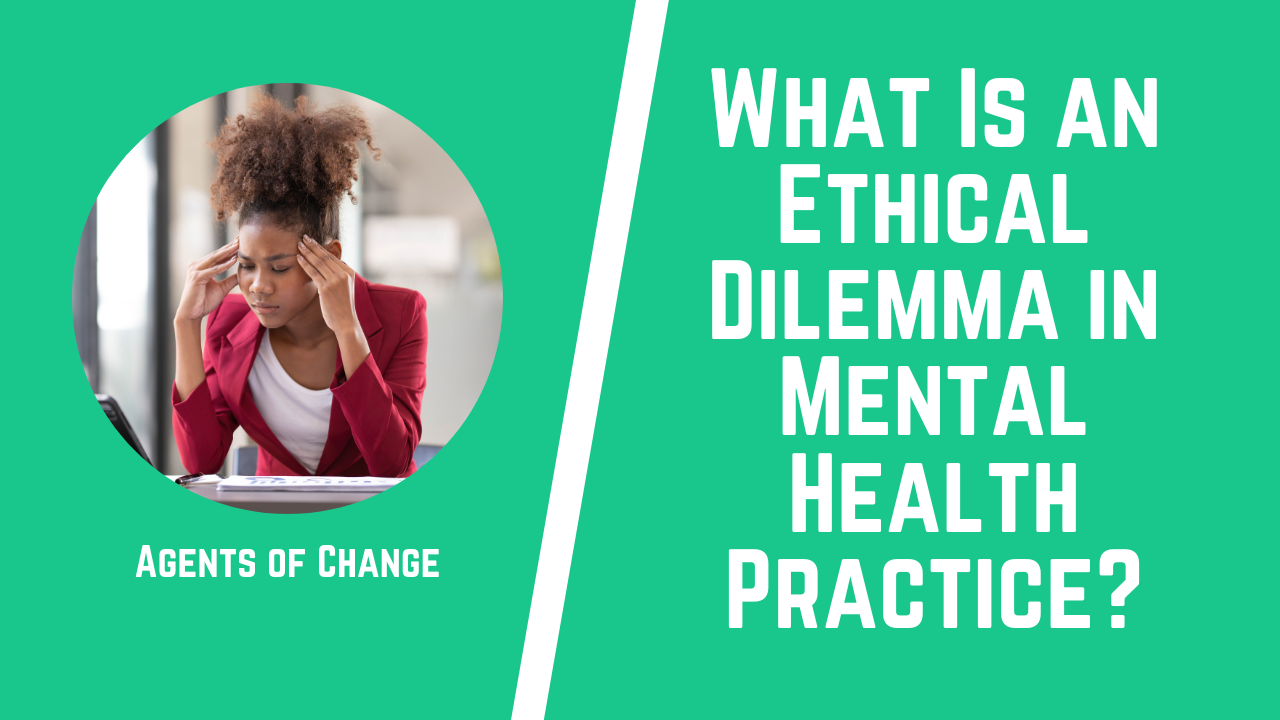
What Is an Ethical Dilemma in Mental Health Practice? Definitions, Examples, and a Framework for Resolution
What Is an Ethical Dilemma in Mental Health Practice? Definitions, Examples, and a Framework for Resolution
Ethical dilemmas in mental health practice rarely feel simple in the moment. They usually show up as a knot in your stomach, a pause before you respond, or that quiet thought of, “I need to be really careful here.” A client shares something concerning but begs you not to tell anyone. A parent asks for details from a teen’s session. A court, school, or partner wants information that may or may not be appropriate to release. Suddenly, you’re balancing confidentiality, safety, autonomy, legal duties, professional standards, and the therapeutic relationship all at once.

That’s why understanding ethical dilemmas and having a framework for resolution matters so much for Therapists, Social Workers, Counselors, and Mental Health Professionals. An ethical dilemma is more than a hard day at work or an uncomfortable clinical decision. It’s a situation where two or more legitimate ethical responsibilities are in tension, and every possible response carries some kind of consequence. In other words, there may not be a perfect answer, but there still needs to be a thoughtful, defensible process.

This post breaks down what ethical dilemmas are, how they differ from clear ethical violations, and what they can look like in real clinical practice. We’ll walk through common examples, clinical vignettes, and a practical framework for resolution that can help you slow down, consult wisely, document clearly, and make decisions with more confidence. Because in mental health work, ethics isn’t just about knowing the rules. It’s about staying grounded when the rules, the relationship, and real life all collide.

Did you know? Agents of Change Continuing Education offers Unlimited Access to 200+ ASWB and NBCC-approved online CE courses and 20+ Live Events per year for one low annual fee to meet your state’s requirements for Continuing Education credits and level up your career.

We’ve helped hundreds of thousands of Social Workers, Counselors, and Mental Health Professionals with Continuing Education, learn more here about Agents of Change and claim your 7.5 free CEUs.

1) What Is an Ethical Dilemma in Mental Health Practice?

An ethical dilemma in mental health practice happens when a clinician faces two or more competing professional responsibilities, and there isn’t a clean, obvious answer. It’s not just an uncomfortable situation or a hard clinical call. It’s a moment when values like confidentiality, safety, autonomy, informed consent, cultural humility, and professional duty can pull in different directions.

a diverse therapist stressing over an ethical dilemma in a private practice environment

For example, a therapist may want to protect a client’s privacy while also worrying about risk. A social worker may want to honor a client’s self-determination while recognizing that the client’s choice could lead to harm. A counselor may want to support a family’s cultural values while still following mandated reporting laws. That’s where the dilemma lives.

Ethical Dilemma vs. Ethical Violation

An ethical dilemma is not the same as an ethical violation. A violation usually involves behavior that is clearly outside professional standards, such as falsifying records, exploiting a client, ignoring informed consent, or knowingly breaking confidentiality without justification.

An ethical dilemma is more complex. The clinician may be trying to do the right thing, but the “right thing” isn’t immediately clear. There may be several possible actions, each with benefits and risks.

Why These Situations Feel So Complicated

Ethical dilemmas can feel stressful because they often involve real consequences. A decision may affect client trust, safety, treatment progress, family relationships, legal responsibilities, or professional accountability.

They can also stir up the clinician’s own anxiety. Sitting with uncertainty, it’s easy to want a quick answer. But ethical practice usually requires slowing down, gathering information, consulting when needed, and documenting the reasoning process.

Common Signs You’re Facing an Ethical Dilemma

You may be facing an ethical dilemma when you find yourself asking:

  • “Am I protecting confidentiality or avoiding a necessary action?”
  • “Does this meet the threshold for reporting or disclosure?”
  • “Whose needs am I prioritizing right now?”
  • “What does the law require, and what does clinical judgment suggest?”
  • “Could any option cause harm?”
  • “Do I need consultation before deciding?”

The Heart of Ethical Decision-Making

At its core, ethical decision-making is about thoughtful, accountable clinical practice. Clinicians don’t need to be perfect, but they do need a defensible process. That means identifying the dilemma, reviewing relevant standards, considering potential harm, consulting appropriately, making a clear decision, and documenting why that decision was made.

Learn more about Agents of Change Continuing Education. We’ve helped hundreds of thousands of Social Workers, Counselors, and Mental Health Professionals with their online continuing education and CEUs, and we want you to be next!

2) Common Sources of Ethical Dilemmas in Mental Health Practice

Ethical dilemmas can come from almost anywhere in mental health practice, but certain themes show up again and again. Usually, the difficulty isn’t that the clinician doesn’t care about ethics. It’s that two important responsibilities are competing at the same time. Below are five of the most common sources of ethical dilemmas, along with examples of what they can look like in real clinical work.

1. Confidentiality and Its Limits

Confidentiality is one of the foundations of therapy. Clients need to trust that their private information won’t be shared casually or unnecessarily. Still, confidentiality has limits, especially when safety, abuse, neglect, court involvement, supervision, or legal requirements enter the picture.

Example: A 16-year-old client tells their therapist they’ve been using substances at parties and riding home with intoxicated friends. They beg the therapist not to tell their parents. The clinician now has to balance the teen’s privacy, the therapeutic relationship, safety concerns, informed consent, and any applicable minor consent laws.

Another common example is when an adult client discloses thoughts of harming someone but is vague about intent. The clinician must decide whether the situation meets the threshold for breaching confidentiality, warning others, or taking protective action.

2. Client Autonomy vs. Client Safety

Mental health professionals are trained to respect client self-determination. Adults generally have the right to make their own choices, even choices a clinician worries about. At the same time, clinicians also have a duty to respond to serious risk.

Example: A client with severe depression refuses a higher level of care, even though they’re increasingly isolated, missing work, and reporting passive suicidal ideation. They deny plan or intent, but the clinician is worried. The dilemma is whether to respect the client’s refusal, intensify outpatient support, involve emergency services, or seek consultation about whether further intervention is needed.

This type of dilemma also appears in cases involving substance use, eating disorders, domestic violence, medical neglect, or unsafe living conditions. The client may not want outside involvement, yet the clinician may see escalating risk.

3. Boundaries and Dual Relationships

Boundaries protect the therapeutic relationship. They clarify roles, reduce confusion, and help prevent exploitation. Still, real life can complicate boundaries, especially in small towns, schools, faith communities, professional networks, and online spaces.

Example: A therapist in a small community realizes that a new client is also the parent of their child’s classmate. Avoiding all contact may be impossible, but continuing therapy without addressing the overlap could create discomfort or confusion. The clinician must consider whether the dual relationship can be managed ethically or whether a referral is needed.

Digital boundaries create another layer. A former client may send a friend request on social media, comment on a clinician’s public post, or message through an informal platform. The clinician must decide how to respond in a way that protects privacy and maintains professional boundaries.

4. Mandated Reporting and Family Trust

Mandated reporting can create some of the most emotionally difficult ethical dilemmas in practice. Clinicians may care deeply about preserving trust with a client or family while also having a legal duty to report suspected abuse, neglect, exploitation, or danger to a vulnerable person.

Example: A child client describes being hit with an object and having bruises. The caregiver explains that this is culturally accepted discipline and feels judged by the therapist’s concern. The clinician must balance cultural humility, child safety, legal reporting duties, and the therapeutic relationship with the family.

Another example might involve an older adult client who appears to be financially exploited by a relative but does not want the clinician to report it. The clinician must assess capacity, vulnerability, legal obligations, and potential harm.

5. Documentation, Records, and Information Sharing

Documentation may seem administrative, but it’s full of ethical decisions. Clinicians have to record enough information to support quality care, continuity, billing, and legal requirements, while avoiding unnecessary details that could harm the client if records are released.

Example: A client asks to see their full record during a contentious divorce. The clinician wants to respect the client’s right to access records, but the notes include sensitive information about the client’s child, partner, and safety concerns. The dilemma involves privacy, legal rights, clinical judgment, third-party information, and possible harm if the records are used in court.

Information sharing with schools, attorneys, physicians, parents, partners, or agencies can create similar challenges. Even with a release of information, clinicians still need to ask: What is the purpose of sharing? What is the minimum necessary information? Could this disclosure harm the client? Is the release valid and specific enough?

Why These Sources Matter

These common sources of ethical dilemmas remind us that ethical practice isn’t just about memorizing rules. It’s about applying professional judgment in complicated human situations. When confidentiality, safety, autonomy, boundaries, reporting duties, and documentation responsibilities collide, clinicians need a clear process for slowing down, consulting, making a defensible decision, and documenting the reasoning behind it.

Agents of Change has helped hundreds of thousands of Social Workers, Counselors, and Mental Health Professionals with Continuing Education, learn more here about Agents of Change and claim your 7.5 free CEUs!

3) A Practical Framework for Resolving Ethical Dilemmas

Ethical dilemmas can feel overwhelming because they often don’t come with one obvious answer. When confidentiality, safety, autonomy, cultural values, legal requirements, and professional responsibilities are all in the room together, it’s easy to feel stuck. That’s exactly why clinicians need a practical decision-making framework.

a picture of a diverse therapist confidently working with others

A framework won’t make every decision easy. It won’t remove discomfort, and it won’t guarantee that everyone agrees with the outcome. What it does provide is a structured way to slow down, think clearly, seek consultation, and make a decision that is thoughtful, ethical, and defensible.

Step 1: Pause and Name the Dilemma

The first step is to slow the situation down enough to name what’s actually happening. Ethical dilemmas often feel urgent, but unless there is an immediate safety emergency, taking a moment to identify the core issue can prevent rushed decision-making.

Try putting the dilemma into one sentence:

“I’m trying to balance _____ with _____ while also considering _____.”

For example:

“I’m trying to balance my client’s confidentiality with my duty to protect safety while also considering legal reporting requirements.”

Or:

“I’m trying to respect the client’s autonomy while also recognizing that their current choices may increase clinical risk.”

Naming the dilemma helps separate the ethical issue from the emotional pressure around it.

Ask yourself:

  • What makes this situation ethically complicated?
  • Which values or responsibilities are in conflict?
  • Is this a true ethical dilemma, or is it a clear legal or policy requirement?
  • Is there an immediate risk that requires urgent action?
  • What am I feeling, and how might that be affecting my judgment?

That last question matters. Clinicians are human. Fear, protectiveness, frustration, uncertainty, and even the desire to avoid conflict can all shape decision-making. Noticing those reactions helps keep them from running the show.

Step 2: Gather the Relevant Facts

Before deciding what to do, make sure you have enough information. Ethical decisions can go sideways when clinicians act on assumptions, incomplete details, or emotional impressions.

This doesn’t mean you need every possible detail. It means you need the facts that are relevant to the decision.

Consider:

  • Who is involved?
  • What exactly was disclosed or observed?
  • When did it happen?
  • Is there current risk?
  • Has this happened before?
  • What does the client understand about the situation?
  • Are there signed releases, consent forms, court orders, or custody documents?
  • What laws, agency policies, or professional standards may apply?
  • What is known, and what is still unclear?

For example, if a client says, “Sometimes I don’t want to be here anymore,” the next step isn’t to panic or ignore it. The next step is assessment. Do they mean passive thoughts? Suicidal ideation? Intent? Plan? Access to means? History of attempts? Protective factors? The ethical response depends on the clinical facts.

Step 3: Identify the Stakeholders

Ethical dilemmas usually affect more than one person. Stakeholders are the people or systems who may be impacted by the decision.

Depending on the situation, stakeholders may include:

  • The client
  • Parents or caregivers
  • Children or vulnerable adults
  • Partners or family members
  • Potential victims
  • The clinician
  • Supervisors or agency leadership
  • Schools, courts, hospitals, or other providers
  • The broader community

Identifying stakeholders helps the clinician think beyond the most immediate pressure. For example, in a minor confidentiality dilemma, the teen client is a stakeholder, but so is the caregiver, especially if caregiver support is needed for safety. In a mandated reporting situation, the child’s safety matters, and so does the family’s experience of the reporting process.

This step does not mean everyone gets equal access to information. It simply means the clinician is thinking carefully about who may be affected.

Step 4: Review Ethical Codes, Laws, Policies, and Informed Consent

Once the dilemma is clear and the facts are gathered, review the standards that apply. This is where the clinician moves from “I feel like” to “I am grounding my decision in.”

Depending on your role and setting, you may need to review:

  • Professional codes of ethics
  • State licensing laws
  • Mandated reporting laws
  • Confidentiality and privacy laws
  • Agency policies
  • Informed consent documents
  • Telehealth policies
  • Custody or court documents
  • Supervision requirements
  • Standards of care related to risk assessment

This step is important because clinical instinct alone isn’t enough. A clinician may feel strongly that a client’s privacy should be protected, but the law may require a report. Another clinician may feel anxious about a client’s risk level, but the client may not meet the threshold for involuntary intervention.

Also, check what the client was told at the beginning of services. Informed consent should explain limits of confidentiality, emergency procedures, communication expectations, record policies, fees, and caregiver involvement when relevant.

If the current situation was already addressed in informed consent, that gives the clinician and client a shared reference point.

Step 5: Consult Before You Decide

Consultation is one of the most important parts of ethical decision-making. It helps clinicians avoid isolation, blind spots, and fear-based decisions. It also strengthens the defensibility of the final choice.

Helpful consultation may come from:

  • A clinical supervisor
  • An ethics consultant
  • A trusted senior colleague
  • Agency leadership
  • A risk management professional
  • An attorney familiar with mental health law
  • A cultural consultant
  • A licensing board ethics resource

When consulting, protect client privacy as much as possible. Share only the information needed to get meaningful guidance.

A strong consultation question is specific:

“I’m working with a 14-year-old client who disclosed self-injury without suicidal intent. The behavior is increasing, and the client is begging me not to tell their parent. I’m trying to determine what level of caregiver involvement is ethically and clinically appropriate based on our informed consent and state law.”

That kind of question gives the consultant enough context to help. It’s much more useful than, “What should I do with a teen who self-harms?”

Consultation doesn’t mean handing off responsibility. The treating clinician still has to make the decision. But a well-chosen consultation can help clarify the options.

Step 6: Consider the Possible Options

Before choosing a course of action, list the realistic options. Ethical dilemmas often feel like there are only two choices, but once you slow down, more possibilities may appear.

For each option, ask:

  • What ethical principle supports this option?
  • What are the possible benefits?
  • What are the possible harms?
  • What could happen if I do this?
  • What could happen if I don’t do this?
  • Does this option follow the law and professional standards?
  • Would I feel comfortable explaining this choice in supervision?
  • Would this decision make sense if reviewed later?
  • Does this option protect the client’s dignity as much as possible?

For example, if a teen discloses risky behavior, the options may include more than “tell the parent everything” or “tell the parent nothing.” Other options could include:

  • Creating a safety plan with the teen
  • Encouraging the teen to disclose to a caregiver
  • Sharing limited information with a caregiver
  • Increasing session frequency
  • Consulting with a supervisor before making a disclosure
  • Reviewing the informed consent agreement with the teen
  • Involving another safe adult with the teen’s participation

This step can reduce all-or-nothing thinking.

Step 7: Choose the Least Harmful, Most Defensible Action

After reviewing the facts, standards, consultation, and options, choose the action that best balances ethical responsibilities. In many cases, the goal is not to find a perfect answer. The goal is to choose the least harmful, most clinically appropriate, and most ethically defensible path.

A defensible decision usually has these features:

  • It is grounded in facts, not assumptions.
  • It considers relevant laws and ethical standards.
  • It includes consultation when needed.
  • It takes client safety seriously.
  • It protects confidentiality as much as possible.
  • It respects client dignity and autonomy.
  • It is clinically appropriate.
  • It can be clearly documented.
  • It includes a follow-up plan.

This is where clinicians sometimes need to tolerate discomfort. A client may be upset. A caregiver may disagree. A system may pressure the clinician for more information than is appropriate. The ethical choice may still be the right one, even when it feels uncomfortable.

Step 8: Communicate the Decision Clearly and Compassionately

How a clinician communicates an ethical decision matters. Even when the decision is difficult, the conversation can still be respectful and relational.

Use plain language. Avoid hiding behind formal policy language if it makes the conversation feel cold or confusing.

Instead of:

“I am required to breach confidentiality due to mandated reporting obligations.”

Try:

“Because you shared information that makes me concerned a child may be unsafe, I’m required to make a report. I know this may feel scary or upsetting, and I want to talk with you about what happens next.”

When possible, involve the client in the process. For example, if caregiver notification is needed, a clinician might say:

“I do need to involve your caregiver because of the safety concern. Let’s talk together about what needs to be shared and what details can stay private.”

That approach preserves as much autonomy and trust as possible.

Step 9: Document the Decision-Making Process

Documentation should show what happened, what the clinician considered, and why a particular decision was made. This is especially important in ethical dilemmas because the final action may not tell the whole story.

Document:

  • The relevant clinical facts
  • The ethical dilemma or competing responsibilities
  • Risk assessment details, if applicable
  • Laws, policies, consent agreements, or ethical standards reviewed
  • Consultation obtained
  • Options considered
  • Decision made
  • Rationale for the decision
  • What was communicated to the client
  • Client response
  • Follow-up plan

For example:

“Client disclosed increased non-suicidal self-injury and denied suicidal intent, plan, or access to lethal means. Clinician reviewed minor confidentiality agreement and consulted with supervisor regarding caregiver involvement. Determined that limited caregiver notification was clinically indicated due to escalation in frequency and need for home safety support. Discussed decision with client, validated distress, and collaborated on what information would be shared. Safety plan updated.”

That note is clear, grounded, and defensible.

Step 10: Follow Up and Repair When Needed

Ethical decisions can affect the therapeutic relationship. Even when the clinician makes the right decision, the client may feel hurt, angry, scared, or betrayed. Follow-up gives space to process that impact.

The next session might include questions like:

  • “How are you feeling about what happened last session?”
  • “What was it like for you when I explained my decision?”
  • “Did anything about that process affect your trust in me?”
  • “What do you need from me today so we can keep working together?”
  • “Is there anything I could have explained more clearly?”

Repair does not mean apologizing for an ethically necessary action. It means acknowledging the relational impact and staying connected.

A clinician might say:

“I still believe I needed to take that step for safety, and I also understand that it felt really upsetting. I want us to talk about both of those things.”

That kind of honesty can strengthen the therapeutic relationship over time.

A Simple Ethical Decision-Making Checklist

When you’re unsure what to do, use this quick checklist:

  1. What is the ethical dilemma?
  2. What are the competing duties or values?
  3. What facts do I know?
  4. What facts do I still need?
  5. Who are the stakeholders?
  6. Is there an immediate safety concern?
  7. What laws, policies, ethical codes, or consent agreements apply?
  8. Who should I consult?
  9. What are the possible actions?
  10. What are the benefits and risks of each option?
  11. What action is least harmful and most defensible?
  12. How will I explain the decision to the client?
  13. How will I document the process?
  14. What follow-up or repair may be needed?

Final Thought on Using a Framework

A practical framework helps clinicians move from panic to process. It reminds us that ethical practice isn’t about having instant certainty. It’s about slowing down, thinking clearly, seeking support, protecting clients, respecting dignity, and documenting the path taken.

In real clinical work, there may not be a perfect answer. But there can be a thoughtful one.

4) 5 Clinical Vignettes on Ethical Dilemmas

Ethical dilemmas are easier to understand when we move from theory into the therapy room. On paper, values like confidentiality, autonomy, safety, informed consent, and professional boundaries can seem fairly straightforward. In practice, though, they often overlap in messy, emotionally charged ways.

The following clinical vignettes are fictional, but they reflect common ethical tensions that Therapists, Social Workers, Counselors, and Mental Health Professionals may encounter. Each example includes the situation, the ethical dilemma, and possible clinical considerations.

Vignette 1: The Teen Who Says, “Please Don’t Tell My Mom”

A 15-year-old client, Jordan, has been seeing a therapist for anxiety, school stress, and conflict at home. During a session, Jordan shares that they’ve been vaping THC at parties and recently rode home with an older friend who had been drinking. Jordan says, “I know it was stupid, but please don’t tell my mom. She’ll freak out, take away my phone, and never let me come back here.”

The therapist feels the tension immediately. Jordan has been hard to engage in therapy, and this is the first session where they’ve been fully honest. Breaking confidentiality too quickly could damage trust. At the same time, the therapist is concerned about substance use, impaired driving, peer safety, and the possibility that Jordan may continue putting themselves in dangerous situations.

The Ethical Dilemma

The therapist must balance Jordan’s confidentiality and therapeutic trust with the need to address safety. The issue may not automatically meet the threshold for breaching confidentiality in every jurisdiction or setting, but ignoring it would be clinically irresponsible.

Clinical Considerations

The therapist would need to review the informed consent agreement, minor confidentiality rules, agency policy, and state law. They should also assess risk more fully. Is this a one-time event or a pattern? Is Jordan using substances regularly? Are they getting into cars with impaired drivers often? Is there any suicidal ideation, coercion, or exploitation involved?

Rather than jumping immediately to “tell the parent everything” or “keep it all secret,” the therapist may consider a middle path. For example, they might collaborate with Jordan to involve a caregiver around transportation safety while protecting unnecessary details.

A possible clinical response could be:

“I’m really glad you told me. I’m not here to punish you, and I don’t want to share more than needs to be shared. I am concerned about the safety piece, especially riding with someone who had been drinking. Let’s talk about what support you need so this doesn’t happen again, and whether we need to bring your mom into part of that conversation.”

The ethical goal is to preserve as much trust and privacy as possible while taking real safety concerns seriously.

Vignette 2: The Adult Client Who Refuses a Higher Level of Care

Maya, a 34-year-old client, has a history of depression and panic attacks. Over the past month, her symptoms have worsened. She’s missing work, isolating from friends, sleeping only a few hours a night, and describing life as “pointless.” In session, she says, “I’m not going to kill myself, but I don’t really care if I wake up tomorrow.”

The clinician completes a suicide risk assessment. Maya denies intent, denies a plan, and says she doesn’t have access to firearms. She has a close sister nearby, but doesn’t want the clinician to contact her. The clinician recommends an intensive outpatient program or a psychiatric evaluation. Maya refuses both, saying, “I can’t miss work. If I lose my job, I’ll actually have nothing.”

The Ethical Dilemma

The clinician must balance Maya’s autonomy with concern for her safety. Maya is an adult with the right to refuse treatment recommendations, but the clinician also has a duty to assess risk, respond appropriately, and avoid abandoning her in a worsening clinical state.

Clinical Considerations

The clinician should avoid making a decision based only on fear. Anxiety about Maya’s depression is not the same as evidence that she meets criteria for involuntary hospitalization. At the same time, passive suicidal ideation, functional decline, sleep disruption, and hopelessness deserve a serious response.

The clinician may consult with a supervisor or risk management resource, document the risk assessment, and consider a stepped plan. Options could include increasing session frequency, creating a detailed safety plan, discussing means safety, asking Maya for permission to involve her sister, providing crisis resources, coordinating with a prescriber, and scheduling a sooner follow-up.

A possible response could be:

“I hear that a higher level of care feels impossible right now. I’m still concerned about how much worse things have gotten. Since you’re not willing to do IOP today, we need a stronger plan for safety and support. Let’s talk about what you would agree to, what would signal that things are getting more dangerous, and who we can involve if that happens.”

The ethical issue is not simply “hospitalize or don’t hospitalize.” It’s about matching the intervention to the level of risk while respecting the client’s rights and maintaining clinical responsibility.

Vignette 3: The Couple’s Secret That Changes the Therapy

Luis and Elena are in couples therapy after years of conflict and emotional distance. They’ve been working on communication, trust, and parenting stress. One afternoon, Luis emails the therapist privately and says he needs an individual check-in. During the call, he discloses that he had an affair six months ago. Elena does not know. Luis says he wants to stay in the marriage but is terrified that disclosure will end it.

He asks the therapist, “Can you please help me figure this out without bringing it into our sessions yet? I just need time.”

The therapist feels caught. Luis is clearly distressed. At the same time, continuing couples therapy while holding a major secret could compromise the integrity of the work and create an unfair therapeutic imbalance.

The Ethical Dilemma

The therapist must balance confidentiality, the couple’s treatment agreement, informed consent, fairness to both partners, and the clinical integrity of couples therapy. The situation becomes even more complicated if the therapist did not clearly explain a “secrets policy” at the beginning of treatment.

Clinical Considerations

The therapist should review the informed consent documents and any written couple therapy policy. Some clinicians use a “no secrets” policy, which states that information shared individually may need to be brought into conjoint work if it significantly affects treatment. Others handle individual disclosures differently. Whatever the policy, it should be clear and discussed early.

If there is a clear no-secrets policy, the therapist might tell Luis that they cannot continue couples work indefinitely while holding information that directly affects the treatment goals. The therapist can support Luis in planning a responsible disclosure or discuss whether couples therapy needs to pause.

A possible response could be:

“I can hear how scared you are. I also need to be clear that I can’t continue helping both of you work on trust while holding a major secret that directly affects that trust. Let’s talk about how this can be brought into the work safely, or whether we need to pause couples sessions while you decide what you’re going to do.”

If there was no clear policy, the therapist may need consultation before deciding how to proceed. The ethical repair may include revisiting informed consent and clarifying how individual disclosures will be handled going forward.

Vignette 4: The Boundary Question in a Small Community

A therapist named Priya works in a small rural town. A new client, Hannah, begins therapy for grief after the death of her father. After two sessions, Priya realizes that Hannah’s child is on the same soccer team as Priya’s daughter. They’re likely to see each other at games every weekend for the next two months.

Priya didn’t know about the overlap during intake. Hannah seems comfortable in therapy and says, “It’s fine. I won’t talk to you at games.” Still, Priya feels uneasy. She worries about confidentiality, awkward public encounters, and whether the dual relationship could affect treatment.

The Ethical Dilemma

Priya must balance access to care, especially in a small community, with the need to maintain appropriate boundaries and protect confidentiality. Referring Hannah out may disrupt needed grief support. Continuing therapy without discussing the overlap could create confusion or risk.

Clinical Considerations

Not every dual relationship is automatically unethical. In small communities, some overlap may be unavoidable. The key questions are whether the dual relationship could impair professional judgment, create risk of exploitation, compromise confidentiality, or harm the client.

Priya should discuss the overlap directly with Hannah. Together, they can create a public contact plan. For example, Priya might explain that she won’t initiate contact in public to protect Hannah’s privacy, but Hannah can choose whether to acknowledge her. Priya should also document the discussion and continue monitoring whether the overlap affects therapy.

A possible response could be:

“I want to talk about something practical. Since our children are on the same soccer team, we may see each other outside of therapy. To protect your privacy, I won’t approach you or acknowledge you first in public. You’re welcome to say hello if you want to, but there’s no expectation. We can also keep checking in about whether this overlap feels uncomfortable.”

If the relationship becomes too intertwined, referral may become necessary. But the ethical decision should be thoughtful, not automatic.

Vignette 5: The Record Request During a Custody Conflict

A client, Danielle, has been in individual therapy for anxiety and trauma related to a difficult divorce. During treatment, Danielle has discussed parenting stress, conflict with her ex-partner, her child’s emotional reactions, and fears about the custody process. One day, Danielle emails the therapist asking for “all of my therapy records” because her attorney thinks they may help her case.

The therapist wants to respect Danielle’s right to access her records. At the same time, the therapist is concerned. The notes include sensitive references to the child, the ex-partner, safety concerns that were explored but not confirmed, and Danielle’s emotional statements during moments of distress. The therapist worries the records could be misused in court or harm Danielle, the child, or the therapeutic relationship.

The Ethical Dilemma

The therapist must balance the client’s right to access records with privacy, third-party information, clinical judgment, legal requirements, and potential harm from disclosure. The therapist also needs to avoid slipping into a forensic role if they were hired as a treating clinician.

Clinical Considerations

The therapist should review applicable law, professional standards, agency policy, and the original informed consent. They may need to consult with a supervisor, attorney, or risk management professional before releasing records. The therapist should also clarify what Danielle is requesting and why.

In some situations, a treatment summary may meet the client’s needs better than raw progress notes, if legally and ethically appropriate. The clinician should be careful not to provide custody opinions unless qualified, authorized, and formally serving in that role.

A possible response could be:

“You have the right to request your records, and I want to walk through that process carefully with you. Therapy notes can include sensitive information that may not always have the effect people expect in legal settings. Let’s talk about what your attorney is looking for, whether a treatment summary would be appropriate, and what information may or may not be included.”

The ethical task is not to block the client from accessing information. It is to handle the request thoughtfully, lawfully, and with awareness of potential consequences.

How These Vignettes Help Clinicians Think Ethically

These five examples show why ethical dilemmas in mental health practice are rarely solved by memorizing one rule. Each situation requires clinical judgment, consultation, documentation, and attention to the relationship.

Across the vignettes, a few themes stand out:

  • Confidentiality matters, but it has limits.
  • Client autonomy matters, but safety still has to be assessed.
  • Boundaries matter, even when the relationship feels warm or informal.
  • Informed consent matters most when things get complicated.
  • Documentation matters because it tells the story of the clinician’s reasoning.
  • Consultation matters because ethical dilemmas should not be managed in isolation.

The goal is not to make every decision feel easy. The goal is to create a thoughtful process so clinicians can act with clarity, humility, and professional integrity.

5) FAQs – Ethical Dilemmas in Mental Health Practice

Q: What is an ethical dilemma in mental health practice?

A: An ethical dilemma in mental health practice happens when two or more professional responsibilities, values, laws, or clinical duties are in tension. For example, a clinician may need to protect client confidentiality while also responding to serious safety concerns.

These situations usually require careful assessment, consultation, documentation, and a clear decision-making process.

Q: How should clinicians resolve ethical dilemmas when there is no perfect answer?

A: When there is no perfect answer, clinicians should focus on using a thoughtful and defensible process rather than rushing toward certainty. This includes identifying the dilemma, reviewing relevant laws and ethical codes, considering possible harms, consulting when needed, and documenting the rationale for the final decision.

The goal is to choose the least harmful, most clinically appropriate option based on the information available.

Q: Why is consultation important when facing an ethical dilemma?

A: Consultation helps clinicians step out of isolation and examine the dilemma from multiple perspectives. It can clarify legal, ethical, cultural, clinical, or agency-related issues that may be easy to miss in the moment. It also strengthens documentation by showing that the clinician sought guidance before making a difficult decision.

6) Conclusion

Ethical dilemmas in mental health practice are rarely simple, and that’s exactly why they require more than instinct. When confidentiality, safety, autonomy, legal duties, cultural humility, and clinical judgment all collide, clinicians need a process that helps them slow down and think clearly. The goal isn’t to find a perfect answer every time, but to make a thoughtful, well-supported decision that protects clients and honors professional responsibilities.

A strong ethical decision-making framework gives clinicians something steady to return to when the situation feels complicated. By naming the dilemma, gathering relevant facts, identifying stakeholders, reviewing laws and ethical codes, consulting appropriately, considering options, documenting carefully, and following up with the client, mental health professionals can respond with greater confidence. For clinicians who want to keep strengthening this skill set, Agents of Change Continuing Education offers ethics CE courses for Social Workers, Counselors, Therapists, and Mental Health Professionals.

Ultimately, ethical dilemmas remind us that mental health work is both human and professional. Clinicians bring compassion, training, judgment, and humility into rooms where the answers aren’t always obvious. With the right framework, consultation, and commitment to ongoing learning, Therapists, Social Workers, Counselors, and Mental Health Professionals can navigate difficult moments with clarity, care, and integrity.

————————————————————————————————————————————————

► Learn more about the Agents of Change Continuing Education here: https://agentsofchangetraining.com

About the Lead Instructor, Dr. Meagan Mitchell: Meagan is a Licensed Clinical Social Worker and has been providing Continuing Education for Social Workers, Counselors, and Mental Health Professionals for more than 10 years. From all of this experience helping others, she created Agents of Change Continuing Education to help Social Workers, Counselors, and Mental Health Professionals stay up-to-date on the latest trends, research, and techniques.

#socialwork #socialworker #socialwork #socialworklicense #socialworklicensing #continuinged #continuingeducation #ce #socialworkce #freecesocialwork #lmsw #lcsw #counselor #NBCC #ASWB #ACE

Disclaimer: This content has been made available for informational and educational purposes only. This content is not intended to be a substitute for professional medical or clinical advice, diagnosis, or treatment

Note: Certain images used in this post were generated with the help of artificial intelligence.

Share:

Discover more from Agents of Change

Subscribe now to keep reading and get access to the full archive.

Continue reading

Limited Availability: Only 72 Spots Left — Unlock Unlimited CE + Live Events for $75.