Supervision CEs for Social Workers and Mental Health Professionals: Training Topics Every Clinical Supervisor Should Know
Supervision CEs for Social Workers and Mental Health Professionals: Training Topics Every Clinical Supervisor Should Know
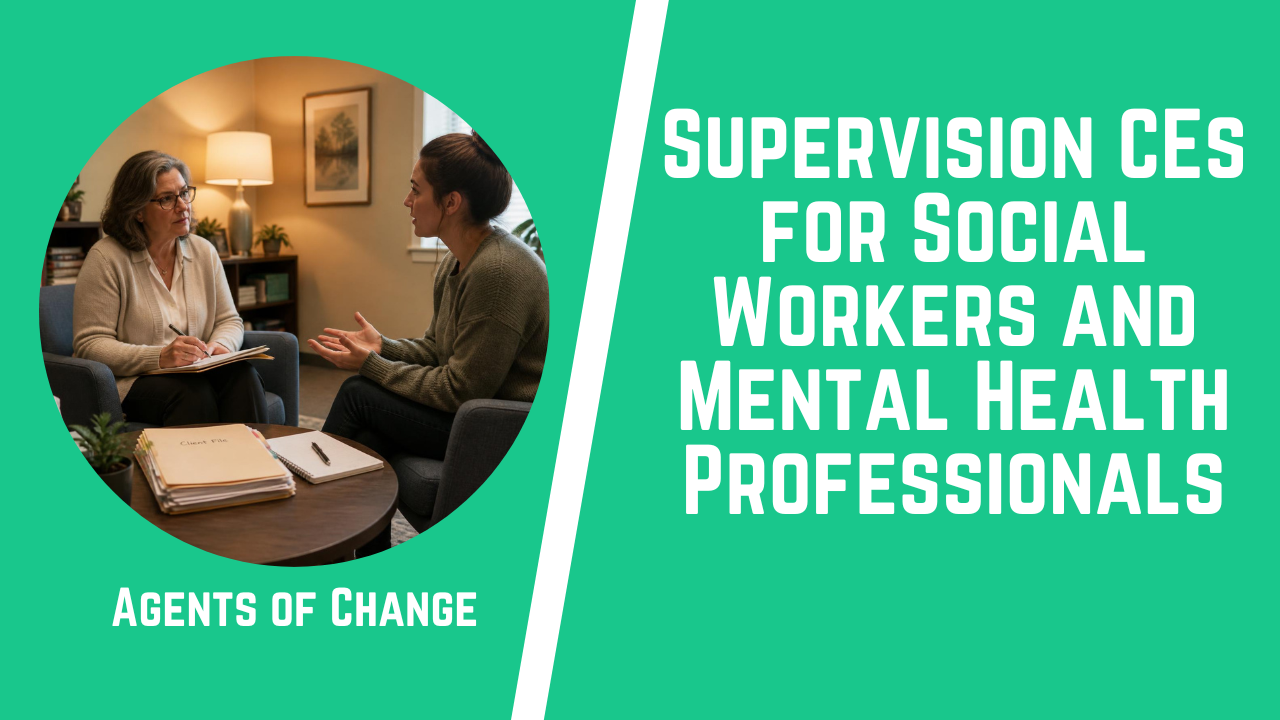
Clinical supervision is one of the most influential responsibilities a social worker, therapist, counselor, or mental health professional can take on. A supervisor helps shape how another clinician thinks, responds to ethical concerns, documents care, manages risk, and grows in confidence. While clinical experience provides an important foundation, effective supervision requires its own set of skills, expectations, and professional knowledge.

Supervisors must balance several roles at once. They support learning, evaluate competence, provide feedback, address performance concerns, and protect client well-being. They also need to navigate power dynamics, cultural differences, professional boundaries, burnout, and difficult conversations without turning supervision into therapy or simple case review. That’s a lot to manage, especially without formal clinical supervision training.

Supervision CEs can help supervisors approach these responsibilities with greater clarity and confidence. By strengthening knowledge in ethics, documentation, feedback, gatekeeping, and clinical skill development, supervisors can create a learning environment that supports both professional growth and safer client care.

Did you know? Agents of Change Continuing Education offers Unlimited Access to 200+ ASWB and NBCC-approved online CE courses and 20+ Live Events per year for one low annual fee to meet your state’s requirements for Continuing Education credits and level up your career.

We’ve helped hundreds of thousands of Social Workers, Counselors, and Mental Health Professionals with Continuing Education, learn more here about Agents of Change and claim your 7.5 free CEUs.

1) Why Supervision Training Deserves Its Own Continuing Education

Being an experienced clinician doesn’t automatically prepare someone to become an effective supervisor. Clinical practice and clinical supervision overlap, but they require different skills. A therapist may be excellent at supporting clients while still feeling unsure about how to evaluate another clinician, provide corrective feedback, document supervision, or address concerns about professional competence.

a social work supervision sesssion between two diverse clinicans

Supervision Involves More Than Case Consultation

Supervision can easily become a weekly review of difficult cases, but strong supervision goes much further. Supervisors are expected to help clinicians strengthen assessment, treatment planning, ethical reasoning, documentation, boundaries, and clinical judgment. They may also need to monitor licensure hours, respond to safety concerns, and determine whether a supervisee is ready for greater independence.

These responsibilities require intentional training, not just years of experience.

Supervisors Hold Significant Power and Responsibility

The supervision relationship includes an unavoidable power difference. Supervisors may influence evaluations, employment, recommendations, licensure approval, case assignments, and career advancement. Because of this authority, supervisors must understand how power can affect honesty, trust, feedback, and the supervisee’s willingness to admit mistakes.

Supervision training helps professionals create a space where questions and uncertainty are welcomed while accountability remains clear.

Ethical and Legal Concerns Can Be Complex

Supervisors may face questions involving confidentiality, informed consent, dual relationships, documentation, client safety, impaired practice, and professional boundaries. They also need to know when to offer guidance, when to give a direct instruction, and when to intervene more actively in a case.

Without clear preparation, supervisors may respond inconsistently or avoid difficult decisions. Continuing education provides practical frameworks for addressing these situations thoughtfully and documenting the reasoning behind supervisory decisions.

Supervision Directly Affects Client Care

Although supervisors may not meet every client, their guidance can influence assessment, treatment, risk management, and ethical decision-making. When supervision is vague, rushed, or overly focused on administrative tasks, important clinical concerns can be missed.

Supervision CEUs for social workers and mental health professionals help supervisors become stronger teachers, evaluators, mentors, and gatekeepers. Dedicated training supports the growth of the supervisee while helping protect clients, organizations, and the profession as a whole.

Learn more about Agents of Change Continuing Education. We’ve helped hundreds of thousands of Social Workers, Counselors, and Mental Health Professionals with their online continuing education and CEUs, and we want you to be next!

2) Training Topics Every Clinical Supervisor Should Know

A comprehensive supervision course can’t cover every possible scenario. It can, however, give supervisors a reliable framework for approaching the situations they’re most likely to encounter.

a social work supervision sesssion between two diverse clinicans

The following topics should be central to supervision training for social workers, therapists, counselors, and other mental health professionals.

1. Ethics in Clinical Supervision

Ethics should be treated as a foundation of supervision, not as an occasional topic pulled out when something goes wrong.

Supervision creates ethical responsibilities involving client welfare, competence, confidentiality, informed consent, dual relationships, evaluation, documentation, and professional boundaries. Supervisors must consider their own actions while monitoring how supervisees understand and apply ethical standards.

Ethics training should address questions such as:

  • What information should clients receive about supervision?
  • How should confidential client information be discussed?
  • What are the limits of confidentiality within the supervision relationship?
  • When must a supervisor intervene in a supervisee’s case?
  • How should concerns about competence be documented?
  • What happens when a supervisor has multiple roles with a supervisee?
  • How should disagreements about ethical decisions be resolved?

Ethical supervision requires consistency. If expectations change depending on the supervisor’s mood, the supervisee’s personality, or the severity of a mistake, trust erodes quickly.

Supervisors also need a decision-making process. When a concern arises, they should be able to identify the ethical issue, review applicable professional standards, consider relevant laws and regulations, consult when appropriate, evaluate possible consequences, and document the reasoning behind the final decision.

2. Supervision Documentation

Documentation is one of the most overlooked areas of clinical supervision.

Some supervisors keep detailed records. Others sign a log and rely on memory. That may feel manageable until questions arise about what was discussed, what guidance was given, whether a concern had been identified, or how the supervisee responded.

Supervision documentation should generally capture:

  • The date and length of the meeting
  • The format of supervision
  • Major cases or clinical issues reviewed
  • Ethical or safety concerns discussed
  • Guidance, recommendations, or directives provided
  • Skill development goals
  • Follow-up responsibilities
  • Concerns about performance or competence
  • Progress toward licensure or employment requirements

The record doesn’t need to become a word-for-word transcript. In fact, excessive detail can create its own problems. It should be clear enough to demonstrate what occurred, especially when the supervisor gave a specific directive or identified a serious concern.

Documentation training should also distinguish among several different records. A licensing-hour log, an agency supervision note, an employee performance evaluation, and a formal corrective action plan don’t serve the same purpose.

Supervisors should understand where records are stored, who can access them, how long they’re retained, and what happens if the supervisory relationship ends unexpectedly.

3. Power Dynamics and Psychological Safety

Supervision is never a completely equal relationship.

Even when the supervisor is warm, collaborative, and approachable, they may control evaluations, recommendations, employment opportunities, licensure verification, access to cases, and advancement within the organization. Pretending that power doesn’t exist won’t make the relationship safer. It usually makes the power harder to discuss.

Supervision training should help supervisors examine how authority affects disclosure. A supervisee may avoid admitting uncertainty because they fear being viewed as incompetent. They may agree with the supervisor even when they have concerns. They may conceal a mistake, overstate their confidence, or say what they believe the supervisor wants to hear.

Creating psychological safety doesn’t mean eliminating accountability. It means establishing an environment where supervisees can disclose problems early enough for the supervisor to help.

Supervisors can support that environment by:

  1. Explaining how evaluation will occur.
  2. Normalizing appropriate uncertainty.
  3. Responding to questions without ridicule or impatience.
  4. Separating teachable mistakes from reckless conduct.
  5. Inviting disagreement and alternative perspectives.
  6. Following through consistently when concerns arise.
  7. Acknowledging the authority attached to the supervisory role.

A supervisor might say, “I know I’m evaluating your work, and that can make it harder to talk openly about mistakes. I’d rather hear about a concern early so we can respond together.”

That doesn’t erase the power difference. It makes it visible and manageable.

4. Giving Feedback That Produces Growth

Feedback is one of the clearest differences between casual consultation and formal supervision.

Supervisors have to say things that colleagues or peers might avoid. A supervisee may interrupt clients, miss important risk factors, document poorly, struggle with boundaries, become defensive, or rely on interventions that don’t match the client’s needs. Ignoring the problem may preserve temporary comfort, but it doesn’t support development.

Effective feedback should be:

  • Specific
  • Timely
  • Behavior-focused
  • Connected to client care
  • Proportionate to the concern
  • Paired with a plan for improvement
  • Revisited in future supervision

Compare these two statements:

“You need to improve your clinical judgment.”

“In the last two cases we reviewed, you moved into intervention before completing an assessment of safety and available supports. During the next three supervision meetings, we’re going to practice slowing down the assessment process before selecting an intervention.”

The second statement tells the supervisee what happened, why it matters, and what comes next.

Supervision training should also help supervisors receive feedback. Supervisors have blind spots too! Asking supervisees what helps them learn, what makes supervision difficult, and where expectations remain unclear can strengthen the relationship.

Of course, the supervisor shouldn’t hand over all responsibility for the structure of supervision. Collaboration and leadership can exist together.

5. Gatekeeping and Evaluating Professional Competence

Gatekeeping is one of the most difficult supervisory responsibilities.

Supervisors want supervisees to succeed. They may feel invested in the person’s career, especially after months or years of working together. Yet supervisors also have a responsibility to clients, organizations, licensing boards, and the profession.

What happens when a supervisee isn’t demonstrating sufficient competence?

The answer can’t be endless encouragement without measurable improvement. Supervisors need training in how to identify concerns, communicate them clearly, create remediation plans, evaluate progress, consult with relevant parties, and make difficult decisions when necessary.

Potential warning signs include:

  • Repeated ethical violations
  • Chronic failure to follow safety procedures
  • Persistent documentation problems
  • Inability to recognize personal limitations
  • Serious boundary concerns
  • Dishonesty during supervision
  • Refusal to follow appropriate clinical direction
  • Impaired functioning that affects client care
  • Repeated use of interventions outside the supervisee’s competence

Gatekeeping shouldn’t begin at the moment a supervisor decides not to endorse someone. Expectations should be discussed from the beginning. Evaluation criteria should be transparent, concerns should be documented, and supervisees should receive reasonable opportunities to improve when remediation is appropriate.

Caught off guard, the final decision can feel like a betrayal. Addressed early, the process is still difficult, but it’s more ethical and fair.

6. Clinical Skill Development

Supervision should help clinicians become more capable, thoughtful, and independent over time.

A supervision meeting that consists entirely of updates may keep the supervisor informed, but it doesn’t necessarily build skill. Clinical supervision training should teach supervisors how to move beyond “What happened?” and toward “How did you understand what was happening?”

Skill-focused supervision may include:

  • Reviewing assessments
  • Comparing possible diagnoses
  • Examining treatment plans
  • Role-playing difficult conversations
  • Reviewing audio or video recordings when permitted
  • Practicing risk assessment questions
  • Evaluating intervention timing
  • Discussing therapeutic ruptures
  • Exploring countertransference
  • Examining cultural assumptions
  • Reviewing outcomes and adjusting treatment

Supervisors can ask questions that reveal the supervisee’s reasoning:

  • What led you to that interpretation?
  • What other explanations did you consider?
  • What information are you still missing?
  • How did the client respond?
  • What did you notice in yourself?
  • Which intervention options did you consider?
  • What would make you change the treatment plan?
  • What are you most uncertain about?

Over time, the supervisor should gradually reduce unnecessary direction and increase the supervisee’s responsibility for clinical decision-making. The goal isn’t to create a clinician who copies the supervisor. It’s to develop a professional who can reason independently, recognize limitations, seek consultation, and make defensible decisions.

7. Risk Assessment, Crisis Response, and Supervisor Liability

High-risk situations can expose weaknesses in supervision quickly.

A supervisee may report suicidal ideation, suspected abuse, interpersonal violence, threats toward others, psychosis, severe substance use, medical instability, or another urgent concern. The supervisor must assess the supervisee’s understanding of the situation while determining whether immediate action is necessary.

Training should cover:

  • When a supervisor needs to become directly involved
  • How to assess whether the supervisee gathered enough information
  • How to document supervisory guidance
  • When to involve emergency services or additional professionals
  • How to review the event afterward
  • How to distinguish consultation from a direct clinical directive
  • How to respond when a supervisee fails to follow instructions

High-risk supervision requires calm, clear communication. Vague language creates confusion.

Rather than saying, “You may want to consider a safety plan,” a supervisor may need to say, “Complete a collaborative safety plan before the client leaves, consult with the on-call clinician, document the assessment, and update me when those steps are complete.”

The supervisor’s tone can remain respectful while the expectation remains unmistakable.

8. Cultural Humility and Responsive Supervision

Supervision occurs within cultural, social, and institutional contexts.

Differences involving race, ethnicity, gender, disability, sexual orientation, religion, socioeconomic status, age, language, immigration, professional background, or lived experience may shape the supervision relationship. These differences can affect trust, feedback, authority, interpretation, and the willingness to disclose uncertainty.

Culturally responsive supervision asks supervisors to examine their own assumptions rather than positioning themselves as culturally complete. It also requires attention to how organizations distribute opportunities, assign high-risk cases, evaluate communication styles, and define professionalism.

Important supervision questions include:

  • Whose communication style is being treated as the standard?
  • Is the supervisee being asked to represent an entire community?
  • Are identity-related concerns being minimized?
  • Does the supervisor become defensive when bias is discussed?
  • Are client behaviors being interpreted without adequate cultural context?
  • Is feedback being applied consistently across supervisees?
  • Who receives mentorship, flexibility, visibility, and advancement?

Cultural humility shouldn’t be confined to one annual conversation. It belongs in case conceptualization, feedback, evaluation, organizational decision-making, and the supervision relationship itself.

9. Trauma-Informed Supervision and Workforce Well-Being

Mental health professionals often work within systems shaped by crisis, scarcity, urgency, and secondary exposure to trauma. Supervisors may be tempted to treat emotional exhaustion as a personal resilience problem. Sometimes, though, the workload is the problem. The staffing model is the problem. The absence of support is the problem.

Trauma-informed supervision recognizes the influence of stress and trauma while maintaining expectations for ethical practice. It doesn’t excuse harmful behavior, but it asks what conditions may be contributing to it.

A trauma-informed supervisor pays attention to:

  • Predictability and transparency
  • Emotional and physical safety
  • Choice where choice is possible
  • Collaborative problem-solving
  • Boundaries and role clarity
  • Nervous system responses
  • The impact of repeated exposure to trauma
  • Organizational conditions contributing to distress

This approach can be especially helpful when a supervisee becomes shut down, reactive, avoidant, overly self-critical, or fearful after a difficult clinical event.

That said, supervision can’t solve systemic burnout by encouraging better breathing exercises. Supervisors should be prepared to advocate for reasonable caseloads, meaningful support, protected supervision time, and safer organizational practices.

10. Technology, Telehealth, and Remote Supervision

Remote work has expanded the ways supervision can occur, but convenience introduces new responsibilities.

Supervisors need to consider privacy, platform security, documentation, emergency procedures, jurisdictional requirements, communication outside scheduled meetings, and the limits of remote observation.

Technology-focused supervision training should address:

  • Whether the platform protects confidential information
  • Where the supervisor and supervisee are physically located
  • How emergencies will be handled
  • Whether sessions may be recorded
  • How recordings will be stored and deleted
  • Expectations for texting, email, and messaging
  • Appropriate use of artificial intelligence tools
  • How remote supervision affects relationship-building and evaluation

Supervisors should establish clear communication rules rather than improvising them after a problem occurs. Is texting reserved for urgent situations? How quickly should the supervisor respond? What should the supervisee do when the supervisor is unavailable? Which client details may be included in electronic messages?

Written expectations reduce confusion and protect everyone involved.

Agents of Change has helped hundreds of thousands of Social Workers, Counselors, and Mental Health Professionals with Continuing Education, learn more here about Agents of Change and claim your 7.5 free CEUs!

3) Finding Affordable Supervision CEs

Supervision training shouldn’t force social workers, therapists, and counselors to choose between professional growth and an already tight budget. Individual continuing education courses can become expensive quickly, especially when supervisors need training in several areas, such as ethics, documentation, feedback, trauma, risk assessment, cultural responsiveness, and technology. Looking at the total value of a CE provider, rather than the price of one course, can make supervision CEUs far more affordable.

Choose an Unlimited CE Subscription

Professionals who need multiple credits will often save money with an annual subscription. Instead of paying separately for every course, an unlimited plan allows supervisors to complete training throughout the year and explore topics that may fall outside their immediate renewal requirements.

Agents of Change Continuing Education offers a $99 annual subscription that includes unlimited access to a growing library of more than 200 ASWB and NBCC-approved courses. Members also receive access to more than 20 live continuing education events each year, giving supervisors opportunities to participate in interactive learning more than once per month.

The subscription can be especially valuable for supervisors who oversee clinicians with different roles, populations, and levels of experience. One supervisor may need courses on ethics, trauma, suicide assessment, documentation, telehealth, cultural humility, and burnout within the same renewal period.

Explore Supervision-Specific AOC Courses

Agents of Change offers courses that connect directly to the responsibilities of clinical supervisors. Current supervision-focused options include:

  • Ethics in Supervision, a three-credit ethics course covering ethical supervision, power dynamics, burnout, and practical strategies for developing safer and more effective clinical workplaces.
  • Trauma-Informed Supervision, a three-credit general course focused on connection, self-awareness, boundaries, nervous system regulation, and the lived experiences supervisees bring into the supervisory relationship.

These courses can help supervisors move beyond general case consultation and strengthen the relational, ethical, and evaluative skills the role requires.

Build a Broader Supervision Learning Plan

A supervisor’s education shouldn’t stop with courses containing the word “supervision” in the title. Effective clinical supervision requires knowledge across several connected practice areas.

Consider adding AOC courses related to:

  • Ethics and professional boundaries
  • Risk and safety assessments
  • Trauma-informed care
  • Burnout and vicarious trauma
  • Cultural competency
  • Artificial intelligence and technology ethics
  • Documentation and clinical decision-making
  • Treatment approaches used by supervisees

With more than 200 available topics, supervisors can create a learning plan that reflects the actual needs of their teams and client populations.

Confirm Your Licensing Board’s Requirements

Affordability matters, but the credits must still satisfy the rules governing your profession and license. Requirements for supervision training, ethics credits, live participation, and approved providers vary by state and licensing board.

Before enrolling, review your board’s current requirements and confirm whether a course qualifies for the category you need. Agents of Change is an ASWB-Approved Continuing Education Provider and an NBCC-Approved Continuing Education Provider, but regulatory boards remain the final authority on which credits they accept.

For supervisors seeking flexible, relevant, and affordable continuing education, Agents of Change provides a practical way to complete required credits while continuing to build real-world supervisory skills.

4) Future Supervision-Focused Training Topics Worth Prioritizing

Clinical supervision continues to evolve alongside changes in technology, workplace expectations, client needs, and professional practice. Supervisors need training that reflects the challenges clinicians are facing now, rather than relying only on traditional supervision models. The following five topics deserve greater attention in future supervision CE courses.

1. Supervising the Use of Artificial Intelligence

Mental health professionals are increasingly using artificial intelligence for documentation, treatment planning, research, administrative tasks, and educational support. Supervisors need to understand the ethical risks involving confidentiality, accuracy, bias, informed consent, and overreliance on automated tools.

Training in this area can help supervisors establish clear policies, evaluate how supervisees are using AI, and protect clinical judgment from being replaced by technology. It can also prepare supervisors to respond when AI-generated information is incomplete, inaccurate, or inappropriate for a client’s situation.

2. Repairing Ruptures in the Supervisory Relationship

Disagreements, misunderstandings, cultural differences, and difficult feedback can strain the relationship between a supervisor and supervisee. When those ruptures aren’t addressed, supervisees may become guarded, avoid asking questions, or withhold important clinical information.

Training on rupture and repair can teach supervisors how to recognize changes in trust, invite honest discussion, take responsibility when appropriate, and rebuild the working relationship. These skills are essential because effective supervision depends on both psychological safety and accountability.

3. Supervising Neurodivergent Clinicians

Neurodivergent social workers, counselors, and therapists may have different communication, organizational, sensory, or learning needs. Traditional supervision methods may unintentionally create barriers when expectations are vague, feedback is overly indirect, or workplace norms prioritize one communication style.

Future training should help supervisors provide clear expectations, flexible learning strategies, direct feedback, and individualized support without making deficit-based assumptions. This can improve clinician confidence, performance, retention, and access to leadership opportunities.

4. Advanced Gatekeeping and Remediation

Supervisors need more practical guidance for situations in which a supervisee isn’t meeting professional or clinical expectations. These concerns may involve documentation, boundaries, ethical conduct, safety procedures, honesty, or readiness for independent practice.

Advanced training should include sample remediation plans, measurable goals, documentation standards, consultation steps, and decision-making frameworks. This topic is especially important because supervisors must support professional growth while protecting clients and maintaining the standards of the profession.

5. Group Supervision Facilitation

Group supervision can increase collaboration, reduce professional isolation, and expose clinicians to a wider range of perspectives. However, leading a group requires different skills than supervising one person.

Training should address confidentiality, unequal participation, group conflict, psychological safety, time management, and the handling of sensitive mistakes in front of peers. Supervisors who understand group dynamics can create a learning environment where participants feel comfortable contributing while still receiving meaningful feedback and direction.

5) FAQs – Supervision CEs for Social Workers and Mental Health Professionals

Q: What topics should supervision CEUs for social workers cover?

A: Strong supervision CEUs should address ethics, documentation, feedback, power dynamics, gatekeeping, risk management, and clinical skill development. They should also help supervisors navigate cultural differences, professional boundaries, burnout, and technology use. The most useful courses connect these concepts to realistic supervisory situations.

Q: Is supervision training required before becoming a clinical supervisor?

A: Requirements vary by state, licensing board, profession, and license type. Some boards require a specific number of supervision training hours, while others have additional experience, documentation, or approval requirements. Always review your board’s current rules before agreeing to supervise another professional.

Q: How can I find affordable clinical supervision training?

A: An unlimited CE subscription may be more affordable than purchasing supervision courses individually, especially if you need several credits. Agents of Change Continuing Education offers a $99 annual subscription with access to more than 200 ASWB and NBCC-approved courses and over 20 live events each year. Be sure to confirm that each course meets your licensing board’s specific requirements.

6) Conclusion

Clinical supervision is a responsibility that reaches far beyond reviewing cases or signing off on hours. Supervisors help shape ethical judgment, professional confidence, clinical reasoning, and the quality of care clients receive. With the right training, they can provide clearer feedback, document concerns appropriately, navigate power dynamics, and support supervisees through difficult decisions.

Supervision CEs can help experienced clinicians develop the specific skills required for this role. Courses covering ethics, documentation, gatekeeping, trauma-informed supervision, cultural humility, and clinical skill development give supervisors practical tools they can use in real situations. Ongoing education also helps supervisors respond to emerging concerns involving artificial intelligence, remote practice, neurodiversity, and changing workplace expectations.

Investing in supervision training benefits the supervisor, the supervisee, the organization, and every client affected by their work. Affordable options such as Agents of Change Continuing Education make it easier to access supervision-focused courses alongside a broader library of relevant clinical topics. By continuing to learn and reflect, supervisors can create relationships that balance accountability, psychological safety, professional growth, and responsible client care.

————————————————————————————————————————————————

► Learn more about the Agents of Change Continuing Education here: https://agentsofchangetraining.com

About the Lead Instructor, Dr. Meagan Mitchell: Meagan is a Licensed Clinical Social Worker and has been providing Continuing Education for Social Workers, Counselors, and Mental Health Professionals for more than 10 years. From all of this experience helping others, she created Agents of Change Continuing Education to help Social Workers, Counselors, and Mental Health Professionals stay up-to-date on the latest trends, research, and techniques.

#socialwork #socialworker #socialwork #socialworklicense #socialworklicensing #continuinged #continuingeducation #ce #socialworkce #freecesocialwork #lmsw #lcsw #counselor #NBCC #ASWB #ACE

Disclaimer: This content has been made available for informational and educational purposes only. This content is not intended to be a substitute for professional medical or clinical advice, diagnosis, or treatment

Note: Certain images used in this post were generated with the help of artificial intelligence.

Share:

Discover more from Agents of Change

Subscribe now to keep reading and get access to the full archive.

Continue reading