Ethics continuing education is a common requirement for social work, therapist, and counselor license renewal, but finding free ethics CEUs that actually count can take some research. A course may be free and relevant to mental health practice, but that does not automatically mean your licensing board will accept it for continuing education credit.
Ethics CE courses can cover a wide range of issues that social workers, therapists, and counselors face in practice, including confidentiality, professional boundaries, informed consent, technology, artificial intelligence, documentation, dual relationships, and ethical decision-making. The best courses do more than review the NASW Code of Ethics. They help you think through situations where the right response may not be immediately clear.
In this guide, we will share free ethics CEUs for Social Workers, Therapists, and Counselors and explain what to check before completing a course for credit. We will also look at current ethical issues in social work practice and how continuing education can help you meet license renewal requirements while strengthening your approach to difficult decisions.
Before enrolling in any free ethics CE course, confirm how many ethics hours your state requires, which providers it accepts, and whether the course format meets your board’s rules. Requirements vary by state and license type, so a course that counts for one social worker may not count for another.
Did you know? Agents of Change Continuing Education offers Unlimited Access to 200+ ASWB and NBCC-approved online CE courses and 20+ Live Events per year for one low annual fee to meet your state’s requirements for Continuing Education credits and level up your career.
We’ve helped hundreds of thousands of Social Workers, Counselors, and Mental Health Professionals with Continuing Education, learn more here about Agents of Change and claim your 7.5 free CEUs.
1) Navigating Ethical Dilemmas: Why It Matters
Ethical dilemmas are a regular part of social work and therapy practice. Social workers often need to make decisions when professional values, client preferences, agency policies, laws, safety concerns, or the needs of multiple people do not point to one simple answer.
These situations may involve questions about:
- Confidentiality and privacy
- Informed consent
- Professional boundaries
- Dual relationships
- Client self-determination
- Safety and mandated reporting
- Technology and artificial intelligence
- Documentation and recordkeeping
- Conflicts between agency policies and client needs
Strong ethical practice is not about memorizing a rule for every situation. It involves recognizing when an ethical issue is present, gathering the relevant information, considering professional standards and legal requirements, and thinking carefully about the possible consequences of different options.
Protecting Trust With Clients
Trust is central to the relationship between social workers, therapists, counselors and the people they serve. Clients may share sensitive information about their relationships, mental health, trauma, finances, health, or other parts of their lives.
Social workers, therapists, and counselors need to be clear about confidentiality, its limits, and how client information will be used. When an ethical concern arises, thoughtful communication can help clients understand what is happening and why certain decisions may need to be made.
Balancing Competing Responsibilities
Many ethical dilemmas are difficult because more than one responsibility matters.
A social worker may need to balance:
- Respect for client self-determination with concerns about safety
- Confidentiality with legal reporting requirements
- A client’s wishes with responsibilities to other people
- Professional boundaries with a desire to be helpful
- Agency policies with ethical concerns about access or fairness
In these situations, the goal is not simply to identify one value and ignore the others. Social workers need a process for considering the full situation and deciding how to move forward.
Understanding Ethics, Law, and Policy
Ethical standards, legal requirements, and workplace policies often overlap, but they are not the same thing.
A situation may require a social worker, therapist, or counselor to review:
- The NASW Code of Ethics or another professional code
- State and federal laws
- Licensing board rules
- Agency policies
- Professional standards of care
When the answer is unclear, consultation with a supervisor, experienced colleague, legal resource, or licensing board may be appropriate.
Keeping Up With New Ethical Issues
Social work and therapy practice continues to change, and new technology has created additional ethical questions. Telehealth, social media, electronic communication, artificial intelligence, and digital documentation all raise questions about privacy, informed consent, professional judgment, and boundaries.
This is one reason ethics continuing education can be valuable even when it is not required for license renewal. Good ethics CE courses can help social workers, therapists, and counselors think through current practice issues, review decision-making frameworks, and consider how professional standards apply to situations that may not have existed when they were in graduate school.
Ethical dilemmas will not always have a perfect answer. The goal is to approach them carefully, seek consultation when needed, document the decision-making process, and remain focused on professional responsibilities and the well-being of the people involved.
Agents of Change Continuing Education offers Unlimited Access to 200+ CE courses and 20+ live events per year for one low annual fee to meet your state’s requirements for Continuing Education credits.
2) Free CEUs for Social Workers, Therapists, and Mental Health Professionals
How about some free CEUs that are not just informative but also super engaging? Here are two courses that you absolutely must check out:
- AI for Mental Health Professionals (3 FREE Ethics CE Credits!): Learn how to responsibly use AI in mental health practice, from documentation to ethics, while maintaining clinical judgment and professional values. Step confidently into the future of clinical practice with this comprehensive course designed specifically for mental health professionals.
- Powerful Home-School Partnerships
- Link: Powerful Home-School Partnerships
- Description: Dive into the world of home/school partnerships and discover the pivotal role Social Workers play. And guess what? It’s a team effort! From teachers to parents, everyone has a key part and ethics are a key component of building a strong relationship.
- ChatGPT and AI for Social Workers
- Link: ChatGPT and AI for Social Workers
- Description: AI in Social Work? You bet! This course is your gateway to understanding the ethical considerations of using AI tools like ChatGPT. From workshops to guest lectures, it’s a comprehensive guide to the future of AI in social work and managing the ethics of this new technology.
Agents of Change Continuing Education also offers Unlimited Access to 200+ Online ACE and NBCC-approved courses and 20+ live events for one low annual fee. We’ve helped thousands of Social Workers with Continuing Education, learn more here about Agents of Change.
3) FAQs – Free Ethics CEUs
Q: How do technological advancements, especially AI, reshape the ethical landscape in Social Work?
A: The integration of technology, particularly AI, into Social Work has led to a new era of challenges and opportunities. AI tools, like ChatGPT, can assist in data analysis, predict client needs, and even provide therapeutic interventions. However, with these advancements come ethical concerns:
- Data Privacy: AI systems often require vast amounts of data. Ensuring the confidentiality and privacy of client information becomes paramount. How is this data stored, who has access, and how is it used?
- Depersonalization: While AI can provide tools for intervention, it’s essential to ensure that the human touch, the very essence of Social Work, isn’t lost. Can an AI truly replace the empathy, understanding, and nuanced decision-making of a human?
- Bias and Fairness: AI systems are trained on data, and if this data is biased, the AI’s decisions can be too. How do we ensure that these tools are equitable and don’t perpetuate societal biases?
Q: How can Social Workers ensure they’re making the most ethically sound decisions when faced with dilemmas?
A: Ethical decision-making is a cornerstone of social work. Here are some steps to ensure sound decisions:
- Stay Informed: Regularly update your knowledge through courses, like the free CEUs mentioned, to stay abreast of the latest ethical guidelines and considerations.
- Seek Supervision: Sometimes, two heads are better than one. Discussing dilemmas with a supervisor or colleague can provide fresh perspectives and insights.
- Reflect: Take time to introspect. Understand your biases, values, and beliefs, and how they might influence your decisions.
- Consult Ethical Guidelines: Professional organizations often provide ethical guidelines and codes of conduct. Familiarize yourself with these and use them as a compass.
Need to close a credit gap quickly? Agents of Change Continuing Education offers Unlimited Access to 150+ Online Social Work ACE-approved courses.
Q: With the increasing complexity of ethical dilemmas, how can educational institutions better prepare budding Social Workers?
A: Here’s how institutions can step up:
- Integrate Technology and Ethics: Courses that combine technological advancements, like AI, with ethical considerations can provide students with a holistic view. For instance, the “ChatGPT and AI for Social Workers” course is a prime example.
- Scenario-Based Learning: Instead of just theoretical knowledge, institutions can use real-life scenarios or case studies to simulate ethical dilemmas.
- Promote Interdisciplinary Learning: Encourage students to take courses in a variety of disciplines, including philosophy, law, and technology. A broader knowledge base can provide varied perspectives, enriching their understanding of ethical issues.
4) Conclusion
Finding free ethics CEUs for social workers, therapists, and counselors can help make license renewal more affordable, but the most important step is making sure the course actually meets your state’s requirements. Before enrolling, confirm that the provider is accepted, the course qualifies for ethics credit, and the format meets any rules for online or self-paced learning.
Ethics continuing education can also be useful beyond checking a box for renewal. Courses on confidentiality, boundaries, informed consent, technology, artificial intelligence, documentation, and ethical decision-making can help social workers think more carefully about situations that do not have one obvious answer.
Take time to choose ethics CE courses that are relevant to your work and the clients you serve. With the right free resources and a clear understanding of your licensing requirements, you can complete required ethics hours while continuing to strengthen your professional judgment and practice.
Learn more about Agents of Change Continuing Education. We’ve helped hundreds of thousands of Social Workers with their Continuing Education and want you to be next!
————————————————————————————————————————————————
► Learn more about the Agents of Change Continuing Education here: https://agentsofchangetraining.com
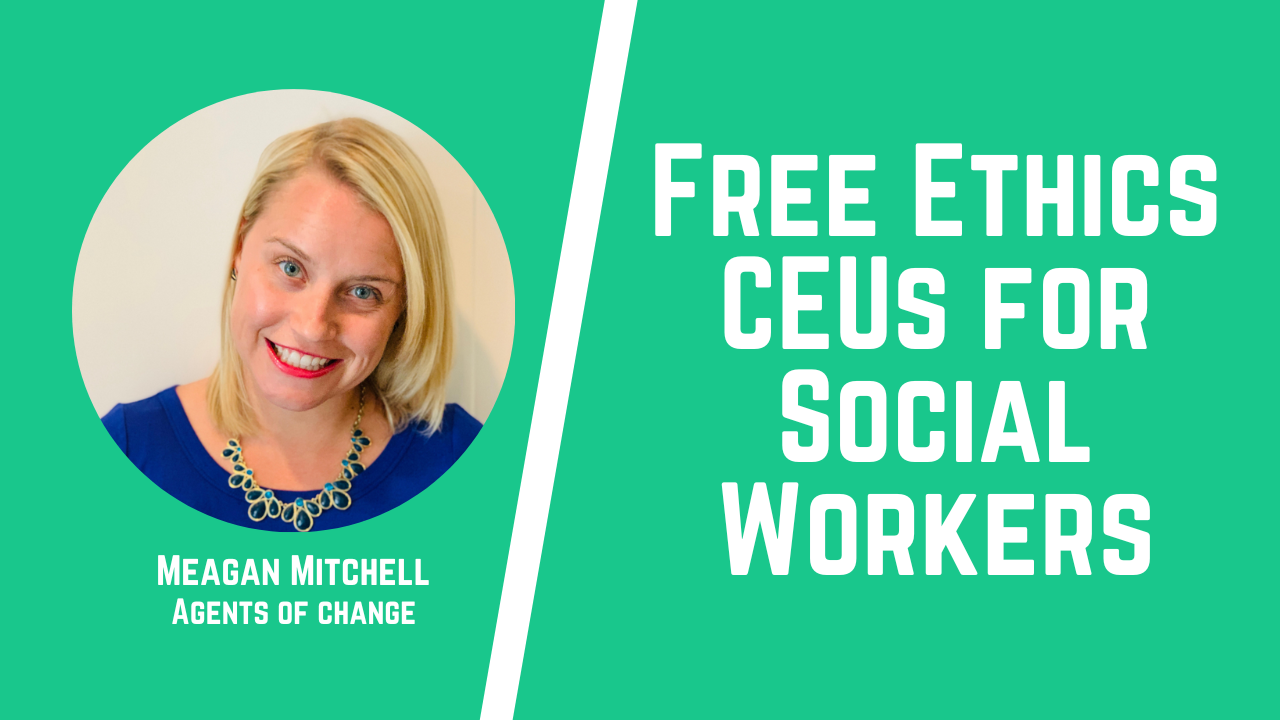
About the Lead Instructor, Dr. Meagan Mitchell: Meagan is a Licensed Clinical Social Worker and has been providing Continuing Education for Social Workers, Counselors, and Mental Health Professionals for more than 10 years. From all of this experience helping others, she created Agents of Change Continuing Education to help Social Workers, Counselors, and Mental Health Professionals stay up-to-date on the latest trends, research, and techniques.
#socialwork #socialworker #socialwork #socialworklicense #socialworklicensing #continuinged #continuingeducation #ce #socialworkce #freecesocialwork #lmsw #lcsw #counselor #NBCC #ASWB #ACE
Disclaimer: This content has been made available for informational and educational purposes only. This content is not intended to be a substitute for professional medical or clinical advice, diagnosis, or treatment