Studying for the Association of Social Work Boards (ASWB) exam can be a daunting task. With a vast amount of material to cover and the pressure to succeed, it’s no wonder many aspiring Social Workers feel overwhelmed.
Traditional study methods like reading textbooks or taking notes can sometimes fall short, leaving you searching for more effective ways to retain and understand the information. This is where multisensory learning techniques, like those used by Agents of Change, come into play. By engaging multiple senses, you can enhance your memory and comprehension, making your study sessions more productive and even enjoyable.
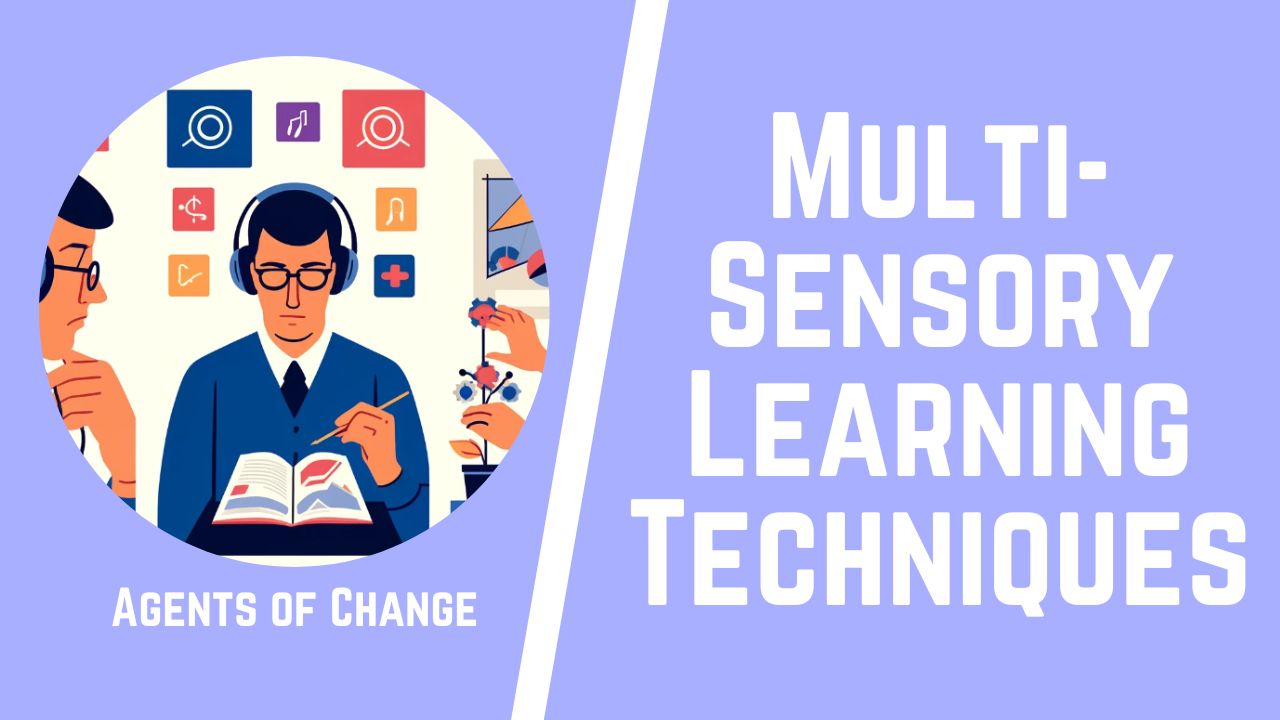
Multisensory learning involves using a combination of visual, auditory, and kinesthetic methods to absorb information. Imagine transforming your study routine into an immersive experience where you’re not just passively reading but actively engaging with the material.
Visual techniques like mind mapping can help you organize and visualize complex concepts, while auditory methods such as listening to recorded notes or participating in discussions can reinforce your understanding. Kinesthetic activities, including role-playing and hands-on projects, can make abstract ideas more concrete and memorable.
In this blog post, we’ll explore a variety of multisensory learning techniques designed specifically to help you succeed on the ASWB exam. From practical tips on creating effective flashcards to innovative ways of incorporating movement into your study sessions, you’ll discover strategies that cater to different learning styles.
Learn more about the ASWB exam and create a personalized ASWB study plan with Agents of Change. We’ve helped thousands of Social Workers pass their ASWB exams and want to help you be next!
1) The Power of Multisensory Learning
Multisensory learning is a powerful educational approach that taps into the strengths of different sensory modalities to enhance understanding and retention.
By involving multiple senses in the learning process, this technique can transform the way you study, making it more engaging and effective.
Understanding Multisensory Learning

What is Multisensory Learning?
Multisensory learning involves using more than one sense—such as sight, sound, and touch—to learn and retain information. Instead of relying solely on reading or listening, you combine these methods to create a richer learning experience.
This approach is particularly beneficial because it aligns with how our brains naturally process information, reinforcing learning through multiple channels.
The Science Behind Multisensory Learning
Research has shown that when we engage multiple senses, our brains create stronger and more complex neural connections. This multi-faceted approach can lead to deeper understanding and better recall. Here’s how it works:
-
Enhanced Neural Connections: Engaging different senses helps to form multiple pathways in the brain, making it easier to retrieve information.
-
Increased Engagement: Multisensory activities are often more interesting and enjoyable, leading to better focus and motivation.
-
Improved Memory: Using multiple senses can help encode information more effectively, making it easier to remember.
Benefits of Multisensory Learning
Improved Retention and Recall
One of the main advantages of multisensory learning is its ability to improve retention and recall. When you learn through various sensory channels, you’re more likely to remember the information because it’s stored in multiple ways. For instance, combining visual aids with hands-on activities can help reinforce what you’ve learned, making it easier to recall during the exam.
Enhanced Understanding
Multisensory learning can also deepen your understanding of complex concepts. By seeing, hearing, and physically interacting with the material, you gain a more comprehensive grasp of the subject matter. This holistic understanding is crucial for subjects like social work, where theoretical knowledge needs to be applied in practical situations.
Greater Engagement
Studying can often feel monotonous, but incorporating multisensory techniques can make it more engaging. When you’re actively involved in the learning process, you’re more likely to stay motivated and interested. This increased engagement can lead to more effective study sessions and better overall performance.
Implementing Multisensory Learning Techniques
Visual Techniques

Visual learning involves using images, diagrams, charts, and other visual aids to understand and remember information. Here are some effective visual techniques:
-
Mind Mapping: Create mind maps to organize and connect concepts visually.
-
Flashcards: Use flashcards with images and diagrams to reinforce key concepts. Claim your free ASWB flashcards from Agents of Change here.
-
Color Coding: Highlight important information in different colors to make it more memorable.
Auditory Techniques
Auditory learning focuses on listening to information. This can be particularly useful for those who retain information better through hearing. Some auditory techniques include:
-
Audio Recordings: Record your notes or summaries and listen to them during commutes or while doing chores.
-
Podcasts: Find relevant podcasts that cover exam topics and listen to expert discussions. Follow the Agents of Change podcast here.
-
Study Groups: Participate in study groups to discuss and hear different perspectives on the material. All Agents of Change packages include 2 live study groups per month.
Kinesthetic Techniques
Kinesthetic learning involves physical activities and hands-on experiences. This approach can help make abstract concepts more tangible. Effective kinesthetic techniques include:
-
Role-Playing: Act out scenarios to understand practical applications of Social Work theories.
-
Hands-On Activities: Use physical objects or models to represent abstract concepts.
-
Movement-Based Learning: Incorporate movement into your study sessions, such as walking while reviewing notes or using gestures to represent ideas.
Combining Multisensory Techniques
Integrated Study Sessions
To maximize the benefits of multisensory learning, try combining different techniques in a single study session. For example, you might start with a visual activity like mind mapping, follow it up with an auditory activity like listening to a podcast, and finish with a kinesthetic activity like role-playing.
Sample Study Session
Here’s a sample study session that incorporates multiple senses:
-
Visual: Create a mind map of a key concept such as “Theories of Social Work.”
-
Auditory: Listen to a lecture or podcast on the same topic.
-
Kinesthetic: Role-play a scenario that applies the theory in a practical setting.
Tips for Effective Multisensory Learning
-
Use Variety: Mix different techniques to keep your brain engaged and prevent burnout.
-
Be Consistent: Regularly incorporate multisensory methods into your study routine.
-
Reflect: After each study session, reflect on which techniques were most effective and why.
Agents of Change packages include 30+ ASWB topics and hundreds of practice questions so you’ll be ready for test day!
2) Visual Techniques for ASWB Exam Success
Visual learning techniques can be incredibly effective in helping you prepare for the ASWB exam. These methods leverage the power of images, diagrams, and other visual aids to enhance understanding and retention.
Creating Effective Visual Summaries
Infographics
Infographics are a fantastic way to summarize complex information visually. They combine images, icons, charts, and minimal text to present information clearly and concisely. Creating infographics for different topics can help you condense large amounts of data into manageable, easy-to-understand visuals.
Steps to Create an Infographic
-
Identify Key Points: Determine the main ideas and data you need to include.
-
Choose a Layout: Select a template or layout that suits your content.
-
Add Visual Elements: Use icons, images, and charts to represent information.
-
Simplify Text: Keep text brief and to the point, focusing on essential facts.
-
Review and Refine: Ensure the infographic is clear and visually appealing.
Concept Maps
Concept maps are similar to mind maps but focus more on the relationships between different concepts. They are excellent for understanding how various topics in social work interconnect.
How to Create a Concept Map
-
Start with a Central Concept: Write the main topic in the center of your page.
-
Add Related Concepts: Draw lines to connect related ideas, writing them around the central concept.
-
Show Relationships: Use linking words or phrases on the connecting lines to explain the relationships.
-
Incorporate Examples: Add specific examples to make abstract ideas more concrete.
Visual Note-Taking
Sketchnotes
Sketchnoting is a visual note-taking technique that combines words and drawings to capture information. It’s particularly useful for lectures and reading materials, helping you to remember content more effectively by engaging both your verbal and visual memory.
Tips for Effective Sketchnotes
-
Use Simple Drawings: You don’t need to be an artist. Simple icons and doodles can effectively represent ideas.
-
Combine Text and Images: Mix short notes with drawings to capture key points.
-
Highlight Important Information: Use colors, arrows, and boxes to emphasize critical information.
-
Organize Spatially: Arrange notes in a way that reflects their importance and relationships.
Visual Journals
A visual journal is a personal, creative way to document your learning journey. It combines traditional journaling with visual elements like drawings, diagrams, and color coding.
How to Maintain a Visual Journal
-
Daily Entries: Regularly summarize what you’ve learned in visual form.
-
Use a Variety of Tools: Incorporate pens, markers, stickers, and other art supplies to make entries engaging.
-
Reflect and Connect: Use your journal to reflect on your learning and make connections between different topics.
Visual Study Aids
Charts and Graphs
Creating charts and graphs can help you visualize data and understand trends, patterns, and relationships within the material. This is particularly useful for understanding statistics and research methods in Social Work.
Types of Charts and Graphs
-
Bar Charts: Great for comparing quantities.
-
Pie Charts: Useful for showing proportions.
-
Line Graphs: Ideal for displaying changes over time.
-
Flowcharts: Help visualize processes and workflows.
Diagrams and Models
Diagrams and models can simplify complex concepts and theories. For instance, drawing a flowchart of the steps in a social work intervention process can make it easier to understand and remember.
Common Diagrams in Social Work
-
Ecological Systems Model: Illustrate the different systems impacting a client’s life.
-
Genograms: Map out family relationships and dynamics.
-
Flowcharts: Outline processes and decision-making steps.
Utilizing Technology for Visual Learning

Digital Tools and Apps
Numerous digital tools and apps are designed to facilitate visual learning. These tools can help you create, organize, and review visual materials more efficiently.
Recommended Tools
-
Canva: Create infographics, charts, and visual summaries.
-
MindMeister: Develop detailed mind maps and concept maps.
-
Notability: Combine note-taking with sketching and drawing features.
Implementing Visual Techniques in Your Study Routine
Planning Your Visual Study Sessions
Integrating visual techniques into your study routine requires planning and consistency. Here’s how you can structure your sessions to make the most of these techniques:
Steps to Plan Visual Study Sessions
-
Set Clear Goals: Define what you aim to achieve in each study session.
-
Choose the Right Technique: Select the visual method that best suits the material.
-
Prepare Your Materials: Gather all necessary tools and resources beforehand.
-
Review Regularly: Consistently review your visual aids to reinforce learning.
-
Reflect and Adjust: Reflect on what worked well and adjust your techniques accordingly.
Balancing Visual Learning with Other Techniques
While visual techniques are powerful, it’s important to balance them with auditory and kinesthetic methods to create a well-rounded study routine. This integrated approach ensures you’re engaging multiple senses and reinforcing learning through various channels.
Tips for Balancing Techniques
-
Rotate Methods: Alternate between visual, auditory, and kinesthetic activities.
-
Combine Techniques: Use visual aids while listening to audio recordings or during hands-on activities.
-
Stay Flexible: Be willing to adjust your methods based on what’s most effective for you.
Learn more additional tips and tricks for the ASWB exam and get hundreds of practice questions with Agents of Change!
3) Auditory Techniques for ASWB Exam Success
Auditory learning techniques can significantly enhance your study sessions for the ASWB exam. By leveraging the power of sound, these methods help reinforce information and improve retention.
Let’s explore various auditory strategies, including creating and using audio recordings, engaging in auditory discussions, and integrating music and rhythm into your learning process.
Creating and Using Audio Recordings

Recording Your Notes
One of the simplest yet most effective auditory techniques is recording your notes. Hearing your voice explaining concepts can reinforce your understanding and make it easier to recall information during the exam.
How to Record Effective Notes
-
Be Clear and Concise: Speak clearly and break down complex concepts into simpler terms.
-
Use Examples: Include practical examples to illustrate key points.
-
Pause and Reflect: After each major point, pause to reflect on its significance and relation to other concepts.
-
Review and Edit: Listen to your recordings and make necessary edits to ensure clarity and accuracy.
Listening on the Go
Audio recordings are perfect for multitasking. You can listen to them during your commute, while exercising, or even while doing household chores. This flexibility allows you to maximize your study time without being tied to a desk.
Tips for Effective Listening
-
Create Playlists: Organize recordings into playlists based on topics or chapters.
-
Use Playback Speed: Adjust the playback speed to match your listening preference and comprehension rate.
-
Take Notes: Keep a notepad handy to jot down important points or questions that arise while listening.
Engaging in Auditory Discussions
Study Groups
Participating in study groups can be highly beneficial for auditory learners. Discussing material with peers helps reinforce your understanding and exposes you to different perspectives. All Agents of Change courses include 2 live study groups per month.
Benefits of Study Groups
-
Clarification of Concepts: Get immediate feedback and clarification on confusing topics.
-
Active Engagement: Engaging in discussions keeps you actively involved in the learning process.
-
Diverse Perspectives: Hearing different viewpoints can deepen your understanding of complex issues.
Tutoring Sessions
One-on-one tutoring sessions provide an opportunity for personalized auditory learning. A tutor can explain difficult concepts in a way that’s easy to understand and tailored to your learning style.
How to Make the Most of Tutoring Sessions
-
Prepare Questions: Come to each session with specific questions or topics you need help with.
-
Request Explanations: Ask the tutor to explain concepts in multiple ways to reinforce understanding.
-
Record Sessions: With permission, record the sessions to review later.
Integrating Music and Rhythm
Using Music to Enhance Focus
Music can be a powerful tool for improving concentration and memory. Certain types of music, especially classical and instrumental, can create an optimal environment for studying.
Tips for Using Music in Study Sessions
-
Choose Instrumental Music: Avoid lyrics that can distract your focus.
-
Experiment with Genres: Try different genres to see which ones enhance your concentration the most.
-
Use Playlists: Create playlists that last as long as your study sessions to avoid interruptions.
Rhythm and Mnemonics
Rhythm and mnemonics are auditory tools that can make memorization easier. By setting information to a tune or creating rhythmic patterns, you can improve recall.
How to Use Rhythm and Mnemonics
-
Create Rhymes: Turn key concepts into rhymes or short songs.
-
Use Familiar Tunes: Set information to the tune of familiar songs to make it easier to remember.
-
Practice Regularly: Regularly review and recite your mnemonics to reinforce memory.
Leveraging Technology for Auditory Learning
Audiobooks and Podcasts
Audiobooks and podcasts are excellent resources for auditory learners. Many educational publishers and experts offer materials specifically designed to help you prepare for the ASWB exam.
Recommended Audiobook and Podcast Resources
- ASWB Exam Prep Audio: All Agents of Change materials are available in audio form.
- Social Work Podcasts: Find podcasts that discuss relevant topics, case studies, and current trends in social work like Agents of Change.
Speech-to-Text Tools
Speech-to-text tools can convert your spoken notes into written text, providing a dual modality for studying. This can be particularly useful for reviewing and organizing your study materials.
Popular Speech-to-Text Tools
-
Dragon NaturallySpeaking: A powerful tool that offers high accuracy and customization options.
-
Google Docs Voice Typing: A free and convenient option for quick conversions.
-
Otter.ai: Offers transcription services and allows for easy editing and sharing.
Incorporating Auditory Techniques into Your Study Routine
Planning Auditory Study Sessions
To effectively incorporate auditory techniques into your study routine, it’s important to plan your sessions thoughtfully. Here’s how you can structure your auditory learning:
Steps to Plan Auditory Study Sessions
-
Set Clear Objectives: Define what you aim to achieve in each session.
-
Select Materials: Choose appropriate audio materials, such as recordings, podcasts, or audiobooks.
-
Create a Quiet Environment: Find a quiet space where you can focus on listening without distractions.
-
Take Breaks: Schedule short breaks to rest your ears and mind.
-
Review and Reflect: After each session, review your notes and reflect on what you’ve learned.
Balancing Auditory Learning with Other Techniques
While auditory techniques are powerful, it’s important to balance them with visual and kinesthetic methods. This integrated approach ensures you’re engaging multiple senses and reinforcing learning through various channels.
Tips for Balancing Techniques
-
Alternate Methods: Rotate between auditory, visual, and kinesthetic activities to keep your brain engaged.
-
Combine Techniques: Use auditory materials while engaging in visual or hands-on activities.
-
Stay Adaptable: Be willing to adjust your methods based on what’s most effective for you.
4) Kinesthetic Techniques for ASWB Exam Success
Kinesthetic learning involves engaging your body and senses through physical activities, movement, and hands-on experiences. This approach can be particularly effective for those who learn best by doing rather than just seeing or hearing.
Role-Playing Scenarios
Practical Application of Theories
Role-playing is an excellent way to bring theoretical concepts to life. By acting out scenarios, you can better understand and remember the practical applications of social work theories and interventions.
Steps to Effective Role-Playing
-
Identify Key Concepts: Choose a theory or concept you want to explore, such as crisis intervention or family therapy.
-
Create Scenarios: Develop realistic scenarios that require the application of the chosen concept.
-
Assign Roles: Assign roles to yourself and study partners, including clients, social workers, and other relevant characters.
-
Act Out Scenarios: Perform the scenarios, focusing on applying the theory and practicing relevant skills.
-
Reflect and Discuss: After each role-play, discuss what went well and what could be improved. Reflect on how the theory was applied in practice.
Case Studies
Working through case studies is another form of role-playing that allows you to analyze and solve real-world problems. This technique helps you develop critical thinking and decision-making skills essential for the ASWB exam.
How to Use Case Studies
-
Select Relevant Cases: Choose case studies related to the exam topics.
-
Analyze the Situation: Break down the case into its components, identifying key issues and challenges.
-
Apply Theories and Interventions: Use social work theories and interventions to propose solutions.
-
Discuss Outcomes: Reflect on the proposed solutions and discuss potential outcomes and alternative approaches.
Hands-On Activities
Creating Physical Models
Building physical models can help you visualize and understand complex concepts. This technique is particularly useful for subjects like systems theory and ecological models.
Examples of Physical Models
-
Systems Theory Models: Use objects like blocks or figures to represent different systems and their interactions.
-
Ecological Models: Create a 3D representation of an ecological model, illustrating the different levels of influence on an individual or community.
-
Flowcharts and Diagrams: Construct physical flowcharts using materials like string and note cards to represent processes and workflows.
Interactive Study Tools
Interactive tools and games can make studying more engaging and fun. These tools often require physical interaction, which can reinforce learning and improve retention.
Examples of Interactive Study Tools
-
Flashcard Apps: Use apps that allow you to physically swipe through digital flashcards like the ASWB flashcards from Agents of Change.
-
Educational Games: Engage with games designed to teach Social Work concepts and skills.
-
Simulations: Participate in simulations that mimic real-world social work scenarios, requiring you to make decisions and solve problems.
Movement-Based Learning
Incorporating Movement into Study Sessions
Movement can help stimulate your brain and improve focus. Incorporating movement into your study sessions can make learning more dynamic and effective.
Ways to Incorporate Movement
-
Walking While Studying: Walk around while reviewing notes or listening to audio recordings.
-
Gesture-Based Learning: Use gestures to represent concepts and theories, creating a physical association with the material.
-
Standing Desks: Use a standing desk to allow for more movement while studying.
Kinesthetic Note-Taking
Kinesthetic note-taking involves using movement and physical interaction to enhance the note-taking process. This method can help improve memory and understanding.
Techniques for Kinesthetic Note-Taking
-
Interactive Notebooks: Create interactive notebooks with flaps, pockets, and movable parts to make note-taking more engaging.
-
Tactile Materials: Use tactile materials like textured paper or raised-line paper to add a physical dimension to your notes.
-
Manipulatives: Incorporate manipulatives, such as clay or modeling dough, to create physical representations of concepts while taking notes.
Combining Kinesthetic Techniques with Other Learning Styles
Integrated Learning Sessions
To maximize the benefits of kinesthetic learning, combine it with visual and auditory techniques in an integrated study session. This approach ensures a well-rounded and engaging learning experience.
Sample Integrated Study Session
-
Kinesthetic: Start with a hands-on activity, such as building a model or acting out a scenario.
-
Visual: Follow up with visual aids, such as diagrams or mind maps, to reinforce the material.
-
Auditory: Listen to an audio recording or participate in a discussion to further solidify your understanding.
Balancing Different Techniques
Balancing kinesthetic techniques with other learning styles can help you create a comprehensive study routine that caters to all aspects of your learning process.
Tips for Balancing Techniques
-
Schedule Rotation: Rotate between different types of activities to keep your study sessions varied and engaging.
-
Use Combinations: Combine kinesthetic activities with visual and auditory methods to reinforce learning from multiple angles.
-
Reflect on Effectiveness: Regularly assess which techniques are most effective for you and adjust your study plan accordingly.
5) Combining Multisensory Techniques
Combining multisensory techniques can transform your study routine, making it more effective and engaging. By integrating visual, auditory, and kinesthetic methods, you reinforce learning through multiple channels, which can significantly enhance retention and comprehension. This section explores how to seamlessly blend these techniques into your study sessions for maximum impact.
The Synergy of Multisensory Learning
Why Combining Techniques Works
Multisensory learning leverages the brain’s ability to process information through various senses simultaneously. This multisensory approach can create stronger neural connections, making it easier to recall information during the ASWB exam.
Benefits of Combining Techniques
-
Enhanced Memory Retention: Information processed through multiple senses is stored more robustly in memory.
-
Improved Comprehension: Different techniques can help you understand complex concepts from various angles.
-
Increased Engagement: A variety of activities keeps your study sessions interesting and prevents boredom.
-
Holistic Learning: Integrating different senses leads to a more comprehensive grasp of the material.
Practical Strategies for Integration
Planning Multisensory Study Sessions
Effective integration of multisensory techniques requires careful planning. Design your study sessions to incorporate various methods, ensuring a balanced and cohesive learning experience.
Steps to Plan Integrated Sessions
-
Set Clear Goals: Define what you want to achieve in each session.
-
Select Techniques: Choose appropriate techniques that complement each other.
-
Allocate Time: Divide your session time among different activities to maintain balance.
-
Gather Materials: Prepare all necessary tools and resources beforehand.
-
Reflect and Adjust: After each session, reflect on what worked well and adjust your plan accordingly.
Sample Multisensory Study Session
Here’s an example of how to structure a study session that combines visual, auditory, and kinesthetic techniques:
Session Outline
-
Visual Activity (20 minutes):
-
Create a mind map of a key concept such as “Crisis Intervention.”
-
-
Auditory Activity (20 minutes):
-
Listen to a podcast or lecture on the same topic while reviewing your mind map.
-
-
Kinesthetic Activity (20 minutes):
-
Role-play a crisis intervention scenario with a study partner, applying the concepts from your mind map and podcast.
-
-
Integrated Review (10 minutes):
-
Discuss the scenario and reflect on how the visual and auditory information helped in understanding and applying the concept.
-
Combining Visual and Auditory Techniques
Visual and Auditory Flashcards
Enhance traditional flashcards by adding an auditory element. Record yourself reading the questions and answers, then listen to these recordings while reviewing the flashcards.
How to Create Visual-Auditory Flashcards
-
Write Questions and Answers: Create flashcards with key questions and their answers.
-
Record Audio: Record yourself reading each question and answer.
-
Review Simultaneously: Listen to the recordings while visually reviewing the flashcards.
Combining Auditory and Kinesthetic Techniques
Discussion-Based Activities
Engage in study group discussions where you can actively move and interact with peers while discussing material. This combines auditory learning (through listening and speaking) with kinesthetic engagement (through movement and interaction).
Tips for Effective Discussion-Based Activities
-
Rotate Roles: Take turns explaining concepts and asking questions.
-
Use Props: Incorporate props or physical objects related to the discussion topic.
-
Active Participation: Encourage all group members to participate actively.
Rhythmic Mnemonics
Set important information to a rhythm or beat and practice moving or clapping along. This method uses both auditory and kinesthetic learning to reinforce memory.
Steps for Creating Rhythmic Mnemonics
-
Identify Key Information: Choose concepts or facts that are essential to remember.
-
Create a Rhythm: Set the information to a simple beat or rhythm.
-
Practice Movement: Incorporate clapping, tapping, or simple movements while reciting the information.
Combining Visual and Kinesthetic Techniques
Hands-On Visual Projects
Engage in projects that require both visual and kinesthetic skills, such as creating posters, models, or diagrams that you build and manipulate.
Examples of Hands-On Visual Projects
-
Poster Creation: Design a poster that summarizes a major theory or concept using images, diagrams, and text.
-
Model Building: Construct physical models of systems theories or ecological frameworks.
-
Interactive Diagrams: Create diagrams with movable parts to illustrate dynamic processes or relationships.
Visual-Kinesthetic Note-Taking
Combine visual note-taking with kinesthetic elements by using interactive notebooks that require physical manipulation.
Techniques for Visual-Kinesthetic Note-Taking
-
Foldable Notes: Create foldable notes with flaps that reveal additional information.
-
Pop-Up Diagrams: Use pop-up elements to add a 3D aspect to your notes.
-
Color and Texture: Use textured materials and colored pens to make notes more engaging and tactile.
Evaluating and Adjusting Multisensory Techniques
Self-Assessment and Feedback
Regularly evaluate the effectiveness of your multisensory techniques through self-assessment and feedback from peers or tutors.
Steps for Evaluation
-
Self-Reflection: Reflect on what techniques helped you understand and retain information best.
-
Seek Feedback: Ask peers or tutors for feedback on your use of multisensory methods.
-
Adjust Accordingly: Modify your study plan based on what worked well and areas that need improvement.
Maintaining Flexibility
Stay flexible and open to adjusting your techniques as you discover what works best for you. Multisensory learning is highly personal, and what works for one person may not work for another.
Tips for Maintaining Flexibility
-
Experiment with New Methods: Don’t be afraid to try new techniques and see how they impact your learning.
-
Be Adaptable: Adjust your methods based on feedback and self-assessment.
-
Stay Open-Minded: Be willing to incorporate unexpected techniques that might enhance your study sessions.
6) FAQs – Multisensory Learning Techniques for ASWB Exam Success
Q: How do I determine which multisensory learning techniques are most effective for me?
A: Determining the most effective multisensory learning techniques involves a bit of trial and error. Start by experimenting with different methods—such as visual aids (like mind maps and diagrams), auditory tools (like audio recordings and podcasts), and kinesthetic activities (like role-playing and hands-on projects).
Pay attention to which techniques help you retain information and understand concepts the best. Additionally, consider your personal learning preferences and habits. Reflect on past learning experiences and identify which sensory modalities you tend to rely on the most.
Keeping a study journal can also help track your progress and identify the techniques that are yielding the best results. Remember, the goal is to find a balance that keeps you engaged and enhances your comprehension.
Q: Can I still use multisensory learning techniques if I have a limited amount of study time?
A: Absolutely! Multisensory learning techniques can be adapted to fit any schedule, and they can even make your study sessions more efficient. For example, you can listen to audio recordings or podcasts while commuting or doing household chores.
Integrate visual techniques by creating quick mind maps or flashcards that you can review during short breaks. For kinesthetic learning, incorporate simple activities like walking while reciting key concepts or using gestures to represent ideas.
The key is to integrate these techniques into your daily routine seamlessly. Even a few minutes of focused, multisensory study can be more effective than longer periods of traditional, passive studying.
Q: Are multisensory learning techniques suitable for all types of ASWB exam content?
A: Yes, multisensory learning techniques are versatile and can be adapted to suit any type of content covered in the ASWB exam. For theoretical and conceptual material, visual aids like diagrams and mind maps can help illustrate relationships and hierarchies.
For memorizing definitions and key terms, auditory tools like recordings and mnemonics can be highly effective. Kinesthetic activities, such as role-playing or creating physical models, are particularly useful for understanding practical applications and case studies.
By tailoring the techniques to fit the specific content you’re studying, you can enhance your comprehension and retention across all areas of the exam.