Social Work Practices in Rural vs. Urban Settings and the ASWB Exam
Social Work Practices in Rural vs. Urban Settings and the ASWB Exam
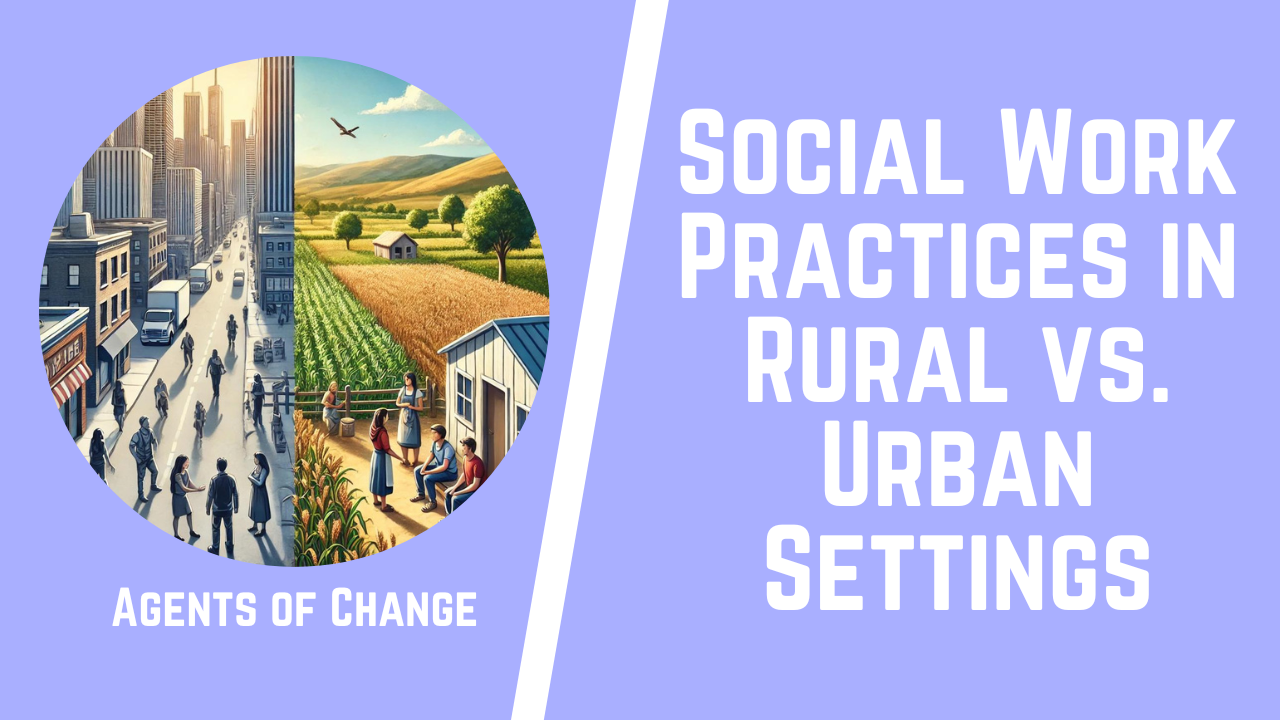
Social Work is a diverse and dynamic profession that requires adaptability, empathy, and a deep commitment to helping others. Whether you’re working in a bustling city or a quiet rural town, the challenges and opportunities you encounter as a Social Worker can vary significantly based on your environment.

In urban settings, Social Workers often face high caseloads, complex social service systems, and a rich tapestry of cultural diversity. Conversely, rural Social Workers grapple with limited resources, long travel distances, and the unique dynamics of smaller, tight-knit communities.

Understanding these differences is crucial, not only for effective practice but also for excelling on the Association of Social Work Boards (ASWB) exam, which often tests your ability to apply Social Work principles in different contexts.

In this blog post, we’ll explore the key differences between Social Work practices in rural and urban settings, highlighting the unique challenges each presents. We’ll also discuss how these challenges can appear on the ASWB exam and offer strategies to help you prepare effectively. Whether you’re aiming to work in a rural area or an urban center, this article will provide valuable insights to help you succeed in both your studies and your future career as a Social Worker.

Learn more about the ASWB exam and create a personalized ASWB study plan with Agents of Change. We’ve helped thousands of Social Workers pass their ASWB exams and want to help you be next!

1) Rural vs. Urban Social Work: An Overview

Social Work is a versatile profession that adapts to the diverse needs of communities, and the environment in which Social Workers operate plays a significant role in shaping their daily practice.

Whether in a bustling urban environment or a serene rural setting, Social Workers aim to provide support, advocacy, and resources to those in need. However, the way these services are delivered, and the challenges encountered, can vary drastically depending on the setting.

split image featuring a Black female social worker working in both an urban and a rural environment.

Population Density and Client Demographics

One of the most apparent differences between rural and urban Social Work is population density. Urban areas are typically characterized by high population density, with Social Workers serving large, diverse communities.

This diversity can encompass a wide range of cultural, socioeconomic, and linguistic backgrounds, making urban Social Work both challenging and enriching. In contrast, rural areas often have lower population density, with more homogenous populations. Social Workers in these settings may work with fewer clients, but the connections they build can be deeper and more personal.

Key Differences:

  • Urban Setting: High population density, diverse client demographics, fast-paced environment.

  • Rural Setting: Lower population density, more homogenous populations, closer-knit communities.

Service Delivery and Accessibility

Service delivery in urban versus rural settings can be starkly different, primarily due to accessibility. In urban areas, Social Workers typically have access to a broader range of services and resources. Public transportation is more readily available, and clients can often find multiple organizations that offer specialized services within a short distance. However, the abundance of services can also lead to bureaucratic challenges and long wait times.

In contrast, rural Social Workers often face significant barriers to service delivery due to a lack of resources. Transportation can be a major hurdle for clients who live far from the nearest service provider. Additionally, rural Social Workers may need to wear many hats, offering a broader range of services themselves because specialized resources are scarce.

Challenges in Service Delivery:

  • Urban Social Work: Navigating complex service networks, managing long wait times, coordinating care across multiple providers.

  • Rural Social Work: Overcoming transportation barriers, limited access to specialized services, being a generalist due to resource scarcity.

Professional Roles and Responsibilities

The roles and responsibilities of Social Workers can also differ based on the setting. In urban areas, Social Workers often work in specialized roles within large agencies or organizations. For example, one Social Worker might focus exclusively on child welfare, while another specializes in mental health services. This specialization allows for in-depth expertise in a particular area but can sometimes lead to a narrower focus.

In rural settings, however, Social Workers are more likely to take on multiple roles within a single position. A rural Social Worker might be responsible for providing mental health counseling, child welfare services, and community outreach, all within the same job. This generalist approach requires a broad skill set and the ability to adapt to a wide range of situations.

Role Differences:

  • Urban Social Workers: Often specialize in specific areas, work within large organizations, and may have more defined roles.

  • Rural Social Workers: Tend to be generalists, handle multiple responsibilities, and work in smaller, more community-based settings.

Community Relationships and Engagement

Building relationships and engaging with the community are critical components of Social Work in any setting. However, the way Social Workers interact with their communities can differ based on whether they are in an urban or rural environment.

In urban areas, the sheer size and diversity of the population can make it more challenging to build close, personal relationships with clients. Social Workers may work with a wide range of individuals but might not have the opportunity to engage deeply with any single community.

In rural areas, Social Workers often become an integral part of the community. They might see their clients at the grocery store, school events, or community gatherings. While this close-knit environment can foster strong relationships, it also presents challenges related to maintaining professional boundaries and confidentiality.

Community Engagement:

  • Urban Social Work: Engaging with diverse populations, managing larger caseloads, maintaining professional distance.

  • Rural Social Work: Building close relationships, navigating dual relationships, integrating into the community.

Ethical Considerations

Ethical challenges are inherent in Social Work, but the nature of these challenges can vary depending on the setting. In urban areas, Social Workers often face ethical dilemmas related to managing high caseloads, navigating complex systems, and working with clients from diverse cultural backgrounds. Issues of confidentiality, informed consent, and cultural competence are often at the forefront of urban Social Work practice.

In rural settings, ethical challenges are more likely to arise from the close-knit nature of the community. Dual relationships—where a Social Worker has both a professional and personal connection with a client—are more common. Maintaining confidentiality can also be more difficult in small towns where “everyone knows everyone.” Rural Social Workers must be especially vigilant in upholding ethical standards while managing these unique challenges.

Ethical Challenges:

  • Urban Social Work: High caseloads, complex service systems, cultural competence, confidentiality in diverse populations.

  • Rural Social Work: Dual relationships, confidentiality in close-knit communities, balancing professional and personal boundaries.

Understanding the differences and similarities between rural and urban Social Work is essential for effective practice and for excelling on the ASWB exam. While the settings may differ, the core mission of Social Work—to improve the lives of individuals, families, and communities—remains the same. By appreciating the unique challenges and opportunities in each environment, Social Workers can better serve their clients and make a lasting impact on their communities.

Agents of Change packages include 30+ ASWB topics, 2 free study groups per month, and hundreds of practice questions so you’ll be ready for test day!

2) Challenges in Rural and Urban Social Work

Social Work, regardless of the setting, is a profession filled with both rewards and challenges. However, the specific challenges Social Workers face can vary greatly depending on whether they practice in a rural or urban environment.

These challenges shape the day-to-day work of Social Workers and influence the strategies they must employ to serve their clients effectively. In this section, we’ll explore the unique challenges of rural and urban Social Work, breaking them down into key areas such as resource availability, client accessibility, professional boundaries, and more.

Resource Availability

Urban Social Work

In urban settings, Social Workers often have access to a wide array of resources and services. Large cities typically offer a diverse network of social services, including specialized programs for mental health, housing, substance abuse, and more. However, while these resources are more plentiful, they can also be more difficult to navigate due to their complexity.

A Black female social worker in an office environment, looking frustrated due to the lack of resource availability for her clients

Challenges in Urban Resource Availability:

  • Bureaucratic Red Tape: Social Workers may spend a significant amount of time dealing with paperwork, eligibility requirements, and long wait times for services.

  • Overcrowded Services: High demand for services in urban areas can lead to long waitlists and limited availability, making it challenging to connect clients with the help they need in a timely manner.

  • Funding Constraints: Despite the abundance of resources, funding is often stretched thin, leading to understaffed agencies and overworked professionals.

Rural Social Work

In contrast, rural Social Workers often face the challenge of limited resources. Many rural communities lack the specialized services that are more common in urban areas. For example, a rural Social Worker might struggle to find mental health providers, substance abuse treatment centers, or affordable housing options for their clients.

Challenges in Rural Resource Availability:

  • Scarcity of Services: Rural areas may have fewer social services, and clients might need to travel long distances to access the services that are available.

  • Generalist Roles: Due to the lack of specialized services, rural Social Workers often need to be generalists, providing a broad range of services themselves.

  • Isolation of Resources: Clients in rural areas may not have easy access to internet or transportation, making it even harder to connect them with necessary resources.

Client Accessibility

Urban Social Work

While urban areas generally offer more resources, accessibility can still be a significant challenge. The density of the population in cities can lead to overcrowded systems, and navigating these systems can be daunting for both Social Workers and their clients.

Challenges in Urban Client Accessibility:

  • Transportation: Although urban areas usually have public transportation, it can be expensive, unreliable, or insufficient, especially for clients with disabilities or those living in underserved neighborhoods.

  • Homelessness and Transiency: Urban Social Workers often deal with transient populations, including the homeless, who may be difficult to track and support consistently.

  • Overwhelming Caseloads: The high demand for services in urban areas can lead to Social Workers carrying overwhelming caseloads, making it difficult to provide individualized attention to each client.

Rural Social Work

In rural areas, client accessibility challenges are often related to geographic isolation. Clients may live far from services, and rural Social Workers may need to travel long distances to meet with them. This can be especially difficult in emergencies or when clients lack reliable transportation.

A diverse social worker driving long distances on a rural road to see clients in a remote environment

Challenges in Rural Client Accessibility:

  • Geographic Isolation: Clients in rural areas may live many miles away from the nearest service provider, making regular visits and follow-ups challenging.

  • Limited Transportation Options: Public transportation is often non-existent in rural areas, and clients may not have access to a car, further limiting their ability to seek help.

  • Service Gaps: Even when services are available, they may be spread thin, with limited hours of operation or long wait times for appointments.

Professional Boundaries and Ethical Dilemmas

Urban Social Work

In urban settings, Social Workers are more likely to work within large organizations where professional boundaries are clearly defined. However, the complexity of urban environments can still lead to ethical dilemmas, particularly when working with diverse populations or managing high caseloads.

Challenges in Urban Professional Boundaries:

  • Cultural Competency: Social Workers must navigate the cultural dynamics of a diverse population, which requires sensitivity and awareness of cultural differences and potential biases.

  • High Caseloads and Burnout: The pressure of managing large caseloads can lead to burnout, making it difficult for Social Workers to maintain the high ethical standards required in their profession.

  • Client Anonymity: In large cities, the anonymity of clients can be both a blessing and a challenge. While it may help maintain confidentiality, it can also make it harder to build trusting relationships.

Rural Social Work

Rural Social Workers often face unique challenges related to maintaining professional boundaries. In small communities, Social Workers may encounter clients in their personal lives, leading to dual relationships and potential conflicts of interest.

Challenges in Rural Professional Boundaries:

  • Dual Relationships: In rural areas, Social Workers may have multiple roles in the community, such as being both a neighbor and a service provider, which can blur professional boundaries.

  • Maintaining Confidentiality: In close-knit communities, it can be difficult to maintain confidentiality, as everyone tends to know each other’s business.

  • Limited Support Networks: Rural Social Workers may have fewer colleagues to consult with or turn to for support, increasing the risk of ethical dilemmas going unaddressed.

Social Worker Well-being and Burnout

Urban Social Work

Urban Social Workers often deal with the stress of managing high caseloads, navigating complex service systems, and working in environments with high rates of poverty and violence. These factors can lead to burnout, which can affect their well-being and ability to provide quality care.

Challenges in Urban Social Worker Well-being:

  • Caseload Pressure: Overwhelming caseloads and high demand for services can lead to exhaustion and burnout.

  • Emotional Toll: Constant exposure to poverty, trauma, and violence can take an emotional toll on Social Workers, leading to compassion fatigue.

  • Work-Life Balance: The fast pace of urban life, coupled with professional demands, can make it difficult for Social Workers to maintain a healthy work-life balance.

Rural Social Work

Rural Social Workers also face burnout, but for different reasons. The isolation, lack of resources, and the need to take on multiple roles can be exhausting. Additionally, the close-knit nature of rural communities can make it hard for Social Workers to “switch off” and separate their personal and professional lives.

Challenges in Rural Social Worker Well-being:

  • Isolation: The physical and professional isolation of working in a rural area can lead to feelings of loneliness and burnout.

  • Multiple Roles: Juggling multiple responsibilities without adequate support can be overwhelming and lead to stress.

  • Limited Access to Professional Development: Rural Social Workers may have fewer opportunities for professional development or peer support, making it harder to stay energized and engaged in their work.

Overcoming Challenges in Rural and Urban Social Work

While the challenges in rural and urban Social Work are distinct, Social Workers in both settings must develop strategies to overcome them. This includes advocating for systemic changes, building strong professional networks, and prioritizing self-care to maintain well-being.

Strategies for Overcoming Challenges:

  • Advocacy: Social Workers should advocate for policy changes that improve access to resources, whether it’s increasing funding for urban social services or expanding telehealth options in rural areas.

  • Networking and Support: Building a strong network of peers, mentors, and community partners can provide invaluable support in navigating the challenges of Social Work.

  • Self-Care: Prioritizing self-care and setting boundaries, both personally and professionally, are essential for preventing burnout and maintaining the energy needed to serve clients effectively.

Social Workers in both rural and urban settings face unique challenges that shape their practice. While urban Social Workers may struggle with overwhelming caseloads and navigating complex systems, their rural counterparts contend with resource scarcity and the blurring of professional boundaries.

By understanding these challenges and developing strategies to address them, Social Workers can better serve their communities and maintain their well-being.

Learn more additional tips and tricks for the ASWB exam and get hundreds of practice questions with Agents of Change!

3) Similarities in Rural and Urban Social Work

While the differences between rural and urban Social Work are often emphasized, it’s equally important to recognize the similarities that unite practitioners across these diverse settings.

Whether in a bustling city or a quiet rural town, Social Workers are driven by the same core values and ethical principles, and they face common challenges related to advocacy, client relationships, and professional development. 

Core Values and Ethical Principles

Regardless of where they practice, Social Workers are guided by a set of core values and ethical principles that form the foundation of the profession. These principles, as outlined by the National Association of Social Workers (NASW) Code of Ethics, include a commitment to service, social justice, dignity and worth of the person, the importance of human relationships, integrity, and competence. These values are universal and apply to Social Workers in all settings.

Shared Core Values:

  • Service: The primary goal of Social Work is to help people in need and address social problems. This commitment to service is evident in both rural and urban settings, where Social Workers work tirelessly to improve the lives of individuals and communities.

  • Social Justice: Social Workers in both rural and urban areas advocate for social change and challenge injustice, whether it’s addressing systemic inequalities in a city or fighting for better resources in a rural community.

  • Dignity and Worth of the Person: Every Social Worker, regardless of their location, is committed to treating clients with respect and honoring their inherent dignity and worth.

  • Importance of Human Relationships: Building strong, trusting relationships with clients is a cornerstone of Social Work, whether in a densely populated urban area or a close-knit rural community.

  • Integrity and Competence: Upholding ethical standards and continuously developing professional skills are essential for all Social Workers, no matter where they practice.

Advocacy and Social Justice

Both rural and urban Social Workers play a critical role in advocating for their clients and communities. Advocacy is a central component of Social Work, as professionals strive to address social inequities, improve access to resources, and promote policies that benefit marginalized populations. While the specific issues may differ between rural and urban settings, the need for advocacy remains constant.

Urban Social Work Advocacy

In urban areas, Social Workers often advocate on behalf of clients who are navigating complex systems, such as housing, healthcare, or criminal justice. They may work to address systemic issues like homelessness, poverty, or racial disparities. Advocacy in urban settings often involves coordinating with multiple agencies and pushing for policy changes at the local or state level.

Common Advocacy Efforts in Urban Social Work:

  • Addressing homelessness and affordable housing shortages.

  • Advocating for equitable access to healthcare and mental health services.

  • Fighting for racial justice and challenging discriminatory practices.

  • Working to improve public transportation and access to social services.

Rural Social Work Advocacy

In rural settings, Social Workers may focus on advocating for increased access to services that are often scarce, such as healthcare, mental health support, and education. They might also work to address issues related to poverty, unemployment, and the isolation of rural communities. Rural advocacy often involves working closely with local government and community organizations to bring about change.

Common Advocacy Efforts in Rural Social Work:

  • Fighting for better healthcare access and telehealth services.

  • Addressing transportation barriers and infrastructure needs.

  • Advocating for educational resources and opportunities in underserved areas.

  • Promoting economic development and job creation in rural communities.

Client Relationships and Trust-Building

Building and maintaining strong relationships with clients is a fundamental aspect of Social Work, no matter the setting. Trust is the foundation of effective Social Work practice, and Social Workers in both rural and urban areas must work to establish and nurture this trust with their clients. While the dynamics of these relationships may differ based on the environment, the importance of trust remains a constant.

Building Trust in Urban Settings

In urban environments, Social Workers often work with a large and diverse client base. Establishing trust in these settings can be challenging due to the sheer number of clients and the fast-paced nature of urban life. Social Workers must be culturally competent and sensitive to the unique needs of each client, building rapport through active listening, empathy, and consistency.

Strategies for Building Trust in Urban Social Work:

  • Cultural Competence: Understanding and respecting the cultural backgrounds of clients is essential for building trust in diverse urban settings.

  • Consistency: Maintaining regular contact and following through on commitments helps build credibility and trust with clients.

  • Empathy and Active Listening: Demonstrating genuine care and attentiveness to clients’ concerns fosters a trusting relationship.

Building Trust in Rural Settings

In rural settings, Social Workers often have closer, more personal relationships with their clients. While this can make it easier to build trust, it also requires careful boundary management to ensure that professional relationships remain ethical. Trust-building in rural areas often involves becoming an integral part of the community and showing a long-term commitment to clients’ well-being.

Strategies for Building Trust in Rural Social Work:

  • Community Involvement: Being actively involved in the community and understanding local dynamics can enhance trust with clients.

  • Long-Term Commitment: Demonstrating a genuine investment in clients’ long-term success helps solidify trust in rural settings.

  • Boundary Management: Balancing personal and professional relationships in small communities is key to maintaining trust and ethical standards.

Professional Development and Lifelong Learning

Continuous professional development is vital for Social Workers in all settings. The rapidly changing nature of social issues, policies, and best practices means that Social Workers must stay informed and continually enhance their skills. Both rural and urban Social Workers face the challenge of finding opportunities for professional growth, although the specific obstacles may differ.

Professional Development in Urban Settings

Urban Social Workers often have greater access to professional development opportunities, such as conferences, workshops, and training programs. However, finding the time to participate in these opportunities can be challenging due to high caseloads and demanding schedules.

Professional Development Opportunities in Urban Social Work:

  • Conferences and Workshops: Urban Social Workers may have more opportunities to attend industry conferences and specialized training sessions.

  • Networking: Working in a densely populated area provides more chances to network with other professionals and learn from peers.

  • Access to Resources: Urban settings often offer more resources for continuing education and skills development.

Professional Development in Rural Settings

Rural Social Workers may have fewer opportunities for in-person professional development due to geographic isolation. However, they can still access online training, webinars, and virtual conferences. Additionally, rural Social Workers may benefit from more personalized mentorship and support from local organizations.

Professional Development Opportunities in Rural Social Work:

  • Online Learning: Virtual conferences, webinars, and online courses offer valuable opportunities for professional development without the need for travel.

  • Local Mentorship: Close relationships with local agencies and organizations can provide personalized support and mentorship.

  • Telehealth Training: As telehealth becomes more prevalent in rural areas, training in this area is increasingly important for rural Social Workers.

Universal Challenges in Social Work

Despite the differences between rural and urban settings, Social Workers everywhere face universal challenges that test their resilience and dedication. These challenges include managing stress and burnout, balancing personal and professional responsibilities, and staying committed to the ethical principles of the profession.

Whether dealing with an overwhelming caseload in a city or navigating the isolation of rural practice, Social Workers must find ways to cope with these common challenges.

Universal Challenges:

  • Burnout: Social Workers in both settings can experience burnout due to high emotional demands and heavy workloads.

  • Ethical Dilemmas: Whether in a city or a small town, Social Workers must navigate complex ethical issues, such as confidentiality, dual relationships, and cultural competence.

  • Work-Life Balance: Balancing personal life with professional responsibilities is a challenge for Social Workers in all environments.

  • Advocacy and Systemic Change: Social Workers everywhere must advocate for systemic change to improve the lives of their clients and communities, regardless of the setting.

While rural and urban Social Work practices differ in many ways, the similarities that bind the profession are equally significant. The core values of service, social justice, dignity, and human relationships are central to Social Work in all environments.

Both rural and urban Social Workers face the challenge of advocating for their clients, building trust, and continuously developing their skills. By recognizing these commonalities, Social Workers can draw on shared experiences and strategies to strengthen their practice and better serve their communities, no matter where they are.

4) Relevance to the ASWB Exam of Setting and Rural vs. Urban

The Association of Social Work Boards (ASWB) exam is a critical milestone for aspiring Social Workers, testing their knowledge and competency across various domains of Social Work practice.

One area of particular importance on the exam is the understanding of how different settings—such as rural versus urban environments—impact Social Work practice. 

Context-Specific Scenarios and Case Studies

One of the primary ways in which the ASWB exam tests your understanding of rural and urban settings is through context-specific scenarios and case studies. These questions require you to apply your knowledge to real-world situations, considering the unique factors that may influence practice in different environments. Understanding the nuances of rural and urban Social Work is essential for answering these questions effectively.

Common Scenario-Based Questions

The ASWB exam often includes scenario-based questions that reflect the realities of Social Work practice in different settings. For example, you might be asked how you would handle a dual relationship in a rural community or how you would address language barriers with a culturally diverse client in an urban setting. These questions assess your ability to think critically and adapt your approach based on the context.

Examples of Scenario-Based Questions:

  • Rural Setting: You are the only Social Worker in a small town, and one of your clients also attends your church. How do you manage the dual relationship while maintaining professional boundaries and ethical standards?

  • Urban Setting: You are working with a family in an urban area that does not speak English fluently. How do you ensure effective communication and culturally competent care?

  • Resource Availability: You have a client in a rural area who needs mental health services, but the nearest provider is an hour away. What strategies do you use to connect them with the necessary support?

How to Approach Scenario-Based Questions

To succeed in answering scenario-based questions on the ASWB exam, it’s essential to:

  • Understand the Context: Consider the specific challenges and dynamics of the setting (rural or urban) when evaluating the scenario.

  • Apply Ethical Principles: Think about how ethical guidelines, such as confidentiality, cultural competence, and dual relationships, apply to the situation.

  • Use Critical Thinking: Weigh the pros and cons of different approaches, considering both the immediate needs of the client and the long-term implications of your decisions.

Ethical Considerations Across Settings

Ethics is a significant component of the ASWB exam, and understanding how ethical challenges differ between rural and urban settings is crucial. The exam may test your ability to navigate complex ethical dilemmas that arise due to the specific characteristics of each environment. Being prepared to address these issues from both a rural and urban perspective will strengthen your performance on the exam.

Common Ethical Dilemmas

Ethical dilemmas can vary based on the setting, but some issues are particularly relevant to either rural or urban Social Work. For example, in rural areas, Social Workers may encounter dual relationships more frequently due to the close-knit nature of communities. In urban settings, issues related to confidentiality and cultural competence may be more prominent.

Examples of Ethical Dilemmas on the ASWB Exam:

  • Dual Relationships in Rural Areas: How do you manage a situation where you have both a professional and personal connection with a client in a rural community?

  • Confidentiality in Urban Areas: How do you protect a client’s privacy in an overcrowded and diverse urban setting where anonymity is both a challenge and a necessity?

  • Cultural Competence: How do you ensure that your practice is culturally sensitive and respectful, especially when working with clients from different backgrounds?

Ethical Decision-Making Process

When faced with ethical questions on the ASWB exam, it’s important to:

  • Refer to the NASW Code of Ethics: Use the Code of Ethics as your guide for making decisions that prioritize the client’s well-being and uphold professional standards.

  • Consider the Impact of the Setting: Think about how the rural or urban environment may influence the ethical considerations at play.

  • Analyze the Situation Holistically: Look at the bigger picture, considering not only the immediate ethical dilemma but also the long-term effects of your actions on the client and community.

Service Delivery and Access to Resources

Another key area of relevance to the ASWB exam is understanding how service delivery and resource availability differ between rural and urban settings. The exam may test your knowledge of how to navigate these challenges and ensure that clients receive the support they need, regardless of their location.

Urban vs. Rural Service Delivery Challenges

The ASWB exam may include questions that focus on the logistical challenges of service delivery in different environments. For instance, in urban areas, you might be asked about strategies for managing high caseloads or coordinating care across multiple agencies. In rural areas, questions may focus on overcoming barriers to access, such as transportation and the lack of specialized services.

Examples of Service Delivery Questions:

  • Urban Service Delivery: You have a client who needs housing assistance, but the waitlist for affordable housing is months long. How do you prioritize their needs and connect them with temporary solutions?

  • Rural Service Delivery: A client in a rural area needs substance abuse treatment, but the nearest facility is two hours away. What alternatives can you explore to ensure they receive timely care?

  • Coordinating Care: In an urban setting with many service providers, how do you ensure that all aspects of a client’s care are well-coordinated and that they don’t fall through the cracks?

Strategies for Answering Resource-Related Questions

To effectively tackle resource-related questions on the ASWB exam:

  • Consider All Options: Think creatively about alternative solutions, such as telehealth for rural clients or community partnerships for urban clients.

  • Understand Resource Availability: Be aware of how the availability of services differs between rural and urban settings, and how this impacts client care.

  • Advocate for Clients: Think about how you can advocate for your clients to ensure they receive the resources and support they need, despite the limitations of their environment.

Cultural Competence and Diversity

Cultural competence is a critical aspect of Social Work, and the ASWB exam often includes questions that assess your ability to work effectively with diverse populations.

Whether in an urban or rural setting, Social Workers must be culturally sensitive and aware of the unique needs of their clients. The exam may test your understanding of how cultural dynamics play out differently in rural and urban environments and how to adapt your practice accordingly.

Cultural Competence in Urban Settings

In urban areas, Social Workers often work with clients from a wide range of cultural, linguistic, and socioeconomic backgrounds. The ASWB exam may include questions that challenge you to demonstrate cultural competence by considering factors such as language barriers, cultural traditions, and the impact of systemic discrimination.

Examples of Cultural Competence Questions in Urban Settings:

  • How do you adapt your communication style when working with a client who speaks limited English?

  • What strategies do you use to ensure that your practice is inclusive and respectful of cultural differences?

  • How do you address the impact of systemic racism or other forms of discrimination on your clients?

Cultural Competence in Rural Settings

While rural areas may be less diverse than urban environments, cultural competence is still crucial. Rural Social Workers may encounter clients with strong ties to local traditions, religious beliefs, or unique community dynamics. The ASWB exam may test your ability to navigate these cultural nuances while providing effective care.

Examples of Cultural Competence Questions in Rural Settings:

  • How do you respect and integrate local traditions and values into your practice while maintaining professional boundaries?

  • What considerations should you keep in mind when working with a rural community that has a strong religious or cultural identity?

  • How do you address the potential stigma of seeking help in a close-knit rural community?

Approaching Cultural Competence Questions

To answer cultural competence questions effectively on the ASWB exam:

  • Demonstrate Cultural Sensitivity: Show that you understand and respect the cultural backgrounds of your clients and are committed to providing culturally competent care.

  • Avoid Assumptions: Be cautious not to make assumptions about clients based on their cultural background, and instead, focus on understanding their individual needs and experiences.

  • Adapt Your Practice: Highlight your ability to adapt your practice to meet the cultural needs of your clients, whether through language support, community engagement, or other strategies.

Understanding the relevance of rural and urban settings to the ASWB exam is essential for success. The exam tests your ability to apply Social Work principles across different environments, considering the unique challenges and ethical considerations that each setting presents.

By preparing for context-specific scenarios, ethical dilemmas, resource-related questions, and cultural competence challenges, you can approach the ASWB exam with confidence.

Remember, regardless of the setting, the core values of Social Work—service, social justice, dignity, and competence—remain central to your practice and will guide you through the exam and beyond.

5) FAQs – Rural vs. Urban Social Work

Q: How can I prepare for scenario-based questions on the ASWB exam that focus on rural versus urban Social Work settings?

A: To prepare for scenario-based questions on the ASWB exam that involve rural and urban settings, start by thoroughly understanding the unique challenges and dynamics of each environment. Study case examples that highlight issues such as resource availability, transportation barriers, cultural diversity, and ethical dilemmas in both settings.

Practice answering questions that require you to apply ethical principles and problem-solving strategies to real-world situations. Additionally, reviewing practice exams and using study guides that include context-specific questions will help you become more comfortable with this type of questioning.

Q: What are the key ethical considerations I need to keep in mind when answering ASWB exam questions about rural and urban Social Work?

A: Key ethical considerations on the ASWB exam include maintaining confidentiality, managing dual relationships, and practicing cultural competence. In rural settings, focus on how you would handle dual relationships and protect client confidentiality in close-knit communities.

In urban settings, think about the challenges of working with diverse populations, including respecting cultural differences and ensuring privacy in crowded environments. The NASW Code of Ethics should be your guide in navigating these scenarios, and understanding how these ethical principles apply differently across rural and urban contexts will help you answer these questions effectively.

Q: How does the ASWB exam assess my understanding of resource availability in rural and urban Social Work settings?

A: The ASWB exam assesses your understanding of resource availability by presenting questions that explore the challenges of accessing and coordinating services in different settings. In urban areas, questions may focus on navigating complex service networks, managing high caseloads, and dealing with overcrowded systems. In rural areas, you might be asked about overcoming barriers like geographic isolation, limited transportation, and scarcity of specialized services.

To prepare, familiarize yourself with strategies for addressing these challenges, such as utilizing telehealth in rural settings or collaborating with community partners in urban environments. Thinking creatively about resource solutions will be key to answering these questions successfully.

6) Conclusion

Whether in a rural or urban setting, Social Workers must navigate a variety of challenges, from resource availability and client accessibility to ethical dilemmas and cultural competence. The ASWB exam reflects this complexity by testing your ability to apply Social Work principles in context-specific scenarios, ensuring you are prepared to handle the diverse situations you may encounter in your professional practice.

Understanding the differences and similarities between rural and urban social work is crucial for effective practice and excelling on the ASWB exam. By familiarizing yourself with the unique dynamics of each setting, you can approach exam questions with greater confidence and clarity. Whether you’re answering questions about dual relationships in rural communities or managing high caseloads in urban environments, your ability to think critically and adapt to different contexts will be key to your success.


► Learn more about the Agents of Change course here: https://agentsofchangeprep.com

About the Instructor, Meagan Mitchell: Meagan is a Licensed Clinical Social Worker and has been providing individualized and group test prep for the ASWB for over 7 years. From all of this experience helping others pass their exams, she created the Agents of Change course to help you prepare for and pass the ASWB exam!

Find more from Agents of Change here:

► Facebook Group: https://www.facebook.com/groups/aswbtestprep

► Podcast: https://podcasters.spotify.com/pod/show/agents-of-change-sw

#socialwork #testprep #aswb #socialworker #socialwork #socialworktest #socialworkexam #exam #socialworktestprep #socialworklicense #socialworklicensing #licsw #lmsw #lcsw #aswbexam #aswb #lcswexam #lmswexam #aswbtestprep #aswbtest #lcswtestprep #lcswtest #lmswtestprep #lmswtest #aswbcourse #learningstyles #learningstyle

Disclaimer: This content has been made available for informational and educational purposes only. This content is not intended to be a substitute for professional medical or clinical advice, diagnosis, or treatment

Share:

Discover more from Agents of Change

Subscribe now to keep reading and get access to the full archive.

Continue reading