Building Effective Policy Advocacy Campaigns: ASWB Exam Key Concepts
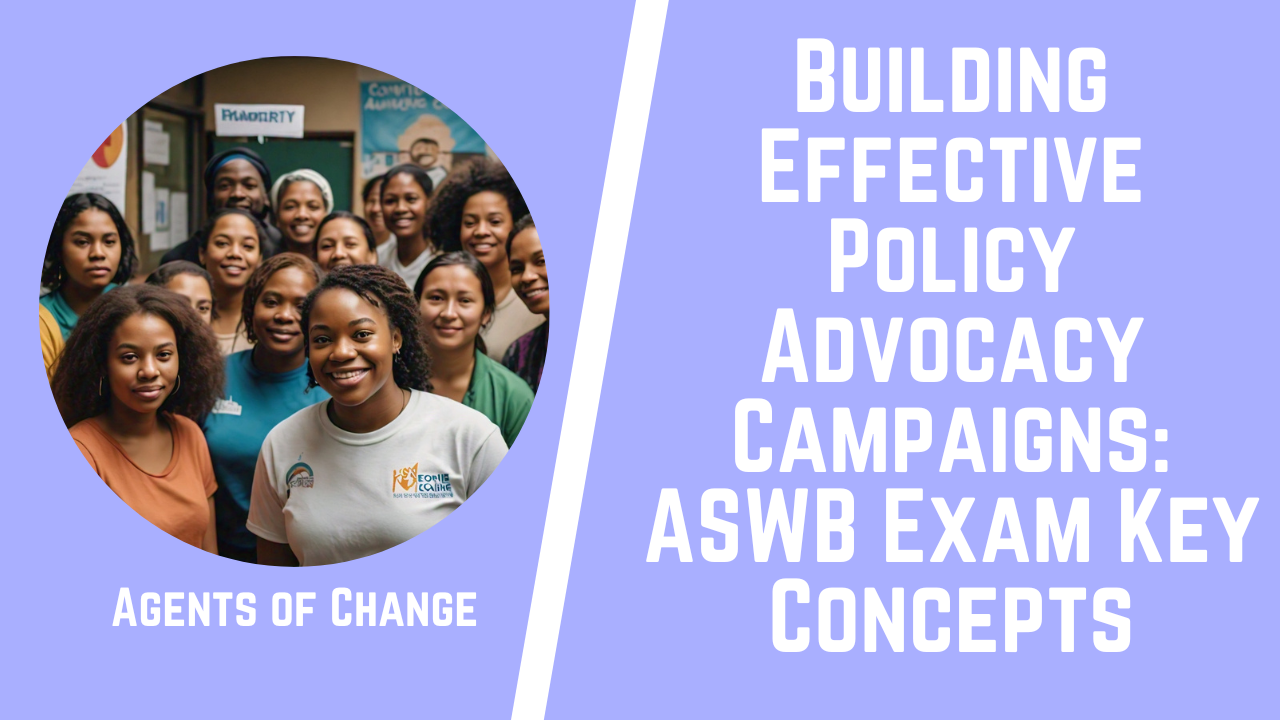
Building Effective Policy Advocacy Campaigns: ASWB Exam Key Concepts
Policy advocacy is at the heart of Social Work, offering a powerful way to influence systemic changes that improve lives. Social Workers who champion policy advocacy campaigns seek to address and shift the inequities impacting marginalized or vulnerable populations.

Whether advocating for better mental health resources, affordable housing, or access to healthcare, policy advocacy enables Social Workers to amplify voices that often go unheard. For those preparing for the ASWB exam, mastering the key concepts of policy advocacy isn’t just an academic requirement; it’s the foundation for real-world impact.

The ASWB exam emphasizes policy advocacy because it equips Social Workers with the knowledge and skills to initiate change at both community and legislative levels. Understanding these advocacy principles allows Social Workers to effectively analyze policy contexts, build strong support networks, and engage with decision-makers.

Each step of an advocacy campaign, from identifying core issues to crafting persuasive messaging, plays a critical role in creating campaigns that resonate. In preparation for the ASWB exam, exploring these core steps helps Social Workers approach advocacy with purpose and precision.

Learn more about the ASWB exam and create a personalized ASWB study plan with Agents of Change. We’ve helped thousands of Social Workers pass their ASWB exams and want to help you be next!

1) What Is Policy Advocacy in Social Work?

Policy advocacy in Social Work is about taking action to influence policies and practices that shape the lives of individuals and communities. Social Workers engaged in advocacy strive to address systemic issues and improve social conditions by changing or implementing policies at local, state, or national levels.

a diverse social worker leading an advocacy campaign

Effective policy advocacy can make lasting, positive changes in healthcare access, housing, mental health services, criminal justice reform, and more. Let’s break down the core elements of policy advocacy in Social Work and examine what it means for Social Workers to take on this impactful role.

The Role of Policy Advocacy in Social Work

At its core, policy advocacy aims to bring social justice and equality into society by challenging and reforming existing systems. Social Workers, who often witness the direct effects of policies on individuals, are uniquely positioned to advocate for changes that benefit vulnerable and marginalized populations. This role can be broken down into several key functions:

  • Identifying Barriers: Social Workers identify policies or gaps in services that negatively impact clients or communities.
  • Proposing Solutions: They develop practical, policy-driven solutions that address these issues and present viable alternatives.
  • Engaging Stakeholders: By working with other community members, organizations, and policymakers, Social Workers build coalitions that push for meaningful change.
  • Empowering Communities: Social Workers help communities understand their rights and how policies affect them, empowering them to take action.

Types of Policy Advocacy

Policy advocacy can take many forms, depending on the scope and target of the desired change. Here are some common types of policy advocacy Social Workers engage in:

  • Legislative Advocacy: This involves pushing for changes in laws or regulations, often at the local, state, or national level. Examples include advocating for laws that increase funding for mental health services or protect children in foster care.

  • Administrative Advocacy: Here, Social Workers aim to modify policies within specific agencies or organizations. For instance, a Social Worker might advocate for new policies in a healthcare facility to improve access to services for underinsured individuals.

  • Community-Based Advocacy: This type of advocacy involves working directly within a community to address its unique needs and challenges. Social Workers might organize community meetings, raise awareness, and help community members voice their concerns to local leaders.

  • Judicial Advocacy: Social Workers may also engage in judicial advocacy, working on cases or partnering with legal advocates to influence court decisions that impact policy, such as challenging discriminatory practices or defending civil rights.

Key Components of Policy Advocacy in Social Work

A successful policy advocacy campaign doesn’t just happen—it requires intentional planning and a deep understanding of both the issues at hand and the systems involved. Here are the essential components Social Workers need to consider when engaging in policy advocacy:

  1. Problem Identification: Before any action can be taken, Social Workers must clearly identify and define the problem they aim to address. This involves analyzing the root causes of an issue and understanding its impacts on individuals and communities.

  2. Stakeholder Analysis: Recognizing and understanding the roles of different stakeholders is crucial. Social Workers must identify those affected by the issue, those in a position to help solve it, and those who might oppose proposed changes.

  3. Research and Data Gathering: Compiling data and research to support the advocacy efforts is essential. By gathering statistics, case studies, and real-life examples, Social Workers strengthen their case for policy change.

  4. Messaging and Communication: Crafting a compelling message that resonates with both decision-makers and the public is a key part of advocacy. Clear, impactful messaging can make a significant difference in how a campaign is received.

Skills Essential for Policy Advocacy

Social Workers rely on a unique skill set when engaging in policy advocacy. Here are some of the most important skills needed to create impactful advocacy campaigns:

  • Research and Analytical Skills: Understanding complex policies and data analysis to make informed decisions.
  • Communication Skills: The ability to convey messages clearly and persuasively to diverse audiences.
  • Strategic Thinking: Planning and executing advocacy strategies that align with campaign goals.
  • Negotiation and Conflict Resolution: Navigating disagreements and finding common ground among stakeholders.
  • Community Organizing: Mobilizing community members and resources to support advocacy efforts.

Challenges and Rewards of Policy Advocacy

A simpler version of a diverse social worker leading an advocacy campaign with a community group

Advocating for policy change can be challenging, particularly in politically charged or resistant environments. Social Workers may face obstacles such as limited resources, opposition from powerful groups, or bureaucratic delays. Despite these challenges, the rewards of policy advocacy are substantial:

  • Amplifying Marginalized Voices: Advocacy enables Social Workers to bring attention to the concerns and experiences of marginalized individuals.
  • Creating Lasting Impact: While direct service impacts individuals, policy advocacy has the potential to create systemic change that affects entire communities or populations.
  • Fostering Social Justice: By fighting for fairer, more equitable policies, Social Workers actively contribute to building a just society.

Policy advocacy in Social Work isn’t just an added responsibility; it’s an essential aspect of creating the broad social changes needed to improve people’s lives. From understanding the various types of advocacy to honing the skills required for success, Social Workers play a pivotal role in driving policy reforms that matter.

Agents of Change packages include 30+ ASWB topics, 2 free study groups per month, and hundreds of practice questions so you’ll be ready for test day!

2) Essential Steps in Building an Effective Policy Advocacy Campaign

Building an effective policy advocacy campaign requires careful planning, strategic action, and a deep understanding of the issue at hand. Successful advocacy campaigns involve multiple steps to ensure that all aspects—from problem identification to stakeholder engagement—align to create a cohesive, powerful initiative. This section explores each step in detail, providing actionable strategies Social Workers can use to build impactful policy advocacy campaigns.

Step 1: Identifying and Defining the Core Issue

The foundation of any advocacy campaign is a clear understanding of the issue that needs to be addressed. This stage involves defining the problem in precise terms, understanding its root causes, and recognizing its impact on the target population. A well-defined issue statement guides the campaign’s objectives and strategy.

Questions to Consider:

  • What specific problem are we trying to solve?
  • How does this issue impact individuals and communities?
  • What are the immediate and long-term consequences of inaction?

Key Activities for Issue Identification:

  • Conduct Needs Assessments: Gathering data and conducting assessments in the affected communities help clarify the issue’s scope and impact.
  • Engage with Affected Individuals: Speaking with people directly impacted by the problem brings a personal dimension to the campaign and helps refine the issue statement.
  • Review Existing Data: Using statistics, research studies, and policy analyses offers a data-backed understanding of the problem.

Step 2: Understanding the Policy Landscape

Once the issue is identified, the next step is to understand the current policy landscape. This involves researching existing laws, policies, and programs related to the issue, as well as examining previous advocacy efforts. Knowing the policy context provides insights into potential allies, opposition, and the feasibility of different strategies.

Policy Landscape Research Checklist:

  • Current Legislation: Identify existing laws or regulations addressing the issue. Are they effective, or do they need modification?
  • Policy Gaps: Look for gaps in current policies that your advocacy efforts could address.
  • Stakeholders and Power Dynamics: Recognize the stakeholders with influence over the issue, including policymakers, agencies, and advocacy groups.
  • Political Climate: Assess whether the current political climate is supportive or resistant to change regarding your advocacy goal.

Example: If the campaign aims to increase mental health services for youth, understanding the relevant state and local healthcare policies, available funding sources, and influential decision-makers (such as state health departments) will shape the campaign’s strategy.

Step 3: Setting Clear and Measurable Campaign Goals

Defining clear goals gives the campaign a direction and allows the advocacy team to measure progress. Effective goals are specific, measurable, achievable, relevant, and time-bound (SMART). Goals can include short-term objectives that build momentum and long-term targets that represent the ultimate vision of the campaign.

Tips for Setting Effective Campaign Goals:

  • Make Them Specific: Rather than vague goals like “increase resources,” specify what those resources should be, e.g., “secure $500,000 in funding for mental health programs in public schools.”
  • Focus on Measurability: Trackable goals allow for progress assessment and necessary adjustments along the way.
  • Define a Timeline: Set a realistic timeframe for achieving each goal to keep the campaign on track.

Example Goal Structure:

  1. Short-Term Goal: “Secure 100 petition signatures from community members within the first month.”
  2. Medium-Term Goal: “Meet with three city council members to present evidence supporting the need for new funding.”
  3. Long-Term Goal: “Achieve a 25% increase in city funding for mental health services by the end of the fiscal year.”

Step 4: Building a Strong Support Network

Successful advocacy campaigns rarely happen in isolation. Building alliances with community members, other advocacy groups, and influential stakeholders broadens the campaign’s reach and legitimacy. A robust network can amplify the campaign’s voice and provide additional resources and support.

Components of a Support Network:

  • Community Groups: Partner with local organizations, faith-based groups, and community leaders who share an interest in the issue.
  • Nonprofit and Advocacy Organizations: Collaborate with nonprofits and other advocacy groups with similar goals or complementary missions.
  • Policy Experts: Connect with policy experts and researchers who can provide insights and data to strengthen the campaign’s case.
  • Media Contacts: Cultivating relationships with journalists and media outlets helps to promote the campaign and keep the public informed.

Strategies for Building Partnerships:

  • Identify Common Goals: Find allies who are aligned with the campaign’s objectives, and focus on mutual benefits in the partnership.
  • Engage in Community Outreach: Host town halls, workshops, or virtual events to inform community members about the issue and gain their support.
  • Leverage Social Media: Use social media platforms to engage a broader audience, spread awareness, and connect with potential partners.

Step 5: Crafting a Powerful and Persuasive Message

An advocacy campaign’s success often depends on how effectively it communicates its message. This message should clearly explain the problem, why it matters, and how the proposed solution will bring positive change. It should resonate with various audiences, including decision-makers, the general public, and affected individuals.

Components of an Effective Advocacy Message:

  • Clear Issue Statement: Describe the problem in straightforward language that anyone can understand.
  • Solution and Benefits: Explain the proposed policy change and its positive impact on the target population.
  • Emotional Appeal: Using stories of individuals impacted by the issue can make the message more relatable and compelling.
  • Data-Driven Insights: Include relevant statistics, research findings, or case studies to lend credibility to the argument.

Message Crafting Tips:

  • Tailor the Message for Different Audiences: The message for policymakers may be more data-focused, while the public might respond better to stories and emotional appeals.
  • Stay Consistent: Ensure that everyone involved in the campaign communicates the same core message to avoid confusion.
  • Keep It Concise: Avoid jargon or lengthy explanations; instead, keep the message focused and to the point.

Step 6: Engaging Decision-Makers

Reaching and persuading decision-makers is a critical step in moving policy change forward. Decision-makers include politicians, agency leaders, board members, or other influential figures who have the authority to enact change. Approaching decision-makers with a targeted, respectful, and well-prepared strategy increases the likelihood of securing their support.

Techniques for Effective Engagement:

  • Schedule Meetings: Request meetings with decision-makers or their staff to present the campaign’s evidence and proposals in person.
  • Develop Relationships: Building long-term relationships with decision-makers can create allies who support the cause even beyond the current campaign.
  • Follow-Up: After initial meetings or presentations, follow up with emails, letters, or additional resources to reinforce the message and maintain engagement.

Engagement Tips:

  • Prepare Key Talking Points: Highlight the main points you want to communicate and be ready to answer questions.
  • Focus on Shared Values: Find areas of common ground that resonate with the decision-maker’s goals or interests.
  • Bring Supporters: Consider inviting a community member directly impacted by the issue to speak from experience, as personal stories can leave a lasting impact.

Step 7: Implementing and Monitoring the Campaign

Once the groundwork is laid, it’s time to put the advocacy campaign into action. Implementing the campaign involves executing planned activities, monitoring progress, and making adjustments as needed. Regular monitoring is essential to ensure the campaign remains on track and to identify any emerging challenges.

Implementation and Monitoring Actions:

  • Launch Public Awareness Efforts: Use social media, press releases, and community events to inform the public and mobilize support.
  • Track Key Metrics: Monitor progress on specific campaign goals, such as community engagement levels, funding raised, or legislative actions.
  • Adjust Strategies: Be ready to pivot or refine strategies based on real-time feedback, changing circumstances, or new data.

Example Metrics to Monitor:

  • Number of public endorsements from influential figures.
  • Frequency and reach of social media posts related to the campaign.
  • Legislative activity or amendments related to the campaign’s policy focus.

Step 8: Evaluating Campaign Outcomes and Reflecting on Lessons Learned

Once the campaign concludes or reaches a significant milestone, it’s essential to evaluate the outcomes and assess the campaign’s effectiveness. This step involves analyzing whether the campaign met its objectives, what strategies worked well, and where improvements can be made for future advocacy efforts.

a diverse social worker sitting in front of a computer analyzing data

Evaluation Steps:

  • Compare Outcomes to Goals: Review the campaign goals and compare them with the final results, noting any gaps or unexpected successes.
  • Solicit Feedback: Collect feedback from stakeholders, supporters, and community members to understand their perspectives on the campaign’s effectiveness.
  • Document Lessons Learned: Record insights, best practices, and lessons learned to apply them to future advocacy efforts.

Key Evaluation Questions:

  • Did the campaign meet its primary objectives?
  • What impact did the campaign have on public awareness and community engagement?
  • What strategies could be improved or changed in the future?

Reflecting on the campaign’s outcomes helps advocacy teams learn and grow, enabling them to build even stronger campaigns in the future. Analyzing successes and setbacks offers valuable insights that contribute to long-term advocacy success and sustained impact in the field of Social Work.

3) Key ASWB Exam Concepts for Policy Advocacy

The ASWB exam covers a range of policy advocacy concepts that Social Workers need to understand to address systemic issues effectively. These concepts not only prepare Social Workers for the exam but also provide the foundation for impactful advocacy in real-world practice.

From understanding social welfare policy history to mastering cultural competence, these are the essential ASWB exam concepts for policy advocacy that every Social Worker should know.

1. Social Welfare Policy and Historical Context

To engage in effective policy advocacy, Social Workers need to understand the history and evolution of social welfare policies. This knowledge enables them to see how current policies have been shaped by past legislation and societal trends and helps them identify areas for future reform.

Key Areas of Focus:

  • Development of Social Welfare Programs: The history and purpose of programs such as Medicare, Medicaid, Social Security, and TANF (Temporary Assistance for Needy Families).
  • Significant Policy Shifts: Knowledge of major legislative shifts, like the Civil Rights Act, ADA (Americans with Disabilities Act), and other reforms that shaped access and equity in services.
  • Historical Policy Impacts: Understanding how past policies impacted different populations, particularly marginalized communities, and how these impacts inform current advocacy.

Why It Matters for the ASWB Exam: Exam questions often require Social Workers to understand how past policies influence today’s social welfare environment, helping test-takers demonstrate an understanding of the social work field’s policy roots.

2. Understanding Social Justice and Ethical Standards in Advocacy

Social Workers are bound by ethical principles that guide their advocacy efforts, particularly when representing vulnerable or marginalized groups. Ethics and social justice are core concepts on the ASWB exam, as they are central to the values of Social Work.

Ethical Standards in Policy Advocacy:

  • Confidentiality and Privacy: Respect for clients’ privacy is crucial, even when sharing their stories to support advocacy efforts.
  • Informed Consent: Social Workers must ensure that clients fully understand the implications of being involved in advocacy, including any potential risks.
  • Transparency and Accountability: It’s essential to provide accurate information and uphold integrity when advocating for policy changes.

Principles of Social Justice:

  • Equity: Social Workers advocate for fair and equal access to resources, opportunities, and protections for all communities.
  • Non-Discrimination: Ensuring that advocacy efforts do not perpetuate biases and instead work to dismantle discriminatory practices.
  • Empowerment: Policy advocacy aims to amplify the voices of marginalized groups, helping them have a seat at the table.

Why It Matters for the ASWB Exam: Exam questions often test knowledge of these ethical principles and social justice concepts by presenting case scenarios that require ethical judgment and a deep understanding of fairness and equity.

3. Cultural Competence in Policy Advocacy

Cultural competence is a critical concept in Social Work, especially when advocating for policy changes that impact diverse populations. The ASWB exam assesses a Social Worker’s ability to understand, respect, and incorporate cultural differences in advocacy and practice.

Key Aspects of Cultural Competence:

  • Awareness of Cultural Biases: Recognizing personal biases and understanding how they might affect interactions with diverse clients.
  • Community-Specific Knowledge: Learning about the history, values, and needs of specific cultural groups to create more relevant advocacy initiatives.
  • Adaptation of Advocacy Approaches: Tailoring advocacy messages and methods to resonate with the cultural backgrounds of the communities being served.

Guidelines for Culturally Competent Advocacy:

  • Engage Local Leaders: Working with trusted community leaders to understand culturally specific concerns and gain credibility within the community.
  • Use Inclusive Language: Ensuring that advocacy messages are free of stereotypes or jargon that may alienate or misrepresent certain groups.
  • Acknowledge Unique Experiences: Recognizing how cultural factors like language, immigration status, or religion may influence a community’s needs and perspectives on policies.

Why It Matters for the ASWB Exam: Cultural competence questions on the ASWB exam often require test-takers to demonstrate sensitivity to cultural differences, assess the impact of cultural identity on client interactions, and create advocacy strategies that honor these differences.

4. Legislative and Policy-Making Processes

Social Workers must understand how policies are created, modified, and implemented to engage in effective advocacy. Familiarity with legislative and policy-making processes is essential for navigating government systems and influencing policy decisions.

Stages of the Policy-Making Process:

  1. Agenda Setting: Identifying issues and garnering public and political interest.
  2. Policy Formulation: Developing potential solutions and proposals for addressing the issue.
  3. Policy Adoption: Passing laws, regulations, or programs through legislative or administrative bodies.
  4. Policy Implementation: Putting policies into action and ensuring the systems are in place to administer them.
  5. Evaluation and Adjustment: Reviewing the impact of the policy and making modifications as necessary.

Social Workers’ Role in Each Stage:

  • Agenda Setting: Social Workers can bring attention to issues by organizing public awareness campaigns and community meetings.
  • Policy Formulation: They may provide research, evidence, and firsthand accounts to inform policy proposals.
  • Policy Adoption: Social Workers can lobby for or against proposed legislation, often working with lawmakers to support their clients’ interests.
  • Policy Implementation: Social Workers assist in ensuring that policies are rolled out effectively and reach the intended populations.
  • Evaluation: By monitoring policy impacts, Social Workers advocate for any necessary adjustments to improve policy outcomes.

Why It Matters for the ASWB Exam: The ASWB exam may include questions on these processes, testing a Social Worker’s ability to navigate and influence policy-making in ways that serve clients and communities effectively.

5. Coalition Building and Stakeholder Engagement

Successful policy advocacy often requires coalition building and working with a network of stakeholders. Social Workers need to understand how to identify potential allies, build collaborative relationships, and engage stakeholders in advocacy efforts.

Key Steps in Coalition Building:

  • Identify Allies and Partners: Look for community organizations, local leaders, and advocacy groups that share similar goals.
  • Define Shared Goals: Align with stakeholders on common objectives and clarify each group’s role in the advocacy effort.
  • Maintain Open Communication: Frequent, transparent communication keeps stakeholders engaged and aligned throughout the advocacy process.

Benefits of Coalition Building:

  • Amplified Voice: A coalition brings together multiple voices, making the advocacy effort more visible and impactful.
  • Resource Sharing: Coalitions allow members to pool resources, such as funding, research, and community networks.
  • Increased Credibility: Working with respected community groups or experts adds legitimacy to the campaign and attracts more support.

Why It Matters for the ASWB Exam: Coalition-building questions on the ASWB exam may test a Social Worker’s understanding of collaboration dynamics, stakeholder analysis, and ways to foster partnerships for effective advocacy.

6. Advocacy Strategy Development and Evaluation

The ability to create and implement an advocacy strategy is essential for policy advocacy, and the ASWB exam often includes questions on this skill. Developing an effective strategy requires a thorough understanding of the target audience, clear objectives, and a plan for evaluating the campaign’s impact.

Components of an Advocacy Strategy:

  • Issue Identification and Analysis: Clearly defining the issue, its impact, and the desired outcome.
  • Goal Setting: Establishing realistic, measurable goals to guide the advocacy campaign.
  • Messaging and Communication: Crafting a compelling message and identifying the best channels for reaching different audiences.
  • Timeline and Milestones: Breaking down the campaign into phases, with specific activities and deadlines to track progress.

Evaluation Methods:

  • Pre- and Post-Campaign Surveys: Measuring public awareness, attitudes, or support for the issue before and after the campaign.
  • Outcome Analysis: Reviewing whether specific goals were achieved, such as policy adoption or increased funding.
  • Feedback from Stakeholders: Gathering feedback from coalition partners, community members, and decision-makers to assess the campaign’s effectiveness.

Why It Matters for the ASWB Exam: The ASWB exam tests the ability to develop an advocacy strategy, often through case scenarios where Social Workers must identify and apply strategic planning steps for successful advocacy campaigns.

These core ASWB exam concepts: social welfare history, ethical standards, cultural competence, policy-making, coalition building, and strategic development—are vital for policy advocacy in Social Work.

Mastering these areas prepares Social Workers for the ASWB exam and equips them to lead impactful advocacy campaigns that create meaningful change for communities and clients.

4) FAQs – Building Effective Policy Advocacy Campaigns: ASWB Exam Key Concepts

Q: Why is policy advocacy so essential for Social Workers?

A: Policy advocacy is critical for Social Workers because it allows them to address systemic issues that affect clients and communities on a broader scale. While Social Work often involves providing direct services to individuals, policy advocacy tackles the root causes of problems that impact entire populations, such as inequitable access to healthcare, education, or housing.

Through advocacy, Social Workers work to bring about legislative and social changes that promote fairness, accessibility, and opportunity for marginalized groups. Ultimately, effective policy advocacy aligns with Social Work’s core values of social justice and human dignity, empowering Social Workers to enact change that improves societal structures for the long term.

Q: What are some key differences between legislative advocacy and community-based advocacy?

A: Legislative advocacy and community-based advocacy are both vital approaches in Social Work, but they target change in different arenas. Legislative advocacy focuses on influencing laws, regulations, and policies at local, state, or federal levels.

It often involves engaging with policymakers, lobbying, or pushing for bills that address specific social issues, such as increased funding for mental health services. Community-based advocacy, on the other hand, focuses on directly working within and alongside specific communities to address their unique needs and challenges.

Community-based efforts might include raising awareness, building coalitions with local organizations, or organizing community meetings to promote change. While legislative advocacy aims to influence decision-makers on a broader scale, community-based advocacy centers on grassroots organizing and mobilizing community support to create local impact.

Q: How does the ASWB exam test Social Workers’ knowledge of policy advocacy?

A: The ASWB exam tests Social Workers’ understanding of policy advocacy through a mix of theoretical questions and applied case scenarios. These questions assess a candidate’s knowledge of key concepts like social welfare history, ethical standards, cultural competence, and the legislative process.

Exam scenarios might present situations requiring Social Workers to analyze policy impacts, identify appropriate advocacy strategies, or engage with community stakeholders effectively. For instance, candidates might be asked how they would approach advocating for a vulnerable population facing systemic barriers, ensuring their actions align with ethical guidelines and cultural sensitivity.

By assessing these skills, the ASWB exam ensures that licensed Social Workers are well-prepared to engage in effective policy advocacy in their professional practice.

5) Conclusion

In Social Work, policy advocacy serves as a powerful tool for addressing systemic issues and achieving long-term change. By understanding and applying the essential concepts of policy advocacy—like problem identification, stakeholder engagement, ethical standards, and cultural competence—Social Workers can create campaigns that amplify marginalized voices and influence policies that promote social justice.

Whether tackling issues in healthcare, housing, or education, each advocacy effort has the potential to bring about significant societal improvements that benefit entire communities.

Preparing for the ASWB exam means mastering these key concepts and strategies, not only to pass the test but to approach advocacy work with confidence and impact. The exam questions on policy advocacy provide Social Workers with practical scenarios that mirror real-life challenges in the field, encouraging them to think critically about the steps necessary for successful advocacy.

By focusing on coalition building, ethical guidelines, and the legislative process, Social Workers gain the skills and knowledge needed to navigate complex policy landscapes and drive meaningful change.

6) ASWB Practice Question: Building Effective Policy Advocacy Campaigns

A Social Worker is leading a policy advocacy campaign to address the lack of accessible mental health services in a low-income community. Which of the following actions should the Social Worker prioritize first to ensure the campaign is effective?

A) Drafting a petition to gather community support for increasing mental health funding
B) Scheduling a meeting with local policymakers to discuss potential funding options
C) Conducting a needs assessment to understand the specific mental health service gaps in the community
D) Creating a coalition of healthcare providers to support the campaign’s objectives

Correct Answer: C) Conducting a needs assessment to understand the specific mental health service gaps in the community

Rationale:
Conducting a needs assessment (Answer C) is the first step in building an effective policy advocacy campaign because it allows the Social Worker to gather essential information about the specific mental health service gaps and understand the community’s unique needs.

This data-driven approach provides a clear understanding of the problem, which is critical before engaging in actions like drafting petitions, meeting policymakers, or forming coalitions. Without a thorough assessment, advocacy efforts may lack direction or fail to address the most pressing issues within the community.


► Learn more about the Agents of Change course here: https://agentsofchangeprep.com

About the Instructor, Meagan Mitchell: Meagan is a Licensed Clinical Social Worker and has been providing individualized and group test prep for the ASWB for over 8 years. From all of this experience helping others pass their exams, she created the Agents of Change course to help you prepare for and pass the ASWB exam!

Find more from Agents of Change here:

► Facebook Group: https://www.facebook.com/groups/aswbtestprep

► Podcast: https://podcasters.spotify.com/pod/show/agents-of-change-sw

#socialwork #testprep #aswb #socialworker #socialwork #socialworktest #socialworkexam #exam #socialworktestprep #socialworklicense #socialworklicensing #licsw #lmsw #lcsw #aswbexam #aswb #lcswexam #lmswexam #aswbtestprep #aswbtest #lcswtestprep #lcswtest #lmswtestprep #lmswtest #aswbcourse #learningstyles #learningstyle

Disclaimer: This content has been made available for informational and educational purposes only. This content is not intended to be a substitute for professional medical or clinical advice, diagnosis, or treatment.

Share:

Discover more from Agents of Change

Subscribe now to keep reading and get access to the full archive.

Continue reading