Balancing Personal Life with ASWB Exam Study: A Guide for Busy Social Workers
Balancing Personal Life with ASWB Exam Study: A Guide for Busy Social Workers
Preparing for the ASWB (Association of Social Work Boards) exam is a significant milestone for Social Workers. The challenge, however, lies in mastering a broad spectrum of knowledge and balancing intensive study sessions with everyday personal and professional responsibilities. This juggling act can feel particularly overwhelming for those already balancing full-time jobs, family obligations, or other personal commitments. How can you effectively prepare for such a critical examination without letting other aspects of life slip through the cracks?

The key to success lies in finding a harmonious balance where your study schedule and personal life do not negatively impact one another but coexist in a manageable and productive way. This guide aims to equip you with practical tips and strategies to integrate your ASWB exam preparation into your busy lifestyle smoothly. It’s about making your study time more effective, ensuring you remain engaged and motivated without heading towards burnout.

We’ll explore how to set realistic study goals, optimize your time through effective planning, and use technology to enhance your learning experience. Additionally, understanding the importance of mental and physical well-being will be emphasized, providing you with tools to maintain your health while pursuing your professional goals. This comprehensive approach ensures that you are prepared for the exam and can enjoy and manage your personal life, making the entire process more enjoyable and less stressful.

Learn more about the ASWB exam and create a personalized ASWB study plan with Agents of Change. We’ve helped thousands of Social Workers pass their ASWB exams and want to help you be next!

1) Why Is Balancing Personal Life and Study So Challenging?

Balancing the demands of your personal life with the rigors of studying for the ASWB exam presents a unique set of challenges. These challenges can stem from various aspects of everyday life that intersect and sometimes conflict with your study goals. Understanding these can help you strategize better and manage your responsibilities alongside your exam preparation more effectively.

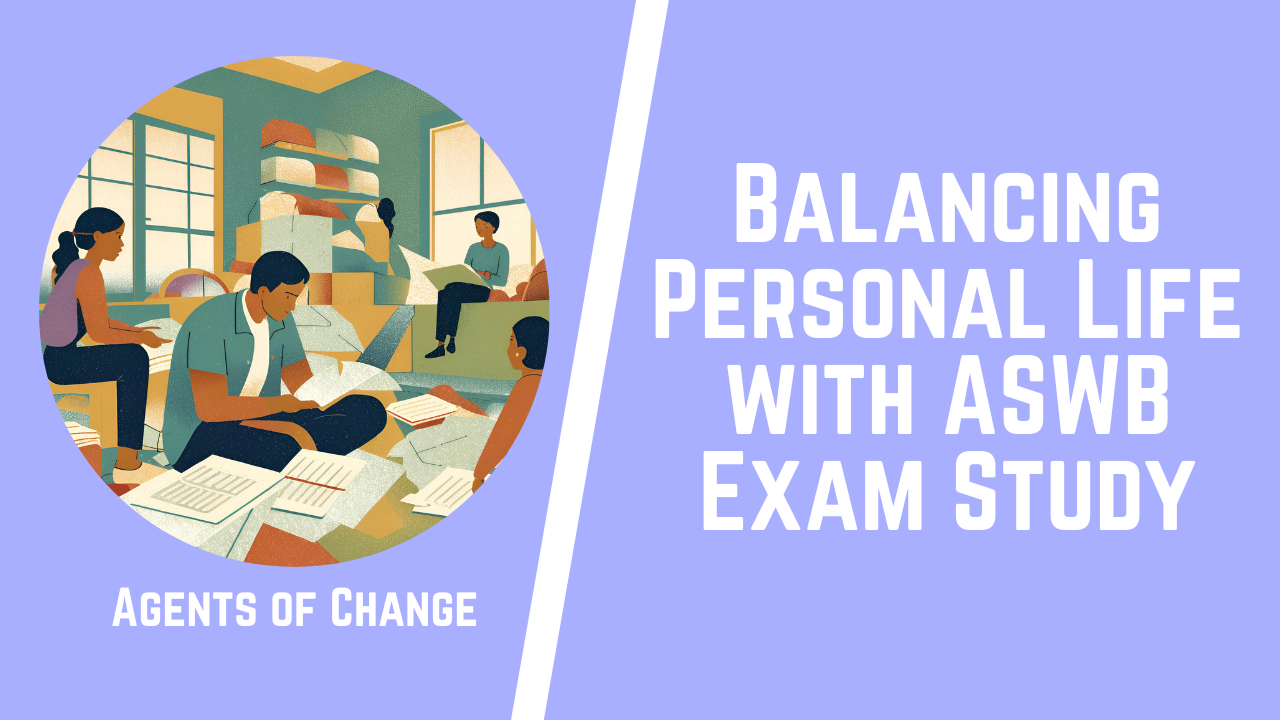
a diverse group of social workers studying for an exam in a communal setting. The illustration is colorful and expressive, capturing the balance between professional exam preparation and personal responsibilities.

Emotional and Mental Demands of Social Work

Social Work is inherently demanding, often requiring emotional investment and mental stamina. This can deplete your energy levels, making it hard to switch gears and focus on studying:

  • Emotional Fatigue: Daily interactions with clients who may be facing significant life challenges can leave you emotionally drained.
  • Compassion Fatigue: Continually empathizing with others’ hardships can lead to this form of burnout, making it hard to concentrate on your studies.
  • Mental Load: The need to make critical decisions and provide support can extend beyond work hours, impacting your ability to focus on exam preparation.

Time Management Challenges

Finding adequate time to study amidst professional and personal obligations is another hurdle. The finite hours in a day often seem insufficient for all tasks, leading to:

  • Work Commitments: Full-time jobs, especially in demanding fields like Social Work, can leave little room for additional activities.
  • Family Responsibilities: Caring for children or other family members requires time and energy, which can limit your study sessions.
  • Social Obligations: Maintaining a healthy social life is also crucial for mental health but requires time management.

Physical Exhaustion

The physical demands of work and life can also hinder study efforts, particularly when:

  • Long Work Hours: Extended hours at work, common in Social Work settings, can lead to physical tiredness.
  • Poor Sleep Patterns: High stress and irregular work hours can disrupt sleep, reducing alertness and retention capacity during study times.
  • Neglected Health: Busy schedules can lead to skipped meals, lack of exercise, and ignored health needs, all of which affect cognitive functions.

Understanding these factors is crucial in developing a realistic and effective study plan. It’s about working smarter, not harder, and ensuring your well-being is preserved as you prepare for your ASWB exam.

By recognizing these challenges, you can tailor your study habits to be more flexible, integrate rest and recovery, and use your time more efficiently, all of which are essential for maintaining balance.

Agents of Change packages include 30+ ASWB topics, 2 free study groups per month, and hundreds of practice questions so you’ll be ready for test day!

2) Practical Tips for Balancing Personal Life with ASWB Exam Study

1. Set Clear, Realistic Goals

Setting manageable goals is essential. You’ll want to set both short-term and long-term goals that you can realistically accomplish within your time frame.

  • Break Down Your Study Timeline: Instead of saying, “I need to study for the ASWB,” break it down into actionable steps. Maybe start with “This month, I’ll review ethics,” and then “Next month, I’ll dive into human behavior.” All Agents of Change packages include study schedule plans!
  • Daily Micro-goals: Set small goals like “read 5 pages” or “review 10 flashcards.” Little accomplishments every day lead to significant progress over time.
  • Celebrate Small Wins: Acknowledge each milestone, no matter how small. It keeps your motivation alive!

2. Designate a Study Time That Works for YOU

Everyone has different times of day when they’re at their best. Some are early birds, while others do their best thinking in the evening. Find your peak time and designate it for study.

  • Early Morning or Late Evening: Consider whether you can study during early morning quiet hours or in the late evening. Early birds may find a morning study habit to be incredibly effective.
  • Leverage Lunch Breaks: Even 15 minutes during lunch can make a difference. Try using that time to go over flashcards or review notes.
  • Weekends as Power Sessions: For some, dedicating a couple of hours on the weekend for focused study can help alleviate weekday pressures.

3. Utilize the Power of Study Tools and Apps

photorealistic image of a diverse female social worker studying confidently for an exam. The setting captures her focus and the real-world environment of balancing life and studies.

Digital tools can save time and boost your efficiency when it comes to studying.

  • Agents of Change packages all include study plans and structured materials to keep you on track even when you’re time-limited.
  • Quizlet or Brainscape for Flashcards: Flashcards are great for memorizing terms or key concepts quickly, and these apps can be accessed anytime. Claim your free Agents of Change flashcards here.
  • Pomodoro Timers: The Pomodoro technique (25 minutes focused, 5-minute break) can help sustain concentration without burnout. Apps like Focus Keeper or Tide can help.

4. Communicate with Your Support System

Your friends and family may not realize the time commitment you’re making. Open communication is essential so that they can support (or at least understand) your journey.

  • Explain Your Goal and Timeline: Give your loved ones an idea of why this exam matters to you. When they understand what’s at stake, they’re more likely to be supportive.
  • Set Boundaries During Study Times: Politely let people know when you’re not available, like during your set study times. A quick “I’m studying for the next hour” goes a long way in setting expectations.
  • Ask for Help with Daily Tasks: Whether it’s help with chores or watching the kids, don’t hesitate to lean on others when you’re trying to focus.

5. Schedule ‘You’ Time

Balancing personal life with ASWB exam study can quickly lead to burnout if you’re not careful about downtime. Make sure to schedule breaks to recharge.

  • Set Aside At Least One ‘Rest Day’ a Week: Use this time to unwind and relax without any studying. This can help you reset mentally and physically.
  • Incorporate Physical Activity: A quick walk or a workout can boost your energy and concentration levels.
  • Mindfulness or Meditation Sessions: Apps like Headspace or Calm can help you build in a quick mindfulness routine, which is excellent for stress relief and focus.

6. Practice Effective Time Management

Time management is the secret sauce to balancing life and exam prep.

  • Use a Planner or Digital Calendar: Block out study time on your calendar just like you would a work meeting. Seeing it there can reinforce commitment. Agents of Change packages include study schedules to help you plan your personal and studying times.
  • Prioritize Tasks with the Eisenhower Matrix: This matrix divides tasks into four categories: urgent/important, not urgent/important, urgent/not important, and not urgent/not important. Focusing on high-priority tasks keeps you efficient.
  • Limit Distractions: Put your phone on airplane mode or use apps like Freedom to block distracting websites.

7. Focus on Conceptual Understanding

The ASWB exam emphasizes understanding over rote memorization. It’s all about applying Social Work principles in various scenarios.

  • Use Case Studies: Reviewing case studies or hypothetical scenarios can help you apply theoretical concepts.
  • Group Study for Discussion: If you have time, study groups can be great for talking through complex concepts and applications.
  • Regular Self-Assessment: Taking practice tests regularly can help highlight areas where you need more focus.

8. Leverage Practice Exams Wisely

Practice exams are one of the best ways to prepare, but they should be approached strategically.

  • Simulate Exam Conditions: Set a timer, use only the resources you’ll have in the exam, and see how you perform.
  • Review Each Mistake: Don’t just go over the right answers. Spend time analyzing your mistakes to understand where you went wrong.
  • Track Progress: Keep a record of your scores to monitor improvement over time.

3) ASWB Study Resources That Can Help

Preparing for the ASWB exam requires dedication and hard work and the right resources to guide your study. There are several valuable tools and programs available that can provide structured learning and help you effectively navigate the breadth of the Social Work curriculum.

a diverse male social worker studying for an exam in a public library. The setting captures his concentration within an academic atmosphere.

Here’s a look at some key resources that can significantly improve your exam preparation.

Agents of Change Study Programs

Agents of Change (https://agentsofchangeprep.com/) offers comprehensive study programs tailored specifically for ASWB exam takers. Their resources are designed to enhance your learning experience and boost your exam readiness through:

  • Live Study Groups: Participate in two live study groups per month. These sessions allow you to interact with knowledgeable instructors and fellow exam takers, fostering a collaborative learning environment where you can discuss tricky topics and clarify doubts in real-time.
  • Extensive Practice Questions: Access to hundreds of practice questions helps you test your knowledge and prepare for the type of questions you’ll face on the actual exam. Practicing with these questions can also aid in identifying areas where you need further study or clarification.
  • Structured Learning: The structured format of Agents of Change programs ensures that you cover all necessary content areas systematically, making it easier to track your progress and maintain a comprehensive study schedule.

These features make Agents of Change an excellent resource for anyone serious about passing the ASWB exam. The blend of live support and extensive practice materials can significantly enhance your study effectiveness.

Official ASWB Practice Exam

The official ASWB practice exam is another invaluable resource for prospective Social Workers. Available through the ASWB’s official website (https://www.aswb.org/exam/getting-ready-for-the-exam/online-practice-test/), this practice test offers several benefits:

  • Exam Format Familiarity: The practice exam is structured similarly to the actual ASWB exam, which helps you get accustomed to the format and time constraints you will face.
  • Direct Insight into Exam Questions: While the questions are not identical to those on the actual exam, they are similar in style and complexity, providing a realistic practice experience.
  • Performance Feedback: After completing the practice test, you receive detailed feedback on your performance. This feedback can pinpoint areas of strength and weakness, allowing you to focus your studies more effectively on topics that need attention.

Every ASWB exam candidate should consider taking the official practice exam. It serves as a diagnostic tool to assess your readiness and a strategic asset in fine-tuning your study plan.

Utilizing these targeted resources can elevate your ASWB exam preparation, providing you with structured study, real-time problem-solving opportunities, and a deep dive into the types of questions you’ll encounter on the exam day. Together, they offer a robust framework to help you approach your exam with confidence and competence.

4) FAQs – Balancing Personal Life with ASWB Exam Study

Q: How long should I prepare for the ASWB exam?

A: The length of preparation time for the ASWB exam varies based on your background in Social Work, familiarity with the exam content, and personal learning pace. However, a common recommendation is to begin studying at least three to six months before your scheduled exam date.

This timeframe allows you to cover all content areas thoroughly, engage in various forms of review, and complete plenty of practice exams. Adjust this timeline based on your weekly availability; some candidates might need more time if they can only commit a few hours each week.

Q: Can I still work full-time while studying for the ASWB exam?

A: Yes, many candidates successfully prepare for the ASWB exam while working full-time. The key is effective time management. Utilize a detailed study schedule that includes consistent, shorter study sessions during the workweek, complemented by longer sessions on weekends.

Take advantage of tools and resources that fit into a busy schedule, such as mobile apps for study on the go and live study groups like those offered by Agents of Change, which provide structured learning without requiring daily time commitments.

Q: What are the best methods to retain the information needed to pass the ASWB exam?

A: Effective retention strategies for the ASWB exam include a mix of active learning techniques and consistent review. Here are a few methods to consider:

  • Active Recall: Regularly test yourself on the material instead of passively reading or watching videos. Use flashcards, practice questions, or explain the material in your own words.
  • Spaced Repetition: Review the material at increasing intervals. This technique helps move information from short-term to long-term memory.
  • Interleaving Practice: Mix up your study topics instead of focusing on one subject for a long time. This method helps improve problem-solving skills and application of knowledge across different scenarios.
  • Group Study: Joining study groups can help reinforce your knowledge through discussion and explanation, a method that can be particularly beneficial for understanding complex Social Work concepts. All Agents of Change packages include 2 live study groups per month.

5) Conclusion

Balancing personal life with ASWB exam study requires dedication, strategic planning, and resourcefulness. By setting clear, achievable goals, optimizing your study schedule, and utilizing targeted resources like Agents of Change and the official ASWB practice exam, you can enhance your preparation significantly. Remember, success in the ASWB exam isn’t just about hard study but also about studying smart—integrating preparation seamlessly into your daily life without sacrificing your personal well-being or professional responsibilities.

Embracing a holistic approach to exam preparation, which includes managing stress, practicing self-care, and seeking support when needed, can make a considerable difference. Your journey towards becoming a licensed Social Worker is as much about learning and understanding as it is about self-growth and resilience. Maintaining a balanced lifestyle while preparing for the exam will help you achieve a better outcome and prepare you for the demanding yet rewarding career ahead.

Ultimately, every minute spent in thoughtful preparation brings you one step closer to your goal of passing the ASWB exam and advancing in your Social Work career. So, keep pushing forward, stay organized, and remember to take care of yourself along the way. With the right strategies and resources at your disposal, you are well-equipped to tackle this challenge and emerge successful, ready to make a significant impact in the field of Social Work.


► Learn more about the Agents of Change course here: https://agentsofchangeprep.com

About the Instructor, Meagan Mitchell: Meagan is a Licensed Clinical Social Worker and has been providing individualized and group test prep for the ASWB for over 8 years. From all of this experience helping others pass their exams, she created the Agents of Change course to help you prepare for and pass the ASWB exam!

Find more from Agents of Change here:

► Facebook Group: https://www.facebook.com/groups/aswbtestprep

► Podcast: https://podcasters.spotify.com/pod/show/agents-of-change-sw

#socialwork #testprep #aswb #socialworker #socialwork #socialworktest #socialworkexam #exam #socialworktestprep #socialworklicense #socialworklicensing #licsw #lmsw #lcsw #aswbexam #aswb #lcswexam #lmswexam #aswbtestprep #aswbtest #lcswtestprep #lcswtest #lmswtestprep #lmswtest #aswbcourse #learningstyles #learningstyle

Disclaimer: This content has been made available for informational and educational purposes only. This content is not intended to be a substitute for professional medical or clinical advice, diagnosis, or treatment.

Share:

Discover more from Agents of Change

Subscribe now to keep reading and get access to the full archive.

Continue reading