Defense Mechanisms Explained: Regression

Defense Mechanisms Explained: Regression
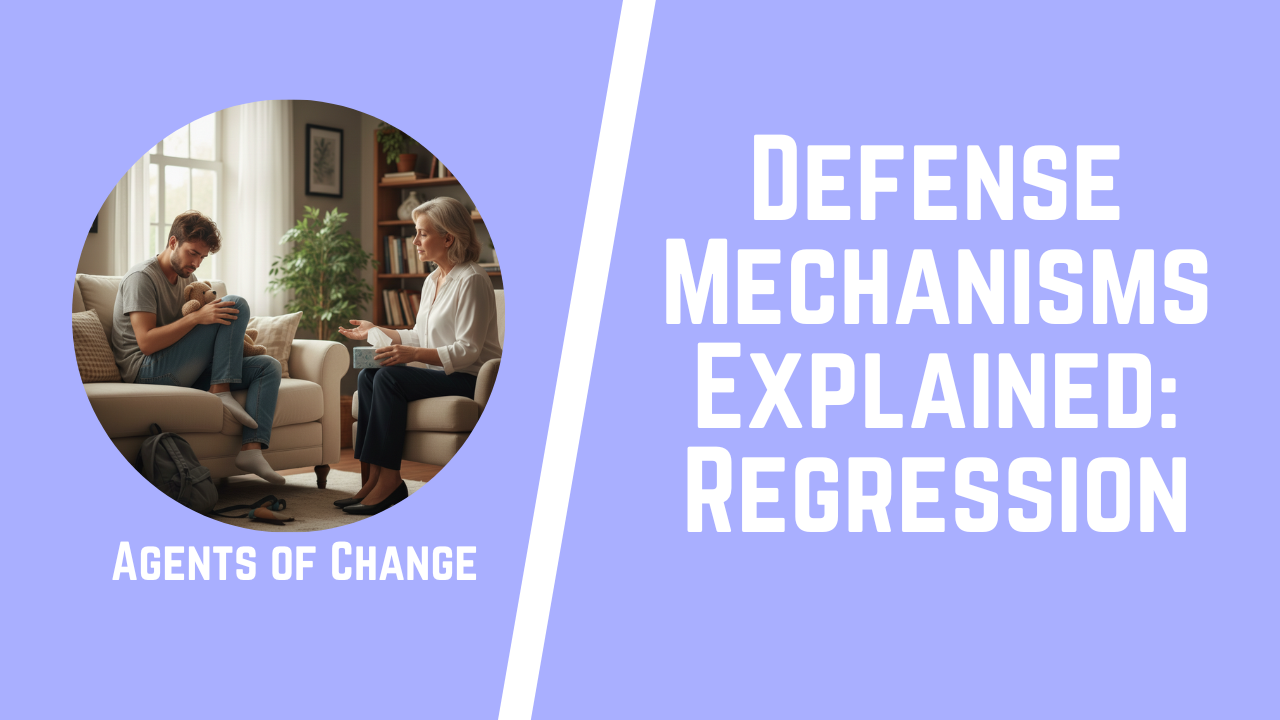
Preparing for the ASWB exam can feel like trying to juggle a dozen topics at once while keeping your confidence steady. Human behavior theories, assessment strategies, ethics, and intervention models all compete for your attention, and it is easy to wonder where to focus your energy first. Among these topics, defense mechanisms often trip people up because they show up in subtle ways and require careful interpretation rather than simple memorization.

Regression is one of those concepts that seem straightforward at first, yet become confusing when placed in a realistic case scenario. A client’s behavior may suddenly appear immature, dependent, or emotionally intense, and the exam expects you to recognize what is happening beneath the surface. Understanding why this happens and how it fits into psychological theory can make a big difference in how confidently you answer those questions.

This post is designed to help you feel more grounded when you encounter regression on the ASWB exam and in real Social Work practice. You will learn what regression actually means, how it differs from other defense mechanisms, and how it typically appears in test questions. With a clearer picture of this concept, you can approach both studying and client scenarios with greater clarity and less second-guessing.

Learn more about the ASWB exam and create a personalized ASWB study plan with Agents of Change. We’ve helped hundreds of thousands of Social Workers pass their ASWB exams and want to help you be next!

1) Why Defense Mechanisms Matter on the ASWB Exam

Defense mechanisms matter on the ASWB exam because they sit right at the intersection of theory, assessment, and intervention, which are three areas the test loves to blend together. You might be reading a question that appears to be about coping, emotional regulation, or even resistance to treatment, but the correct answer depends on recognizing an unconscious psychological process at work. If you miss that layer, it becomes easy to choose an option that sounds helpful but does not match the question’s true intent.

Another reason defense mechanisms are so important is that the ASWB frequently presents them through brief client scenarios rather than direct definitions. Instead of asking, “What is regression,” the exam might describe a stressed adult who suddenly becomes dependent, avoids responsibility, or seeks constant reassurance. Your task is to translate behavior into psychological meaning, and that skill is central to competent Social Work practice. Identifying these patterns helps you understand what a client is communicating emotionally, even when they cannot put it into words themselves.

Finally, defense mechanisms guide what the Social Worker should do next, which is often the heart of the question. If a client is using regression, confrontation, or pushing for insight, these approaches may increase distress rather than promote growth. The exam expects you to recognize when support, stabilization, or reassurance is more appropriate than challenge. When you understand defense mechanisms, you are not just labeling behavior; you are choosing responses that align with the client’s emotional capacity in that moment, which is exactly the kind of clinical judgment the ASWB is designed to measure.

Agents of Change packages include 30+ ASWB topics, 2 free study groups per month, and hundreds of practice questions so you’ll be ready for test day!

2) Defense Mechanisms Explained: Regression

Regression is one of the most commonly tested defense mechanisms on the ASWB exam because it reflects how people respond when emotional stress exceeds their usual coping capacity.

 a therapy session where a client is exhibiting the regression defense mechanism

Rather than facing the stress with adult problem-solving skills, the person unconsciously shifts into behaviors, emotions, or ways of relating that come from an earlier stage of development. This shift is not planned and it is not manipulative. It is the nervous system searching for safety using strategies that once worked.

Understanding regression clearly helps you answer exam questions more accurately and respond to clients with greater empathy in real Social Work settings. Let’s break it down into manageable pieces.

What Regression Looks Like in Behavior

Regression can appear in many forms, and the exact behavior depends on the person’s developmental history and current stressors. The key feature is that the behavior feels younger than the person’s actual age or usual level of functioning.

Common signs of regression include:

  • Increased dependency on others for reassurance or decision-making

  • Tearfulness or emotional outbursts that feel disproportionate to the situation

  • Withdrawal from responsibilities or adult roles

  • Difficulty tolerating frustration or waiting for help

  • Seeking comfort in routines or objects associated with safety

On the ASWB exam, these behaviors are often described after a stressful trigger such as illness, trauma, loss, or major life transitions. When you see that pattern, regression should be high on your list of possibilities.

Why the Mind Uses Regression

Regression serves a protective psychological function. When a person feels overwhelmed, the brain attempts to reduce emotional threat by returning to a time when fewer demands existed and support felt more accessible. This does not mean the person actually becomes a child, but their emotional responses may temporarily reflect earlier coping strategies.

Regression may be triggered by:

  • Feeling powerless or trapped

  • Sudden changes in environment or routine

  • Trauma reminders or anniversaries

  • Medical procedures or hospitalization

  • Relationship conflict or abandonment fears

From a clinical standpoint, regression can be understood as a signal that the person’s current stress level has exceeded their coping resources. For the Social Worker, this becomes important information about the client’s emotional state, not a reason to label the client as resistant or uncooperative.

Regression Across Different Practice Settings

Regression does not belong to just one population or treatment context. It can appear in many areas of Social Work, which is why the ASWB includes it across multiple content domains.

In different settings, regression may look like:

  • In medical settings: patients relying heavily on staff, avoiding decisions, or expressing fear in childlike ways

  • In mental health counseling: clients becoming emotionally fragile when discussing trauma or difficult relationships

  • In child welfare: children returning to earlier behaviors such as bedwetting or separation anxiety after family disruptions

  • In geriatric care: older adults becoming more dependent or withdrawn following illness or loss

Recognizing that regression is context-driven helps you avoid assuming long-term pathology when the behavior may be temporary and stress-related.

Regression vs Normal Stress Reactions

One of the challenges on the ASWB exam is deciding whether behavior represents regression or simply emotional distress. While both involve discomfort, regression specifically involves a return to earlier patterns of functioning rather than just feeling upset.

Stress reactions may include:

  • Feeling anxious or worried

  • Difficulty sleeping

  • Irritability or sadness

Regression, however, involves:

  • A noticeable shift in maturity or independence

  • Behavior that resembles earlier developmental stages

  • Increased reliance on others in ways that are new or intensified

When the question highlights this developmental shift, that is your strongest clue that regression is being described.

How Regression Affects Intervention Choices

The ASWB exam often tests not just recognition of regression, but what a Social Worker should do in response to it. Because regression reflects emotional overload, the most appropriate interventions usually focus on safety, support, and stabilization rather than confrontation or deep insight work.

Helpful responses may include:

  • Providing reassurance and emotional validation

  • Offering structure and predictability

  • Helping the client regain a sense of control

  • Gradually encouraging independent functioning as stability improves

What typically does not help in moments of regression is pushing for behavioral change without addressing emotional safety first. The exam often rewards answers that respect the client’s current emotional capacity rather than expecting immediate self-sufficiency.

How Regression Is Tested on the ASWB

Regression usually appears in case vignettes where a client’s behavior suddenly changes following stress. You may be asked to identify the defense mechanism, interpret the meaning of the behavior, or choose the most appropriate next step.

When reading these questions, it helps to ask yourself:

  • What stressor just occurred

  • How has the client’s behavior changed

  • Does the behavior resemble earlier developmental coping

If the answer points to a backward shift in coping style, regression is likely the correct concept. Keeping this framework in mind prevents you from confusing regression with resistance, dependency disorders, or poor motivation, all of which may appear similar on the surface but are conceptually different.

3) Commonly Confused Defense Mechanisms with Regression

Regression is easy to recognize when behaviors are clearly childlike, but many ASWB exam questions are written to blur the lines between similar defense mechanisms. This is where test takers often second-guess themselves and change correct answers.

client in hospital demonstrating regression defense mechanism

Knowing the top defense mechanisms that get confused with regression, and exactly how to tell them apart, can save you valuable points on exam day.

Below are the three most commonly confused defense mechanisms with regression and the key differences you should look for in ASWB-style scenarios.

1. Regression vs Denial

Denial involves refusing to acknowledge an uncomfortable reality, while regression involves changing behavior in response to emotional overload. Both can appear after stressful events, which is why they are often confused.

Denial looks like:

  • Insisting nothing is wrong despite evidence

  • Minimizing the seriousness of a situation

  • Rejecting medical or psychological diagnoses

Regression looks like:

  • Becoming more dependent or emotionally vulnerable

  • Withdrawing from adult responsibilities

  • Displaying childlike emotional reactions

How to tell the difference:
Ask whether the client is rejecting reality or retreating emotionally. If the person is aware of the situation but cannot cope in their usual adult way, that points to regression. If the person refuses to accept that the problem exists at all, that points to denial.

On the ASWB exam, denial usually centers on thoughts and beliefs, while regression centers on behavior and emotional functioning.


2. Regression vs Acting Out

These two are frequently confused because both involve emotional expression under stress. The difference lies in how the emotion is expressed and whether the behavior reflects earlier developmental patterns.

Acting out looks like:

  • Impulsive or risky behavior

  • Aggressive or disruptive actions

  • Externalizing emotions through behavior rather than words

Regression looks like:

  • Clinging or seeking reassurance

  • Crying or withdrawing

  • Avoiding adult responsibilities

How to tell the difference:
Look at whether the behavior is impulsive and outwardly disruptive, or emotionally dependent and inwardly focused. Acting out pushes emotions outward through behavior, while regression pulls the person inward toward earlier emotional coping styles.

On exam questions, acting out is more likely to involve rule-breaking, aggression, or sudden, risky actions. Regression tends to involve helplessness, dependency, or emotional retreat.


3. Regression vs Projection

Projection is often confused with regression because both can occur during emotional distress, but they operate in completely different ways.

Projection looks like:

  • Attributing one’s own feelings to others

  • Accusing others of emotions or intentions that the client is experiencing

  • Externalizing internal conflict

Regression looks like:

  • Shifting into younger emotional behaviors

  • Becoming dependent or passive

  • Seeking protection or reassurance

How to tell the difference:
Ask whether the client is misattributing feelings to others or changing their own behavior. Projection is about where emotions are assigned, while regression is about how the person behaves and copes.

On the ASWB exam, projection is usually revealed through statements the client makes about other people, while regression is revealed through how the client functions emotionally and socially.


Quick Decision Guide for Exam Questions

When you are stuck between regression and another defense mechanism, these questions can help you choose more confidently:

  • Is the client rejecting reality, or reacting emotionally to it?

  • Is the behavior impulsive and disruptive, or dependent and withdrawn?

  • Is the client blaming others for internal feelings, or struggling to cope internally?

If the behavior reflects a return to earlier emotional functioning under stress, regression is the strongest answer.

Understanding these distinctions helps you move beyond memorization and into true clinical reasoning, which is exactly what the ASWB exam is designed to assess. When you can quickly spot the pattern behind the behavior, your confidence improves, your answer choices narrow, and the question becomes far less intimidating.

4) How the Regression Defense Mechanism Shows Up on the ASWB Exam

On the ASWB exam, regression rarely appears as a direct definition question. Instead, it is almost always embedded inside a short client vignette where you must interpret behavior and identify the underlying coping response. These questions test your ability to connect emotional stress to developmental functioning, which is a core skill in Social Work assessment.

Most regression questions follow a predictable structure. First, the exam introduces a stressor such as illness, trauma, relationship conflict, or a major life change. Next, it describes a noticeable shift in the client’s behavior that seems less mature or less independent than their typical functioning. Finally, the question asks you to identify what psychological process is occurring or what the behavior most likely represents. If you train your brain to look for that stress plus backward shift pattern, regression becomes much easier to recognize.

You may also see regression indirectly tested through intervention questions. For example, the exam might describe a client who becomes emotionally fragile, dependent, or withdrawn during therapy and then ask what the Social Worker should do next.

In those cases, the correct answer usually involves providing emotional support, stabilization, or reassurance rather than confrontation or insight-oriented techniques. The exam is assessing whether you understand that regression reflects emotional overload, not unwillingness to participate in treatment.

Practice ASWB Exam Question

Question:
A 42-year-old client who is usually independent and confident becomes tearful, avoids making decisions, and frequently seeks reassurance from the Social Worker after being diagnosed with a serious medical condition. Which defense mechanism best explains the client’s behavior?

A. Denial
B. Regression
C. Projection
D. Intellectualization

Correct Answer: B. Regression

Rationale

The key features in this question are the stressful trigger and the noticeable shift in functioning. The client has experienced a serious medical diagnosis, which represents a significant loss of control and increase in vulnerability. Following this stressor, the client becomes emotionally dependent, tearful, and avoids decision-making, all of which reflect a retreat to earlier coping styles.

Denial would involve refusing to accept the diagnosis or minimizing its seriousness, which is not described here. Projection would involve attributing the client’s own fears or emotions to others, such as accusing staff of being afraid when the client is actually anxious. Intellectualization would involve focusing on facts and medical details to avoid emotional processing, which is the opposite of what is happening in this scenario.

Because the behavior reflects a shift toward childlike dependency and emotional vulnerability in response to stress, regression is the most accurate answer.

How to Strengthen Your Exam Strategy for Regression Questions

To improve your accuracy with regression-related questions, keep these strategies in mind:

  • Always identify the stressor first and ask how the client responds to it

  • Look for changes in independence, emotional regulation, or maturity

  • Focus on behavior patterns rather than isolated emotions

  • Choose interventions that match the client’s current emotional capacity

When you consistently apply this framework, regression becomes one of the easier defense mechanisms to identify. Instead of guessing, you are reading the emotional story behind the behavior, which is exactly what the ASWB exam expects you to do as a future Social Worker.

5) FAQs – The Regression Defense Mechanism

Q: How can I quickly identify regression versus general emotional distress on the ASWB exam?

A: The fastest way to tell the difference is to look for a change in developmental functioning, not just strong feelings. Emotional distress may involve anxiety, sadness, or fear while the person still maintains adult decision-making and independence.

Regression involves a shift toward earlier coping patterns, such as increased dependency, avoidance of responsibility, or seeking constant reassurance. On the ASWB exam, when emotional reactions are paired with behaviors that feel younger or less self-directed than the client’s usual functioning, regression is the more accurate interpretation.

Q: Will the ASWB expect me to choose regression even if the behavior could also fit another concept?

A: Yes, and this is where careful reading matters. The exam is written so that one answer best fits the overall pattern, even if other concepts seem partially relevant. If the behavior includes a backward shift in coping after stress, regression usually becomes the most clinically accurate option compared to defenses like denial, projection, or acting out. When you see developmental retreat combined with emotional vulnerability, the exam is signaling regression more strongly than any other defense mechanism.

Q: How much time should I spend studying defense mechanisms compared to other ASWB topics?

A: Defense mechanisms should be studied as part of your broader human behavior review rather than as an isolated topic. They frequently appear within case vignettes that also test assessment skills and intervention choices, so they influence more than one content area.

You do not need to memorize every defense mechanism in depth, but you should feel very comfortable with the most common ones, including regression, denial, projection, displacement, rationalization, and sublimation. Understanding how these appear in real scenarios will give you more return on your study time than memorizing definitions alone.

6) Conclusion

Understanding regression as a defense mechanism gives you a powerful lens for interpreting client behavior, both on the ASWB exam and in real Social Work practice. When you recognize that certain behaviors are signs of emotional overload rather than lack of motivation or resistance, your responses become more compassionate and clinically appropriate. This shift in perspective helps you move beyond surface-level reactions and toward a deeper understanding of what clients are experiencing internally.

For exam preparation, recognizing regression can simplify many scenario-based questions that might otherwise feel confusing. When you learn to connect stress, loss of control, and changes in developmental functioning, the correct answer becomes much clearer. Instead of memorizing definitions in isolation, you begin to see patterns that repeat across different questions and practice settings, which builds both confidence and consistency in your decision-making.


► Learn more about the Agents of Change course here: https://agentsofchangeprep.com

About the Instructor, Dr. Meagan Mitchell: Meagan is a Licensed Clinical Social Worker and has been providing individualized and group test prep for the ASWB for over 11 years. From all of this experience helping others pass their exams, she created the Agents of Change course to help you prepare for and pass the ASWB exam!

Find more from Agents of Change here:

► Facebook Group: https://www.facebook.com/groups/aswbtestprep

► Podcast: https://podcasters.spotify.com/pod/show/agents-of-change-sw

#socialwork #testprep #aswb #socialworker #socialwork #socialworktest #socialworkexam #exam #socialworktestprep #socialworklicense #socialworklicensing #licsw #lmsw #lcsw #aswbexam #aswb #lcswexam #lmswexam #aswbtestprep #aswbtest #lcswtestprep #lcswtest #lmswtestprep #lmswtest #aswbcourse #learningstyles #learningstyle

Disclaimer: This content has been made available for informational and educational purposes only. This content is not intended to be a substitute for professional medical or clinical advice, diagnosis, or treatment.

Note: Certain images used in this post were generated with the help of artificial intelligence.

Share:

Discover more from Agents of Change

Subscribe now to keep reading and get access to the full archive.

Continue reading