Defense Mechanisms Explained: Suppression

Defense Mechanisms Explained: Suppression
Preparing for the ASWB exam can feel overwhelming, especially when psychological concepts start to blur together after hours of studying. Defense mechanisms are a perfect example of this, since many of them sound similar but function in very different ways. Suppression often gets less attention than other defenses, yet it appears frequently in exam questions and real Social Work scenarios. Understanding how it works can make a noticeable difference in both test performance and professional confidence.

Suppression is unique because it involves a conscious choice to set aside uncomfortable thoughts or feelings so a person can stay focused on immediate responsibilities. That small detail can completely change how a case vignette should be interpreted on the exam. When students miss that point, it is easy to confuse suppression with other mechanisms like repression or denial, which can lead to selecting the wrong answer even when the overall situation seems familiar. Getting clear on this concept early helps reduce that kind of second-guessing later on.

This article breaks down suppression in practical, easy-to-understand terms and shows how it fits into the broader category of defense mechanisms. You will see how it appears in client behavior, how to distinguish it from similar concepts, and why the ASWB exam expects you to recognize it quickly. By the end, you should feel more confident in identifying suppression and using that knowledge to choose the best responses on test day.

Learn more about the ASWB exam and create a personalized ASWB study plan with Agents of Change. We’ve helped hundreds of thousands of Social Workers pass their ASWB exams and want to help you be next!

1) Why Defense Mechanisms Matter on the ASWB Exam

Defense mechanisms matter on the ASWB exam because they help assess your ability to understand how people cope with stress, conflict, and emotional discomfort. The exam is not only testing whether you can recognize terminology, but whether you can interpret behavior and thought patterns in realistic situations. Many questions describe clients who are responding to anxiety, trauma, or interpersonal conflict, and the correct answer often depends on identifying the coping strategy being used. If you can quickly recognize a defense mechanism, you gain valuable insight into what the client is experiencing and what kind of intervention would be most appropriate.

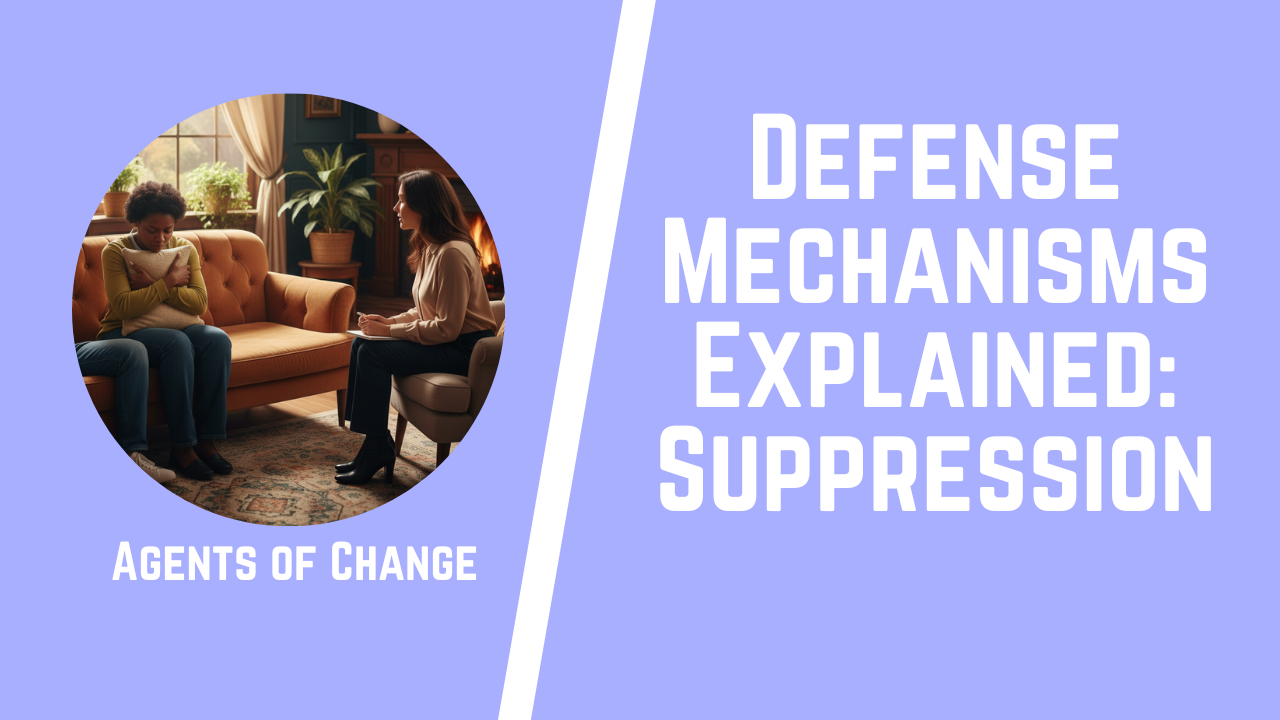
a diverse client expressing suppression defense mechanism in a 1:1 therapy sesssion in a warm and comfortable office

Another reason these concepts are tested is that they connect directly to assessment and treatment planning, which are central to Social Work practice. Defense mechanisms influence how clients communicate, how they respond to stress, and how open they may be to support or change. On the exam, this may show up as a question asking what a client’s behavior indicates, what stage of readiness they are in, or how a Social Worker should respond next. Understanding defense mechanisms helps you avoid jumping to conclusions and instead choose responses that align with the client’s emotional capacity and safety in that moment.

Finally, defense mechanisms are tested because they reveal how well you can think clinically under pressure, which mirrors real practice more than memorized facts ever could. The ASWB exam often presents multiple answer choices that seem reasonable, but only one fits best with the client’s psychological functioning. When you understand how suppression, denial, projection, and other defenses differ, you are better equipped to narrow down your options and avoid common traps. In other words, these concepts act like shortcuts to understanding the bigger picture of a case, which is exactly what the exam wants to see.

Agents of Change packages include 30+ ASWB topics, 2 free study groups per month, and hundreds of practice questions so you’ll be ready for test day!

2) Defense Mechanisms Explained: Suppression

Suppression is one of those concepts that sounds simple at first, yet it plays a major role in both clinical understanding and ASWB exam questions. While it is classified as a defense mechanism, it can function more like a coping strategy in certain situations. The key is that suppression involves awareness and choice, which separates it from many other psychological defenses that operate automatically and outside of conscious control.

a diverse client expressing suppression defense mechanism in a 1:1 therapy sesssion in a warm and comfortable office

What Suppression Means in Simple Terms

At its core, suppression is the conscious decision to postpone dealing with distressing thoughts, feelings, or impulses. The person knows the emotion or problem exists, but intentionally sets it aside to stay focused on what needs to be done in the moment. This does not mean the issue is ignored forever, just that it is delayed until a safer or more manageable time.

In everyday life, suppression might look like someone choosing to focus on work during the day and planning to process emotions later at home, or a parent holding back their own distress in order to support their child. The emotional material is still accessible, but temporarily placed on the back burner.

Key Features of Suppression

When you are trying to identify suppression, especially in an exam scenario, certain features tend to stand out. These clues can help you distinguish it from other defense mechanisms.

Common characteristics include:

  • The person acknowledges the thought or feeling

  • There is an intentional effort to put it aside

  • The delay is usually temporary

  • The goal is to stay functional in the present situation

If awareness and choice are both present, suppression should be high on your list of possibilities.

Suppression vs Repression

This is one of the most important distinctions for the ASWB exam, and it comes up often. While the two words sound similar, they operate very differently.

With suppression, the person is aware of what they are avoiding and chooses to delay thinking about it. With repression, the person is not aware that the thought or feeling is being blocked. The material is pushed out of conscious awareness automatically, and the person may not understand why they are reacting emotionally or physically in certain situations.

A quick way to remember this difference is:

  • Suppression is intentional and conscious

  • Repression is automatic and unconscious

If the vignette shows insight into the avoided emotion, suppression is the better answer.

When Suppression Can Be Helpful

Unlike some defense mechanisms that are mostly maladaptive, suppression can be useful in certain contexts. It allows people to manage emotional overload when immediate responsibilities require attention and focus.

Situations where suppression may serve a protective function include:

  • Emergencies where quick decisions are necessary

  • Academic or work deadlines that cannot be postponed

  • Supporting others during a crisis

  • Short-term stress that will be addressed later

In these cases, suppression can help prevent emotional flooding and support stability. From a Social Work perspective, short-term suppression may be appropriate when safety and functioning are the priority.

When Suppression Becomes a Problem

While suppression can be helpful in the short term, long-term or habitual suppression may interfere with emotional processing and mental health. Emotions that are repeatedly pushed aside tend to resurface in other ways, including anxiety, irritability, or physical symptoms.

Potential risks of chronic suppression include:

  • Increased stress and burnout

  • Difficulty recognizing emotional needs

  • Strained relationships due to emotional distance

  • Delayed grief or trauma responses

On the ASWB exam, this may appear in questions about coping patterns that are no longer serving the client well and require intervention or emotional exploration.

How Suppression Appears in ASWB Exam Scenarios

Exam questions rarely label suppression directly. Instead, they describe behavior and internal experiences that point to the mechanism.

Clues that suggest suppression may include statements like:

  • The client says they will deal with feelings later

  • The client acknowledges distress but prioritizes other tasks

  • The client intentionally avoids emotional conversations temporarily

What matters most is that the client is aware of the emotional issue and is actively choosing to postpone addressing it.

Clinical Implications for Social Work Practice

Understanding suppression helps Social Workers respond appropriately rather than pushing clients to process emotions before they are ready. In early stages of crisis or trauma recovery, supporting stability may be more helpful than encouraging immediate emotional exploration.

Clinical responses may involve:

  • Validating the client’s need to stay focused on immediate concerns

  • Gently checking in about emotional well-being

  • Planning future opportunities to process feelings

  • Building coping skills for emotional regulation

This balanced approach respects the client’s current capacity while keeping long-term emotional health in view.

Why Suppression Is Tested on the ASWB Exam

Suppression is tested because it reflects how people regulate emotions and prioritize functioning, which are core aspects of psychosocial assessment. The exam expects Social Workers to recognize whether a client is avoiding emotions unconsciously or making a strategic choice to delay emotional processing.

By identifying suppression correctly, you can better determine:

  • Whether the behavior is adaptive or maladaptive

  • What level of intervention is appropriate

  • How to support the client without increasing distress

This skill demonstrates clinical judgment, which is exactly what the ASWB exam is designed to measure.

Understanding suppression clearly and confidently gives you one more tool for interpreting client behavior, choosing appropriate interventions, and avoiding common exam traps. When you can spot the awareness and intentional delay that define suppression, you are much more likely to select the best answer and feel confident doing it.

3) Commonly Confused Defense Mechanisms with Suppression

Suppression is frequently confused with other defense mechanisms because many of them involve avoiding emotional discomfort. On the ASWB exam, this confusion is intentional, since several answer choices may seem plausible at first glance. The key to choosing correctly is paying close attention to awareness, intention, and how the emotion is managed. Below are the three defense mechanisms most commonly confused with suppression and how to tell them apart in exam scenarios.

Repression

Repression is the most common trap when suppression is the correct answer, mainly because both involve pushing distressing material out of awareness. The difference lies in whether the client knows the emotion or memory exists.

With repression, the person is not aware that something is being blocked. The emotional material is pushed into the unconscious, and the person may experience anxiety, physical symptoms, or emotional reactions without understanding why. There is no conscious decision to avoid the thought or feeling.

How to tell repression from suppression on the exam:

  • If the client acknowledges the feeling and chooses to avoid it temporarily, think suppression.

  • If the client seems unaware of the emotional source of their reactions, think repression.

  • If the vignette mentions forgotten memories or lack of insight, repression is more likely.

Always look for whether the client knows what they are avoiding. Awareness almost always points to suppression.

Denial

Denial can look similar to suppression because both involve avoiding emotional discomfort, but denial involves rejecting reality rather than postponing emotional processing.

In denial, the person refuses to accept that a problem exists at all. They may minimize, rationalize, or completely dismiss evidence that something is wrong. There is often resistance to acknowledging facts that are obvious to others.

How to tell denial from suppression on the exam:

  • If the client says the problem does not exist, think denial.

  • If the client admits the problem exists but says they will deal with it later, think suppression.

  • If the vignette shows the client arguing against clear evidence, denial is more likely.

Suppression accepts reality. Denial does not. That distinction is critical for test questions.

Displacement

Displacement involves redirecting emotions from a threatening or unsafe target to a safer one. This can be confused with suppression when the original emotion is not directly expressed.

With displacement, the emotion is not postponed, it is expressed in another direction. For example, someone who is angry at their supervisor may come home and argue with their partner instead.

How to tell displacement from suppression on the exam:

  • If the emotion is expressed toward someone else, think displacement.

  • If the emotion is held back entirely and not expressed, think suppression.

  • If the vignette shows emotional reactions in the wrong place, displacement is likely.

Suppression keeps the emotion internal for the time being. Displacement moves the emotion elsewhere.

How to Quickly Identify the Correct Defense Mechanism

When faced with confusing answer choices, focusing on a few core questions can help you narrow things down quickly:

  • Is the client aware of the emotion or problem?

  • Are they choosing to postpone dealing with it, or is it happening automatically?

  • Is the emotion being redirected, denied, or simply set aside?

If awareness and intentional delay are present, suppression is usually the best fit. If awareness is missing, repression becomes more likely. If reality itself is rejected, denial is the stronger answer. If emotions are aimed at the wrong target, displacement is the key concept.

4) How the Suppression Defense Mechanism Shows Up on the ASWB Exam

On the ASWB exam, suppression rarely appears as a direct vocabulary question. Instead, it manifests as client statements, behaviors, and coping choices that require you to interpret what is happening psychologically. The exam is testing whether you can recognize that the client is aware of their emotions and intentionally choosing to postpone dealing with them so they can function in the present moment. This means you must read carefully and pay attention to how much insight the client demonstrates in the vignette.

Most suppression questions include three essential elements: awareness of the emotional issue, a clear decision to set it aside, and a practical reason for doing so, such as work demands, caregiving responsibilities, or immediate safety concerns. The client may even state that they plan to address the feelings later, which is a strong indicator of suppression. When you see this pattern, suppression should stand out as a likely answer choice.

Practice Question

A Social Worker is meeting with a client whose spouse recently passed away. The client reports feeling overwhelmed with sadness but says, “I know I need to grieve, but right now I have to stay focused on taking care of my children and managing work. I plan to deal with my emotions when things calm down.” Which defense mechanism is the client primarily using?

A. Denial
B. Repression
C. Suppression
D. Displacement

Correct Answer: C. Suppression

Rationale

The client is clearly aware of their grief and openly acknowledges their sadness. They are not denying the loss, and they are not unaware of their emotional state, which rules out both denial and repression. Instead, the client is making a conscious decision to postpone emotional processing in order to manage immediate responsibilities, which is the defining feature of suppression.

Displacement would involve redirecting emotions toward another person or situation, which is not happening here. The client is not expressing anger or sadness at others; they are simply choosing to delay engaging with their grief. Because the client demonstrates insight and intentional control over when they will process emotions, suppression is the best answer.

What This Tells You About Exam Strategy

This type of question highlights why it is so important to focus on awareness and intention when identifying defense mechanisms. The ASWB exam often includes multiple answers that seem emotionally plausible, but only one fits the psychological pattern described. When you see clients who openly acknowledge difficult feelings and explain why they are setting them aside temporarily, suppression is usually the concept being tested.

Training yourself to spot these patterns through practice questions is one of the most effective ways to improve your confidence and accuracy. The more often you recognize suppression in context, the less likely you are to confuse it with defenses that operate automatically or involve rejecting reality.

5) FAQs – The Suppression Defense Mechanism

Q: Is suppression always an unhealthy defense mechanism?

A: No, suppression is not always unhealthy, and in some situations it can actually be helpful. Because suppression is a conscious choice to postpone dealing with difficult emotions, it can allow a person to stay focused during emergencies, work demands, or caregiving responsibilities. In Social Work practice, short-term suppression may support stability and safety. However, if emotions are consistently pushed aside and never processed, suppression can contribute to increased stress, anxiety, or emotional outbursts later on. On the ASWB exam, this balance is important because suppression may be viewed as adaptive or maladaptive depending on the context.

Q: How can I quickly tell if a vignette is describing suppression or repression?

A: The fastest way to tell the difference is to look for awareness. If the client clearly recognizes the emotion or problem and says they are choosing to deal with it later, that points to suppression. If the client seems unaware of the emotional source of their behavior or has no insight into why they are reacting a certain way, repression is more likely. Exam questions often include subtle language that signals whether the client has insight, so slowing down and rereading those details can help prevent choosing the wrong answer.

Q: Do I need to know every defense mechanism in detail for the ASWB exam?

A: You do not need to memorize long theoretical explanations, but you should understand how the most common defense mechanisms appear in real-life situations. The ASWB exam focuses on recognizing patterns of behavior and choosing appropriate clinical responses, not reciting definitions. Defense mechanisms like suppression, denial, projection, displacement, and repression tend to appear more often, so being able to identify their key features in case scenarios is far more important than knowing every possible term from a psychology textbook.

6) Conclusion

Understanding suppression as a defense mechanism can make a meaningful difference in how you approach both the ASWB exam and real world Social Work practice. When you recognize that a client is consciously choosing to set aside difficult emotions to stay focused, you gain insight into their coping style and emotional readiness. This allows for more accurate assessment and more appropriate clinical responses, which is exactly what the exam is designed to evaluate.

As you continue studying, paying close attention to awareness, intention, and timing will help you distinguish suppression from similar defense mechanisms that operate automatically or involve rejecting reality. These small details often determine whether you choose the best answer or get pulled into a common exam trap. With enough practice, spotting suppression in case vignettes becomes much easier and far less stressful.


► Learn more about the Agents of Change course here: https://agentsofchangeprep.com

About the Instructor, Dr. Meagan Mitchell: Meagan is a Licensed Clinical Social Worker and has been providing individualized and group test prep for the ASWB for over 11 years. From all of this experience helping others pass their exams, she created the Agents of Change course to help you prepare for and pass the ASWB exam!

Find more from Agents of Change here:

► Facebook Group: https://www.facebook.com/groups/aswbtestprep

► Podcast: https://podcasters.spotify.com/pod/show/agents-of-change-sw

#socialwork #testprep #aswb #socialworker #socialwork #socialworktest #socialworkexam #exam #socialworktestprep #socialworklicense #socialworklicensing #licsw #lmsw #lcsw #aswbexam #aswb #lcswexam #lmswexam #aswbtestprep #aswbtest #lcswtestprep #lcswtest #lmswtestprep #lmswtest #aswbcourse #learningstyles #learningstyle

Disclaimer: This content has been made available for informational and educational purposes only. This content is not intended to be a substitute for professional medical or clinical advice, diagnosis, or treatment.

Note: Certain images used in this post were generated with the help of artificial intelligence.

Share:

Discover more from Agents of Change

Subscribe now to keep reading and get access to the full archive.

Continue reading