
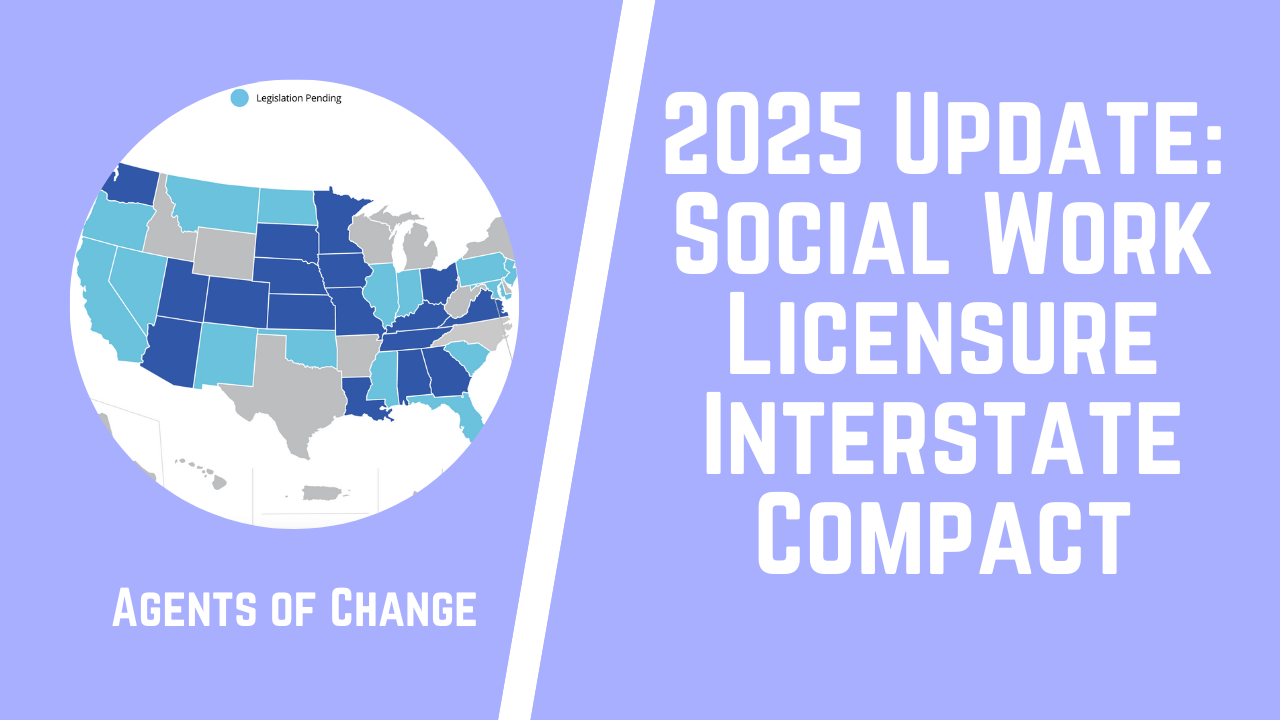
For years, Social Workers have faced significant barriers when trying to practice across state lines. Each state has its own licensing requirements, meaning that even experienced professionals must go through complicated, time-consuming processes just to continue their work after relocating. This has created challenges not only for Social Workers but also for the communities that rely on their services, especially in times of crisis. To solve this problem, the Social Work Interstate Compact was introduced—an agreement designed to allow licensed professionals to work in multiple states under a single multistate license.
As of 2025, the compact has been enacted in 12 states and has officially reached activation status. However, while this is a major milestone, Social Workers still cannot apply for multistate licenses just yet. The compact’s implementation process is expected to take 18 to 24 months, with essential steps like setting fees, creating licensing systems, and establishing regulatory guidelines still underway. This has left many Social Workers wondering: When will multistate licenses become available? How will the compact impact current licensing requirements? What should professionals do to prepare?
In this article, we’ll break down everything you need to know about the 2025 update on the Social Work Interstate Compact. From its current status and expected timeline to practical steps you can take now, we’ve got you covered. Plus, if you’re preparing for the ASWB exam, we’ll highlight how Agents of Change can help you succeed—because staying ahead in your career starts with a solid foundation. Let’s dive in!
Learn more about the ASWB exam and create a personalized ASWB study plan with Agents of Change. We’ve helped tens of thousands of Social Workers pass their ASWB exams and want to help you be next!
1) What Is the Social Work Interstate Compact?
The Social Work Interstate Compact is a groundbreaking agreement designed to improve professional mobility for licensed Social Workers. Traditionally, Social Workers who wanted to practice in multiple states had to apply for separate licenses in each state, often facing redundant exams, fees, and paperwork.

The compact aims to eliminate these barriers by allowing professionals in participating states to obtain a multistate license, making it easier to work across state lines.
How Does the Social Work Compact Work?
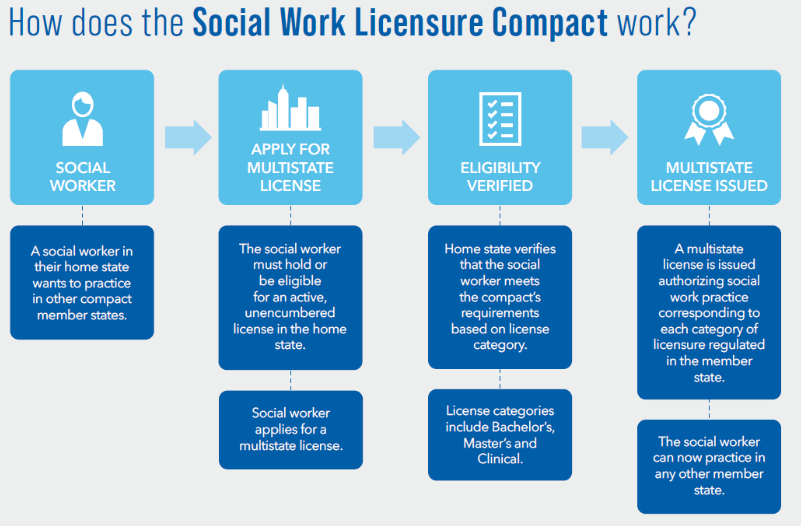
At its core, the compact functions like an interstate driver’s license system. Just as a driver licensed in one state can legally operate a vehicle in another, Social Workers who hold a multistate license will be able to provide services in any compact member state without needing additional licensure.
To participate, states must enact legislation joining the compact. Once they do, Social Workers in those states can apply for a multistate license, provided they meet the eligibility criteria established by the compact commission. However, states will still have control over disciplinary actions and specific practice regulations within their jurisdiction.
Key Benefits of the Social Work Interstate Compact
The Social Work Interstate Compact is a game-changer for professionals and their communities. Here are some of its biggest advantages:
✅ Increased Career Flexibility – Social Workers can relocate without having to go through new licensing processes in each state.
✅ Improved Access to Services – Clients in underserved areas, including rural communities, can receive services from licensed professionals across state lines.
✅ Standardized Licensing Criteria – The compact creates more consistency in licensing requirements across member states.
✅ Expanded Telehealth Opportunities – Social Workers can provide virtual care across state borders without additional licensure barriers.
✅ Reduced Administrative Burdens – Less paperwork, fewer redundant exams, and lower costs for Social Workers moving between states.
Who Is Eligible for a Multistate License?
Although multistate licenses are not yet available, professionals should understand the expected eligibility requirements. To qualify for a multistate license, a Social Worker must:
- Hold an active, unencumbered license in a compact member state
- Meet educational and examination requirements set by the compact
- Pass criminal background checks
- Adhere to state-specific regulations where they practice
These requirements aim to ensure that only qualified professionals can benefit from interstate practice while maintaining high standards for client safety and ethical service delivery.
What the Compact Does Not Change
While the compact simplifies licensure, it does not override state-specific practice laws. Social Workers must still follow:
- State-specific regulations related to scope of practice
- Mandatory reporting laws for abuse and neglect
- Ethical and professional conduct standards set by each state
Additionally, states retain the authority to take disciplinary action against any Social Worker practicing within their jurisdiction, ensuring public protection remains a top priority.
Why This Matters for the Future of Social Work
The Social Work Interstate Compact is an essential step toward modernizing the profession. By eliminating unnecessary barriers and increasing access to care, it will benefit both professionals and the communities they serve. As more states join, the compact has the potential to transform Social Work, making it a more adaptable and accessible field in the years to come.
With multistate licenses expected to become available in late 2025 or early 2026, now is the time for Social Workers to stay informed, keep their licenses in good standing, and prepare for future opportunities.
Agents of Change packages include 30+ ASWB topics, 2 free study groups per month, and hundreds of practice questions so you’ll be ready for test day!
2) 2025 Update: Where Does the Compact Stand Now?
The Social Work Interstate Compact has made significant progress, but multistate licenses are not yet available. As of 2025, the compact has reached activation status, meaning the necessary steps to implement it are in motion. However, the full rollout—including the ability to apply for multistate licenses—will take approximately 18 to 24 months.
So, where does everything stand now? Below, we’ll break down the latest updates, the expected timeline, and what Social Workers need to know moving forward.
Current Status of the Social Work Interstate Compact
As of early 2025, the compact has been enacted in 12 states, with 15 additional states considering legislation to join. While this is a major step forward, the compact is still in its implementation phase, meaning no Social Worker can apply for a multistate license just yet.
🔹 12 states have officially joined the compact
🔹 15 other states have introduced legislation to participate
🔹 The full implementation process will take 18-24 months
During this time, officials are working to establish the regulatory framework that will govern the compact, ensuring it is fair, accessible, and beneficial to both Social Workers and the clients they serve.
What Needs to Happen Next?
Although the compact is in place, there are several key steps that must be completed before Social Workers can start applying for multistate licenses. These include:
✅ Setting Application and Licensing Fees – Establishing the cost structure for multistate licenses.
✅ Creating a National Licensing Database – Developing a system that allows states to verify Social Workers’ credentials and disciplinary history.
✅ Drafting Compact Rules and Bylaws – Establishing clear policies to govern the compact.
✅ Standardizing the Licensing Process – Ensuring that eligibility requirements are consistent across member states.
✅ Launching the Multistate License Application System – Building the infrastructure needed for professionals to apply and maintain their licenses.
Officials estimate that these processes will take between 18 and 24 months, meaning the earliest possible date for multistate licensing could be late 2025 or early 2026.
Which States Have Joined So Far?
As of 2025, the following 12 states have enacted the Social Work Interstate Compact:
- Georgia
- Iowa
- Missouri
- Kentucky
- Utah
- South Dakota
- Maine
- Texas
- Washington
- Nebraska
- Ohio
- Tennessee
In addition, 15 other states have pending legislation that, if passed, could significantly expand the compact’s reach. If more states join, this would create a nationwide system of mobility, benefiting Social Workers across the country.
What This Means for Social Workers Right Now
Since multistate licenses are not yet available, Social Workers should focus on preparing for the transition rather than expecting immediate changes. Here’s what you can do now:
- Stay Updated – Follow developments at SWCompact.org and check your state’s licensing board for updates.
- Keep Your License in Good Standing – Ensure you meet all continuing education and renewal requirements in your state.
- Prepare for the ASWB Exam – If you haven’t yet obtained licensure, passing the ASWB exam is your first step. Agents of Change offers top-tier study resources, including practice exams, live study groups, and flashcards to help you succeed.
- Plan for Future Mobility – If you’re considering relocating, check whether your destination state is part of the compact or has pending legislation to join.
The Social Work Interstate Compact represents a major step forward for the profession, but implementation takes time. By staying informed and prepared, you can ensure you’re ready to take advantage of multistate licensing as soon as it becomes available.
3) How to Prepare for the Social Work Compact
While the Social Work Interstate Compact is still in its implementation phase, Social Workers can take steps now to ensure they are ready once multistate licenses become available. Whether you’re currently licensed, planning to relocate, or preparing for the ASWB exam, getting ahead of the process will put you in the best position to take full advantage of interstate licensing.
Below are key actions you can take to prepare for the upcoming changes and maximize your career opportunities.
1. Stay Informed on Compact Developments
Because the compact is still being implemented, it’s crucial to stay updated on the latest changes. Regulations, timelines, and eligibility requirements could shift as the Social Work Compact Commission finalizes details over the next 18 to 24 months.
📌 How to Stay Updated:
- Visit SWCompact.org for official announcements
- Check your state’s licensing board for state-specific updates
- Follow professional organizations like NASW and ASWB
- Join online Social Work communities to discuss changes with other professionals
By keeping up with the latest compact news, you’ll know exactly when and how to apply for a multistate license as soon as the process becomes available.
2. Keep Your Current License in Good Standing
To qualify for a multistate license, you will need to have a current, unencumbered license in a participating compact state. This means you should:
✅ Renew your license on time – Don’t let it lapse!
✅ Complete continuing education (CE) requirements – Each state has different CE requirements, so stay compliant. You can earn unlimited CEs for one low fee with Agents of Change Continuing Education.
✅ Ensure there are no disciplinary actions on your record – Any sanctions or unresolved issues may impact your eligibility.
✅ Verify your license meets compact standards – Once finalized, compact states may require additional documentation, such as background checks.
Taking these steps now will prevent any last-minute complications once multistate licenses become available.
3. Prepare for the ASWB Exam with Agents of Change
If you’re not yet licensed, passing the ASWB exam is a mandatory step to becoming a Social Worker in any state. The Social Work Interstate Compact won’t eliminate exam requirements—so if you’re planning to enter the field, now is the time to get licensed.
📚 How to Pass the ASWB Exam with Confidence:
The best way to ensure success is by using top-tier study resources like Agents of Change, which offers:
- Comprehensive study materials tailored to the ASWB exam
- Realistic practice exams that simulate the test format
- Live study groups for peer support and expert guidance
- Flashcards and on-demand courses for convenient, effective learning
Since licensure is a prerequisite for applying for a multistate license, getting your ASWB exam out of the way now ensures you’ll be ready for the compact when the time comes.
4. Plan for Future Mobility
If you’re thinking about moving, or if you practice in multiple states, understanding how the compact will impact your career is crucial.
🔹 If your state is already part of the compact → You’ll likely be eligible for a multistate license once they are issued. Keep an eye out for application details.
🔹 If your state has pending legislation → Advocate for its passage by contacting state legislators or professional organizations.
🔹 If your state is NOT part of the compact → You’ll still need to go through the traditional state-by-state licensing process unless your state later joins.
By knowing where your state stands, you can make informed career decisions regarding future job opportunities, relocations, and licensure needs.
5. Expand Your Professional Network
Networking can be invaluable when major changes like the Social Work Compact are happening. Connecting with other professionals can help you stay informed, find job opportunities, and prepare for upcoming licensing changes.
🤝 Ways to Build Your Network:
- Attend Social Work conferences and events
- Join online Social Work forums and LinkedIn groups like those offered by Agents of Change
- Connect with state licensing boards and professional associations
- Participate in Agents of Change study groups to meet others preparing for licensure
A strong professional network will ensure you have the latest information and support system in place as the compact moves forward.
The Social Work Interstate Compact is a huge step toward simplifying licensure and increasing career mobility, but implementation will take time. Rather than waiting for multistate licenses to become available, Social Workers should take action now by keeping their licenses up to date, preparing for the ASWB exam, and staying informed on compact developments.
By using trusted resources like Agents of Change to pass the ASWB exam and keeping track of licensing updates, you’ll be well-prepared to take advantage of multistate licensing as soon as it becomes available. The future of Social Work is evolving—make sure you’re ready for what’s ahead! 🚀
4) FAQs – Social Work Licensure Interstate Compact
Q: When will multistate Social Work licenses become available?
A: As of early 2025, multistate licenses are not yet available because the compact is still in its implementation phase. The Social Work Compact Commission is working on establishing licensing fees, creating a national database, and drafting regulations.
This process is expected to take 18 to 24 months, meaning Social Workers may be able to apply for multistate licenses in late 2025 or early 2026. Until then, professionals must continue to follow state-specific licensing procedures to practice across state lines.
Q: How do I know if my state is part of the Social Work Interstate Compact?
A: The compact has been enacted in 12 states as of early 2025, and 15 additional states have introduced legislation to join. To check if your state is part of the compact:
🔹 Visit the official compact website at SWCompact.org for an up-to-date list.
🔹 Contact your state’s Social Work licensing board for status updates.
🔹 Follow professional organizations like NASW or ASWB for legislative updates.
If your state has not yet joined, consider advocating for its adoption by reaching out to your state representatives or joining Social Work associations that support the compact.
Q: Will I need to take another exam or meet new requirements to qualify for a multistate license?
A: No, you will not need to take another ASWB exam if you are already licensed. However, to qualify for a multistate license, you must:
✅ Hold an active, unencumbered license in a compact member state
✅ Meet all state-specific educational and background check requirements
✅ Comply with professional and ethical standards set by the compact
Each state will still have some control over Social Work regulations, so it’s essential to stay informed on any additional state-specific requirements that may apply once multistate licensing becomes available.