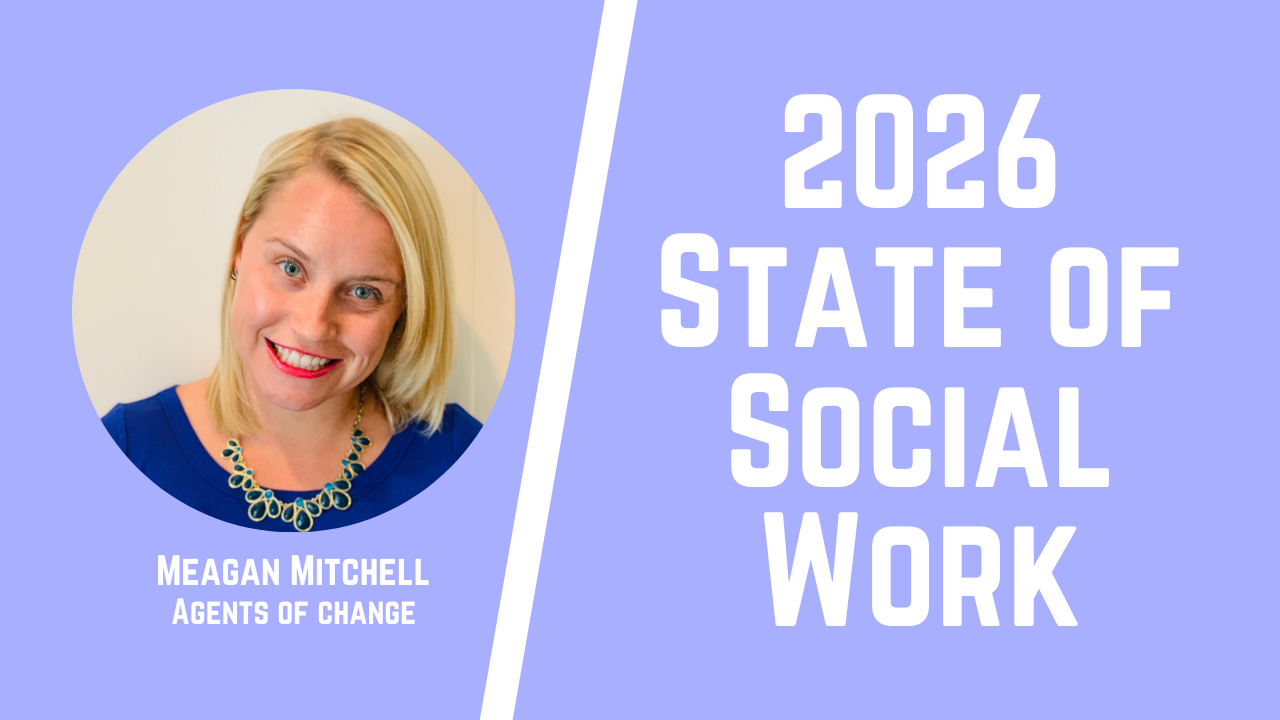
We’re incredibly excited to share our 4th annual “State of Social Work” report with the world of Social Workers. The report is derived from 414 responses from the Social Work community collected in December 2025.
It’s our sincere hope that the insights in this report help Social Workers (and aspiring Social Workers) better understand the state of the Social Work profession and make more informed decisions about how to thrive within it.
Would you like to see the full report and download the infographic? Click this link and share your email address, and we’ll send you both: Download Full Report + Infographic
Who Took the Survey?
The 2026 State of Social Work survey reached a diverse group of respondents in terms of experience, age, and geographic location.
Experience Level
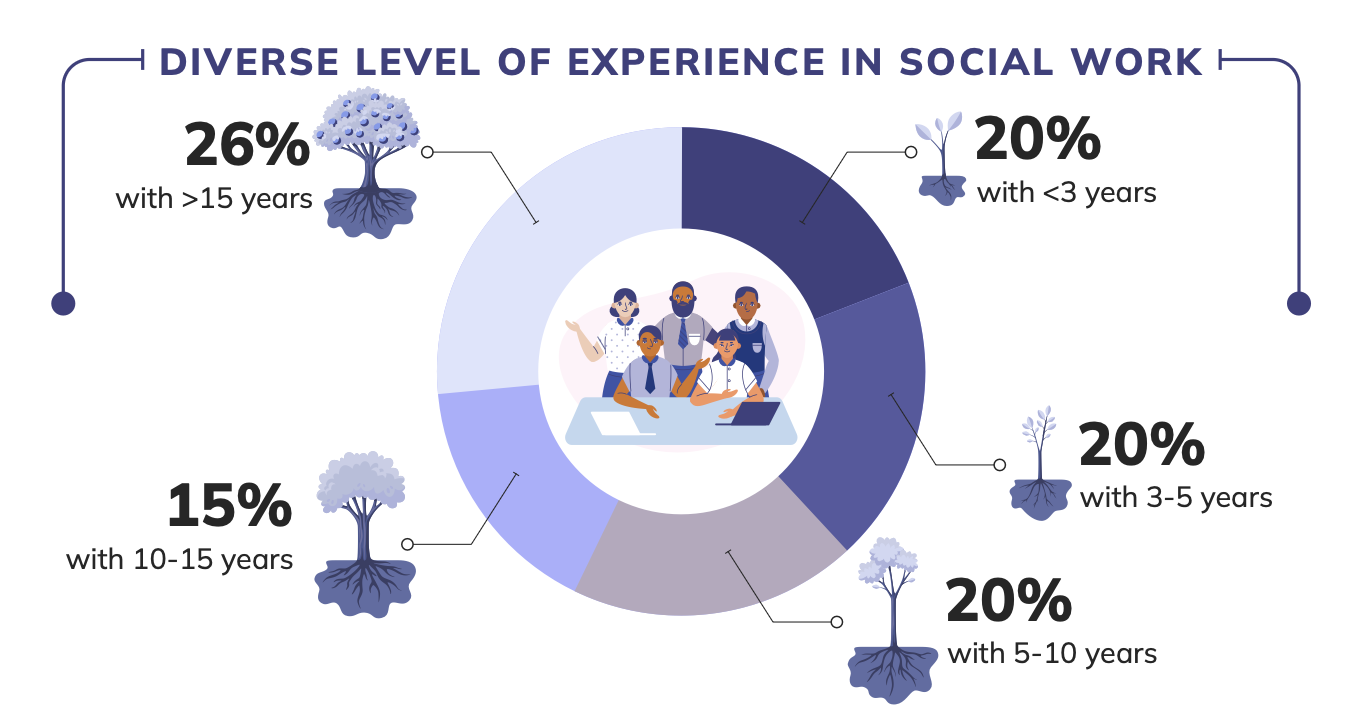
Among respondents, 20% had less than three years of experience in the field, 20% had between three and five years of experience, 20% had between five and ten years of experience, 15% had between ten and fifteen years of experience, and 26% had more than fifteen years of experience.
This was relatively similar to last year’s survey, with a slight skew towards more tenured Social Workers (26% with 15+ years vs. 25% last year).
Age
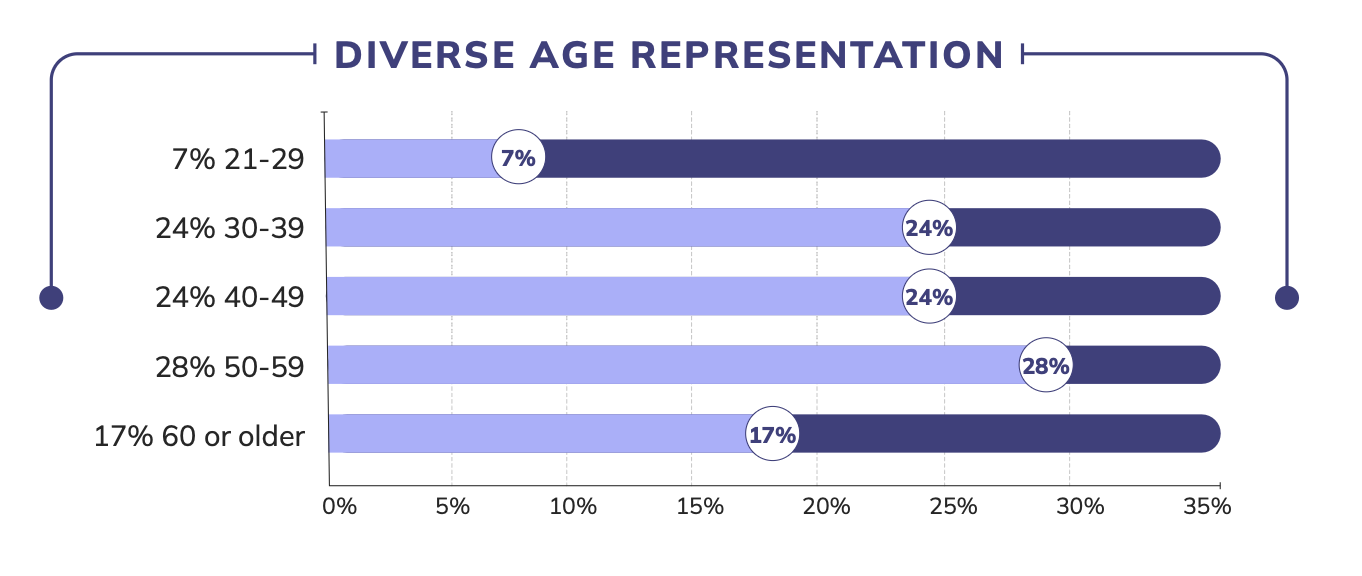
In terms of age, 7% were in the 21-29 age range, 24% in the 30-39 age range, 24% in the 40-49 age range, 28% in the 50-59 age range, and 17% were 60 or older.
This distribution skewed slightly older than last year’s State of Social Work survey, which had only 15% 60 or older and 9% between the ages of 21-29.
Gender, Race, and Ethnicity
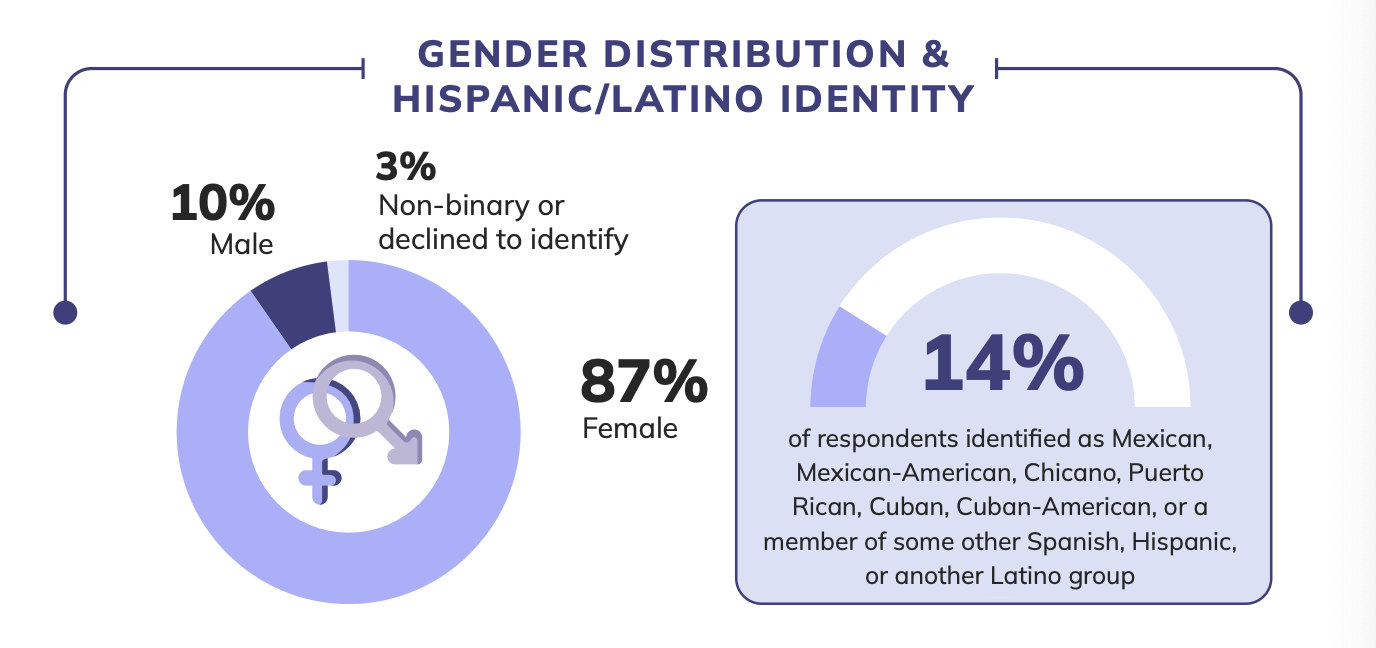
Of the respondents to this year’s survey, 87% identified as female, 10% as male, and 3% as non-binary or declined to identify.

In terms of race and ethnicity, 41% identified as Black, 53% as White, 3% as Asian, and 2% as American Indian or Alaskan Native.
14% of respondents identified as Mexican, Mexican-American, Chicano, Puerto Rican, Cuban, Cuban-American, or a member of another Spanish, Hispanic, or Latino group.
Geography
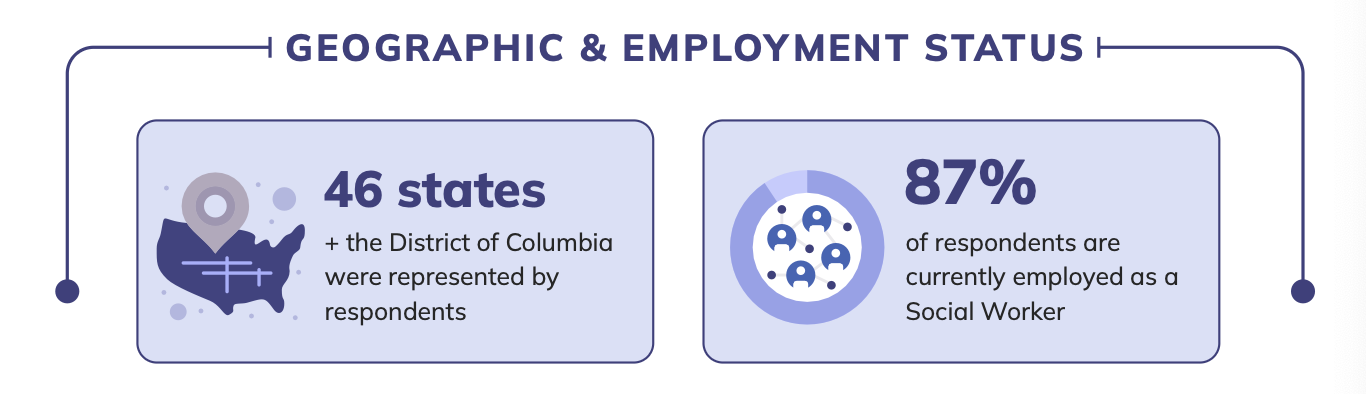
The survey included respondents from 46 states (last year: 47) and the District of Columbia. The states not represented are Hawaii, South Dakota, Vermont, and West Virginia.
Of those surveyed, 87% were currently employed as Social Workers (last year: 83%)
Findings About the ASWB Exam and Licensing
Most respondents (59%) are currently studying for an Association of Social Work Boards (ASWB) exam. Of those studying, 34% are preparing to take the Masters exam, and 60% are studying for the Clinical Exam. Only 4% of respondents are preparing for the Bachelors exam.

Motivation to Take the ASWB Exam
When asked about their primary reason for taking the ASWB exam (% change from last year):
- 57% of respondents cited the desire to “acquire a valuable credential” (+7%)
- 16% said the exam was “required for a job they are applying for” (-13%)
- 13% said it was “required for their current job” (No change)
- 14% said they wanted to “build skills as a social worker” (+6%)
Last year, here were our respondents’ answers to the same question:
- 50% of respondents cited the desire to “acquire a valuable credential”
- 29% said the exam was “required for a job they are applying for”
- 13% said it was “required for their current job”
- 8% said they wanted to “build skills as a social worker”
This year, we saw large increases in “acquire a valuable credential” and “build skills as a social worker” and a major decrease in “required for job they are applying for.”
Changes Respondents Want to See in the ASWB Exam
5 common themes emerged in terms of what changes respondents wanted to see in the ASWB exam in the future:
- Clarity and Quality of Exam Questions
- Respondents frequently mention the need for questions to be less confusing, clearer, and better worded. This theme addresses the frustration with ambiguous or poorly constructed items that make selecting the “best” answer difficult.
- “I have taken the clinical exam. Some of the questions are not practical, and many of the answer choices are confusing and very similar. It is not helpful.”
- “I would like to see clearer questions and less misleading questions and answers.”
- Relevance and Practicality of Exam Content
- There is a strong desire for the exam content to be more grounded in real-world clinical and Social Work practice, moving away from what many perceive as outdated or purely theoretical knowledge.
- “Make the exam relevant to current clinical practice. The exam seems dated and not related to current practice.”
- Reduced Cost and Financial Burden
- The high cost of the initial exam and retakes is a significant pain point for many Social Workers, with calls to lower the fees to make licensure more financially accessible.
- “Lower the cost of the exam itself and the cost of retakes.”
- Increased Accessibility and Flexibility in Format
- Respondents would like more convenient options for where and how they take the exam, citing the stress and logistical difficulty of the current in-person format.
- “Testing at home with proctor.”
- “Allowing open book or remote testing.”
- Improved Transparency in Scoring and Standards
- Respondents seek greater clarity and fairness in the scoring process, specifically regarding how passing scores are set and what recourse or leniency is available for those who narrowly miss the cut-off.
- “Being able to not have to retest if you don’t pass within 10 points.”
- “More transparency on the scoring process and why I failed.”
Last year’s top themes were:
- “Reduction in Test Length or Complexity”
- “Clearer Questions and Less Ambiguity”
- “More Practice Materials”
- “Improvements in Scoring System”
- “More Practical and Scenario-Based Questions”
How Did Your University or College Prepare You for the ASWB Exam?
44% of respondents said that their college or university either “Did not prepare them” or only “Somewhat prepared them” for the ASWB exam (1 or 2 on a 5-point scale). Last year, this was 47%.
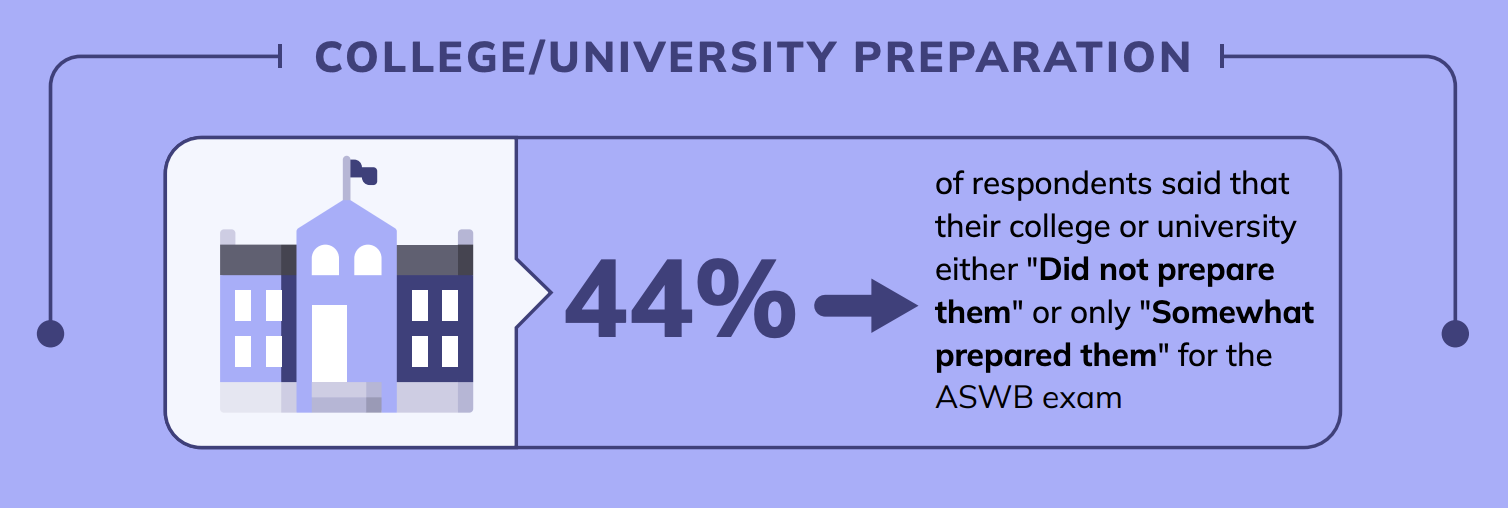
While there is some improvement year-over-year, Social Work programs still need to do much more to prepare their students for licensing exams!
Did you know Agents of Change can help your college or university prepare students for the ASWB exam? Learn more about how we partner with higher education institutions here.
Findings About Social Work Careers
This year, we saw a high level of career diversity, with 274 specific job titles mentioned by respondents!
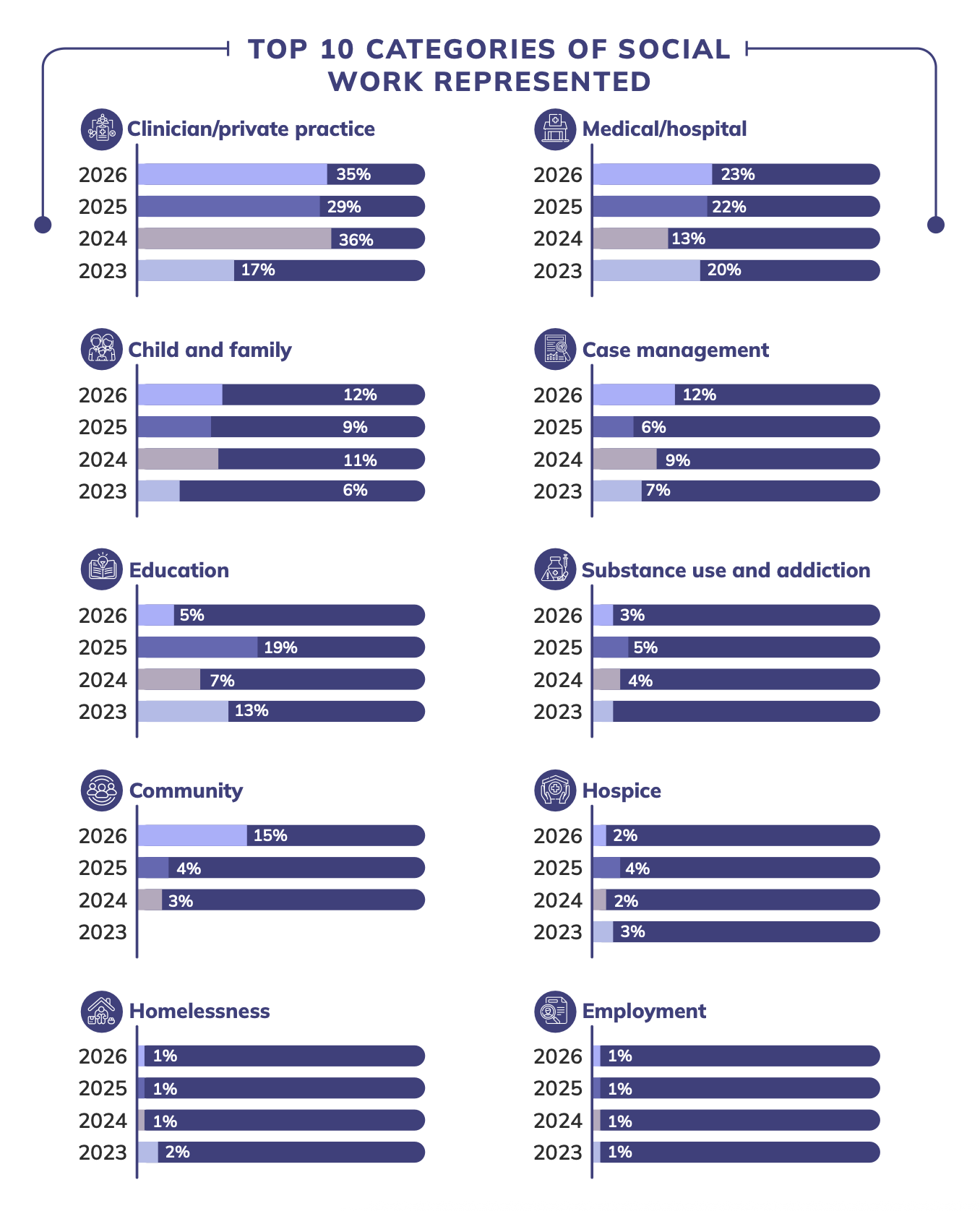
The Top 10 Categories of Social Work Careers:
- Clinician/private practice (2026: 35%; 2025: 29%; 2024: 36%; 2023: 17%)
- Medical/hospital (2026: 23%; 2025: 22%; 2024: 13%; 2023: 20%)
- Child and family (2026: 12%; 2025: 9%; 2024: 11%; 2023: 6%)
- Case management (2026: 6%; 2025: 6%; 2024: 9%; 2023: 7%)
- Education (2026: 5%; 2025: 19%; 2024: 7%; 2023: 13%)
- Substance use and addiction (2026: 3%; 2025: 5%; 2024: 4%; 2023: 3%)
- Community: (2026: 15%; 2025: 4%; 3% in 2024)
- Hospice (2026: 2%; 2025: 4%; 2024: 2%; 2023: 3%)
- Homelessness (2026: 1%; 2025: 1%; 2024: 1%; 2023: 2%)
- Employment (2026: 1%; 2025: 1%; 2024: 1%; 2023: 1%)
Changing Jobs and Motivations
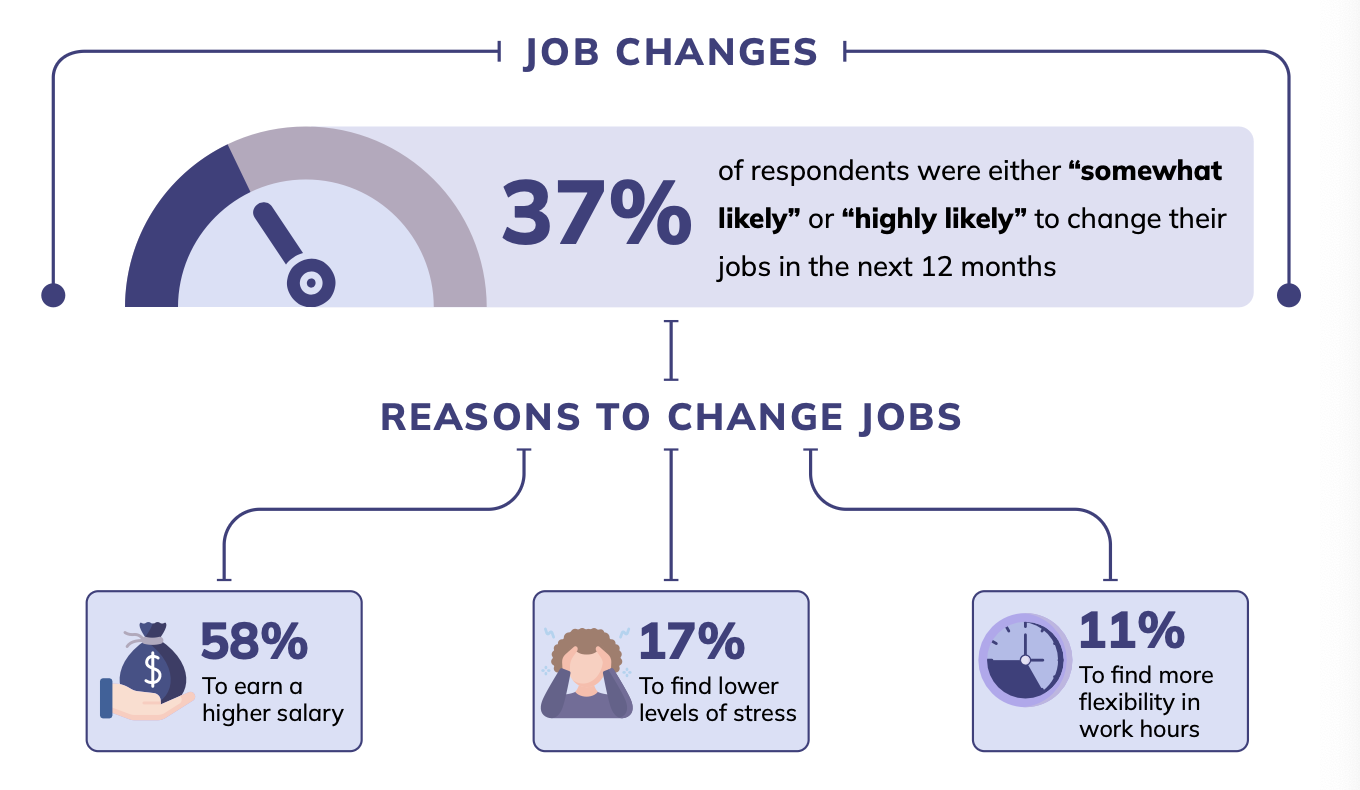
The survey also found that 37% of respondents were either “somewhat likely” or “very likely” to change their jobs in the next 12 months (decreasing 5% from last year).
Of those planning to change jobs:
- 58% cited the desire to earn a higher salary as their primary reason (2025: 57%; 2024: 61%; 2023: 64%)
- 17% said they wanted to change to a role with lower levels of stress (2025: 15%; 2024: 17%; 2023: 13%)
- 11% wanted to find more flexibility in their work hours (2025: 15%; 2024: 7%; 2023: 10%)
Most Likely to Change Jobs
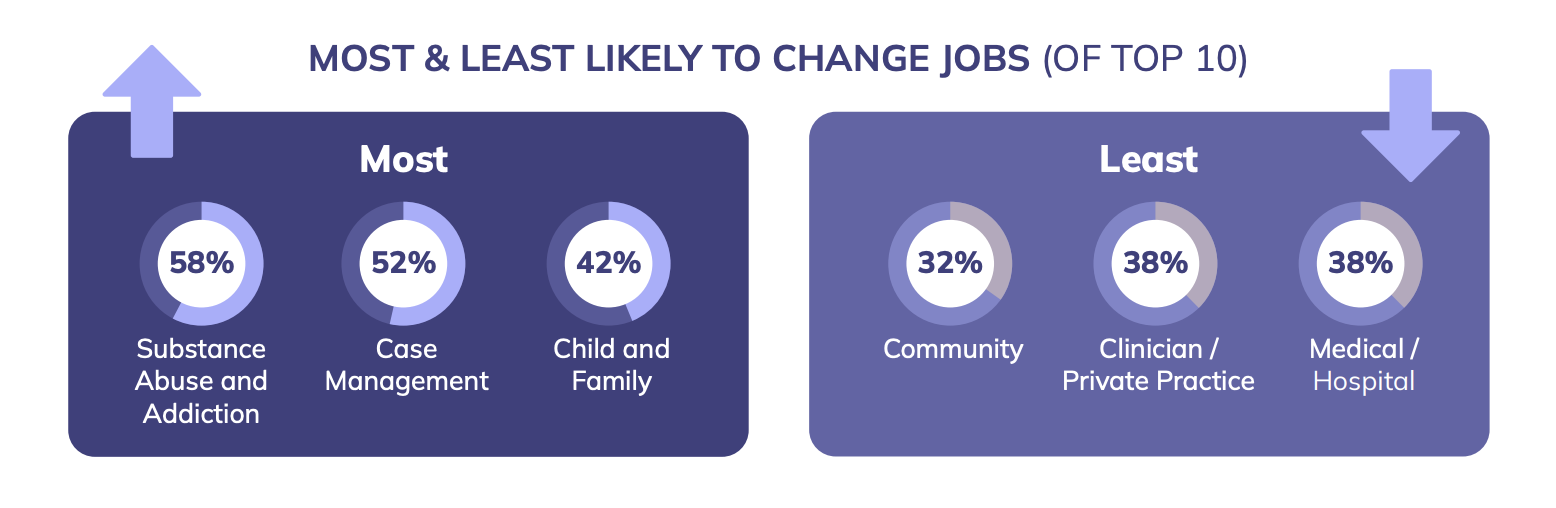
When examining the top 10 categories of Social Work represented, the three types of Social Work that were most likely to want to change jobs were Substance Abuse and Addiction (58% reported being very or somewhat likely to change jobs), Case Management (52% reported being very or somewhat likely to change jobs), and Child and Family (42% reported being very or somewhat likely to change jobs).
These were similar to 2025, where the top 3 categories likely to change jobs were Case Management, Child and Family, and Community.
Least Likely to Change Jobs
The three least likely to want to change jobs were Community (32% reported being very or somewhat likely to change jobs), Clinician/Private Practice (38% reported being very or somewhat likely to change jobs), and Medical/Hospital (38% reported being very or somewhat likely to change jobs).
These were mostly different from 2025, where the least likely to change jobs were Education, Clinician/Private Practice, and Hospice.
Interestingly, Community moved from one of the “most likely to change jobs” category to “least likely”!
Highest Stress Level Social Work Careers
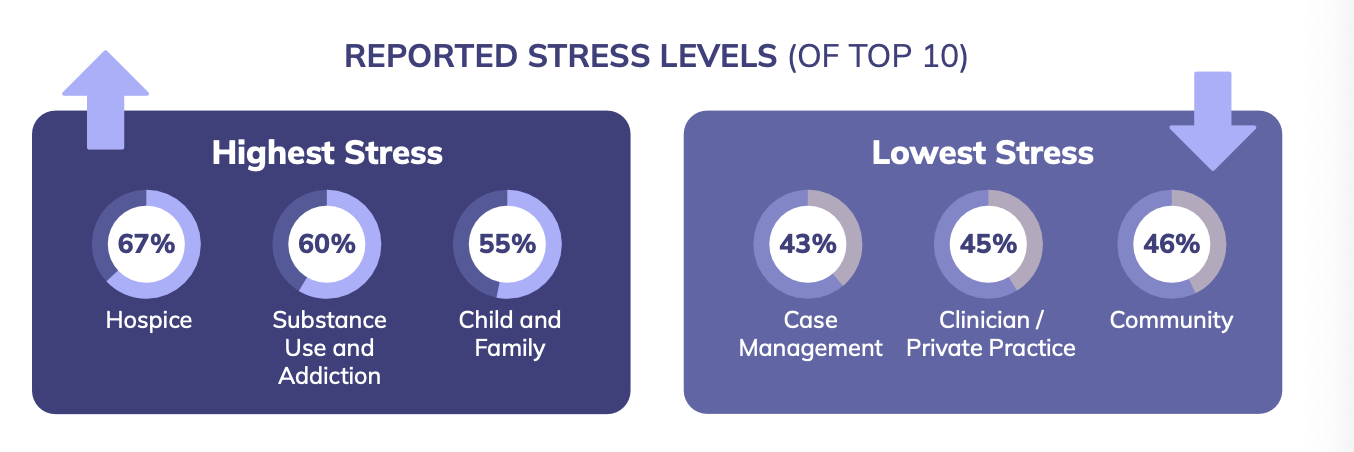
In terms of stress levels, the three types of Social Work with the highest reported stress levels were Hospice (67% reported very or somewhat high stress), Substance Use and Addiction (60% reported very or somewhat high stress), and Child and Family (55% reported very or somewhat high stress).
These were meaningfully different from last year, where the three types of Social Work with the highest reported stress levels were Child and Family (79% reported very or somewhat high stress), Case Management (58% reported very or somewhat high stress), and Medical/Hospital (56% reported very or somewhat high stress).
Lowest Stress Level Social Work Careers
The three types of Social Work with the lowest reported stress levels were Case Management (43% reported very or somewhat high stress), Clinician/Private Practice (45% reported very or somewhat high stress), and Community (46% reported very or somewhat high stress).
These were meaningfully different from last year, where the three types of Social Work with the lowest reported stress levels were Hospice (22% reported very or somewhat high stress), Community (36% reported very or somewhat high stress), and Substance Use and Addiction (40% reported very or somewhat high stress).
Social Worker Salaries and Adequate Pay
49% of Social Workers replied that they were “not adequately paid for their work” or only “somewhat adequately paid for their work” (1 or 2 on a 5-point scale). Last year, this was 47%.
Salary by Social Work Career Category
Top 3 “NOT Paid Adequately for My Work”
- Case Management (71%)
- Medical/Hospital (29%)
- Clinician/Private Practice (28%)
Top 3 “Paid Adequately for My Work”
- Child and Family (11%)
- Substance Use and Addiction (10%)
- Medical/Hospital (9%)
Interestingly, Medical/Hospital was only on the “Paid Adequately” top 3 last year, but it is also on the “NOT Paid Adequately” category this year, indicating potential variability in salaries in this field.
Findings About the Future of Social Work
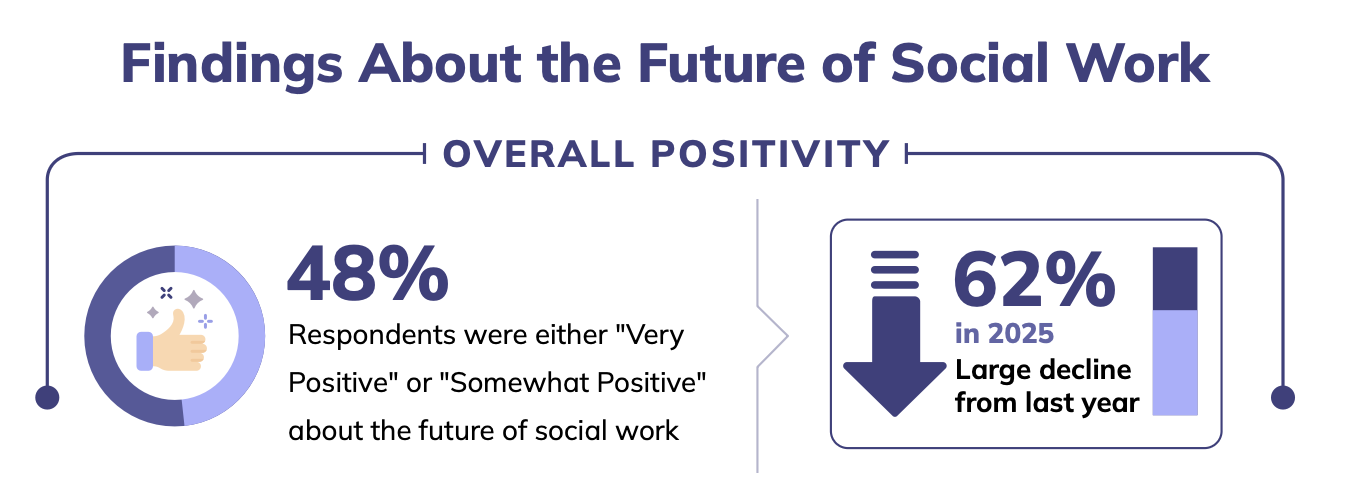
According to the 2026 State of Social Work survey, 48% of respondents are either “very positive” or “somewhat positive” about the future of Social Work, while 28% are neutral.
This is a notable decrease from 2025, where 62% were “very positive” or “somewhat positive.”
Level of Positivity About Future Varies Based on Experience
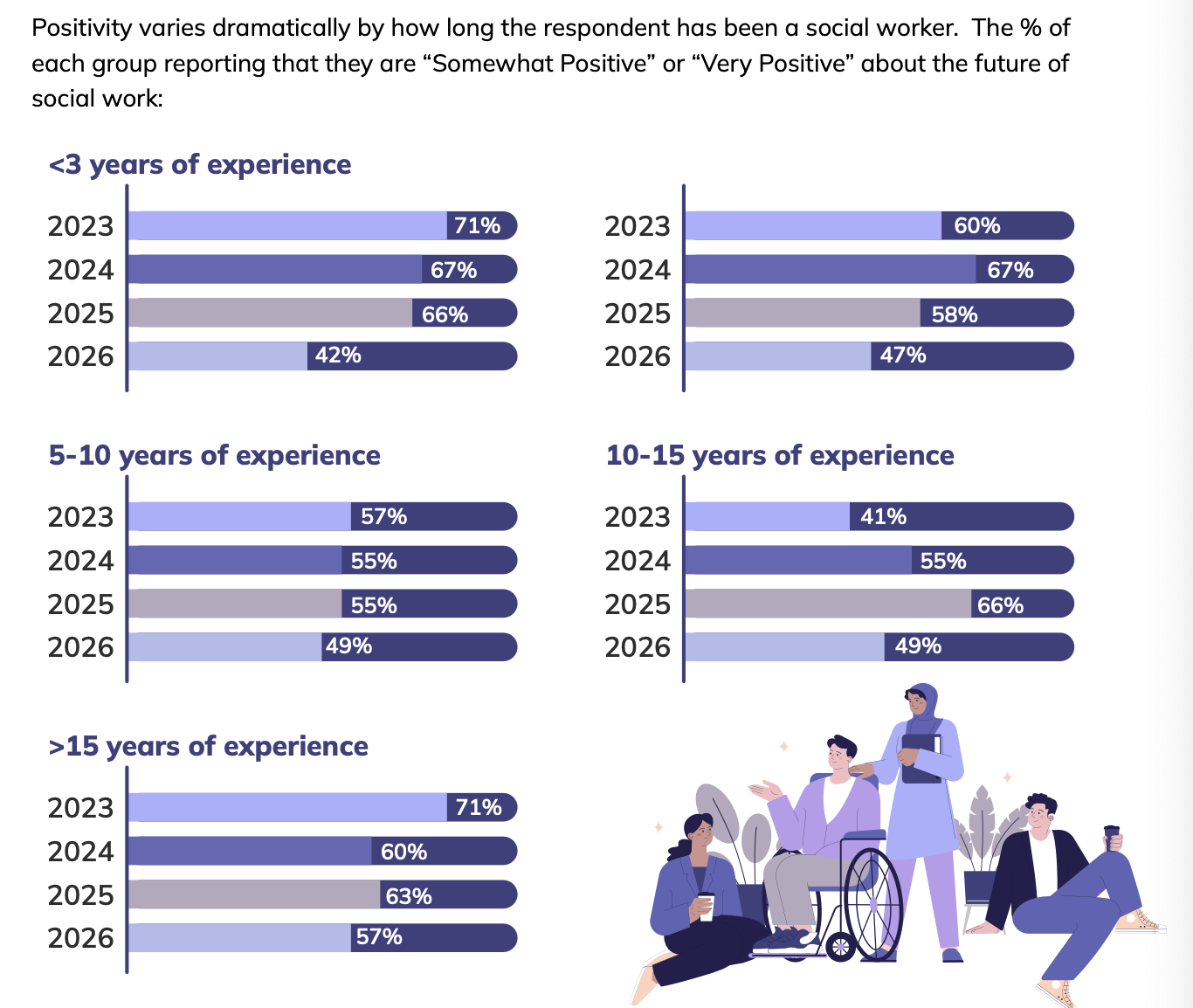
However, the level of positivity varies significantly based on the respondent’s experience in the field.
Among those with less than three years of experience as a Social Worker, only 42% reported being somewhat or very positive about the future of Social Work. This is a significant decline from 2025, where 66% from this new-to-Social-Work group reported being very positive or somewhat positive.
These percentages have varied significantly by year (very positive or somewhat positive %):
- <3 years of experience:
- 2023: 71%
- 2024: 67%
- 2025: 66%
- 2026: 42%
- 3-5 years of experience:
- 2023: 60%
- 2024: 67%
- 2025: 58%
- 2026: 47%
- 5-10 years of experience:
- 2023: 57%
- 2024: 55%
- 2025: 55%
- 2026: 49%
- 10-15 years of experience:
- 2023: 41%
- 2024: 55%
- 2025: 66%
- 2026: 49%
- >15 years of experience:
- 2023: 71%
- 2024: 60%
- 2025: 63%
- 2026: 57%
Reasons for Positivity
For those who were somewhat or very positive about the future of Social Work, the main reasons cited were:
Reasons for Negativity
On the other hand, those who were somewhat or very negative about the future of Social Work cited:
- Low Compensation and Financial Undervaluing: The primary theme of negativity is the lack of adequate salary and compensation, leading to financial instability and the inability to retain talented professionals.
- Burnout, High Stress, and Unmanageable Workload: Respondents cite emotional exhaustion, heavy caseloads, administrative burden, and high stress as key drivers making the profession unsustainable for long-term careers.
- Systemic Lack of Respect and Recognition: Social Workers feel their role is consistently undervalued by the public, by government agencies, and within organizations, leading to poor morale and lack of support.
- Political and Bureaucratic Barriers: Negativity stems from the profession’s inability to effectively address systemic political and legislative barriers, including poor funding for services and excessive non-clinical paperwork.
- Licensure and Barrier Issues (ASWB Exam): The licensing process itself is seen as an unnecessary and unfair barrier, which limits the growth and diversity of the profession without meaningfully measuring competence.
AI and Potential Impact on Social Work
42% of Social Workers are “Neutral” on AI, by far the largest segment of the population.
28% of Social Workers are “Very Positive” or “Somewhat Positive,” increasing from only 19% last year. 30% of Social Workers are “Very Negative” or “Somewhat Negative” about the potential impact of AI on Social Work.
Since last year, Social Workers have become more positive about AI.

Reasons for Positivity with AI
For those who were somewhat or very positive about AI and its potential impact on Social Work, the main reasons cited were:
- Reduced Administrative Burden/Increased Efficiency: The primary positive theme is the hope that AI can take over time-consuming paperwork, documentation, and scheduling, freeing up Social Workers to spend more time directly with clients.
- Enhanced Access and Support for Clients: AI is viewed as a tool to bridge gaps in service by providing 24/7 informational support, initial screenings, and resource navigation, which can benefit clients in crisis or underserved areas.
- Improved Data Analysis and Service Quality: Respondents see AI’s potential in processing large amounts of data to identify trends, evaluate program effectiveness, and improve the quality of care and systemic interventions.
Reasons for Negativity with AI
For those who were somewhat or very negative about AI and its potential impact on Social Work, the main reasons cited were:
Download the Full Report + Infographic
Would you like to see the full report and download the infographic?
Click this link, share your email address, and we’ll send it to you: Download Full Report + Infographic.
By the way, did you know Agents of Change offers Continuing Education? Use code 10OFFCEBLOG for $10 OFF our Unlimited Access Subscription!
————————————————————————————————————————————————
► Learn more about the Agents of Change ASWB course here: https://agentsofchangeprep.com
► Learn more about the Agents of Change Continuing Education here: https://agentsofchangetraining.com
About the Instructor: Dr. Meagan Mitchell: Meagan is a Licensed Clinical Social Worker and has been providing individualized and group test prep for the ASWB for over 11 years. From all of this experience helping others pass their exams, she created the Agents of Change course to help you prepare for and pass the ASWB exam!
Find more from Agents of Change here:
► Facebook Group: https://www.facebook.com/groups/aswbtestprep
► Podcast: https://podcasters.spotify.com/pod/show/agents-of-change-sw
#socialwork #testprep #aswb #socialworker #socialwork #socialworktest #socialworkexam #exam #socialworktestprep #socialworklicense #socialworklicensing #licsw #lmsw #lcsw #aswbexam #aswb #lcswexam #lmswexam #aswbtestprep #aswbtest #lcswtestprep #lcswtest #lmswtestprep #lmswtest #aswbcourse #learningstyles #learningstyle
Disclaimer: This content has been made available for informational and educational purposes only. This content is not intended to be a substitute for professional medical or clinical advice, diagnosis, or treatment.