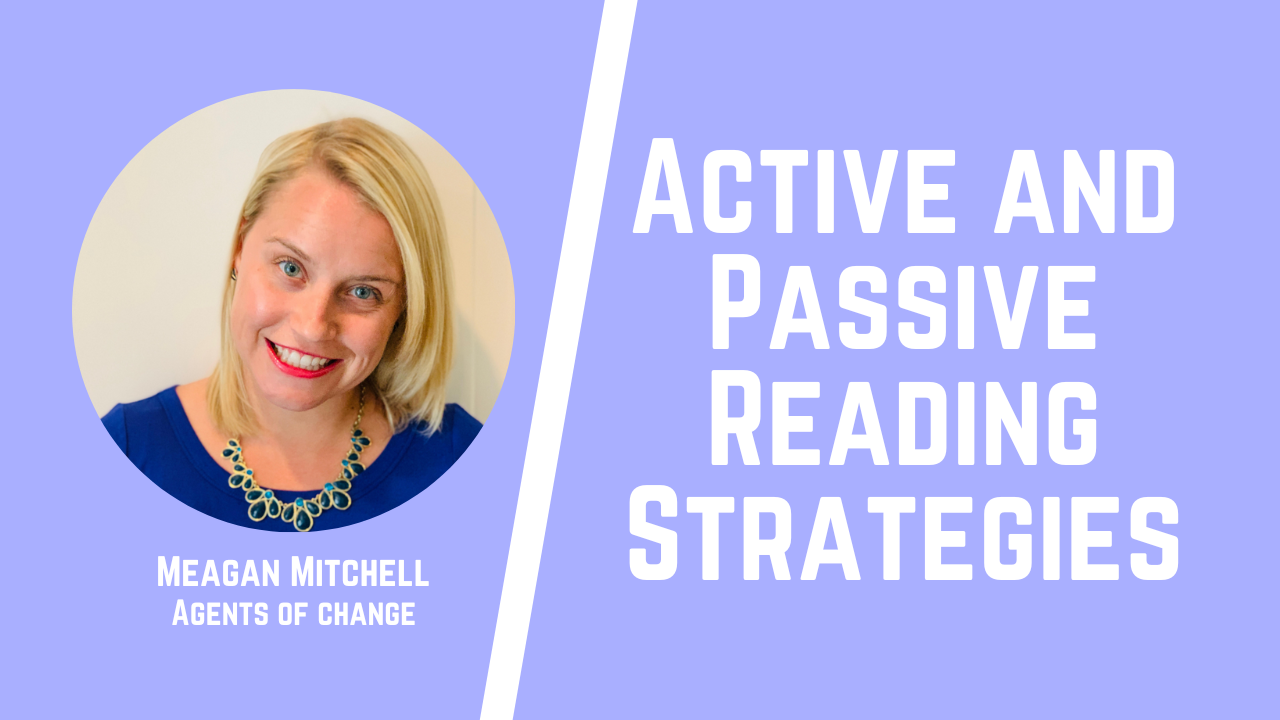
All reading is not created equal! There is a large difference between active and passive reading and it’s important you take an active reading approach in your ASWB exam studies to maximize your test performance.
What is Active Reading?
Active reading involves deeper engagement with the text before, during, and after reading. Active reading is reading with a purpose, reading with questions in mind, and includes annotating/note taking as you read.
What is Passive Reading?
Passive reading is when a reader reads the words, but absorbs next to nothing about what is written and why. It is reading without a purpose, without questions in mind, and without reflection.
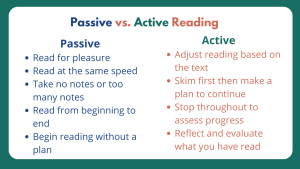
Applying Active Reading Strategies to Exam Prep
Before You Read
- Determine the purpose of the reading
- Write down questions you’d like to answer
- Preview a text before reading by skimming headings, topic sentences, and keywords
While You Read
- Adjust how you read depending on the type of text and context within which you’re reading
- Stop to monitor your understanding of the text as you read
- Annotate/take notes while you read
After You Read
- Make time to reflect upon and evaluate what you have read
- Review the questions you wrote down and the answers you found through your reading
Benefits of Active Reading
- Stronger information retention
- Fewer “re-reads” required
- Improved reading comprehension
- Better understanding of the purpose of the content, not just memorizing the content
- Higher levels of enjoyment (It won’t seem so daunting!)
Active Reading Tips
- Don’t rush it! If you don’t understand something you read, write down a question about the content and re-read the section before advancing
- A good rule of thumb is that you should have approximately 1 full page of notes for every 20 pages of reading
- Visualize what the text is describing. Especially if you are a visual learner, painting a picture in your mind of the content will improve your retention!
- Connect the Dots: When you read something that connects to something else you read or know, connect the dots for your brain and write it down in your notes!
- Clarify and Summarize: How would you summarize what you just read in a few sentences?
- Evaluate: Do you agree with what you read? What is confusing to you, what is clear? Write it down!
ASWB Practice Question
A hospital social worker meets with a client who has recently lost their job. The client says, “I can’t believe this happened. I gave everything to that company, and now I feel worthless. My partner has been supportive, but I just keep thinking I failed.” Which of the following should the social worker recognize as the client’s primary concern based on this statement?
A. The client is experiencing conflict with their partner.
B. The client is struggling with feelings of self-worth after job loss.
C. The client is focused on finding immediate employment.
D. The client is in denial about the loss of their job.
Correct Answer
B. The client is struggling with feelings of self-worth after job loss.
Rationale
Active reading requires careful attention to the client’s words and the emotions underlying them. The client explicitly states feeling “worthless” and describes the job loss as a personal failure, highlighting a struggle with self-esteem and identity.
-
Option A is incorrect because the client indicates their partner is supportive, not a source of conflict.
-
Option C is incorrect because the client does not mention searching for new employment; their focus is on emotional impact rather than problem-solving.
-
Option D is incorrect because the client acknowledges the job loss and its effect; this demonstrates acceptance, not denial.
By actively reading and identifying the emotional theme of “worthlessness,” the social worker can accurately determine the client’s primary concern.
————————————————————————————————————————————————
► Learn more about the course here: https://agentsofchangeprep.com/
About the Instructor, Meagan Mitchell: Meagan is a Licensed Clinical Social Worker and has been providing individualized and group test prep for the ASWB for over five years. From all of this experience helping others pass their exams, she created the Agents of Change course to help you prepare for and pass the ASWB exam!
Find more from Agents of Change here:
► Facebook Group: https://www.facebook.com/groups/aswbtestprep
► Podcast: https://anchor.fm/agents-of-change-sw
#socialwork #testprep #aswb #socialworker #socialwork #socialworktest #socialworkexam #exam #socialworktestprep #socialworklicense #socialworklicensing #licsw #lmsw #lcsw #aswbexam #aswb #lcswexam #lmswexam #aswbtestprep #aswbtest #lcswtestprep #lcswtest #lmswtestprep #lmswtest #aswbcourse #learningstyles #learningstyle
Disclaimer: This content has been made available for informational and educational purposes only. This content is not intended to be a substitute for professional medical or clinical advice, diagnosis, or treatment