Boundary Crossing vs. Boundary Violation and the ASWB Exam
One of the trickier areas of the ASWB Exam is understanding the difference between boundary crossing and boundary violation. Let’s dive into it and see why the devil is in the details here.
1) Unraveling the Twisted Threads: Boundary Crossing vs. Boundary Violation
Now, let’s not kid ourselves; these two terms sound almost interchangeable, don’t they? But there’s a world of difference!
Boundary Crossing: The Polite Guest
First off, boundary crossings, in the Social Work universe, are essentially mild, often unintentional deviations from established professional rules or norms.
They are usually benign and may even enhance the therapeutic relationship. You might think of them as the polite guests of the Social Work party; they occasionally step out of line, but their heart is in the right place.
Some examples of boundary crossings:
Accepting a small, non-expensive gift from a client
Offering a brief, comforting hug when a client shares painful news
Self-Disclosure: A Social Worker may share some personal information or experiences with a client when it serves a therapeutic purpose. However, it’s important that the information shared is relevant, limited, and maintains the focus on the client.
Boundary Violation: The Party Crasher
On the other side of the fence, we have boundary violations. Now, these are the party crashers of the Social Work world.
They involve a significant departure from professional norms, often with harmful or potentially damaging effects on the client. Boundary violations often exploit the client or the therapeutic relationship.
Examples of boundary violations:
Entering into a romantic or sexual relationship with a client
Borrowing money from or loaning money to a client
Exploiting a client for personal, political, or business interests
Now that we’ve identified differences between boundary crossing and boundary violation, let’s see how they come into play in the ASWB Exam.
2) Crossing the Right Lines: Boundary Management in the ASWB Exam
Aspiring to ace the ASWB Exam? Well, understanding boundary management is key. The Exam will challenge you with hypothetical scenarios and expect you to identify and respond appropriately to both boundary crossings and violations.
But don’t break into a cold sweat just yet! Take a deep breath, and let’s look at a few tips to help you handle these questions like a champ.
Tips to Tackle Boundary Questions in the ASWB Exam
Context is king. Always consider the context of the situation, the client’s needs, and the potential for harm or benefit.
When in doubt, consult! Never underestimate the value of supervision and consultation in resolving boundary dilemmas.
3) ASWB Practice Question – Boundary Crossing vs. Boundary Violation
Question: Samantha, a Social Worker, has been working with a client, Jake, who is struggling with depression. After a particularly intense session, Jake presents Samantha with a homemade cake as a thank-you for her support. How should Samantha respond?
A) Samantha should accept the cake and thank Jake for his kindness.
B) Samantha should refuse the gift and take time to remind Jake of their professional relationship.
C) Samantha should report Jake to her supervisor for overstepping his boundaries.
D) Samantha should ask Jake to give the cake to someone else instead.
Answer: A) Samantha should accept the cake and thank Jake for his kindness.
Rationale: The scenario described here would typically be seen as a boundary crossing, rather than a boundary violation. The client, Jake, is giving a small, homemade gift to express his gratitude to Samantha.
This gesture does not seem to be harmful or exploitative and can be seen as a positive contribution to the therapeutic alliance.
4) Real-World Social Work Scenarios: Boundary Crossing vs. Violation
Understanding the difference between boundary crossings and boundary violations becomes much clearer when we look at real-life situations. On the ASWB Exam and in actual practice, you will often be asked to evaluate a scenario and determine whether the Social Worker’s behavior is appropriate, questionable, or unethical.
Below are several examples that illustrate how these situations might appear in real-world practice.
Scenario 1: Accepting a Small Gift
Maria, a Social Worker, has been working with a client for several months. At the end of their final session, the client brings Maria a small handmade bracelet to thank her for the support she provided during treatment.
Likely a Boundary Crossing
Accepting a small, inexpensive, culturally meaningful gift may be considered a boundary crossing rather than a violation. In some cultures, refusing a gift can damage rapport. If the gift is modest and accepting it does not exploit the client or shift the focus away from the client’s needs, it may be appropriate. Many Social Workers would still document the situation and discuss it in supervision.
Scenario 2: Attending a Client’s Important Event
A teenage client invites their Social Worker to attend their high school graduation ceremony to celebrate the progress they have made after overcoming significant personal challenges.
Potential Boundary Crossing
Attending a client’s event could be a boundary crossing depending on the context. If the Social Worker carefully considers the client’s needs, discusses it in supervision, and determines that attendance supports the client’s progress without creating dependency or dual relationships, it may be appropriate. However, the Social Worker should carefully weigh the potential impact on professional boundaries.
Scenario 3: Connecting on Social Media
A client sends their Social Worker a friend request on a personal social media account. The Social Worker accepts and begins interacting with the client’s posts.
Potential Boundary Violation
Accepting social media connections with current clients can blur professional boundaries and create dual relationships. It may expose personal information about the Social Worker and compromise the professional relationship. Many agencies and ethical guidelines recommend maintaining strict social media boundaries with clients.
Scenario 4: Borrowing Money from a Client
A Social Worker is experiencing financial stress and asks a long-term client if they can borrow money to help cover a personal expense.
Clear Boundary Violation
Borrowing money from a client exploits the power imbalance inherent in the therapeutic relationship. This type of financial involvement is considered a serious ethical breach and can harm the client and undermine trust.
Scenario 5: Offering a Comforting Hug
During a session, a client becomes overwhelmed while discussing the recent loss of a loved one. The Social Worker offers a brief hug to comfort the client.
Possible Boundary Crossing
Physical contact can sometimes be appropriate when it is culturally sensitive, brief, and clearly intended to support the client. However, Social Workers must be mindful of the client’s history, comfort level, and the agency’s policies. In many situations, offering verbal support may be the safer choice.
Scenario 6: Starting a Romantic Relationship with a Client
After terminating therapy, a Social Worker begins dating a former client they worked with six months earlier.
Serious Boundary Violation
Romantic or sexual relationships with clients or even recent former clients are considered severe ethical violations. These relationships exploit the power dynamics created during therapy and are strictly prohibited by professional ethical standards.
What These Scenarios Teach Us
As these examples show, the difference between a boundary crossing and a boundary violation often comes down to intent, impact, and professional judgment.
A helpful rule of thumb for Social Workers is to ask:
Does this action benefit the client, or does it benefit me?
Could this create a dual relationship or conflict of interest?
Would I feel comfortable documenting this decision and discussing it with my supervisor?
When uncertainty arises, consultation and supervision are always the best course of action. These same principles are exactly what the ASWB Exam expects you to apply when evaluating boundary-related questions.
5) Key Ethical Guidelines from the NASW Code of Ethics
When Social Workers are unsure whether a situation represents a boundary crossing or a boundary violation, the NASW Code of Ethics provides clear guidance. The ASWB Exam often expects test takers to apply these ethical standards when evaluating difficult scenarios.
Several sections of the Code of Ethics are particularly relevant when it comes to professional boundaries.
1. Conflicts of Interest (Standard 1.06)
According to Standard 1.06: Conflicts of Interest, Social Workers should avoid situations where personal interests interfere with professional judgment.
This includes dual or multiple relationships in which the Social Worker has more than one type of relationship with a client, such as financial, social, or business relationships.
The Code of Ethics states that Social Workers should:
Avoid conflicts of interest that interfere with professional discretion and impartial judgment
Avoid dual or multiple relationships when there is a risk of exploitation or harm to the client
Take steps to protect clients if such relationships are unavoidable
This standard is especially important when evaluating situations involving gifts, business arrangements, or personal relationships with clients.
2. Physical Contact (Standard 1.10)
Standard 1.10: Physical Contact addresses the use of physical touch in professional relationships.
The Code of Ethics states that Social Workers should not engage in physical contact with clients when there is a possibility of psychological harm to the client. Social Workers must consider cultural norms, the client’s personal history, and the therapeutic context.
For example, a brief supportive hug may sometimes be appropriate in certain cultural or clinical contexts. However, Social Workers must always evaluate whether physical contact could be misinterpreted or cause discomfort.
3. Sexual Relationships (Standard 1.09)
One of the clearest boundary rules in the Code of Ethics appears in Standard 1.09: Sexual Relationships.
The Code explicitly states that Social Workers must not engage in sexual activities or sexual contact with current clients under any circumstances.
Additionally, the Code strongly discourages sexual relationships with former clients because of the power imbalance and potential for exploitation that can persist even after professional services end.
On the ASWB Exam, any answer choice involving sexual relationships with current clients is almost always an ethical violation.
4. Privacy and Confidentiality (Standard 1.07)
Standard 1.07: Privacy and Confidentiality also plays a role in maintaining professional boundaries.
Social Workers have an ethical responsibility to protect client information and maintain appropriate professional limits. This includes being cautious about communication methods, social media interactions, and any situations where client confidentiality could be compromised.
Maintaining confidentiality helps preserve trust and ensures that the therapeutic relationship remains focused on the client’s well-being.
Why These Standards Matter for the ASWB Exam
The ASWB Exam often presents complex ethical scenarios where multiple answers may seem reasonable. In many cases, the best answer is the one that most closely aligns with the NASW Code of Ethics and prioritizes the client’s protection.
When evaluating boundary-related questions, it is helpful to ask:
Does this situation create a potential conflict of interest?
Could this action harm or exploit the client?
Does the decision align with the NASW Code of Ethics?
By grounding decisions in these ethical guidelines, Social Workers can navigate challenging boundary situations with professionalism and integrity.
6) How the ASWB Exam Tests Boundary Questions
Questions about professional boundaries are common on the ASWB Exam. Rather than simply asking you to define a boundary crossing or boundary violation, the exam typically presents a scenario involving a client and a Social Worker. Your task is to determine the most ethical and appropriate response.
Understanding the patterns behind these questions can help you approach them with greater confidence.
Scenario-Based Ethical Decision Making
Most boundary questions appear as short case scenarios that require you to evaluate a Social Worker’s actions. These scenarios often involve situations where professional boundaries could become blurred.
For example, the exam may present situations involving:
Accepting gifts from clients
Physical contact with clients
Dual relationships
Social media interactions
Financial arrangements with clients
Your goal is usually to determine whether the behavior represents a reasonable boundary crossing, a serious boundary violation, or an ethical situation that requires consultation or corrective action.
Identifying Potential Risk
Many boundary questions test your ability to recognize when a situation could potentially harm the client or the therapeutic relationship.
When evaluating a scenario, look for red flags such as:
Dual relationships, where the Social Worker has multiple roles with the client
Financial involvement, such as borrowing or lending money
Romantic or sexual involvement with a current or former client
Actions that benefit the Social Worker more than the client
Situations that blur professional roles
If a scenario contains one of these elements, it may indicate a boundary violation or a situation that requires immediate ethical intervention.
Choosing the Most Ethical Next Step
Many ASWB questions do not ask you to label a behavior as a boundary crossing or violation. Instead, they ask what the Social Worker should do next.
Common correct responses often include actions such as:
Consulting with a supervisor
Seeking professional supervision or peer consultation
Reviewing agency policies or the NASW Code of Ethics
Documenting concerns in the client record
Maintaining clear professional boundaries
These options demonstrate ethical decision-making and a commitment to protecting the client.
Common Traps on Boundary Questions
The ASWB Exam sometimes includes answer choices that appear compassionate or supportive but actually violate professional boundaries.
Be cautious of responses that involve:
Becoming friends with a client
Engaging in financial transactions with a client
Sharing excessive personal information
Meeting with clients outside of professional settings without a therapeutic reason
Ignoring agency policies or ethical guidelines
While these actions may seem helpful in the moment, they often compromise professional boundaries.
A Simple Strategy for Boundary Questions
When you encounter a boundary-related question on the ASWB Exam, it can help to pause and ask yourself a few key questions:
Does this action primarily benefit the client, or the Social Worker?
Could this situation create a dual relationship?
Is there a risk of exploitation or harm to the client?
Would a supervisor likely support this decision?
In many cases, the best answer is the one that protects the client, maintains professional boundaries, and aligns with the NASW Code of Ethics.
By approaching boundary questions with this framework in mind, you will be better prepared to navigate these scenarios on the exam and in real-world Social Work practice.
7) FAQs on Boundary Crossing and Boundary Violation
Q: Is any boundary crossing acceptable in Social Work?
A: Yes, certain boundary crossings can be acceptable at times in Social Work if they are done in the client’s best interest and don’t risk exploiting or damaging the therapeutic relationship.
Q: What should I do if I accidentally commit a boundary violation?
A: If you find yourself in hot water due to an inadvertent boundary violation, immediately seek guidance from a supervisor or trusted colleague. Reflect on your actions, apologize if necessary, and take steps to rectify the situation and prevent future mistakes.
Q: How do I avoid boundary violations in social work?
A: Constant self-awareness, ongoing professional development, and supervision are your best friends in avoiding boundary violations. It’s also crucial to fully understand and adhere to the ethical guidelines of the Social Work profession. Learn more about Boundary Crossing and Boundary Violations and get access to hundreds of additional practice questions with Agents of Change.
8) Conclusion
There you have it, folks! The intriguing world of boundary crossing versus boundary violation in Social Work, and its significance in the ASWB Exam. With knowledge and practice under your belt, you’re sure to navigate these tricky waters like a pro.
Remember, Social Work is a fine balance. Yes, we may need to cross certain boundaries to forge meaningful connections, but never at the risk of violating professional ethics. It’s a tough line to toe, but we’re confident you’ll master it.
Learn more about Boundary Crossing and Boundary Violations and get access to hundreds of additional practice questions with Agents of Change.
We’ve helped thousands of Social Workers pass their ASWB exams and want to help you be next!
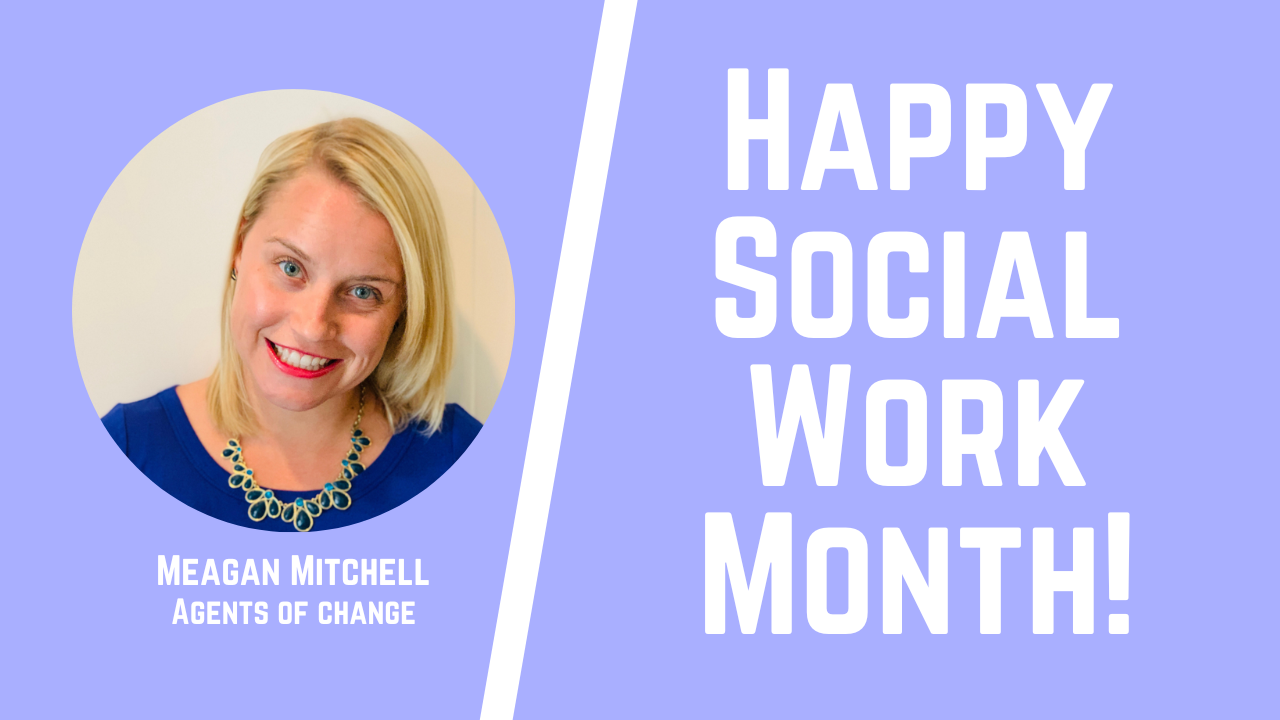
About the Instructor, Meagan Mitchell: Meagan is a Licensed Clinical Social Worker and has been providing individualized and group test prep for the ASWB for over five years. From all of this experience helping others pass their exams, she created the Agents of Change course to help you prepare for and pass the ASWB exam!
Disclaimer: This content has been made available for informational and educational purposes only. This content is not intended to be a substitute for professional medical or clinical advice, diagnosis, or treatment