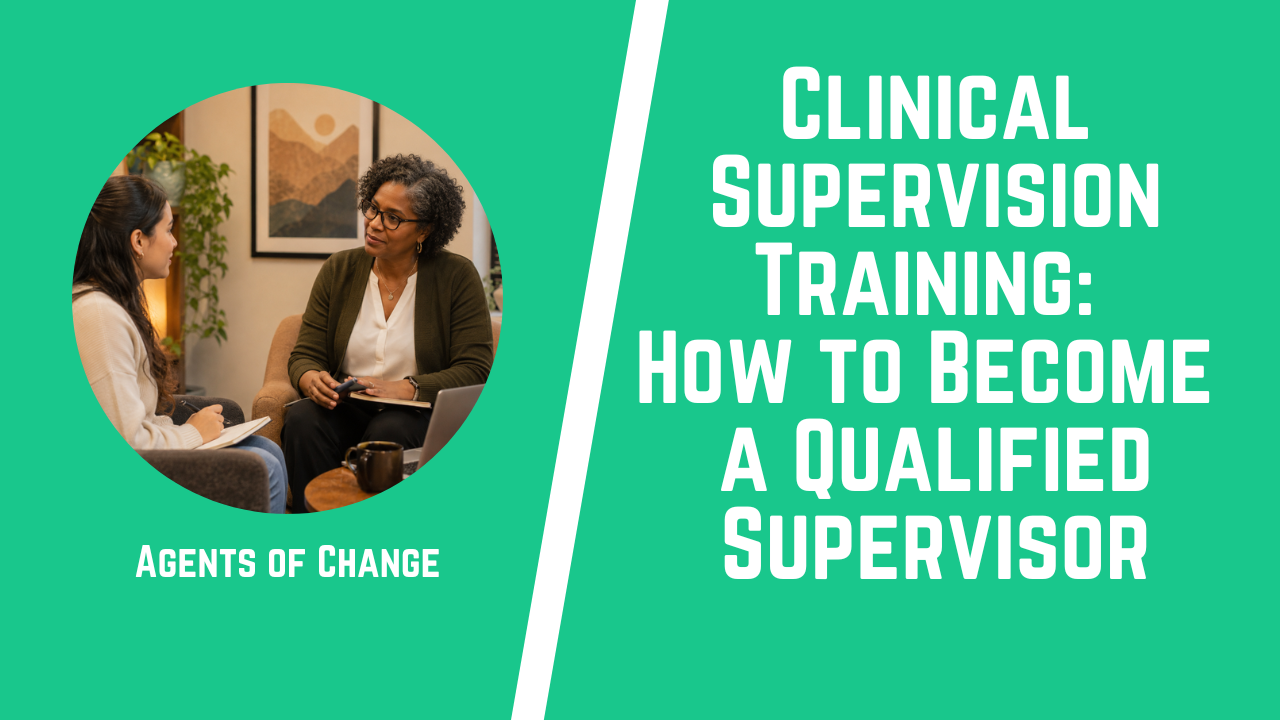
Clinical Supervision Training: How to Become a Qualified Supervisor (and How to Choose One)
Clinical Supervision Training: How to Become a Qualified Supervisor (and How to Choose One)
Clinical supervision is one of the most important relationships in a mental health professional’s career. It is where new clinicians learn how to think more clearly, respond more ethically, and build confidence in the messy, complicated, very human work of therapy, counseling, and social work. The right supervisor can help a clinician grow from second-guessing every decision to developing a grounded clinical voice.

But supervision is not just about getting hours signed off for licensure. It is about learning how to assess risk, document carefully, manage boundaries, understand power dynamics, and stay connected to your professional values when cases get complicated. For supervisors, this role requires more than clinical experience. It requires training, structure, humility, and a clear understanding of the responsibility involved.

That is why clinical supervision training matters so much. Whether you are hoping to become a qualified supervisor or trying to choose one for your own licensure journey, the goal is the same: supervision that is ethical, supportive, challenging, and actually useful. When done well, supervision strengthens clinicians, protects clients, and raises the standard of care across the mental health field.

Did you know? Agents of Change Continuing Education offers Unlimited Access to 200+ ASWB and NBCC-approved online CE courses and 20+ Live Events per year for one low annual fee to meet your state’s requirements for Continuing Education credits and level up your career.

We’ve helped hundreds of thousands of Social Workers, Counselors, and Mental Health Professionals with Continuing Education, learn more here about Agents of Change and claim your 7.5 free CEUs.

1) Why Clinical Supervision Training Matters

Clinical supervision training matters because supervision is more than talking through cases. It is a structured professional responsibility that affects client care, clinician development, ethics, documentation, and licensure. A great clinician may have strong instincts in session, but supervising another professional requires a different set of skills.

a diverse clinical supervisor working with a supervisee in a warm office setting

It Prepares Supervisors for Ethical Responsibility

Supervisors often help supervisees make decisions in complex, high-stakes situations. That might include mandated reporting, suicidal ideation, boundary concerns, confidentiality questions, or documentation problems. Without training, supervisors may rely too heavily on personal opinion or “what I’ve always done.”

Clinical supervision training gives supervisors a clearer framework for ethical decision-making, risk management, and professional accountability.

It Helps Supervisors Give Better Feedback

Feedback is one of the most important parts of supervision, and honestly, it can be awkward. Too vague, and the supervisee doesn’t know what to improve. Too harsh, and the supervisee may shut down or become defensive.

Training helps supervisors learn how to give feedback that is specific, respectful, timely, and useful. The goal is not to criticize. The goal is to help the supervisee grow.

It Protects Clients and Supports Better Care

Supervision directly impacts clients, even when clients never meet the supervisor. When supervisors are well-trained, they can help clinicians catch blind spots, think through treatment planning, assess risk, and respond more thoughtfully to complicated clinical situations.

Better supervision often means better care. Simple as that.

It Strengthens the Supervisory Relationship

A strong supervision relationship needs clarity. Supervisees should know what to expect, how they will be evaluated, what documentation is required, and how to ask for support when something urgent comes up.

Clinical supervision training helps supervisors create structure around the relationship so it feels supportive, professional, and grounded.

It Builds Confidence for Both Supervisors and Supervisees

Supervision can feel intimidating on both sides. New supervisors may wonder, “Am I doing this right?” Supervisees may wonder, “Can I be honest about what I don’t know?”

Training helps create a shared sense of safety, accountability, and direction. When supervision is done well, everyone grows: the supervisor, the supervisee, and the profession as a whole.

Learn more about Agents of Change Continuing Education. We’ve helped hundreds of thousands of Social Workers, Counselors, and Mental Health Professionals with their online continuing education and CEUs, and we want you to be next!

2) Clinical Supervision Training: How to Become a Qualified Supervisor

Becoming a qualified supervisor is a meaningful next step for experienced clinicians who want to support the growth of newer professionals. But it is not something to casually add to your bio because you have been practicing for a while. Clinical supervision carries ethical, legal, clinical, and evaluative responsibilities, which means supervisors need preparation, structure, and a clear understanding of their role.

supervisee supervisor conversation

A qualified supervisor helps clinicians develop clinical judgment, strengthen documentation, navigate ethical dilemmas, understand licensure requirements, and grow into more confident professionals. To do that well, supervisors need more than good intentions. They need training.

Step 1: Confirm Your State and Licensing Board Requirements

The first step is to check your specific licensing board’s requirements. This matters because supervision rules vary by state, license type, and profession. Social workers, counselors, marriage and family therapists, psychologists, and other mental health professionals may all have different requirements.

Before offering supervision, confirm:

  • What license level you must hold
  • How long you must be independently licensed
  • Whether you need board approval to supervise
  • How many clinical supervision training hours are required
  • Whether training must be renewed
  • What forms, contracts, or documentation are required
  • Whether virtual supervision is allowed
  • How many supervisees you can supervise at one time
  • Whether group supervision counts toward licensure hours

Do not rely only on what another clinician tells you. Rules change, and small details can make a big difference. Go directly to your licensing board’s website and review the current regulations yourself.

Step 2: Make Sure You Have Enough Clinical Experience

Most boards require supervisors to have a certain amount of post-licensure experience before supervising others. Even when this is not required, it is still important.

Supervisees need guidance from someone who has handled complex cases, made difficult clinical decisions, worked through ethical uncertainty, and developed confidence over time. Having years of experience does not automatically make someone a good supervisor, but it does provide a foundation.

Before becoming a supervisor, ask yourself:

  • Have I developed a clear clinical identity?
  • Am I comfortable discussing risk, ethics, and documentation?
  • Can I explain my clinical reasoning clearly?
  • Do I understand my scope of practice?
  • Have I worked with enough complexity to guide others?
  • Am I prepared to say, “I do not know, but let’s consult”?

That last question matters. A strong supervisor does not pretend to know everything. They know how to pause, consult, and model ethical humility.

Step 3: Complete Formal Clinical Supervision Training

Clinical supervision training helps clinicians move from being skilled providers to effective supervisors. The role is different. In therapy, your focus is the client. In supervision, your focus includes the supervisee, the client, the agency or practice setting, licensure rules, ethical standards, documentation, and public protection.

A strong clinical supervision training should cover:

  • Supervision models and theories
  • Ethical and legal responsibilities
  • Evaluation and feedback
  • Documentation requirements
  • Risk management
  • Cultural humility and responsiveness
  • Power dynamics in supervision
  • Gatekeeping responsibilities
  • Supervision contracts
  • Telehealth supervision
  • Supporting supervisee development
  • Addressing supervisee impairment or performance concerns

Training gives supervisors a framework so supervision does not become random case chatting. A supervisee deserves more than “So, what do you want to talk about today?” every week. There should be structure, reflection, accountability, and room for growth.

Step 4: Understand the Supervisor’s Ethical Responsibilities

Supervisors have an ethical duty to support supervisee development while protecting clients and the profession. This can feel like a balancing act because supervision is both supportive and evaluative.

A qualified supervisor must be prepared to:

  • Help supervisees make ethical decisions
  • Review risk-related concerns
  • Discuss mandated reporting responsibilities
  • Address boundary issues
  • Monitor documentation quality
  • Evaluate clinical competence
  • Provide corrective feedback
  • Identify when additional training or support is needed
  • Refuse to sign off on hours if requirements or competencies are not met

That final point can be uncomfortable, but it is part of the role. Supervisors are not just mentors. They are also gatekeepers. When concerns arise, supervisors need to address them early, clearly, and respectfully.

Step 5: Create a Written Supervision Agreement

Before supervision begins, create a written supervision agreement. This document helps both the supervisor and supervisee understand the expectations of the relationship.

A supervision agreement should include:

  • Names, credentials, and license numbers
  • Purpose of supervision
  • Frequency and length of supervision sessions
  • Format of supervision, such as individual, group, virtual, or in person
  • Fees and cancellation policies, if applicable
  • Expectations for preparation
  • Documentation and hour-tracking procedures
  • Emergency consultation procedures
  • Limits of confidentiality
  • Evaluation process
  • Communication boundaries between sessions
  • Procedures for ending supervision
  • Responsibilities of both supervisor and supervisee

This agreement does not need to be cold or overly formal. It just needs to be clear. Clear expectations protect the supervisor, the supervisee, and the clients being served.

Step 6: Develop a Structure for Supervision Sessions

Good supervision has a rhythm. It should allow space for urgent clinical concerns while still supporting long-term professional development.

A typical supervision session might include:

  1. Risk and urgent client concerns
    Start with safety issues, mandated reporting concerns, crisis situations, or ethical dilemmas.
  2. Case consultation
    Review client progress, treatment planning, interventions, and clinical decision-making.
  3. Skill development
    Discuss specific clinical skills, documentation practices, assessment strategies, or modality-based interventions.
  4. Reflection and use of self
    Explore the supervisee’s reactions, biases, strengths, uncertainty, and growth edges.
  5. Feedback and next steps
    End with clear takeaways, action items, and documentation reminders.

Without structure, supervision can drift. With too much rigidity, it can feel mechanical. The goal is to create enough structure to be useful while leaving enough flexibility for real clinical life.

Step 7: Learn How to Give Clear and Supportive Feedback

Feedback is one of the most important supervision skills. It is also one of the easiest to avoid.

Many supervisors worry about hurting a supervisee’s feelings, so they soften feedback until it becomes unclear. Others give feedback too bluntly, leaving the supervisee embarrassed or defensive. Neither approach works well.

Effective feedback should be:

  • Specific
  • Timely
  • Behavioral
  • Connected to professional standards
  • Balanced with strengths
  • Focused on growth
  • Documented when necessary

For example, instead of saying, “Your notes need work,” a supervisor might say, “Your notes are capturing the general session content, but they need clearer clinical interventions and stronger documentation of client response. Let’s review two examples together and create a template you can use this week.”

That kind of feedback gives the supervisee something to do. And honestly, that is the whole point.

Step 8: Prepare for Gatekeeping Responsibilities

Gatekeeping is one of the hardest parts of supervision. It means supervisors are responsible for identifying and addressing concerns that may affect client care, ethical practice, or professional readiness.

Concerns might include:

  • Repeated documentation problems
  • Poor boundaries
  • Lack of follow-through
  • Unsafe clinical judgment
  • Ethical violations
  • Impairment that affects practice
  • Resistance to feedback
  • Practicing outside scope
  • Chronic lateness or missed supervision
  • Inability to assess or respond to risk

When concerns show up, supervisors should not ignore them and hope they disappear. Usually, they do not. Instead, supervisors should document the concern, provide clear feedback, create a plan for improvement, and consult when needed.

Gatekeeping is not about punishment. It is about protecting clients and helping supervisees understand what professional practice requires.

Step 9: Build Cultural Humility Into Supervision

Clinical supervision should include regular conversations about culture, identity, power, and bias. This is not an optional add-on. It is central to ethical clinical practice.

Supervisors should help supervisees consider:

  • How client identities shape the clinical relationship
  • How the supervisee’s identities influence their perceptions
  • How the supervisor’s identities and power affect supervision
  • Whether clinical interpretations are culturally responsive
  • How systemic oppression may be affecting the client’s experience
  • When additional consultation or education is needed

A supervisor does not need to have perfect answers. Nobody does. But they do need to be willing to ask thoughtful questions, tolerate discomfort, and keep learning.

Step 10: Keep Learning Through Continuing Education and Consultation

Becoming a qualified supervisor is not a one-time achievement. Supervisors need ongoing education and consultation to stay current and effective.

Continuing education can help supervisors strengthen their knowledge in areas such as:

  • Ethics
  • Risk assessment
  • Documentation
  • Telehealth
  • Trauma-informed care
  • Cultural humility
  • Clinical interventions
  • Supervision models
  • Leadership
  • Burnout prevention

Supervisors should also seek consultation when they encounter complex situations. This might include concerns about supervisee competence, ethical dilemmas, dual relationships, client risk, or uncertainty about board requirements.

Strong supervisors model lifelong learning. They show supervisees that competence does not mean having every answer. It means knowing how to keep growing.

Step 11: Evaluate Your Effectiveness as a Supervisor

Qualified supervisors should regularly reflect on their own work. Supervision is a skill, and like any skill, it improves with feedback and practice.

Ask yourself:

  • Are my supervisees growing in confidence and competence?
  • Am I giving feedback clearly and consistently?
  • Do I avoid difficult conversations?
  • Am I documenting supervision appropriately?
  • Do I understand current licensing requirements?
  • Am I making room for culture, identity, and power?
  • Do I provide enough structure?
  • Do I encourage clinical reasoning instead of creating dependency?
  • Am I staying within my own scope of competence?
  • Do I seek consultation when needed?

Supervision is not about being the smartest person in the room. It is about creating a learning space where clinical judgment, ethical practice, and professional confidence can develop.

Final Takeaway

Clinical supervision training helps experienced clinicians become qualified supervisors who can guide others with clarity, confidence, and ethical responsibility. The process starts with understanding board requirements, completing formal training, creating structure, learning how to evaluate supervisees, and committing to ongoing growth.

When done well, supervision becomes much more than a licensure requirement. It becomes a place where clinicians learn how to think, reflect, repair, document, consult, and practice with integrity. And that kind of supervision strengthens the entire mental health field.

Agents of Change has helped hundreds of thousands of Social Workers, Counselors, and Mental Health Professionals with Continuing Education, learn more here about Agents of Change and claim your 7.5 free CEUs!

3) Core Topics in Clinical Supervision Training

Clinical supervision training should prepare supervisors for the real work of guiding clinicians, not just the paperwork side of signing off on hours. Supervision sits at the intersection of ethics, clinical judgment, documentation, risk management, professional identity, and client care. Because of that, a strong training experience should help supervisors understand what to teach, how to teach it, when to evaluate, and how to respond when things get complicated.

For supervisors and supervisees who want to keep building these skills, Agents of Change Continuing Education offers more than 200 ASWB and NBCC-approved courses for therapists, social workers, counselors, and mental health professionals. With a $99/year subscription, clinicians can access a growing library of continuing education courses, plus more than 20 live events each year, which is more than one live event per month. That makes ongoing professional development more affordable and easier to fit into an already full clinical schedule.

Ethics and Legal Responsibilities

Ethics is one of the most important topics in clinical supervision training. Supervisors need to help supervisees think through confidentiality, informed consent, mandated reporting, duty to warn or protect, documentation, boundaries, and scope of practice.

This is where supervision becomes more than casual case discussion. A supervisee might bring in a situation that feels unclear, emotionally charged, or legally risky. The supervisor’s role is to help them slow down, identify the ethical issue, review the relevant standards, consider options, document carefully, and consult when needed.

Strong supervision training should help supervisors answer questions like:

  • What are my ethical responsibilities as a supervisor?
  • What must I document in supervision?
  • How do I support supervisees without taking over their clinical decision-making?
  • When do I need to intervene more directly?
  • How do I handle concerns about client safety or supervisee competence?

Risk Assessment and Crisis Response

Supervisors must be prepared to support supervisees through high-stakes clinical situations. That may include suicidal ideation, self-harm, abuse or neglect concerns, intimate partner violence, psychosis, substance use risk, or threats toward others.

Clinical supervision training should cover how to guide supervisees through risk assessment, safety planning, crisis documentation, consultation, and follow-up. It should also help supervisors create clear expectations for what supervisees should do when an urgent issue comes up outside of scheduled supervision.

A qualified supervisor should make sure supervisees know:

  • When to contact the supervisor immediately
  • What information to gather during a risk assessment
  • How to document safety concerns
  • When to involve emergency services or higher levels of care
  • How to follow agency, practice, and licensing board expectations

This is also an area where continuing education matters. Agents of Change Continuing Education offers courses and live events that can help clinicians strengthen related skills in ethics, assessment, trauma-informed care, crisis response, and clinical decision-making.

Documentation and Licensure Requirements

Documentation is not the most glamorous part of clinical work, but it is one of the most important. Supervisors need to teach supervisees how to write notes that are clear, accurate, clinically meaningful, and aligned with ethical and legal standards.

Supervision training should address:

  • Progress note expectations
  • Treatment planning
  • Risk documentation
  • Supervision notes
  • Hour tracking
  • Licensure forms
  • Evaluation records
  • Supervision agreements
  • Documentation of feedback or concerns

Supervisors should also understand the licensure process for the supervisees they support. That means knowing what counts as clinical hours, how supervision hours are calculated, what forms are required, and what deadlines matter.

A supervisee should never reach the end of their licensure process and discover that their hours were not tracked correctly. That’s a supervision failure, and it can be avoided with training and organization.

Supervision Models and Structure

Clinical supervision training should introduce supervisors to different supervision models. These may include developmental models, competency-based models, reflective supervision, strengths-based supervision, or models connected to specific therapeutic approaches.

The model matters because it gives supervision a structure. Without a model, sessions can become scattered. One week is paperwork, the next is venting, the next is a rushed case update. Some flexibility is normal, of course, but supervision should still have a clear purpose.

A strong supervision structure may include:

  1. Reviewing urgent clinical or ethical concerns.
  2. Discussing specific cases.
  3. Exploring clinical reasoning and interventions.
  4. Reviewing documentation.
  5. Reflecting on the supervisee’s reactions and growth.
  6. Identifying feedback, goals, and next steps.

Good supervision has enough structure to be useful and enough flexibility to respond to real clinical life.

Feedback, Evaluation, and Gatekeeping

Supervisors need to know how to give feedback that is honest, specific, and supportive. This can be harder than it sounds. Many supervisors either soften feedback too much or wait until a problem has grown before addressing it.

Clinical supervision training should help supervisors practice giving feedback that is:

  • Clear
  • Timely
  • Behavior-based
  • Connected to professional standards
  • Focused on growth
  • Documented when needed

Supervisors also have a gatekeeping role. That means they are responsible for addressing concerns about a supervisee’s readiness, ethics, judgment, or competence. Gatekeeping can feel uncomfortable, but it protects clients and upholds the standards of the profession.

When concerns arise, supervisors should know how to create a remediation plan, increase support, document the concern, consult with others, and make difficult decisions about whether a supervisee is ready to move forward.

Cultural Humility and Power Dynamics

Clinical supervision always involves power. The supervisor may evaluate the supervisee, sign off on hours, influence licensure progress, and shape professional confidence. Ignoring that power does not make it disappear. It just makes it harder to talk about.

Supervision training should help supervisors understand how power, identity, culture, privilege, oppression, and bias show up in the supervisory relationship and in client care.

Supervisors should be prepared to ask questions like:

  • How might culture and identity be shaping this case?
  • What assumptions might the supervisee or supervisor be bringing into the room?
  • How are power and privilege affecting the client’s experience?
  • How does the supervisee experience feedback from me?
  • What additional learning or consultation is needed?

Agents of Change Continuing Education offers ongoing courses and live events that can support growth in areas like ethics, cultural humility, diversity, trauma, LGBTQ+ affirming care, and clinical best practices. These topics are essential for supervisors who want to guide clinicians in a thoughtful, inclusive, and professionally responsible way.

Clinical Skill Development

Supervisors are also teachers. They help supervisees strengthen clinical skills, deepen assessment abilities, improve treatment planning, and choose interventions that fit the client’s needs.

Depending on the supervisee’s setting, this may include support with:

  • Intake assessments
  • Diagnosis and case conceptualization
  • Treatment planning
  • Evidence-based interventions
  • Family work
  • Group therapy
  • Trauma-informed care
  • Neurodiversity-affirming practice
  • Anxiety, depression, ADHD, OCD, grief, or substance use treatment
  • Termination and transitions

This is where ongoing continuing education can be especially helpful. Because Agents of Change Continuing Education includes a growing library of more than 200 ASWB and NBCC-approved courses, supervisors and supervisees can continue expanding their clinical knowledge across many practice areas while earning CE credits needed to keep their licenses active.

Supervisee Development and Professional Identity

A major goal of supervision is helping clinicians develop their own professional identity. Supervisees are learning how to think, respond, document, consult, set boundaries, and trust their clinical judgment.

Clinical supervision training should help supervisors understand how clinicians grow over time. A brand-new clinician may need more structure, direct teaching, and reassurance. A more advanced supervisee may need deeper consultation, more autonomy, and space to refine their clinical voice.

The supervisor’s job is to meet the supervisee where they are while still helping them move forward. That takes patience, clarity, and skill.

The Value of Ongoing Training

Clinical supervision training is not a one-time event. Even experienced supervisors need ongoing learning to stay current with ethical standards, clinical trends, telehealth issues, documentation expectations, and best practices.

That is why accessible continuing education matters. Agents of Change Continuing Education provides an affordable way for mental health professionals to keep growing, with a $99/year subscription that includes access to 200+ ASWB and NBCC-approved courses, 20+ live events per year, and more. For supervisors, that kind of ongoing learning can strengthen the quality of supervision they provide. For supervisees, it can support clinical growth far beyond the required supervision hours.

4) How to Choose a Qualified Supervisor

Choosing a qualified supervisor is one of the most important decisions in your clinical development. The right supervisor can help you build confidence, strengthen your clinical judgment, understand ethical responsibilities, and move through the licensure process with clarity. The wrong fit can leave you feeling confused, unsupported, or unsure whether your hours and documentation are being handled correctly.

The process does not have to be overwhelming, though. A simple step-by-step approach can help you choose a supervisor who meets licensing requirements and supports the kind of clinician you want to become.

Step 1: Start With Your Licensing Board Requirements

Before you contact any potential supervisor, check your state licensing board’s rules. This is the most important first step because supervision requirements vary by state, profession, and license type.

Look for answers to questions like:

  • What type of license must my supervisor hold?
  • Does my supervisor need to be board-approved?
  • How many years of experience must they have?
  • Can supervision happen virtually?
  • How often do I need supervision?
  • Are group supervision hours allowed?
  • How many total supervision hours do I need?
  • What forms or contracts are required?
  • What documentation must be submitted for licensure?

Do not assume that a supervisor is qualified just because they are experienced or well-liked. They need to meet the specific requirements for your license path.

Step 2: Confirm Their Credentials

Once you understand your board’s requirements, confirm that the supervisor actually meets them. This might feel awkward, but it is normal and appropriate. A qualified supervisor should expect these questions.

Ask directly:

  • Are you currently licensed and in good standing?
  • Are you approved to supervise my license type?
  • How long have you been independently licensed?
  • Have you completed clinical supervision training?
  • Have you supervised clinicians pursuing my specific license before?
  • Are you familiar with my state’s licensure forms and requirements?

You can also verify their license through your state licensing board’s online lookup system. Trust, but verify. Your licensure timeline depends on it.

Step 3: Ask About Their Clinical Experience

A supervisor does not need to have identical experience to you, but they should have enough relevant clinical knowledge to guide your work. If your caseload includes children, trauma, crisis intervention, substance use, OCD, severe mental illness, or family systems, your supervisor should be comfortable helping you think through those kinds of cases.

Ask about their experience with:

  • Your client population
  • Your practice setting
  • Your treatment approaches
  • Risk assessment and crisis planning
  • Diagnosis and treatment planning
  • Documentation standards
  • Ethical decision-making
  • Cultural humility and identity-related clinical issues

A supervisor who is honest about their strengths and limits is often a better choice than someone who claims to know everything. Nobody knows everything. Good supervisors know when to consult.

Step 4: Learn How They Structure Supervision

Supervision should have a clear structure. It should not feel like a random weekly conversation where you leave wondering what just happened.

Ask potential supervisors:

  • How do you usually structure supervision sessions?
  • Do you review cases, documentation, ethics, and professional development?
  • How do you handle urgent clinical concerns?
  • Do you provide written feedback or evaluations?
  • How do you track supervision hours?
  • What do you expect me to bring to each session?
  • How do you balance support and accountability?

A strong supervision structure might include time for risk concerns, case consultation, clinical skill-building, documentation review, ethical questions, and reflection on your professional growth.

Step 5: Pay Attention to Their Feedback Style

Feedback is a major part of supervision. You want a supervisor who can be kind and direct. Too harsh, and supervision can feel shaming. Too vague, and you may not know what to improve.

Ask:

  • How do you give feedback?
  • How do you handle concerns about supervisee performance?
  • How often do you provide formal evaluation?
  • What happens if I make a clinical mistake?
  • How do you help supervisees grow without making them feel judged?

A good supervisor should be able to say difficult things respectfully. You should feel safe enough to be honest about what you do not know, while still knowing that supervision includes real accountability.

Step 6: Review the Supervision Agreement Before Starting

A qualified supervisor should use a written supervision agreement. This protects both of you and clarifies expectations from the beginning.

The agreement should include:

  • Supervisor and supervisee names and credentials
  • Purpose of supervision
  • Frequency and length of sessions
  • Format, such as individual, group, virtual, or in person
  • Fees and cancellation policy, if applicable
  • Documentation and hour-tracking process
  • Emergency consultation procedures
  • Limits of confidentiality
  • Evaluation process
  • Communication expectations between sessions
  • Process for ending supervision

If a supervisor does not use an agreement or seems dismissive when you ask about one, pause. That is something to be aware of.

Step 7: Consider the Relationship Fit

Credentials matter, but fit matters too. Supervision is a professional relationship where you need to be able to ask questions, admit uncertainty, discuss mistakes, and receive feedback.

After talking with a potential supervisor, ask yourself:

  • Do I feel respected?
  • Do they seem organized?
  • Do they explain things clearly?
  • Do they invite questions?
  • Do they understand the kind of work I do?
  • Do they seem comfortable discussing ethics and risk?
  • Do I feel like I could be honest with them?
  • Do they seem supportive without being overly casual?

You do not need a supervisor who feels like your best friend. Actually, that can get complicated. You need someone who feels steady, ethical, clear, and invested in your growth.

Step 8: Watch for Red Flags

Some warning signs should make you slow down before committing.

Be cautious if a supervisor:

  • Cannot clearly explain their qualifications
  • Seems unfamiliar with your licensing requirements
  • Does not use a supervision agreement
  • Promises to sign off on hours no matter what
  • Avoids discussing evaluation or feedback
  • Frequently cancels or seems hard to reach
  • Blurs professional boundaries
  • Talks mostly about themselves during consultation
  • Minimizes ethical concerns
  • Dismisses culture, identity, power, or bias
  • Does not have a plan for urgent clinical situations
  • Pressures you into unfair financial or work arrangements
  • Discourages you from seeking outside consultation

One red flag does not always mean you need to run. But several red flags together? Pay attention.

Step 9: Look for Green Flags

A strong supervisor will usually show signs of reliability and professionalism early.

Green flags include:

  • They explain their qualifications clearly.
  • They are familiar with your licensure path.
  • They use a written supervision agreement.
  • They ask about your clinical goals.
  • They discuss feedback openly.
  • They talk about ethics, documentation, and risk without making it scary.
  • They respect cultural humility and identity-related issues.
  • They are clear about availability and boundaries.
  • They encourage your clinical reasoning instead of just giving answers.
  • They are honest about their own limits.
  • They welcome questions.

The best supervisors help you feel more grounded, not more confused.

Step 10: Reassess the Fit Over Time

Choosing a supervisor is not a one-time decision. Once supervision begins, continue paying attention to how the relationship is working.

Ask yourself every few months:

  • Am I growing clinically?
  • Am I receiving useful feedback?
  • Are my hours being tracked correctly?
  • Do I understand what is expected of me?
  • Do I feel comfortable bringing hard cases?
  • Are ethical and risk concerns taken seriously?
  • Is supervision consistent?
  • Do I leave with clearer next steps?

If something feels off, bring it up early. Sometimes the issue can be fixed with a direct conversation. If not, it may be appropriate to look for a better fit.

Things to Be Aware Of Before You Commit

Before choosing a supervisor, keep these practical points in mind:

  • Your board’s rules come first. A supervisor can be wonderful and still not meet your licensure requirements.
  • Documentation matters. Make sure you know how hours, evaluations, and forms will be handled.
  • Cheapest is not always best. Cost matters, but poor supervision can create bigger problems later.
  • Convenience is not the same as quality. A nearby or available supervisor is helpful, but they still need to be competent and organized.
  • Supervision should include accountability. If a supervisor never gives feedback, that is not necessarily a good thing.
  • You are allowed to ask questions. A qualified supervisor should not make you feel difficult for wanting clarity.
  • Fit can change. What you need as a brand-new clinician may shift as you become more confident.

Final Takeaway

Choosing a qualified supervisor means looking at both the official requirements and the human relationship. Start with your licensing board, verify credentials, ask about clinical experience, review the supervision structure, and pay attention to how the supervisor communicates.

The right supervisor will help you grow, challenge you when needed, support your clinical reasoning, and keep the licensure process organized. Good supervision should feel clear, ethical, supportive, and professionally grounded. Not perfect, because nothing is, but steady enough that you know you are not figuring it all out alone.

5) FAQs – Clinical Supervision Training

Q: What is clinical supervision training, and why does it matter?

A: Clinical supervision training prepares experienced clinicians to guide, evaluate, and support newer mental health professionals. It matters because supervision involves ethics, documentation, risk management, licensure requirements, feedback, and client safety. A strong clinician still needs specific training to become an effective supervisor. Good supervision helps supervisees grow with more confidence, clarity, and accountability.

Q: How do I become a qualified clinical supervisor?

A: Start by checking your state licensing board’s requirements, since rules vary by profession and location. Most clinicians need an active independent license, post-licensure experience, and formal clinical supervision training. You may also need board approval, supervision renewal training, or specific documentation procedures. Once qualified, create a clear supervision agreement, structure your sessions, and continue learning through consultation and continuing education.

Q: How do I choose the right qualified supervisor?

A: First, confirm that the supervisor meets your licensing board’s requirements for your specific license path. Then ask about their clinical experience, supervision style, documentation process, feedback approach, and availability for urgent concerns. Watch for red flags like unclear credentials, no supervision agreement, poor organization, or promises to sign off on hours no matter what. The right supervisor should feel ethical, steady, supportive, and willing to challenge you when needed.

6) Conclusion

Clinical supervision is one of the most meaningful parts of professional development in the mental health field. Whether you are working toward independent licensure or preparing to guide newer clinicians yourself, supervision shapes how professionals think, respond, document, reflect, and grow. When it is done well, it creates stronger clinicians and safer, more thoughtful care for clients.

For clinicians who want to become qualified supervisors, clinical supervision training provides the structure needed to step into the role with clarity and confidence. It helps supervisors understand ethics, evaluation, documentation, cultural humility, risk management, and the responsibility of supporting another professional’s development. Good intentions matter, but training helps turn those intentions into ethical and effective supervision.

For supervisees, choosing the right supervisor is just as important. The best supervisor is qualified on paper and supportive in practice, offering guidance that is organized, honest, respectful, and grounded in professional standards. With the right training, the right fit, and a commitment to ongoing learning, clinical supervision becomes much more than a licensure requirement. It becomes a foundation for long-term growth in the profession.

————————————————————————————————————————————————

► Learn more about the Agents of Change Continuing Education here: https://agentsofchangetraining.com

About the Lead Instructor, Dr. Meagan Mitchell: Meagan is a Licensed Clinical Social Worker and has been providing Continuing Education for Social Workers, Counselors, and Mental Health Professionals for more than 10 years. From all of this experience helping others, she created Agents of Change Continuing Education to help Social Workers, Counselors, and Mental Health Professionals stay up-to-date on the latest trends, research, and techniques.

#socialwork #socialworker #socialwork #socialworklicense #socialworklicensing #continuinged #continuingeducation #ce #socialworkce #freecesocialwork #lmsw #lcsw #counselor #NBCC #ASWB #ACE

Disclaimer: This content has been made available for informational and educational purposes only. This content is not intended to be a substitute for professional medical or clinical advice, diagnosis, or treatment

Note: Certain images used in this post were generated with the help of artificial intelligence.

Share:

Discover more from Agents of Change

Subscribe now to keep reading and get access to the full archive.

Continue reading