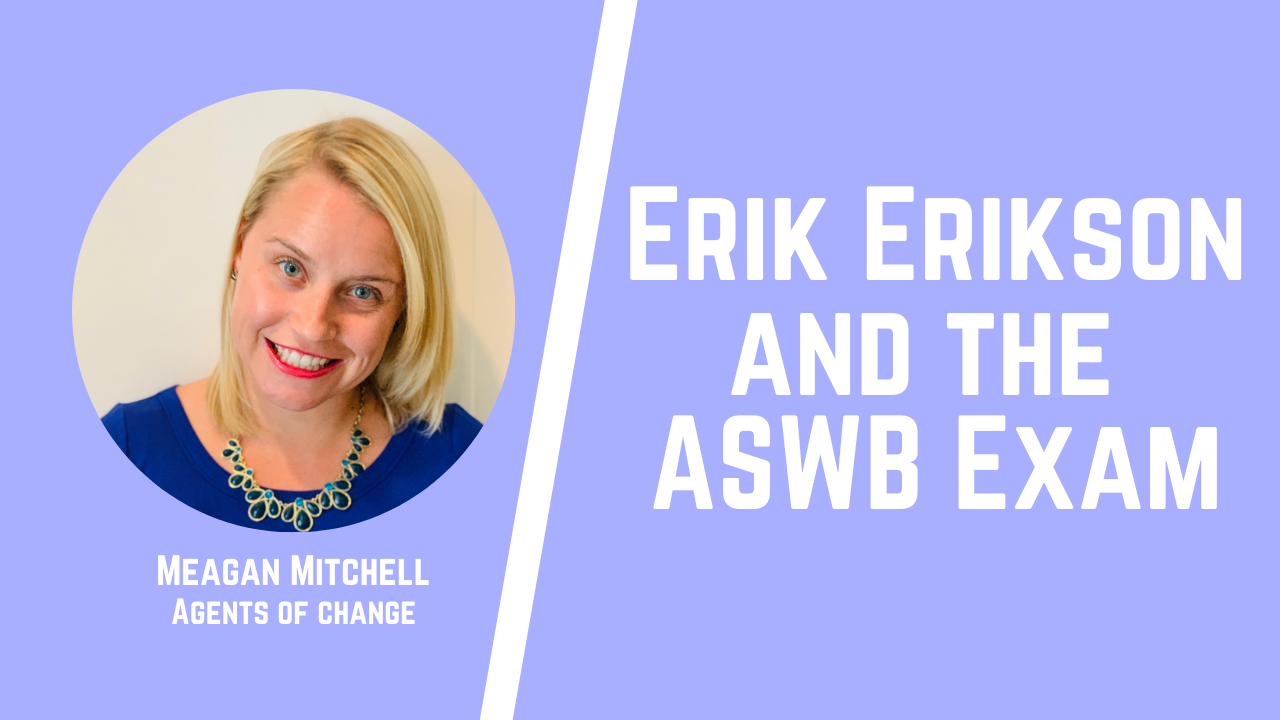
Erik Erikson and the ASWB Exam

Erik Erikson and the ASWB Exam

Originally published on April 7th, 2023. Last updated on October 13th, 2024.

Erik Erikson’s theory of psychosocial development stands as a foundational concept in the field of social work, especially for those preparing for the ASWB licensing exams. Social workers must be equipped to understand and apply Erikson’s eight stages of development to their practice, as they form the basis for assessing client progress, planning interventions, and fostering positive change across different life stages. The ASWB exam frequently tests candidates on these stages, making it essential to master Erikson’s ideas in order to effectively support clients through the various crises and challenges they face.

In this blog post, we will break down the critical elements of Erikson’s psychosocial development theory, with a specific focus on the information social workers need to succeed on the ASWB exam. From understanding how trust versus mistrust shapes early relationships, to recognizing the importance of identity formation in adolescence, Erikson’s stages provide a roadmap for understanding human development. We will also discuss how social workers can integrate these stages with other essential frameworks like systems theory and strengths-based practice to deliver holistic, culturally competent care.

Mastering Erikson’s theory is not only vital for passing the ASWB exam but also for effectively intervening in the lives of clients across the lifespan. By developing a deep understanding of how individuals evolve within their social contexts, social workers can assess needs, advocate for change, and empower clients to achieve meaningful progress. This blog will give you the confidence and knowledge to excel on the exam and in your future professional practice.

Learn more about the ASWB exam and create a personalized ASWB study plan with Agents of Change. We’ve helped thousands of Social Workers pass their ASWB exams and want to help you be next!

1) What is Important to Know About Erik Erikson?

Theory of Psychosocial Development

Erikson’s eight-stage theory of psychosocial development, which emphasizes the interplay between growth and social context, is essential knowledge for Social Workers. The ASWB exam tests your ability to apply these stages to real-life situations, assess clients’ developmental progress, and design appropriate interventions to support positive change.

A play therapist working with a child in a fun and welcoming office environment

The Eight Stages of Erikson’s Psychosocial Development:

  1. Trust vs. Mistrust (Birth to 1 year): At this stage, infants depend on their caregivers for safety, comfort, and nourishment. If their needs are consistently met, they develop a sense of trust; if not, they may develop mistrust and insecurity.
  2. Autonomy vs. Shame and Doubt (1 to 3 years): During this stage, toddlers explore their environment and start to develop a sense of autonomy and independence. They learn to make choices and control their bodies. If encouraged, they develop confidence; if criticized or overly controlled, they may feel shame and doubt.
  3. Initiative vs. Guilt (3 to 5 years): Preschool children start to take the initiative in planning and executing tasks. If their efforts are supported, they develop a sense of purpose and the ability to take initiative. If they are criticized or their attempts are seen as a nuisance, they may develop guilt and hesitancy.
  4. Industry vs. Inferiority (6 to 11 years): At this stage, children begin to develop skills, compete with peers, and complete tasks. If they receive positive reinforcement, they develop a sense of competence and industry. If they experience repeated failure or disapproval, they may develop feelings of inferiority.
  5. Identity vs. Role Confusion (12 to 18 years): During adolescence, individuals search for their identity and place in society. They explore various roles and ideologies. Successfully navigating this stage results in a strong sense of self and identity. If they cannot establish a coherent identity, they may experience role confusion and insecurity.
  6. Intimacy vs. Isolation (19 to 40 years): Young adults face the challenge of forming deep, meaningful relationships with others. If they can develop intimate bonds, they gain a sense of love and connection. If they struggle to connect with others, they may experience isolation and loneliness.
  7. Generativity vs. Stagnation (40 to 65 years): During middle adulthood, individuals seek to contribute to society, usually through work, family, or community involvement. If they can make a positive impact, they develop a sense of generativity. If they feel unproductive or uninvolved, they may experience stagnation and self-absorption.
  8. Integrity vs. Despair (65 years and older): In the final stage of life, older adults reflect on their lives and accomplishments. If they feel satisfied with their contributions and achievements, they develop a sense of integrity. If they harbor regrets and disappointment, they may experience despair and a sense of failure.

Identity Formation and Crisis Resolution

In addition to the eight stages, Social Workers must grasp the role of identity formation and crisis resolution throughout the lifespan. This includes understanding concepts such as trust versus mistrust, autonomy versus shame and doubt, and generativity versus stagnation, as well as their implications for client well-being.

Integration with Other Key Theories and Approaches

Furthermore, the ASWB exam requires Social Workers to integrate Erikson’s theories with other key Social Work approaches, such as systems theory, strengths-based perspectives, and cultural competence, in order to deliver effective services to diverse populations.

Agents of Change packages include 30+ ASWB topics and hundreds of practice questions so you’ll be ready for test day! Build the perfect ASWB study plan with our personalized study plan builder here.

2) Practice ASWB Exam Questions on Erik Erikson

Question 1: A 4-year-old child is struggling with feelings of guilt after their attempts to help around the house were criticized by their parents. According to Erikson’s theory of psychosocial development, which stage is the child experiencing?

A) Trust vs. Mistrust
B) Autonomy vs. Shame and Doubt
C) Initiative vs. Guilt
D) Industry vs. Inferiority

Answer: C

Rationale: According to Erikson’s theory, children between the ages of 3 and 5 years are in the stage of Initiative vs. Guilt. During this stage, they begin taking the initiative in planning and executing tasks. If their efforts are supported, they develop a sense of purpose and the ability to take initiative. If they are criticized or their attempts are seen as a nuisance, they may develop guilt and hesitancy.

Question 2: According to Erikson’s theory of psychosocial development, which of the following best describes the role of social context in an individual’s development?

A) Social context is unrelated to an individual’s psychosocial development.
B) Social context has a minor influence on psychosocial development, but primarily in early childhood.
C) Social context only affects an individual’s psychosocial development during adolescence.
D) Social context plays a critical role in shaping an individual’s psychosocial development throughout their lifespan.

Answer: D

Rationale: Erikson’s theory of psychosocial development emphasizes the importance of social context in shaping an individual’s development at each stage of life. The theory posits that individuals face unique psychosocial crises at different stages of their lives, and these crises are influenced by their interactions with others and the broader social environment. As such, social context is a critical factor in psychosocial development throughout a person’s entire lifespan.

3) Master Your Understanding of Erik Erikson

Erik Erikson’s theories of psychosocial development are important to understand for all Social Workers preparing for the ASWB licensing exam. A comprehensive understanding of human development across the lifespan, as presented in Erikson’s eight stages, is crucial for effectively assessing, intervening, and advocating for clients in various life stages and social contexts.

A therapist working with a teenage client in a cozy office environment.

By mastering Erikson’s concepts, aspiring Social Workers will be equipped to tailor their interventions to the unique needs of each client, fostering positive growth and change. In addition, Erikson’s theories serve as a foundation for integrating other essential Social Work approaches, such as strengths-based perspectives, systems theory, and cultural competence, which are all critical components of the ASWB exam.

Ultimately, a thorough understanding of Erikson’s work will not only increase your chances of success on the ASWB exam but also empower you to make a lasting impact in the lives of the individuals and communities you serve.

For more content, resources, and practice questions like the ones discussed in this blog post, visit www.agentsofchangeprep.com. With our comprehensive materials and expert guidance, you’ll be well-prepared for the ASWB exam and ready to excel in your social work practice!

4) Applying Erikson’s Stages to Diverse Populations and Cultural Contexts

Erikson’s psychosocial theory offers valuable insights into human development, but social workers must apply these concepts with cultural sensitivity and an understanding of diverse populations. Since each stage of Erikson’s model is influenced by social interactions and cultural context, it’s important for social workers to recognize how cultural norms, values, and experiences shape psychosocial development. In this section, we’ll explore how Erikson’s stages can be tailored to various cultural backgrounds, including considerations for working with diverse racial, ethnic, socioeconomic, and LGBTQ+ populations.

1. Cultural Variations in Trust vs. Mistrust (Birth to 1 year)

In Erikson’s first stage, infants learn to trust based on their caregivers’ ability to meet their needs. However, cultural differences in caregiving practices can influence how trust is developed.

  • Collectivist vs. Individualist Cultures: In collectivist societies, child-rearing often involves extended family and community support, which can foster a sense of trust in a broader social network. In contrast, individualist cultures may emphasize more independence in caregiving, which can shape how trust and autonomy are developed in the early years.
  • Parenting Styles: Cultural norms around discipline, nurturing, and responsiveness vary widely. Social workers should be mindful of how these cultural practices impact the development of trust and the attachment process.

Key Considerations for Social Workers:

  • Assess parenting practices in the context of the family’s cultural values.
  • Explore how broader community support systems impact the child’s development of trust.

2. Autonomy vs. Shame and Doubt (1 to 3 years) in Different Cultures

Autonomy is about children developing independence and control over their actions, but how this independence is encouraged can differ greatly across cultural contexts.

  • Cultural Expectations of Independence: In some cultures, children are encouraged to become self-reliant at an early age, while in others, interdependence and community reliance may be prioritized. For example, in cultures that emphasize communal values, less emphasis may be placed on early autonomy.
  • Disciplinary Practices: Social workers should consider how culturally specific disciplinary methods, such as shame-based discipline, might impact a child’s developing sense of autonomy.

Key Considerations for Social Workers:

  • Be aware of cultural differences in expectations for autonomy and independence.
  • Understand how disciplinary approaches may affect the balance between autonomy and shame.

3. Initiative vs. Guilt (3 to 5 years): Encouraging Initiative Across Cultures

During the preschool years, children are eager to assert themselves by taking initiative in their activities. However, cultural norms may influence how this initiative is viewed and supported.

  • Role of Gender Norms: In some cultures, traditional gender roles may affect how boys and girls are encouraged or discouraged from taking initiative. Social workers need to consider how gender expectations shape a child’s opportunities for exploration and leadership.
  • Parental Expectations and Authority: In cultures where respect for authority and obedience are highly valued, a child’s initiatives may be limited or redirected, potentially leading to feelings of guilt if their efforts are seen as overstepping boundaries.

Key Considerations for Social Workers:

  • Be mindful of gender roles and expectations within different cultural settings.
  • Help parents understand the importance of fostering initiative, even in the context of respect for authority and tradition.

4. Identity vs. Role Confusion (12 to 18 years): Navigating Cultural Identity

The adolescent search for identity is central to Erikson’s fifth stage, but for individuals from diverse backgrounds, this search often includes negotiating cultural, racial, or ethnic identity alongside personal identity.

  • Bicultural or Multicultural Identity: Adolescents from immigrant or minority backgrounds may struggle with reconciling their cultural heritage with the dominant culture, leading to a sense of role confusion. They may face pressures to assimilate or, conversely, to maintain strong ties to their cultural origins.
  • Discrimination and Identity Formation: Experiences of racial or ethnic discrimination can complicate the process of identity development. Social workers must recognize how these external pressures shape an adolescent’s self-concept and sense of belonging.

Key Considerations for Social Workers:

  • Support adolescents in exploring and integrating multiple aspects of their identity, including cultural, racial, and ethnic backgrounds.
  • Provide space for discussions around discrimination and its impact on identity development.

5. Generativity vs. Stagnation (40 to 65 years): Contribution Across Cultures

In middle adulthood, individuals seek to contribute to society, but the form that contribution takes can be influenced by cultural values surrounding work, family, and community involvement.

  • Work and Family Balance in Different Cultures: In cultures where family is a central focus, generativity may be more closely tied to family roles and caregiving, whereas in other societies, professional achievement or community involvement may be more heavily emphasized.
  • Cultural Expectations of Aging: Some cultures value the wisdom and experience of older adults, while others may prioritize youth and innovation. These cultural perceptions can affect how individuals in middle adulthood perceive their capacity for generativity.

Key Considerations for Social Workers:

  • Help clients identify culturally relevant pathways to generativity, whether through family, work, or community service.
  • Be sensitive to the cultural meanings attached to aging and productivity.

6. Cultural Sensitivity and Competence in Applying Erikson’s Stages

Understanding Erikson’s stages in isolation can lead to overgeneralization if cultural differences are not taken into account. Social workers must adopt a culturally competent approach to psychosocial development, ensuring they respect and acknowledge diverse worldviews and experiences.

  • Cultural Humility: Social workers should adopt an attitude of cultural humility, recognizing that every client’s experience is unique and that Erikson’s stages might manifest differently depending on their background.
  • Adaptation of Interventions: Psychosocial interventions should be adapted to align with a client’s cultural values and belief systems. For instance, promoting autonomy in a collectivist culture might require a different approach than in an individualist one.

Key Considerations for Social Workers:

  • Continually educate themselves on the cultural contexts of the populations they serve.
  • Engage in active listening and be open to learning from clients about their cultural perspectives.

By applying Erikson’s stages with cultural awareness and sensitivity, social workers can more effectively support their clients’ development and well-being. This approach not only honors the individual’s cultural background but also ensures that interventions are respectful, relevant, and impactful across diverse populations.

4) FAQ – Erik Erikson

Q: How can social workers apply Erikson’s stages of development to clients from diverse cultural backgrounds?

A: Social workers can apply Erikson’s stages by recognizing that each client’s development is shaped by their cultural context. This requires understanding how cultural norms, family structures, and community values influence the way individuals experience each psychosocial stage.

For example, autonomy in early childhood might look different in collectivist cultures compared to individualist ones. By practicing cultural humility, social workers can tailor their interventions to support clients’ development in ways that align with their cultural values, ensuring that the client’s unique background is respected and incorporated into the therapeutic process.

Q: How does Erikson’s theory help social workers assess and intervene across different life stages?

A: Erikson’s theory provides a framework that helps social workers assess where a client is in their psychosocial development and identify the key challenges or crises they are facing. Each stage—from trust vs. mistrust in infancy to integrity vs. despair in old age—presents specific developmental tasks.

By understanding these tasks, social workers can create targeted interventions to address developmental issues. For example, with an adolescent struggling with identity vs. role confusion, social workers might focus on helping the client explore their sense of self and navigate external pressures like peer influence or cultural expectations.

Q: What role does social context play in Erikson’s psychosocial stages, and why is it important for social workers to consider this?

A: Social context is central to Erikson’s theory, as each stage of psychosocial development is influenced by the individual’s interactions with their social environment, including family, peers, community, and broader cultural factors.

For social workers, considering the social context means understanding how factors such as socioeconomic status, cultural traditions, family dynamics, and societal pressures shape a client’s experiences and developmental challenges. This allows social workers to provide more holistic and culturally responsive care, helping clients overcome barriers and build resilience within their unique social circumstances.

5) Conclusion

Erik Erikson’s theory of psychosocial development serves as an essential framework for social workers, offering insights into human growth across the lifespan and the critical role of social interactions in shaping identity and well-being.

By understanding Erikson’s eight stages, social workers are better equipped to assess their clients’ developmental challenges, create targeted interventions, and guide them toward healthier psychosocial outcomes. Whether working with infants developing trust or older adults reflecting on life’s meaning, Erikson’s stages provide a roadmap for supporting clients through each phase of life.

However, it is crucial for social workers to apply Erikson’s theory with cultural sensitivity and an understanding of the diverse contexts in which their clients live. Each stage of development is influenced by cultural norms, family structures, and societal expectations, meaning that the same psychosocial task may manifest differently across populations.

Recognizing these differences allows social workers to deliver culturally competent care, ensuring that interventions are respectful of and relevant to each client’s unique background. Integrating Erikson’s theory with other social work approaches, such as systems theory and strengths-based practices, further enhances the ability to provide effective, holistic support.

————————————————————————————————————————————————

► Learn more about the Agents of Change course here: https://agentsofchangeprep.com

About the Instructor, Meagan Mitchell: Meagan is a Licensed Clinical Social Worker and has been providing individualized and group test prep for the ASWB for over 8 years. From all of this experience helping others pass their exams, she created the Agents of Change course to help you prepare for and pass the ASWB exam!

Find more from Agents of Change here:

► Facebook Group: https://www.facebook.com/groups/aswbtestprep

► Podcast: https://podcasters.spotify.com/pod/show/agents-of-change-sw

#socialwork #testprep #aswb #socialworker #socialwork #socialworktest #socialworkexam #exam #socialworktestprep #socialworklicense #socialworklicensing #licsw #lmsw #lcsw #aswbexam #aswb #lcswexam #lmswexam #aswbtestprep #aswbtest #lcswtestprep #lcswtest #lmswtestprep #lmswtest #aswbcourse #learningstyles #learningstyle

Disclaimer: This content has been made available for informational and educational purposes only. This content is not intended to be a substitute for professional medical or clinical advice, diagnosis, or treatment

Share:

Discover more from Agents of Change

Subscribe now to keep reading and get access to the full archive.

Continue reading