Guide to Integrative Case Studies for ASWB Exam

Guide to Integrative Case Studies for ASWB Exam

Preparing for the Association of Social Work Boards (ASWB) exam can feel overwhelming, especially when encountering integrative case studies. These complex scenarios test not just your knowledge but your ability to apply that knowledge in real-world situations.

Understanding how to navigate these case studies is crucial for any aspiring Social Worker. This guide aims to provide you with practical strategies and insights to help you master this essential component of the exam.

Integrative case studies are designed to simulate the complex situations Social Workers face daily. They challenge you to synthesize theoretical knowledge with practical application, ensuring you’re ready for the diverse and dynamic nature of the profession. From assessing a client’s needs to developing effective intervention plans, these case studies require a comprehensive approach that goes beyond textbook learning.

Learn more about the ASWB exam and create a personalized ASWB study plan with Agents of Change. We’ve helped thousands of Social Workers pass their ASWB exams and want to help you be next!

1) Understanding Integrative Case Studies

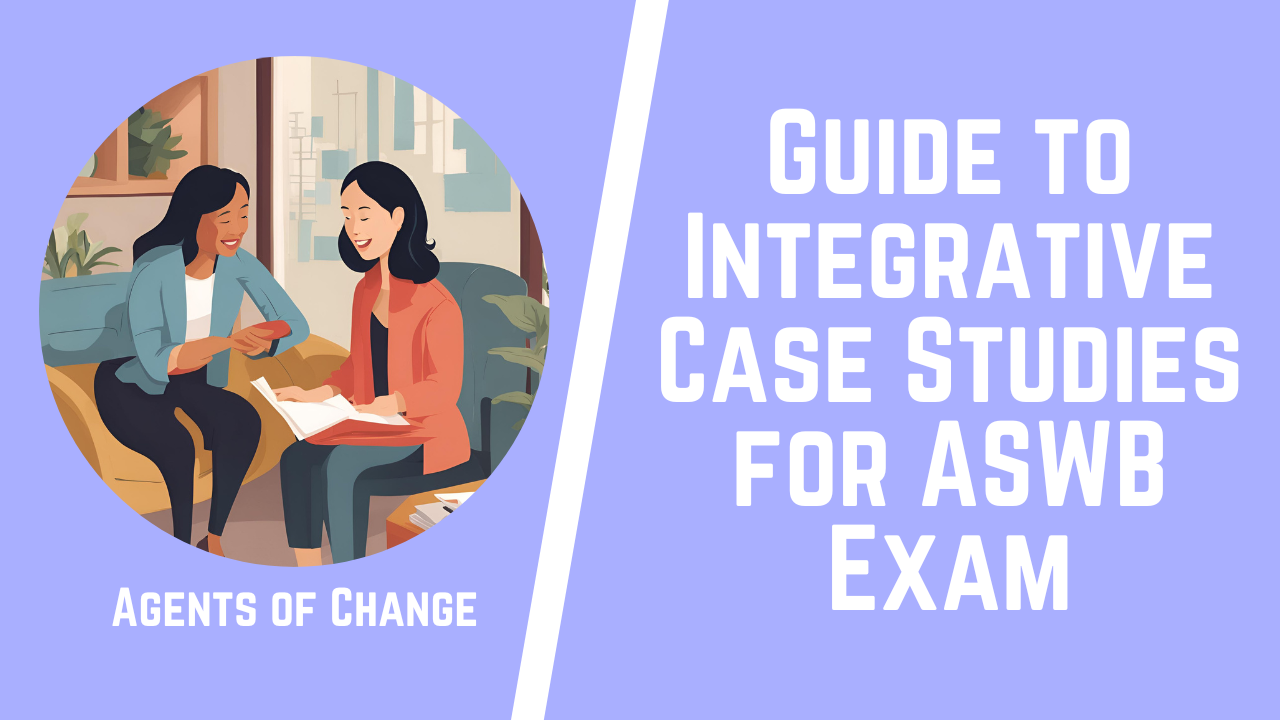
A diverse female social worker studying for an exam in a cozy environment. The setting is warm and inviting, perfect for focused study.

What Are Integrative Case Studies?

Integrative case studies are in-depth scenarios included in the ASWB exam that reflect real-life challenges a Social Worker might encounter. These case studies are comprehensive, combining multiple elements of Social Work practice and theory to assess your ability to think critically and apply your knowledge effectively.

  • Complexity: Unlike straightforward questions, integrative case studies involve layered problems that require a multifaceted approach.

  • Realism: They mimic real-world scenarios, offering a more practical assessment of your readiness for the profession.

  • Synthesis: These case studies demand you synthesize information from various domains of Social Work, including ethics, theories, and practical interventions.

Why Are Integrative Case Studies Important?

Integrative case studies play a crucial role in the ASWB exam for several reasons:

  • Assessment of Comprehensive Knowledge: These tests test your ability to draw from all areas of your education, ensuring a well-rounded understanding of Social Work.

  • Critical Thinking: These case studies evaluate your critical thinking and problem-solving skills.

  • Practical Application: They ensure you can apply theoretical knowledge to real-world situations, preparing you for the actual demands of the profession.

Key Components of Integrative Case Studies

To effectively tackle integrative case studies, it’s essential to understand their key components. Each case study typically includes the following elements:

  • Client Background: Information about the client’s history, including personal, social, and environmental factors.

  • Presenting Problems: The immediate issues or concerns that the client is facing.

  • Underlying Issues: Deeper, sometimes less obvious, issues contributing to the client’s situation.

  • Assessment Data: Information gathered through various assessment tools and techniques.

  • Intervention Strategies: Potential methods for addressing the client’s problems.

  • Evaluation Criteria: Metrics for determining the success of the interventions.

Common Themes in Integrative Case Studies

A social worker working with a diverse family in a therapeutic setting. The environment is professional yet comfortable, fostering a supportive atmosphere for the family's session.

Several common themes and topics often appear in integrative case studies. Being familiar with these can help you prepare more effectively:

  • Mental Health: Diagnosing and treating mental health issues such as depression, anxiety, or trauma.

  • Family Dynamics: Addressing issues within family systems, such as domestic violence or child welfare.

  • Substance Abuse: Interventions for clients struggling with addiction.

  • Cultural Competence: Ensuring culturally sensitive practice, especially with diverse populations.

  • Ethical Dilemmas: Navigating complex ethical situations in accordance with the NASW Code of Ethics.

Tips for Analyzing Integrative Case Studies

To succeed with integrative case studies, follow these tips for thorough analysis:

  1. Read Carefully: Take your time to understand every detail of the case. Missing a small piece of information can lead to incorrect conclusions.

  2. Identify Key Issues: List out the main problems and underlying issues presented in the case.

  3. Link Theory to Practice: Apply relevant Social Work theories to explain the issues and propose interventions.

  4. Consider All Perspectives: Look at the case from different angles, considering the client’s perspective, family dynamics, and social environment.

  5. Stay Ethical: Always keep ethical considerations in mind and refer to the NASW Code of Ethics.

Steps to Develop a Response

When crafting your response to an integrative case study, follow these steps:

  • Assessment:

    • Gather all relevant information about the client.

    • Use various assessment tools to understand the client’s needs and issues.

  • Intervention:

    • Develop a detailed intervention plan based on your assessment.

    • Choose specific Social Work techniques and approaches that are suitable for the client’s situation.

  • Evaluation:

    • Establish clear criteria to measure the effectiveness of your intervention.

    • Plan for regular reviews and adjustments based on the client’s progress.

Applying Theories in Case Studies

Here are some common Social Work theories and how they might be applied in integrative case studies:

  • Systems Theory: Understanding the client in the context of their relationships and social systems.

  • Psychodynamic Theory: Exploring underlying psychological processes and how past experiences affect current behavior.

  • Cognitive-Behavioral Theory (CBT): Identifying and changing negative thought patterns and behaviors.

  • Humanistic Theory: Focusing on the client’s potential for growth and self-actualization.

  • Strengths-Based Approach: Emphasizing the client’s strengths and resources to overcome challenges.

Integrating Cultural Competence

Cultural competence is a critical aspect of Social Work practice. When dealing with integrative case studies, ensure you:

  • Understand the Client’s Background: Be aware of the client’s cultural, racial, and ethnic background.

  • Respect Differences: Show respect for the client’s beliefs, values, and customs.

  • Use Appropriate Interventions: Choose interventions that are culturally sensitive and relevant to the client’s context.

  • Avoid Assumptions: Do not make assumptions based on stereotypes. Always seek to understand the individual.

Ethical Considerations in Integrative Case Studies

Ethical practice is paramount in Social Work. When working through integrative case studies, consider the following:

  • Confidentiality: Ensure the client’s information is kept confidential.

  • Informed Consent: Make sure the client is fully informed and consents to any interventions.

  • Professional Boundaries: Maintain clear boundaries between yourself and the client.

  • Conflict of Interest: Be aware of any potential conflicts of interest and address them appropriately.

  • Client Self-Determination: Respect the client’s right to make their own decisions.

Agents of Change packages include 30+ ASWB topics, 2 free study groups per month, and hundreds of practice questions so you’ll be ready for test day!

2) Strategies for Approaching Integrative Case Studies

Thoroughly Understand the Case

A diverse female social worker studying very hard for an exam in a library environment. The setting is conducive to focused and serious study, with plenty of books and a quiet atmosphere.

The first step in tackling any integrative case study is to understand the scenario presented thoroughly. Rushing through the case can lead to missed details and incorrect conclusions. Here’s how to ensure you’ve grasped every critical element:

Read Carefully

  • Multiple Read-Throughs: Read the case study multiple times to ensure you haven’t missed any details.

  • Highlight Key Information: Use a highlighter or take notes on key facts, such as the client’s background, presenting problems, and any mentioned resources or limitations.

  • Identify Underlying Issues: Look beyond the surface to identify deeper issues that may influence the client’s situation.

Ask Clarifying Questions

  • What are the main problems presented?

  • What additional information might be relevant?

  • What are the potential underlying causes of the client’s issues?

Apply Relevant Theories

Linking theory to practice is crucial in integrative case studies. Demonstrating your ability to apply theoretical concepts to practical situations shows a deep understanding of Social Work principles.

Select Appropriate Theories

  • Systems Theory: Use this to understand the client within the context of their relationships and broader social systems.

  • Cognitive-Behavioral Theory (CBT): Apply CBT to address dysfunctional thought patterns and behaviors.

  • Psychodynamic Theory: Explore how past experiences and unconscious processes influence current behavior.

  • Strengths-Based Approach: Focus on the client’s strengths and resources to foster resilience and empowerment.

Integrate Theory into Your Analysis

  • Assessment: Explain how theoretical concepts help you understand the client’s situation.

  • Intervention: Detail how specific theories guide your choice of intervention strategies.

  • Evaluation: Discuss how theories inform your criteria for measuring success.

Develop a Step-by-Step Plan

Creating a structured plan ensures that your response is comprehensive and logical. Breaking down your approach into clear steps can make the case study more manageable.

Assessment

Start by thoroughly assessing the client’s situation. This involves gathering and analyzing relevant information to fully understand the client’s needs and challenges.

  • Collect Data: Use various assessment tools and techniques to gather information about the client’s history, current situation, and environment.

  • Analyze Findings: Identify patterns and key issues from the data collected.

  • Formulate Hypotheses: Develop hypotheses about the underlying causes of the client’s problems.

Intervention

Based on your assessment, formulate a detailed intervention plan. This should include specific strategies and techniques tailored to the client’s needs.

  • Set Goals: Define clear, measurable goals for the intervention.

  • Choose Techniques: Select appropriate Social Work techniques and approaches, such as CBT, family therapy, or community resources.

  • Develop a Timeline: Create a timeline for implementing the intervention and achieving the goals.

Evaluation

Explain how you will evaluate the effectiveness of your intervention. This involves setting criteria for success and determining how progress will be measured.

  • Define Success Indicators: Identify specific indicators that will show whether the intervention is working (e.g., reduced anxiety levels, improved family relationships).

  • Plan for Regular Reviews: Schedule regular check-ins to assess progress and make necessary adjustments to the intervention plan.

Incorporate Ethical Considerations

Ethics are a cornerstone of Social Work practice. When analyzing integrative case studies, always consider the ethical implications of your decisions and actions.

Identify Ethical Dilemmas

  • Confidentiality: Ensure the client’s information is protected.

  • Informed Consent: Make sure the client is fully informed about and consents to the intervention.

  • Dual Relationships: Avoid situations where you have multiple roles with the client that could impair professional judgment.

  • Client Autonomy: Respect the client’s right to make their own decisions, even if you disagree with their choices.

Apply Ethical Principles

  • Refer to the NASW Code of Ethics: Use the National Association of Social Workers (NASW) Code of Ethics as a guide for resolving ethical dilemmas.

  • Consult with Supervisors: When in doubt, seek advice from supervisors or colleagues.

  • Document Decisions: Keep detailed records of your ethical decision-making process.

Reflect on Cultural Competence

Cultural competence is essential for effective Social Work practice. Integrative case studies often include clients from diverse backgrounds, so it’s important to demonstrate your ability to work sensitively and effectively with all clients.

A social worker talking with a diverse family in a comfortable and welcoming setting. The atmosphere is warm and supportive, fostering open communication and engagement.

Understand Cultural Contexts

  • Research: Learn about the client’s cultural background, including customs, values, and traditions.

  • Avoid Assumptions: Approach each client as an individual rather than relying on stereotypes.

  • Ask Culturally Relevant Questions: Use culturally sensitive questions to gather information about the client’s context.

Adapt Interventions

  • Culturally Appropriate Techniques: Choose intervention strategies that are respectful of and relevant to the client’s cultural background.

  • Language and Communication: Be aware of language barriers and consider using interpreters or bilingual resources when necessary.

  • Cultural Sensitivity: Respect the client’s cultural beliefs and practices in all interactions.

Practice with Real-Life Scenarios

Finally, one of the best ways to prepare for integrative case studies is to practice with real-life scenarios. This can help you become more comfortable with the format and improve your analytical skills.

Use Sample Case Studies

  • Study Guides: Agents of Change can help you prepare with sample case studies

  • Class Assignments: Review past assignments and projects that involved case studies.

Role-Playing

  • Group Study: Form study groups with peers to role-play different scenarios. All Agents of Change programs include 2 live study groups per month.

  • Simulate Interviews: Practice conducting client interviews and assessments with classmates or mentors.

  • Feedback and Discussion: After role-playing, discuss the scenarios and provide feedback to each other.

Seek Support and Resources

Utilizing available resources can significantly enhance your preparation for integrative case studies.

Academic Resources

  • Professors and Instructors: Seek guidance from your professors and instructors who have practical experience in Social Work.

  • Library Materials: Access textbooks, journals, and articles that cover case study analysis and Social Work theories.

Professional Networks

  • Mentorship: Find a mentor who can provide insights and advice on handling complex case studies.

  • Professional Organizations: Join organizations like NASW for additional resources and networking opportunities.

Online Platforms

  • Webinars and Workshops: Attend webinars and workshops focused on case study analysis and ASWB exam preparation.

  • Discussion Forums: Participate in online forums where Social Work professionals and students discuss case studies and share strategies.

By implementing these strategies, you’ll be better prepared to approach integrative case studies on the ASWB exam with confidence. Thorough understanding, effective application of theory, structured planning, ethical and cultural competence, and continuous practice will equip you with the skills necessary to excel in your Social Work career.

Learn more additional tips and tricks for the ASWB exam and get hundreds of practice questions with Agents of Change!

3) Common Mistakes to Avoid

Overlooking Key Details

One of the most frequent mistakes in approaching integrative case studies is overlooking key details. This can lead to incomplete assessments, inappropriate interventions, and poor outcomes.

Skimming the Case Study

Rushing through the case study can result in missing crucial information. It’s important to:

  • Read Multiple Times: Go through the case study at least twice to ensure you’ve captured all the details.

  • Highlight Important Information: Use a highlighter to mark key facts, client history, and specific problems mentioned.

  • Take Notes: Write down important points and questions that arise as you read.

Missing Subtle Cues

Integrative case studies often include subtle cues that are easy to miss but crucial for a complete understanding.

  • Underlying Issues: Look for underlying issues that might not be immediately obvious.

  • Non-Verbal Indicators: Pay attention to non-verbal indicators or context clues within the case.

  • Secondary Problems: Identify secondary problems that could affect the primary issue.

Ignoring Theory-Practice Linkage

Failing to link theory to practice is another common mistake. Your ability to apply theoretical knowledge to practical scenarios is critical in Social Work.

Not Applying Relevant Theories

It’s not enough to understand theories; you must apply them to the case study.

  • Identify Theories: Identify which theories are most relevant to the case.

  • Explain Application: Clearly explain how you would apply these theories to understand and address the client’s issues.

  • Use Multiple Theories: Don’t rely on just one theory; integrate multiple perspectives to provide a comprehensive analysis.

Failing to Justify Interventions

Interventions should be justified with theoretical backing.

  • Theoretical Basis: Ensure each intervention has a strong theoretical basis.

  • Evidence-Based Practice: Use evidence-based practices that are supported by research and theory.

  • Link to Outcomes: Explain how the chosen theories and interventions are expected to lead to positive outcomes.

Neglecting Ethical and Cultural Considerations

Ethics and cultural competence are fundamental in Social Work, yet they are often neglected in case study analyses.

Overlooking Ethical Dilemmas

Ignoring ethical considerations can compromise the integrity of your practice.

  • Identify Ethical Issues: Be vigilant in identifying potential ethical issues in the case study.

  • Apply Ethical Principles: Use the NASW Code of Ethics to guide your decision-making.

  • Document Decisions: Keep detailed records of how you address ethical dilemmas.

Failing to Address Cultural Competence

Cultural competence is essential for effective and respectful practice.

  • Cultural Sensitivity: Demonstrate sensitivity to the client’s cultural background and experiences.

  • Avoid Stereotypes: Avoid making assumptions based on stereotypes.

  • Adapt Interventions: Adapt your interventions to be culturally relevant and respectful.

Making Assumptions

Assuming facts not presented in the case study can lead to incorrect conclusions and ineffective interventions.

Filling in Gaps Incorrectly

If information is missing, don’t make assumptions to fill in the gaps.

  • Stick to Provided Information: Base your analysis and interventions on the information provided in the case study.

  • Seek Clarification: If possible, seek clarification or acknowledge the limitations of the provided information.

Overgeneralizing

Avoid overgeneralizing based on limited information.

  • Client Uniqueness: Remember that each client is unique, and generalizations can lead to inappropriate interventions.

  • Specific Details: Focus on the specific details and context of the case study.

Lack of Structure in Responses

A disorganized response can be confusing and less effective. Clear, structured responses are essential for demonstrating your understanding and analysis.

Unstructured Analysis

An unstructured analysis can make it difficult to follow your thought process.

  • Use a Framework: Follow a clear framework such as assessment, intervention, and evaluation.

  • Logical Flow: Ensure your response flows logically from one point to the next.

  • Headings and Subheadings: Use headings and subheadings to organize your response.

Vague Responses

Vague responses can undermine the clarity and effectiveness of your analysis.

  • Be Specific: Provide specific details and examples in your response.

  • Clear Explanations: Clearly explain your reasoning and the steps you would take.

  • Direct Answers: Address the questions and issues directly without unnecessary fluff.

Underestimating the Complexity

Some candidates underestimate the complexity of integrative case studies and offer oversimplified solutions.

Simplistic Solutions

Oversimplified solutions often fail to address the multifaceted nature of the client’s issues.

  • Comprehensive Analysis: Conduct a comprehensive analysis that considers all aspects of the case.

  • Multiple Interventions: Be prepared to use multiple interventions to address complex problems.

  • Holistic Approach: Adopt a holistic approach that considers the client’s overall well-being.

Overlooking Long-Term Implications

Neglecting long-term implications can lead to short-sighted solutions.

  • Long-Term Planning: Consider the long-term implications of your interventions.

  • Sustainable Solutions: Focus on sustainable solutions that promote long-term well-being.

  • Follow-Up: Plan for follow-up and ongoing support to ensure continued progress.

Insufficient Evaluation Plans

An insufficient evaluation plan can make it difficult to measure the success of your interventions.

Vague Evaluation Criteria

Vague criteria can lead to unclear or inaccurate evaluations.

  • Specific Indicators: Define specific indicators of success.

  • Measurable Outcomes: Ensure your evaluation criteria are measurable.

  • Regular Reviews: Plan for regular reviews to assess progress and make necessary adjustments.

Lack of Flexibility

A rigid evaluation plan may not accommodate the client’s evolving needs.

  • Adaptive Planning: Be prepared to adapt your evaluation plan as needed.

  • Client Feedback: Incorporate client feedback into your evaluation process.

  • Continuous Improvement: Use evaluation results to continuously improve your practice.

By being aware of these common mistakes and implementing strategies to avoid them, you can improve your approach to integrative case studies, leading to more effective and comprehensive responses. 

4) FAQs – Case Studies on the ASWB Exam

Q: What strategies can help me effectively link theory to practice in integrative case studies?

A: To effectively link theory to practice in integrative case studies, follow these strategies:

  • Identify Relevant Theories: Determine which Social Work theories best apply to the case study. This could include systems theory, cognitive-behavioral theory, psychodynamic theory, or others.

  • Explain Application: Clearly explain how these theories provide insight into the client’s issues and guide your intervention strategies. For example, use systems theory to explore the client’s family dynamics or apply CBT to address negative thought patterns.

  • Provide Evidence-Based Justifications: Support your chosen interventions with evidence from research and theory. Demonstrate how these interventions are expected to lead to positive outcomes based on theoretical principles.

  • Use Multiple Perspectives: Integrate multiple theories to provide a comprehensive analysis, considering different aspects of the client’s situation.

Q: How can I ensure my response to a case study is well-structured and comprehensive?

A: Ensuring a well-structured and comprehensive response involves the following steps:

  • Framework Utilization: Use a clear framework, such as assessment, intervention, and evaluation. This helps organize your thoughts and ensures all aspects of the case are covered.

  • Logical Flow: Ensure your response follows a logical flow, with each section building on the previous one. Begin with a thorough assessment, followed by a detailed intervention plan, and conclude with a clear evaluation strategy.

  • Headings and Subheadings: Use headings and subheadings to organize your response and make it easy to follow. This also helps you stay focused on addressing each component of the case study.

  • Specificity and Clarity: Provide specific details and examples in each section. Clearly explain your reasoning, the steps you would take, and how you would measure the success of your interventions.

Q: How do I address ethical and cultural considerations in integrative case studies?

A: Addressing ethical and cultural considerations involves several key steps:

  • Identify Ethical Issues: Be vigilant in identifying potential ethical dilemmas within the case study. Common issues include confidentiality, informed consent, and dual relationships.

  • Apply Ethical Principles: Use the NASW Code of Ethics as a guide for resolving ethical dilemmas. Clearly explain how you would address each issue in accordance with professional standards.

  • Cultural Sensitivity: Demonstrate cultural competence by understanding and respecting the client’s cultural background. This includes being aware of cultural norms, values, and potential barriers.

  • Adapt Interventions: Choose intervention strategies that are culturally relevant and sensitive to the client’s background. Avoid assumptions and stereotypes, and consider the client’s unique experiences and needs.

  • Seek Guidance: When in doubt, consult with supervisors or colleagues to ensure your approach is ethically sound and culturally appropriate.


5) Conclusion

Navigating integrative case studies on the ASWB exam requires a blend of theoretical knowledge, practical skills, and ethical considerations. By thoroughly understanding the case, applying relevant theories, and developing a structured plan, you can approach these scenarios with confidence. Integrating ethical and cultural competence into your analysis ensures that your practice is both professional and respectful of the diverse backgrounds of the clients you will serve.

Avoiding common mistakes, such as overlooking key details or failing to link theory to practice, is essential for success. By staying vigilant and methodical in your approach, you can provide comprehensive and effective responses that demonstrate your readiness for the complex challenges of Social Work.

Continuous practice with real-life scenarios and seeking guidance from mentors and resources can further enhance your preparation, making you more adept at handling these complex case studies.


► Learn more about the Agents of Change course here: https://agentsofchangeprep.com

About the Instructor, Meagan Mitchell: Meagan is a Licensed Clinical Social Worker and has been providing individualized and group test prep for the ASWB for over 7 years. From all of this experience helping others pass their exams, she created the Agents of Change course to help you prepare for and pass the ASWB exam!

Find more from Agents of Change here:

► Facebook Group: https://www.facebook.com/groups/aswbtestprep

► Podcast: https://podcasters.spotify.com/pod/show/agents-of-change-sw

#socialwork #testprep #aswb #socialworker #socialwork #socialworktest #socialworkexam #exam #socialworktestprep #socialworklicense #socialworklicensing #licsw #lmsw #lcsw #aswbexam #aswb #lcswexam #lmswexam #aswbtestprep #aswbtest #lcswtestprep #lcswtest #lmswtestprep #lmswtest #aswbcourse #learningstyles #learningstyle

Disclaimer: This content has been made available for informational and educational purposes only. This content is not intended to be a substitute for professional medical or clinical advice, diagnosis, or treatment

Share:

Discover more from Agents of Change

Subscribe now to keep reading and get access to the full archive.

Continue reading