Keeping up with continuing education requirements is an important part of maintaining your social work license, but the cost of CE courses can add up quickly. The good news is that there are free continuing education opportunities available if you know where to look.
Finding free Social Work CEUs can take a little research because every state has its own rules about approved providers, required topics, and the types of courses that count toward license renewal. A free course is only helpful if your licensing board will actually accept the credit.
In this guide, we will walk through how to find free Social Work CEUs, where to look for reputable opportunities, and how to make sure the courses you choose meet your state’s requirements.
You will also find practical tips for using professional organizations, universities, webinars, local resources, and online platforms to complete some of your continuing education without paying for every course.
Did you know? Agents of Change Continuing Education offers Unlimited Access to 200+ ASWB and NBCC-approved online CE courses and 20+ Live Events per year for one low annual fee to meet your state’s requirements for Continuing Education credits and level up your career.
We’ve helped hundreds of thousands of Social Workers, Counselors, and Mental Health Professionals with Continuing Education, learn more here about Agents of Change and claim your 7.5 free CEUs.
1) Know Your State’s Requirements
Before you sign up for any free CE course, make sure you know exactly what your state requires for license renewal. Continuing education rules can vary significantly by state, license type, and renewal period.
Start by checking:
- How many CE hours you need
- How often your license must be renewed
- Whether specific topics are required, such as ethics, mandated reporting, cultural competence, or suicide prevention
- Whether there are limits on online or self-paced courses
- What types of CE providers your licensing board accepts
- Whether you can carry extra hours into your next renewal period
- Whether different requirements apply to your first license renewal
To make this easier, use the free Agents of Change CE Requirements Tracker. Select your profession, license type, and state to get a personalized overview of the requirements that may apply to you.
Once you know what you need, you can be much more strategic about finding free CE opportunities. For example, if your state requires a specific ethics course, completing five free hours on unrelated topics will not help you meet that requirement.
Always verify your requirements with your state licensing board before completing courses for credit, especially if your renewal deadline is approaching. Rules can change, and your board is the final authority on what counts toward your license renewal.
Learn more about Agents of Change Continuing Education. We’ve helped hundreds of thousands of Social Workers, Counselors, and Mental Health Professionals with their online continuing education and CEUs, and we want you to be next!
2) Online Platforms: A Goldmine for Free CEUs
Online continuing education has made it much easier to find free CE opportunities, but you still need to know where to look. Instead of searching for “free Social Work CEUs” and clicking on the first result, start with organizations that regularly offer training for social workers and mental health professionals.
Start With Continuing Education Providers
Some CE providers offer free courses as a way to introduce you to their content. These can be especially useful because the course information usually clearly explains the number of credits offered, the type of credit, and the provider’s approvals.
For example, Agents of Change offers free Social Work and mental health continuing education courses, including opportunities to earn CE credit on topics relevant to current practice.
Check Professional Organizations
Professional associations are another good place to look. The National Association of Social Workers offers online CE opportunities, and some webinars are free for members or specific membership groups.
Your state NASW chapter may also offer free or low-cost webinars throughout the year. These opportunities can be especially helpful because they often cover state-specific practice issues and licensing requirements.
Look Beyond Traditional CE Websites
Hospitals, universities, government agencies, and behavioral health organizations often host free professional training online. For example, Sheppard Pratt offers free virtual continuing education programs throughout the year, and the Council on Social Work Education offers webinars and on-demand learning on emerging issues in social work.
The most important thing to remember is that free training and free CE credit are not always the same thing. Before registering, confirm that the event actually offers a certificate or CE credit, check the provider’s approval, and make sure your state licensing board will accept it.
Agents of Change has helped hundreds of thousands of Social Workers, Counselors, and Mental Health Professionals with Continuing Education, learn more here about Agents of Change and claim your 7.5 free CEUs!
3) Local Opportunities: Look Closer to Home
Not every free CE opportunity will show up in a Google search. Some of the best options may come through organizations you already know or work with.
Start with your employer. Hospitals, community mental health agencies, schools, nonprofits, and other large organizations often provide staff with free trainings that include continuing education credit. Check your internal learning portal, professional development calendar, or employee emails before paying for a course elsewhere. You may already have access to more CE opportunities than you realize.
It is also worth checking:
- Local colleges and universities: Schools of social work, psychology, public health, and medicine frequently host lectures, conferences, and community trainings. Alumni may also have access to free or discounted professional development.
- Your state or local NASW chapter: Many chapters offer free or discounted events for members. Some also maintain calendars of CE programs offered by other organizations. In 2025, for example, the NASW New York State chapter reported offering members 35.5 free CE credits.
- Hospitals and health systems: Academic medical centers and behavioral health organizations often host grand rounds, lectures, and professional trainings that may be open to community clinicians.
- Local mental health and nonprofit organizations: Community agencies sometimes offer free trainings on topics such as suicide prevention, trauma, substance use, domestic violence, and child welfare.
- Libraries and community organizations: These may not be the first places you think to look, but some partner with universities, health systems, or professional groups to host free educational events.
Follow local organizations on LinkedIn, join professional email lists, and check event calendars regularly. Free events are often announced only a few weeks in advance and may have limited space.
One reminder: a professional training can be valuable even if it does not offer CE credit, but it will not help with license renewal unless your board accepts it. Before attending, confirm whether continuing education credit is available, who is approving or providing the credit, and whether it meets your state’s requirements.
4) Networking With Other Mental Health Professionals
Networking isn’t just about exchanging business cards at formal events. It’s about building genuine relationships and tapping into collective knowledge. Here’s how to harness the power of networking to find free CEUs:
a. Attend Local and National Conferences
Even if you’re attending a paid conference, the connections you make there can lead you to free CEU opportunities in the future.
- Engage in Breakout Sessions: These smaller group discussions can be gold mines for information. Engage with presenters and attendees. They might know of upcoming free webinars or workshops. Or they may even be presenting free CEU courses themselves!
- Visit Exhibition Booths: Many organizations and institutions set up booths at conferences. Stop by, chat with them, and collect information. They often have flyers or brochures about upcoming CEU opportunities.
b. Alumni Associations
Many colleges and universities have alumni associations that offer resources for continued learning.
- Stay in Touch: Make sure you’re on their mailing list. You’ll often receive newsletters or emails about upcoming events, webinars, or workshops.
- Engage in Alumni Events: These events are not just for reminiscing about the good old days. They can also be platforms for professional growth.
c. Mentorship
Having a mentor, or being one, can open doors to a plethora of resources.
- Seek Guidance: If you have a mentor, ask them about CEU opportunities. With their experience, they might know of resources that aren’t widely advertised.
- Offer Guidance: If you’re mentoring someone, encourage a two-way exchange of information. Newer Social Workers might be more in tune with digital platforms or newer organizations offering free CEUs.
d. Engage in Online Forums and Discussion Boards
- Ask Questions: Don’t be shy! If you’re looking for CEUs in a specific area, ask the community.
- Share Your Knowledge: If you come across a free CEU opportunity, share it with the community.
e. Volunteering
Sometimes, giving back can lead to learning opportunities.
- Offer Your Expertise: Organizations, especially non-profits, often need professionals to give talks or workshops. While you’re offering your knowledge for free, these sessions might qualify for CEUs. If you’re interested in being a Continuing Education creator, reach out to Agents of Change here, we’d love to have your experience!
- Engage with Larger Organizations: Big organizations like the Red Cross or UNICEF often have training sessions for their volunteers. If you’re volunteering with them, check if any of these sessions offer CEUs.
5) FAQs – Finding Free Social Work Continuing Education in Your State
Q: I’ve found a free CEU course, but how can I verify its accreditation for my state?
A: Great question! It’s crucial to ensure that the CEUs you’re investing time in will count towards your state’s requirements. Here’s a step-by-step guide:
- Check the Course Provider’s Claims: Most legitimate courses will clearly state their accreditations. Look for any logos, badges, or mentions of state or national accrediting bodies.
- Visit Your State’s Licensing Board Website: They often have a list of approved CEU providers or courses. If you can’t find the information online, don’t hesitate to give them a call. Learn more about your state’s requirements here.
- Contact the Course Provider: If you’re still unsure, reach out to the course provider directly. Ask them about their accreditation and if they’ve had past participants from your state successfully earn CEUs.
Q: With so many online platforms offering courses, how can I determine which ones are most relevant to my Social Work practice?
A: It’s true; the sheer volume of online courses can be overwhelming. Here’s a strategy to narrow down your choices:
- Define Your Learning Objectives: Are you looking to specialize in a particular area, like child welfare or substance abuse? Or are you aiming to fulfill general CEU requirements? Knowing your goals can help you filter courses.
- Read Course Descriptions and Reviews: This can give you an idea of the course content and its relevance. Reviews, especially from fellow Social Workers, can provide insights into the course’s applicability in real-world scenarios.
- Consult with Colleagues: Sometimes, word-of-mouth recommendations are the best. Ask fellow Social Workers if they’ve taken any standout courses recently.
Q: I’m swamped with work and personal commitments. How can I efficiently manage my time to complete these CEUs?
A: Balancing work, personal life, and continuing education can be a juggling act. Here are some tips to manage your time effectively:
- Set Clear Deadlines: Determine when your CEUs are due and work backward. Create a timeline, setting aside specific days or hours each week dedicated to your CEU courses.
- Break It Down: Instead of viewing it as a massive task, break your CEU requirements into smaller chunks. Completing a little bit at a time can make the process less daunting.
- Utilize Mobile Learning: Many online platforms have mobile apps. This means you can listen to lectures or complete modules during commutes, breaks, or even while doing household chores!
- Stay Organized: Use tools like calendars, to-do lists, or even specialized apps to track your progress and upcoming courses or webinars.
6) Conclusion
Finding free Social Work CEUs takes a little planning, but there are more options available than many social workers realize. Online CE providers, professional organizations, employers, universities, hospitals, and local agencies can all be good places to look for free training.
The most important step is making sure the course actually counts toward your license renewal. Before registering, check your state’s requirements, confirm that CE credit is included, and verify that the provider or approval type is accepted by your licensing board. The free Agents of Change CE Requirements Tracker can help you get started.
You may not be able to complete every required CE hour for free, but taking advantage of no-cost opportunities can make continuing education much more affordable. With a little research and a plan for your renewal cycle, you can meet your requirements while still choosing courses that are relevant to your work and professional goals.
Learn more about Agents of Change Continuing Education. We’ve helped hundreds of thousands of Social Workers with their Continuing Education and want you to be next!
————————————————————————————————————————————————
► Learn more about the Agents of Change Continuing Education here: https://agentsofchangetraining.com
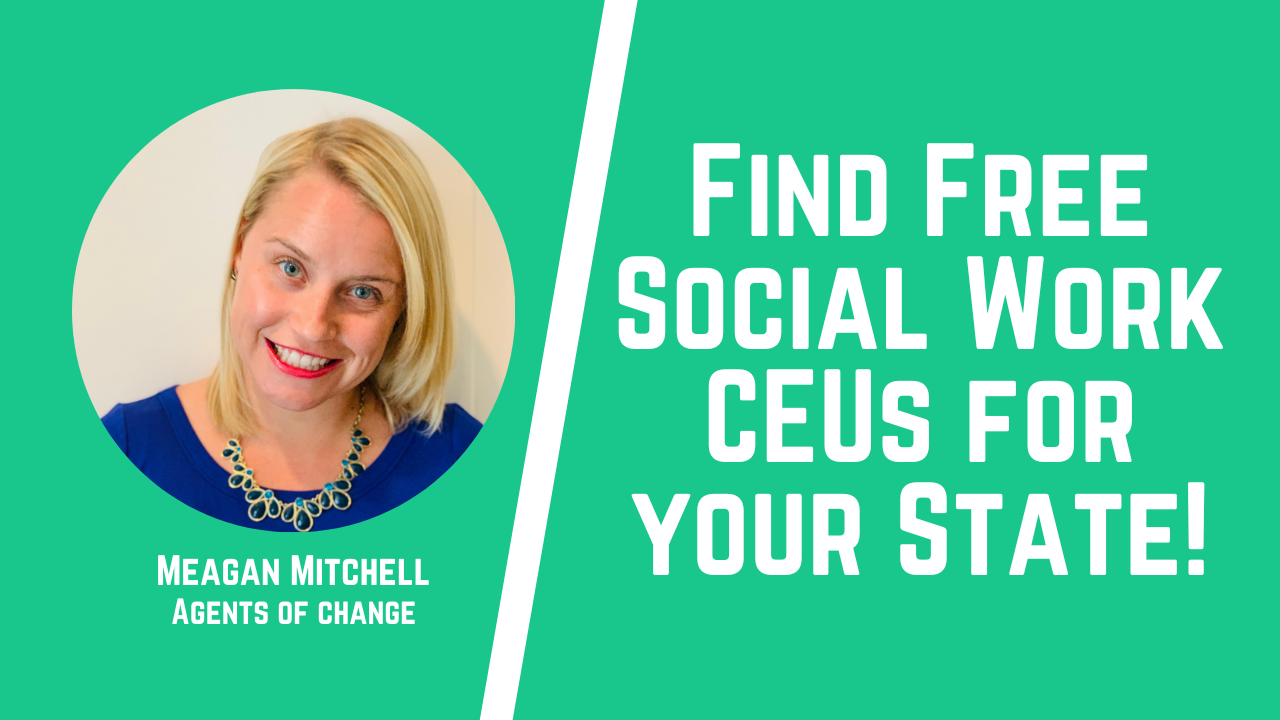
About the Lead Instructor, Dr. Meagan Mitchell: Meagan is a Licensed Clinical Social Worker and has been providing Continuing Education for Social Workers, Counselors, and Mental Health Professionals for more than 10 years. From all of this experience helping others, she created Agents of Change Continuing Education to help Social Workers, Counselors, and Mental Health Professionals stay up-to-date on the latest trends, research, and techniques.
#socialwork #socialworker #socialwork #socialworklicense #socialworklicensing #continuinged #continuingeducation #ce #socialworkce #freecesocialwork #lmsw #lcsw #counselor #NBCC #ASWB #ACE
Disclaimer: This content has been made available for informational and educational purposes only. This content is not intended to be a substitute for professional medical or clinical advice, diagnosis, or treatment