The Window of Tolerance in Therapy: Helping Clients Move From Survival to Connection
The Window of Tolerance in Therapy: Helping Clients Move From Survival to Connection
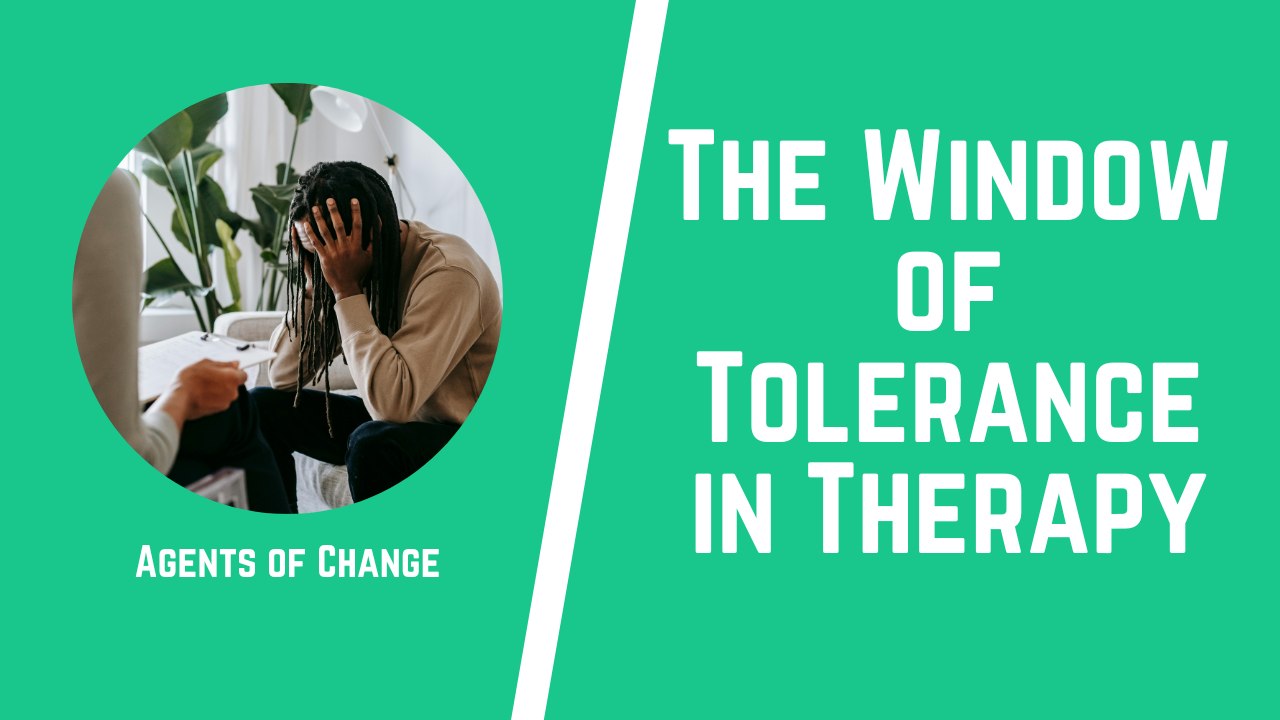
A client walks into session already on edge. Their voice is tight, their answers are short, and their body seems ready to bolt before the conversation even begins. Another client sinks into the couch, shrugs at every question, and says, “I don’t know,” again and again. In both moments, it can be tempting to focus on the behavior itself. Are they avoiding? Are they resistant? Are they refusing to engage? But with a nervous system lens, we can ask a more useful question: what state is their body in right now?

The window of tolerance in therapy gives clinicians a practical way to understand why some clients can reflect, connect, and problem-solve in one moment, then become flooded or shut down in the next. When clients are within their window of tolerance, they usually have enough safety and enough energy to stay present. They can feel emotions without being completely overtaken by them. They can think with more flexibility, notice their body cues, and engage in meaningful therapeutic work. When they move outside that window, survival responses often take over.

This framework matters because therapy asks people to do deeply vulnerable work. Clients are asked to remember, feel, trust, repair, name hard truths, and try new ways of responding. That’s a lot! Before insight can happen, the nervous system needs enough felt safety to stay connected. By learning to recognize hyperarousal, hypoarousal, and regulated engagement, therapists can move from pushing for reflection too soon to creating the conditions where reflection can actually land.

Did you know? Agents of Change Continuing Education offers Unlimited Access to 200+ ASWB and NBCC-approved online CE courses and 20+ Live Events per year for one low annual fee to meet your state’s requirements for Continuing Education credits and level up your career.

We’ve helped hundreds of thousands of Social Workers, Counselors, and Mental Health Professionals with Continuing Education, learn more here about Agents of Change and claim your 7.5 free CEUs.

1) What Is the Window of Tolerance?

The window of tolerance is the zone where a person’s nervous system has enough safety and enough energy to stay present. Inside this window, clients can feel emotions, think clearly enough, connect with others, and recover after distress. They may still feel sadness, anger, fear, or grief, but those emotions don’t completely take over.

a therapy client that arrives in a state of hyperarousal at an in person session

In therapy, this concept helps clinicians understand why a client may be reflective and open one minute, then panicked, numb, irritable, or unreachable the next. The issue usually isn’t a lack of effort. Often, the client’s nervous system has moved outside the range where insight and problem-solving are available.

Inside the Window

When clients are inside their window of tolerance, they can usually engage with the work of therapy. They may be curious about their patterns, able to notice body sensations, and more open to exploring hard emotions. Their thinking is more flexible, their breathing may be steadier, and they can stay connected to the therapist without losing connection to themselves.

This doesn’t mean they’re perfectly calm. A regulated client can cry, feel angry, or talk about painful memories. The difference is that they can stay present enough to process what’s happening.

Above the Window: Hyperarousal

When a client moves above their window of tolerance, the nervous system becomes mobilized. This is often connected to fight-or-flight energy. Clinically, hyperarousal may show up as panic, anger, urgency, rapid speech, interrupting, restlessness, shallow breathing, or scanning the room.

In this state, asking for deep reflection too soon may overwhelm the client. They may need grounding, orienting, slower pacing, choice, predictability, or help lengthening the exhale before they can return to therapeutic processing.

Below the Window: Hypoarousal

When a client moves below their window of tolerance, the nervous system may shift into shutdown or conservation mode. This can look like flat affect, low energy, fogginess, numbness, withdrawal, limited eye contact, or repeated “I don’t know” responses.

Hypoarousal can be mistaken for avoidance, but it’s often a sign that the client’s system has gone offline. Gentle activation can help, such as small movements, posture shifts, sensory input, warm tone, concrete language, or short choices.

The Goal Is Flexibility

The goal of nervous-system-informed therapy isn’t to keep clients calm all the time. Life is emotional, and therapy often brings up difficult material. The real goal is to help clients move through different states with more awareness, support, and recovery. Over time, clients can learn what it feels like to leave their window, what helps them return, and how to stay connected to themselves even when big emotions show up.

Learn more about Agents of Change Continuing Education. We’ve helped hundreds of thousands of Social Workers, Counselors, and Mental Health Professionals with their online continuing education and CEUs, and we want you to be next!

2) The Three Core Nervous System States

When clinicians understand nervous system states, client behavior starts to make a lot more sense. A client who looks angry, numb, restless, distracted, or checked out may not be trying to derail the work. Their body may be communicating safety, threat, overwhelm, or shutdown.

diverse client in a state of Hypoarousal i

The three core states to watch for in therapy are hyperarousal, hypoarousal, and regulated engagement. Clients may move between these states throughout a session, especially when emotionally loaded material comes up.

1. Hyperarousal: When the System Mobilizes

Hyperarousal is the “too much” state. The client’s nervous system has moved above its window of tolerance and is mobilizing for protection. This is often connected to fight-or-flight energy. The body is alert, activated, and ready to respond to danger, even when the danger is emotional, relational, remembered, or anticipated.

In session, hyperarousal may look like:

  • Rapid speech or interrupting
  • Anger, panic, irritability, or urgency
  • Muscle tension, clenched fists, or bracing
  • Restlessness or difficulty sitting still
  • Shallow breathing
  • Scanning the room or looking toward the door
  • Distractibility or racing thoughts
  • Difficulty slowing down enough to reflect

When a client is hyperaroused, insight may be hard to access. They may need the clinician to slow the pace, lower the cognitive load, offer predictable choices, and help them orient to the present moment before asking them to process what happened.

Helpful clinical moves include:

  • Speaking slowly and warmly
  • Asking fewer questions
  • Offering grounding through the senses
  • Inviting feet on the floor
  • Using longer exhales
  • Giving the client choices
  • Avoiding unnecessary power struggles

2. Hypoarousal: When the System Shuts Down

Hypoarousal is the “too little” state. The nervous system has moved below the window of tolerance and is conserving energy. Instead of fighting or fleeing, the body may go quiet, numb, foggy, collapsed, or disconnected.

This state can be tricky because it’s often mistaken for avoidance or lack of motivation. A client who says “I don’t know” repeatedly may not be refusing to engage. Their system may have gone offline.

In session, hypoarousal may look like:

  • Flat affect or monotone voice
  • Low energy or fatigue
  • Numbness or emotional disconnection
  • Foggy thinking
  • Reduced eye contact
  • Withdrawal or minimal responses
  • Body heaviness or collapsed posture
  • Limited access to memory, emotion, or language

With hypoarousal, the goal is usually gentle activation. The clinician may need to bring in warmth, movement, sensory input, and concrete choices to help the client come back into contact with the room, the relationship, and themselves.

Helpful clinical moves include:

  • Inviting a small posture shift
  • Offering short, simple choices
  • Using a warm and steady tone
  • Naming what is happening in the present moment
  • Encouraging gentle movement
  • Bringing attention to sensory details
  • Avoiding shame-based interpretations of shutdown

3. Regulated Engagement: When the System Can Connect

Regulated engagement is the state where therapy can usually go deeper. The client has enough safety and enough energy to stay present, connected, and flexible. They may still feel big emotions, but they can experience those emotions without being completely overtaken by them.

In this state, clients may be more able to:

  • Think clearly
  • Reflect on patterns
  • Notice body cues
  • Stay emotionally present
  • Problem-solve
  • Make choices
  • Connect with the clinician
  • Recover after distress
  • Hold more than one perspective at a time

This is often where insight-oriented work becomes most useful. The client can explore meaning, memory, emotion, identity, relationships, and behavior with more capacity. They may be able to ask, “What’s happening in me?” instead of being fully consumed by the experience.

Why These States Matter Clinically

The goal is not to keep every client calm all the time. That’s not realistic, and it’s not the point of therapy. The goal is to help clients recognize their state, receive support, and move with more flexibility.

A nervous-system-informed therapist asks:

  • Is this client mobilized, shut down, or connected enough to reflect?
  • What cues am I noticing in their breath, voice, posture, eyes, and energy?
  • What does this nervous system need before we ask for insight?
  • Do I need to slow things down, gently activate, or deepen reflection?

When clinicians can identify these states, they’re better able to meet the client where they actually are. That’s where therapy becomes less about pushing for insight and more about creating enough safety for insight to emerge.

Agents of Change has helped hundreds of thousands of Social Workers, Counselors, and Mental Health Professionals with Continuing Education, learn more here about Agents of Change and claim your 7.5 free CEUs!

3) Track, Regulate, Reflect: A Practical Clinical Sequence

When a client is dysregulated, it’s easy to feel pressure to do something quickly. Ask the right question. Offer the right skill. Get to the insight. Fix the moment. But nervous-system-informed therapy asks clinicians to slow down and follow a simple sequence: track, regulate, reflect.

This sequence helps therapists assess the client’s state, support a return to safety, and then invite meaning-making when the client’s body is ready. It’s simple enough to remember in the middle of a hard session, which is exactly when clinicians need it most.

Step 1: Track

Tracking means reading the nervous system before choosing an intervention. Before asking a big question or moving into processing, pause and notice what the client’s body is communicating.

Look for cues such as:

  • Breath: Is it shallow, fast, held, or steady?
  • Eyes: Are they scanning, fixed, avoidant, or engaged?
  • Voice: Is it rapid, flat, loud, quiet, shaky, or pressured?
  • Posture: Is the body braced, collapsed, restless, or grounded?
  • Movement: Is the client fidgeting, frozen, pacing, or withdrawing?
  • Affect: Does their emotional expression match what they’re saying?

The goal isn’t to perfectly label the client’s state. The goal is to form a gentle clinical hypothesis. Are they mobilized and overwhelmed? Are they shut down and disconnected? Are they regulated enough to reflect?

A therapist might say, “I’m noticing your body got really still when we started talking about that. Can we pause and check in with what’s happening right now?”

Step 2: Regulate

Once you have a sense of the client’s state, match the support to what their nervous system needs. Regulation is not always about calming down. Sometimes the client needs help slowing down. Other times, they need gentle activation to come back online.

If the client appears hyperaroused, try down-regulating support:

  • Slow your pace and lower your voice.
  • Use fewer words.
  • Invite the client to orient to the room.
  • Ask them to feel their feet on the floor.
  • Encourage a longer exhale.
  • Offer choices to increase felt control.
  • Avoid pushing for insight too soon.

If the client appears hypoaroused, try up-regulating support:

  • Use a warm, inviting tone.
  • Offer short, concrete choices.
  • Invite a posture shift or small movement.
  • Ask the client to name what they see in the room.
  • Use sensory input, such as cool water or grounding objects.
  • Encourage gentle bilateral movement or tapping.
  • Avoid interpreting shutdown as refusal.

If the client appears regulated, deepen the work carefully:

  • Invite curiosity.
  • Explore emotion and meaning.
  • Move slowly between hard material and resources.
  • Notice body cues as the client processes.
  • Stay alongside the client rather than pushing ahead.

Step 3: Reflect

Reflection comes after regulation because insight lands best when the body has enough safety to receive it. Once the client is more present, the therapist can invite meaning-making, emotional exploration, and connection to patterns.

Helpful reflection questions include:

  • “What do you notice now that you didn’t notice a few minutes ago?”
  • “What helped your body come back just now?”
  • “What feels different from this calmer place?”
  • “What do you think your body was trying to protect you from?”
  • “What would you like to remember from this moment?”

This is where therapy can move into deeper work. The client may be able to connect thoughts, emotions, body sensations, memories, and choices with more flexibility.

A Simple Clinical Flow

Use this sequence when a session starts to feel stuck, flooded, tense, foggy, or disconnected:

  1. Pause and track: What state does the client’s nervous system seem to be in?
  2. Name gently: Reflect what you notice without judgment.
  3. Match the intervention: Down-regulate hyperarousal, up-regulate hypoarousal, or deepen regulated engagement.
  4. Check for capacity: Is the client more present, connected, or able to choose?
  5. Invite reflection: Once the client is regulated enough, explore meaning, emotion, and next steps.

Track, regulate, reflect gives clinicians a steady path through complex moments. Instead of rushing toward insight, the therapist creates the conditions where insight can actually emerge.

4) Common Mistakes Clinicians Make

Even skilled clinicians can move too quickly when a client is dysregulated. It happens! Therapy sessions are full of subtle shifts, and it’s easy to focus on the story while missing what the client’s nervous system is communicating. The goal isn’t to be perfect. The goal is to notice sooner, adjust with more compassion, and create enough safety for the work to continue.

1. Asking for Insight Too Soon

One of the most common mistakes is moving into reflection before the client is regulated enough to process. A therapist may ask a thoughtful question like, “What do you think this reminds you of?” or “Why do you think you reacted that way?” but if the client is flooded or shut down, those questions may feel impossible.

When a client is outside their window of tolerance, insight may not be available yet. Their body is focused on survival, not meaning-making.

How to avoid it:

  • Pause before asking deeper processing questions.
  • Notice breath, posture, voice, eye contact, and energy.
  • Start with grounding or orientation.
  • Use simpler language.
  • Wait for signs that the client is more present before reflecting.

A helpful phrase might be, “Before we try to figure this out, let’s help your body settle a little.”

2. Mistaking Shutdown for Resistance

Hypoarousal can look like avoidance, disinterest, or refusal. A client may say “I don’t know,” avoid eye contact, speak in a flat voice, or seem emotionally unreachable. It can be frustrating, especially when the clinician is trying hard to help.

But shutdown is often a nervous system response, not a lack of effort. The client’s system may be conserving energy because the material feels too much.

How to avoid it:

  • Reframe shutdown as protection rather than defiance.
  • Use warmth instead of pressure.
  • Offer short, concrete choices.
  • Invite gentle movement or posture changes.
  • Avoid shaming the client for going quiet.

Instead of saying, “You need to try to engage,” try, “It seems like part of you may have gone a little offline. We can take this slowly.”

3. Overloading the Client With Too Many Words

When clinicians feel anxious, they may explain, educate, or problem-solve more than usual. Unfortunately, a dysregulated client may experience too much verbal input as overwhelming. Long explanations can add cognitive load when the client’s system is already struggling.

This is especially important with children, teens, trauma survivors, anxious clients, and clients who process language differently.

How to avoid it:

  • Use fewer words.
  • Slow your pace.
  • Give one instruction at a time.
  • Check for understanding.
  • Let silence do some of the work.
  • Pair words with sensory or body-based support.

A simple “Feet on the floor. Look around. I’m right here,” may be more useful than a long explanation of why grounding works.

4. Matching the Client’s Urgency

A hyperaroused client can pull the whole room into speed. They may talk fast, interrupt, argue, panic, or demand an immediate answer. Without noticing it, the clinician may begin speaking faster, leaning forward, over-explaining, or trying to fix the situation quickly.

That urgency can accidentally confirm the client’s sense that something dangerous is happening.

How to avoid it:

  • Track your own body while tracking the client’s.
  • Slow your voice intentionally.
  • Relax your shoulders and jaw.
  • Keep your language steady and predictable.
  • Offer choices rather than rushing into solutions.
  • Stay connected without getting swept into the pace.

A useful internal reminder is, “I don’t need to match the urgency to take this seriously.”

5. Forgetting the Therapist’s Nervous System

Clinicians are part of the regulatory environment. If the therapist is braced, rushed, checked out, irritated, or over-functioning, the client may feel it, even if nothing is said directly. This doesn’t mean therapists need to be perfectly calm all the time. That’s not human. It means the clinician’s internal state matters clinically.

Therapy is demanding relational work, and clinicians need their own regulation practices to stay present and effective.

How to avoid it:

  • Take a breath before responding.
  • Notice when you feel pulled to rescue, argue, or rush.
  • Anchor through your feet, hands, or breath.
  • Build small resets between sessions.
  • Seek consultation when certain client states activate you.
  • Treat your own regulation as part of ethical practice.

A quick reset can be as simple as looking around the room, exhaling slowly, releasing your jaw, and choosing one next step.

The Bigger Lesson

Most mistakes happen when clinicians push for therapy to happen before the nervous system is ready. The repair is usually simple: slow down, track the state, match the intervention, and return to reflection when the client has more capacity.

When clinicians stop asking, “Why won’t this client engage?” and start asking, “What does this nervous system need right now?” the entire session can shift.

5) FAQs – The Window of Tolerance in Therapy

Q: How do I know if a client is outside their window of tolerance?

A: A client may be outside their window of tolerance when their nervous system seems too activated or too shut down to access reflection, problem-solving, or connection. In hyperarousal, this may look like rapid speech, panic, anger, irritability, restlessness, shallow breathing, scanning the room, or difficulty slowing down. In hypoarousal, it may look like flat affect, numbness, fogginess, low energy, withdrawal, limited eye contact, or repeated “I don’t know” responses.

The key is to track the client’s breath, voice, posture, eyes, movement, and ability to stay connected in the moment. Clinicians don’t have to identify the state perfectly. Instead, they can form a curious hypothesis and adjust the intervention based on what the client’s body seems to need.

Q: Why does regulation need to come before reflection in therapy?

A: Regulation comes before reflection because insight requires enough nervous system safety for the client to think, feel, and make meaning without becoming flooded or shut down. When a client is dysregulated, their body may be focused on protection rather than processing. A thoughtful question can accidentally feel overwhelming if the client’s system is already outside its window of tolerance.

That’s why a clinician may need to slow the pace, offer grounding, invite movement, use sensory supports, or create predictability before asking the client to explore emotions or patterns. Once the client is more regulated, reflection can land with more depth, flexibility, and integration.

Q: What can clinicians do when a client keeps moving into hyperarousal or hypoarousal during session?

A: When a client repeatedly moves into hyperarousal or hypoarousal, the therapist can treat those shifts as important clinical information rather than interruptions to the work. The first step is to track what happens right before the shift. Was there a specific topic, question, memory, relational cue, silence, sensory trigger, or body sensation? From there, the clinician can match support to the client’s state.

Hyperarousal often calls for slower pacing, fewer words, grounding, orienting, longer exhales, and predictable choices. Hypoarousal often calls for gentle activation, short concrete questions, posture shifts, warm tone, movement, and sensory input. Over time, therapy can help the client notice these patterns earlier and build more flexible pathways back to connection.

6) Conclusion

The window of tolerance gives clinicians a compassionate and practical way to understand what happens when clients become flooded, shut down, reactive, foggy, or disconnected in session. Instead of seeing these moments as resistance or failure, therapists can recognize them as nervous system communication. When we track the client’s state, match our intervention to what their body needs, and wait to reflect until there is enough safety, therapy becomes more attuned, more effective, and more humane.

This approach also reminds us that regulation is relational. Clients often borrow steadiness from the therapist’s pacing, voice, presence, and ability to stay connected without rushing to fix everything. That doesn’t mean clinicians have to be perfectly calm or endlessly available. It means the therapist’s nervous system matters too, and sustainable clinical work requires recovery, consultation, boundaries, and intentional regulation practices.

For mental health professionals who want to learn more about nervous system regulation, co-regulation, hyperarousal, hypoarousal, and practical tools for clinical sessions, Agents of Change Continuing Education offers the course From Dysregulation to Connection: Nervous System Tools for Mental Health Clinicians. This training can help clinicians strengthen their ability to recognize nervous system states, respond with greater confidence, and support clients in moving from dysregulation toward connection.

————————————————————————————————————————————————

► Learn more about the Agents of Change Continuing Education here: https://agentsofchangetraining.com

About the Instructor, Dr. Meagan Mitchell: Meagan is a Licensed Clinical Social Worker and has been providing Continuing Education for Social Workers, Counselors, and Mental Health Professionals for more than 10 years. From all of this experience helping others, she created Agents of Change Continuing Education to help Social Workers, Counselors, and Mental Health Professionals stay up-to-date on the latest trends, research, and techniques.

#socialwork #socialworker #socialwork #socialworklicense #socialworklicensing #continuinged #continuingeducation #ce #socialworkce #freecesocialwork #lmsw #lcsw #counselor #NBCC #ASWB #ACE

Disclaimer: This content has been made available for informational and educational purposes only. This content is not intended to be a substitute for professional medical or clinical advice, diagnosis, or treatment

Note: Certain images used in this post were generated with the help of artificial intelligence.

Share:

Discover more from Agents of Change

Subscribe now to keep reading and get access to the full archive.

Continue reading

Limited Availability: 200 Spots Only — Unlock Unlimited CE + Live Events for $75.