Integrating Family Systems Therapy into Substance Abuse Interventions for the ASWB Exam
Integrating Family Systems Therapy into Substance Abuse Interventions for the ASWB Exam
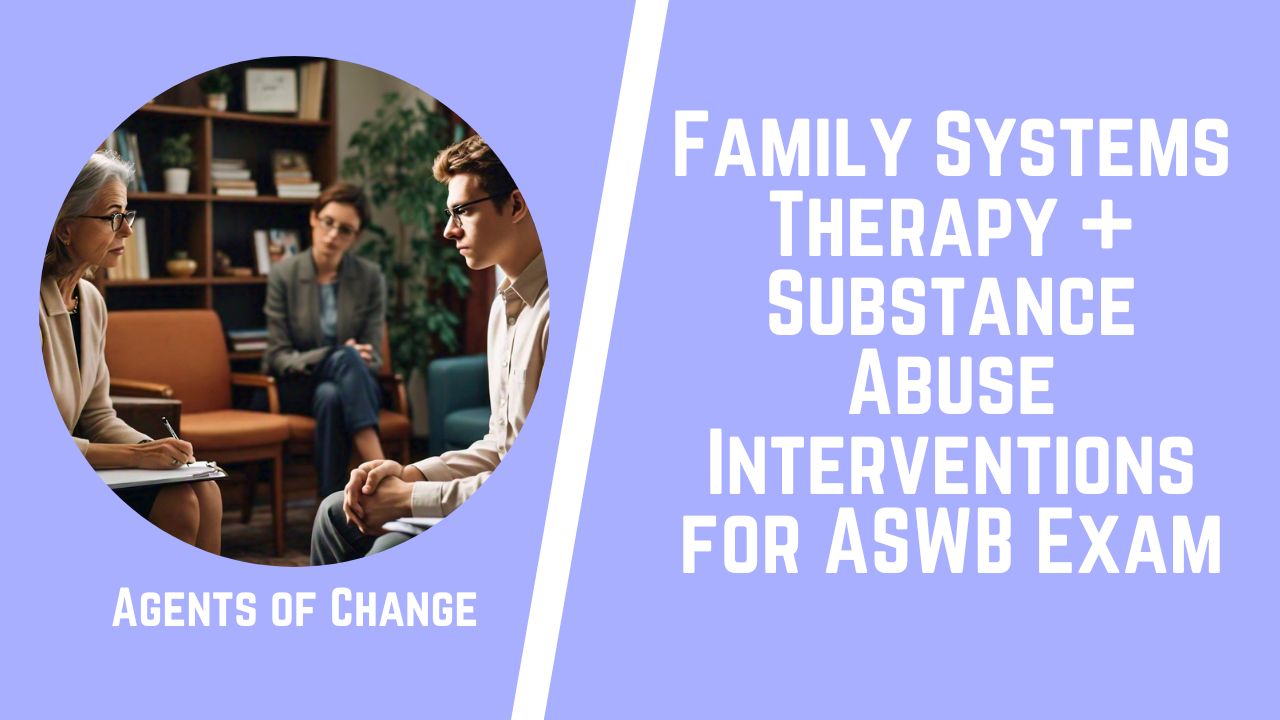
Substance abuse affects far more than the individual struggling with addiction—it reverberates through entire family systems, disrupting relationships and altering family dynamics. For Social Workers, understanding this impact is vital, especially when preparing for the Association of Social Work Boards (ASWB) exam.

While traditional substance abuse interventions often focus on the individual, incorporating Family Systems Therapy (FST) opens a pathway to a more holistic approach. FST centers on the idea that family members’ thoughts, feelings, and behaviors are deeply interconnected. When one family member is caught in a cycle of addiction, the entire system shifts, influencing and being influenced by the addiction itself.

Integrating Family Systems Therapy into substance abuse interventions allows Social Workers to address these complex dynamics, empowering families to become part of the healing process. By identifying family roles, recognizing patterns of communication, and encouraging a collective journey toward recovery, Social Workers can help families shift from reinforcing addiction to supporting recovery.

This approach is especially useful in preparing for the ASWB exam, which tests Social Workers on their ability to apply theoretical frameworks like FST to practical scenarios. When Social Workers understand family dynamics in substance abuse, they gain a powerful toolset for helping families navigate the challenges of addiction together.

In this guide, we’ll dive into how Family Systems Therapy can be seamlessly combined with substance abuse interventions, offering Social Workers a robust framework for the ASWB exam and real-world practice. From defining the foundational principles of FST to exploring actionable steps and addressing common challenges, this article will equip you with the insights needed to make FST a transformative part of your approach. We’ll also cover essential skills, FAQs, and exam-relevant strategies, so by the end, you’ll have a well-rounded understanding of how to bring families together in the journey toward recovery.

Learn more about the ASWB exam and create a personalized ASWB study plan with Agents of Change. We’ve helped thousands of Social Workers pass their ASWB exams and want to help you be next!

1) What is Family Systems Therapy?

Family Systems Therapy (FST) is a therapeutic approach developed by Murray Bowen in the mid-20th century, which views the family as an interconnected emotional unit where each member’s behavior and experiences impact the others. FST suggests that individuals cannot be understood in isolation from their family, as family members are emotionally intertwined and influence one another’s actions, thoughts, and emotions.

a family attending therapy together in a warm, cozy setting

This approach helps Social Workers and therapists look beyond the “identified patient” (often the person with a substance use disorder) to see how family roles, patterns, and dynamics contribute to and sustain issues like addiction.

By shifting focus from an individual to a family system, FST provides a comprehensive framework that fosters healthier family interactions, encouraging members to support recovery rather than perpetuating addiction-related behaviors. Below, we’ll break down the foundational principles and core components that make Family Systems Therapy such an effective tool.


Core Principles of Family Systems Therapy

Understanding the key principles of FST is essential for Social Workers, particularly those preparing for the ASWB exam. These principles highlight how family relationships and emotional bonds can either promote healing or hinder progress when a family member struggles with substance abuse.

Here are some foundational principles of Family Systems Therapy:

  • Interdependence: Family members’ emotions and behaviors are closely linked, meaning that a change in one person often leads to changes in others.
  • Triangles: This concept describes the three-person interactions that form when two family members face tension, often leading them to bring a third into the dynamic to manage stress or anxiety.
  • Differentiation of Self: Differentiation refers to an individual’s ability to maintain their identity while staying emotionally connected to the family. Families with low differentiation often struggle to separate personal feelings from family dynamics.
  • Emotional Cutoff: When tension becomes overwhelming, family members may distance themselves, either physically or emotionally, to reduce stress. While sometimes effective in the short term, this response can prevent healthy resolution of conflicts.

Why Family Systems Therapy Works for Substance Abuse

Family Systems Therapy is particularly beneficial in substance abuse cases because addiction impacts—and is impacted by—family relationships and roles. Often, family dynamics play a role in either exacerbating or mitigating addictive behaviors, making it crucial to involve the entire family in the treatment process.

Key reasons why FST is effective in substance abuse interventions include:

  • Holistic Perspective: FST addresses the whole family rather than isolating the individual, leading to a more comprehensive treatment approach.
  • Supportive Environment: Families can become a powerful source of support in recovery when they understand their roles and how to foster a positive environment.
  • Sustainable Change: By addressing dysfunctional patterns within the family, FST promotes lasting change that reduces the likelihood of relapse.
  • Improved Communication: FST emphasizes open communication, which is essential for rebuilding trust and addressing underlying issues that may contribute to substance abuse.

Family Roles in Addiction

In families affected by addiction, members often adopt specific roles, either consciously or unconsciously, that can perpetuate the cycle of substance abuse. Recognizing these roles allows Social Workers to help family members understand their contributions to the family dynamic and make changes that support recovery.

Common roles in families dealing with substance abuse include:

  • The Enabler: Often a spouse or parent who tries to protect the person with the addiction, unintentionally allowing the behavior to continue by minimizing its consequences.
  • The Hero: Usually the high-achieving family member who tries to compensate for the dysfunction by excelling in school or work, diverting attention from the issue.
  • The Scapegoat: This person, often a sibling, acts out or engages in problematic behaviors, drawing negative attention and deflecting focus from the addiction.
  • The Lost Child: A quiet family member who avoids conflict, distancing themselves emotionally from family issues.
  • The Mascot: Often the one who uses humor to relieve tension, trying to keep the family “together” by minimizing the severity of the problem.

These roles can create a cycle that reinforces addiction and hinders recovery. Recognizing and addressing these roles in therapy sessions allows the family to rebuild a more supportive environment.


Techniques and Tools in Family Systems Therapy

Family Systems Therapy offers various tools and techniques that Social Workers can use to work with families affected by addiction. Each of these tools helps to uncover and address underlying issues, fostering healthier relationships within the family.

Genograms

Genograms are visual tools that map family relationships and reveal multigenerational patterns, such as cycles of addiction, trauma, or conflict. By illustrating connections and patterns, genograms help families understand how their relationships contribute to the individual’s struggles with substance abuse.

Communication Exercises

Substance abuse often disrupts open and honest communication. FST encourages families to practice new communication strategies, such as active listening and empathy exercises, which can rebuild trust and support recovery.

Family Sculpting

Family sculpting is an experiential technique where family members physically position themselves in a way that represents their emotional closeness or distance. This visualization helps individuals recognize and discuss feelings of isolation or entanglement, providing insight into family dynamics.

Role Reversal

Role reversal allows family members to step into one another’s roles temporarily, fostering empathy and understanding. For instance, an “enabler” might experience the role of the “identified patient” and gain insights into the pressures and struggles of that position.


Benefits of FST for Social Workers

Family Systems Therapy equips Social Workers with tools to handle complex family dynamics often present in substance abuse cases. It encourages a balanced, comprehensive approach that is especially valuable for the ASWB exam, which frequently focuses on holistic, family-centered practices.

  • In-depth Understanding: FST encourages Social Workers to understand how family roles and dynamics fuel or mitigate addiction, helping them develop more effective interventions.
  • Enhanced Assessment Skills: Using genograms and communication assessments, Social Workers can identify specific family dynamics and patterns related to substance abuse.
  • Empathy Development: FST fosters empathy within the family, helping members understand each other’s struggles and perspectives, which can be crucial for a successful recovery.

Agents of Change packages include 30+ ASWB topics, 2 free study groups per month, and hundreds of practice questions so you’ll be ready for test day!

2) Applying Family Systems Therapy to Substance Abuse Interventions

Applying Family Systems Therapy (FST) to substance abuse interventions requires a comprehensive understanding of family dynamics, effective communication skills, and strategic intervention planning. For Social Workers, especially those preparing for the ASWB exam, mastering FST in the context of addiction offers a framework that enables meaningful, family-centered change.

Multi generational therapy meeting separately with therapist

By engaging the entire family in the treatment process, Social Workers can address underlying issues that contribute to addiction and help the family build a more supportive environment for recovery.

Below, we outline actionable steps and strategies to integrate Family Systems Therapy into substance abuse interventions, along with practical tools to facilitate family healing and promote sustainable change.


Step 1: Assess Family Dynamics

The first step in integrating Family Systems Therapy into substance abuse interventions is to assess the family’s dynamics, identifying specific patterns that might influence the addiction. Social Workers can use this assessment to understand each member’s role, interactions, and emotional connections within the family.

Key Assessment Areas

  • Family Roles: Identify roles that family members may have adopted, such as the “enabler,” “scapegoat,” or “hero,” which can perpetuate addictive behaviors.
  • Communication Patterns: Assess how family members communicate about the addiction. Do they avoid discussing it, blame each other, or offer support? Understanding these patterns helps guide interventions.
  • Emotional Cutoffs: Look for instances where family members have distanced themselves to avoid conflict or emotional stress. Recognizing these cutoffs can help the family address unresolved issues.
  • History of Addiction or Trauma: Exploring the family’s history can reveal generational patterns that might be influencing the current situation, such as previous substance use disorders or unaddressed trauma.

This assessment forms the foundation for a tailored intervention plan, offering insights into how family members interact and how these dynamics affect the individual with a substance use disorder.


Step 2: Set Clear Goals and Expectations

Once the family dynamics are assessed, Social Workers should work collaboratively with the family to set clear goals and establish expectations. These goals should be realistic, measurable, and centered around creating healthier relationships and supporting recovery.

Common Goals for FST in Substance Abuse Interventions

  • Improve Communication: Encourage open, honest conversations about addiction, helping family members express their thoughts and feelings constructively.
  • Shift Roles: Help family members step out of unhealthy roles, such as the enabler or scapegoat, to create a more balanced and supportive dynamic.
  • Rebuild Trust: Set goals around rebuilding trust by addressing past conflicts and promoting accountability.
  • Reduce Enabling Behaviors: Encourage family members to set boundaries and avoid behaviors that inadvertently support the addiction.

By setting these goals, the family gains a roadmap for the therapeutic process, helping them understand their role in supporting recovery and building healthier relationships.


Step 3: Facilitate Family Sessions

Family sessions are central to Family Systems Therapy and are essential in addressing the complex interactions that contribute to substance abuse. In these sessions, Social Workers create a safe space for family members to communicate openly, express emotions, and explore their roles.

Techniques for Effective Family Sessions

  • Role-Playing: Encourage family members to role-play each other’s experiences, fostering empathy and helping them understand each other’s perspectives.
  • Communication Skills Training: Use exercises to improve listening and expression skills, reducing misunderstandings and fostering open dialogue.
  • Conflict Resolution: Guide the family through structured methods of conflict resolution, encouraging them to address disagreements without triggering negative patterns.
  • Boundary Setting: Help the family understand the importance of boundaries and how to set them in a way that supports both the individual in recovery and the family as a whole.

These sessions allow families to practice new, healthier interaction patterns, promoting a sense of unity and shared responsibility in the recovery process.


Step 4: Address and Reframe Family Roles

In families affected by addiction, members often adopt certain roles that reinforce unhealthy dynamics. By identifying and reframing these roles, Social Workers can help family members move beyond these entrenched behaviors, creating an environment that supports recovery rather than perpetuating addiction.

Common Family Roles and Strategies to Reframe Them

  • The Enabler: This person often tries to “help” by minimizing consequences or providing resources that sustain the addiction. Encourage them to support recovery by setting boundaries and allowing the individual to face natural consequences.
  • The Scapegoat: Often blamed for family issues, the scapegoat may act out as a means of coping. Help this person understand their behavior and reframe their role as a supportive family member rather than the “problem.”
  • The Hero: The family’s overachiever may take on extra responsibility to distract from the addiction. Encourage this member to focus on healthy self-expression rather than compensating for family issues.
  • The Mascot: Using humor to deflect tension, the mascot can avoid confronting serious issues. Support them in finding other ways to engage with the family without minimizing the addiction’s impact.

Through this process, family members can redefine their roles in ways that contribute to a more stable, supportive family dynamic.


Step 5: Empower the Family with Tools for Lasting Change

After addressing family roles and dynamics, it’s essential to equip the family with tools they can use outside of therapy sessions. Providing practical skills for managing stress, setting boundaries, and supporting recovery empowers families to maintain a positive environment over the long term.

Recommended Tools and Strategies for Families

  • Mindfulness Techniques: Encourage mindfulness practices, such as deep breathing or meditation, to help family members manage stress and remain present during difficult conversations.
  • Regular Family Meetings: Set up a routine for family meetings where members can discuss concerns, celebrate progress, and reinforce goals without falling back into old patterns.
  • Relapse Prevention Plans: Work with the family to create a plan for preventing and managing relapses, setting clear steps they’ll take to support recovery if setbacks occur.
  • Self-Care Strategies: Remind each family member to prioritize their own well-being. Supporting someone with an addiction can be draining, and self-care is vital for long-term resilience.

These tools help the family sustain positive changes, ensuring that progress made during therapy sessions continues to impact their lives outside of treatment.


Benefits of Applying Family Systems Therapy to Substance Abuse Interventions

Integrating Family Systems Therapy into substance abuse interventions provides numerous benefits, both for the individual in recovery and the family as a whole. FST fosters an environment where family members can support each other’s healing and break patterns that may have contributed to addiction.

  • Holistic Recovery: By addressing family dynamics, FST helps the entire family heal, which often leads to more effective and lasting recovery for the individual.
  • Enhanced Support System: Families equipped with FST techniques can offer better support, creating a nurturing environment that reduces the risk of relapse.
  • Sustainable Change: FST addresses root issues within the family, making it less likely that the family will revert to behaviors that reinforce addiction.
  • Strengthened Family Bonds: Through open communication and role redefinition, FST helps families build healthier, more positive relationships.

Applying Family Systems Therapy to substance abuse interventions equips families with the skills and insights to foster sustainable, positive change. For Social Workers, understanding how to guide families through this process provides a powerful framework for supporting individuals in recovery, which is essential for both the ASWB exam and real-life practice.

3) Key Family Systems Therapy Skills for the ASWB Exam

Understanding the core skills of Family Systems Therapy (FST) is crucial for Social Workers preparing for the ASWB exam. The exam frequently tests knowledge on family dynamics, assessment techniques, intervention planning, and ethical considerations, all of which play a significant role in effective FST practice. Mastering these skills can help Social Workers address complex family-related issues in substance abuse cases, making FST a valuable tool in both exam preparation and real-world applications.

a diverse social worker studying for an exam in a cozy, inviting home setting

Below, we’ll explore key Family Systems Therapy skills that are relevant for the ASWB exam, focusing on assessment and diagnosis, intervention planning, ethical considerations, and cultural competency. These skills will help you succeed on the exam and enhance your practice with families impacted by substance abuse.


1. Assessment and Diagnosis

One of the foundational skills in Family Systems Therapy is the ability to assess and diagnose family dynamics that influence substance abuse and other behavioral issues. This skill involves identifying relational patterns, family roles, communication styles, and emotional bonds that shape the family system.

Essential Assessment Tools for FST

  • Genograms: Genograms are visual maps that chart family relationships and track patterns across generations. On the ASWB exam, you may encounter scenarios where genograms are useful for identifying cycles of addiction, trauma, or mental health issues within families.
  • Family Role Analysis: Understanding each family member’s role (e.g., enabler, scapegoat, hero) is essential for diagnosing unhealthy patterns that sustain substance abuse. Recognizing these roles is often a key element in exam scenarios involving family assessment.
  • Patterns of Communication: Effective assessment includes analyzing how family members communicate. Dysfunctional communication patterns, such as avoidance or blame-shifting, can perpetuate addiction. For the ASWB exam, knowing how to identify these patterns is critical.

Using these tools effectively will help you analyze complex family dynamics, a skill that’s frequently assessed in the ASWB exam through case scenarios.


2. Intervention Planning

Once you have assessed the family dynamics, the next step is to create an intervention plan tailored to the specific needs of the family. Family Systems Therapy emphasizes interventions that involve all family members, with a focus on changing patterns that contribute to or exacerbate substance abuse.

Key Components of an FST Intervention Plan

  • Goal Setting: Clear, realistic goals provide a roadmap for treatment. Goals might include improving communication, shifting unhealthy roles, or fostering empathy within the family. The ASWB exam may ask you to identify or set appropriate goals for a given family scenario.
  • Session Structure: FST often involves structured family sessions where each member has the opportunity to express themselves. These sessions help the family confront issues and practice new interaction patterns. Recognizing how to structure these sessions is essential for intervention planning questions on the exam.
  • Role Reframing: Interventions in FST often involve reframing each family member’s role to encourage supportive behavior. For example, helping an “enabler” to set boundaries or a “hero” to focus on their own needs rather than compensating for the family’s dysfunction. The ASWB exam may test your ability to recommend appropriate interventions for role-based issues.
  • Relapse Prevention Planning: Incorporate strategies for relapse prevention, including family-based plans to manage setbacks. Preparing for the possibility of relapse helps families support each other without enabling or reinforcing addiction-related behaviors.

By understanding these elements of intervention planning, you’ll be better prepared to answer questions on the ASWB exam that require creating or evaluating a family-centered intervention plan.


3. Ethical Considerations

Ethics play a crucial role in Family Systems Therapy, especially when dealing with sensitive issues like substance abuse. The ASWB exam places strong emphasis on ethical practice, including confidentiality, informed consent, and professional boundaries. Family therapy often presents unique ethical challenges since multiple family members are involved, making it essential to handle these dynamics with care.

Ethical Challenges and How to Address Them

  • Confidentiality with Multiple Clients: When working with families, maintaining confidentiality can be complex. Each family member has a right to privacy, but there’s also a shared therapeutic environment. On the ASWB exam, you may face scenarios that test your understanding of how to handle confidentiality while balancing the needs of all family members.
  • Informed Consent and Voluntary Participation: Ensuring that all family members are willing participants in therapy is crucial. Family members should fully understand the goals, risks, and benefits of therapy. The ASWB exam often includes questions about obtaining informed consent and ensuring that each individual’s participation is voluntary.
  • Handling Family Conflicts and Neutrality: Family Systems Therapy requires therapists to maintain neutrality, especially in cases involving conflicts. Social Workers must avoid taking sides and instead focus on facilitating constructive dialogue. Expect questions on the ASWB exam that challenge your ability to stay neutral in difficult family dynamics.
  • Boundaries and Dual Relationships: Setting clear boundaries is critical in FST to prevent role confusion or inappropriate dual relationships. Maintaining these boundaries helps foster trust and professionalism. The ASWB exam may assess your understanding of ethical boundaries and how to handle situations where boundaries could be blurred.

Mastering these ethical principles will prepare you for the ethical dilemmas often posed in ASWB exam questions on Family Systems Therapy.


4. Cultural Competency

In Family Systems Therapy, cultural awareness is crucial for understanding how diverse backgrounds, values, and beliefs shape family dynamics and influence substance abuse. The ASWB exam tests cultural competency, especially in contexts where family structure, communication styles, and norms vary widely. Social Workers must avoid a one-size-fits-all approach and adapt their interventions to fit each family’s unique cultural context.

Key Cultural Competency Skills for FST

  • Understanding Cultural Norms Around Family Roles: Cultural backgrounds often influence family roles. For example, in some cultures, family members might prioritize loyalty and collective decision-making, while in others, individual autonomy may be more valued. Recognizing these norms is essential when working with diverse families and is often covered on the ASWB exam.
  • Addressing Language and Communication Styles: Effective FST practice requires adapting communication to fit each family’s style. For instance, some families may use direct language, while others may avoid confrontation. The ASWB exam may include scenarios that test your ability to identify culturally appropriate communication techniques.
  • Respecting Traditional Beliefs and Practices: Family values, such as religious beliefs or traditional customs, can play a significant role in family therapy. Social Workers should demonstrate respect and integrate these values into the therapeutic process where possible. Questions on the ASWB exam may assess your ability to incorporate culturally relevant practices into treatment.
  • Tailoring Interventions for Cultural Sensitivity: Interventions should be customized to reflect the family’s background. For example, a culturally competent intervention may involve extended family members if the family’s cultural norm emphasizes collective involvement. You may encounter exam questions that test your ability to develop culturally sensitive intervention plans.

Developing cultural competency in FST will enable you to approach the ASWB exam with a nuanced understanding of family systems in diverse populations.


5. Communication and Conflict Resolution Skills

Communication and conflict resolution are core skills in Family Systems Therapy, as substance abuse can often lead to strained relationships and unresolved conflicts within the family. The ASWB exam frequently tests candidates on their ability to assess and intervene in family communication patterns and manage conflicts effectively.

Techniques for Enhancing Communication and Managing Conflict

  • Active Listening: Encouraging family members to listen actively, without interruption, can help them understand each other’s perspectives and foster empathy. For the ASWB exam, it’s essential to recognize when and how to implement active listening techniques in family sessions.
  • Reframing Statements: Helping family members reframe negative statements can reduce blame and encourage a more constructive approach. For example, reframing “You never support me” to “I feel unsupported sometimes” can soften accusations and foster understanding.
  • Structured Conflict Resolution: Guiding families through structured conflict resolution techniques, such as setting ground rules for discussions, helps them address issues constructively. The ASWB exam may pose scenarios that require you to implement structured conflict resolution.
  • Encouraging Emotional Expression: Many families affected by substance abuse avoid discussing difficult emotions. FST promotes emotional expression as a means of addressing underlying issues. You may encounter ASWB exam questions that test your understanding of how to encourage emotional expression in a supportive way.

These communication skills are crucial for both the exam and effective Family Systems Therapy, enabling Social Workers to guide families through challenging conversations and foster a more supportive dynamic.


6. Empathy and Validation

Empathy and validation are fundamental skills in Family Systems Therapy. They involve acknowledging each family member’s experience and feelings, creating an environment of trust and respect. These skills are especially important when dealing with families affected by addiction, where feelings of shame, guilt, and resentment often run high.

Empathy and Validation Techniques for FST

  • Reflective Listening: By restating a family member’s statements to confirm understanding, reflective listening shows empathy and fosters open communication. This technique is likely to appear in ASWB exam questions on therapeutic communication.
  • Normalizing Emotional Reactions: Validating feelings by normalizing them (e.g., “It’s natural to feel frustrated in this situation”) helps family members feel seen and reduces tension. The ASWB exam may test your ability to recognize when and how to validate emotions.
  • Encouraging Mutual Empathy: Help family members see each other’s struggles and perspectives, encouraging empathy that fosters a supportive environment. For the ASWB exam, questions may involve scenarios where promoting mutual empathy is key to intervention success.

By developing strong empathy and validation skills, Social Workers can guide families toward a greater sense of understanding and collaboration, both for the ASWB exam and in real-life practice.

4) FAQs – Integrating Family Systems Therapy into Substance Abuse Interventions

Q: How does Family Systems Therapy differ from individual therapy in treating substance abuse?

A: Family Systems Therapy (FST) takes a holistic approach by focusing on the entire family unit rather than just the individual struggling with substance abuse. Unlike individual therapy, which concentrates on the personal experiences and challenges of one person, FST views addiction as a symptom of broader family dynamics.

In FST, Social Workers analyze family roles, communication patterns, and emotional interactions to understand how each member’s behavior influences the other. By involving the whole family, FST promotes a supportive environment where each person can contribute to a healthier dynamic, potentially leading to more sustainable recovery outcomes.

For Social Workers preparing for the ASWB exam, understanding the differences between individual and family-focused approaches like FST is essential, as the exam often tests knowledge on how to select appropriate therapeutic frameworks.

Q: What are the main benefits of using Family Systems Therapy for substance abuse interventions?

A: Family Systems Therapy offers several unique benefits for substance abuse interventions, making it a valuable tool for Social Workers. Some key advantages include:

  • Holistic Healing: FST addresses not only the individual’s addiction but also the family patterns that may contribute to it, promoting collective healing.
  • Enhanced Support Network: By involving family members, FST builds a support system that can reinforce recovery outside of therapy sessions.
  • Reduced Relapse Rates: When families learn healthier ways to interact and communicate, they often become more effective in supporting their loved one’s long-term recovery and preventing relapse.
  • Improved Communication and Trust: FST fosters open dialogue, helping families address underlying issues, rebuild trust, and support each other more constructively.

These benefits make FST an effective approach for families dealing with addiction, and understanding them can help Social Workers apply this method effectively in both exam and practice settings.

Q: What key concepts of Family Systems Therapy should I focus on for the ASWB exam?

A: For the ASWB exam, focus on mastering the core principles of Family Systems Therapy, as well as understanding how to apply these concepts to real-world scenarios involving substance abuse. Key FST concepts to review include:

  • Interdependence: Recognize how family members’ behaviors affect one another and contribute to the dynamics of addiction.
  • Family Roles: Study roles such as the “enabler,” “scapegoat,” and “hero,” which often perpetuate addiction within the family system.
  • Triangles: Understand this concept of three-person relational dynamics, where a third family member is often drawn in to mediate tension between two others.
  • Differentiation of Self: Learn about the importance of maintaining individual identities while staying emotionally connected within the family.

These foundational concepts are commonly referenced in exam scenarios where candidates must assess family dynamics and recommend appropriate interventions. Familiarity with these principles will enhance your ability to navigate FST-related questions with confidence on the ASWB exam.

5) Conclusion

Family Systems Therapy offers a unique and effective approach to substance abuse interventions by recognizing the powerful role that family dynamics play in addiction and recovery. Instead of viewing addiction as an isolated problem within one individual, FST considers the broader family system, where each member’s behaviors, emotions, and roles are interconnected.

For Social Workers, this approach not only aligns with holistic and family-centered principles but also provides a comprehensive framework that can enhance the effectiveness of treatment and promote lasting change within the family. Preparing for the ASWB exam with an understanding of FST gives Social Workers a critical advantage in applying these concepts to real-life scenarios.

Incorporating FST into substance abuse interventions involves assessing family roles, communication patterns, and emotional bonds, all of which contribute to the addiction cycle. By creating structured family sessions, setting realistic goals, and employing tools like genograms and conflict resolution exercises, Social Workers can facilitate healthier dynamics and encourage each family member to support the recovery process actively.

Addressing ethical considerations and cultural competency further strengthens the FST approach, ensuring that interventions are respectful, inclusive, and aligned with professional standards. For ASWB exam preparation, focusing on these skills and principles equips Social Workers to select the most effective, ethically sound interventions in family therapy scenarios.

6) ASWB Practice Question: Integrating Family Systems Therapy into Substance Abuse Interventions

A Social Worker is conducting an initial family session with a client struggling with substance use. The Social Worker notices that the client’s spouse frequently deflects blame away from the client by covering up instances of substance abuse and making excuses to family members and friends. Which role in Family Systems Therapy best describes the spouse’s behavior?

A. The Scapegoat
B. The Hero
C. The Enabler
D. The Lost Child

Correct Answer: C. The Enabler

Rationale:
In Family Systems Therapy, the “Enabler” is a family member who, often unknowingly, supports or perpetuates the substance abuse by minimizing its consequences, covering up behaviors, or making excuses.

This role often stems from a desire to protect the individual with the addiction but ultimately allows the addictive behavior to continue without immediate repercussions. In this scenario, the spouse’s actions are consistent with the Enabler role, as they’re attempting to shield the client from negative consequences rather than addressing the behavior directly.


► Learn more about the Agents of Change course here: https://agentsofchangeprep.com

About the Instructor, Meagan Mitchell: Meagan is a Licensed Clinical Social Worker and has been providing individualized and group test prep for the ASWB for over 8 years. From all of this experience helping others pass their exams, she created the Agents of Change course to help you prepare for and pass the ASWB exam!

Find more from Agents of Change here:

► Facebook Group: https://www.facebook.com/groups/aswbtestprep

► Podcast: https://podcasters.spotify.com/pod/show/agents-of-change-sw

#socialwork #testprep #aswb #socialworker #socialwork #socialworktest #socialworkexam #exam #socialworktestprep #socialworklicense #socialworklicensing #licsw #lmsw #lcsw #aswbexam #aswb #lcswexam #lmswexam #aswbtestprep #aswbtest #lcswtestprep #lcswtest #lmswtestprep #lmswtest #aswbcourse #learningstyles #learningstyle

Disclaimer: This content has been made available for informational and educational purposes only. This content is not intended to be a substitute for professional medical or clinical advice, diagnosis, or treatment.

Share:

Discover more from Agents of Change

Subscribe now to keep reading and get access to the full archive.

Continue reading