Navigating Cultural Competence in Rural and Urban Social Work Settings for the ASWB Exam
Navigating Cultural Competence in Rural and Urban Social Work Settings for the ASWB Exam
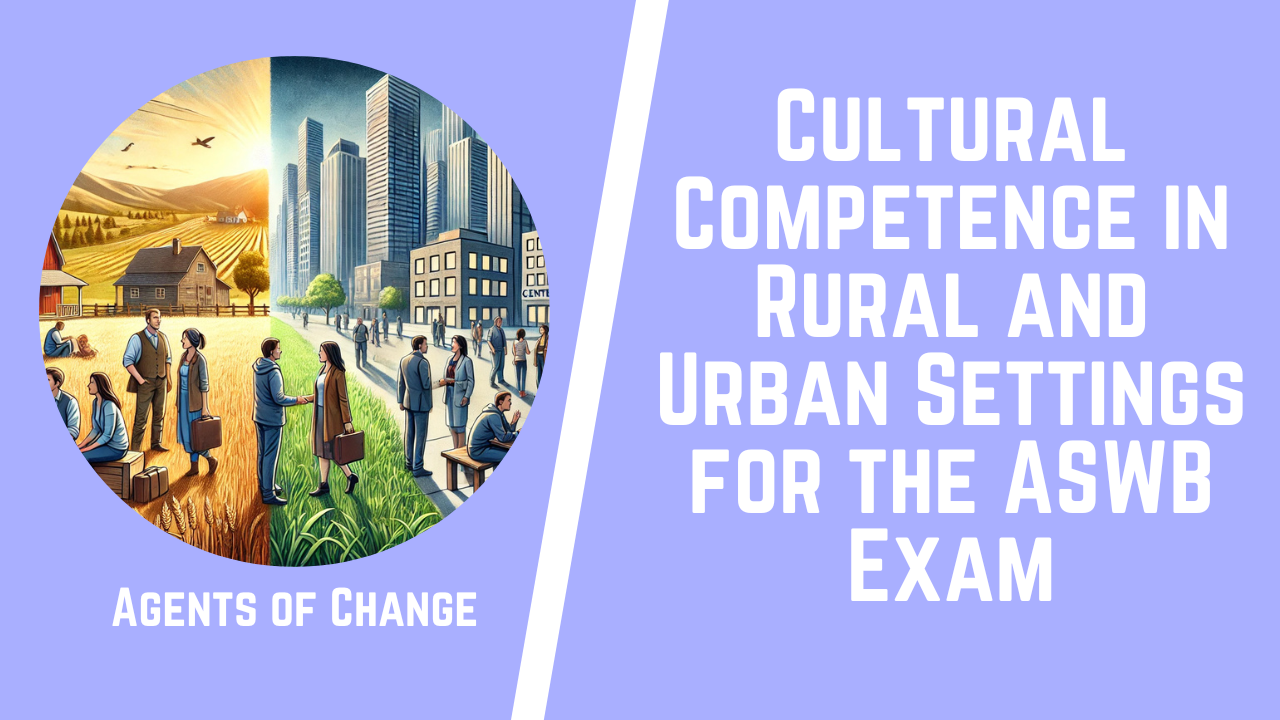
Social Work is a unique and deeply impactful profession, but it’s far from one-size-fits-all. When working with diverse communities, particularly in contrasting rural and urban settings, Social Workers face unique challenges that demand cultural sensitivity and adaptability.

For those preparing for the Association of Social Work Boards (ASWB) Exam, understanding cultural competence in these varied environments is crucial. Rural and urban settings each have distinctive characteristics that influence how Social Workers engage with individuals and families, address community issues, and navigate local systems. This blog post will guide you through these differences, offering key insights for mastering cultural competence as a Social Worker.

In rural areas, Social Workers often encounter close-knit communities with traditional values, limited access to resources, and unique privacy concerns. These environments require a careful approach to build trust and adapt services to meet clients’ needs within their cultural context. M

eanwhile, urban settings present a different landscape, marked by diversity, high population density, and a wider range of available services. Here, Social Workers must be prepared to navigate complex social dynamics and address barriers such as language differences and economic disparities. Each setting demands tailored strategies, and the ASWB Exam expects future Social Workers to recognize and respond to these distinctions.

Learn more about the ASWB exam and create a personalized ASWB study plan with Agents of Change. We’ve helped thousands of Social Workers pass their ASWB exams and want to help you be next!

1) Rural Social Work: Unique Cultural Competence Challenges

Rural Social Work brings a set of unique challenges that require Social Workers to adapt their approaches to meet the specific needs and characteristics of rural communities.

Unlike urban settings, rural areas often have limited resources, close-knit communities, and cultural values that influence how people view and interact with Social Workers. This section explores the cultural and logistical obstacles Social Workers face in rural areas and offers strategies to help navigate them effectively.

a social worker working with a rural community

Characteristics of Rural Communities

To effectively work within rural settings, it’s crucial to understand the foundational characteristics that shape these communities. Rural areas tend to be marked by:

  • Strong Community Ties: Many rural communities are close-knit, meaning that community members often know each other and may rely on each other for support.
  • Limited Diversity: Rural areas frequently lack racial and ethnic diversity, though they may have diversity in socioeconomic backgrounds, religious affiliations, and family structures.
  • Geographic Isolation: Many rural communities are spread out over large areas with limited transportation, making service delivery challenging.
  • Traditional Values: Rural residents may hold traditional or conservative beliefs, which can impact their willingness to seek services and influence their attitudes toward social issues.

The Impact of Limited Resources

One of the primary challenges in rural Social Work is the lack of accessible resources. Many rural communities have limited access to healthcare, mental health services, education, and employment opportunities, which can complicate efforts to provide support and services.

  • Healthcare Access: Rural areas may lack hospitals, mental health clinics, and substance abuse programs, making it difficult for clients to receive comprehensive care.
  • Educational Support: Schools in rural areas often have fewer resources, which can impact family support services, counseling, and other educational interventions.
  • Employment Opportunities: Limited job availability in rural areas can contribute to higher poverty rates, impacting family dynamics and creating a need for financial assistance programs.

Social Workers in rural settings often need to become resourceful, developing creative solutions to provide support with the limited tools available.

Navigating Stigma and Privacy Concerns

In small, close-knit communities, seeking Social Work services can be stigmatized. Community members may worry about others knowing their business, and this concern for privacy can prevent individuals and families from reaching out for help.

  • Stigma Around Mental Health: In many rural areas, there can be a heightened stigma surrounding mental health services. Social Workers may encounter clients who are hesitant to discuss mental health concerns openly.
  • Privacy Concerns: Since everyone tends to know each other in smaller communities, privacy can be a significant barrier. Social Workers must reassure clients that confidentiality is a top priority.

Strategies for Building Trust in Rural Social Work

Building trust is essential for Social Workers in rural settings, where clients may be wary of outsiders or unfamiliar with Social Work practices. To establish a foundation of trust, Social Workers can use the following approaches:

  • Active Community Involvement: Attend local events, join community gatherings, and get to know the community members. Being visible and approachable can help foster trust.
  • Respect for Local Values: Recognize and respect the cultural values held by rural communities, such as religious beliefs or traditional views on family. Acknowledging these values without judgment can improve rapport with clients.
  • Consistent Presence: Due to the community’s close-knit nature, building trust takes time. Maintaining a consistent presence and demonstrating reliability is critical to building long-term relationships with clients.

Overcoming Transportation Barriers

Rural areas often lack public transportation, and clients may not have reliable access to a vehicle. Social Workers can offer solutions to make services more accessible despite these logistical challenges:

  • Provide Telehealth Options: With advancements in telehealth, many Social Workers are able to offer virtual appointments, which can be a lifeline for clients who live far from the office.
  • Arrange Central Meeting Points: If telehealth is not an option, consider meeting clients at a central community location, such as a library or community center, to reduce travel distance.
  • Coordinate with Community Partners: Partner with local organizations, like churches or food banks, to establish drop-in support days in areas that are more accessible to clients.

Leveraging Community Resources

A diverse social worker working in a rural setting.

In rural Social Work, the lack of formal services often makes collaboration with community members and organizations essential. Social Workers can leverage existing community structures to help provide a more comprehensive support system:

  • Collaboration with Faith-Based Organizations: Churches and other faith-based groups are central to many rural communities and can help connect Social Workers with clients who may otherwise avoid seeking help.
  • Engagement with Local Nonprofits: Rural areas may have nonprofits that focus on food security, housing, or youth programs. Partnering with these organizations can strengthen the support network for clients.
  • Utilizing Informal Community Networks: In many rural areas, informal support networks—such as family networks, farming cooperatives, and volunteer groups—can be tapped to provide additional resources for clients.

Summary of Key Challenges and Solutions

To navigate the cultural competence challenges unique to rural Social Work, Social Workers must be mindful of the community’s distinctive characteristics, logistical limitations, and values. Here’s a quick recap of strategies for success in rural Social Work:

  • Foster Trust by being active and visible within the community, respecting local values, and ensuring a consistent presence.
  • Address Stigma and Privacy by offering reassurance of confidentiality and being mindful of the stigma surrounding services, particularly mental health.
  • Mitigate Transportation Issues by providing telehealth, meeting at central locations, and collaborating with community organizations.
  • Utilize Community Partnerships to strengthen support networks, leveraging faith-based organizations, nonprofits, and informal networks.

By understanding these unique challenges and adopting a culturally competent approach, Social Workers in rural settings can more effectively provide ethical, meaningful support to clients who need it most.

Agents of Change packages include 30+ ASWB topics, 2 free study groups per month, and hundreds of practice questions so you’ll be ready for test day!

2) Urban Social Work: Embracing Cultural Diversity and Complexity

Urban Social Work brings with it a rich tapestry of cultural diversity, economic complexity, and social dynamics. In cities, Social Workers encounter individuals and families from various backgrounds, including different racial, ethnic, and linguistic groups, socioeconomic statuses, and cultural traditions.

Navigating this diversity requires flexibility, cultural humility, and an ability to work within complex systems. In this section, we’ll explore the specific characteristics of urban settings, the challenges they present, and the skills and strategies Social Workers need to succeed.

Characteristics of Urban Communities

Urban settings differ from rural areas in several key ways, which significantly shape Social Work practice. Social Workers in urban environments must navigate:

  • High Diversity: Urban areas typically have a wide range of cultural, ethnic, and linguistic backgrounds, creating a multicultural environment.
  • Population Density: Cities are densely populated, meaning Social Workers often serve a large and varied clientele with complex needs.
  • Resource Abundance and Barriers: While cities offer more services and programs, navigating these resources can be challenging for clients due to bureaucratic processes and accessibility issues.
  • Social Stratification: Economic disparities are often stark in urban areas, with people experiencing vastly different standards of living side by side.

These characteristics mean that Social Workers in urban settings need to be adept at addressing diversity and managing high caseloads, all while navigating a web of public and private resources.

Embracing Cultural Sensitivity in Diverse Populations

Urban Social Work requires a high level of cultural sensitivity to engage effectively with clients from varied backgrounds. Recognizing the unique experiences of each client allows Social Workers to provide more relevant, empathetic care.

  • Cultural Humility: Instead of assuming knowledge about a client’s background, approach each interaction with a willingness to learn and understand the client’s perspective.
  • Awareness of Intersectionality: In urban settings, clients may experience multiple, overlapping identities, such as race, gender, and socioeconomic status, that shape their experiences uniquely.
  • Sensitivity to Language Needs: Clients in cities may speak various languages, and Social Workers should be prepared to use interpreters, translation services, or multilingual resources to ensure effective communication.

Practical Strategies:

  • Engage in Continuous Learning: Attend training on cultural competence and keep up-to-date with research on different cultural practices and issues.
  • Leverage Cultural Brokers: Collaborate with community members who understand specific cultural backgrounds to bridge communication gaps and build trust with clients.

Addressing Economic Disparities and Social Stratification

Economic inequality is often heightened in urban settings, where wealthier and low-income communities coexist within close proximity. Social Workers must be prepared to address the unique needs of economically disadvantaged clients while navigating the effects of social stratification.

  • Barriers to Access: Clients may struggle to access affordable housing, quality healthcare, and education, exacerbating existing challenges.
  • Gentrification: Rapid urban development can displace low-income families, pushing them out of their neighborhoods and disrupting community support networks.
  • Homelessness: Urban Social Workers frequently encounter high rates of homelessness, requiring them to have in-depth knowledge of housing resources, shelters, and relevant support programs.

Strategies for Supporting Low-Income Clients:

  • Resource Mapping: Develop a clear understanding of local services and resources available for low-income clients, including food banks, housing programs, and employment services.
  • Advocacy for Affordable Housing: Engage in advocacy efforts that support affordable housing policies and address the root causes of homelessness.
  • Client Empowerment: Help clients build skills and access resources that empower them to navigate complex systems independently over time.

Managing Language Barriers in a Multilingual Environment

Language diversity is a significant factor in urban Social Work, and effective communication with clients from non-English-speaking backgrounds is essential for providing high-quality care. Social Workers must be proactive in bridging language gaps to ensure all clients are heard and understood.

Ways to Address Language Barriers:

  • Interpreter Services: Have a list of reliable interpreters available or use tele-interpretation services when needed.
  • Multilingual Resources: Provide informational materials in various languages to ensure clients understand their rights, resources, and available support.
  • Cultural Literacy Training: Beyond language, cultural literacy can help Social Workers understand subtle, culturally-specific nuances in communication.

Benefits of Addressing Language Needs:

  • Improved trust and rapport with clients
  • Increased client engagement and compliance with treatment plans
  • Reduced risk of misunderstandings and miscommunication

Navigating Bureaucratic Systems and Service Complexity

Urban areas may have a wealth of resources, but accessing them often involves navigating complex bureaucracies. Social Workers must help clients overcome these barriers, providing guidance and support as they work through public systems.

  • Public Health and Welfare Programs: Urban Social Workers frequently connect clients with welfare programs, housing assistance, and public health resources. However, these systems are often difficult to navigate due to paperwork, eligibility requirements, and long wait times.
  • Legal Services and Support: Clients in urban settings may need help accessing legal services, especially in cases involving immigration, housing, or discrimination.
  • Collaborating with Multiple Agencies: In urban settings, Social Workers may coordinate care across several organizations, requiring strong organizational skills and clear communication.

Strategies for Effective Navigation:

  • Streamline Referrals: Build a network of contacts within different agencies to expedite referrals and advocate on behalf of clients.
  • Educate Clients: Empower clients to understand the systems they’re working within, providing them with the knowledge and tools they need to navigate these resources independently.
  • Use Technology to Track Resources: Utilize digital tools and apps to keep track of resources, appointments, and follow-ups, ensuring clients don’t fall through the cracks.

Key Takeaways for Urban Social Work

Urban Social Work is multifaceted, requiring Social Workers to juggle cultural diversity, economic complexity, and system navigation. Here’s a quick summary of strategies for embracing cultural competence in urban Social Work:

  • Develop Cultural Humility by approaching each client with a willingness to learn about their unique background and experiences.
  • Empower Low-Income Clients through advocacy, resource mapping, and skill-building to address economic disparities and social stratification.
  • Address Language Barriers by utilizing interpreters and offering multilingual resources, making services accessible for all clients.
  • Guide Clients Through Bureaucracies by establishing networks with other agencies, simplifying referrals, and providing clients with tools to navigate systems independently.

By embracing these strategies, Social Workers in urban environments can effectively manage the challenges of cultural diversity and complexity, ensuring that every client receives the support they need.

3) Comparing Rural and Urban Social Work: Key Differences and Similarities

Understanding the differences and similarities between rural and urban Social Work is essential for anyone preparing for the ASWB Exam.

While both settings require cultural competence, the approaches, challenges, and resources differ significantly. Social Workers must tailor their strategies to the distinct characteristics of each environment, whether they are building trust in a close-knit rural community or navigating cultural diversity in a bustling city. 

Differences in Community Characteristics

The fundamental makeup of rural and urban communities varies, affecting how Social Workers approach client engagement, resource access, and service delivery.

Key Differences

  • Population Density: Rural areas have a low population density, leading to smaller, more interconnected communities, whereas urban settings are densely populated with high turnover.
  • Cultural Diversity: Rural communities often lack racial and ethnic diversity but may have strong subcultural identities tied to region, religion, or lifestyle. Urban areas are typically more racially, ethnically, and linguistically diverse.
  • Trust-Building: In rural areas, trust often develops slowly, as outsiders may face skepticism. Urban Social Workers may find that clients expect professionalism and expertise rather than personal relationships.
Factor Rural Social Work Urban Social Work
Population Density Low density; smaller, tight-knit communities High density; large, transient population
Cultural Diversity Less racial diversity, but strong regional identity High racial, ethnic, and linguistic diversity
Trust-Building Personal relationships are central Professional expertise often valued
Community Privacy Privacy concerns are high; people know each other Anonymity is more common

Differences in Resource Access and Service Delivery

Both rural and urban Social Workers must connect clients to essential services, but resource availability, access, and logistical challenges can differ sharply.

  • Access to Services: Rural communities often lack local healthcare facilities, mental health services, and specialized programs, requiring creative solutions for clients to access these resources. Urban areas, while resource-rich, often have complex systems that clients may struggle to navigate.
  • Transportation: Lack of public transportation in rural areas often limits client access, while urban clients may contend with crowded public transit or high costs.
  • Bureaucratic Complexity: Urban Social Workers frequently interact with multiple agencies, creating a need for strong coordination. In rural areas, Social Workers may work with fewer agencies but face long distances and limited availability.
Factor Rural Social Work Urban Social Work
Resource Availability Limited; often need to travel for services Abundant, but navigating systems can be complex
Transportation Limited public transportation, long travel distances Public transportation available but may be costly or inconvenient
Interagency Collaboration Fewer agencies, with simpler but spread-out services Requires coordination across multiple agencies

Similarities in Ethical and Cultural Competency Needs

Despite these differences, both rural and urban Social Workers share common ethical responsibilities and must uphold cultural competence, though it may look different in each setting.

Shared Ethical Considerations

Regardless of the setting, Social Workers in both rural and urban areas must adhere to the same ethical principles. The National Association of Social Workers (NASW) Code of Ethics guides practitioners in maintaining client confidentiality, practicing cultural sensitivity, and promoting social justice.

  • Confidentiality: In both settings, Social Workers must prioritize confidentiality, though it may be harder in rural areas where everyone knows each other, or in urban areas where multiple agencies handle client data.
  • Cultural Sensitivity: Whether navigating traditional rural values or the diversity of an urban environment, Social Workers need to engage with clients’ unique cultural contexts thoughtfully.
  • Advocacy: Social Workers in both environments are tasked with advocating for client rights and resources, though the issues may differ, such as promoting healthcare access in rural areas or affordable housing in cities.

Similar Skills Needed

While the application differs, both rural and urban Social Work require key skills:

  • Adaptability: Both environments require Social Workers to adjust their approach based on client needs and available resources.
  • Empathy and Rapport-Building: Whether working with a close-knit rural family or a diverse urban client, empathy is essential to establish trust.
  • Resource Coordination: In both settings, Social Workers must effectively coordinate resources, whether in limited rural areas or complex urban systems.
Skill or Principle Rural Social Work Urban Social Work
Confidentiality Difficult due to community visibility Challenging with multiple agencies involved
Cultural Sensitivity Respect for traditional, community-focused values Awareness of racial, ethnic, and linguistic diversity
Advocacy Focus on healthcare, transportation, and education Emphasis on housing, poverty, and immigration services

Shared Challenges in Both Settings

While some obstacles differ, rural and urban Social Workers also face several common challenges that require adaptable strategies.

  • Resource Constraints: Although rural areas lack services outright, urban settings face overcrowded services with long waitlists, making access difficult in both cases.
  • Client Stigma: In rural settings, stigma often surrounds mental health or Social Work services in general. Urban clients may also face stigma, particularly around poverty, homelessness, or cultural differences.
  • Workload Pressures: Social Workers in both settings may encounter high caseloads, with limited time to spend on each client due to demand and organizational limitations.

Key Takeaways on Rural and Urban Social Work

Both rural and urban Social Work settings come with distinct challenges and opportunities, yet they share fundamental ethical responsibilities and skills. By understanding these differences and similarities, Social Workers can tailor their approaches, uphold cultural competence, and advocate effectively for their clients in any setting.

Summary of Key Differences:

  • Population Density: Sparse in rural areas, dense in urban areas.
  • Diversity: Limited in rural areas, high in urban areas.
  • Resource Access: Scarce and dispersed in rural areas, complex and abundant in urban areas.

Summary of Shared Principles:

  • Ethics: Confidentiality, cultural sensitivity, and advocacy are essential in both settings.
  • Skills: Empathy, adaptability, and resource coordination are critical in all Social Work roles.

Understanding these nuances allows Social Workers to approach rural and urban settings with appropriate strategies, ensuring effective and culturally competent care across diverse communities.

4) Preparing for ASWB Questions on Rural and Urban Cultural Competence

The Association of Social Work Boards (ASWB) Exam covers a wide range of topics, including cultural competence in both rural and urban Social Work settings. Questions on the ASWB Exam often test your ability to adapt to the distinct needs of each environment, with a focus on ethical considerations, client engagement, and practical problem-solving.

Understanding the nuances of rural and urban Social Work and practicing culturally competent approaches is essential for passing the exam. This section provides insights into the types of questions you may encounter and offers strategies to help you succeed.

a Hispanic social worker studying for an exam in a warm, cozy library environment.

Key Concepts to Understand for the ASWB Exam

Before diving into specific question types, it’s important to review the core concepts related to rural and urban cultural competence that you’ll likely see on the ASWB Exam. Knowing these concepts will help you analyze and respond effectively to a variety of questions.

  • Cultural Competence: Demonstrating awareness of and sensitivity to the diverse cultural backgrounds of clients, whether in rural or urban settings.
  • Resource Access and Barriers: Recognizing the different resource challenges that clients face in rural (limited access, geographic isolation) and urban (bureaucratic complexity, economic barriers) areas.
  • Ethical Standards: Adhering to the NASW Code of Ethics, particularly around confidentiality, informed consent, and respect for client autonomy.
  • Client Engagement: Developing trust with clients, whether in a close-knit rural community or a diverse urban setting, through empathy, communication, and understanding.

Common ASWB Question Types on Rural and Urban Social Work

The ASWB Exam uses a variety of question formats to assess your understanding of cultural competence in different settings. Here are a few common types of questions you may encounter:

Scenario-Based Questions

Scenario-based questions present a specific situation and ask you to identify the best course of action. These questions test your ability to apply cultural competence to real-world Social Work settings.

Example Scenario Question:
A Social Worker is working with a rural family that is hesitant to accept mental health services due to stigma within their close-knit community. What is the best approach?

  • Answer Choices:
    1. Encourage the family to relocate to a nearby urban area for more privacy.
    2. Suggest the family attend a local support group to reduce stigma.
    3. Offer telehealth services as a way to provide privacy and reduce travel barriers.
    4. Explain that mental health issues are common and nothing to be ashamed of.

Best Answer: Option 3, offering telehealth services, addresses both the family’s concern for privacy and the transportation barrier, making it the most culturally competent choice for this rural setting.

Key Tips:

  • Focus on practicality and sensitivity to the client’s cultural environment.
  • Look for answers that address both logistical and cultural concerns, like privacy, stigma, or transportation issues.

Ethical Dilemma Questions

Ethical dilemma questions test your understanding of the NASW Code of Ethics, particularly when cultural competence intersects with ethical responsibilities. You may be asked to identify the most ethical response in rural or urban contexts, where community privacy, confidentiality, or cultural beliefs are at stake.

Example Ethical Question:
A Social Worker in a small rural town is approached by a local resident asking if a mutual acquaintance is seeing the Social Worker for mental health support. What is the most ethical response?

  • Answer Choices:
    1. Politely decline to share information, emphasizing client confidentiality.
    2. Acknowledge that the acquaintance is a client but avoid further details.
    3. Explain that due to the town’s size, confidentiality can’t always be maintained.
    4. Indicate that you cannot confirm or deny anyone’s involvement due to confidentiality policies.

Best Answer: Option 4 is the correct answer because it respects confidentiality without revealing any information. It’s crucial in rural settings to uphold ethical standards around privacy despite community familiarity.

Key Tips:

  • Always prioritize confidentiality, especially in rural settings where social connections can blur boundaries.
  • Choose responses that align closely with the NASW Code of Ethics regarding privacy and professional boundaries.

Client Engagement and Communication Questions

These questions assess how well you can build rapport, address cultural needs, and communicate effectively with clients from various backgrounds.

Example Communication Question:
A Social Worker in an urban community is working with a client who speaks limited English and is hesitant to engage in services. What is the most culturally competent approach?

  • Answer Choices:
    1. Use simple English to communicate, hoping the client will understand.
    2. Provide a translator to ensure the client’s comfort and understanding.
    3. Encourage the client to bring a family member to translate sensitive information.
    4. Reschedule the appointment for a time when an interpreter is available.

Best Answer: Option 2, providing a translator, is the most culturally competent choice as it respects the client’s language needs and ensures they fully understand the information.

Key Tips:

  • Look for answers that respect language needs and promote clear, culturally sensitive communication.
  • Avoid answers that assume the client should adapt to language barriers without assistance, as this can hinder effective engagement.

Strategies for Tackling ASWB Exam Questions on Rural and Urban Cultural Competence

Now that you understand the types of questions you might encounter, let’s go over some practical strategies to maximize your success on the ASWB Exam.

1. Practice Cultural Humility

The ASWB Exam places a high emphasis on cultural humility, which means approaching each client with respect and an open mind, recognizing that every client’s background and needs are unique.

  • Avoid Assumptions: Avoid answers that assume a one-size-fits-all approach to different cultural contexts.
  • Prioritize Learning and Understanding: Choose responses that show a willingness to understand and adapt to each client’s background rather than imposing preconceived ideas.

2. Focus on Client-Centered Solutions

Effective Social Work means prioritizing the client’s needs, values, and cultural context. This is particularly important in culturally competent Social Work, where solutions should address the unique characteristics of rural or urban settings.

  • Identify Practical Solutions: Look for answers that address specific logistical issues like transportation in rural settings or language barriers in urban ones.
  • Show Empathy and Respect: Choose responses that reflect empathy and cultural respect, recognizing that clients may have valid concerns based on their environment.

3. Prioritize NASW Ethical Standards

Questions related to cultural competence often intersect with ethical responsibilities. Familiarize yourself with the NASW Code of Ethics, especially sections on client confidentiality, autonomy, and respect for cultural diversity.

  • Confidentiality: Ensure that your answers always uphold client privacy, particularly in rural areas where clients may be concerned about community visibility.
  • Informed Consent: Choose answers that respect the client’s right to be fully informed, especially when language or cultural differences are present.
  • Cultural Respect: Avoid responses that might imply judgment or insensitivity toward a client’s cultural or community beliefs.

Example Practice Questions and Explanations

To solidify your understanding, here are a few more practice questions with explanations.

Question 1: Trust-Building in Rural Settings

Scenario: A Social Worker is new to a rural town and is meeting clients who are skeptical about seeking services due to a stigma surrounding Social Work. What approach would be most effective?

Answer Choices:

  1. Meet clients in a public space to show openness and transparency.
  2. Attend local community events to get to know residents and gain their trust.
  3. Explain to clients that Social Work is beneficial and well-accepted in urban areas.
  4. Directly confront the stigma, encouraging clients to ignore local opinions.

Best Answer: Option 2 is the most effective approach. By attending local events, the Social Worker shows respect for community values and takes time to build relationships. This approach builds trust without confronting stigma head-on, which might create resistance.

Question 2: Language Barriers in Urban Settings

Scenario: A Social Worker in a large city is working with a non-English-speaking client who struggles to understand important service information. What should the Social Worker do?

Answer Choices:

  1. Speak slowly and hope the client will understand over time.
  2. Request an interpreter to ensure the client understands fully.
  3. Ask the client’s bilingual child to translate sensitive information.
  4. Advise the client to study English to facilitate future conversations.

Best Answer: Option 2, requesting an interpreter, ensures clear and respectful communication. Involving family members in translating sensitive information can raise ethical concerns, and encouraging language learning doesn’t meet the immediate needs of the client.


Final Tips for ASWB Exam Success

The ASWB Exam tests not only your knowledge but your ability to think critically and apply Social Work principles effectively across diverse settings. Here are a few closing tips:

  • Analyze Each Scenario Carefully: Take time to understand the unique needs of each setting and client before choosing your answer.
  • Think Ethically and Practically: Balance ethical standards with practical solutions that address client needs directly.
  • Reinforce Cultural Competence Concepts: Review cultural humility, resource access, and communication strategies specific to rural and urban Social Work.

By following these strategies and understanding the differences in rural and urban cultural competence, you’ll be well-prepared to tackle ASWB questions and demonstrate your readiness to serve clients in any setting. Good luck!

5) FAQs – Navigating Cultural Competence in Rural and Urban Social Work Settings for the ASWB Exam

Q: How can I best prepare for ASWB questions on rural and urban cultural competence?

A: Preparing for ASWB questions on rural and urban cultural competence involves understanding the unique characteristics and challenges of each setting. For rural settings, focus on issues like limited resources, transportation barriers, and community privacy concerns. In urban settings, expect questions on diversity, economic disparities, and navigating complex service systems.

To prepare, familiarize yourself with scenario-based questions that ask you to apply cultural humility, client-centered solutions, and ethical standards specific to each environment. Practicing with real-world scenarios and reviewing NASW Code of Ethics standards on confidentiality, respect, and cultural sensitivity will help you approach each question thoughtfully and confidently.

Q: What are some common ethical challenges Social Workers face in rural and urban settings?

A: Ethical challenges in rural and urban settings often differ based on community dynamics and resource availability. In rural settings, Social Workers frequently face confidentiality issues due to the close-knit nature of small communities where everyone knows each other.

Maintaining client privacy and addressing stigma are crucial. In urban settings, ethical challenges may involve managing large caseloads, navigating bureaucratic systems, and ensuring fair treatment in diverse, economically stratified communities. The ASWB Exam may test how well you balance ethical principles, such as client autonomy and cultural respect, while addressing these unique challenges.

Q: What are some practical strategies for addressing language barriers on the ASWB Exam for urban Social Work questions?

A: To handle ASWB Exam questions related to language barriers in urban settings, focus on culturally competent solutions that prioritize client understanding and comfort. Using interpreter services, providing multilingual resources, and offering culturally relevant information are typically the most effective approaches.

Avoid solutions that expect clients to adapt to language barriers on their own or rely on family members for translation in sensitive situations. Practice questions that test your ability to offer clear, professional communication while respecting the client’s language needs, as these will likely appear on the exam.

6) Conclusion

Cultural competence is at the heart of effective Social Work, and understanding how it differs between rural and urban settings is essential, especially when preparing for the ASWB Exam. Both environments present distinct challenges and opportunities, from the close-knit, resource-limited nature of rural communities to the diverse, densely populated landscape of urban areas. Each setting requires Social Workers to adapt their approaches, addressing unique cultural, logistical, and ethical concerns to ensure that clients receive respectful, effective care.

For ASWB Exam success, developing a solid grasp of these differences will help you navigate questions on rural and urban Social Work with confidence. By focusing on cultural humility, practical problem-solving, and adherence to the NASW Code of Ethics, you’ll be equipped to respond thoughtfully to various scenarios and client needs. Whether building trust with a rural family wary of stigma or overcoming language barriers in an urban center, demonstrating cultural competence is critical to making a meaningful impact across different communities.

As you prepare, remember that cultural competence is not just a skill for the exam—it’s a lifelong commitment that enriches your work and builds stronger connections with those you serve. Approaching each client with empathy and respect, recognizing the complexities of their environment, and advocating for their needs are the hallmarks of a skilled Social Worker. With these principles in mind, you’ll not only be prepared for the ASWB Exam but also ready to navigate the rewarding and challenging landscape of Social Work in any setting.

7) ASWB Practice Question: Cultural Competence in Rural and Urban Social Work Settings

A Social Worker in a rural community is working with a client who needs mental health support. The client expresses concern about privacy, as they worry that others in their close-knit community might find out they are seeking help. The client is also unable to drive to the nearest urban center where specialized services are available. What would be the most culturally competent and practical approach for the Social Worker to take?

  • A. Encourage the client to reach out to friends or family members for rides to the nearest urban center for appointments.
  • B. Reassure the client that mental health services are confidential and encourage them to seek support in the local community.
  • C. Offer telehealth services as a way to maintain the client’s privacy and reduce the need for travel.
  • D. Suggest that the client try online self-help resources instead of professional services to avoid any community stigma.

Correct Answer: C. Offer telehealth services as a way to maintain the client’s privacy and reduce the need for travel.

Rationale:
Option C is the most culturally competent and practical approach, as it directly addresses the client’s primary concerns: privacy and transportation barriers. Telehealth services allow the client to receive mental health support without traveling or worrying about community visibility, both of which are often significant concerns in rural settings. Offering telehealth respects the client’s need for confidentiality and provides a feasible solution given their limited access to in-person services.

  • Option A may inadvertently compromise the client’s privacy by involving others for transportation, potentially reinforcing stigma.
  • Option B fails to address the client’s expressed concerns about privacy and may not offer a practical solution in this context.
  • Option D suggests an alternative that does not provide professional support, which may not be appropriate given the client’s need for mental health services.

By selecting option C, the Social Worker demonstrates cultural competence and sensitivity to the client’s rural environment and individual needs.


► Learn more about the Agents of Change course here: https://agentsofchangeprep.com

About the Instructor, Meagan Mitchell: Meagan is a Licensed Clinical Social Worker and has been providing individualized and group test prep for the ASWB for over 8 years. From all of this experience helping others pass their exams, she created the Agents of Change course to help you prepare for and pass the ASWB exam!

Find more from Agents of Change here:

► Facebook Group: https://www.facebook.com/groups/aswbtestprep

► Podcast: https://podcasters.spotify.com/pod/show/agents-of-change-sw

#socialwork #testprep #aswb #socialworker #socialwork #socialworktest #socialworkexam #exam #socialworktestprep #socialworklicense #socialworklicensing #licsw #lmsw #lcsw #aswbexam #aswb #lcswexam #lmswexam #aswbtestprep #aswbtest #lcswtestprep #lcswtest #lmswtestprep #lmswtest #aswbcourse #learningstyles #learningstyle

Disclaimer: This content has been made available for informational and educational purposes only. This content is not intended to be a substitute for professional medical or clinical advice, diagnosis, or treatment.

Share:

Discover more from Agents of Change

Subscribe now to keep reading and get access to the full archive.

Continue reading