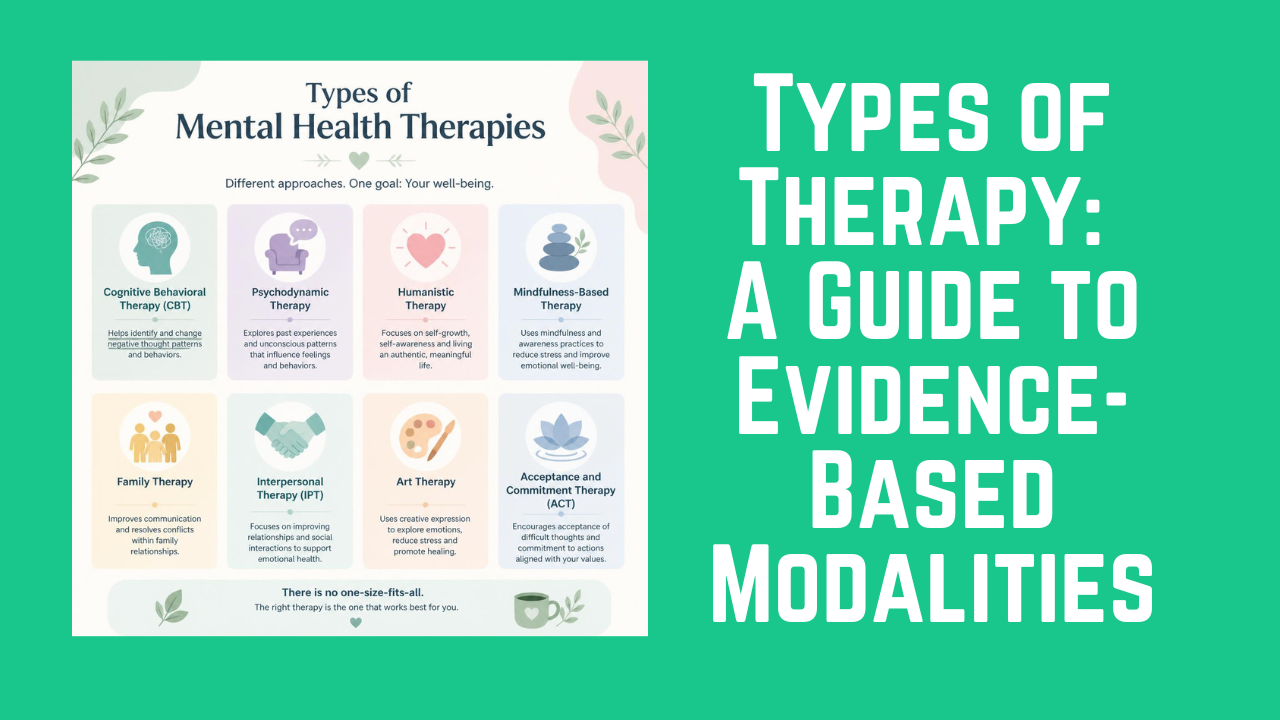
Types of Therapy: A Guide to Evidence-Based Modalities for Mental Health Professionals
Types of Therapy: A Guide to Evidence-Based Modalities for Mental Health Professionals
Cognitive Behavioral Therapy. EMDR. DBT. ACT. Parts work. Play Therapy. If you’re trying to make sense of the many types of therapy used in mental health practice, the alphabet soup can get overwhelming pretty quickly.

Part of the confusion comes from the fact that therapy isn’t one standardized service. Two therapists may have the same professional license yet approach the same client in completely different ways. One clinician may use highly structured Cognitive Behavioral Therapy with worksheets and between-session practice, while another focuses on attachment patterns, emotional experiences, family relationships, behavioral exposure, creative expression, or the stories a client tells about themselves.

Then there’s another layer: evidence. Some therapeutic approaches have decades of research supporting their effectiveness for particular diagnoses. Others have promising but developing research, or are better understood as frameworks that therapists integrate with more established treatment models. An intervention that works remarkably well for Obsessive-Compulsive Disorder might be a poor choice for another client simply because the presenting concern, developmental level, goals, culture, readiness, or treatment setting is different.

That’s why understanding therapy requires more than memorizing definitions.

In this guide to evidence-based modalities, we’ll look at some of the most common therapeutic approaches used by Social Workers, Counselors, Therapists, Psychologists, and other Mental Health Professionals, including what each modality focuses on, which clients may benefit, and how clinicians determine when to use one approach over another.

We’ll also sort out another frequently confusing question: What’s the difference between types of counselors, types of therapist licenses, and types of therapy? Let’s make the whole landscape a lot easier to understand!

Did you know? Agents of Change Continuing Education offers Unlimited Access to 200+ ASWB and NBCC-approved online CE courses and 25+ Live Events per year for one low annual fee to meet your state’s requirements for Continuing Education credits and level up your career.

We’ve helped hundreds of thousands of Social Workers, Counselors, and Mental Health Professionals with Continuing Education, learn more here about Agents of Change and claim your 7.5 free CEUs.

1) What Does “Evidence-Based Therapy” Actually Mean?

The phrase evidence-based therapy gets used frequently, but it doesn’t mean that one therapy has been scientifically declared the winner.

Evidence-based practice combines several pieces of information:

  • The best available research
  • The clinician’s training and professional expertise
  • The client’s needs and clinical presentation
  • The client’s values, culture, preferences, and goals
  • The setting and circumstances in which treatment occurs

That distinction matters. A treatment can have strong research support for one condition and much less evidence for another. Exposure and Response Prevention, for example, has substantial support for Obsessive-Compulsive Disorder and is specifically included in treatment recommendations for OCD. Cognitive Processing Therapy, Prolonged Exposure, and EMDR have particularly strong research support as trauma-focused treatments for PTSD.

Meanwhile, approaches such as expressive therapies, Sand Tray Therapy, parts-based interventions, or integrative approaches may be used to address different clinical needs and often become part of a broader individualized treatment plan.

The takeaway? Evidence-based practice is about matching the intervention to the client, rather than finding one modality that supposedly works for everyone.

Learn more about Agents of Change Continuing Education. We’ve helped hundreds of thousands of Social Workers, Counselors, and Mental Health Professionals with their online continuing education and CEUs, and we want you to be next!

2) Guide to the Major Types of Therapy

Here’s a bird’s-eye view before we explore each approach more closely.

Therapy Primary Focus Commonly Used For
Cognitive Behavioral Therapy (CBT) Thoughts, emotions, behaviors Anxiety, depression, trauma, many other concerns
Dialectical Behavior Therapy (DBT) Emotion regulation and behavioral skills Emotional dysregulation, self-harm, BPD, interpersonal difficulties
Acceptance and Commitment Therapy (ACT) Acceptance, values, psychological flexibility Anxiety, depression, chronic stress, avoidance
Exposure Therapy / ERP Reducing avoidance and fear responses OCD, phobias, anxiety
Cognitive Processing Therapy (CPT) Trauma-related beliefs PTSD and trauma
EMDR Processing traumatic memories PTSD and trauma
Prolonged Exposure (PE) Confronting trauma-related avoidance PTSD
Motivational Interviewing (MI) Resolving ambivalence about change Substance use, health behavior, treatment engagement
Solution-Focused Brief Therapy (SFBT) Goals, strengths, solutions Short-term treatment, transitions, practical concerns
Person-Centered Therapy Relationship, empathy, self-direction Broad emotional and relational concerns
Narrative Therapy Stories and identity Identity, shame, family issues, trauma
Emotionally Focused Therapy Attachment and emotional patterns Couples, relationships, individual attachment concerns
Family Therapy Relationships and family systems Family conflict, parenting, relational concerns
Play Therapy Developmentally appropriate expression through play Children and families
Sand Tray Therapy Symbolic and experiential expression Children, adults, trauma, emotional processing
Parts Work / IFS-Informed Therapy Internal parts and self-compassion Trauma, internal conflict, emotional patterns
Habit Reversal Training Awareness and replacement behaviors Tics and body-focused repetitive behaviors
Mindfulness-Based Approaches Awareness and nonjudgmental attention Stress, anxiety, emotional regulation
Expressive Arts Approaches Creative expression Trauma, grief, children, emotional processing

And yes, therapists frequently use more than one!

1. Cognitive Behavioral Therapy (CBT)

Cognitive Behavioral Therapy is one of the most recognizable types of therapy, and for good reason. It has been studied extensively across a wide range of mental health conditions. The central idea behind CBT is straightforward: thoughts, feelings, and behaviors influence one another.

A client who thinks, “Everyone at this meeting is going to think I’m incompetent,” may feel intense anxiety. That anxiety might lead them to avoid speaking. Avoiding participation then prevents them from discovering that their fear may have been exaggerated.

CBT helps identify and interrupt cycles like this.

What Happens in CBT?

A therapist may help a client:

  • Identify automatic thoughts
  • Examine cognitive distortions
  • Test assumptions against evidence
  • Build coping strategies
  • Change avoidance patterns
  • Practice new behaviors
  • Complete exercises between sessions

CBT can be highly structured, although skilled clinicians adapt its techniques based on the person sitting in front of them.

It is frequently used in treatment for anxiety, depression, trauma-related symptoms, insomnia, behavioral concerns, and many other conditions.

Agents of Change has additional clinical content on advanced CBT and DBT strategies as well as a broader resource on anxiety management therapies for Social Workers.

2. Dialectical Behavior Therapy (DBT)

Dialectical Behavior Therapy grew from the broader cognitive-behavioral tradition but places particular emphasis on balancing two ideas:

Acceptance and change.

A client can learn to accept their current emotional experience while simultaneously working toward behavioral change. That tension is at the heart of DBT.

Full-model DBT generally includes several components, although individual clinicians may also incorporate DBT-informed skills into other forms of therapy.

Its four commonly recognized skills areas are:

  1. Mindfulness
  2. Emotion regulation
  3. Distress tolerance
  4. Interpersonal effectiveness

DBT is especially associated with treating intense emotional dysregulation, chronic suicidal behavior, self-harm, and Borderline Personality Disorder. NICE guidance, for example, recommends considering comprehensive DBT when reducing recurrent self-harm is a priority for women with Borderline Personality Disorder.

DBT skills have also spread far beyond that original population and are frequently incorporated into treatment for anxiety, depression, trauma, relationship problems, and emotional regulation challenges.

One practical example is the DBT Check the Facts skill. It teaches clients to examine whether their emotional reaction fits what is objectively occurring, separating observable facts from interpretations and assumptions.

Clinicians can explore the skill in more detail in Agents of Change’s guide to the “Check the Facts” skill with DBT.

3. Acceptance and Commitment Therapy (ACT)

What if the goal of therapy isn’t to eliminate every uncomfortable thought or feeling? That’s one of the ideas behind Acceptance and Commitment Therapy. ACT focuses heavily on psychological flexibility, meaning the ability to experience difficult internal experiences while continuing to move toward the life you value.

Rather than arguing with every negative thought, clients may practice noticing thoughts without allowing those thoughts to dictate what happens next.

Common ACT processes include:

  • Acceptance
  • Cognitive defusion
  • Present-moment awareness
  • Values identification
  • Committed action
  • Developing a more flexible relationship with the sense of self

Consider someone experiencing social anxiety.

A purely symptom-focused goal might be, “I need to stop feeling anxious before I attend social events.” ACT might shift that toward, “Connection matters deeply to me. Can I make room for some anxiety while still taking a step toward connection?” Subtle difference. Big clinical implication.

ACT is commonly applied to anxiety, depression, chronic pain, stress, avoidance, and other concerns.

Agents of Change’s guide to anxiety management therapies discusses ACT alongside CBT, mindfulness, and exposure-based interventions. ACT principles also appear in Process-Based Therapy, an increasingly individualized approach that targets the psychological processes maintaining a client’s difficulties.

4. Exposure Therapy and Exposure and Response Prevention

Avoidance feels helpful in the short term.

Terrified of elevators? Take the stairs.

Afraid contamination will make you sick? Wash your hands again.

Anxious about driving? Stay home.

The immediate anxiety decreases, which teaches the brain an unfortunate lesson: Avoidance worked.

Exposure-based therapies help break that learning cycle.

Instead of repeatedly escaping feared situations, sensations, memories, or thoughts, clients gradually practice approaching experiences they have learned to fear.

What Is Exposure and Response Prevention?

Exposure and Response Prevention, usually shortened to ERP, is particularly important in the treatment of OCD.

The exposure involves confronting a feared trigger.

The response prevention involves resisting the compulsion or safety behavior that usually follows.

For someone with contamination OCD, an exposure might involve touching something they consider contaminated. Response prevention could mean delaying or refraining from the ritualized handwashing that normally follows.

Over time, clients can learn that they can tolerate uncertainty and distress without performing compulsions.

ERP is one of the clearest examples of why therapists need specialized training. Reassuring a client with OCD may feel compassionate, yet repeated reassurance can accidentally become part of the client’s compulsive cycle.

Agents of Change explores related applications in its resource on supporting clients with health anxiety.

5. Cognitive Processing Therapy (CPT)

Cognitive Processing Therapy is a structured trauma-focused therapy primarily used for PTSD.

CPT examines how traumatic experiences can change what someone believes about themselves, other people, and the world.

After trauma, someone may develop beliefs such as:

  • “The trauma was my fault.”
  • “I can never trust anyone again.”
  • “I’m permanently damaged.”
  • “The world is completely unsafe.”
  • “If I let my guard down, something terrible will happen.”

CPT helps clients identify and evaluate these trauma-related beliefs.

The approach addresses themes that commonly become disrupted after trauma, including safety, trust, power and control, esteem, and intimacy.

CPT is particularly well supported for PTSD. The American Psychological Association describes CPT as a specific type of CBT that helps clients challenge and modify unhelpful trauma-related beliefs.

For a much deeper explanation, read Agents of Change’s guide to Cognitive Processing Therapy (CPT).

6. Eye Movement Desensitization and Reprocessing (EMDR)

EMDR is another structured trauma therapy.

During EMDR, the client briefly focuses on aspects of a traumatic memory while engaging in bilateral stimulation, frequently guided eye movements or another alternating sensory experience.

Treatment typically follows a structured series of phases that includes assessment, preparation, memory processing, installation of adaptive beliefs, and reevaluation.

EMDR has become particularly prominent in PTSD treatment. Current VA/DoD guidance identifies EMDR alongside CPT and Prolonged Exposure among the trauma-focused psychotherapies with the strongest evidence for PTSD.

That doesn’t mean every person with trauma automatically needs EMDR. Treatment selection should still account for preferences, symptoms, stability, clinical history, therapist competence, and informed consent.

Clinicians interested in trauma treatment can continue with Agents of Change’s broader guide to Trauma Therapy Techniques, which discusses EMDR alongside several additional approaches.

7. Prolonged Exposure Therapy

Prolonged Exposure, often called PE, is another specialized treatment for PTSD.

Trauma can cause people to avoid:

  • Memories
  • Conversations
  • Places
  • Activities
  • Sensations
  • People
  • Situations associated with the traumatic event

Avoidance makes sense as a protective strategy. Unfortunately, persistent avoidance can also prevent new learning.

PE systematically helps clients approach safe situations and trauma memories that they have been avoiding.

Treatment commonly involves both:

In vivo exposure, which involves gradually approaching safe real-world situations that have become associated with danger.

Imaginal exposure, which involves revisiting and processing the trauma memory in a controlled therapeutic environment.

Like CPT and EMDR, PE has extensive empirical support for PTSD. The VA identifies CPT, EMDR, and PE as the trauma-focused psychotherapies with the strongest research support.

8. Motivational Interviewing (MI)

Sometimes the biggest barrier to change isn’t a lack of information.

It’s ambivalence.

“I want to stop drinking, but it’s the only thing that helps me relax.”

“I know I should take my medication, but I hate feeling dependent on it.”

“I want things to change, but I’m not sure therapy is going to help.”

Motivational Interviewing was developed for exactly these kinds of conversations.

MI is a collaborative approach that helps clients explore their own motivations for change without turning therapy into an argument.

A clinician using MI may rely heavily on:

  • Open-ended questions
  • Affirmations
  • Reflective listening
  • Summaries
  • Exploring ambivalence
  • Supporting autonomy
  • Eliciting change talk

SAMHSA identifies Motivational Interviewing among evidence-based practices used in behavioral health treatment and continues to provide specific guidance on using MI in substance use treatment.

Two concepts are especially useful to understand.

Change talk is client language moving toward change.

Sustain talk is client language supporting the status quo.

Agents of Change has separate guides explaining Change Talk in Motivational Interviewing and Sustain Talk in Motivational Interviewing.

9. Solution-Focused Brief Therapy (SFBT)

Some therapies spend considerable time examining how a problem developed.

Solution-Focused Brief Therapy asks a different question:

What would tell us things are getting better?

SFBT is strengths-based, future-oriented, and typically focused on achievable change.

Common techniques include:

  • The miracle question
  • Scaling questions
  • Identifying exceptions
  • Exploring strengths and resources
  • Recognizing previous successes
  • Developing small, concrete next steps

Suppose a client says, “My anxiety is destroying everything.”

Instead of immediately analyzing every origin of the anxiety, a Solution-Focused therapist might ask, “When has anxiety been slightly less powerful this week? What was different then?”

That exception becomes information.

SFBT can be particularly useful in settings where treatment is brief, practical goals matter, or clients need to recognize resources they already possess.

Read Agents of Change’s full guide to Solution-Focused Brief Therapy for a more detailed explanation of the model and its techniques.

10. Person-Centered Therapy

Person-Centered Therapy is associated with psychologist Carl Rogers and the humanistic tradition.

Rather than positioning the therapist as the expert who tells the client what needs to change, Person-Centered Therapy places enormous importance on the therapeutic relationship.

Core principles include:

  • Empathy
  • Congruence or genuineness
  • Unconditional positive regard
  • Respect for autonomy
  • Client-directed exploration

The therapist creates an environment in which clients can understand themselves, identify their own direction, and move toward growth.

Some modern therapists practice primarily from a Person-Centered orientation. Others integrate these principles into CBT, ACT, trauma therapy, family work, or nearly any other modality. In reality, techniques matter, but so does the relationship through which those techniques are delivered.

Agents of Change’s guide to commonly used Social Work tools and models explores Person-Centered Therapy alongside Narrative Therapy, SFBT, Motivational Interviewing, and other approaches.

11. Narrative Therapy

Narrative Therapy starts with an intriguing idea:

People make sense of their lives through stories.

Unfortunately, problems can begin dominating those stories.

“I’m the difficult child.”

“I’m a failure.”

“Our family is broken.”

“I’m an anxious person.”

Narrative Therapy helps clients examine, challenge, and potentially rewrite problem-saturated narratives.

One familiar technique is externalization.

Rather than “I am anxiety,” the client might begin talking about “the anxiety that keeps trying to control my decisions.”

That shift creates psychological space between the person and the problem.

Narrative therapists may explore:

  • Dominant stories
  • Exceptions to those stories
  • Social and cultural influences
  • Strengths hidden within previous experiences
  • Preferred identities
  • Alternative narratives

This approach can be especially meaningful when identity, power, culture, stigma, shame, family systems, or social context play major roles in the client’s experience.

Agents of Change includes Narrative Therapy in its overview of commonly used Social Work models.

12. Emotionally Focused Therapy and EFIT

Emotionally Focused Therapy is rooted in attachment theory and focuses heavily on emotional experiences and relational bonds.

It is especially well known in couples therapy, where therapists help partners recognize repetitive cycles of disconnection.

For example:

One partner feels abandoned and criticizes.

The other feels attacked and withdraws.

The withdrawal increases the first partner’s sense of abandonment.

More criticism follows.

EFT helps couples understand the underlying attachment needs driving the cycle rather than simply blaming one another for the surface behavior.

Emotionally Focused Individual Therapy, or EFIT, adapts attachment-focused principles to individual therapy.

EFIT may help clients explore:

  • Emotional patterns
  • Attachment wounds
  • Fears of rejection or abandonment
  • Difficulty trusting others
  • Emotional avoidance
  • Internal experiences connected with relationships

Agents of Change has a complete introduction to Emotionally Focused Individual Therapy (EFIT).

13. Family Therapy and Structural Family Therapy

Sometimes treating one person’s symptoms without understanding the larger family system misses important information.

Family therapies look at relationships, roles, communication patterns, boundaries, hierarchies, and interactions.

Rather than asking only, “What’s happening inside this person?” the clinician may also ask:

What’s happening between people?

Structural Family Therapy, associated with Salvador Minuchin, pays particular attention to the organization of the family.

The therapist may examine:

  • Boundaries
  • Subsystems
  • Hierarchy
  • Alliances
  • Coalitions
  • Family roles
  • Repetitive interaction patterns

For example, a child’s behavior might appear to be the primary problem. A family-systems assessment could reveal inconsistent parental boundaries, parent-child triangulation, or conflict that repeatedly places the child in the middle.

That doesn’t mean the child’s behavior isn’t real. It changes the lens through which treatment is conceptualized.

Agents of Change provides a deeper guide to Structural Family Therapy as well as information about becoming a Family Therapy Counselor.

14. Play Therapy

Adults tend to communicate through conversation.

Children often communicate through play.

That distinction is central to Play Therapy.

Play Therapy uses developmentally appropriate activities and the therapeutic relationship to help children express emotions, explore experiences, build skills, and work through problems.

Depending on the approach, therapy may involve:

  • Pretend play
  • Puppets
  • Dolls
  • Games
  • Art
  • Storytelling
  • Miniatures
  • Sensory materials
  • Therapeutic limit-setting
  • Parent involvement

Play Therapy can be directive or nondirective.

In Child-Centered Play Therapy, for example, therapists typically follow the child’s lead while creating a safe, accepting, and carefully structured therapeutic environment.

Other play-based interventions may intentionally teach coping strategies, social skills, emotional regulation, or problem-solving.

Play Therapy can be used with children experiencing anxiety, behavioral concerns, family transitions, grief, trauma, relationship difficulties, and other concerns.

For a full overview, see Agents of Change’s guide to Play Therapy and becoming a Play Therapist.

15. Sand Tray Therapy

Sometimes words aren’t the easiest route into someone’s experience.

Sand Tray Therapy provides a visual and experiential alternative.

Clients choose miniatures and arrange them in a tray of sand, creating scenes that can represent relationships, conflicts, memories, emotions, fears, or imagined possibilities.

While people often associate Sand Tray Therapy with children, adolescents and adults can use it too.

The approach may be helpful for clients who:

  • Struggle to verbalize emotions
  • Think visually
  • Feel overwhelmed by direct discussion
  • Are processing complex experiences
  • Benefit from symbolic expression
  • Need some emotional distance from difficult material

A therapist might notice themes in the scene and invite the client to explore them, but careful Sand Tray work isn’t about announcing, “That dragon obviously represents your father.”

The client’s meaning matters more than the therapist’s guess.

Agents of Change has an entire guide explaining Sand Tray Therapy and how it can be incorporated into clinical work.

16. Expressive Arts Approaches

Talking isn’t the only way people process emotion.

Expressive approaches may incorporate:

  • Drawing
  • Painting
  • Music
  • Movement
  • Collage
  • Poetry
  • Storytelling
  • Drama
  • Creative writing
  • Visual symbolism

These methods may be especially useful when verbal processing feels inaccessible, overly intellectualized, developmentally inappropriate, or emotionally overwhelming.

Importantly, clinicians need to distinguish between incorporating expressive techniques into psychotherapy and practicing within separately regulated or credentialed professions such as Art Therapy or Music Therapy. Scope of practice, training, state regulations, and professional titles matter.

Expressive techniques can still be valuable additions to appropriately trained clinical practice.

Agents of Change discusses expressive methods, storytelling, metaphors, and other creative interventions in its guide to motivating and engaging mental health clients.

17. Internal Family Systems and Parts Work

Have you ever heard a client say something like:

“Part of me wants to leave the relationship, but another part is terrified.”

That language comes naturally to many people.

Parts-based therapy works with the idea that people can experience distinct internal states or “parts” with different roles, emotions, memories, or protective strategies.

Internal Family Systems, commonly called IFS, is one well-known parts-based model.

A client might recognize:

  • A perfectionistic part
  • A frightened younger part
  • A highly critical part
  • A people-pleasing part
  • An angry protector
  • A part that shuts everything down

Instead of immediately trying to eliminate a part, parts-oriented work often asks what that part is trying to accomplish.

The critical voice that sounds cruel may have developed as an attempt to prevent rejection.

The emotionally detached part may have helped someone survive overwhelming experiences.

Understanding protective intent can create room for curiosity and self-compassion.

The evidence base for IFS and parts-oriented therapies is developing, and clinicians should avoid treating every popular modality as though it has identical empirical support. That said, parts-based concepts have become increasingly common in trauma-informed and integrative clinical practice.

Agents of Change explores this approach in What Is Parts Therapy in Social Work? and discusses IFS within its broader guide to Trauma Therapy Techniques.

18. Habit Reversal Training

Habit Reversal Training, or HRT, is a much more behaviorally focused intervention.

It is commonly used for body-focused repetitive behaviors and tic-related concerns, including behaviors such as:

  • Hair pulling
  • Skin picking
  • Nail biting
  • Certain repetitive habits
  • Tics

A major component of HRT involves increasing awareness of the behavior and the cues surrounding it.

Clients then learn a competing response, meaning a behavior that makes the unwanted behavior harder or impossible to perform at the same time.

Treatment may also examine environmental triggers, social support, motivation, and strategies for reducing vulnerability to the behavior.

Because HRT targets a specific behavioral cycle, it provides another good example of why “What therapy do you use?” isn’t always the best question.

A better question might be:

What treatment has evidence for the specific problem we’re trying to change?

Learn more in Agents of Change’s guide to Habit Reversal Training for Mental Health Professionals.

19. Mindfulness-Based Approaches

Mindfulness has become integrated into many therapy models.

At its core, mindfulness involves intentionally noticing present-moment experiences with greater awareness and less automatic judgment.

Clients may practice observing:

  • Thoughts
  • Emotions
  • Physical sensations
  • Urges
  • Breathing
  • Environmental experiences

Mindfulness doesn’t mean forcing the mind to become blank.

It also doesn’t mean accepting harmful circumstances without acting.

Instead, mindfulness can help create a little more space between an internal experience and an automatic response.

Mindfulness appears within DBT, ACT, Mindfulness-Based Stress Reduction, Mindfulness-Based Cognitive Therapy, trauma-informed interventions, and many integrative approaches.

For someone whose anxiety rapidly moves from a physical sensation to catastrophic interpretation to panic, learning to notice that initial sensation without instantly reacting may become an important therapeutic skill.

20. Gestalt Therapy

Gestalt Therapy is a humanistic and experiential approach emphasizing awareness, personal responsibility, and the present moment.

Instead of focusing exclusively on explaining why something happened years ago, a Gestalt-oriented therapist might become curious about what is occurring right now.

What happens in your body as you tell that story?

What are you noticing emotionally?

What are you avoiding saying?

What changes when you imagine speaking directly to the person involved?

Experiential activities may help clients notice unresolved emotions, patterns of interaction, or discrepancies between what they say and what they experience.

Agents of Change provides a longer introduction to Gestalt Therapy.

Agents of Change has helped hundreds of thousands of Social Workers, Counselors, and Mental Health Professionals with Continuing Education, learn more here about Agents of Change and claim your 7.5 free CEUs!

3) How Do Therapists Choose Between Different Types of Therapy?

Imagine two clients both receive a diagnosis of Generalized Anxiety Disorder.

Does that mean they need identical therapy? Probably not.

One client may struggle mainly with catastrophic thinking and respond well to structured CBT.

Another may understand their anxious thinking perfectly but organize their entire life around avoiding uncomfortable experiences. ACT or exposure-based strategies might become more important. A third may have intense emotional dysregulation and benefit from DBT skills. Another client’s anxiety may be tied closely to attachment and relationships. Good treatment planning requires more than matching one diagnosis to one acronym.

Therapists may consider:

  1. Diagnosis and presenting concerns
  2. Severity of symptoms
  3. Safety and level of care
  4. Research supporting particular interventions
  5. Developmental level
  6. Culture and identity
  7. Client preferences
  8. Previous treatment experiences
  9. Readiness for change
  10. Family and environmental factors
  11. Clinician competence and training
  12. Treatment setting
  13. Available time and resources

This is why eclectic or integrative practice is common. But “integrative” shouldn’t mean randomly grabbing techniques.

Ethical integration requires clinicians to understand why an intervention makes sense, what evidence supports it, whether it fits the treatment goals, and whether they have appropriate training to provide it.

Types of Counselors and Types of Therapist Licenses

A common source of confusion is that therapy modality and professional license are two completely different things.

CBT is a therapy modality.

LCSW is a professional license.

EMDR is a treatment approach.

LPC is a professional license.

Knowing someone’s license usually tells you something about their professional education and regulated scope of practice. It doesn’t automatically tell you what modality they use.

Licensed Clinical Social Workers

Clinical Social Workers may hold titles such as:

  • LCSW
  • LICSW
  • LISW
  • LCSW-C
  • Other jurisdiction-specific variations

Clinical Social Workers typically earn an MSW and complete additional supervised clinical experience and licensing requirements.

Exact titles and scopes of practice differ significantly between jurisdictions. Agents of Change’s comprehensive guides to Social Work licensing requirements by state and Social Worker licensing acronyms can help clarify those differences.

Licensed Professional Counselors and Mental Health Counselors

Depending on the state, professional counselors may use titles such as:

  • LPC
  • LMHC
  • LCPC
  • LPCC
  • LCMHC

Counselors typically complete graduate-level counseling education, supervised clinical practice, and state-specific examination and licensing requirements.

If you’re exploring this career pathway, Agents of Change offers a step-by-step guide to becoming an LMHC or LPC as well as a broader resource covering counselor licensing requirements.

Marriage and Family Therapists

Licensed Marriage and Family Therapists, commonly LMFTs, receive graduate-level training emphasizing relationships and family systems.

Although marriage appears in the title, LMFTs may work with:

  • Individuals
  • Couples
  • Families
  • Children
  • Adolescents

Their training often gives particular attention to understanding psychological difficulties within relational systems.

Psychologists

Licensed psychologists typically hold doctoral-level training such as a PhD or PsyD, although exact pathways and scopes vary by jurisdiction.

Psychologists may provide psychotherapy, psychological testing, assessment, consultation, research, or other psychological services depending on their training and license.

Addiction Counselors

Substance use professionals may hold credentials that vary significantly by state and level of education.

Some work primarily in substance use treatment, while others hold broader mental health licenses and specialize in addiction.

Because addiction credentials, independent practice permissions, and scopes vary widely, clients and professionals should verify the credential within the relevant state.

Therapist Is Often an Umbrella Term

Here’s the twist.

“Therapist” may describe professionals from several licensed disciplines.

A therapist could be:

  • A Clinical Social Worker
  • A Professional Counselor
  • A Marriage and Family Therapist
  • A Psychologist
  • Another appropriately licensed behavioral health professional

That’s why searching for the “best type of therapist” without considering credentials, specialization, treatment approach, and state regulation can quickly become confusing.

Agents of Change has an additional comparison of Social Workers, Counselors, and Therapists as well as a guide to different types of licensed counselors.

License, Certification, and Modality Are Not the Same Thing

This distinction deserves its own section.

Suppose someone’s professional profile says:

Jane Doe, LCSW, Certified EMDR Therapist

Those credentials describe different things.

LCSW is a state-issued professional license.

EMDR certification is specialized professional training or credentialing beyond the foundational license.

EMDR is the therapeutic modality.

The same applies to Play Therapy credentials, trauma certifications, DBT certifications, grief certifications, and many others.

A specialty certification does not automatically replace the professional license required to practice psychotherapy.

Agents of Change’s comprehensive list of therapist certifications explains the distinction and reviews many available specialty credentials.

4) Can a Therapist Use Multiple Modalities?

Absolutely. In fact, many clinicians describe themselves as integrative, eclectic, or multimodal therapists.

A therapist working with one client might combine:

  • CBT to challenge unhelpful beliefs
  • ACT to increase willingness to experience difficult emotions
  • DBT skills to improve emotional regulation
  • Motivational Interviewing to work through ambivalence
  • Family interventions to address environmental patterns

The key is intentionality.

Combining modalities should have a clinical rationale. Adding another technique because it sounds interesting on social media is different from integrating interventions based on assessment, research, case conceptualization, informed consent, and professional competence.

Modern psychotherapy is increasingly interested in the processes underlying change rather than forcing every client into a single theoretical box. Agents of Change’s guide to Process-Based Therapy explores this movement toward individualized treatment in greater detail.

Does the Therapeutic Relationship Matter More Than the Modality?

This is one of those questions where the most accurate answer is: it depends on what you’re treating.

The therapeutic relationship matters enormously. Clients need safety, trust, collaboration, and a sense that their therapist understands them.

At the same time, relationship quality doesn’t make every intervention interchangeable. A warm, empathic therapist repeatedly reassuring a client with severe OCD may unintentionally reinforce compulsions. A wonderfully supportive therapist who has never been trained in trauma-focused therapy shouldn’t simply improvise EMDR.

A strong relationship creates the conditions for therapy. Appropriate intervention selection provides direction for the work. Effective clinicians pay attention to both.

How Can Mental Health Professionals Learn New Therapy Modalities?

Graduate school gives clinicians a foundation, but it can’t possibly provide advanced training in every population, diagnosis, and therapeutic modality they’ll encounter during a career.

Continuing education becomes especially important as clinicians:

  • Encounter new populations
  • Change practice settings
  • Develop clinical specialties
  • Learn evidence-based treatments
  • Respond to evolving research
  • Maintain professional licenses
  • Seek consultation or advanced supervision

Agents of Change Continuing Education offers a growing library of more than 200 ASWB ACE and NBCC-approved courses for Social Workers, Counselors, Therapists, and other Mental Health Professionals. The current Unlimited CE + Live Events subscription is $99 per year and includes 200+ courses, new courses added regularly, and live CE programming.

Agents of Change also offers 25+ live continuing education events each year, which means clinicians can participate in more than two live learning opportunities during an average month. Topics span therapeutic modalities, trauma, ethics, diagnosis, clinical skills, supervision, children and families, emerging research, and many other areas of mental health practice.

At $99 per year, Agents of Change Continuing Education is the most affordable option available for clinicians looking for a comprehensive CE subscription that includes a growing library of 200+ ASWB ACE and NBCC-approved courses, 25+ live events each year, unlimited CE opportunities, and additional professional learning resources.

5) How Should You Choose Which Therapy Modality to Learn?

Choosing a new therapy modality can feel overwhelming. There are dozens of approaches, certifications, trainings, and specialty programs competing for your attention, and it’s easy to assume you need to learn whatever seems most popular right now.

A better approach is to work backward from your actual clinical practice.

Use this step-by-step process to decide which therapy modality is most worth your time, money, and energy.

Step 1: Look at the Clients You Work With Most Often

Start with your current caseload or the population you hope to work with.

Ask yourself:

  • What ages do I primarily serve?
  • What diagnoses or concerns come up repeatedly?
  • What problems do clients most often bring to therapy?
  • Where do I currently feel least confident?

For example, if you regularly work with children who struggle to communicate their emotions verbally, Play Therapy or Sand Tray Therapy may be especially useful.

If you frequently work with clients experiencing OCD, learning Exposure and Response Prevention may be a higher priority.

If trauma and PTSD appear throughout your caseload, you may want to explore CPT, EMDR, Prolonged Exposure, or other trauma-focused approaches.

Start with the problems you actually need to solve in practice.

Step 2: Identify the Clinical Gap

Next, ask yourself where your current therapeutic toolbox falls short.

Think about recent cases where you found yourself wondering:

  • “I’m not sure what to do next.”
  • “My usual interventions aren’t working.”
  • “I understand the diagnosis, but I’m not confident treating it.”
  • “I keep seeing this concern and want better tools for addressing it.”

That gap can point directly toward your next area of training.

For example, a therapist who already understands CBT but struggles with highly dysregulated clients may benefit from learning more DBT strategies.

A clinician who works with clients who understand their anxious thoughts but continue avoiding meaningful activities might explore ACT or exposure-based approaches.

A therapist who regularly encounters ambivalence about change could strengthen their skills in Motivational Interviewing.

Step 3: Research Which Modalities Have Evidence for That Problem

Once you’ve identified the clinical need, look at the research.

Don’t start by asking:

“What’s the most popular therapy right now?”

Instead, ask:

“Which treatments have evidence for the clients and concerns I’m working with?”

Look at:

  • Clinical practice guidelines
  • Systematic reviews
  • Professional organizations
  • Peer-reviewed research
  • Evidence-based treatment databases

Pay attention to exactly what the research studied.

A therapy may have strong evidence for PTSD but limited evidence for another condition. Another modality may work particularly well with adults but have less research involving children.

The goal isn’t simply to find an “evidence-based therapy.” It’s to find evidence that matches your population and clinical problem.

Step 4: Decide How Much Training You Need

Not every modality requires the same level of training.

There is a big difference between:

  • Learning about a modality
  • Incorporating a few evidence-based techniques
  • Becoming competent in the complete treatment model
  • Pursuing formal certification

For example, a Continuing Education course may be appropriate if you want an introduction to ACT concepts or DBT skills. More specialized interventions may require extensive training, supervision, consultation, or certification before you can competently provide the full treatment.

Before enrolling, ask:

  • What will this training actually qualify me to do?
  • Is additional supervision required?
  • Is there a formal certification process?
  • Does my state or professional board have specific requirements?
  • Is this training introductory, intermediate, or advanced?

That can prevent you from spending thousands of dollars on training you don’t actually need yet.

Step 5: Evaluate Whether the Modality Fits Your Existing Approach

Your next modality doesn’t necessarily need to completely change the way you practice. Often, the most useful training builds naturally on skills you already have.

For example:

  • A CBT therapist might add ACT.
  • A trauma therapist might strengthen DBT skills.
  • A child therapist might learn Play Therapy or Sand Tray Therapy.
  • A family therapist might study attachment-based approaches.
  • A therapist working with substance use may deepen Motivational Interviewing skills.
  • A clinician treating anxiety may add exposure-based interventions.

Think about how the new modality will fit into your existing case conceptualization and treatment planning.

Ideally, you’re building a coherent clinical toolbox, rather than collecting unrelated techniques.

Step 6: Consider the Practical Investment

Training can range from a one-hour Continuing Education course to a multi-year certification process.

Before committing, consider:

  • Cost
  • Time
  • Required consultation or supervision
  • Travel requirements
  • Continuing certification fees
  • Whether you’ll actually use the modality regularly
  • Whether clients in your setting are likely to benefit

A $2,000 certification may be a worthwhile investment if you plan to build an entire specialty around that treatment. It may make less sense if you’ll use the approach with one client every few years. Sometimes an introductory Continuing Education course is the smartest first step.

Step 7: Learn the Basics Before Committing to Advanced Certification

If you’re curious about a modality but aren’t sure whether it fits your practice, begin with foundational education.

Take an introductory course.

Read the primary research.

Attend a live training.

Learn the core concepts.

Then ask yourself:

Can I realistically see myself using this approach with my clients?

If the answer is yes, you can pursue more advanced training.

This approach lowers the risk of spending significant money on a certification that sounded exciting but doesn’t fit your actual clinical work.

Agents of Change Continuing Education offers more than 200 ASWB and NBCC-approved courses covering clinical interventions, diagnosis, trauma, ethics, children and families, and many other areas of mental health practice. Clinicians can use introductory Continuing Education courses to explore new approaches before deciding whether more extensive modality-specific training makes sense.

Step 8: Make Sure You Can Practice the Modality Competently

Finally, training doesn’t end when the course ends.

Ask yourself:

  • Do I understand the theory behind the intervention?
  • Can I explain why I’m using it?
  • Do I know when the approach is appropriate?
  • Do I know when it may be inappropriate?
  • Can I recognize when a case is beyond my current competence?
  • Do I have access to consultation or supervision if needed?

Ethical practice requires more than knowing a few techniques.

The goal is to understand the modality well enough to use it intentionally, safely, and effectively.

A Simple Formula for Choosing Your Next Therapy Modality

When you’re unsure what to learn next, follow this sequence:

Your clients → Your clinical gap → The evidence → Training requirements → Fit with your practice → Cost and time → Competence

In other words, don’t start with the training.

Start with the client.

6) Common Mistakes When Comparing Types of Therapy

Comparing therapy modalities sounds simple until you actually try to do it. One approach has decades of research behind it. Another is newer but gaining attention. A third may be especially effective for a very specific diagnosis, while another is designed to work across a broader range of concerns.

The biggest mistake is assuming therapies can be ranked on a single scale from “best” to “worst.” In reality, the better question is usually: Best for whom, for what problem, and under what circumstances?

Here are five of the most common mistakes people make when comparing types of therapy, along with ways to avoid them.

Mistake 1: Assuming the Most Popular Therapy Is the Best Therapy

A therapy can become popular because of social media, celebrity endorsements, strong marketing, or growing professional interest. Popularity, however, isn’t the same thing as clinical effectiveness.

Some of the most heavily researched treatments aren’t necessarily the ones generating the most conversation online. Likewise, an emerging modality may be promising without yet having the same depth of research as a more established treatment.

How to Avoid This Mistake

Look beyond popularity and ask:

  • What does the research say?
  • Which populations have been studied?
  • What conditions was the therapy designed to treat?
  • Are there clinical practice guidelines supporting its use?
  • How strong and consistent is the evidence?

A therapy doesn’t need to be trendy to be effective, and being trendy doesn’t automatically make it ineffective. The key is separating attention from evidence.

Mistake 2: Comparing Therapies Without Considering the Specific Diagnosis or Problem

People sometimes ask broad questions like, “Is CBT better than EMDR?” or “Is DBT better than ACT?”

Those comparisons are often too vague to be useful.

A therapy that works especially well for one concern may not be the first choice for another. Exposure and Response Prevention, for example, has a very specific role in treating OCD. Cognitive Processing Therapy is designed specifically around trauma-related beliefs associated with PTSD. DBT may be especially valuable when severe emotional dysregulation or self-harm is central to treatment.

How to Avoid This Mistake

Start with the clinical problem before comparing interventions.

Ask:

  1. What is the primary diagnosis or presenting concern?
  2. What symptoms are causing the greatest impairment?
  3. What treatments have been studied for that problem?
  4. Does the client have additional concerns that affect treatment planning?
  5. What are the client’s goals and preferences?

Comparing therapies makes much more sense once the clinical target is clear.

Mistake 3: Assuming One Therapy Should Work for Everyone

Even when a treatment has strong evidence, that doesn’t mean every client will respond to it in the same way.

Two people with the same diagnosis may differ significantly in age, culture, trauma history, family environment, cognitive abilities, motivation, resources, preferences, and treatment goals. One client may thrive with a highly structured approach. Another may need a more relational, experiential, developmental, or flexible treatment style.

How to Avoid This Mistake

Think in terms of treatment matching rather than one-size-fits-all therapy.

Consider:

  • Developmental level
  • Cultural context
  • Client preferences
  • Previous therapy experiences
  • Readiness for change
  • Family and environmental factors
  • Accessibility needs
  • Co-occurring diagnoses
  • The client’s ability to participate in the treatment as designed

Evidence should guide treatment, but good clinical judgment also requires adapting care to the individual.

Mistake 4: Confusing Therapy Modality With Therapist License or Certification

CBT, EMDR, DBT, and ACT are therapeutic approaches.

LCSW, LPC, LMHC, LMFT, and psychologist are professional licenses.

Those categories answer completely different questions.

A Licensed Clinical Social Worker may practice CBT. A Licensed Professional Counselor may also practice CBT. Either clinician could pursue additional training in EMDR, Play Therapy, DBT, or another specialty.

Likewise, a certification in a particular therapy doesn’t replace the professional license required to independently provide psychotherapy.

How to Avoid This Mistake

When evaluating a therapist or training program, separate three things:

  • Professional license: What legally regulated profession does the clinician belong to?
  • Clinical specialty: What populations or concerns does the clinician regularly treat?
  • Therapy modality: What treatment approaches has the clinician been trained to use?

Looking at all three gives a much clearer picture than focusing on the letters after someone’s name alone.

Mistake 5: Assuming More Modalities Automatically Means Better Therapy

A therapist’s website might list 15 different treatment approaches.

That can sound impressive, but a long list doesn’t necessarily tell you how deeply the clinician understands any of them.

Effective therapy isn’t about collecting as many techniques as possible. It’s about knowing when to use an intervention, why you’re using it, what evidence supports it, and whether you’re competent to provide it.

How to Avoid This Mistake

Prioritize depth, intentionality, and competence.

Clinicians should be able to explain:

  • Why a particular modality fits the client’s needs
  • What the treatment is intended to change
  • What evidence supports the approach
  • What training they’ve completed
  • How progress will be evaluated
  • When they would modify the treatment or refer elsewhere

For Mental Health Professionals, this is also an important reminder when choosing Continuing Education. Learning another technique can be valuable, but the goal should be building a thoughtful clinical framework rather than accumulating disconnected interventions.

Ultimately, comparing different types of therapy isn’t about finding the modality with the best marketing, the longest acronym, or the biggest following. It’s about matching the right intervention to the right clinical need while considering evidence, client preferences, therapist competence, and the realities of the treatment setting.

7) FAQs – Types of Therapy: A Guide to Evidence-Based Modalities for Mental Health Professionals
Q: What are the main types of therapy?

A: Some of the most common types of therapy include Cognitive Behavioral Therapy (CBT), Dialectical Behavior Therapy (DBT), Acceptance and Commitment Therapy (ACT), exposure-based therapies, trauma-focused therapies, family therapy, Play Therapy, and Person-Centered Therapy. Other approaches include Motivational Interviewing, Solution-Focused Brief Therapy, Narrative Therapy, Sand Tray Therapy, and parts-based therapies. Many Mental Health Professionals use more than one modality depending on the client’s diagnosis, goals, age, preferences, and treatment needs.

Q: How do I know which type of therapy is best for a specific mental health condition?

A: Start by identifying the primary diagnosis, symptoms, and functional concerns, then look at which treatments have the strongest evidence for that specific problem. For example, Exposure and Response Prevention is commonly used for OCD, while CPT, EMDR, and Prolonged Exposure are well-supported treatments for PTSD. Client preferences, developmental level, culture, co-occurring conditions, and therapist competence should also be part of treatment selection.

Q: What is the difference between a therapy modality and a therapist license?

A: A therapy modality is the clinical approach a therapist uses, such as CBT, DBT, EMDR, ACT, or Play Therapy. A therapist license, such as LCSW, LPC, LMHC, LMFT, or psychologist, reflects the professional pathway and legal scope under which the clinician practices. Two therapists with the same license may use completely different modalities, while professionals with different licenses may be trained in many of the same therapies.

Q: Can a therapist use several different therapy modalities with the same client?

A: Yes, many therapists practice from an integrative approach and combine interventions from multiple modalities when there is a clear clinical reason to do so. For example, a therapist might use CBT to address unhelpful thinking patterns, DBT skills for emotion regulation, and Motivational Interviewing to address ambivalence about change. The important part is that each intervention fits the treatment plan and falls within the clinician’s competence and training.

Q: Which therapy modalities should Mental Health Professionals learn first?

A: There is no single order that works for every clinician, so the best starting point is usually the population and concerns you encounter most often. A clinician who frequently treats anxiety may prioritize CBT and exposure-based approaches, while someone working with trauma may pursue CPT, EMDR, or other trauma-focused training. Before investing in advanced certification, consider the strength of the evidence, the training requirements, how often you will use the modality, and whether it fits your existing clinical approach.

8) Conclusion

Understanding the many types of therapy can make the mental health field feel much more approachable. Each modality brings a different way of understanding change, whether the focus is on thoughts, behaviors, emotions, relationships, trauma, values, family systems, or developmental needs. The goal is not to decide that one type of therapy is universally best, but to understand which approaches have the strongest fit for a particular client, concern, and treatment setting.

For Social Workers, Counselors, Therapists, and other Mental Health Professionals, learning new modalities should be an intentional process. Start with the clients you serve, identify gaps in your current skill set, review the evidence, and then pursue training that strengthens your ability to provide competent and thoughtful care. Over time, that approach creates a clinical toolbox that is broad enough to be flexible while still grounded in evidence and professional competence.

As research continues to evolve, so will the ways clinicians understand and deliver therapy. Continuing education, consultation, supervision, and ongoing curiosity all help Mental Health Professionals keep pace with that growth. By understanding the strengths, limitations, and appropriate uses of different therapeutic approaches, clinicians can make more informed treatment decisions and provide care that is responsive to the real people sitting across from them.

————————————————————————————————————————————————

► Learn more about the Agents of Change Continuing Education here: https://agentsofchangetraining.com

About the Lead Instructor, Dr. Meagan Mitchell: Meagan is a Licensed Clinical Social Worker and has been providing Continuing Education for Social Workers, Counselors, and Mental Health Professionals for more than 10 years. From all of this experience helping others, she created Agents of Change Continuing Education to help Social Workers, Counselors, and Mental Health Professionals stay up-to-date on the latest trends, research, and techniques.

#socialwork #socialworker #socialwork #socialworklicense #socialworklicensing #continuinged #continuingeducation #ce #socialworkce #freecesocialwork #lmsw #lcsw #counselor #NBCC #ASWB #ACE

Disclaimer: This content has been made available for informational and educational purposes only. This content is not intended to be a substitute for professional medical or clinical advice, diagnosis, or treatment

Note: Certain images used in this post were generated with the help of artificial intelligence.

Share:

Discover more from Agents of Change

Subscribe now to keep reading and get access to the full archive.

Continue reading

Best Price of The Year — Unlock Unlimited CE + Live Events for $49.