The 10-Minute Break Strategy: How to Use the Scheduled Break Without Losing Momentum
The 10-Minute Break Strategy: How to Use the Scheduled Break Without Losing Momentum
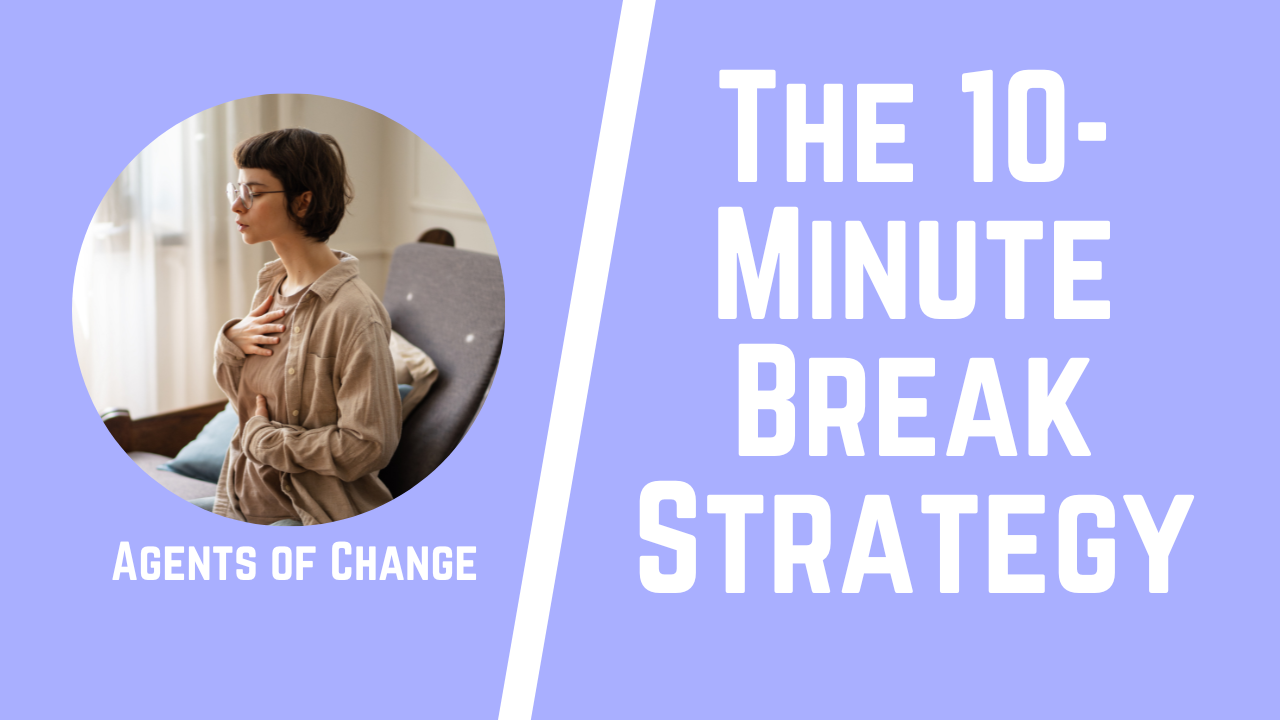
Ten minutes can pass quickly, especially in the middle of a high-stakes exam. Many ASWB candidates see the scheduled break and assume it doesn’t matter much. Some skip it altogether, while others take the break but spend the time replaying questions in their minds or worrying about how they’re performing. Unfortunately, using the break this way can drain focus and make the second half of the exam feel even harder.

The truth is that a short break can become a powerful tool when it’s used intentionally. Instead of treating it as empty time, candidates can use those ten minutes to reset their thinking, calm their nerves, and return to the exam with better concentration. A simple routine that includes breathing, hydration, and a quick mental reset can help protect the momentum you built during the first part of the test.

By approaching the break with a clear plan, you can turn a brief pause into a practical performance advantage. In the sections ahead, you’ll learn exactly how to structure your break, what to do during those ten minutes, and how to return to the exam feeling focused and steady.

Learn more about the ASWB exam and create a personalized ASWB study plan with Agents of Change. We’ve helped hundreds of thousands of Social Workers pass their ASWB exams and want to help you be next!

1) Why Scheduled Breaks Matter More Than You Think

When preparing for a major exam like the ASWB, many candidates focus on studying content, memorizing concepts, and practicing exam questions. Those steps are essential, of course. Yet something far less obvious can influence your performance just as much. How you use your scheduled break can affect your concentration, confidence, and decision-making during the second half of the exam.

a 20 something diverse female using her 10 minute break at a testing center to recharge and reset

A long exam places sustained demands on your brain. Attention, reasoning, and emotional regulation all require mental energy. As the test progresses, fatigue quietly builds. Even well-prepared candidates begin to experience slower processing, increased doubt, or the urge to rush through questions. A structured break interrupts that downward slide and gives your brain a chance to reset.

Many candidates underestimate this moment. They assume the break is optional or irrelevant. In reality, a brief pause can restore focus and help you maintain the momentum you built earlier in the exam.

Mental Fatigue Is Real

The ASWB exam requires continuous reading, analysis, and judgment. These tasks draw heavily on your working memory and executive functioning. Over time, those cognitive systems begin to tire.

When fatigue sets in, candidates often notice subtle changes such as:

  • Reading questions more slowly

  • Missing key details in the answer choices

  • Second-guessing decisions that would normally feel clear

  • Feeling mentally “foggy” or overwhelmed

A short break interrupts this pattern. Standing up, breathing deeply, and stepping away from the screen allows your brain to recover some of its processing capacity.

Even a few minutes of recovery can make a noticeable difference in mental clarity.

Stress Builds Quietly During Long Exams

Test anxiety does not always appear as obvious panic. Often it builds gradually. Your shoulders tense. Your breathing becomes shallow. You begin worrying about how many questions remain or whether you answered earlier items correctly.

Left unchecked, that stress can interfere with clear thinking.

A scheduled break provides space to regulate your nervous system. During the pause, candidates can:

  • Slow their breathing

  • Relax physical tension in the body

  • Shift attention away from the exam temporarily

  • Reset their emotional state before continuing

These small actions help restore calm and allow you to return to the exam with steadier focus.

Breaks Protect Your Momentum

Many candidates worry that stepping away from the exam will disrupt their rhythm. Surprisingly, the opposite is usually true.

Momentum during a test comes from mental clarity and steady decision-making. When fatigue and stress accumulate, that momentum fades. A brief reset helps preserve the mental rhythm you established during the earlier questions.

When used effectively, a scheduled break helps you:

  • Maintain concentration during the second half of the exam

  • Prevent careless mistakes caused by fatigue

  • Stay confident in your reasoning

  • Continue answering questions at a steady pace

Rather than interrupting progress, the break supports it.

Without a Plan, Breaks Can Backfire

Although breaks can be beneficial, they only help when used intentionally. Without a clear routine, candidates sometimes spend the break replaying difficult questions or worrying about their performance.

Common break mistakes include:

  • Analyzing questions that were already answered

  • Predicting whether you passed or failed

  • Mentally reviewing entire sections of the exam

  • Rushing back into the test without resetting

These habits often increase anxiety rather than reducing it.

Instead of allowing your mind to wander, it helps to approach the break with a simple plan. Structured breathing, hydration, and a quick mental reset can turn a short pause into a powerful tool for maintaining focus.

The Break Is Part of Your Test Strategy

Many candidates spend weeks preparing content for the exam, but give almost no thought to how they will manage their energy during the test itself. Treating the break as part of your strategy changes that.

When you prepare intentionally, the break becomes an opportunity to:

  • Reset your focus

  • Regulate stress

  • Check your pacing

  • Return to the exam with renewed clarity

By recognizing why scheduled breaks matter, you can begin to use them as a performance advantage rather than an afterthought.

Agents of Change packages include 30+ ASWB topics, 2 free study groups per month, and hundreds of practice questions so you’ll be ready for test day!

2) The 10-Minute Break Strategy: How to Use the Scheduled Break Without Losing Momentum

Instead of treating the break as empty time, treat it as a four-step reset routine.

a young woman taking advantage of her 10-minute break at a testing center to recharge and reset. In this quiet corner, she steps away from her desk to find a moment of peace and mental clarity before returning to her exam.

Each step supports your brain in a different way.

The Four-Part Break Routine

  1. Breathing Reset

  2. Hydration

  3. Micro-Reframe

  4. Timing Check

Together, they create a quick mental reboot that keeps your exam momentum intact.

Let’s break down each part.


Step 1: The Breathing Reset

After answering dozens of questions, your nervous system might be quietly ramping up.

Even if you feel calm, your body could be holding tension—tight shoulders, shallow breathing, clenched jaw.

Before doing anything else, pause and breathe.

A simple breathing pattern works well:

The 4–6 Reset

  • Inhale slowly for 4 seconds

  • Exhale slowly for 6 seconds

  • Repeat for 5 cycles

Longer exhales activate your parasympathetic nervous system, which signals your body to calm down.

Within about 30 seconds, your heart rate begins to slow. Mental clarity follows.

No dramatic meditation needed. Just steady breathing.


Step 2: Hydration

Your brain runs on oxygen, glucose, and, often overlooked, water.

Even mild dehydration affects attention and processing speed. During a long exam, it can quietly erode performance.

During your break:

  • Take a few sips of water

  • Avoid excessive caffeine

  • Skip sugary drinks that spike energy, then crash

Hydration supports your brain’s ability to stay focused for the remainder of the exam.

Simple, yet surprisingly effective.


Step 3: The Micro-Reframe

Here’s where many candidates accidentally sabotage themselves.

They start thinking:

  • “That last section felt terrible.”

  • “I probably failed already.”

  • “Maybe I should change a bunch of answers.”

Your break isn’t the time to analyze your performance.

Instead, do a micro-reframe.

A micro-reframe shifts your internal dialogue back to something useful.

Examples:

  • “One question at a time.”

  • “I prepared for this.”

  • “Keep moving forward.”

Short. Focused. Supportive.

You’re not pretending the exam is easy. You’re simply redirecting attention to the next step.


Step 4: Timing Check

Before returning to the exam, quickly check your pacing.

Ask yourself:

  • Am I roughly halfway through?

  • Do I need to adjust my speed?

  • Have I been overthinking questions?

This check helps prevent time surprises later.

Keep it brief: 30 seconds is enough.

Then, return to the exam with a clear plan.


A 60-Second Reset Script You Can Practice

One of the best ways to prepare for your break is to rehearse it during practice exams.

Below is a simple script candidates can memorize.


The 60-Second Reset Script

Second 1–20: Breathing

“Slow inhale… slow exhale.
I’m steady.
I’ve prepared for this.”

Second 21–40: Physical Reset

Relax your shoulders.

Take a sip of water.

Stretch your neck gently.

Second 41–60: Mental Reframe

“One question at a time.
Stay focused.
Keep moving forward.”


Practicing this during mock exams helps your brain recognize the routine automatically on test day.

3) The Do / Don’t List for Your ASWB Exam Break

When the scheduled break appears during the ASWB exam, it can feel like a strange moment. After answering dozens of questions, your brain is still in test mode. Some candidates rush through the break or spend it worrying about earlier questions. Others sit there, unsure what to do with the time.

A simple guideline can help you avoid that uncertainty. Think of the break as a structured reset, not empty time, and not a review session. The goal is to calm your nervous system, restore focus, and return to the exam ready to continue thinking clearly.

Below is a practical table outlining helpful behaviors and habits to avoid.

Break-Time Do’s and Don’ts

Do Don’t
Take slow, controlled breaths to calm your nervous system Replay difficult questions in your mind
Drink a small amount of water to stay hydrated Try to calculate whether you are passing or failing
Stand up and stretch your shoulders or neck Scroll through your phone or outside distractions if allowed
Remind yourself to focus on one question at a time Criticize yourself for answers you are unsure about
Check your pacing briefly before returning Rush back to the exam without resetting mentally

Following the “do” column helps your brain recharge. Avoiding the “don’t” column prevents unnecessary stress that can linger into the next section of the test.

Let’s look more closely at why the “don’t” behaviors are so unhelpful.


Why You Shouldn’t Replay Difficult Questions

One of the most common break habits is mentally reviewing questions you already answered. It’s understandable. Your brain naturally wants closure.

However, replaying questions during the break creates several problems:

  • It increases doubt about the answers you already submitted.

  • It raises anxiety levels right when you should be calming down.

  • It distracts you from preparing for the questions ahead.

Once a question is answered, it’s finished. The break should focus on resetting your attention, not revisiting the past.


Why You Shouldn’t Try to Predict Your Score

Some candidates spend the break wondering whether they are passing. They start estimating how many questions they might have missed.

The problem is that these guesses are rarely accurate.

More importantly, score predictions drain mental energy and increase pressure for the remainder of the exam. Instead of focusing on the next question, your mind becomes stuck on hypothetical outcomes.

A better approach is simple: remind yourself that the only task that matters is the next question in front of you.


Why You Should Avoid Outside Distractions

If your break environment allows access to a phone or other distractions, it may be tempting to check messages or scroll through social media. Even a quick glance can pull your attention away from the exam mindset.

Distractions during the break can:

  • Break your concentration rhythm

  • Introduce unrelated emotional reactions

  • Make it harder to regain focus afterward

Keeping the break quiet and simple protects your mental momentum.


Why Self-Criticism Hurts Performance

After a challenging section of the exam, it’s easy to think things like:

  • “I should have studied more.”

  • “I probably got that wrong.”

  • “I’m not doing well.”

Self-critical thoughts increase stress and reduce confidence. That emotional shift can carry into the second half of the exam and affect how you approach new questions.

Instead, use the break for a quick mental reset. A short phrase such as “One question at a time” can redirect your focus toward the task ahead.


Why Rushing Back Into the Exam Doesn’t Help

Some candidates barely use their break at all. They feel pressure to finish quickly and jump back into the exam after a minute or two.

Unfortunately, this defeats the purpose of the break.

Without taking a moment to breathe, hydrate, and relax your muscles, the mental fatigue from the first half of the exam continues building. A short reset gives your brain a chance to recover so you can approach the remaining questions with better clarity.

Taking even a few intentional minutes can make the second half of the exam feel noticeably more manageable.


Used thoughtfully, your break becomes an important part of your exam strategy. Instead of losing momentum, you return to the test calmer, more focused, and ready to keep moving forward.

4) How Agents of Change Helps You Build Exam Momentum

Preparing for the ASWB exam requires more than memorizing terms and reviewing practice questions. Success often comes down to consistency, structure, and confidence under pressure. Many candidates start studying with strong motivation, but struggle to maintain momentum as the exam approaches. Without a clear plan, it’s easy to jump between topics, second-guess your preparation, or feel overwhelmed by the amount of material.

This is where Agents of Change becomes an extremely valuable resource for Social Work candidates. Their programs are designed to provide both the knowledge and the structure needed to stay focused throughout your preparation. Instead of studying randomly, you follow a clear path that keeps you moving steadily toward test day.

Structured Study Plans That Keep You Moving Forward

One of the biggest challenges during exam preparation is figuring out what to study and when. Without guidance, many candidates spend too much time on certain topics while overlooking others.

Agents of Change addresses this by including organized study plans in every program. These plans help you:

  • Break large amounts of material into manageable sections

  • Stay consistent with your study schedule

  • Track your progress over time

  • Reduce the stress of wondering if you’re studying the “right” things

Having a clear plan removes a great deal of uncertainty. Instead of feeling scattered, you know exactly what your next step should be.

Practice Exams That Build Test-Day Confidence

Reading study materials is helpful, but true confidence comes from simulating the real exam experience.

Agents of Change provides practice exams that allow candidates to:

  • Experience the pacing of the ASWB exam

  • Practice answering questions under time pressure

  • Identify knowledge gaps early

  • Build endurance for a long testing session

Live Study Groups for Ongoing Support

Studying alone can sometimes feel isolating. Questions arise, motivation fluctuates, and it’s easy to feel unsure about your progress.

Agents of Change includes two live study groups each month, which allow candidates to:

  • Review key concepts with expert guidance

  • Ask questions in real time

  • Learn from other Social Work candidates preparing for the same exam

  • Stay accountable to their study goals

These sessions help reinforce learning and keep candidates engaged in their preparation.

Flashcards and Targeted Study Tools

Efficient studying often requires quick review tools that reinforce memory and strengthen recall.

Agents of Change offers flashcards and focused study materials that help candidates:

  • Reinforce key Social Work concepts

  • Review important terminology

  • Strengthen recall through repetition

  • Study effectively even during short study sessions

These tools are especially helpful when reviewing concepts that appear frequently on the ASWB exam.

Access Until You Pass

Many candidates worry about starting a prep program too early and losing access before they take the exam. Agents of Change removes that concern entirely.

When you enroll, you have access to the program until you pass your exam. This means:

  • You can begin studying whenever you feel ready

  • You don’t have to rush your preparation

  • You can revisit materials as many times as needed

In other words, you can’t buy the program “too soon.” The resources remain available for as long as you need them.

A System That Supports Momentum

Preparing for the ASWB exam is a journey that requires sustained focus. Tools like structured study plans, practice exams, live study groups, and review materials help candidates maintain steady progress rather than studying in bursts of anxiety.

With the support of Agents of Change, Social Work candidates gain the structure and confidence needed to stay on track, build exam endurance, and approach test day with a clear strategy.

If you are preparing for the ASWB exam and want a comprehensive system designed specifically for Social Work candidates, explore the available programs here: https://agentsofchangeprep.com/course-selection/

5) FAQs – ASWB Exam Day Checklist

Q: Should I take the scheduled break during the ASWB exam or skip it?

A: Most candidates benefit from taking the scheduled break. Even if you feel focused in the moment, a short pause helps prevent mental fatigue from building during the second half of the exam. Long testing sessions require sustained concentration, and a brief reset can restore clarity and reduce stress. The key is to use the break intentionally. Instead of thinking about previous questions, use the time to breathe slowly, hydrate, stretch, and mentally refocus before returning to the exam.

Q: How can I practice the 10-Minute Break Strategy before test day?

A: The best way to practice The 10-Minute Break Strategy: How to Use the Scheduled Break Without Losing Momentum is during full-length mock exams. When you take a practice test, pause at the halfway point and follow the same break routine you plan to use on exam day.

Spend a minute or two focusing on slow breathing, drink some water, stretch your shoulders or neck, and remind yourself to approach the remaining questions one at a time. Practicing this routine trains your brain to treat the break as a structured reset rather than an unplanned pause.

Q: What study resources can help me prepare effectively for the ASWB exam?

A: Preparing for the ASWB exam is much easier with structured guidance and realistic practice. Agents of Change offers comprehensive preparation tools designed specifically for Social Work candidates. Their programs include detailed study materials, full practice exams, flashcards, and two live study groups each month where you can review topics and ask questions.

All programs also include organized study plans to help keep your preparation on track. One major advantage is that you receive access to the program until you pass your exam, so you don’t have to worry about purchasing it too early or rushing through the materials.

6) Conclusion

Preparing for the ASWB exam requires more than mastering Social Work concepts. It also involves managing your focus, energy, and mindset during a long and demanding testing experience. The scheduled break may seem small, yet it plays an important role in helping you maintain clarity and confidence. When used intentionally, those ten minutes can help calm your nervous system, restore concentration, and prepare you for the remainder of the exam.

By following the 10-Minute Break Strategy, you give yourself a simple routine that supports your performance. Slow breathing, hydration, a brief mental reset, and a quick pacing check can make a noticeable difference in how you approach the second half of the test. Instead of letting fatigue or anxiety build, you return to the exam steady, focused, and ready to continue answering questions one at a time.


► Learn more about the Agents of Change course here: https://agentsofchangeprep.com

About the Instructor, Dr. Meagan Mitchell: Meagan is a Licensed Clinical Social Worker and has been providing individualized and group test prep for the ASWB for over 11 years. From all of this experience helping others pass their exams, she created the Agents of Change course to help you prepare for and pass the ASWB exam!

Find more from Agents of Change here:

► Facebook Group: https://www.facebook.com/groups/aswbtestprep

► Podcast: https://podcasters.spotify.com/pod/show/agents-of-change-sw

#socialwork #testprep #aswb #socialworker #socialwork #socialworktest #socialworkexam #exam #socialworktestprep #socialworklicense #socialworklicensing #licsw #lmsw #lcsw #aswbexam #aswb #lcswexam #lmswexam #aswbtestprep #aswbtest #lcswtestprep #lcswtest #lmswtestprep #lmswtest #aswbcourse #learningstyles #learningstyle

Disclaimer: This content has been made available for informational and educational purposes only. This content is not intended to be a substitute for professional medical or clinical advice, diagnosis, or treatment.

Note: Certain images used in this post were generated with the help of artificial intelligence.

Share:

Discover more from Agents of Change

Subscribe now to keep reading and get access to the full archive.

Continue reading