Agents of Change Blog

Search

Our Recent Posts

Ethics and the ASWB Exam: 6.02 Public Participation

When studying for the ASWB exam, it’s easy to focus on theories, interventions, and clinical skills while brushing past the ethics sections. Yet ethics isn’t just a small part of Social Work; it’s the foundation that shapes how professionals practice.
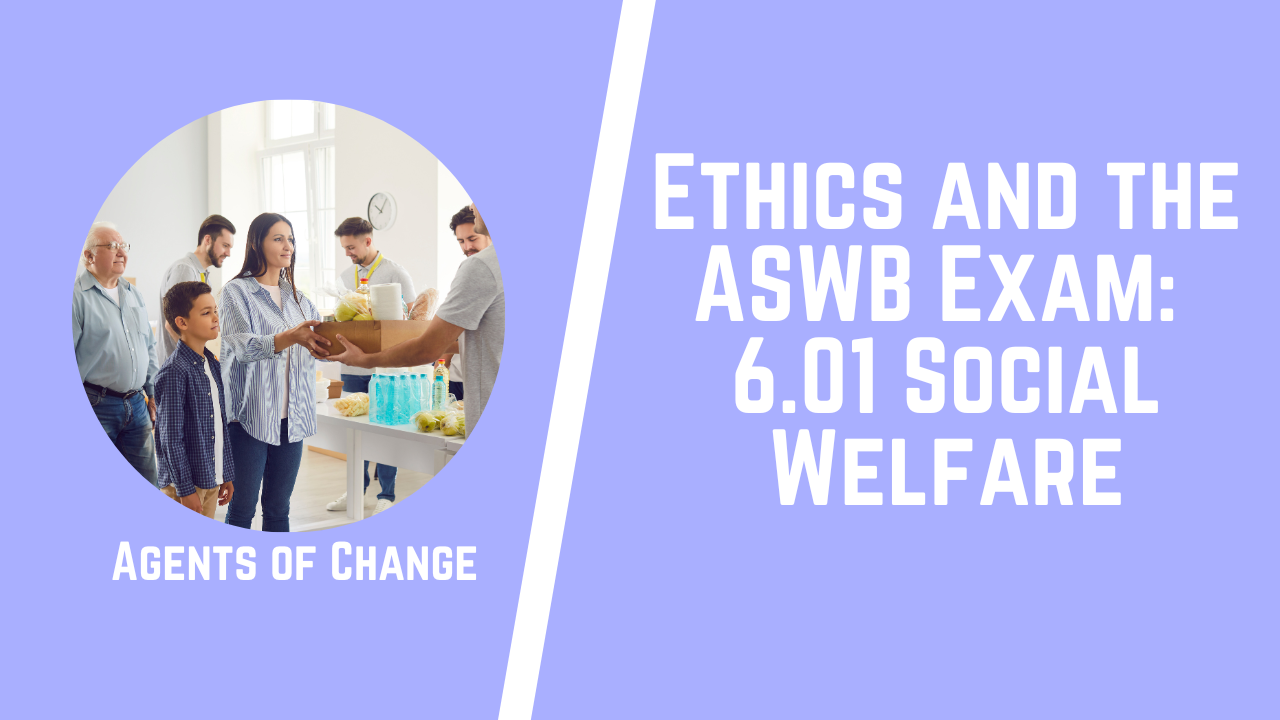
Ethics and the ASWB Exam: 6.01 Social Welfare

Preparing for the ASWB exam can feel overwhelming, especially when you come across sections that blend ethical theory with practical application. One of the most important areas you will encounter is 6.01 Social Welfare. This section goes beyond the basics

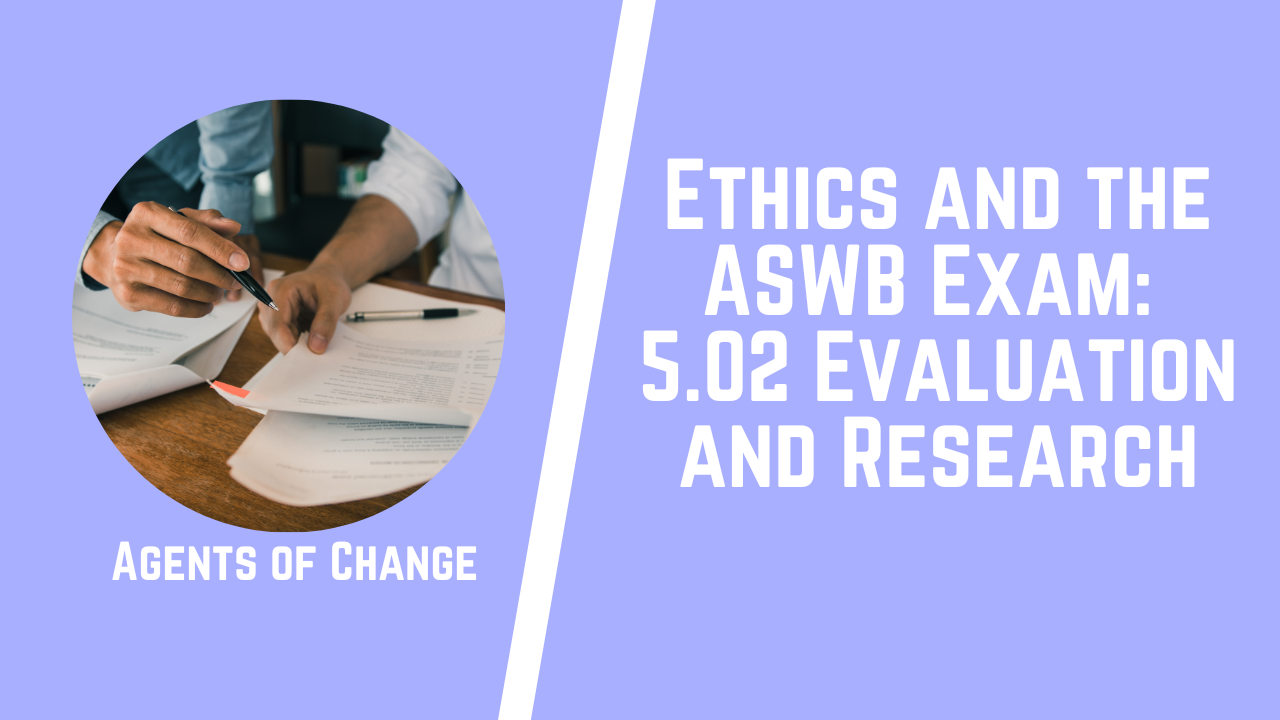
Ethics and the ASWB Exam: 5.02 Evaluation and Research

Preparing for the ASWB exam can feel like juggling a hundred different priorities at once. There are practice tests to complete, theories to review, and ethical principles to memorize. Among all the exam content, the section on ethics stands out

Ethics and the ASWB Exam: 5.01 Integrity of the Profession

Preparing for the ASWB exam can feel overwhelming, especially when it comes to the ethics section. Ethics questions tend to be layered, detailed, and designed to test whether you can apply professional values in real-world scenarios. One of the most

Ethics and the ASWB Exam: 4.08 Acknowledging Credit

Preparing for the ASWB exam can feel overwhelming at times. Between theories, practice models, and ethical standards, there is a lot to master. One area that often slips under the radar but carries significant weight is 4.08 Acknowledging Credit. At

Ethics and the ASWB Exam: 4.07 Solicitations

Studying for the ASWB exam can feel overwhelming at times. The material is broad, the scenarios can be tricky, and the ethical standards often require more than memorization. They demand careful thinking and a clear understanding of how Social Work

Ethics and the ASWB Exam: 4.06 Misrepresentation

Preparing for the ASWB exam can feel overwhelming, especially when it comes to the ethics section. The National Association of Social Workers (NASW) Code of Ethics is central to the profession, and one area that deserves special attention is 4.06

Ethics and the ASWB Exam: 4.05 Impairment

Preparing for the ASWB exam can feel overwhelming, especially when it comes to the ethics portion. Many test-takers worry about interpreting the NASW Code of Ethics correctly under exam pressure. One section that frequently raises questions is 4.05 Impairment, which

Ethics and the ASWB Exam: 4.04 Dishonesty, Fraud, and Deception

Preparing for the ASWB exam isn’t just about memorizing facts or learning clinical theories. It’s also about understanding the ethical framework that guides every aspect of Social Work. One section that deserves special attention is 4.04 of the NASW Code

Ethics and the ASWB Exam: 4.03 Private Conduct

Preparing for the ASWB exam means more than brushing up on intervention techniques or diagnostic criteria. It also means grounding yourself in the ethical responsibilities that shape the Social Work profession. One often-overlooked section of the NASW Code of Ethics,

Most Popular Stories

Neurodiversity-Affirming Therapy Approaches

For many years, mental health treatment often viewed neurological differences through a deficit-based lens. Autistic clients were encouraged to appear less Autistic, people with ADHD were told to become more organized or disciplined, and those with sensory or communication differences

Trauma-Informed Care and the Stress Response

A client misses an appointment, shuts down during an assessment, becomes irritated by a routine question, or struggles to remember what was discussed moments earlier. These reactions may be labeled as avoidance, resistance, poor motivation, or noncompliance. Yet beneath the

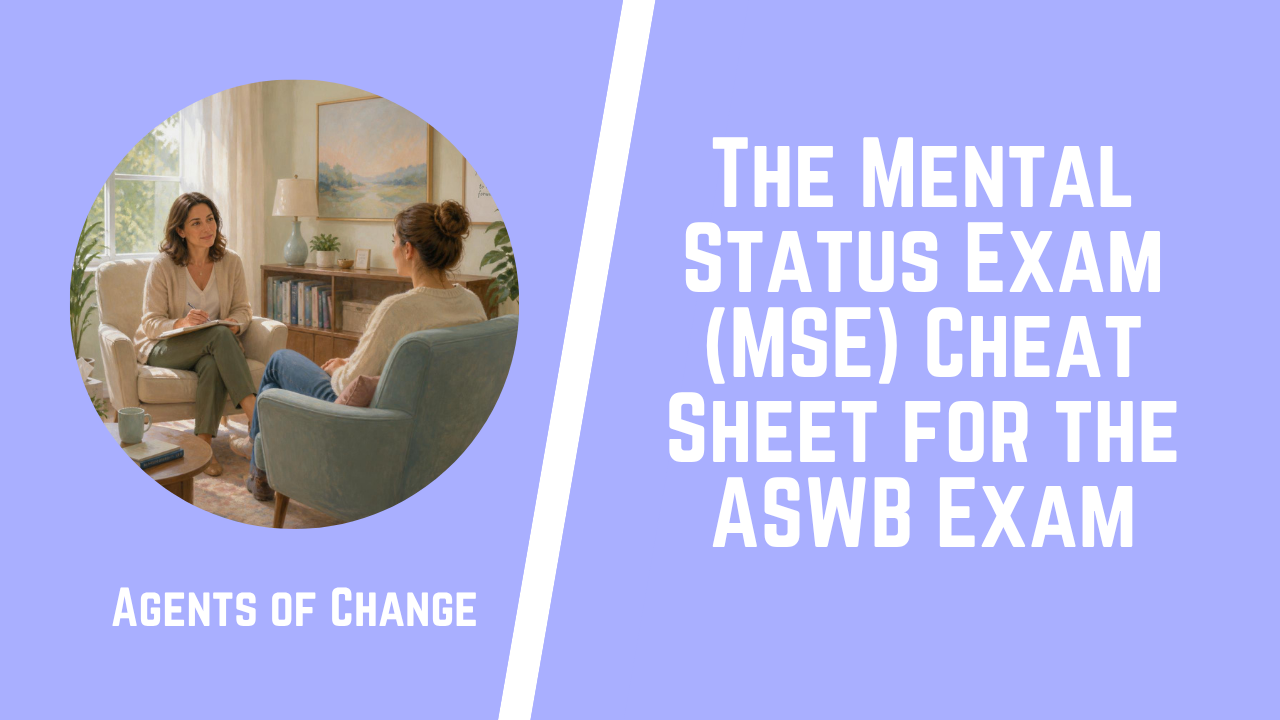
a therapist talking with a client for the first time in a calming office setting

The Mental Status Exam (MSE) Cheat Sheet for the ASWB Exam

The Mental Status Exam can feel like a long list of clinical terms until you understand what each category is actually measuring. Mood, affect, thought process, perception, insight, judgment, and orientation may sound technical at first, but each one helps